3 Ingredients for a Faithful Church

church_coverI am well acquainted with Diet Coke and Diet Dr. Pepper; some people would call me an addict, I call myself an enthusiast.  My familiarity with this heavenly nectar means I am all too aware when an establishment tries to pass of a fake as the real thing.

Because our church does not have an office at the moment, I spend much of my week working at two different locations of a local BBQ joint. One of these locations regularly has a delicious mix of the heavenly nectar, and the other location . . . well, not so much. The real thing comes from a proper mix of ingredients and, to an enthusiast, can easily be distinguished from imitation.

The same thing is true about a church. I noticed this truth earlier this year as I preached through 1 Timothy. Paul sent a letter along to his young protege so that if he delayed Timothy “may know how one ought to behave in the household of God, which is the church of the living God, a pillar and buttress of the truth.” In the short span of six chapters Paul manages to cover an astonishing amount of material related to the church’s faithfulness, and one realizes that three themes prove to be emblematic of a faithful church. Three themes I like to think about as three necessary ingredients for a faithful church:

#1 – Sound doctrine. Paul left Timothy in Ephesus and charged him to deal with the false teachers that had infiltrated the church. Refuting the false teachers meant calling them to repentance (and excommunicating if necessary) and publishing sound doctrine.

#2 – Sound leadership. Sound doctrine must be proclaimed and taught, so who is to do this? Elders. These men must be “able to teach,” thereby ensuring the church’s doctrine is protected and propagated. Chapter three famously delineates the qualifications for elders and deacons, and chapter four is taken up – almost entirely – with pointed instructing on healthy pastoral ministry.

#3 – Sound living. This is, after all, the purpose for Paul’s writing, that the church would “know how they ought to live together.” Sound living flows from a pure heart, good conscience, and sincere faith. It manifests itself in praise to God, modest dress, contentment, honor, and focused holiness.

Sound doctrine, sound leadership, sound living. A three-strand chord of faithfulness hard to separate and hard to break. It’s not easily broken because all three ingredients are only found in Christ, the Unassailable One. He is the Truth, the Good Shepherd, and the Holy One – He is Faithfulness. Therefore, what I think Paul drives at in this letter is the realization that a faithful church is focused on the exaltation of Christ through the empowerment of His Spirit. Christ-centeredness in the church need not be an esoteric idea and pursuit. 1 Timothy bring this glorious aim down to the ground floor of daily practice; Christ-centered faithfulness concentrates on sound doctrine, sound leadership, and sound living. These are the three ingredients of a faithful church.
Work at Your Public Prayer

Clarus-Carson
“If you are in any form of spiritual leadership, work at your public prayers. It does not matter whether the form of spiritual leadership you exercise is the teaching of a Sunday school class, pastoral ministry, small-group evangelism, or anything else: if at any point you pray in public as a leader, then work at your public prayers.

Some people think this advice distinctly corrupt.  It smells too much of public relations, of concern for public image.  After all, whether we are praying in private or in public, we are praying to God: Surely he is the one we should be thinking about, no one else.

This objection misses the point.  Certainly if we must choose between trying to please God in prayer, and trying to please our fellow creatures, we must unhesitatingly opt for the former.  But that is not the issue.  It is not a question of pleasing our human hearers, but of instructing them and edifying them.

The ultimate sanction for this approach is none less than Jesus himself.  At the tomb of Lazarus, after the stone has been removed, Jesus looks to heaven and prays, “Father, I thank you that you have heard me.  I knew that you always hear me, but I said this for the benefit of the people standing here, that they may believe that you sent me” (John 11:41-42).  Here, then, is a prayer of Jesus himself that is shaped in part by his awareness of what his human hearers need to hear.

The point is that although public prayer is addressed to God, it is addressed to God while others are overhearing it.  Of course, if the one who is praying is more concerned to impress these human hearers than to pray to God, then rank hypocrisy takes over.  That is why Jesus so roundly condemns much of the public praying of his day and insists on the primacy of private prayer (Matt. 6:5-8).  But that does not mean that there is no place at all for public prayer.  Rather, it means that public prayer ought to be the overflow of one’s private praying.  And then, judging by the example of Jesus at the tomb of Lazarus, there is ample reason to reflect on just what my prayer, rightly directed to God, is saying to the people who hear me.

In  brief, public praying is a pedagogical opportunity.  It provides the one who is praying with an opportunity to instruct or encourage or edify all who hear the prayer.  In liturgical churches, many of the prayers are well-crafted, but to some ears they lack spontaneity.  In nonliturgical churches, many of the prayers are so predictable that they are scarcely any more spontaneous than written prayers, and most of them are not nearly as well-crafted.  The answer to both situations is to provide more prayers that are carefully and freshly prepared.  That does not necessarily mean writing them out verbatim (though that can be a good thing to do).  At the least, it means thinking through in advance and in some detail just where the prayer is going, preparing, perhaps, some notes, and memorizing them.

Public praying is a responsibility as well as a privilege.  In the last century, the great English preacher Charles Spurgeon did not mind sharing his pulpit: others sometimes preached in his home church even when he was present.  But when he came to the “pastoral prayer,” if he was present, he reserved that part of the service for himself.  This decision did not arise out of any priestly conviction that his prayers were more efficacious than those of others.  Rather, it arose from his love for his people, his high view of prayer, his conviction that public praying should not only intercede with God but also instruct and edify and encourage the saints.

Many facets of Christian discipleship, not least prayer, are rather more effectively passed on by modeling than by formal teaching.  Good praying is more easily caught than taught.  If it is right to say that we should choose models from whom we can learn, then the obverse truth is that we ourselves become responsible to become models for others.  So whether you are leading a service or family prayers, whether you are praying in a small-group Bible study or at a convention, work at your public prayers.”

D. A. Carson, A Call to Spiritual Reformation: Priorities from Paul and His Prayers (Baker, 1992), 34-35.  HT: Brian Hedges

Stephen Miller’s “Crown Him with Many Crowns (All Hail the King)”

Stephen Miller’s latest album includes a strong, modern recording of “Crown Him with Many Crowns.” Whether or not you like Miller’s added chorus, the song captures how a musical arrangement appropriately reflects the song’s lyrics. “Crown Him” speaks of a royal coronation and Miller’s arrangement is triumphal and celebratory. Excellent work!

Pastoral Postcard – Holy Dread

Pastoral PostcardEach week I try to write a “Pastoral Postcard,” a post that aims to encourage pastors in the work of ministry. I take one verse of Scripture and apply it to the blessings and afflictions every gospel minister experiences. The postcards originate from a time when I was preaching through 1 Timothy while reading Thomas Boston’s The Art of Man-Fishing. As a young pastor myself, I tried to channel my inner Boston and write short-ish notes to encourage my labor. Hopefully they can be some encouragement to you.

“Not many of you should become teachers, my brothers, for you know that we who teach will be judged with greater strictness.” – James 3:1

Pastor, execute your ministry with a sense of awesomeness – a tone of holy dread.

The holy dread of ministry is found in the warning, “Not many of you should become teachers,” for you will be judged with greater strictness. Your words and ways are on display for all to see and will be the fragrance of life or stench of death. You dare not be found a peddler of God’s word, but a faithful trader in eternal things. The apostle reveals his understanding of your awesome calling when he asked, “Who is sufficient for these things?” To answer in a sentence: the pastor soaked with Spirit-wrought sobriety and sincerity.

A SOBER PASTOR

Sobriety in ministry fertilizes holy dread. Sobriety is identified by her children called Earnestness and Reverence. God made you a steward of His Word so that you would publish abroad the good news of His kingdom; what earnestness this calling demands! The sin of your heart and schemes of your enemy will tempt you to complacency in ministry. The Serpent knows that idleness might just be more effective in harming your congregation than disqualifying sin. Idleness fuels lifeless preaching, disconnected oversight, and spiritual isolation. If the Serpent succeeds in rendering you idle he will then attack your congregation and/or elder body to unwise extensions of grace. They will let your sin go unchecked longer than it should and even if they call you to account he will tempt them to keep you in your office. Should he succeed in both ends he has just rendered the congregation faithless and fruitless. The gates of hell snicker at idle pastors and, by extension, idle congregations.

Yet, the gates of hell crumble in terror before a man of God distinguished by the peculiar grace of reverence. Reverence, fear and awe at God’s majesty, slays the sin of complacency and promotes sobriety. The age in which you live celebrates levity and frivolity in the pulpit, while your God celebrates men who tremble at His Word. Many congregations come to corporate worship hoping for a chance to laugh rather than a chance to repent. The Serpent will use the atmosphere of the age to tempt you to be an entertainer more than a gospel minister, but you must stand your ground. You are standing in the gap of the ages calling people to repent of their sin and believe in their Savior. Such proclamation cannot be done with flippant shallowness, it must be done with sober reverence.

Understand that the Serpent will tempt you away from reverence by presenting it as unapproachable austerity. But no, this is deception and confusion. Your God reigns in awesome splendor that strikes men with fear, but compelling fear. Awesomeness compels nearness; holy dread fuels sobriety.

A SINCERE PASTOR

Sincerity is a friend to the fear of God and is thus a friend to holy dread. No one, not even you, can stand in front of the Glorious God covered in deceptive masks. He knows your prayers before they are offered, your words before they are spoken, your actions before they appear; You cannot hide from Him and His Spirit searches you inner being. Do you see how this calls for sincerity? This coming week you will stand behind the sacred desk and the awesomeness of God demands sincere proclamation. The Serpent will tempt you to subtle deception in preaching; he will scheme for you to soften the reality of sin, the greatness of Christ, and the demands of discipleship. Sincerity slays soft preaching and prepares a feast that your people may not want, but they still need.

Pastoral ministry runs on the twin rails of patient plodding and pleading, and this long-suffering needs sincerity. The oracles of God you carry into the pulpit and around town each week are blessed burdens. The Serpent intends to burn you with these burdens by tempting you to bear them alone. Yet, sincerity drives out this deception by linking arms with a band of brothers to join you in plodding and pleading. After all, you are not the only one that will give an account for those God entrusted to you. Holy dread promotes and enables sincerity.

Finally, remind yourself often that this ministry is not be played at nor trifled with. Your Lord will not suffer His sheep to be shepherded with buffoonery; rather, His glorious majesty assume a disposition of sobriety and sincerity. Pastor your people with holy dread.

Cultivating Gravity and Gladness in Preaching

Preaching Header

In The Supremacy of God in Preaching John Piper calls preachers to “gravity and gladness” in their work. For those wondering what the phrase means, Piper writes,

Gravity and gladness should be woven together in the life and preaching of a pastor in such a way as to sober the careless soul and sweeten the burdens of the saints. Love for people cannot treat awesome realities lightly (hence, gravity!), and love for people cannot load people with the burden of joyless obedience (hence, gladness!).

He then gives seven suggestions for cultivating gravity and gladness in preaching, suggestions that will challenge and encourage.

  1. Strive for practical, earnest, glad-hearted holiness in every area of your life.
  2. Make your life – especially the life of your study – a life of constant communion with God in prayer.
  3. Read books that were written by men or women who bleed Bible while you prick them and who are blood-earnest about the truths they discuss.
  4. Direct your mind often to the contemplation of death.
  5. Consider the biblical teaching that as a preacher you will be judged with greater strictness.
  6. Consider the example of Jesus.
  7. Finally, strive will all the strength you have to know God and to humble yourself under his mighty hand.

Here’s to preaching whose primary aim is repentance and faith wrought by a stupendous vision of our glorious God.

Recent Reads

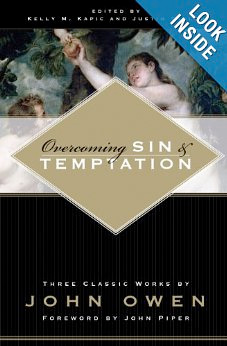
Overcoming SinThe Mortification of Sin by John Owen. I try to reread this book once every year because it’s just that good. Every Christian needs continual encouragement in the fight against sin and Mortification has some mighty fine fuel for the fight. Owen is a surgeon of the soul par excellence, for he cuts and heals in all the right places. The book reveals Puritan pithiness at its best; for example, “Mortification from a self-strength, carried on by ways of self-invention, to the end of a self-righteousness, is the soul and substance of all false religion in the world,” and, “Do you mortify? Do you make it your daily work? You must always be at it while you live; do not take a day off from this work; always be killing sin or it will be killing you.”

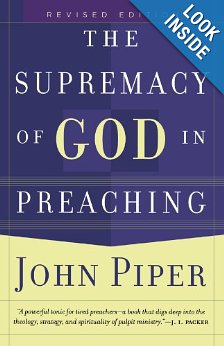
41aW95Yh5uL._SY346_PJlook-inside-v2,TopRight,1,0_SH20_The Supremacy of God in Preaching by John Piper. This book is short, just over 100 pages, but packs a punch typical of Piper. He defines preaching as “expository exultation” and then unfolds that theme in two parts: 1) Why God Should Be Supreme in Preaching, and 2) How to Make God Supreme in Preaching: Guidance from the Ministry of Jonathan Edwards. Although originally published in 1990, the book remains a clarion call to contemporary preachers to pursue “gravity and gladness” in preaching. One of the few books on preaching that, I think, will survive in print for decades.

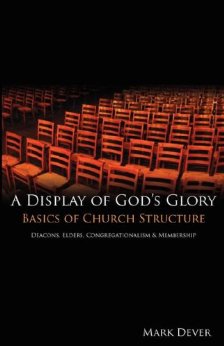
41cx5DxHIsL._SY346_A Display of God’s Glory by Mark Dever. The finest primer on congregationalist polity that I’ve read. While some readers might want more detailed explanation on various congregational convictions, the book’s aim to provide the “basics of church structure” and it succeeds. A strength of the book is the emphasis Dever places on church unity as a primary aim and fruit of biblical governance. He has a masterful discussion on what issues merit congregational involvement and which issues congregations should joyfully defer to installed leadership. This is an excellent training resource for elder-led congregational churches.

51bam5XeGTL._SY346_PJlook-inside-v2,TopRight,1,0_SH20_The Fifth Witness by Michael Connelly. For better or worse (probably the latter), the majority of my fiction reading squarely falls into the “mystery/suspense/detective/lawyer” genre, a genre Michael Connelly dominates. The Fifth Witness is the most recent volume in his Mickey Haller series and Stephen King calls it, “One of the most bone-crunching courtroom dramas you’ll ever read.” I love Connelly because he steers clear of the gratuitous content permeating so many bestsellers today; mystery alone drives the story and captures the readers interest. Anyone familiar with Connelly knows he is a master of surprise endings and The Fifth Witness won’t disappoint in this area.

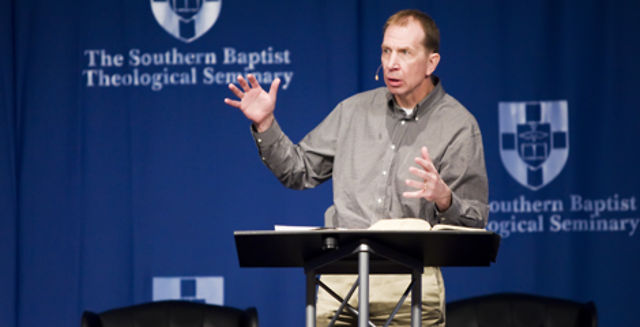
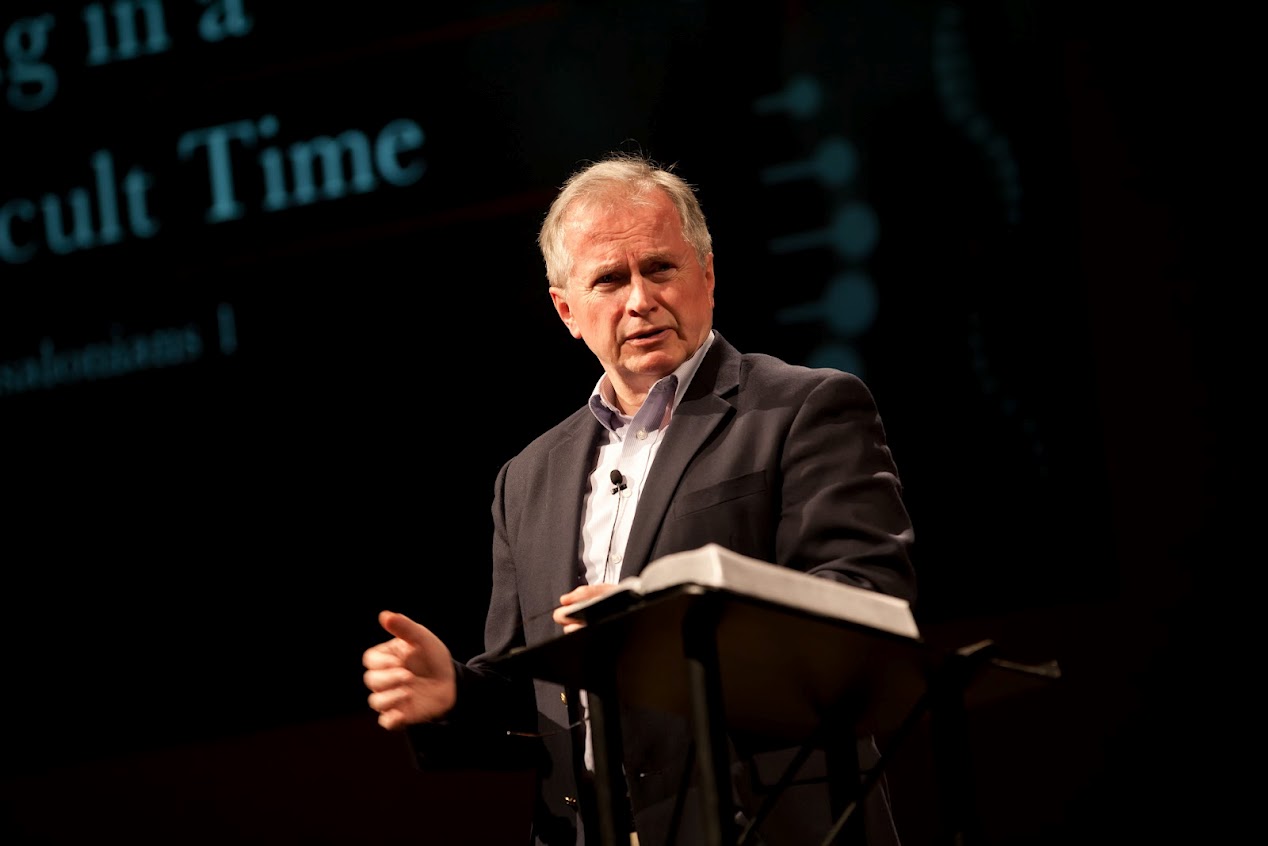
In light of my post earlier this morning, I thought it would serve you well to watch Mike in action. Here he is delivering the first lecture at this year’s 9Marks at Southern event.

A Teacher of Preachers

425062952_640

Every pastor should be a preacher (2 Tim. 4:2) and a teacher of preachers (2 Tim. 2:2). Mike Bullmore, for me, is the consummate example of this biblical balance in pastoral ministry.

Bullmore currently is the Senior Pastor of CrossWay Community Church in Bristol, Wisconsin, a church he planted in 1998. Prior to planting CrossWay, he served for 15 years as an Associate Professor of Homiletics (preaching) and Pastoral Theology, as well as chairman of the Practical Theology Department at Trinity Evangelical Divinity School in Deerfield, Ill.

I first discovered Bullmore through lectures he delivered at a couple Sovereign Grace Pastors Conferences. There is unusual winsomeness in Bullmore’s teaching, and his warmth and wisdom will encourage any man who ascends to the sacred desk. Here are the seven lectures that, I think, will serve every pastor in a special way. So pull up a chair and feast!

The great design and intention of the office of a Christian preacher [is] to restore the throne and dominion of God to the souls of men. – Cotton Mather

The Supremacy of God in Preaching (Grand Rapids: Baker, 1990), 25

3 Books Every Pastor Should Read: On Preaching

Books are some of the best friends a pastor can have. How to know which friends to have is quite difficult, for as the inspired Preacher said, “Of making many books there is no end” (Ecclesiastes 12:12). Last week I suggested three books on pastoral ministry that every time-strapped and budget-strapped pastor should read. Here are my offerings for that most essential duty of ministry, preaching:

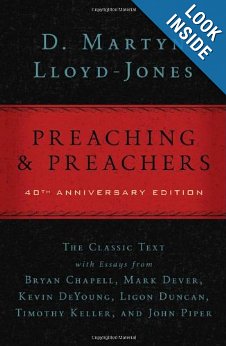
41aOmdoo-sL._SY346_PJlook-inside-v2,TopRight,1,0_SH20_Preaching and Preachers by Martyn Lloyd-Jones. In 1969 Lloyd-Jones traveled across the pond to deliver a series of lectures on preaching at Westminster Theological Seminary in Philadelphia, which were published as Preaching and Preachers in 1972. “The Doctor” still has great relevance for preachers more than forty years later. Lloyd-Jones writes from the presupposition that preaching “is the primary task of the Church and the Christian minister.” It’s here that you find the timeless declaration that preaching is, “Logic on fire!” Also, the chief end of preaching “is to give men and women a sense of God and His presence.” You won’t agree with everything the good doctor thinks, but I promise he will make you think about preaching and preachers in a challenging way.

51+9sj57iqL._SY346_PJlook-inside-v2,TopRight,1,0_SH20_Between Two Worlds: The Challenges of Preaching Today by John Stott. In this book Stott manages to cover an incredible swath of material. He covers the history of preaching, contemporary challenges to preaching, theological foundations for preaching, and practical considerations for preaching. In other words, there is something for everyone in this book! Of particular help are his chapters on preaching with “Sincerity and Earnestness” and “Courage and Humility.”

41YcnBUV4+L._SY346_PJlook-inside-v2,TopRight,1,0_SH20_Faithful Preaching: Declaring Scripture with Responsibility, Passion, and Authenticity by Tony Merida. This book sure seems to fly under the radar in discussion on preaching resources, but Merida is useful on so many levels. The book is broken down into four parts: 1) Trinitarian Convictions for Expository Preaching, 2) How Busy Pastors Prepare Christ-Exalting Expository Messages, 3) Watching Our Life and Doctrine, & 4) Preaching the Gospel in Our Generation. I enjoy how Merida interacts with relevant sources while remaining accessibly warm in presentation and wise in application. This book will encourage any seasoned preaching in his ministry and give any young preacher sound practices to employ.

HONORABLE MENTIONS

The Supremacy of God in Preaching by John Piper. The only reason this book isn’t in the top three is it’s brevity; it comes in right around 100 pages. Buy it, read it, and preach the greatness of God.

Speaking God’s Words: A Practical Theology of Preaching by Peter Adam. Another lesser known book. You need a strong theology of preaching and this book offers you one.