You Need to Read

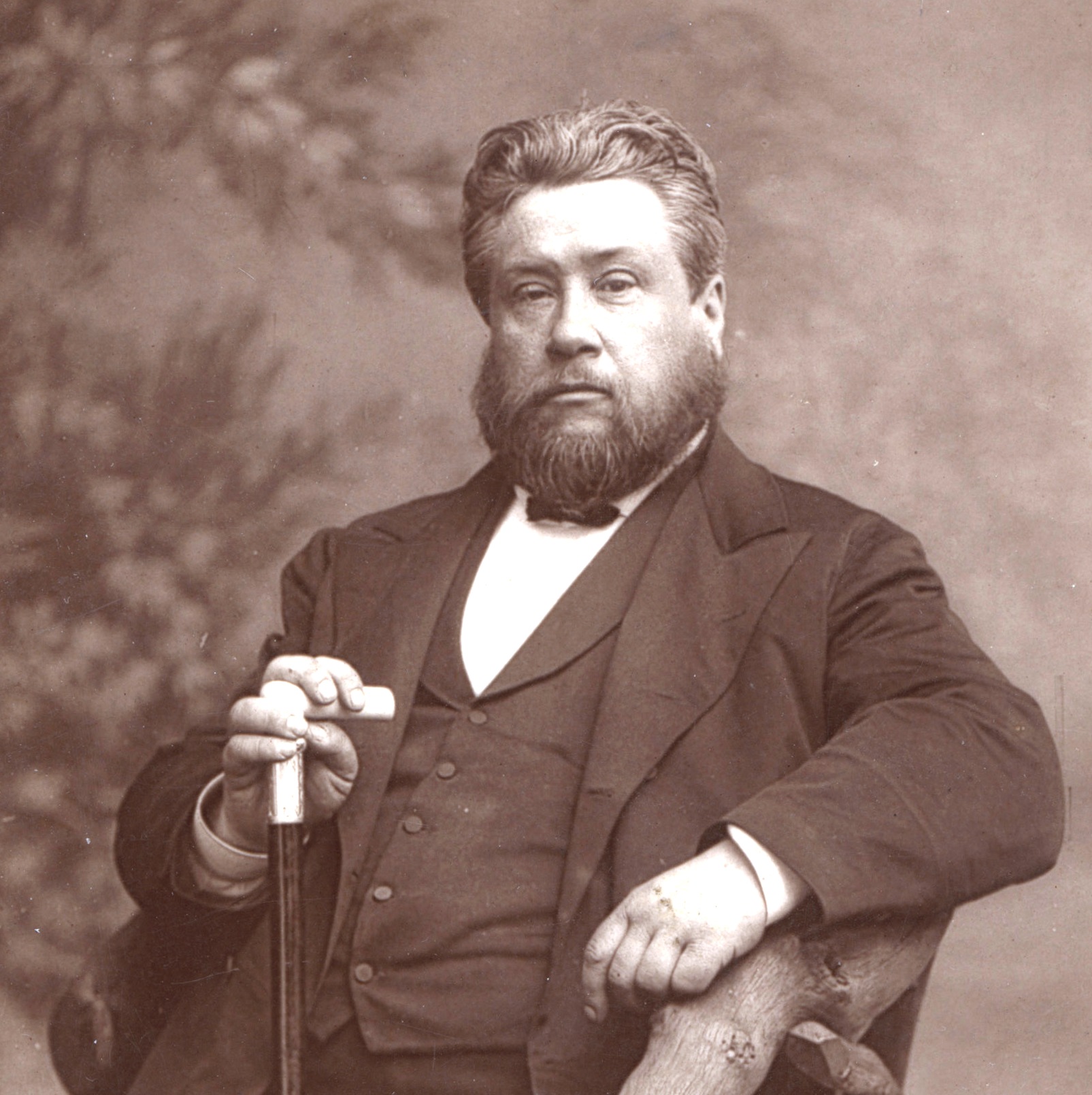
spurgeon_chair1“Paul had a few books, which were left perhaps wrapped up in the cloak, and Timothy was to be careful to bring them. Even an apostle must read.

“Some of our self-sufficient brethren have thought a minister who reads books and studies his sermon must be a very deplorable specimen of a preacher. A man who goes up into the pulpit, professes to take his text on the spot and talks any quantity of nonsense is the idol of many. If he will speak without premeditation, or pretend to do so, and never produce what they call a dish of dead man’s brain – ah! that is the preacher. How rebuked they are by the apostle!

He is inspired, yet he wants books!

He has been preaching for thirty years, yet he wants books!

He has seen the Lord, yet he wants books!

He has a wider experience than most men, yet he wants books!

He had been caught up into the very heaven and had heard things which it was unlawful for a man to utter, yet he wants books!

He had written the major part of the New Testament, yet he wants books!

The apostle says to Timothy, and so he says to every preacher, “Give attendance to reading.” The one who never reads will never be read. He who never quotes will never be quoted. He who will not use the thoughts of other men’s brains proves that he has no brains of his own.

“Brethren, what is true of pastors is true of all our people – you need to read!”

– Charles Haddon Spurgeon

Planning to Read Deeply

Pastors and Reading

When asked about what Christians should be reading, Charles Spurgeon once replied:

As the apostle says to Timothy, so also he says to every-one, ‘Give yourself to reading.’ . . . He who will not use the thoughts of other men’s brains proves that he has no brains of his own . . . You need to read. Renounce as much as you will all light literature, but study as much as possible sound theological works, especially the Puritanic writers, and expositions of the Bible . . . the best way for you to spend your leisure is to be either reading or praying.

Pastors would do well to heed the Prince and read wisely, purposefully, widely, and deeply. Much can be said about each of those four adverbs, but my purpose in this post is to deal with the last: reading deeply.

Light reading is like dessert; it should be regularly enjoyed, but with the knowledge that it can’t sustain. Steer your soul’s course then toward deep reading of Scripture and deep reading of our faith’s weighty tomes: Calvin, Owen, and Bavinck.1 Few pastors will naturally gravitate toward these works, so it will take discipline and planning to reap the awaiting harvest.

But, I promise, should you have patience, the harvest will come quite easily.

A couple years ago I noticed that I would often start an old classic, only to flame out a few weeks in. I suspect that many pastors are like me in this regard. I so desperately wanted to open up the Institutes and read it cover to cover, but try as I might, it never happened. After some reflection I realized my inability to close with Calvin was because my view was too short-sighted. In other words, I opened him up at each sitting with little more on my mind than to read as many pages as possible, as quickly as possible. Such an approach is a recipe for discouragement and dropping out.

A better approach, I soon discovered, was to say, “How many pages would I need to read each day in order to finish the Institutes in one calendar year?” To my surprise, I only need to read four pages per day! I could do that . . . and I bet you could too.

READING DEEPLY IN 2014

We stand on the precipice of a new year, a few weeks away from when the resolutions will abound. Why not set a goal to read a few of the old, deep volumes in 2014? Looking around my study, here would be a few examples:

  • John Calvin’s Institutes of the Christian Religion (2 volumes) – 4 pages per day
  • Works of Jonathan Edwards (2 volumes, Banner edition) – 5 pages per day
  • Herman Bavinck’s Reformed Dogmatics (4 volumes) – 7 pages per day
  • Wilhelmus a Brackel’s The Christian’s Reasonable Service (4 volumes) – 7 pages per day
  • Works of John Flavel (6 volumes) – 10 pages per day

Just for grins, let’s throw in the good perspectivalist . . .

  • John Frame’s A Theology of Lordship (4 volumes) – 6.5 pages per day2

But, I know, each of these works can hit the bank account pretty hard. Why not consider some of the more substantial one volume works?

  • William Gurnall’s The Christian in Complete Armour (Banner edition) – 3 pages
  • Volume 6 of John Owen’s Collected Works (contains his famous works on sanctification) – 2 pages
  • Isaac Ambrose’s Looking Unto Jesus – 2 pages per day
  • The Letters of Samuel Rutherford – 2 pages per day
  • Louis Berkhof’s Systematic Theology – 2.5 pages per day
  • Beeke and Jones’ A Puritan Theology – 3 pages per day

If you are patient and disciplined, you can climb up theological summits in less than a year. So dive on end to the deep end, it will satisfy your soul in surprising ways. Tolle lege!

  1. I am reminded of Mark Dever’s statement, “The only palliative is to keep the clean sea breeze of the centuries blowing through our minds, and this can be done only by reading old books.”
  2. This doesn’t include the hundreds of pages of appendices. Be forewarned, should you attempt the conquer the good perspectivalist, you will be seeing triads everywhere by this time next year.

Recent Reads

I love to read. By God’s grace I am a pretty fast reader; I usually read a couple books each week. I find it helpful to summarize my thoughts on each book and I offer those thoughts in hopes that you will be encouraged to either read or pass over the given title.

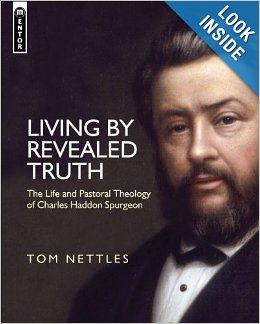
51ChIFpKbLL._SX258_PJlook-inside-v2,TopRight,1,0_SH20_BO1,204,203,200_Living by Revealed Truth: The Life and Pastoral Theology of Charles Haddon Spurgeon  by Tom Nettles. When this book arrived I was initially taken aback by its format. The size is something like 9 inches by 7.5 inches and the text is laid out in double-column. In other words, this is a textbook on Prince of Preachers. Don’t go into it thinking it will be a biography along this lines of Marsden’s Jonathan Edwards or Gordon’s Calvin, instead approach it more as a treasure trove of research on Spurgeon. Nettles isn’t interested in a flowing narrative, as he opts instead to insert Spurgeon’s pastoral theology at various points along the way. For example, after recounting Spurgeon’s baptism at Isleham Ferry the book proceeds to discuss his theology and practice of baptism before returning to Spurgeon’s burgeoning ministry. Some will think this method stilts the story, but I think it’s appropriate for what this book is trying to accomplish. All in all, this would be an incredible addition to any Spurgeon aficionado’s library.

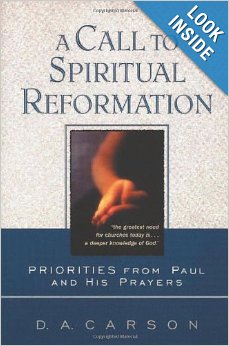
51MSDBHfD2L._SY344_PJlook-inside-v2,TopRight,1,0_SH20_BO1,204,203,200_A Call to Spiritual Reformation: Priorities from Paul and His Prayers by DA Carson. Few books on prayer have influenced my life as much as this one, so I try to read it every year or so. Carson’s aim is to get ordinary Christians to know God in such a way that they become devoted to “spiritual, persistent, biblically minded prayer” (16). To do this the great Canadian exegetes eight different Pauline prayers to show what they tell us about God and how such knowledge should overflow into our prayer lives. The book displays Carson’s profound wisdom as he challenges and comforts in all the right places. I am not sure how someone can read it and not find their practice of prayer transformed according to Scripture. Tolle lege!

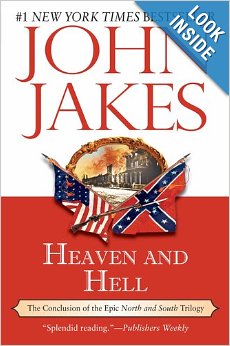
51iC7c30RxL._SY344_PJlook-inside-v2,TopRight,1,0_SH20_BO1,204,203,200_Heaven and Hell by John Jakes. This is the final installment of Jakes’ sweeping historical fiction trilogy on the Civil War. I found this volume to be the weakest in the trilogy, probably because the era of Reconstruction just can’t compete with the tension and gravity of the antebellum and Civil War years. Like the previous two volumes, this one simultaneously weaves multiple story lines together, but unlike the first two some of these story lines aren’t terribly compelling. I actually almost gave up on the book halfway through because it seemed like Jakes was going to make the postbellum period more devastating than the Civil War for the trilogy’s protagonists. Nevertheless, I persevered and am glad I did so. Jakes is especially strong in capturing the darker realities of our country’s dealings with Native Americans in the 1870s, as well as the terrible rise of the Ku Klux Klan. This was an entertaining and informative series.

51YyqHKz7+L._SY344_PJlook-inside-v2,TopRight,1,0_SH20_BO1,204,203,200_Void Moon by Michael Connelly. Sooner or later I was bound to read a Connelly book I didn’t like and Void Moon was it. The narrative focuses on fresh-out-of-prison Cassie Black, who attempts one final heist so she can get out of Dodge. The plot line is promising, but it eventually gets mired in verbose descriptions and narrow perspectives. Make no mistake, the book is entertaining, just in a James Patterson kind of way. And Connelly is better than that.

Recent Reads

I love to read. By God’s grace I am a pretty fast reader; I usually read a couple books each week. I find it helpful to summarize my thoughts on each book and I offer those thoughts in hopes that you will be encouraged to either read or pass over the given title.

51iHv7dPnAL._SX258_BO1,204,203,200_Evangelical Theology: A Biblical and Systematic Theology by Michael Bird. Bird set out to write a “gospel-centered theology for Christians who seek to define themselves principally by the gospel” (21). Whereas Calvin united his theology under the glory of God, Luther under justification by faith, and Barth under the self-disclosure of the Triune God, Bird believes the gospel is the integrating point of Christian theology. “The gospel comprises the beginning point, boundary, and unifying theme for all theology” (45). The book’s strengths and weaknesses flow from the gospel being the penultimate boundary for Christian theology and fellowship. The method is undeniably helpful as no loci of theology is ever far from the gospel announcement. Yet, such a center-bounded approach predictably flattens common areas of divergence as exemplified in Bird’s discussion of God’s fatherhood, eschatology, the extent of Christ’s atonement, church polity, and sacraments. That I felt the center-bounded work falls short of the ideal probably reveals my own convictions on our centered-bounded age.

51PA2NBZ71L._SY344_PJlook-inside-v2,TopRight,1,0_SH20_BO1,204,203,200_The Lord’s Supper by Thomas Watson. This little book represents a prototypical Puritan view of Matthew 26:26-28. Although neither Watson’s dedication nor the publisher’s preface say so, I bet the book is consists of a couple sermons on Matthew’s recounting of the Supper’s institution. The first three chapters unfold five particulars about the gospel-banquet from Matthew 26: 1) the Author, 2) the Time, 3) the Manner, 4) the Guests, and 5) the Benefits. In time Watson quickly dispatches of the two extremes to be avoided, transubstantiation and memorialism. For those familiar with the various views, Watson advocates for and elaborates on the teachings of Calvin. I found his discussion of the kind of heart necessary to partake of the Supper to be most helpful.

411ZASBFp0L._SY344_PJlook-inside-v2,TopRight,1,0_SH20_BO1,204,203,200_Fit to Burst: Abundance, Mayhem, and the Joys of Motherhood by Rachel Jankovic. Some might think it strange to read a book written by a woman for other women, but my wife resonates deeply with Jankovic’s perspective on motherhood, so I read in order to better understand and serve her work as a mom. Jankovic is a fabulous writer, which makes perfect sense when you discover she is Doug Wilson’s daughter and Nate Wilson’s sister. Her uncommon wisdom and wit are preeminently displayed in meditations on misplaced “grace” in discipline, the relationship between faithfulness and stress, and the value of cultivating a lively sense of humor in parenting. Fit to Burst is one of the most enjoyable books I’ve read this year.

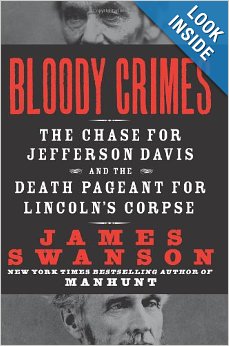
51D1IDjfseL._SY344_PJlook-inside-v2,TopRight,1,0_SH20_BO1,204,203,200_Bloody Crimes: The Funeral of Abraham Lincoln and the Chase for Jefferson Davis by James Swanson. A few years ago Swanson published Manhunt: The 12-Day Chase for Lincoln’s Killer and that story of John Wilkes Booth’s demise was a smashing success. Bloody Crimes functions as something like a sequal to Manhunt, answering the question, “What happened next?” The funeral procession for Lincoln is fascinating and the pictures included paint a vivid portrait of a nation in spectacular mourning. Swanson weaves the death pageant alongside the chase for and capture of America’s “lost man,” Confederate President Jefferson David. Although not as suspenseful as Manhunt, the sequel proves Swanson to be a master of narrative fiction.

3 Books Every Pastor Should Read: On Elders

Books are some of the best friends a pastor can have. How to know which friends to have is quite difficult, for as the inspired Preacher said, “Of making many books there is no end” (Ecclesiastes 12:12). Check back through the archives to see my suggestions on pastoral ministry, preaching, and prayer. Here are my offerings on the topic of elders:

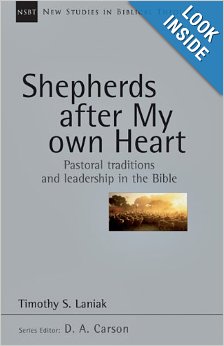
41EHMHxLkAL._SY344_PJlook-inside-v2,TopRight,1,0_SH20_BO1,204,203,200_Shepherds After My Own Heart: Pastoral Traditions and Leadership in the Bibleby Timothy Laniak. If you aren’t familiar with the “New Studies in Biblical Theology” series edited by Don Carson, this would be a great introduction to a great collection. It can be easy to glean all your understanding of elders from the familiar New Testament texts, but to do so would mean you’d miss out on a treasure trove of truth in the Old Testament. Laniak will help you see the full sweep of shepherding in all of Scripture and make pointed application to contemporary pastoral ministry.

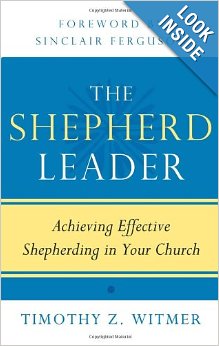
41hsuMz9d6L._SY344_PJlook-inside-v2,TopRight,1,0_SH20_BO1,204,203,200_The Shepherd Leader: Achieving Effective Shepherding in Your Church by Timothy Witmer. Witmer’s book, for me, is the undisputed favorite when it comes to the work of an elder. The first part of the book condenses Laniak’s work, but the real value is found in his four-part matrix of shepherding as: knowing, feeding, leading, and protecting. Clearly grounded in Scripture and overflowing in practical wisdom, this book will either encourage or blow up your current shepherding paradigm. And trust me, the encouragement will be sweet and the explosion will be awesome.

41nsAFBy0HL._SY344_PJlook-inside-v2,TopRight,1,0_SH20_BO1,204,203,200_Finding Faithful Elders and Deacons by Thabiti Anyabwile. In 2 Timothy 2:2 Paul says, “What you have heard from me in the presence of many witnesses entrust to faithful men who will be able to teach others also.” This work will help current elders obey that command as they identify and train future elders. Thabiti takes each biblical qualification for deacon or elder, defines it, and then offers sound advice for how you can see if that qualification is present in a man’s life. For example, when thinking about the requirement that elders be hospitable Thabiti encourages, “Note those men who seem to make a ministry of greeting everyone at church . . . Note the men who help those in need . . . Does the man open his home? . . . Remember that homes are not the only place to show hospitality . . . Does he accept invitations to hospitality?” I have probably seen more fruit from this book in personal discipling relationships than any other.

HONORABLE MENTIONS

Biblical Eldership by Alexander Strauch. The prose is dry, but the exegesis on all the relevant texts is super helpful.

The Elder and His Work by David Dickson. An older work on elders from a Presbyterian perspective, but this would be quite useful for elder training.

Recent Reads

I love to read. By God’s grace I am a pretty fast reader; I usually read a couple books each week. I find it helpful to summarize my thoughts on each book and I offer those thoughts in hopes that you will be encouraged to either read or pass over the given title.

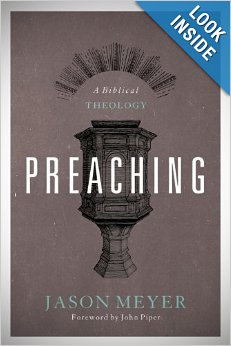
419r4qrrEGL._SY344_PJlook-inside-v2,TopRight,1,0_SH20_BO1,204,203,200_Preaching: A Biblical Theology by Jason Meyer. Many contemporary books on preaching can be quite selective, as some narrowly rely on word studies of “preaching” words, while others largely neglect the Old Testament. Jason Meyer believes his new book fills a void, for he writes, “This book is unique in that I think the whole Bible alone can give a holistic answer to what preaching is” (14). I would affirm the book’s uniqueness. He defines preaching as “stewarding and heralding God’s word in such a way that people encounter God through his word.” Men who preach in this way will be men who preach faithfully, fearlessly, and reverently. I originally planned to do an extended review of the book, but I found myself having nothing to offer but effusive praise. So if you preach regularly or hope to preach regularly, tolle lege!

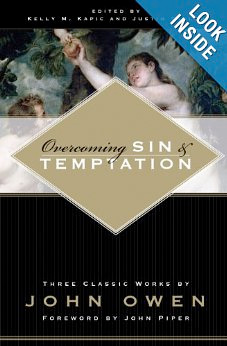
Overcoming SinOf Temptation by John Owen. Few books have impacted my view of the Christian life with such simplicity and clarity as this one. It is short, relatively easy (at least for an Owen book), and packs a punch. Owen takes the words of Christ in Matthew 26:41 – “Watch and pray, that ye enter not into temptation” – and offers a two-part scheme for resisting temptation, “Watch and pray.” Housing all kinds of pithiness and profundity that one can expect from the Prince of Puritans, this book might just be the handiest guide to slaying temptation you can find outside of sacred Scripture. Chapter seven’s discussion of heart-watchfulness is particularly helpful.

41Fd-bA0ViL._SY344_BO1,204,203,200_A Guide to Prayer by Isaac Watts. Many know Watts as a hymn writer (“When I Survey,” “Joy to the World,” etc.), but he was also a great theologian and logician. This book on prayer is a treasure trove of wise application on how to pray in light of Scripture. While the book is somewhat short, Watts leaves no stone unturned as he manages to provide enough principles and directions to fill an encyclopedia. One of the most lasting takeaways from the book – for me – will be the relationship between prayer and spiritual conversation throughout the day. Watts writes, “The reason we lack words for prayer is because we speak so little of Christ throughout the day.” A great book on that most difficult of devotions.

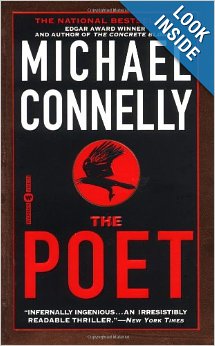
51J+3sfwMwL._SY344_PJlook-inside-v2,TopRight,1,0_SH20_BO1,204,203,200_The Poet by Michael Connelly. This was the first Connelly book I’ve read that didn’t focus on Harry Bosch or Mickey Haller, and Connelly shines as usual. The Poet follows crime-beat reporter Jack McEvoy as he responds to his brother’s apparent suicide in the only way he knows how: investigative journalism. McEvoy’s investigation uncovers a serial killer of unprecedented cunning who target homicide cops, each one haunted by a case he could never crack. About a third of the way into the book I thought I had identified the killer and was well on my way to accusing Connelly of being predictable, but shame on me! In typical Connelly fashion the books ends with a surprise twist; thus the only thing predictable about his books seems to be their very unpredictability. The Poet was originally published in 1997, thus the reader gets an idea for what journalism was like before internet dominance. For example, one character is amazed that one picture can be downloaded on the internet in just four minutes. This of course comes after a detective’s amazement at the strange device called a “digital camera.” A fun and gripping read.

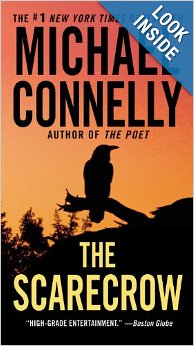
51sJBOCKG5L._SY344_PJlook-inside-v2,TopRight,1,0_SH20_BO1,204,203,200_The Scarecrow by Michael Connelly. This is the second Jack McEvoy book, but Connelly published it twelve years after The Poet. By reading the two volumes back to back I got a clear sense at how technology and the internet revolutionized journalism in just over a decade. Whereas the first volume revels in the novelty of dial-up connections and digital cameras, this second book is stocked with server farms, complex computer hacking, and cutting edge security software. The Scarecrow finds McEvoy forced out of the Los Angeles Times due to budget cuts (thanks to the rise of internet journalism) and once again stumbling into the discovery of a notorious infidel. Page-turning suspense at its finest.

Recent Reads

I love to read. By God’s grace I am a pretty fast reader; I usually read a couple books each week. I find it helpful to summarize my thoughts on each book and I offer those thoughts in hopes that you will be encouraged to either read or pass over the given title.

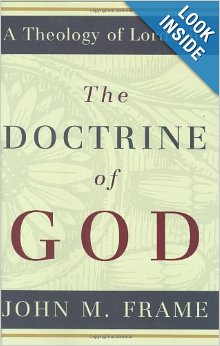
51wVlydXswL._SY344_PJlook-inside-v2,TopRight,1,0_SH20_BO1,204,203,200_Doctrine of God by John Frame. I started this book back in April with a few men in our church and finally wrapped it up this week, thus completing eighteen months of learning at the feet of the good perspectivalist. DG is the second volume in his “Theology of Lordship” series, but for a variety of different reasons I read the other three first. Frame’s extended discussion on the lordship attributes of control, authority, and presence are illuminating and helpful, and I anticipate returning to his discussion on “some problem areas” (Human Responsibility and Divine Sovereignty, The Problem of Evil) for quite some time. Frame flips the script on the traditional ordering of theology proper choosing to deal with the acts of God before the attributes of God. I prefer the traditional ordering and Frame’s order seems to be novel for the sake of being novel. Nevertheless, the book is quintessential Frame – winsome, clear, and abounding with triads. Andy Nasselli is right to say, “If John Frame were a basketball player, he would shoot only 3s.”

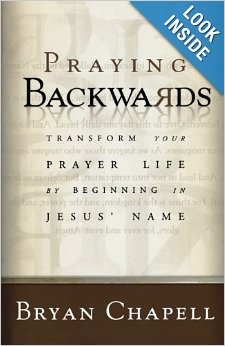
41Vz5Ive8XL._SY344_PJlook-inside-v2,TopRight,1,0_SH20_BO1,204,203,200_Praying Backwards: Transform Your Prayer Life by Beginning in Jesus’ Name by Bryan Chapell. “Actually saying the words “in Jesus’ name” at the beginning of our prayer is not really the point. The message of this book is to put first in our hearts what those words are supposed to mean: ‘I offer this prayer for Jesus’ sake'” (15-16). Chapell succeeds in challenging Christians to be less self-oriented in prayer and more concerned with Christ’s priorities. Like his other popular books, the book is taken up with too much illustration for my taste. But this is a valuable contribution nonetheless.

41nsAFBy0HL._SY344_PJlook-inside-v2,TopRight,1,0_SH20_BO1,204,203,200_Finding Faithful Elders and Deacons by Thabiti Anyabwile. I reread this book yesterday in preparation for our church’s monthly men’s gathering and, my my, this book is good! Anyabwile writes, “This book does not delve into a lot of detailed argumentation, hoping instead to make application easily and quickly” (15).  He takes each qualification for office-bearers and then shows how that requirement will manifest itself in a man’s life. I’ve always felt that Thabiti has uncommon wisdom and he pours it out in abundance in this book. Few books get the “Required Reading” stamp, but this is one of them.

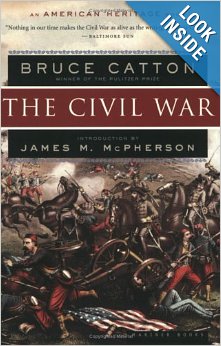
51TYBE4ZNGL._SY344_PJlook-inside-v2,TopRight,1,0_SH20_BO1,204,203,200_The Civil War by Bruce Catton. For years I have heard of Catton’s legendary status as a Civil War historian, but I’ve never got around to reading any of his work. That was until I raced through his somewhat brief overview (400 pages) of the war. What a feast! Catton is endlessly readable and clearly informed on the nuances at play throughout the War of Rebellion. This would be an excellent introduction for anyone unfamiliar with that most unfortunate period on our nation’s history.

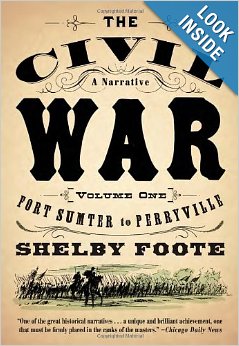
5101kGyxGDL._SY344_PJlook-inside-v2,TopRight,1,0_SH20_BO1,204,203,200_The Civil War Vol. 1: Fort Sumter to Perryville by Shelby Foote. Where Catton is brief, Foote is exhaustive – but not exhausting.  This is careful historical narrative at its finest. Foote manages to provide all the necessary details – mini-biographies of key characters, political intrigues, battle plans/results, etc. – and still retain a pace that serves the overall story. I originally planned to move immediately on to Volume 2 in the series, but I think I need a break from the “Brother Against Brother” war. Reading military history is often an emotional endeavor, at least for me, and The Civil War is downright dispiriting. Yet, fascinatingly dispiriting . . . so I shall return.

Recent Reads

I love to read. By God’s grace I am a pretty fast reader; I usually read a couple books each week. I find it helpful to summarize my thoughts on each book and I offer those thoughts in hopes that you will be encouraged to either read or pass over the given title.

ThoughtsonPublicPrayerlgThought on Public Prayer by Samuel Miller. First published in 1849, Miller’s work goes unnoticed today because I have a suspicion that public prayer is absent from most churches today. This book won’t convince a pastor of public prayer’s necessity as much as it will, Lord willing, increase his ability in public prayer. The first three chapters are somewhat dated as Miller interacts with the contemporary issues of his time, but chapters 4-6 will search the heart. Miller unfolds eighteen “frequent faults” in public prayer and no pastor is outside his scope of criticism. After such bruising Miller offers fourteen “characteristics of a good public prayer” and five “means of attaining excellence in conducting public prayer” to heal the heart. This book has been in print for over 160 years for good reason; if you regularly lead in public prayer it will be of great benefit.

51HxHQBhZeL._SY344_PJlook-inside-v2,TopRight,1,0_SH20_BO1,204,203,200_Family Ministry Field Guide: How Your Church Can Equip Parents to Make Disciples by Timothy Paul Jones. Jones wants to see churches move toward his vision of family ministry: “Intentionally and persistently coordinating a church’s proclamation and practices so that parents are acknowledge, trained, and held accountable as primary disciple-makers in the children’s lives” (33). The book will be most useful for churches wanting to transition from a more programmatic, activity-driven approach to the family ministry approach Jones advocates. Since I came into the book with similar convictions already in place, I didn’t find much that was challenging or new.

41qMDAuSQbL._SY344_PJlook-inside-v2,TopRight,1,0_SH20_BO1,204,203,200_Trained in the Fear of God: Family Ministry in Theological, Historical, and Practical Perspective edited by Randy Stinson and Timothy Paul Jones. I usually stay away from edited volumes because the quality of content can deviate so much from chapter to chapter. Not so with this volume. It’s strength lies in the three fold evaluation of family ministry; containing chapters from a theological, historical, and practical perspective. I found the historical section to be particular helpful in understanding the various factors contributing to the evolution of family ministry throughout the centuries. David Prince’s chapter on “The Pastor’s Home as Paradigm for the Church’s Family Ministry” was illuminating and challenging. A valuable resource for the pastor’s study.

LoveandWarLove and War (North and South Trilogy #2) by John Jakes. I loved the first installment of Jakes’ North and South as he quickly captured my attention and ably painted a picture of various American lifestyles found in the 1840-1850s. Thus, I had high expectations for volume two – the longest in the series – as it it completely occupied with The Civil War. Jakes surpassed my expectations in a most surprising way as he chose the lesser known byways of the War of Rebellion. Characters find themselves at the bottom of Charleston harbor inventing a dramatic change in naval warfare; in engineer battalions and military rail crews; inside the horrors of a Confederate prison; across the pond in London as the South builds its ships. The dramatic tension of the first novel is successfully replicated in the second, even if it requires the death of a major character (and my personal favorite). Insightful, harrowing, and real . . . I am eager to read the final volume.

3 Books Every Pastor Should Read on Worship

Books are some of the best friends a pastor can have. How to know which friends to have is quite difficult, for as the inspired Preacher said, “Of making many books there is no end” (Ecclesiastes 12:12). I recently suggested three books every time-strapped and budget-strapped pastor should read on pastoral ministry, preaching, and prayer.

In light of my post “Preaching Pastors as Worship Pastors” it seems wise to let the next installment of “3 Books Ever Pastor Should Read” be on the topic of worship.

41anShWMyZL._SY344_PJlook-inside-v2,TopRight,1,0_SH20_BO1,204,203,200_Give Praise to God: A Vision for Reforming Worship. This is a Festschrift in honor of James Montgomery Boice, a man who loved to worship. Eighteen different chapters are offered under four parts: 1) The Bible and Worship, 2) Elements of Biblical Worship, 3) Preparing for Biblical Worship, and 4) Worship, History, and Culture. Lig Duncan’s two chapters alone are worth the price of the book as he answers the question “Does God Care How We Worship?” with clarity and power. He helpfully encapsulates Reformed worship as being simple, biblical, transferable, flexible, and reverent. Other chapters of contemporary importance are Rick Phillips’ work on The Lord’s Supper, Terry Johnson’s discussion on singing the psalms, and Bob Godfrey’s evaluation of worship and the emotions. This book covers an astonishing amount of ground on the topic of worship and every chapter drips with biblical conviction. A most invaluable addition to your library.

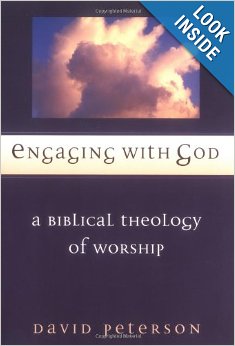
41NOBZWpRYL._SY344_PJlook-inside-v2,TopRight,1,0_SH20_BO1,204,203,200_Engaging with God: A Biblical Theology of Worship by David Peterson. Peterson’s seminal study on worship must be reckoned with. He defines worship as “an engagement with God on the terms that he proposes and in the way that he alone makes possible.” He then moves on to show the nature of worship according to the Old and New testaments. He talks of worship in the New Covenant primarily as service and edification, thus he minimizes – somewhat unfortunately – the worshipful nature of a congregation’s public gatherings. He understands this reality, but in some ways is reacting against the Australian milieu in which he writes. Petersons’ tone is irenic and responsible, I don’t know of another resource that will so ably provide a pastor with the biblical foundation for understanding worship.

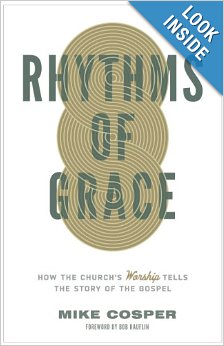
41BD8kstwuL._SY344_PJlook-inside-v2,TopRight,1,0_SH20_BO1,204,203,200_Rhythms of Grace: How the Church’s Worship Tells the Story of the Gospel by Mike Cosper. I bought this book thinking it would be a decent addition to the conversation on worship, but oh how I underestimated Cosper! He brings together the best of all that has been published on worship and then puts his Cosper-like curve on the subject. The “One, Two, Three” framework he offers is quite useful: worship has one object and author (God), two contexts (gathered and scattered), and three audiences (God, the church, and the watching world). Every pastor and church member should read chapter nine,”Sing, Sing, Sing,” which offers uncommon wisdom on the topic and rightly challenges Christians to move from being a critic to a participant. An excellent work not to be underestimated.

HONORABLE MENTIONS

Christ-Centered Worship: Letting the Gospel Shape Our Practice by Bryan Chapell. The prose is dry and the structure is one of a textbook. Yet, Chapell’s historical sensibility and clear grounding in Scripture will help every pastor examine his church’s liturgy.

Worship Matters: Leading Others to Encounter the Greatness of God by Bob Kauflin. The book is directed mostly toward music leaders, but Kauflin’s wisdom is always a joy to hear or read.

Books for Elder Training

Pastoral Ministry

The pastoral epistles1 are best friends to a young pastor like myself. With only nine months of lead pastor ministry under my belt I find myself always turning to these friends for wisdom.

One particular area of focused study in recent months has been Paul’s instruction regarding the installation of elders. Everyone seems to know the qualifications Paul gives for elders in 1 Timothy 3 and Titus 1, but fewer know – or at least talk about – Paul’s wisdom about installing such qualified men. In Titus 1 Paul said to his young church planter, “This is why I left you in Crete, so that you might . . . appoint elders in every town as I directed you” (1:5). The first thing we see is Titus exhorted to urgency as Paul apparently doesn’t want Titus to be lazy in the appointment of elders. But Titus 1:5 needs to always be balanced by 1 Timothy 5:22, where Paul says, “Do not be hasty in the laying on of hands.” So, be urgent and patient. From these two passages I get my conviction that churches should be patiently urgent in installing men for elder leadership.

At our church, this maxim has played out in us spending eight months observing which men are qualified and already doing the work of eldering. We identified those men and then put them in five-months of “elder candidate training.”2 The training involves, on average, three monthly meetings3 along with many books to read, lectures to listen to, and response papers to write. I am always fascinated with and challenged by the resources other churches use for elder training, so I thought it could be useful to provide a list of the books we are using at IDC.

Most of these books are read in their entirety, but from a few we are only reading selected chapters.

BIBLE & THEOLOGY

  • IDC Elder Confession of Faith4
  • The King in His Beauty by Tom Schreiner
  • God’s Big Picture by Vaughn Roberts (UR)5
  • Delighting in the Trinity by Michael Reeves (UR)
  • What is Reformed Theology? by RC Sproul (UR)

ECCLESIOLOGY

  • What is the Mission of the Church? by Kevin DeYoung and Greg Gilbert
  • A Display of God’s Glory by Mark Dever
  • The Deliberate Church by Mark Dever and Paul Alexander
  • What is a Healthy Church? by Mark Dever (UR)

PASTORAL MINISTRY

  • The Shepherd Leader by Timothy Witmer
  • Faithful Preaching by Tony Merida        
  • Finding Faithful Elders and Deacons by Thabiti Anyabwile (UR)

THE CHRISTIAN LIFE

  • The Practice of Godliness by Jerry Bridges
  • Humility by CJ Mahaney (UR)
  • The Gospel & Personal Evangelism by Mark Dever (UR)
  • Sex, Romance, & The Glory of God by CJ Mahaney (UR)
  • A Neglected Grace: Family Worship in the Christian Home by Jason Helopoulos (UR)
  • Mortification of Sin by John Owen (UR)
  • Rhythms of Grace by Mike Cosper (UR)
  • The Secret Key to Heaven by Thomas Brooks (UR)

—————————————————————————————————————————

  1. 1 & 2 Timothy, Titus.
  2. We are about to wrap up our second month.
  3. The meetings normally run about three hours.
  4. An adaptation of the 1689 Baptist Confession.
  5. “UR” signifies a book read for The Upper Room, a monthly gathering for all the men in our church. It’s aim is to disciple men to lead in the home and the church.