Recent Reads

I love to read. By God’s grace I am a pretty fast reader; I usually read a few books each week. I find it helpful to summarize my thoughts on each book and I offer those thoughts in hopes that you will be encouraged to either read or pass over the given title.
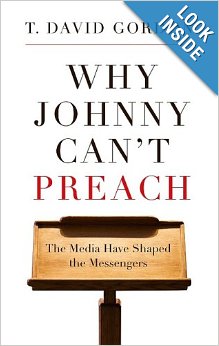
411yqOuLXhL._SY344_PJlook-inside-v2,TopRight,1,0_SH20_BO1,204,203,200_Why Johnny Can’t Preach: The Media Have Shaped the Messengers by T. David Gordon. Gordon wrote this book while completing “fairly severe” treatment for stage III cancer. He thought, “Before I die, I must express my opinion on this subject.” The subject is what Gordon calls “an ordinarily impoverished pulpit.” He believes “the average Christian family in the average pew in the average church on the average Sunday” suffers from less than mediocre preaching. The book’s polemical tone will be off-putting to some, but Gordon’s arguments are unique and merit attention. As a media ecologist, Gordon believes the pulpit’s decline is linked to our society’s evolution from being a language dominated culture to an image dominated culture. Fewer and fewer pastors read carefully and write critically, and are therefore ill-equipped to adequately deal with linguistic realities of preaching. Not every reader will agree with Gordon’s prognosis of modern preaching, but his argument needs to be heard.
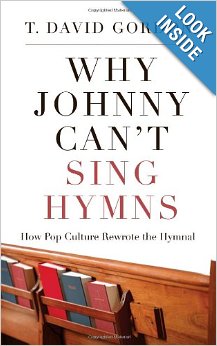
41IGKjf0SLL._SY344_PJlook-inside-v2,TopRight,1,0_SH20_BO1,204,203,200_Why Johnny Can’t Sing Hymns: How Pop Culture Rewrote the Hymnal by T. David Gordon. Gordon followed his book on preaching with one on worship music. The main thesis of this work is that contemporaneity has become the primary criteria for deciding what song is sung in an average worship service. I think Gordon largely succeeds in showing how contemporaneity, alongside the ubiquity of pop music, has rendered many contemporary liturgies inert and transcendent-less. This book is intentionally more descriptive than prescriptive, which is helpful as it reduces the bite of Gordon’s often polemical tone. Chapter 12 on “Strategic Issues” is worth every pastor’s consideration. Much like my final thought on Why Johnny Can’t Preach, not every reader will agree with the thesis of Why Johnny Can’t Sing Hymns (contemporaneity being detrimental to biblical liturgy), but the argument is sufficiently cogent to merit attention.
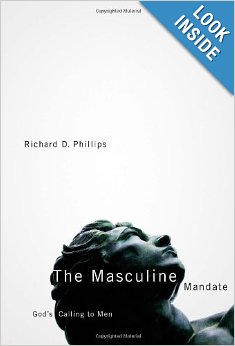
41LVictxJoL._SY344_PJlook-inside-v2,TopRight,1,0_SH20_BO1,204,203,200_The Masculine Mandate: God’s Calling to Men by Rick Phillips. I reread this book in preparation for a monthly men’s meeting we have at our church and I was reminded afresh why TMM is my favorite book on biblical masculinity. Phillips sees Genesis 2:15 as paradigmatic for godly masculinity; “The LORD God took the man and put him in the garden of Eden to work it and keep it.” These two verbs (work and keep) are subsequently expounded and applied to virtually every area of a man’s life. Phillips’ past career in the military ensures the book is sufficiently strong in tone, and he successfully corrects the errors of John Eldridge’s Wild at Heart in a mere two pages. His chapters on marriage and parenting are the best, filled with lifelong wisdom.
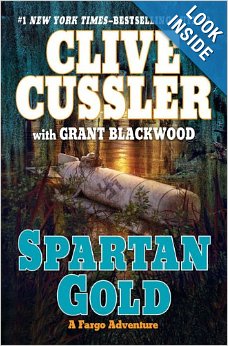
51lfzEeQXeL._SY344_PJlook-inside-v2,TopRight,1,0_SH20_BO1,204,203,200_Spartan Gold by Clive Cussler. For several years a friend has told me to read Cussler and it wasn’t until last week that I actually got around to it. Spartan Gold,  the first volume in Cussler’s “Fargot Adventure” series, is a breezy collision of Indiana Jones and National Treasure. The plot is predictable, but the pages still turn quickly. If formulaic fiction is your cup of tea, Cussler is right up your alley.
Recent Reads

I love to read. By God’s grace I am a pretty fast reader; I usually read a couple books each week. I find it helpful to summarize my thoughts on each book and I offer those thoughts in hopes that you will be encouraged to either read or pass over the given title.

514E3Dc6DNL._SY344_PJlook-inside-v2,TopRight,1,0_SH20_BO1,204,203,200_Biblical Preaching: The Development and Delivery of Expository Messages by Haddon Robinson. This is a book eminently worthy of consideration. Preachers looking for a theological defense of expository preaching will have to turn to Peter Adam or John Stott. Yet, the lack of substantive theological meat does not mean that a feast cannot still be had. There is undoubtedly a place for extended rumination on the practice of preaching; it’s development and delivery. Robinson’s work is indeed a landmark contribution to this field. His emphasis on clarity in exposition is a timely and timeless concentration. It was the apostle himself who asked the Colossians to pray that he would make clear the mystery of the gospel, for that “is how I ought to speak” (Col. 4:4). Young preachers and old preachers alike need to be consistently confronted with the imperative of clarity in preaching, and this book will challenge and encourage unto that end.

41xu1EwyqyL._SY344_PJlook-inside-v2,TopRight,1,0_SH20_BO1,204,203,200_Worship by the Book edited by DA Carson. I am not sure why it took me so long to read this book, but I glad I finally did. The book largely consists of three chapters articulating worship practices from the viewpoints of an Anglican (Mark Ashton), Baptist (Kent Hughes), and Presbyterian (Tim Keller). These chapters follow Carson’s mammoth first chapter on the construction of a theology of worship. It’s is complex and clunky – he acknowledges as much on page 26 – but careful reading will be immensely rewarded as he leaves few stones unturned in defining worship according to the good book. Being a Baptist I appreciated Hughes chapter, particularly for its simplicity and historical sensibility. I find, overwhelmingly, the most common ground with Keller’s adaptation of Calvin’s liturgy as a via media between “Contemporary Worship” and “Historic Worship.” The inclusion of numerous appendices showing various resources and liturgies each tradition employs only increases the book’s value.

41FCuh8XO-L._SY344_BO1,204,203,200_Does God Desire All to Be Saved? by John Piper. This is definitely more a booklet than a book, as it comes in at 66 pages. Piper doesn’t pave any new ground in the discussion on how a Reformed view of God’s election of people unto salvation is compatible with His desire that all men come to repentance. Instead, Piper puts his usual – and helpful – flair on the discussion. The crux of his argument is found in the following paragraph,

The difference between the Reformed and the Arminians lies not in whether there are two wills in God, but in what they say this higher commitment is. What does God will more than saving all? The answer the Arminians give is that human self-determination and the possible resulting love relationship with God are more valu- able than saving all people by sovereign, efficacious grace. The answer the Reformed give is that the greater value is the manifestation of the full range of God’s glory in wrath and mercy (Rom. 9:22–23) and the humbling of man so that he enjoys giving all credit to God for his salvation (1 Cor. 1:29).

Piper’s little work would be a useful resource for pastors discipling church members through this timeless discussion. Download a free PDF here.

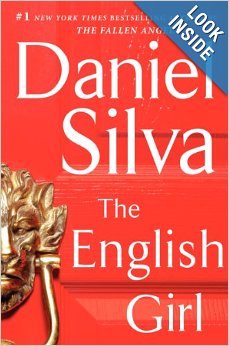
51+pCHlWCkL._SY344_PJlook-inside-v2,TopRight,1,0_SH20_BO1,204,203,200_The English Girl by Daniel Silva. This is the latest volume in Silva’s series on Gabriel Allon, the art-restorer and master Israeli spy. I appreciate Silva for being able to write an intriguing storyline void of the salacious content that often dominates the genre.  The English Girl‘s narrative wanders at times and felt predictable (it may just be that I’ve read too many of these books to be surprised anymore), but I still enjoyed this modern update of classic Cold War espionage.

Recent Reads

I love to read. By God’s grace I am a pretty fast reader; I usually read a couple books each week. I find it helpful to summarize my thoughts on each book and I offer those thoughts in hopes that you will be encouraged to either read or pass over the given title.

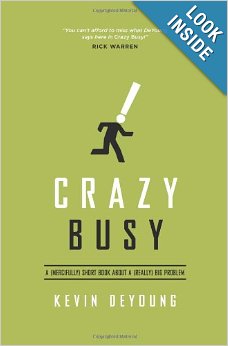
31h23Sg7uVL._SY344_PJlook-inside-v2,TopRight,1,0_SH20_BO1,204,203,200_Crazy Busy: A (Mercifully) Short Book About a (Really) Big Problem by Kevin DeYoung. DeYoung’s latest book is a exactly what the subtitle claims to be. After identifying three dangers of busyness, DeYoung proceeds to offers seven diagnoses to consider along with “one thing you must do.” I’ve seen a couple prominent reviews express various concerns with the book, but I believe DeYoung succeeds in what he sets out to do: call people to examine their state of busyness in light of Scripture. His diagnoses are wise and he correctly reminds us that “the reason we are busy is because we are supposed to be busy” (101). I do wish the final chapter on “The One Thing You Must Do” had more emphasis on public communion with Christ – he emphasizes private communion through the Word and prayer – but regular communion with Christ indeed is the one thing we must do. If one wants more practical suggestions on fighting foolish busyness, see David Murray’s “Addendum to Crazy Busy.”

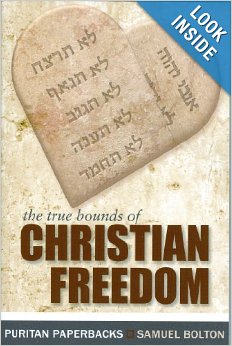
51zrymgbeiL._SY344_PJlook-inside-v2,TopRight,1,0_SH20_BO1,204,203,200_The True Bounds of Christian Freedom by Samuel Bolton. First published in 1645, this book addresses the timeless issue of a Christian’s freedom as it relates to Jesus’ declaration, “If the Son therefore shall make you free, ye shall be free indeed” (John 8:36). In typical Puritan fashion, Bolton pulls from this verse one overarching doctrine: “That there is a true and real freedom which Christ has purchased, and into which He has brought all those who are true believers “(19). The rest of the work is occupied with answering six questions related to the law and freedom. Bolton reveals himself to be a master of precision and distinction in regards to the thorny issues of law and gospel. He correctly understands how the Christian can be simultaneously free from and bound to the law; freed from it as a covenant, but not as a rule. Chapter 5 on “Performance of Duty” and its articulation of the “nine differences between legal obedience and evangelical obedience” is solid gold.

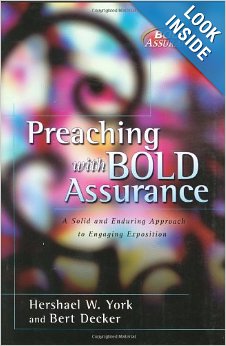
51bfrsGNLOL._SY344_PJlook-inside-v2,TopRight,1,0_SH20_BO1,204,203,200_Preaching with Bold Assurance by Hershael York and Bart Decker. This book feels more focused on communication than preaching, which makes sense seeing that Decker developed the “Bold Assurance” brand as a corporate communication program. “The Decker Grid” (always coupled in the book with an obligatory trademark) has practical wisdom, but isn’t clearly tethered to Scripture. If one goes into this book thinking about it as being more of a guide to broader communication principeles, there is profit to be had. The final four chapters on delivery will challenge any man who stands in a pulpit to think hard about his effectiveness in communicating the Word.

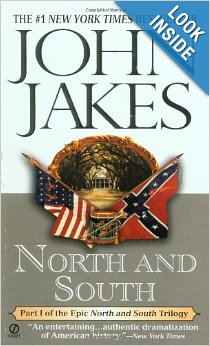
51bprZ22dwL._SY344_PJlook-inside-v2,TopRight,1,0_SH20_BO1,204,203,200_North and South by John Jakes. This is the first volume in Jakes’ historical fiction trilogy on the Civil War. The value of good historical fiction is that it gives the reader a sense of life in the respective period. North and South traces the story of two families – one based in Pennsylvania and the other in South Carolina – from 1842-1861. Jakes’ ably employs a colorful cast of characters to capture the various nuanced worldviews that would lead to secession. One thing I enjoy about historical fiction is watching the author position his characters to be in the heart of key events, and Jakes manages to get characters to The Mexican-American War, Harper’s Ferry, and Fort Sumter. A fun page turner.

Recent Reads

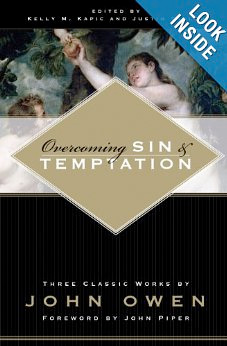
Overcoming SinThe Mortification of Sin by John Owen. I try to reread this book once every year because it’s just that good. Every Christian needs continual encouragement in the fight against sin and Mortification has some mighty fine fuel for the fight. Owen is a surgeon of the soul par excellence, for he cuts and heals in all the right places. The book reveals Puritan pithiness at its best; for example, “Mortification from a self-strength, carried on by ways of self-invention, to the end of a self-righteousness, is the soul and substance of all false religion in the world,” and, “Do you mortify? Do you make it your daily work? You must always be at it while you live; do not take a day off from this work; always be killing sin or it will be killing you.”

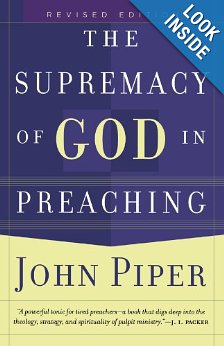
41aW95Yh5uL._SY346_PJlook-inside-v2,TopRight,1,0_SH20_The Supremacy of God in Preaching by John Piper. This book is short, just over 100 pages, but packs a punch typical of Piper. He defines preaching as “expository exultation” and then unfolds that theme in two parts: 1) Why God Should Be Supreme in Preaching, and 2) How to Make God Supreme in Preaching: Guidance from the Ministry of Jonathan Edwards. Although originally published in 1990, the book remains a clarion call to contemporary preachers to pursue “gravity and gladness” in preaching. One of the few books on preaching that, I think, will survive in print for decades.

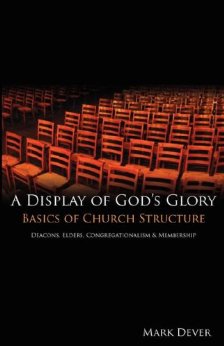
41cx5DxHIsL._SY346_A Display of God’s Glory by Mark Dever. The finest primer on congregationalist polity that I’ve read. While some readers might want more detailed explanation on various congregational convictions, the book’s aim to provide the “basics of church structure” and it succeeds. A strength of the book is the emphasis Dever places on church unity as a primary aim and fruit of biblical governance. He has a masterful discussion on what issues merit congregational involvement and which issues congregations should joyfully defer to installed leadership. This is an excellent training resource for elder-led congregational churches.

51bam5XeGTL._SY346_PJlook-inside-v2,TopRight,1,0_SH20_The Fifth Witness by Michael Connelly. For better or worse (probably the latter), the majority of my fiction reading squarely falls into the “mystery/suspense/detective/lawyer” genre, a genre Michael Connelly dominates. The Fifth Witness is the most recent volume in his Mickey Haller series and Stephen King calls it, “One of the most bone-crunching courtroom dramas you’ll ever read.” I love Connelly because he steers clear of the gratuitous content permeating so many bestsellers today; mystery alone drives the story and captures the readers interest. Anyone familiar with Connelly knows he is a master of surprise endings and The Fifth Witness won’t disappoint in this area.

3 Books Every Pastor Should Read: On Preaching

Books are some of the best friends a pastor can have. How to know which friends to have is quite difficult, for as the inspired Preacher said, “Of making many books there is no end” (Ecclesiastes 12:12). Last week I suggested three books on pastoral ministry that every time-strapped and budget-strapped pastor should read. Here are my offerings for that most essential duty of ministry, preaching:

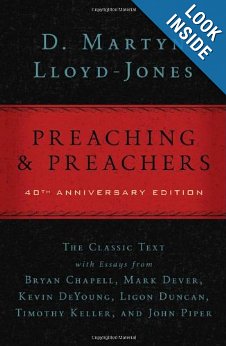
41aOmdoo-sL._SY346_PJlook-inside-v2,TopRight,1,0_SH20_Preaching and Preachers by Martyn Lloyd-Jones. In 1969 Lloyd-Jones traveled across the pond to deliver a series of lectures on preaching at Westminster Theological Seminary in Philadelphia, which were published as Preaching and Preachers in 1972. “The Doctor” still has great relevance for preachers more than forty years later. Lloyd-Jones writes from the presupposition that preaching “is the primary task of the Church and the Christian minister.” It’s here that you find the timeless declaration that preaching is, “Logic on fire!” Also, the chief end of preaching “is to give men and women a sense of God and His presence.” You won’t agree with everything the good doctor thinks, but I promise he will make you think about preaching and preachers in a challenging way.

51+9sj57iqL._SY346_PJlook-inside-v2,TopRight,1,0_SH20_Between Two Worlds: The Challenges of Preaching Today by John Stott. In this book Stott manages to cover an incredible swath of material. He covers the history of preaching, contemporary challenges to preaching, theological foundations for preaching, and practical considerations for preaching. In other words, there is something for everyone in this book! Of particular help are his chapters on preaching with “Sincerity and Earnestness” and “Courage and Humility.”

41YcnBUV4+L._SY346_PJlook-inside-v2,TopRight,1,0_SH20_Faithful Preaching: Declaring Scripture with Responsibility, Passion, and Authenticity by Tony Merida. This book sure seems to fly under the radar in discussion on preaching resources, but Merida is useful on so many levels. The book is broken down into four parts: 1) Trinitarian Convictions for Expository Preaching, 2) How Busy Pastors Prepare Christ-Exalting Expository Messages, 3) Watching Our Life and Doctrine, & 4) Preaching the Gospel in Our Generation. I enjoy how Merida interacts with relevant sources while remaining accessibly warm in presentation and wise in application. This book will encourage any seasoned preaching in his ministry and give any young preacher sound practices to employ.

HONORABLE MENTIONS

The Supremacy of God in Preaching by John Piper. The only reason this book isn’t in the top three is it’s brevity; it comes in right around 100 pages. Buy it, read it, and preach the greatness of God.

Speaking God’s Words: A Practical Theology of Preaching by Peter Adam. Another lesser known book. You need a strong theology of preaching and this book offers you one.

Book Review: Finally Free by Heath Lambert

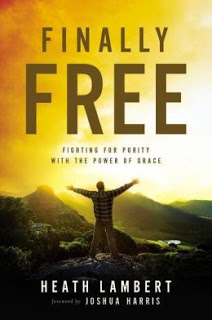
FinallyFreeCarl Trueman has said, “Internet pornography is probably the number one pastoral problem in the world today.” Heath Lambert’s Finally Free: Fighting for Purity with the Power of Grace is a welcome contribution this most pressing problem. Lambert is the executive director of the National Association of Nouthetic Counselors and an associate professor of Biblical Counseling at The Southern Baptist Theological Seminary.

FILLING THE GAP

“This book is not about pornography. You can find countless book about pornography,” Lambert writes in the introduction (11). Some approach the issue by addressing the damage pornography does, still others spill much ink in showing people how to think about pornography. While not doubting the dignity of such approach, Lambert aim to fill a gap in the conversation, namely, “I want to share with you the amazing depth and effect Christ’s power to eradicate pornography from your life. Whether you struggle with pornography yourself or are trying to help someone who struggles, I have good news for you: no matter how intense or long-standing the struggle, it is the work of Jesus Christ to set people free from such sin” (12).

With his purpose articulated Lambert goes on in chapter 1 to explain the nature of grace. He encourages readers that, “It is possible to be free from pornography. Because of his grace, God sent his Son to pay the penalty for the sins we all commit. When you believe in God’s grace toward you, you get God’s righteousness” (19). And this righteousness is experiential. Lambert rightly remarks that the popularity of all things “gospel-centered” runs the risk of created people who delight in discussing the gospel’s power rather than experiencing the gospel’s power. “The danger in our day is taking grace for granted and not considering how to make it practical” (19). In order to make the fight for purity practical, the rest of Lambert’s book illuminates eight strategies in the fight.

EIGHT GOSPEL-CENTERED STRATEGIES

The eight strategies are:

  1. Using Sorrow to Fight Pornography
  2. Using Accountability to Fight Pornography
  3. Using Radical Measures to Fight Pornography
  4. Using Confession to Fight Pornography
  5. Using Your Spouse (or Your Singleness) to Fight Pornography
  6. Using Humility to Fight Pornography
  7. Using Gratitude to Fight Pornography
  8. Using a Dynamic Relationship with Jesus to Fight Pornography

Lambert warmly weaves sound exegesis to case studies to practical exhortation with each strategy. His unfolding of godly sorrows true nature and fruit in chapter two is strikingly clear – in a good way. The chapter on accountability provides seven principles that “strengthen the common weakness we find in most accountability relationship” (47) and I found it to be the best wisdom on true accountability I’ve read. One choice nugget is when he writes, “You will not experience dramatic change in your struggle as long as you use accountability to describe your sins instead of declaring your need for help in the midst of temptation” (49).

One strength of Lambert’s work is that he is blunt when necessary, but the bluntness never contains unnecessary bite. It is always clearly tethered to Scripture and filled with a warmth that you would expect from such a seasoned counselor. For example, in the chapter on humility Lambert begins, “Here is the point I want you to get in this chapter: If you look at pornography, you are arrogant” (108, emphasis original). Using James 3:13-16 as his guide, Lambert so ably reveals the biblical reasoning for his pointed claim, that I think every reader will cry “Amen!”when he reads, “You can look at porn, or you can be humble. But you cannot do both” (109).

An added advantage of Lambert’s work is that each chapter concludes with with a list of next steps or questions for the reader’s consideration. Instead of being useless accessories these final meditation give pastors, small groups leaders, accountability partners, and struggling individuals direct counsel of where to go in light of each chapter’s truth.

ONE CONCERN

One concern I have with the book is housed in the final strategy of “Using a Dynamic Relationship with Jesus to Fight Pornography” (135-148). Using John 6 as his guide, Lambert says, “Your relationship with Jesus is bigger than your struggle with porn” (142). His desire is to move the reader from being a consumer of porn to a consumer of Christ; “You need to be the kind of person who fights for a close relationship with Jesus more than you fight against pornography.” Amen! The three main ways we do this, he writes, is by reading God’s word, praying God’s word, and singing God’s word. Again, amen! But here’s my concern: Lambert never clearly ties these practices to the church. They are individual disciplines that a porn fighter should strive after to be sure, yet it would have been better for Lambert to show how these practices are enriched by and encouraged through the local church. I also believe that Lambert would have been wise to discuss how the Lord’s Supper – what we might call “seeing God’s word” – can fuel the fight for purity. The connection seems especially right in light of Lambert’s using John 6 to drive the chapter.

FILLING THE GAP INDEED

This concern need not be overblown. Lambert’s book is a fantastic grace-fueled filling of the gap in modern literature on the subject. If you took out the chapter on “Using Your Spouse (or Your Singleness)” to Fight Pornography” the book is actually a field manual for killing all kinds of sin. Surely one can use sorrow, humility, gratitude, and confession to slay various, fleshly enemies. I kept thinking that his strategies find a happy partner in the directives Owen provides in The Mortification of Sin.

I agree that “internet pornography is probably the number one pastoral problem in the world today.” Any Christian – pastor, small group leader, lay member – should read this book.

Book Details

  • Author: Heath Lambert
  • Title: Finally Free: Fight for Purity with the Power of Grace
  • Publisher: Zondervan
  • Paperback: 176 pages
  • Score: 8 out of 10

Recent Reads

51JkeL52aUL._SY346_PJlook-inside-v2,TopRight,1,0_SH20_The King in His Beauty: A Biblical Theology of the Old and New Testaments by Tom Schreiner. Schreiner is one of my favorite living biblical scholars. My appreciation is not rooted in the fact that I almost always agree with his conclusions (his understanding of the millenium withstanding), but in the fact that his scholarship is marked by such devotional warmth. He argues, along the lines of Graeme Goldsworthy, for the kingdom of God being “a central theme of the entire Bible” (xiii). There is pronounced emphasis on God’s lordship in the work and I deeply appreciated his focus on how human beings, created in the image of God, are supposed to relate to their Lord and King with praise, obedience, and fear. His handling of the Old Testament narrative is stimulating. Those familiar with his New Testament Theology and Pauline Theology won’t find much new in this book’s correlative sections, but that need not be seen as a weakness. The summary conclusions and interludes woven throughout the book make it all the more useful as a discipleship and teaching resource.

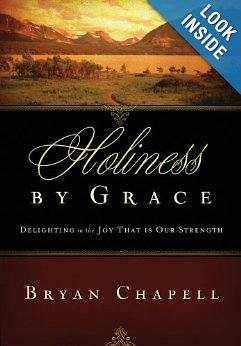
51yqM5L3ElL._SY346_PJlook-inside-v2,TopRight,1,0_SH20_Holiness by Grace: Delighting in the Joy that is Our Strength by Bryan Chapell. Chapell’s aim is to help his readers delight in grace and employ “it to avoid the dangers of both legalism and licentiousness” (13). The work is something of a precursor (by about ten years) to the sanctification debates that peaked in “gospel-centered” circles a few years ago. While Chapell largely succeeds in his attempt to navigate between sanctification’s Scylla and Charybdis, “Holiness by Grace” is largely occupied with steering Christians away from the danger of legalism. I found the book to be longer than necessary, weighing in at 243 pages. One might say the length is due to the careful navigation required to get through the dangerous waters of law and licence, but I think it’s actually caused by undue repetition and over illustration. His chapters “Constrained by the Law of Freedom” and “What’s Discipline Got to Do with It?” are useful contributions to the contemporary conversation. Additionally, his discussion on the changing and unchanging dynamics between God and His children (196) is most helpful.

41RQxwQERdL._SY346_PJlook-inside-v2,TopRight,1,0_SH20_The Pastor as Scholar & The Scholar as Pastor: Reflections on Life and Ministry by John Piper & D.A. Carson. This “book” consists, primarily, in two addresses given by the authors at a 2010 event under the same title. The book’s strength lies in a unified call for deep and clear thinking about God, but not letting such thinking be divorced from personal faithfulness or congregational edification. Carson’s discussion on reading habits is useful for any pastor or scholar. He writes, “If you can develop the habit of reading different things at different speeds, you might be wise to read some books slowly, evaluatively, and often; to read some books briskly, once but comprehensively; to skim other books to see what they are saying; to dip into still other books to see if they add anything to a discussion or merely say the same old things with a minor twist here and there” (97). Overall, this work on loving God with all your mind is worth rumination.

41t4ptakMWL._SY346_PJlook-inside-v2,TopRight,1,0_SH20_The Secret Thoughts of an Unlikely Convert: An English Professor’s Journey into the Christ Faith by Rosaria Champagne Butterfield. Butterfield’s story of conversion is fascinating and fascinatingly written (no surprise here, see the subtitle). I came to the book expecting an engaging narrative of one surprising conversion, but what I didn’t expect were pots of gold along the way. Take these two quotes: “Sin, when unrestrained, infantilizes a person” (108) and “There is no greater enemy to life-breathing faith than insisting on cultural sameness” (115). Throughout the book I was continually struck by God’s powerful use of ordinary pastors to bring “unlikely” converts to faith. This is a book from which anyone can profit.

51V-+WzNP-L._SY346_PJlook-inside-v2,TopRight,1,0_SH20_Housewife Theologian: How the Gospel Interrupts the Ordinary by Aimee Byrd. I read this book in order to see if I wanted to buy a couple copies for the IDC Bookshelf at our church. Byrd’s phrase of “Housewife Theologian” is an excellent designation and, I trust, a biblical one. On the whole, Byrd’s book would be useful for any woman to read although I think it would be strengthened by a more discernible flow of argument. The journaling questions at the end of each chapter make this book a great resource for discussion and discipleship. Click here to listen to an excellent Christ the Center interview on this book.

3 Books Every Pastor Should Read: On Pastoral Ministry

Books are some of the best friends a pastor can have. How to know which friends to have is quite difficult, for as the inspired Preacher said, “Of making many books there is no end” (Ecclesiastes 12:12). In an effort to serve time-strapped and budget-strapped brothers in ministry I am starting a, somewhat weekly, series called, “3 Books Every Pastor Should Read.” Here are my offerings for pastoral ministry:

512DYED3F0L._SY346_PJlook-inside-v2,TopRight,1,0_SH20_The Christian Ministry by Charles Bridges. For me, this is the best book ever written on pastoral ministry. Bridges’ dates (1794-1869) are too late to label him a Puritan in the historically defined sense of the term, but he is cut from the Puritan cloth in his view of pastoral ministry. The breadth of his work is astonishing as he leaves few stones unturned in relation the pastor and his ministry. Of particular help are his sections on “General Causes of the Want of Success in the Christian Ministry” and “Causes of Ministerial Inefficiency Connected with our Personal Character.” His wisdom on applying Scripture to various cases in pastoral ministry is timeless.

51utElkT1IL._SY346_PJlook-inside-v2,TopRight,1,0_SH20_Lectures to My Students by Charles Spurgeon. Every Friday afternoon Spurgeon would address the students of his Pastors’ College and this book collects the cream of the crop. In it you’ll find the Prince of Preachers riffing on everything from watchfulness to prayer to preaching to gesturing in sermons. Spurgeon had the rare balance of gravity and levity, and Lectures will challenge any pastor to greater reverence and joy in his ministry.

41hsuMz9d6L._SY346_PJlook-inside-v2,TopRight,1,0_SH20_The Shepherd Leader by Tim Witmer. When P&R published this book in 2010 I doubt the power at be could have known how well it would sell. It was Westminster Bookstore’s top-seller for 2010 (selling 6,000 copies in the first two days of availability) and ended up being P&R’s second most popular book of that year. This tells me that Witmer’s work filled a gap lacking in modern conversations on shepherding. The book is helpfully broken down into three parts, giving valuable teaching the principals and practices of biblical shepherding. His four-part matrix of shepherds “knowing, feeding, leading, and protecting” the sheep is the stuff on which faithful shepherding can grow.

HONORABLE MENTIONS

The Cross and Christian Ministry by DA Carson. Kevin DeYoung said this book is destined to become a classic, and I couldn’t agree more.

Brothers We are Not Professionals by John Piper. This is Piper doing what he does best, biblical meditation that causes the soul to search.

Recent Reads

Worship MattersWorship Matters: Leading Others to Encounter the Greatness of God by Bob Kauflin. Every Thursday I meet with a couple guys from IDC who lead us in song each week. It is our normal practice to review the upcoming service and discuss a book related to worship/music. We just wrapped up Kauflin’s book and the work is engaging and wide-ranging. He leaves precious few stones unturned in his aim to help worship leaders “think carefully about what we do and why we do it” (19). A valuable, and dare I say necessary, read for every pastor and worship leader.

Pastor's JustifcationThe Pastor’s Justification: Applying the Work of Christ in Your Life and Ministry by Jared Wilson. I hadn’t planned on reading this book until I saw Joe Thorn call it “an instant classic.” Although it didn’t join my personal list of classics, it is nevertheless a quick and encouraging read. Wilson is a gifted writer who understands the need for pastors to continually feed from the never ending well of Christ’s grace. I found his chapters on “The Holy Pastor” and “The Watchful Pastor” to be particularly encouraging.

Overcoming SinIndwelling Sin by John Owen. Owen’s Mortification of Sin and On Temptation are among the most influential books I’ve ever read. So it’s a bit of a mystery to me why it took me so long to read the other member of his “sanctification trilogy.” More complex and difficult (i.e., quintessentially Owen)  than Mortification and Temptation, Indwelling Sin works out the doctrine that “there is an exceeding efficacy and power in the remainder of indwelling sin in believers, whit a constant inclination and working toward evil.” Owen exhaustively covers the dominion, power, opposition, and deceit of the sin that still resides in the Christian’s heart. I found myself frightened anew by the power of sin, but comforted even more so by the Spirit’s power to overcome the enemy within.

Priority of PreachingThe Priority of Preaching by Christopher Ash. This book was given away at T4G in 2010 and somehow got lost in my library. I recently discovered it, and how thankful I am! Ash writes, “This little book is written for ordinary ministers who preach regularly to ordinary people in ordinary places, who may dream of being world-renowned but are going to be spared that fate” (12). The book’s treasures are too many to count and surely will encouraged any pastor discouraged in the power of expository preaching. Chapter three, “Preaching that Mends a Broken World,” is worth the price of the book.

Empire of Blue WaterEmpire of Blue Water: Captain Morgan’s Great Pirate Army, the Epic Battle for the Americas, and the Catastrophe That Ended the Outlaws’ Bloody Reign by Stephan Talty. This title proves my wife’s assertion that my appetite for history can be ridiculous. Captain Morgan is much more than a brand of famous rumbulllion, he is one of the most notorious pirates to every wreak havoc in the Caribbean. With captivating prose Talty recounts Morgan’s stunning ascension to power and equally stunning fall from it. The fascinating details of Caribbean piracy in the mid-17th century are set against the backdrop of the Spanish Empire’s inevitable fall. Talty puts some historical meat on the Hollywood’s Pirates of the Caribbean, and the meat is quite tasty.

Book Review: Preaching? by Alec Motyer

9781781911303There is something special about sitting down with an old saint in ministry and hearing reflections on his time as a steward of the gospel. It reminds me of sitting down over dinner with my grandfather and hearing his thoughts on any past historical event I can think of.

In Preaching? Simple Teaching on Simply Preaching, Alec Motyer offers personal reflections on a lifetime of preaching. Motyer is the former principle of Trinity College in Bristol, England. He is, probably, best known for his work on Isaiah and serves as the Old Testament editor for The Bible Speaks Today commentary series.

A driving conviction for Motyer is, “Not everyone can be what people call a ‘good preacher’, but no one need be a ‘bad preacher'” (9). Amen! He believes bad sermons are “muddled sermons” and thus wants to offer “one way to go about” preaching with clarity. Clear preaching comes from a six step process that includes examination, analysis, orientation, harvesting, presentation, and application.

A SIX-STEP SCHEME

Examination is “the basic task of the expositor: to understand each word, sentence, and verse in a passage, each section of a narrative or book” (39). One strength of Motyer’s work is that he packs an astonishing amount of wisdom into each chapter, providing examples, ruminations, and delightful diatribes on every step in his scheme. For example, the chapter on examination contains discussion on the use of various translations and commentaries, alongside encouragement to develop a personal plan for capturing everything one learns in examination of the text. Analysis and orientation represent finding the passage’s main point, or what Motyer calls “the plan” (50).

After settling on the passage’s plan the preacher is to set about harvesting the text and preparing it for presentation. The chapter on presentation is worth the price of the book alone. Here Motyer writes, “The reason for preaching is the will of God: He has commanded it; the content of preaching is the Bible, God’s revealed truth; the objective of preaching is application, to bring the Word of God to bear on the hearers; but the art of preaching is presentation” (89). He rightly advocates careful thinking about how to divide the text into headings for presentation and encourages headings that are memorable and “snappy.” Another strength of Motyer’s work is that he doesn’t impose a wooden or universal structure on the preacher’s preparation and presentation. One instance of this humble balance is when he discusses the use of notes, outlines, and manuscripts. His conclusion is that “we must each learn to do our own thing – whatever leaves us with liberty in our preaching, and makes the congregation fell they are being addressed without obstruction” (97).

The final step is application and here Motyer is typically balanced in the wisdom he provides. Sound preaching makes it “plain to our hearers both what the chosen Scripture means and what we must do about it” (103). An unexpected delight in the book is the sagacious humor Motyer employs throughout. Permit me an extended quote of his view on illustrations to provide an example:

Illustrations in a sermon don’t help me, and I have to keep reminding myself that they do help other people, and must therefore be thoughtfully used. When listening to a sermon, if I sense an illustration coming on, I want to call out to the preacher, ‘Yes, yes, we all know that. Please get on with the job!’ . . . To tell you the truth, I have come to the conclusion that the chief usefulness of illustrations is to give our hearers a little rest!” (115-116)

FOCUSES AND the FOCUS

With his six-step process delineated Motyer provides two chapters impressing upon the pastor the prominence prayer and personal holiness must have for healthy ministry, saying “It seems to me that the key to an effective ministry is our own personal walk with God” (131). Eternal destinies lie in the hands of a preacher, thus the preacher must be active in prayer. “How else can we face our calling to preach except in the spirit and practice of constant, earnest prayer,” he asks (139).

Motyer ends his work by exhorting preachers to always have “enough ‘gospel’ to save some listening sinner” (141). Christ “should be at the center, ever the Focus of all truth and fully illuminated for every eye” (144). Again, amen.

WE NEED MORE OF THIS

Tim Keller’s endorsement is spot on when he says the book puts “decades of wisdom on expository preaching at the reader’s fingertips.” As I read, I often thought to myself, “We need more of this kind of wisdom.” Wisdom that has decades of experience. Wisdom that is balanced and warm. Wisdom that brings light, heat, and laughter. Alec Motyer offers all this and more in Preaching? Simple Teaching on Simply Preaching, making this book a welcome addition to any pastor’s library.

Book Details

  • Author: Alec Motyer
  • Title: Preaching? Simple Teaching on Simply Preaching
  • Publisher: Christian Focus (September 10, 2013)
  • Paperback: 188 pages
  • Score: 7/10