BT & ST in Preaching

0e733507_helm2ndaryIt ought to be no surprise that the recent resurgence in gospel-centrality has coincided with a renewed concentration on biblical theology. The latter gives weight and meaning to the former.

David Helm, pastor of Holy Trinity Church in Chicago, is no stranger to biblical theology. Through his work with the Simeon Trust he’s trained hundreds of pastors in expositional preaching that’s rooted in biblical theology. He’s also published a perennial best-seller, The Big Picture Story Bible, which eloqently explains the basics of biblical theology for parents and children.

On top of all this, Helm recently published Expositional Preaching in 9Mark’s “Building Healthy Churches Series” in which he says, “The discipline of biblical theology offers preachers a certain benefit. It prevents intellectual or moralistic preaching. To put that positively, it brings you – legitimately – to the heart of the Christian gospel from particular texts in the Bible. It keep the main things the main thing.”

BT & ST IN PREACHING

So what is it about the resurgence of biblical theology – a very resurgence he’s helped promote – that concerns good Mr. Helm? That’s what Mark Dever asked in a recent 9Marks interview. Furthermore, does systematic theology have any place in preaching? Helm says, “Yes!” and his answer is oh so good.

Listen in to this four and a half minute clip as Helm provides sound counsel on how to faithfully integrate biblical theology and systematic theology in your preaching.

Out of the Pulpit

Out of the Pulpit

From the very beginning of our church plant I endeavored to preach no more than 40 times a year, and so I rounded out 2013 having occupied our pulpit 39 times. From my perspective, it was one of the healthiest things we did all year.

I’ve been around many pastors over the last decade who seemed to protect their pulpit with an iron hand. One mentor of mine said he’d never preach less than 48 times a year. I’ve also heard many a church member say something like, “He has to preach every week. That’s what we pay him for!”

Such sentiment, if left unchecked, will set your church on a trajectory of implosion. Let’s begin to chip away a that ticking time-bomb by considering four benefits of having other men occupy the pulpit.

4 BENEFITS OF HAVING OTHERS PREACH

Protects against senior pastor dependency.Regularly having other men preach creates a culture of shared leadership through shared proclamation. No longer is the senior pastor seen as the only resident Bible teacher. The theological acumen of other men bleeds through as they preach and the congregation will recognize their ability. For example, last year one of our members wanted to better understand the finer points of eschatology. He sought out a man – who was an elder candidate at the time – who had preached several times over the year and revealed himself to be theologically trustworthy and able. I love seeing and hearing such things happen!

If a pastor rarely steps out of the pulpit he loses an opportunity to delegate authority. Nothing builds godly authority in a local church like the faithful heralding of God’s word. Have your elders speak from behind the pulpit with some consistency, then sit back and watch the congregation’s joy in submission increase exponentially.

Provides regular weeks of rest.A pastor needs to have weeks when he is still in the trenches of ministry, but the glorious burden of sermon preparation is borne by another. On average, I spend one week every month out of the pulpit. When used rightly, those weeks are like jet-fuel for joy and longevity in ministry. The soul lightens on weeks like these and enables you to return to the pulpit with Spirit-wrought vigor.

Tests and trains future pastors. You will undoubtedly have men in your church that express a calling for pastoral ministry. Having them fill the pulpit does two things. First, it tests the reality of their ability to teach. Pastors must be able to teach (1 Tim. 3:2) and letting them ascend to the sacred desk functions like an “Exam on Your Calling as a Pastor.” Even if the sermon is a dud, a man truly called to pastor will offer many glimpse of hope during the “dudness.” Second, opening the pulpit trains men for faithful ministry. We want to send out men who are relatively seasoned in pulpit ministry. Your church’s pulpit is the saltiest place for that to happen.

Models expositional listening. This is a point of benefit I cannot overstate: your church will be immensely helped by watching you hear a sermon. Do you want your congregation to have expectancy in hearing God’s word? Do you want them to prepare diligently to hear it preached? Do you want your people to come with hearts ready to respond to God’s word? Having regular weeks out of the pulpit while still being in the congregation enables you to model all those things.

The fall is right around the corner and it’s quite likely you are planning to start a new sermon series. So plan to be out of the pulpit a few times and watch the church your church benefit spiritually.

I see a man cannot be a faithful minister, until he preaches Christ for Christ’s sake – until he gives up striving to attract people to himself, and seeks only to attract them to Christ. Lord, give me this! – M’Cheyne

Power in Sermon Prep

Powerful Preparation

Every preacher surely knows the feeling. Sunday’s coming and he’s yet to settle on a text or outline for his sermon. He fears he will enter the pulpit void of power.

What’s he to do?

Clearly, he must pray for the fresh winds of the Spirit to inflame his soul and give him full insight into God’s word. But is there anything else that one can do? Any dispositions of the heart necessary for power in preparation?

LET THE POWERFUL PREACHER ADVISE

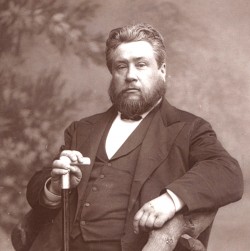
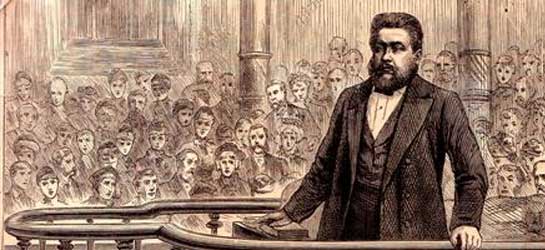
Spurgeon was, by all accounts, a legendary force of power in the pulpit. You don’t get the label “Prince of Preachers” if you aren’t a Christ-exalting, homiletical hurricane. And he trained his pastoral students to yearn for the power of God in preaching. In an address to the annual pastor’s conference over which he presided, Spurgeon remarked on “The Preacher’s Power, and the Conditions for Obtaining It.”

spurgeon_chair1Spurgeon starts by reminding his audience that Sovereign God of the universe purposes to use weak vessels (preachers) to proclaim His treasured Christ. Therefore, these men must preach “by Divine power, or else be total failures.” From where does such power come? “The supernatural force is the power of the Holy Ghost, the power of Jehovah Himself. It is a wonderful thing that God should condescend to work His marvels of grace through men.” Amen!

The Prince calls preachers to long for such power in public, but to remember that “in order to have power in public, we must receive power in private.” It’s in this part of the address that Spurgeon speaks about receiving power in sermon preparation. He says it’s during sermon preparation “the Lord gives the soul saving message, and clothes it with power; He gives it to certain order of people, and under certain conditions.”

So, what are those conditions for receiving the Spirit’s power during sermon prep?

6 CONDITIONS FOR OBTAINING POWER IN SERMON PREP

  1. A simplicity of heart. The Lord pours most into those who are most empty of self. Those who have least of their own shall have the most of God’s. The Lord cares little what the vessel is, whether golden or earthen, so long as it is clean, and disengaged from other uses.
  2. A great humility of mind. It ought not to take much humility for such poor creatures as we are to sit at the feet of Jesus. We ought to look upon it as an elevation of mind for our spirit to lie prostrate before infinite wisdom. Assuredly, this is needful to the reception of power from God.
  3. A singleness of eye. Such a man, trying to hear what God the Lord shall speak, is all ear. He honestly and eagerly desires to know what God’s mind is, and he applies all his faculties to the reception of the Divine communication. Unless you have but one eye, and that one eye sees Christ and His glory in the salvation of men, God will not use you.
  4. A complete subordination to Him. The best of men, must be altogether subordinate to the Word of the Lord.
  5. A deep seriousness of heart. We are so weak, and these Divine inspirations are so weighty, that we are subdued into awe, and there is no room for levity. Brethren, avoid anything like trifling over sermon-making. Do not regard preparation for the pulpit as a trifling thing; and do not rush upon your holy duties without devout preparation for the hallowed service. Make your waiting upon God a necessity of your calling, and at the same time the highest privilege of it. Count it your joy and honour to have an interview with your Master. Get your message fresh from God.
  6. A sympathy with God. The Lord loves to use a man who is in perfect sympathy with Him. God loves to clasp a sympathizing one to His heart, and then to say, “Go, My child, and work in My Name; for I can trust My gospel in thy hands.” Be with God, and God will be with you. Espouse His cause, and He will espouse yours. There can be no question about this.

This is a well of wisdom from which you can drink as you continue to prepare for this weekend. May you receive power in your preparation!

Precisely Packed

Preach_the_Word_wide_t_nv

Meaning moves. Wisdom walks. And precision propels.

Which is why I love definitions. Sometimes you stumble across the definition of a particular term or action that opens the mind to an oh so powerful nuance. I’ve seen this happen in my own ministry when it comes to hearing a pithily packed definition of preaching.

3 LEGS OF UNDERSTANDING

Here are three definitions of preaching that have most shaped my practice:

  • “To know truth as it should be known, to love it as it should be loved, and then to proclaim it in the right spirit, and in its proper proportions.” – Charles Spurgeon, An All Round Ministry, p. 8.
  •  An expositional sermon is a sermon in which “the point of the passage is the point of the sermon, applied to the life of the congregation.” – Mark Dever, quoted in Leeman, Reverberation, 114.
  • “Expositional preaching is empowered preaching that rightly submits the shape and emphasis of the sermon to the shape and emphasis of the biblical text.” – David Helm, Expositional Preaching, 13.

I wonder how these might impact your preaching and sermon preparation. Meditate on them, squeeze out any nuance, and let them compel you to a faithful handling of God’s word.

Preachers as Window Washers

Resound Slider NT

2 Corinthians 4:1-6 is a zenith of apostolic instruction on true preaching.

Pastors would do well to memorize 4:5, where Paul says, “What we proclaim is not ourselves, but Jesus Christ as Lord, with ourselves as your servants for Jesus’ sake.”

HERALDING GOD’S WORD

The verb here for “proclaim” is κηρύσσω, which describes the tone of preaching as “heralding.” If you’ve rightly understood that encountering God’s word through preaching a battle of cosmic proportions, it won’t surprise you to know that “heralding” is military language.

A herald is in times of war what an ambassador is in times of peace . . . The herald would go into enemy territory ahead of an advancing army to warn the enemy of certain destruction unless they accepted the proffered terms for peace. A gospel herald stands with God’s word in hand and proclaims, “Hear ye! Hear ye! Jesus Christ is Lord. All who swear allegiance to his throne will receive eternal life.”

We preachers must ask our unbelieving hearers, “What will you do with this announcement that Jesus is Lord?” Satan wants to blind their eyes in unbelief  and rebellion (2 Cor. 4:4), to keep them as part of His army. But the gospel, the good news of life, is contained in those four words of 4:5: Jesus Christ is Lord. And thus we herald the King who lived perfectly, died sacrificially, rose victoriously, and now reigns supremely. We cry out for them to cry out to Him in faith and repentance. The two eyes of faith and repentance are the only way they will ever see the Son in all his glory. And so we call them to swear allegiance through their seeing of Him.

PREACHING IS WINDOW WASHING

Brother pastor, do not miss the negation contained in 4:5, “. . . what we proclaim is not ourselves,” but Jesus Christ. If you want to be a faithful preacher, rid yourself of notions to use the preaching of God’s word as an occasion to herald yourself. It is dangerous to put much of yourself into a sermon. Sure, short illustrations from personal experience can be useful at times, but such a desire to illuminate truth can easily become an exercise in proclaiming self.

And we dare not tamper with God’s word in that way.

One helpful way of thinking about this is through the analogy of preachers as window washers. God’s word is a window that reveals the glory of Christ. When we stand behind the sacred desk we are to hold up the window of God’s word, and cry out, “Look unto Him! See Him! Behold the glory of God in the face of Jesus Christ.” Our job as preachers then is to scrub that window clean by the clear proclamation of Scripture (2 Cor. 4:2; cf. Col. 4:4).

Putting too much of oneself into the sermon is tantamount to scrubbing the window with clouds of mud and then covering it up with the foil of personal vanity. Our churches won’t see Christ through such dirt. Renounce such disgraceful and underhanded means and herald God’s word by “the open statement of the truth.”

Preacher, you are a window washer. Make the window plain and clear, so they might see Christ!

This post is adapted from my recent sermon, “Preach the Word,” on 2 Corinthians 4:1-6.

A Lord’s Day Reminder for Preachers

02202012_spurgeon

To read Spurgeon’s sermons is to hear and see, as Piper once said, “a bee buzzing around one tree: the cross of Christ.”

In a lecture to his pastoral students entitled “Sermons Likely to Win Souls” Spurgeon said, “People have often asked me, ‘What is the secret of your success?” He answered,

I have no other secret but this, that I have preached the gospel, – not about the gospel, but the gospel – the full, free, glorious gospel of the living Christ who is the incarnation of the good news. Preach Jesus Christ, brethren, always and everywhere; and every time you preach be sure to have much of Jesus Christ in every sermon.

May it be so in pulpits all across the land this day.

A Double Portion for Your Hearers

When The Seats Are Empty
A few weeks ago I mentioned how faithful attendance to their church’s corporate gathering is the most powerful, yet least talked about, way church members can encourage their pastor.

Yet, as every pastor knows, there are two menacing enemies to such encouragement; one is named Summer, and that other goes by the moniker of Holiday.

We know the feeling full well. The school year ends and it’s not uncommon to find the chairs or pews a bit less full in the warm months of the year. Or a national holiday decides to land on a Saturday or Sunday and your flock scatters to four winds of family, fun, vacation, and party.

Summer and Holiday can steal the joy of any preacher.

But they need not succeed in such thievery.

A DOUBLE PORTION OF BLESSING

Earlier this week I listened to an old Piper sermon on Charles Simeon and came across the best way to combat the blues preachers often feel when Summer and Holiday decide to show up.

Simeon face peculiar opposition for much of his ministry. As a way to protest his appointment at Trinity Church the church locked the pew doors on Sunday mornings. The pewholders refused to come and refused to let others sit in their personal pews. Simeon set up seats in the aisles and nooks and corners at his own expense. But the churchwardens took them out and threw them in the churchyard.

This happened for over ten years. And here’s what Simeon said about such discouragement,

In this state of things I saw no remedy but faith and patience. The passage of Scripture which subdued and controlled my mind was this, ‘The servant of the Lord must not strive.’ It was painful indeed to see the church, with the exception of the aisles, almost forsaken; but I thought that if God would only give a double blessing to the congregation that did attend, there would on the whole be as much good done as if the congregation were doubled and the blessing limited to only half the amount. This comforted me many, many times, when, without such a reflection, I should have sunk under my burden. (Moule, 39)

SIMEON’S WISDOM FOR TODAY

The next time time Summer and Holiday creep up on you let Simeon’s wisdom drive you to pray for God to give a double blessing to the congregation that does attend. Who knows? Maybe, in His abounding kindness, there will be as much good done as if the congregation were doubled and the blessing limited to only half the amount.

8 [More] Qualifications for Soul-Winning

Spurgeon on Soul-Winning

On Tuesday the Prince gave us “Seven Qualifications for Soul-Winning – Godward”, those quintessential characteristics God looks for in His servants.

Spurgeon’s next lecture finds him taking up the same them, yet from the “manward” perspective; eight qualities “likely to be approved by the object acted upon, that is, the soul of man.”

There is indeed much crossover with the previous seven qualifications, but the manward qualification poke and prod in unique ways. Here they are with some of Spurgeon’s typical pithiness.

8 MORE QUALIFICATIONS FOR SOUL-WINNING

#1: An ignoramus is not likely to be much of a soul-winner. A man who only knows that he is a sinner, and that Christ is a Saviour, may be very useful to others in the same condition as himself, and it is his duty to do the best he can with what little knowledge he possesses; but, on the whole, I should not expect such a man to be very largely used in the service of God.

#2: There must be about us an evident sincerity. It must be quite clear to your hearers that you have a firm belief in the truths that you are preaching; otherwise, you will never make them believe them. Unless they are convinced, beyond all question, that you do believe these truths yourselves, there will be no efficacy and no force in your preaching. I do beseech you, brethren, speak from your hearts, or else do not speak at all. If you can be silent, be silent; but if you must speak for God, be thoroughly sincere about it.

#3: He must have evident earnestness. If a man is to be a soul-winner, there must be in him intensity of emotion as well as sincerity of heart. What earnestness our theme deserves! We have to tell of an earnest Saviour, an earnest heaven, and an earnest hell. How earnest we ought to be when we remember that in our work we have to deal with souls that are immortal, with sin that is eternal in its effects, with pardon that is infinite, and with terrors and joys that are to last for ever and ever!

#4: He must have an evident love to his hearers. It is very sad when the failure of any ministry is caused by want of heart. Do you not notice that men succeed in the ministry, and win souls for Christ, just in proportion as they are men with large hearts? You must love the people, and mix with them, if you are to be of service to them. There are some ministers who really are much better men than others, yet they do not accomplish so much good as those who are more human, those who go and sit down with the people, and make themselves as much as possible at home with them.

#5: He must have evident unselfishness. A man ceases to bring men to Christ as soon as he becomes known as a selfish man. What are you, my dear brother, that people should all bow down and worship you, and think that in all the world there is none beside you? I tell you what it is; the less you think of yourself, the more will people think of you; and the more you think of yourself, the less will people think of you. If any of you have any trace of selfishness about you, pray get rid of it at once, or you will never be fit instruments for the winning of souls for the Lord Jesus Christ.

#6: He must have holiness of character. When people see that we not only preach about holiness, but that we are ourselves holy men, they will be drawn towards holy things by our character as well as by our preaching.

#7: He must have a seriousness of manner. The most of us, however, are far more inclined to that laughter which doeth good like medicine, and we shall need all our cheerfulness, if we are to comfort and lift up those who are cast down; but we shall never bring many souls to Christ, if we are full of that levity which characterizes some men. There must be a prevailing seriousness about our whole lives, otherwise we cannot hope to lead other men to Christ.

#8: He must have a great deal of tenderness. I like a man to have a due amount of holy boldness, but I do not care to see him brazen-faced and impudent. When you preach, speak out straight, but be very tender about it; and if there is an unpleasant thing to be said, take care that you put it in the kindest possible form.

I believe, brethren, that soul-winning is to be done by men of the character I have been describing; and most of all will this be the case when they are surrounded by people of a similar character. You want to get the very atmosphere in which you live and labour permeated with this spirit before you can rightly expect the fullest and richest blessings. Therefore, may you and all your people be all that I have pictured, for the Lord Jesus Christ’s sake! Amen.


In order that you may impress the Word upon those to whom you preach, remember that it must be impressed upon yourself first. You must feel it yourself, and speak as a man who feels it; not as if you feel it, but because you feel it, otherwise you will not make it felt by others. – Spurgeon