John Reed Miller Lectures

I was invited to give this year’s annual “John Reed Miller Lectures” on preaching at Reformed Theological Seminary, Jackson.

I came into my first pastoral call with no college education. I had no pastoral experience. Simply said, I had no clue what I was doing. But I had enough of a clue about my own inadequacy to know I needed mentors if I was ever to make good in the ministry. Being unmarried and thus unbound with my time, I read far and wide. I asked local ministers whom I deeply respected to meet with me regularly. In time, a company of carers surrounded me. Some were living, some had long passed to glory.   

I entered gospel ministry just a few weeks after turning twenty-one. I had just retired from a comet-like soccer career. It shone for a minute and then disappeared the next. I didn’t know it at the time, but I can see clearly now that my time playing football flickered away when it did because the Lord had decreed that the pulpit, not the pitch, be my calling.

Time has marched ever onward, and I’m now over two decades into pastoral ministry. I still often think to myself, “I don’t know what I’m doing.” But if twenty years have confirmed anything, it’s that I think I can recognize ever better those who do know what they’re doing or did know what they were doing. The Lord has used some of these to comfort and convict, others to strengthen and solidify, and yet more to encourage and exhort. But only two have saved my soul in ministry. One is living, Dr. Sinclair Ferguson, and the other is long gone, Robert Murray M’Cheyne.

So, when it came to the John Reed Miller lectures, I thought, “What do I have to offer? I’m not sure anyone is too interested in what Stone has to say.” But, I figured, there might be more utility in the talks if I centered them on someone who continues to interest so many people—Mr. M’Cheyne.

In the first three lectures, I tried to squeeze out the essentials of preaching as portrayed in M’Cheyne’s ministry. In the final lecture, I offered a series of proverbs on preaching, hoping to be as broadly practical as possible. You can listen to them here:

5 Points on Sermon Introductions

I recently came across the preaching books of J. Ellsworth Kalas. I wish I had known about his teaching earlier in my ministry; it would have saved me no small number of homiletical sins.

In 2003, Ellsworth published a handy little volume, Preaching from the Soul: Insistent Observations on the Sacred Art. The book is almost autobiographical as it unfolds Ellsworth’s conviction that “soul preaching happens when the speaker seeks to deliver not only a message, but his or her own soul, and to deliver it in a way that it reaches the soul of the hearer.” Good preaching inclinations will come from such a view. One such instinct relates to sermon introductions.

5 Points on Sermon Introductions

Ellsworth knows the old way of introducing sermons is not the best today. For most congregations, gone are the days when the preacher could rise to the pulpit and have his first sentence be, “Luke’s gospel tells us . . .”; or, “Today’s text in Colossians announces . . .”

A better way to think about introducing the sermon, Ellsworth says, is to think of it as a social interaction. In the introduction, we say something like, “Sermon and People, I really want you to know one another.” He writes,

We can’t always preach what people want to hear; indeed, we shouldn’t even try, lest we lose our prophetic credentials. But we do want the sermon to be heard, and that won’t happen (especially with unattractive themes) unless we entice interest at the outset. So my business, in the introduction, is first of all, to introduce two dear friends—the congregation I love, and the sermon I love.

Ellsworth then moves to provide five “qualities of a good sermon introduction.” No point is revolutionary. Rather, each one is clear, sane, and practical. I hear too many sermons in my line of work that can’t grasp the basics of an introduction, so here are the five points with some tiny commentary from the book.

  • A good sermon introduction should be intimately related to the subject of the sermon. “This is so obvious, so commonsense, that I would be embarrased to say it if it weren’t that so few introductions accomplish it. Quite simply, an introduction is no good unless it introduces.”
  • The introduction should consist of a single thought. “Listeners aren’t ready for complexity as the sermon begins; indeed, complexity is likely to discourage them from lisenting.”
  • The introduction should usually be brief. “If [the introduction] becomes an end in itself, it fails as an introduction.”
  • Prepare the introduction with special care. “No wasted words here, no fumbling about. The speaker may seem to be very casual, very low key, but never out of control. On the whole, I don’t favor memorizing a sermon, even though I plead strongly for preaching wihtout notes or manuscript. However, if any part of a sermon is justifiably memorized, it is the opening sentences.”
  • The introduction should arouse curiosity and interest. “Most worshipers come to the sermon willing to listen, but also with several competing thoughts on their minds. The preacher’s task is to make the sermon more interesting than those other matters, and than can be quite an assignment.”

A Few Points on Preaching Christ (Part 1)

Preaching Christ is the grand work of ministry. As with all great things, it can sometimes be difficult to describe. Nevertheless, there are at least three points worth discussing when thinking about what it means to preach Christ.

Preaching Christ is a hermeneutic.

Read through the apostolic writings, and you’ll discover their hermeneutical key: Jesus Christ. We must learn to read the Bible like Peter and Paul. Pastoral ministry is in a sad state if the apostles wouldn’t recognize the average pastor’s exegesis. Said differently, we’ve got it all wrong if the apostles couldn’t pass the normal hermeneutics course at a seminary. Dennis Johnson has rightly answered the concern of “whether it is legitimate to learn biblical hermeneutics and homiletics from the apostolic exemplars of the New Testament, because their interpretation by the Spirit of God gave them privileged access to revelatory resources not available to ordinary Christians and preachers.”[1]

The answer is, “Yes! The apostles are the master teachers.” The same Spirit working through them works through us to preach the same Christ.

We can—and should—preach Christ from every genre, theme, image, figure, and event in Scripture. Many helpful grids exist on seeing, and thus speaking, Christ from all of Scripture. For example:

  • Sinclair Ferguson offers four relations: 1) relate promise and fulfillment, 2) relate type and antitype, 3) relate the covenant and Christ, and 4) relate the proleptic participation in salvation and subsequent realization.
  • Sydney Greidanus uses seven ways: 1) the way of redemptive-historical progression, 2) the way of promise and fulfillment, 3) the way of typology, 4) the way of analogy, 5) the way of longitudinal themes, 6) the way of New Testament references, and 7) the way of contrast.
  • David Murray teaches ten ways to preach Christ: 1) in creation, 2) in Old Testament characters, 3) in God’s appearances, 4) in God’s law and commands, 5) in Israel’s history, 6) in the prophets, 7) in the types, 8) in the covenants, 9) in the proverbs, and 10) in the Biblical poets.
  • Gary Millar lists nine ways to get to Christ: 1) following out a theme through every stage to Jesus, 2) jumping immediately to fulfillment in Christ, 3) exposing a human problem and showing Jesus as the solution, 4) highlighting a divine attribute and showing Jesus as its ultimate embodiment, 5) focusing on the diving saving action in the text and salvation, 6) explaining a theological category and tying it to Christ, 7) pointing out sin’s consequences and finding the only remedy in Christ, 8) describing an aspect of human godliness and goodness and showing Christ as the epitome of it, or 9) seeing a human longing and pointing to Christ as its satisfaction.

Preaching Christ is an instinct.

Reject all formulas for preaching Christ. I’m sure we’ve all heard predictable “Christ-centered” sermons where the Savior pops up at the very end as the solution to a perceived problem in the text. We can, and must, do better.

In an article on “Preaching Christ from The Old Testament Scriptures,” Sinclair Ferguson writes,

Many (perhaps most) outstanding preachers of the Bible (and of Christ in all Scripture) are so instinctively. Ask them what their formula is and you will draw a blank expression. The principles they use have been developed unconsciously, through a combination of native ability, gift and experience as listeners and preachers. Some men might struggle to give a series of lectures on how they go about preaching. Why? Because what they have developed is an instinct; preaching biblically has become their native language. They are able to use the grammar of biblical theology, without reflecting on what part of speech they are using. That is why the best preachers are not necessarily the best instructors in homiletics, although they are, surely, the greatest inspirers of true preaching.[2]

Consider a few ordinary illustrations of this point, beginning with the greatest jazz musicians. They have honed their craft to such a degree that not only is improvisation natural, but such instinctual on-the-spot playing is also their greatest joy. They are experts in scales, patterns, and keys. Therefore, playing their instrument is little more than the overflow of lifelong preparation that has sharpened musical instinct.

Preaching Christ must be the same. We have learned the types and contours of redemptive history to such a degree that we can’t help but pour forth Christ from every sermon.

A second illustration is how reading the Bible is like watching a movie with a startling ending. When you watch the movie the second time, you can’t help but interpret everything in light of your new understanding of the end. Once we realize that all Scripture points to Christ, the Spirit constrains us to preach the Savior from every page. We are not to be like Mary in the garden near Jesus’ tomb. Jesus was in front of her, yet she didn’t notice because she didn’t expect Him to be present. We know the full story: He’s there. So we look for Him in the text.

Preaching Christ is an encounter.

“Him we proclaim,” Paul announces in Colossians 1:28. He doesn’t say, “We explain truths about Christ.” No: we preach Christ.

True preaching is a personal encounter with a personal Savior. The truth is a person (John 14:6). An especially instructive text on this point is Ephesians 2:17: “And he came and preached peace to you who were far off and peace to those who were near.” The “he” is Jesus Christ. We must ask, “When did Christ come and preach to the Ephesians?” Various interpretations exist. But the right view is that Christ came to Ephesus through apostolic preaching. Christ still comes through faithful preaching.

The Second Helvetic Confession knows that preaching God’s word is an encounter with the living Word. Chapter 1 has a section titled, “THE PREACHING OF THE WORD OF GOD IS THE WORD OF GOD.” The first sentence confesses, “Wherefore when this Word of God is now preached in the church by preachers lawfully called, we believe that the very Word of God is proclaimed, and received by the faithful.” The Genevan Confession of 1537 says something similar: “As we receive the true ministers of the Word of God as messengers and ambassadors of God, it is necessary to listen to them as to him himself.”

Encountering Christ through the faithful preaching of his word is not a mere experience of the Savior: it’s a confrontation. Hear Paul’s word on this from 2 Corinthians 2:15–17, “For we are the aroma of Christ to God among those who are being saved and among those who are perishing, to one a fragrance from death to death, to the other a fragrance from life to life. Who is sufficient for these things? For we are not, like so many, peddlers of God’s word, but as men of sincerity, as commissioned by God, in the sight of God we speak in Christ.” There is no such thing as a neutral encounter with Christ. You are for Him, or you are against Him. You are in the light or the dark. You are receiving Him or rejecting Him. There is no neutral ground with Christ. Mere sympathy towards Christ has never saved a person. Detachment from Christ has never delivered anyone from sin and Satan.

Stick around for “Part 2,” which thinks about four other points on preaching Christ.

[1] Johnson, Him We Proclaim, 2.

[2] Ferguson, Some Pastors and Teachers, 672.

A Trial for Future Ministers

M'Cheyne

One of my goals for 2017 is to write three hundred words a day on Robert Murray M’Cheyne’s theology and ministry. If I can do that, I’ll have the first draft of my dissertation for The Institution done by November. Every morning I wake up early and, while the house is silent, I find M’Cheyne speaking. He never ceases to stir and shake my ministerial soul.

His Early Joy

This morning I worked on M’Cheyne’s first pastoral post as assistant to John Bonar in Larbert and Dunipace. Larbert was more industrialized, while Dunipace remained somewhat agricultural. The two parishes had more than seven hundred homes, and the spiritual concerns were common to the day. Most shepherding dealt with illness and impending death.

John Bonar was an earnest minister of Christ. He’d regularly visit upwards of thirty homes a day, pressing his people to think of Christ. After visiting Robert, M’Cheyne’s sister said of Bonar, “He seems a very active pushing man—very peculiar, very zealous—quite wrapped up in himself and his parish.” While God honored the preaching Larbert and Dunipace, what’s clear is how the pastor’s visitation work was unusually blessed. Faith became strong; comfort was felt in the last hours of life. The ministers shepherded so well that M’Cheyne told his mother, “There is not a Carroner’s wife takes pain in her head or foot but she has a minister at her door weekly till she gets well.”

I typically assume that preaching God’s word is what most excites every young pastor. After sensing God’s call, and (likely) going through years of training in Bible and theology, every young minister is bursting to herald the gospel. Nothing else energizes a young pastor as ascending to the sacred desk. But M’Cheyne was different. He told his parents he enjoyed the work of visitation more than any other aspect of ministerial life in Larbert and Dunipace.

So much so that he wanted nothing more than to excel at the work.

On the Job Training

M’Cheyne assessed his demeanor during the visits, analyzing how he could have more effortlessly turned the conversation to spiritual matters. One example of such evaluation from his notebook is: “Not simple enough—and yet may some words be carried home” and “spoke plain but not with power.” He even tried different conversational techniques to see which on most ordinarily led to spiritual benefit. Not surprisingly, he found no conversational/spiritual silver bullet.

After several months visiting the people, M’Cheyne wished “the church commissioners would make a trial of a day’s visiting and see how they cast a burden of so many souls on one set of shoulders.”

That wish got my attention.

Examination for Ministry

My theological transition means I’ve given a lot of thought to examinations for ordination. I’m thankful for churches that make ordination mean something. Every pastor should be examined on his knowledge of Bible, theology, church history, sacraments, polity, etc. How else are you to know if he can rightly handle God’s word (2 Tim. 2:15)? Many good brothers have asked me the last few weeks, “What does it matter if you can’t outline the book of Jeremiah? My answer always is, “Why wouldn’t every pastor want to know Jeremiah well enough to outline it on the spot?” Skill with the Word means skill with every part.

I’m also more aware than ever at how insufficient such examination is to test out the full ability needed for faithful ministry. The brightest theological mind may have an astonishing lack of pastoral sensibility. The most skilled exegete may care little for lost souls.

This is where M’Cheyne’s wish comes into play. Is there a better way to assess a potential pastor’s wisdom, compassion, and humility than seeing him in the work of visitation?

I’m not convinced that presbyteries and denominations should add visitation to their examinations. But why wouldn’t every pastoral internship (which should be a prerequisite) aim for regular visitation of members? Think of everything a young man would learn as he observes healthy visitation and engages in it: how to turn conversations to Christ, speak to the hurting, evangelize the lost, exhort the weary, and help the dying. These are the skills of ordinary ministry; these are the skills of love.

Almost every pastor I know would say it’s easier to preach God’s word to hundreds than minister God’s word to one family. But is not the latter what most of our ministry looks like throughout the week?1 So should not our examination process place more emphasis on what is ordinarily the majority of our ministry? Would not our congregations be well served?

————————————————————————–

  1. I’ll leave aside the matter of most churches today having no visitation/shepherding plan. Thus, many pastors don’t have a house-to-house aspect to their ministry. For that, just read The Shepherd Leader.

One of the Best Books on Pastoral Ministry

0851518931mI confess that I’m rarely satisfied with contemporary books on pastoral ministry. I usually find them lacking in the gravitas our calling requires. Sure, they may have sagacity; but as gravity before God is disappearing in our time, it’s not surprising many modern treatments of the sacred office are literary cotton candy—light and hardly filling.

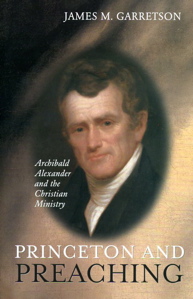
For substance, then, I turn to the men of old. Men like Charles Bridges or Thomas Boston. Or I come to a contemporary author who has laid out a ministerial feast by collating the best from a particular pastor of yesteryear. Yesterday I finished such a feast, Jim Garretson’s Princeton and Preaching: Archibald Alexander and the Christian Ministry.

The Savor of Glad Gravity

The best books on prayer are those that lead you to put down the book to scuff up your knees in the work of prayer. The best books on preaching are those that lead you to fresh zeal to ascend to the sacred desk. The best books on ministry, I’m increasingly convinced, are those that fill the soul with fearful delight regarding shepherding the flock.

The adjective of fearful is appropriate because we must daily resist the devil’s temptation merely to play at pastoring. As James said, “Not many of you should become teachers, for you will be judged all the more severely.” So, we need more fear towards the ministry than we currently have. But we also need more delight in the ministry than we currently have. To hear Christ’s call to the work of man-fishing is one of the sweetest sounds this side of heaven. It means service in the word of God and shepherding the people of God. Christ’s oxen earn their wage by preaching, praying, and pastoring. It’s as though God says, “Here, let me provide for your by commanding you to labor in joy, joy, joy.” Astonishing!

The ministry is one of fearful delight. And Garretson’s book will surely ignite every pastor’s ministry with glad gravity.

[Maybe] The Most Edifying Book I’ve Read This Year

After providing a brief biography of the first professor ever hired by Princeton Theological Seminary, Garretson proceeds to ransack Alexander’s writings for the choicest selections regarding the essentials of pastoral ministry. The great value of Alexander’s teaching is his continual emphasis on “genuine and eminent piety.” Alexander said,

Let every candidate for the ministry, then, as well as everyone that has entered it, aim at high attainments in evangelical piety. Nothing so much as this will be a pledge of eminent usefulness. Nothing else is so fruitful in expedients for doing good, or so efficient in sustaining the spirit amidst the toils of self-denying and arduous vocation, or so sure to bring down upon our labours that blessing which maketh rich.

The chapter titled, “The Preparation of the Preacher’s Heart,” is the finest I’ve every read on the subject. I found it so compelling and convicting that I’ve resolved to read it afresh each week.

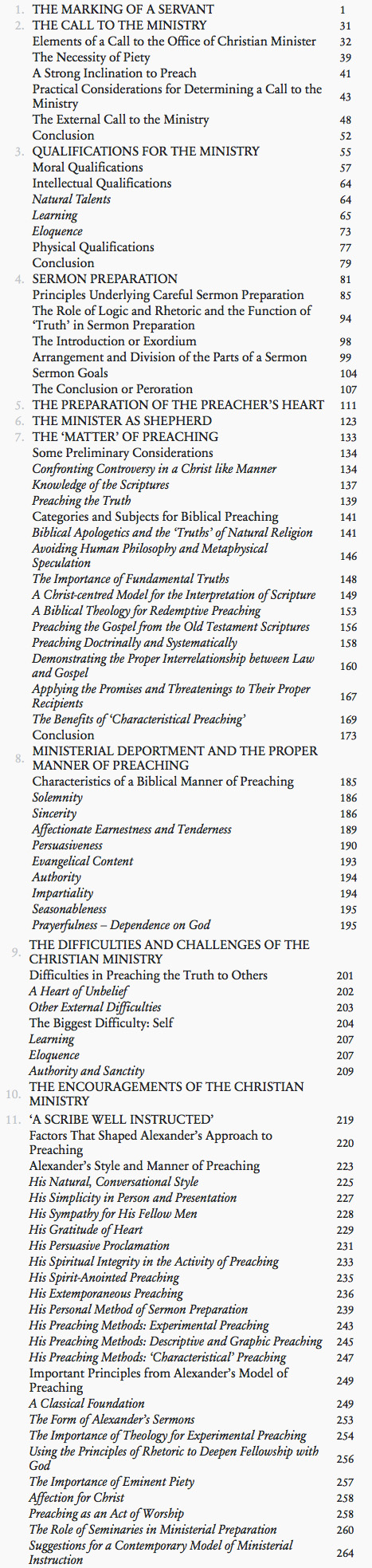
I could go on, but let me just leave you with the Table of Contents to whet your appetite for this feast. If you get Christmas money this week, set some aside to purchase a copy of Princeton and Preaching; it may just save your ministerial life.

Princeton and Preaching - Table of Contents

A Church Polity Boot Camp

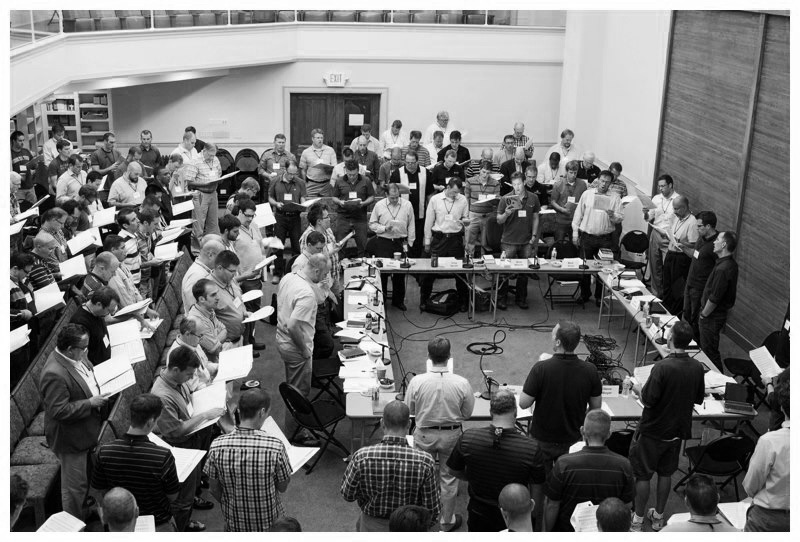
imageToday the other elders at IDC and an elder candidate head out to Washington D.C. for a Weekender at Capitol Hill Baptist Church. What is a Weekender?

The company line says,

Three times a year, 9Marks and Capitol Hill Baptist Church in Washington, D.C. host around one hundred pastors, seminarians, and church leaders from Thursday night to Monday morning for a full-on immersion in the life and inner workings of Capitol Hill Baptist Church, a church committed to living and ministering biblically.

You’ll have box seats for a new members’ class. You’ll be front and center for lectures from Mark Dever on expositional preaching and implementing change. You’ll even go behind closed doors to observe an elders’ meeting. And all that’s just the first half of the weekend.

From leadership to worship to body life and more, it’s all on the table. So bring your questions, and don’t forget to stash some cash for the CHBC bookstall.

In other words, it’s a boot camp on healthy, congregational polity.

Back in the Day

In May of 2012 I went to a Weekender and it was there innumerable ecclesiological convictions clicked into place. At that point in my ministerial life I had no shortage of theoretical convictions about church life and polity, but I’d seen precious few fleshed out ordinary practice. The Weekender at CHBC provided the picture that a lovingly faithful congregational life enjoys painting.

It was oh so timely as I was just about to being gathering a core group for a church plant. Looking back on it now I can’t believe I was walking into planting without many of those convictions having tangible experience attached to them. Yet God, in His kindness, put me into an experiential grinder at the Weekender and I’ve never been the same.

If you are a pastor or church leader, consider going to a Weekender.

Take Much and Leave Little

Any elder or staff member at CHBC will tell you their church is far from perfect. So don’t go to a Weekender to see the perfect church. Go instead to see a rigorous adherence to letting God’s word shape God’s people. Go to see how elders at a very large church manage to spiritually shepherd by knowing all the sheep. Go for the congregational devotion to prayer. Go for the soul-stirring singing on Sunday morning. Go for the thoughtful interactions and lectures on polity, preaching, and missions.

Go to see biblical polity in action.

Find out more information on upcoming Weekenders here.

The 2nd Question to Ask of a Sermon

Questions for Sermons

Yesterday, I said the one question to be asked of any sermon is, “Was it faithful?” A faithful sermon is one that exalts God’s glory in Christ, by clearly making the point of the passage the point of the sermon and broadly applying its truth to the life of the congregation.

Once this question is asked and answered the pastor ought to move on to the second question, “How can it be better?”

METHODS OF EVALUATION

No sermon is perfect, thus every sermon can be better. Honest evaluation can be painful, but inspired Solomon said, “Faithful are the wounds of a friend” (Prov. 27:6). So, how can a pastor evaluate his sermon? Here are three options:

  1. Listen to the sermon. I am regularly amazed at how few preachers ever listen to one of their sermons. Listening is an easy way to identify what habits in vocal delivery are helpful or hurtful.
  2. Watch the sermon. Even better than listening is watching the sermon. This allows the preacher to not only hear vocal tendencies, but also see how his physical expressions and movements serve or distract.
  3. Watch the sermon with trusted brothers in Christ. This is the best way to evaluate a sermon. Some pastors are prone to discouragement and the feedback of other brothers helps to counterbalance doubt and despair. On the flip side, some pastors are prone to think every sermon is a “home run” – or at least an extra base hit – and the critique of other brothers promotes humility. Additionally, multiple perspectives will help the preacher see areas of improvement he might have otherwise missed.

CATEGORIES FOR EVALUATION

Sermon evaluation is done best when every person involved has concrete categories and questions driving the critique. Two basic ones are worth consideration:

  1. Content. Did the sermon faithful exposit the individual passage? Did the sermon have a main point? If so, was the main point clearly and rightly derived from the text? Did the main headings/points/divisions appropriately support the main point? Was there a clear and logical flow to the sermon’s persuasion? Was application used throughout and discriminatory in nature? Was the application tied to the text? Were the illustrations winsome and illuminating? Was the gospel responsibly and naturally integrated into the sermon? Did the sermon have a strong introduction and conclusion? Was the sermon too long or too short?
  2. Delivery. Was the sermon passage read with clarity and appropriate expression? Was passion and authenticity demonstrated? Did the preacher speak with confidence, clarity, and credibility? Was humor used purposefully and naturally? Did the preacher maintain solid eye contact? Was gesturing appropriate and natural? Did the sermon have dynamic pacing and momentum?

The questions that can be asked of a sermon are legion. Therefore, it would be wise for a preacher to concentrate on questions that uniquely reflect his congregation’s sermonic convictions. For example, at our church I am primarily concerned that a sermon have two things: 1) undeniable unity/clarity in exposition, and 2) discriminatory gospel application. Your church may have different priorities.

Proverbs 15:32 says, “He who ignores discipline despises himself, but whoever heeds correction gains understanding.” If we adjust the text for preachers and preaching it might say, “He who ignores evaluation despises his preaching, but whoever heeds correction gains ability.”

We should ask questions of our sermons. Begin with the question, “Was it faithful?” And then ask, “How can it be better?”

The King of Vengeance & Victory

Vengeance and Victory

The book of Haggai ends with a truth that is not only found in Haggai, but virtually every prophet in our sacred Scripture, and it’s this: The King of kings will come in vengeance and victory.1

Haggai 2:20-23 reads,

20 The word of the Lord came a second time to Haggai on the twenty-fourth day of the month, 21 “Speak to Zerubbabel, governor of Judah, saying, I am about to shake the heavens and the earth, 22 and to overthrow the throne of kingdoms. I am about to destroy the strength of the kingdoms of the nations, and overthrow the chariots and their riders. And the horses and their riders shall go down, every one by the sword of his brother. 23 On that day, declares the Lord of hosts, I will take you, O Zerubbabel my servant, the son of Shealtiel, declares the Lord, and make you like a signet ring, for I have chosen you, declares the Lord of hosts.”

The prophet of old says a day is coming that will be marked by two things: 1) the shaking of kingdoms (2:21-22), and 2)  the setting of a king (2:23). The shaking of kingdoms is a promise of terrifying judgment. The setting of a king is a promise of comforting victory. Let me take these two realities in turn and squeeze out application from them.

First, the King of kings’ coming vengeance is terrifying. God uses words like shake, overthrow, and destroy to describe what this day will look like. His judgment of every kingdom that stands against His own is a terrifying judgment. Now, I realize that the terrifying judgment of God is not something that our culture wants to hear. But it is something that God wants us to hear. It is something that God may even want some of your friends or family members to hear.

Danish theologican Søren Kierkegaard once provided an answer to the question, “What happens to those who try to warn the present age?” He answered with a parable. On the opening night of a comedy production a fire breaks out backstage. A clown realized the danger and pushed through the curtains to alert the audience. They applauded. The clown repeated his warning more urgently. By now he was center stage, flailing his arms, his eyes wide in panic. The crowd went wild; whistles, cheers, and raucous laughter. Never had they seen such a routine! Kierkegaard’s point was that the human race thinks the warning of God’s judgment is just another happy joke.

Although some might consider me a clown, the judgment of God – revealed in Haggai 2 – is no happy joke. To what kingdom are you dedicating your life? If your days are devoted to the kingdoms of this world – power, pleasure, and prestige – you can be assured from Haggai 2 that God will overthrow them and judge you in the process. He will not suffer competition from another king or another kingdom. If you’re not a Christian, whether you realize it or not, you are going about your days building your own little kingdom and ruling as your own little king. You stand against God as a rival, and He will tolerate no rivals. There is a time coming where He will overthrow such rivals, but that time is not yet. His mercy and patience call out to you tonight to surrender your kingdom of sin, to understand that Jesus Christ, the King of Kings, took the punishment and wrath of God due to you for your little kingdom building experiment. The loving justice of God crucified His Son so that through faith in this King, you would be brought into God’s kingdom and know a joy and peace that cannot be described with words.  Which leads us then to our second reality.

Second, the King of kings’ coming victory is comforting. Zerubbabel represents a discouraged and despairing people. Neighboring nations pressed down on Judah, revolutions in government marked the known word, the few and feeble Jews wondered if they would be safe. How does God bring comfort? From His promise that a king is coming. Maybe you are suffering from pain or suffering that few people can understand. Maybe the enemies of sin and Satan press down on you so powerfully that obedience and faithfulness is so hard to grasp. Maybe the future is so bleak that you find little reason to hope in the days ahead. Through Haggai, God is calling you and calling us to see the comfort found in the coming of Jesus Christ, the King of kings. Calvin said, “We must remember this principle, that from the time when Christ once appeared, there is nothing left for the faithful, but with suspended minds ever to look forward to his second coming.” Lift up your head and look to when the King will come and bring everlasting comfort.

2,500 years ago, in the far reaches of the Persian Empire, God’s people lived in despair while the temple lay in ruins. So God raised up a mysterious man named Haggai to proclaim His word to His people. He called them to prioritize His presence in their lives by rebuilding the temple, be encouraged that His presence fuels covenant faithfulness, and remember that God fulfills His promises to a holy generation. And the under-girding reality behind all the commands, the stirring up, the encouragement and promises is the fact that our God reigns as sovereign over His people. In His sovereign plan he has decreed that a king is coming in vengeance and victory.

So, as God’s people, we join the old song with renewed expectancy and sing, “And Lord, haste the day when the faith shall be sight, The clouds be rolled back as a scroll, The trump shall resound and the Lord shall descend; ‘Even so’—it is well with my soul.”

  1. This post is adapted from my sermon, “Restored by a King,” on Haggai 2:20-23.

6 Ways to Care for Your Pastor

Care for Your Pastor

Over at the Boundless blog Dave Kraft marshals his four decades of ministry experience to provide six ways church members can care for their pastors.

1. Pray for your pastor.

Undoubtedly, the most important thing you can do to help your pastor be fruitful and effective in his role is to pray for him. You can use passages such as Ephesians 1:15-23Ephesians 3:14-20 and Colossians 1:9-12 to pray for your pastor(s) and other leaders.

  • Pray for him daily.
  • Pray the Lord will give him wisdom in his various responsibilities in the church he serves.
  • Pray for his role as both husband and father (if he is married and has children).
  • Pray the Lord will protect him in the area of sexual purity.
  • Pray he will experience courage and anointing in his preaching/teaching.
  • Pray he would be able to strike a good balance between his ministry, family and personal life.

2. Encourage your pastor.

3. Submit to your pastor’s leadership.

4. Get to know your pastor.

5. Ask how you can serve your pastor/your church.

6. Talk honestly to, not about your pastor.


Read the rest here
.