They Need the Bad News

Disciple-Making and the Gospel Podcast

Several years ago I dad found out, as I like to say, he had the gout. Gout is a complex form of arthritis, which gives birth to sudden and severe attacks of pain in the joints. My dad proceeded to do what I’m sure anyone would do, he scoured around to find all the information he could on treating gout. He consulted with his doctor, others who’d had it, and everything the Internet had to offer. Before the diagnosis he had no interest in the treatment whatsoever, but after the diagnosis he was consumed with the answer to his problem.

And so it is with sin. To see the nature of sin is to see the need for a Savior. This is why we must speak clearly and boldly about the nature of sin. If someone doesn’t know about their problem of sin, why would they have any interest in a Savior? Truly understanding the plight of sin gives you a longing for a powerful Savior.

If you are not a Christian, I pray you would see the true nature of your sin, it’s power and penalty. You need the bad news in order to love the good news. Good news, notice, that comes in 3:24-25, where Paul says, “[Sinners] are justified by his grace as a gift, through the redemption that is in Christ Jesus, whom God put forward as a propitiation by his blood, to be received by faith.” Faith in redemption of Jesus, which came when He died on a cross, can you be yours tonight if you would just turn from your sin and trust in this Savior.

Here are three final implications that a full understanding of sin brings to our disciple-making.

Understanding the nature of sin brings . . .

Earnestness in disciple-making. If every person in the world lives under the power and penalty of sin, should there not be earnestness in our disciple-making efforts? One of the greatest schemes of Satan is to not only make us complacent about our own sin, but also to that of others’ sin. Dietrich Bonhoeffer said, “Nothing can be more cruel than that leniency that abandons others to their sin.” If you’ve found your soul in a season of leniency towards sin, pray for God in His grace to forgive you and renew your understanding of sin’s danger, and awaken you to Spirit-wrought, Word-shaped earnestness in disciple-making at home, at work, and in the world.

Seriousness in disciple-making. The labor of making disciples is concerned with matters of eternal weight; sin is no mere thing to rifle with. I think the nature of our conscience reveals the seriousness with which we treat sin. The more biblically tender our conscience the more serious our understanding of sin. What does your conscience say about the seriousness of sin?

Happiness in disciple-making. We should not be surprised by our sin. It’s the condition in which we were born and would have been content to stay if God, through Christ, hadn’t made our dead hearts alive. That we are sinful is not surprising, but that God has saved us is totally astonishing. When was the last time your salvation surprised you? Happiness grows when we understand He has saved us in order to bear witness to His glory, glory revealed at the cross of Christ. So then the work of disciple-making is a profound privilege and happy responsibility. The most faithful disciple-makers I’ve ever met are those happiest in Christ.

Let us see afresh the totality and vanity of sin. May it lead us to earnestness, seriousness, and happiness in our disciple-making. For sin shows us our need for a Savior.

This post is adapted from my recent sermon, “Disciple-Making & Sin,” on Romans 3:23.

A Retreat

In Quest of Rest

The blog is going silent for the rest of the week as I’m on a retreat with some other brothers in ministry. My time of rich pastoral fellowship will be interspersed with studious dives into Dietrich Bonhoeffer and Eusebius of Caesarea—it’s crunch time for a few doctoral seminars. See you next week.

Mother’s Day is Coming

Mom_std_t_nv

“Amidst the joy, there is often great sadness.”

This coming Sunday is Mother’s Day and churches around the country will think of how they can bless moms. An oft-forgotten reality of Mother’s Day is those who have lost children or are unable to give birth. One way to grieve with those who grieve on this special day is through lament.

A Mother’s Day Lament

In his book Rhythms of Grace Mike Cosper talks about how for the last few years on Mother’s Day his church “has prayed a prayer of lament with those who long to be mothers but feel the pain of childlessness and loneliness.” I’ve regularly used this prayer on Mother’s Day and each year the response is somewhat overwhelming—in a wonderful way.

The section in italics is an introduction to the prayer to be read by a pastor, and the following prayer is one the congregation can read together:

We recognize on a day like today that everything in God’s creation isn’t as it should be. Sin has broken families and caused deep pain and heartache, and suffering in creation has led to suffering in the flesh—some who long to be parents are unable to experience that joy. Let’s pray together, knowing that God hears us in our pain and sadness:

Lord, on this Mother’s Day
we lift up the aching hearts
of all those who long to be mothers,
but mourn the absence of new life within them;
who have conceived,
but suffered loss through miscarriage or abortion;
who have given birth,
but endured the tragedy of burying a child.
Their grief is often hidden from us
or neglected on this day of celebration of motherhood.
We pray that they may experience healing in this church family.
How long, O Lord, must death get its way at the outset of new life?
How long must joy be deferred or interrupted by such cruel sorrow?
Risen Lord of life, grant them comfort and peace,
breathe in us all the breath of new life.
Through Jesus Christ,

who defeated death,
Amen.

For the Hurting and Joyfully Distracted

Cosper goes on to say, “Not only does such a prayer speak to specific and deep pain; it helps the congregation share the burden of that pain. Many on a day like Mother’s Day are joyfully distracted by their own celebrations, and those who suffer do so in isolation. A prayer like this softens the hearts of those who are joyful, and embraces those who are cold.”

As you plan for this Sunday, don’t forget about the sadness that will surely be present amidst the joy.

Recent Reads

I love to read. I find it helpful to summarize my thoughts on each book and I offer those thoughts in the hope that you will be encouraged to either read or pass over the given title.

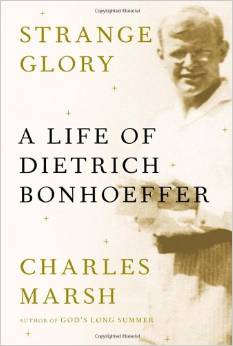
SGStrange Glory: The Life of Dietrich Bonhoeffer by Charles Marsh. At an upcoming doctoral seminar on “20th Century Spirituality” I get to lead the discussion on Dietrich Bonhoeffer’s spirituality. In order to help sharpen my understanding of his life’s finer points I picked up Marsh’s recent biography of the German giant. Strange Glory is the best—and most provocative—volume on Bonhoeffer I’ve yet to read. Its greatest strength lies in Marsh’s grasp of Bonhoeffer’s theological and philosophical development throughout his career, which makes sense when you discover Marsh did his PhD on Bonhoeffer’s philosophical thought. The chapter on Bonhoeffer’s first sojourn in America is alone worth the price of the book. Marsh has ignited much furor over his assertion in the book that Bonhoeffer was romantically attracted to his best friend Eberhard Bethge. While Marsh lets this fascination overshadow too many parts of his narrative I think, on the whole, Marsh is on to something worth deeper reflection.

9781587433580m Rejoicing in Lament: Wrestling with Incurable Cancer & Life in Christ by Todd Billings. We need more books like this one: theologically rich, biblically insightful, and pastorally wise treatment of a sensitive subject. I read Rejoicing in Lament with a church member who just lost a child and Billings’ has been a wonderful companion through the pain. He rightly wants to restore a biblical place for lament in the Christian life and eloquently models faithful lamentation. Quite possibly—for me at least—the greatest parts of the the book are when Billings reflects on how to best care for those going through cancer and facing immanent death. Rejoicing in Lament is a brave book that I’d love to see everyone read.

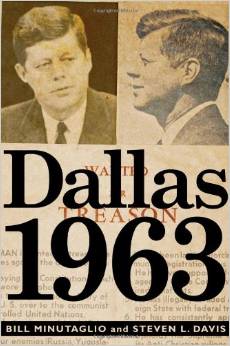
D1963Dallas, 1963 by Bill Minutaglio and Steven Davis. I seem to increasingly have an armchair historian’s interest in the 1960s. The Cold War drama, Camelot-Court-like White House, Civil Rights movement, and general sociological upheaval is quite engrossing. Dallas, 1963 analyzes all of these things as they came to a boiling point in my backyard. The book starts well by promising to recount the political atmosphere of the city where Kennedy would be assassinated. The authors’ initial return on their promise is fascinating, but soon it devolves into some strange liberal fascination with General Edwin Walker—as if Walker was the typological Texan.

Don Graham, professor of history at the University of Texas, is spot on when he says, “Minutaglio and Davis are like a team of U.N. inspectors visiting a country where buried canisters of noxious verbal gas have been left behind for a new generation to discover and, if they’re of a sufficiently liberal mind, to savor how bad those days were, how much hatred there was in Dallas. But the streets of the city that day in November were packed with thousands of people — estimates run to more than 100,000 — who didn’t hate at all, who were excited to see the president and his beautiful wife and who lived in that other Dallas that [the authors are not] much interested in.”

Natchez BurningNatchez Burning by Greg Iles. Natchez Burning was my favorite fiction book of 2014. I recently read it again in preparation for the trilogy’s second installment, which landed last week. And it was as good as ever on a second read. Full of tension, historical interest, Civil Rights drama, and page-turner mystery, this book is a fantastic summer read. I can only hope the second volume keeps this trilogy’s literary train flying down the tracks . . . bring on The Bone Tree.

Click here to find other entries in the Recent Reads series.

Is Church Polity Relevant Today?

On April 22nd Westminster Theological Seminary and Banner of Truth hosted an “Evening Discussion on The Bride of Christ” in honor of Banner’s new edition of James Bannerman’s classic The Church of Christ. Watch the videos below and then go buy a copy of the book.

“Bannerman’s Church of Christ: A Tract for Our Times” by Rev. Dr. Carl Trueman

“Does the Bible Speak to Church Government?” by Dr. Jonathan Leeman

“Why Read Bannerman? Polity, Presbytery, and a Cautionary Tale” by Mr. Nathan Sasser

Panel Discussion on the Bride of Christ, with Garner, Trueman, Leeman, and Sasser

Multiplying Hallelujahs

In honor of the NEEDTOBREATHE concert that kept me up way too late last night, prohibiting me from completing the original post for today, I give you a campfire song from the Carolinians.

Sing of His Love

As David selected a few choice stones for battle, so pastors select a few choice songs each week he and his congregation can hurl against the kingdom of darkness. He needs songs sharp in truth and strong in melody. One valuable weapon-like melody is Samuel Trevor Francis’ “O the Deep, Deep Love of Jesus.” In three short verses Francis manages to visualize the immense love of Christ for His church—a love which bought His people and beat the Devil.

When Crossing the Thames

Francis was born on November 19, 1834, in a village north of London. Having a artist for a father meant Francis developed early on a love and gift in poetry. In time he came to love music and joined the church choir at the age of nine. Yet, just like so many throughout the ages, Francis proceeded to spiritually wander through his teenage years.

One day, as he later wrote, “I was on my way home from work and had to cross Hungerford Bridge to the south of the Thames. During the winter’s night of wind and rain and in the loneliness of that walk, I cried to God to have mercy on me. I stayed for a moment to look at the dark waters flowing under the bridge, and the temptation was whispered to me: ‘Make an end of all this misery.’ I drew back from the evil thought, and suddenly a message was borne into my very soul: ‘You do believe in the Lord Jesus Christ?’ I at once answered, ‘I do believe,’ and I put my whole trust in Him as my Savior.”

Samuel Francis cultivated a deep, deep love for the Savior, joining a local body of believers, preaching the gospel at revivals, and leading worship. He later went on to write this powerful hymn, and he continued to fight the good fight, finishing well the race set before him—after ninety-two years.

A Moving Melody

“O the Deep, Deep Love of Jesus,” Francis’ most famous hymn, is set to an appropriately rolling melody called “Ton-Y-Botel” (“Tune in a Bottle”) because of a legend that it was found in a bottle along the Welsh coast. It was actually composed by Thomas J. Williams and first appeared in a 1890 Welsh hymnal entitled Llawlyfn Moliant.

Here are three different recordings of the great hymn—one with the traditional melody, the other with a more contemplative arrangement by Bob Kauflin.

LYRICS

VERSE 1
Oh the deep, deep love of Jesus
Vast, unmeasured, boundless, free
Rolling as a mighty ocean
In its fullness over me
Underneath me, all around me
Is the current of Your love
Leading onward, leading homeward
To Your glorious rest above

CHORUS (Kauflin arrangement)
Oh the deep, deep love
All I need and trust
Is the deep, deep love of Jesus

VERSE 2
Oh the deep, deep love of Jesus
Spread His praise from shore to shore
How He came to pay our ransom
Through the saving cross He bore
How He watches o’er His loved ones
Those He died to make His own
How for them He’s interceding
Pleading now before the throne

VERSE 3
Oh the deep, deep love of Jesus
Far surpassing all the rest
It’s an ocean full of blessing
In the midst of every test
Oh the deep, deep love of Jesus
Mighty Savior, precious Friend
You will bring us home to glory
Where Your love will never end

The Expositor Podcast

Screen Shot 2015-04-28 at 6.55.01 AM

Steve Lawson recently launched One Passion Ministries which looks to be a treasure trove for modern expositors.

OnePassion is committed to training pastors in expository preaching that is firmly anchored in proclaiming God’s Word. We live in a day in which there is a famine in the land for the hearing of God’s Word. In response to this spiritual drought, this ministry is devoted to calling those who stand in pulpits to the high standard of biblical preaching. If we are to see a new reformation in this day, there must, first, be a reformation of the pulpit. Only then can the church experience transcendent worship, authentic godliness, and true evangelism.

Our goal is to provide as many free audio, video and written materials as possible, along with charging minimal for other resources. In return for these materials, ministry donations are appreciated to further these efforts and continue to provide complimentary resources.

One of these complimentary resources is the “Expositor Podcast.” Hosted by Dr. Lawson, “Expositor” provides an informal look into the life and ministry of the expositor. Three times a week Dr. Lawson offers 6-8 minutes snapshots on a variety of matters pertaining to faithful expository ministry.

Subscribe to Expositor or listen to recent episodes here.

The Danger of Distraction

Acts 6 Podcast

Our second son, Owen Paul, is such a joy in our home. He is never short on imagination or personality. For so long the first thing he’s done after waking up each morning is put on a Buzz Lightyear costume that I’ve taken to calling him, “Buzz” all the time. One of Buzz’s current traits is that he can easily become distracted. We set him off to clean his room or do some chore, and he seemingly disappears for an unusual amount of time. We eventually find him preoccupied with something—usually a toy or game—other than what he was supposed to be doing.

The Concentration of Faithful Ministry

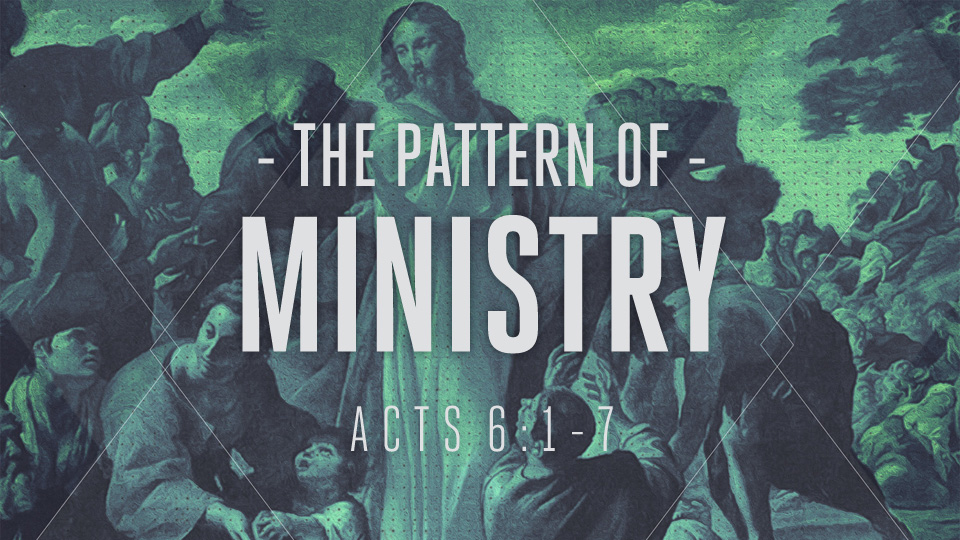
Something quite similar is happening in Acts 6. The apostles’ preoccupation with serving tables is endangering their original marching orders from Christ. What should the apostles be giving their time to? Look at 6:4, “But we will devote ourselves to prayer and to the ministry of the word.

If 6:2-3 give us insight into what a healthy deacon body looks like, 6:4 gives us the priorities of pastoral ministry: praying and preaching. To read the rest of the New Testament, particularly the pastoral letters to Timothy and Titus, is to see this bear out. Faithful pastors and elders are those devoted, like the apostles they emulate to some degree, “ourselves to prayer and to the ministry of the word.

If the great danger threatening the church in this passage was distraction—distraction from occupying their ministry with that which is of first importance. And this Satanic scheme makes so much sense doesn’t it? If faith comes by hearing and preaching is the ordinary way God gives life to His people and grows His church, why wouldn’t the Enemy want to distract pastors from praying and preaching? Why wouldn’t he want to distract some of you from devoting yourselves to the praying and preaching ministry of the church each week in gathered worship? A distracted church is a powerless church.

We will devote “ourselves to prayer and to the ministry of the word.” Oh, how we can’t—I can’t—forget the first side of the apostle’s devotion. Charles Bridges, in his classic work The Christian Ministry, wrote, “‘The spirit of our ministry is a spirit of prayer.’ Prayer is the ornament of the priesthood, the leading feature of our character. Without prayer, the minister is of no use to the church, nor of any advantage to mankind . . . It is prayer alone that gives the whole strength and efficacy to our different administrations . . . Prayer therefore is one half of our ministry; and it gives to the other half all its power and success.” I am incredibly thankful to serve in a church where preaching is valued, encouraged, and prayed for. I frequently get text messages and emails from you expressing encouragements about and prayers for this pulpit. From Acts 6:4 let me also ask, as I’m sure you are doing, to not forget to pray that your elders would be men of prayer.

A Biblical Pattern

Few things bring greater anxiety and expected stress in my life than returning home with self-assembly furniture . . . particularly from Ikea. Their “how-to/assembly” guides have no words, just pictorial steps that cause non-mechanical people like me to labor and toil far too long on a piece of furniture that sure looks like it should come together in a matter of minutes—not a matter of hours. From my perspective, the builder and the building guide cannot be trusted.

It seems to me that Satan wants us to believe something similar when it comes to the church: that the builder and the building guide cannot be trusted. Yet, the first seven verses of Acts 6 announce the builder (Jesus) and the building guide (His Word) are worthy of full trust—of total devotion. We can delight in and rest on the pattern of ministry according to Acts 6:1-7 Jesus’ promise that He will build His church (Matt. 16:18) through His word (Eph. 5:26).

As we conclude I want to point out a few pillars, according to Acts 6, of a church living in a faithful pattern of ministry.

Pillars of Faithful Ministry

A Word-centered ministry. I’m sure we’ve said enough on this point already, but the labor of ministry is to always keep God’s word at the center. The greatest threat to healthy ministry is anything that steals the centrality of the word—for the Word brings life and power to God’s people.

A Spirit-empowered ministry. To read the book of Acts to see a church empowered by God’s Spirit. A constant key to perpetuating unity and delight in a local church is members growing in the fullness of the Spirit. Is there anywhere in your life where you sense growing power from the spirit? It seems that few things test out the true spirit of a church as there life of prayer. Prayer-filled churches are Spirit-empowered churches.

A compassion-saturated ministry. Some people think the apostles acts in this text as though compassionate care of the widows is unimportant. But that’s not the case at all. They lead the church to ensure the widows needs are met. Devotion to God’s word is never severed from compassion towards God’s people.

A gospel-advancing ministry. We keep the Word central, long for the Spirit’s power, and fill our hearts with compassion in order to see the gospel advance in our lives, church, city, and world.

This then is the pattern of ministry we must pursue. One centered on God’s word, empowered by God’s spirit, saturated with compassion for one another, and advancing the gospel for God’s glory in all nations.

This post is adapted from my recent sermon, “The Pattern of Ministry,” on Acts 6:1-7.