
“I love to preach in such a mood, not as though I was about to preach at all, but hoping that the Holy Spirit would speak through me. . . . Dependence upon God is the flowing fountain of success. That true saint of God, George Muller, has always struck me, when I have heard him speak, as being such a simple, child-like being in his dependence upon God; but, alas! the most of us are far too great for God to use us; we can preach as well as anybody, make a sermon with anybody,—and so we fail. Take care, brethren; for if we think we can do anything of ourselves, all we shall get from God will be the opportunity to try.” – Spurgeon, An All-Round Ministry, 183.
New Books on Suffering
Our young church has endured much pain over its two years. We’ve experienced the untimely loss of loved ones, surprising and deadly diagnoses, and profound spiritual sadness. I am thus always eager to find resources full of biblical wisdom and winsomeness to speak to conditions of suffering.
Praise God that we’ve already seen a few marvelous new books published to arm God’s people in the midst of loss. You might want to consider adding these to your church’s book store.
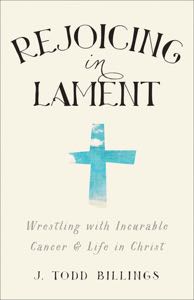 Rejoicing in Lament: Wrestling with Incurable Cancer & Life in Christ by Todd Billings. At the age of thirty-nine, Christian theologian Todd Billings was diagnosed with a rare form of incurable cancer. In the wake of that diagnosis, he began grappling with the hard theological questions we face in the midst of crisis: Why me? Why now? Where is God in all of this? This eloquently written book shares Billings’s journey, struggle, and reflections on providence, lament, and life in Christ in light of his illness, moving beyond pat answers toward hope in God’s promises. Theologically robust yet eminently practical, it engages the open questions, areas of mystery, and times of disorientation in the Christian life. Billings offers concrete examples through autobiography, cultural commentary, and stories from others, showing how our human stories of joy and grief can be incorporated into the larger biblical story of God’s saving work in Christ.
 Grief Undone: A Journey with God and Cancer by Elizabeth Groves. Grief Undone is the breathtakingly honest, yet hopeful account of how Elizabeth (Libbie) and Al Groves walked with God through Al’s terminal cancer. Their true story—saturated with in-the-moment Scriptural reflections, blogs, and fervent prayers—paints a stunning picture of how faith transforms the human experience of suffering. But Grief Undone is more than the chronicle of one family’s courage in the face of cancer. At its core, Grief Undone tells a story about the God who is with his people through each and every circumstance in life. Grief Undone will inevitably display the beauty of Christ’s sustaining love for his people through trials that seemed too hard to bear. Though grief threatens to undo us, we find that we are not destroyed, but sustained by God’s presence.
Story-driven and real, Grief Undone avoids the usual traps of being preachy, gratuitous, or dismissive in the face of suffering and grief. Modeling rather than teaching about healthy and God-honoring grief, Grief Undone is uniquely practical for those who are grieving as well as the pastors, counselors, and friends who seek to help them.
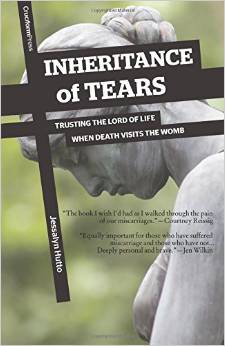 Inheritance of Tears: Trusting the Lord of Life When Death Visits the Womb by Jessalyn Hutto. When a woman becomes pregnant, miscarriage is usually the furthest thing from her mind. Her time is spent dreaming of the day she will finally cradle her newborn baby in her arms. Such was the case for Jessalyn Hutto when she became pregnant with her first baby. But as is all too common in our post-fall world, the precious life she carried came to an abrupt end before those dreams ever became a reality. Death had visited her womb and the horrors of miscarriage had become a part of her life’s story.
In this short book, Hutto seeks to deal honestly and sensitively with the issue of miscarriage and reveal how it relates to the Word of God. She does so by answering questions like:
* Why do babies have to die in the womb?
* Do miscarriages take God by surprise?
* Does God care about your pain?
* How can any good come from something so terrible?
* How can I find joy in the midst of such intense sorrow?
By providing a biblical context for miscarriage, she beckons mourning mothers and fathers to walk triumphantly through the valley of the shadow of death by fixing their eyes upon their loving Savior, who will one day do away with death and sorrow forever.
Short, sensitive, and theologically robust, Inheritance of Tears is a book that every pastor and church member can confidently share with those who are called to walk through the painful trial of miscarriage, and in reading the book themselves, they will gain greater insight into how to effectively minister to these parents in their time of need.
Give Them Your Job Description

Church planting brings with it many advantages, the greatest of which might just be the proverbial “blank slate.” No institutional sacred cows exist; no man-made traditions wait like thieves in the wings. Rather, what you’ve got is total freedom to build and, hopefully, you create no thieving cows.
One of the first things I put on the blank slate of IDC was teaching my own job description. There is something of a symbiotic relationship between the pastor’s health and the congregation’s health. There are two reverberating and reciprocating axioms on this matter:
- Healthy pastors ordinarily fuel a healthy church.
- A healthy church ordinarily fuels healthy pastors.
That sounds about right, doesn’t it? So then the question for me became, “What are some ways in which I can help the church know what God says pastors must be and do?” Here are four things we’ve done the last two years, things God seems to have kindly blessed in abundance.
4 Ways to Do It
Teach. The first book of the Bible we preached through was 1 Timothy. I wanted our people to know what God said about how we ought to live together as a pillar and buttress of His truth. Furthermore, 1 Timothy got us set in the right direction from the beginning about faithful church leadership. We got to examine the qualifications of elders and deacons in chapter 3, and the biblical pattern of faithful ministry in chapter 4. We also used our Family Meetings (bi-monthly church member meetings) to teach on biblical leadership when we began to train elders and deacons.
We are about to have one open week in our sermon calendar between the completion of 1 John and start of Missions Month. What shall we do with that stand alone? Acts 6:1-7 here we come.
Pray. We pray frequently for our church’s leadership during corporate prayer times. We have a 6-7 minute pastoral prayer in every gathered worship and I often pray for our current church officers to be faithful in their work. I also pray each week for other churches and their pastors to be God-glorifying stewards of the gospel. Such prayer times honor the office and, by extension, teach about what’s most important in pastoral ministry. Additionally, 1-2 times each year we dedicate a corporate prayer night to pray for church leaders — usually those at other churches. This allows us to not only model unity, but model how members can best pray for pastors.
Discuss. About eight months into our church’s existence I had over half the men in our church read Thabiti Anyabwile’s Finding Faithful Elders and Deacons for our monthly men’s meeting. What encouragement came from the subsequent discussion! Our guys were instructed from another voice and were challenged to examine their own lives against the qualifications of Scripture. At this meeting I said something we’ve since adopted as an IDC maxim, “Desire to be qualified even if you don’t aspire to the office.”
Disciple. All the labors above constitute discipling for sure, but I’m thinking here of one-to-one discipling. Some great questions you can use in discipling men in the church is, “Do you ever see yourself being an elder or deacon in the church? Is there anything in your life right now preventing you from being qualified?” I think I got that from Mark Dever — it totally sounds like something he’d do. I’ve had incredibly fruitful conversations grow from those simple questions. Discipling’s aim is conformity to Christ and who does Jesus intend to uniquely represent Him in the church? Faithful shepherds.
Encouraging Health Together
Truth brings unity and freedom. Focusing on and shepherding unto the biblical truth surrounding pastoral ministry has brought untold benefits to our church. The most acute thing I can point to is the incredible amount of encouragement and prayer I get each week from our members. Their encouragements and prayers are saturated with concerns firmly attached to what God calls pastors to be. This in turn empowers us to shepherd them unto what God calls them to be as children of faith.
Till the soil of truth regarding pastoral ministry and watch God — in His own time and power — ignite health in your midst.
7 Simple Suggestions for Morning Prayer

I have two simple maxims on the place of prayer in pastoral ministry: 1) prayer is the greatest work, and 2) prayer is the hardest work. The Lord Jesus set the model for us. His life of prayer was full of dependency, consistency, and expectancy. A desire to pastor “like Jesus” calls for careful attention to His prayer life.
While you can’t properly call it a prescription, one unassailable description of Jesus’ prayer life was His affinity for praying early in the morning. Mark famously recounts Jesus’ patter in prayer in 1:35 saying, “And rising very early in the morning, while it was still dark, he departed and went out to a desolate place, and there he prayed” (cf. Luke 4:42).
A Commendation, Not a Command
In a sermon entitled “Christ the Example of Ministers” Jonathan Edwards exhorts,
The ministers of Christ should be persons of the same spirit that their Lord was of: the same spirit of humility and lowliness of heart; for the servant is not greater than his Lord. They should be of the same spirit of heavenly-mindedness, and contempt of the glory, wealth, and pleasures of this world. They should be of the same spirit of devotion and fervent love to God. They should follow the example of his prayerfulness; of whom we read from time to time of his retiring from the world, away from the noise and applause of the multitudes, into mountains and solitary places, for secret prayer, and holy converse with his Father; and once of his rising up in the morning a great while before day, and going and departing into a solitary place to pray, Mark 1:35.
If someone wants to quibble with the Northampton Man they would probably do so with his three-fold use of “should” in the above paragraph. Many might take Edwards’ language of “should” as a binding command—and they probably should! After all, the word does ordinarily communicate duty. But I want to rescue, what is in my estimation, Edwards’ wise counsel. Minsters of Christ love to model their lives after Christ. So while we ought not command morning prayer of others, we can commend it.
There is an arresting power in pastors so desperately dependent on God they long to see their God’s face first thing in the morning. Consider the spiritual blood-earnestness of M’Cheyne who wrote,
I ought to pray before seeing anyone. Often when I sleep long, or meet with others early, it is eleven or twelve o’clock before I begin secret prayer. This is a wretched system. It is unscriptural. Christ arose before day and went into a solitary place. David said, “Early will I seek thee,” and, “My voice shalt Thou hear in the morning.” Family prayer loses much of its power and sweetness, and I can do no good to those who come to seek from me. My conscience feels guilty, my soul unfed, my lamp not trimmed. Then, when in secret prayer, the soul is often out of tune. I feel it is far better to begin with God—to see His face first—to get my soul near Him before it is near another.
Yes, it does seem better to begin the day with Him.
Praying Like Jesus Prayed
A modern author, full of grace and mercy, who sounds a similar call is Paul Miller in his book A Praying Life. He says, “Jesus’ pattern of morning prayer follows the ancient rhythm of the Hebrew writers who bent their hearts to God in the morning.” A sample from the Psalms echo the biblical commendation I’m trying to draw out:
- “O Lord, in the morning you hear my voice; in the morning I prepare a sacrifice for you and watch.” (5:3)
- “But I will sing of your strength; I will sing aloud of your steadfast love in the morning.” (59:16)
- “But I, O Lord, cry to you; in the morning my prayer comes before you.” (88:13)
- “Let me hear in the morning of your steadfast love, for in you I trust. Make me know the way I should go, for to you I lift up my soul.” (143:8)
With Jesus and the Psals in mind Miller goes on to offer the following “seven simple suggestions for how you can spend time with your Father in the morning”:
- Go to bed. What you do in the evening will shape your morning. The Hebrew notion of a day as the evening and morning (see Genesis 1) helps you plan for prayer. If you want to pray in the morning, then plan your evening so you don’t stay up too late. The evening and the morning are connected.
- Get up. Praying in bed is wonderful. But you’ll never develop a morning prayer time in bed. Some of my richest prayer times are at night. I’ll wake up praying. But those prayer times only began to emerge because I got out of bed to pray.
- Get awake. Maybe you need to make a pot of coffee first or take a shower.
- Get a quiet place. Maybe a room, a chair, or a place with a view. Or maybe you do better going for a walk. Make sure that no one can interrupt you.
- Get comfortable. Don’t feel like you have to pray on your knees. For years I was hindered from praying because I found it so uncomfortable to pray on my knees.
- Get going. Start with just five minutes. Start with a small goal that you can attain rather than something heroic. You’ll quickly find that the time will fly.
- Keep going. Consistency is more important than length. If you pray five minutes every day, then the length of time will slowly grow. You’ll look up and discover that twenty minutes have gone by. You’ll enjoy being with God. Jesus is so concerned about hanging in there with prayer he tells “his disciples a parable to show them that they should always pray and not give up” (Luke 18:1, NIV).
That’s helpful and simple counsel. May you put it to discerning use in your ministry.
Don’t doubt the power of devoted morning prayer. It may just be the spiritual catalyst your ministry is missing.
On Preaching with Steve Lawson
Last week I listened to an “In the Room” podcast episode with H.B. Charles and it was extraordinarily helpful (listen to it here). In the course of the interview I found out H.B. has his own podcast. So I ventured over to iTunes, found his “On Preaching Podcast” and my eyes immediately widened when I saw that H.B. had recently interviewed Steve Lawson for over two hours on preaching.
I’ve long thought Lawson is an underrated powerhouse of exposition. He is Macarthur-esque in his bold dogmatism and Spurgeon-esque in his unwavering commitment to God’s word. You’ll want to check out H.B.’s interview with Lawson to hear about his call to the ministry, his amazing preaching influences, why he thinks pastors should get away from the computer, and how R.C. Sproul changed the way he speaks. Listen or watch the interview below.
Sovereign Satisfaction
I think I was probably 11 or 12 when I discovered that my soul quakes at heights. My family used to vacation in the summer at a camp in Colorado called Horn Creek. One of the weekly activities for the courageous spry was to climb Horn Peak, some 13,500 feet in the air. So my dad and I took off. Eventually we made it to Little Horn, which is about 500 feet short of the summit. We sat down, I looked down, and said to my dad something like, “I don’t want to go any further.” The thought of going just another 500 feet to the highest point was terrifying—I was quaking even though I wore a hat proclaiming, “No Fear.” So down we went.
The next year we returned to Colorado and conquered the Horn. I think I also conquered my somewhat debilitating fear of heights. But thoughts of summits still make my heart flutter. Who can stand at the Grand Canyon, look out and not tremble in awe? Who can look down from Mt. Everest and not be moved? To stand on or next to grand heights will always move the soul; it’s part of being an ordinary human being.
From the last three words of 4:8 through 4:10 we come to the Grand Canyon of God’s grace and the Mt. Everest of God’s love; we come to the cross of Jesus Christ. The most hallowed ground in history. Will you be moved? God intends you to be and John intends you to be.
How might we know that God is love? John says look at the death of Christ. Notice 4:9, “In this the love of God was made manifest among us, that God sent his only Son into the world, so that we might live through him.” Love came so that we might live. How does His love in Christ bring us life? Look at 4:10, “In this is love, not that we have loved God but that he loved us and sent his Son to be the propitiation for our sins.” I want you to see two things about God’s love in this most precious of verses.
2 Truths About God’s Love
God’s love is a sovereign love. His love is not a response to ours, “In this is love, not that we have loved God but that he loved us.” He initiated the work of salvation according to His own eternal, sovereign decree of love. The cross shines forth and shouts out God’s sovereign love.
God’s love is a satisfying love. He “sent his Son to be the propitiation for our sins.” What is this word “propitiation?” “Propitiation” is a sacrifice that satisfies divine wrath. It was on the cross that Jesus suffered, and His greatest anguish was not the immense physical pain associated with crucifixion, but the agony of being treated by the Father as a sinner. He who knew no sin was made to be sin, and so suffered the wrath of God. And His suffering was perfect for God’s wrath was satisfied. As the hymn says, “Til on that cross as Jesus died, the wrath of God was satisfied.”
Interestingly enough, last summer a mainline Presbyterian denomination, the PCUSA, published a new hymnbook and much hullaballo ensued about their decision to not include “In Christ Alone” in the book. They’d contacted the Keith Getty and Stuart Townend (writers of “In Christ Alone”) asking them if the denomination could change “the wrath of God was satisfied” line to “the love of God was magnified.” The writers declined and the denomination yanked it from the hymnbook. God’s wrath is something they’d rather remove than sing about, and what they don’t realize is that to apologize for God’s wrath is to rob Jesus’ of due honor and praise. To lessen the wrath of God is to make light of the sin of men, rob majesty from Jesus’ work of propitiation, and steal glory from God’s love.
If you are a Christian, are you affected by this incredible sovereign and satisfying love of God? If not, let me submit to you that it’s probably because you have a low view of sin and thus of God’s wrath. If God’s wrath is not great, your experience of His love will be small.
Maybe you’re not a Christian, if so, you just stop and consider here the wrath of God towards sin. The Bible says we all have been born in sin and sin makes us indifferent towards God. But God is not indifferent towards sin; it is a traitorous offense that demands His consuming wrath. That wrath will fall on you if you don’t turn from your sin and trust in Christ. Eternal life, not wrath, can be your portion if you believe Jesus is the loving savior from your sin.
What, for John, is the logical outcome of God’s love for us in Christ? Notice 4:11, “Beloved, if God so loved us, we also ought to love one another.” Love for one another is thus the grateful duty of every person who knows God’s supreme love revealed at the cross.
Love one another because of who God is and love because of what God did.
This post is adapted from my recent sermon, “The Love of God,” on 1 John 4:7-12.
To Yourself First, Then To Them
“A man preacheth that sermon only well unto others which preacheth itself in his own soul. And he that doth not feed on and thrive in the digestion of the food which he provides for others will scarce make it savoury unto them; yea, he knows not but the food he hath provided may be poison, unless he have really tasted of it himself. If the word do not dwell with power in us, it will not pass with power from us.” – John Owen, Works Vol: XVI, 76.
Tethered Preaching
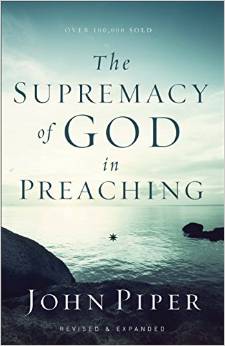 John Piper’s The Supremacy of God in Preaching is probably my favorite book on the subject. When reading the book you can’t help but feel the gravitas of proclaiming God’s word loading your soul—in a wondrous way.
Twenty-five years after its original publication Baker just published a revised version that includes four brand new chapters representing Pipers thoughts on preaching after thirty-three years at Bethlehem Baptist. One of the new chapters is titled, “In Honor of Tethered Preaching: John Calvin and the Entertaining Pastor.” Let me whet your appetite for the new edition with Piper’s answer to the question, “What is an Entertainment-Oriented Preacher?”
The difference between an entertainment-oriented preacher and a Bible-oriented preacher is the presence or absence of a manifest connection between the preacher’s words and the Bible as the authorization of what he says.
The entertainment-oriented preacher gives the impression that he is not tethered to an authoritative book in what he says. What he says doesn’t seem to be shaped and constrained by an authority outside himself. He gives the impression that what he says has significance for reasons other than that it manifestly expresses the meaning and significance of the Bible. So he seems untethered to objective authority.
The entertainment-oriented preacher seems to be at ease talking about many things that are not drawn out of the Bible. In his message, he seems to enjoy more talking about other things than what the Bible teaches. His words seem to have a self-standing worth as interesting or fun. They are entertaining. But they don’t give the impression that this man stands as the representative of God before God’s people to deliver God’s message.
What then is a “Bible-oriented preacher?” Grab a copy today to find out!
A Church Polity Boot Camp
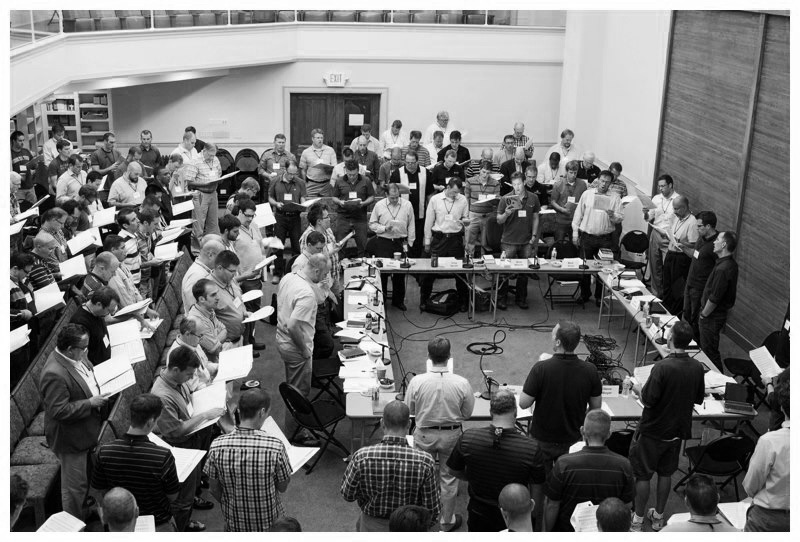 Today the other elders at IDC and an elder candidate head out to Washington D.C. for a Weekender at Capitol Hill Baptist Church. What is a Weekender?
The company line says,
Three times a year, 9Marks and Capitol Hill Baptist Church in Washington, D.C. host around one hundred pastors, seminarians, and church leaders from Thursday night to Monday morning for a full-on immersion in the life and inner workings of Capitol Hill Baptist Church, a church committed to living and ministering biblically.
You’ll have box seats for a new members’ class. You’ll be front and center for lectures from Mark Dever on expositional preaching and implementing change. You’ll even go behind closed doors to observe an elders’ meeting. And all that’s just the first half of the weekend.
From leadership to worship to body life and more, it’s all on the table. So bring your questions, and don’t forget to stash some cash for the CHBC bookstall.
In other words, it’s a boot camp on healthy, congregational polity.
Back in the Day
In May of 2012 I went to a Weekender and it was there innumerable ecclesiological convictions clicked into place. At that point in my ministerial life I had no shortage of theoretical convictions about church life and polity, but I’d seen precious few fleshed out ordinary practice. The Weekender at CHBC provided the picture that a lovingly faithful congregational life enjoys painting.
It was oh so timely as I was just about to being gathering a core group for a church plant. Looking back on it now I can’t believe I was walking into planting without many of those convictions having tangible experience attached to them. Yet God, in His kindness, put me into an experiential grinder at the Weekender and I’ve never been the same.
If you are a pastor or church leader, consider going to a Weekender.
Take Much and Leave Little
Any elder or staff member at CHBC will tell you their church is far from perfect. So don’t go to a Weekender to see the perfect church. Go instead to see a rigorous adherence to letting God’s word shape God’s people. Go to see how elders at a very large church manage to spiritually shepherd by knowing all the sheep. Go for the congregational devotion to prayer. Go for the soul-stirring singing on Sunday morning. Go for the thoughtful interactions and lectures on polity, preaching, and missions.
Go to see biblical polity in action.
Find out more information on upcoming Weekenders here.
Don’t Be a Cherry-Picker
“While psalms of thanksgiving are wonderful, they are rarer in the book of Psalms than psalms of lament. Cherry-picking only the praises from the Psalms tends to shape a church culture in which only positive emotions can be expressed before God in faith.” — Todd Billings, Rejoicing in Lament, 40-41.