An Embarrassment of Riches

Continuing Education

Healthy pastors are growing pastors. And growing pastors are those regularly increasing in the grace and knowledge of our Lord Jesus Christ.

What are you doing to grow in the knowledge of Christ?

The ordinary means of grace (word, prayer, sacrament) are the non-negotiables of growing in Christ. They are the spiritual waters for the soul, you can’t go very long with them and survive. And just like every person’s diet builds on the foundational need of water so too must a pastor’s spiritual feast include various and more occasional means.

I want to highlight just one item you might welcome to the table of your soul: the University of iTunes.

A HIDDEN GEM

Do you make use of iTunes U? When Apple revamped iTunes U in 2012 it was already reaching over 700 million downloads. A tech magazine said, “It has always been one of iTunes’ hidden gems, providing access to lectures, course material, presentations and more from top universities. Today, iTunes U is offering over 500,000 free lectures, videos, books and other content from institutions across 26 countries, says Apple.”

In recent years a few seminaries (particularly Covenant Theological Seminary, Westminster Theological Seminary, Reformed Theological Seminary, and Dallas Theological Seminary) have seized on this educational opportunity and are putting whole courses on iTunes U for free download. Pastors, church leaders, and interested lay members can now listen to gifted teachers and legendary professors without leaving their home and without emptying their bank account. These free courses are a treasure trove for pastors continuing their education and growth in biblical/theological/historical/practical knowledge. Make sure to check out everything offered from the seminaries above, but here a few courses you’d be silly to pass up:
mza_8187391329897104788.170x170-75The Reformation by Carl Trueman. There isn’t anyone from whom I rather learn church history than Carl Trueman. His wit, wisdom, and piercing conclusions make him one of the few professors we could rightly label “Maddeningly Brilliant.” Few eras of church history are as interesting and pivotal as the decades occupied with the Reformation. This course offers 33 lectures on everything from Luther, to Calvin, and on to the English Reformation.
mza_7953614672765780867.170x170-75Preaching Christ in a Postmodern World by Tim Keller and Ed Clowney. Before everything “gospel-centered” was popular in broader evangelicalism, Clowney and Keller embodied everything soon to become in-vogue. Originally taught as a Doctor of Ministry course, Dr. Keller and Dr. Clowney ask, “Is Jesus made visible in every sermon or only talked about?” By analyzing and deconstructing other models of preaching that either exhort on moral levels or attempt to evoke an emotional response, Dr.’s Keller and Clowney provide a model of preaching that is Christocentric. This model of preaching focuses on three aspects to guide the listener and preacher: First, how does this text tell me about Christ? Second, how does this text show that the listener’s life is poor without Christ. Third, how to lead the listener to worship and adore Christ.
mza_1891100271890704331.170x170-75The English Puritans by JI Packer. 20 or so hours of Packer riffing on the Puritans? What a gift! This course is an introduction to the English Puritans that includes an examination of historical context, theological contributions, cultural and community impact, and literary output of several prominent Puritan thinkers. Both informative and engaging, this course invites you to set aside the typical Puritan stereotypes and embrace the lives and legacies of some of the greatest minds and preachers in Church history.
mza_6338291738921363735.170x170-75Calvin’s Institutes by David Calhoun. Dr. Calhoun is too little remembered in many circles today. He is a master of his field and a consummate teacher. The Professor Emeritus of Church History at Covenant Seminary guides this course in the reading and analysis of Calvin’s Institutes of the Christian Religion, emphasizing the Reformer’s method, material arrangement, and biblical-theological content.
d2_160Christian Apologetics by John Frame. This one is for all you who love defending the faith – which should be all of us. In this course John Frame, The Triperspectivalist himself, seeks to formulate the rational basis for believing in Christian theism, with responses to objections and critiques of competing worldviews. In the first part, the student examines what Scripture says about human knowledge, particularly the process by which a non-Christian comes to know Christ. In the second part, the primary focus is on the controversy over how to do apologetics, with attention given to differing apologetic schools. Finally, the third part discusses issues under debate between Christians and non-Christians, such as the existence of God, the truth of Scripture, the problem of evil, and the currents of modern and postmodern thought.

And just for grins . . .

tns.otwwgcqd.170x170-75The Civil War and Reconstruction Era, 1845-1877 by David Blight. If you’ve ever wanted to get a sense of education at Yale University, here you go. Blight is a master lecturer and, I think, will keep anyone interested in this most fascinating and important era in our nation’s history. This course explores the causes, course, and consequences of the American Civil War, from the 1840s to 1877. The primary goal of the course is to understand the multiple meanings of a transforming event in American history. Those meanings may be defined in many ways: national, sectional, racial, constitutional, individual, social, intellectual, or moral. Four broad themes are closely examined: the crisis of union and disunion in an expanding republic; slavery, race, and emancipation as national problem, personal experience, and social process; the experience of modern, total war for individuals and society; and the political and social challenges of Reconstruction.
The Cemetery of Ministry

Cemeteries and Sanctification

“Resolved, to think much on all occasions of my own dying, and of the common circumstances which attend death.” – Edwards

It doesn’t take anyone long to notice I live a life of routine. The less charitable might call me predictable, while the more understanding call me disciplined. I’m sure the reality is somewhere in between.

For the majority of my pastoral ministry I’ve been in a more traditional church setting, replete with church buildings and offices. Those structures are great friends for habit and routine. It was easy to do the same thing, at the same time, in the same place. Those were the good ol’ days.

MOVING IS MY ENEMY

Since we started Imago Dei Church at the beginning of last year my grip on routine was dealt a mighty blow, as we have neither a church building nor office. For much of the last two years my daily routine was everything but routine. Where I was on a given day depending on any number of factors. Sometimes I would move to three or four locations in a given day based on what work I had on my plate. I imagine that those of you who love changes in scenery would think that workflow would be fun, but to me that constant movement is an elusive shadow that haunts my soul. Yes, it is that grave.

So it was to my profound joy and comfort that my parents purchased a townhome – now popularly known in our family as “The Townhouse” – in McKinney earlier this year (they live in Bryan, TX) and asked if I’d like to use it as an office when they weren’t around (which on average is about three weeks a month). “Let me think about it . . . uh, YES!”

Routine returned and productivity flourished.

A CHANGE OF SCENERY

The still silence of The Townhouse has allowed my mind to focus, but I’ve realized in recent weeks how my soul is feeling less energized. Maybe it’s because I’m not around a consistent conversational banter during the day or because the lonesome structure can easily amplify Lone Ranger feelings in ministry. Whatever the reason, I thought to myself this week, “I need to find another place where I can consistently go; a place that will fuel the soul.”

After thinking for a few minutes of options nearby the proverbial “Ding! Ding! Ding!” went off in my mind.

I needed to go to the cemetery.

TRUST AMIDST TOMBSTONES

Two things in this created world seem to have unique power to stir my soul: mountains and cemeteries. We don’t have any mountains in McKinney, but we do have cemeteries.

Walking amongst the tombstones always does something powerful. I am reminded of: my mortality, God’s gracious provision of life, the fleeting nature of time, the impact of faithful generations, and how much I long to do something with this vaporous moments that remain.

Pastoral ministry is a ministry of life and death. Our gilded age celebrates the life-giving nature of faithful ministry, but what of the death-demanding side of things? We must give ourselves over to death so our people might live. We must die to the flesh, the world, and the devil. We must prepare our people to die trusting in the kind arms of the Father.

Sitting under a tree at the cemetery reminds me of all these things. It helps me pray with perspective. It helps me read and write with purpose.

In short, it feeds my soul.

WHAT’S YOUR PLACE?

While not every pastor has my possibly morbid attachment to cemeteries, I’m sure every one of us has a particular place or setting that stirs the soul. What’s yours?

Know it, find it, and then use it to propel you to greater faithfulness in the ministry to which He’s called you.

Leading in Worship

Leading in Worship

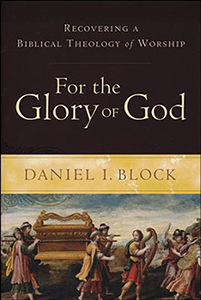
In For the Glory of God: A Biblical Theology of Worship Daniel Block defines true worship as “reverential human acts of submission and homage before the divine Sovereign in response to his gracious revelation of himself and in accord with his will.”

In light of this definition he concludes, “Therefore, promoting worshipers’ awe and reverence before God must be a primary goal of those who lead worship.” And so he concludes the book with a series of exhortations for anyone that would lead God’s people in worship. These exhortations are brilliant and well worth pastoral meditation.

8 EXHORTATIONS FOR THOSE WHO LEAD WORSHIP

  1. Worship leaders must first offer their entire person as a sacrifice of worship to God and maintain purity of life worthy of acceptance with God.
  2. Worship leaders must conduct themselves before God and in the company of the saints in keeping with the glory and majesty of the One they serve.
  3. Worship leaders’ conduct, their performance of duties, and their entire bearing as representatives of God must enhance worshipers’ awe and reverence before God.
  4. Worship leaders must aim above all to ensure that divine revelation is transmitted to worshipers. Whether through reading and expounding Scripture, musical performance, or other cultic acts, leaders must ensure that everything in the service contributes to the clear, unequivocal, and truthful communication of divine truth.
  5. Worship leaders must make every effort to deflect attention away from themselves to God. Whether through dress or public demeanor, drawing attention to those leading worship borders on idolatry.
  6. Worship leaders must promote the engagement of the congregation in worship. In communal worship, people should instruct and exhort one another, sing to one another, and intercede on behalf of one another. The role of worship leaders is to develop this kind of community and to promote the genuine participation of all believers in corporate expressions of homage and submission.
  7. Worship leaders must identify with the worshipers, not only by leading them in confessing sin and praising God for forgiveness and acceptance, but also by walking with them through the week and feeling their pains and joys.
  8. Worship leaders must recognize that access to God is made possible only through the work of Christ himself. Worship must be focused on Christ rather than on the preacher of musicians and the performance of liturgy. When people assemble for worship, they gather for a meeting with God, not for a meeting with the preacher or other leaders.

A Series Worth Serious Investment: Vol. 5

For several years Reformation Trust has quietly been publishing a brilliant series entitled The Long Line of Godly Men.

The series’ editor Steve Lawson writes,

This Long Line of Godly Men Profile series highlights key figures in the agelong procession of sovereign-grace men. The purpose of this series is to explore how these figures used their God-given gifts and abilities to impact their times and further the kingdom of heaven. Because they were courageous followers of Christ, their examples are worthy of emulation today.

Each volume is compact and contains a delightful harmony of biography, theology, and practicality. I find them accessible in presentation and challenging in application. With each read you will want to rise up and say, “We want again such giants of the faith! Lord, help me to be such a servant of God!” Here are the current titles in the series, every one is well worth your investment in money and time.

HER06BH_200x1000The Heroic Boldness of Martin Luther by Steve Lawson. During the Protestant Reformation of the sixteenth century, the Reformers’ most effective tool was the pulpit, and all of the Reformers were gifted preachers. This was especially true of Martin Luther, the man regarded as the father of the Reformation.

Luther used every legitimate means to make known the truths of Scripture. His strategies included writing books, tracts, pamphlets, and letters, as well as classroom lectures, public debates, and heated disputations in churches and universities. But his chief means of producing reform was the pulpit, where he proclaimed the truths of God’s Word with great courage. In a day when the church greatly needed to hear the truth, Luther’s pulpit became one of the most clarion sounding boards for God’s Word this world has ever witnessed.

In The Heroic Boldness of Martin Luther, Dr. Steven J. Lawson shows the convictions and practices that fed Luther’s pulpit boldness, providing an example for all preachers in a day when truth once more is in decline.

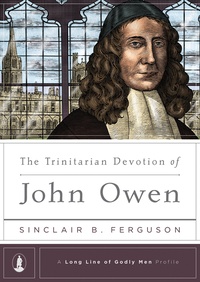
TRI06BH_2_200x1000The Trinitarian Devotion of John Owen by Sinclair Ferguson. The writing and teaching of John Owen, a 17th century pastor and theologian, continues to serve the church. Daily communion with God characterized his life and equipped him for both ministry and persecution.

In The Trinitarian Devotion of John Owen, the latest addition to the Long Line of Godly Men series, Dr. Sinclair Ferguson offers careful reflection and insight for Christians today as he highlights Owen’s faith in the triune God of Scripture. We’re reminded that regardless of our circumstances we can know God, enjoy Him, and encourage others.

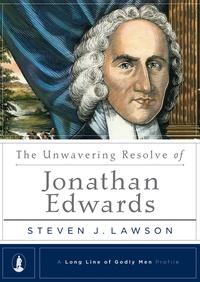
UNW01BH_200x1000The Unwavering Resolve of Jonathan Edwards by Steve Lawson. Jonathan Edwards is well known as perhaps the greatest theologian the United States has ever produced. He is equally noted for his preaching and writing. But in this Long Line Profile, Dr. Steven J. Lawson considers the unique focus and commitment with which Edwards sought to live out the Christian faith.

Lawson examines Edwards’ life through the lens of the seventy resolutions he penned in his late teens, shortly after his conversion, which cover everything from glorifying God to repenting of sin to managing time. Drawing on Edwards’ writings, as well as scholarly accounts of Edwards’ life and thought, Lawson shows how Edwards sought to live out these lofty goals he set for the management of his walk with Christ. In Edwards’ example, he finds helpful instruction for all believers.

EXP03BH_200x1000The Expository Genius of John Calvin by Steve Lawson. Looking to the past for outstanding Bible-based, Christ-centered, and life-changing preaching, Dr. Steven J. Lawson focuses on sixteenth-century Geneva, Switzerland. It was there that John Calvin ministered for decades as a faithful shepherd to a flock of believers.

Here is an intimate portrait of Calvin the preacher-the core beliefs that determined his preaching style, the steps he took to prepare to preach, and the techniques he used in handling the Word of God, interpreting it, and applying it to his congregation. In the pulpit ministry of the great Reformer, Dr. Lawson finds inspiration and guidance for today’s church and calls on modern pastors to follow the Reformer’s example of strong expository preaching.

MIG01BH_200x1000The Mighty Weakness of John Knox by Douglas Bond. John Knox, the great Reformer of Scotland, is often remembered as something akin to a biblical prophet born out of time—strong and brash, thundering in righteous might. In truth, he was “low in stature, and of a weakly constitution,” a small man who was often sickly and afflicted with doubts and fears. In The Mighty Weakness of John Knox, a new Long Line Profile from Reformation Trust Publishing, author Douglas Bond shows that Knox did indeed accomplish herculean tasks, but not because he was strong and resolute in himself. Rather, he was greatly used because he was submissive to God; therefore, God strengthened him. That strength was displayed as Knox endured persecution and exile, faced down the wrath of mighty monarchs, and prayed, preached, and wrote with no fear of man, but only a desire to manifest the glory of God and to please Him.

For those who see themselves as too weak, too small, too timid, or simply too ordinary for service in God’s kingdom, Knox’s life offers a powerful message of hope—the biblical truth that God often delights to work most powerfully through people who are most weak in themselves but most strong in Him.

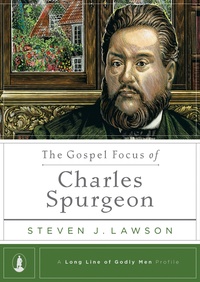
GOS23BH_200x1000The Gospel Focus of Charles Spurgeon by Steve Lawson. Charles Spurgeon, the great Baptist preacher of nineteenth-century London, is remembered today as “the prince of preachers.” However, the strength of Spurgeon’s ministry went far beyond simple rhetorical skill. In The Gospel Focus of Charles Spurgeon, Steven J. Lawson shows that Spurgeon fearlessly taught the doctrines of grace and simultaneously held forth the free offer of salvation in Jesus Christ.

In thirty-eight years as pastor of the congregation meeting at the New Park Street Chapel and later the Metropolitan Tabernacle, Spurgeon propounded Calvinistic theology with precision and clarity. Yet he always accompanied it with a passionate plea for sinners to come to Christ and be saved. Lawson traces these twin points of emphasis throughout Spurgeon’s long, fruitful ministry.

The Gospel Focus of Charles Spurgeon is a passionate call for all Christians to follow Spurgeon in maintaining the proper balance between divine sovereignty in salvation and fiery passion in spreading the gospel of Jesus Christ.

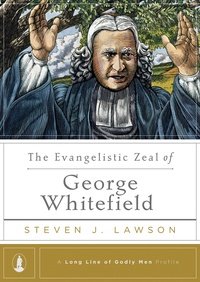
EVA06BH_200x1000The Evangelistic Zeal of George Whitefield by Steve Lawson. England in the seventeenth and early eighteenth centuries was in the midst of spiritual decline, marked by lifeless sermons, strife, persecution, and malaise. Into this dark time, George Whitefield burst forth as one of the greatest preachers the church had seen since the time of the Apostles.

Called the “Grand Itinerant” for his unprecedented preaching ministry, Whitefield crossed the Atlantic Ocean numerous times and lit fires of revival on two continents. Yet, as Dr. Steven J. Lawson illustrates in this latest entry in the Long Line of Godly Men Profiles series, we must note that Whitefield was a man whose extraordinary evangelistic fervor was marked by remarkable piety and deep theology, and whose unswerving devotion to his God led him to risk all that he had to preach the name of Christ.

POE01BH_200x1000The Poetic Wonder of Isaac Watts by Douglas Bond. In an age of simplistic and repetitive choruses, many churches are rediscovering the blessing of theologically rich and biblically informed songs. In the latest addition to our A Long Line of Godly Men Profile series, Douglas Bond introduces us to Isaac Watts, “the father of English hymnody.” Douglas Bond urges Christians to delight in the grandeur, beauty, and joy of Watts’ poetry. We pray that you would regain a sense of God’s majesty as we celebrate the God-given poetic wonder of Isaac Watts.

Click here to see previous entries in the “A Series Worth Serious Investment” series.

The Ablest Man

“Appoint the ablest man to pray, and let the sermon be slurred sooner than the approach to heaven. Let the Infinite Jehovah be served with our best; let prayer addressed to the Divine Majesty be carefully weighed, and presented with all the powers of an awakened heart and a spiritual understanding. He who has been by communion with God prepared to minister to the people, is usually of all men present the most fit to engage in prayer.” (Spurgeon, Lectures to My Students, 59).

Meeting for Unity

Church Unity

The joy of congregational unity just might be the most important lesson I’ve learned since planting Imago Dei Church in January of last year. The difficult joy of unity is probably a better way to put it.

I think we have it, but oh! how we must continually fight for it.

David’s exclamation in Psalm 133:1 captures the happiness of harmony when he says, “Behold, how good and pleasant it is when brothers dwell in unity!” Paul seems to know this delight well for he encourages the Ephesians, and churches everywhere, to be “eager to maintain the spirit of unity in the bond of peace” (Eph. 4:3). Unity in the church is glorious!

THE PURSUIT OF UNITY

We need only to look to the High Priestly Prayer in John 17 to see how much our Lord values unity among His people. Notice these petitions for unity Jesus’ prayer:

  • “Holy Father, keep them in your name, which you have given me, that they may be one, even as we are one” (17:11).
  • “I do not ask for these only, but also for those who will believe in me through their word, that they may all be one, just as you, Father, are in me, and I in you” (17:20-21).
  • The glory that you have given me I have given to them, that they may be one even as we are one, I in them and you in me, that they may become perfectly one, so that the world may know that you sent me and loved them even as you loved me. ” (17:22-23).

Jesus’ requests for His people be one not only underscore the necessity of unity, but also how hard it is to achieve. What fights against unity in the church? According to John 17:15-17 it is Satan and sin. That’s why the Savior prays for the Father to “keep [His people] from the evil one” (17:15) and to “sanctify them in truth” (17:17).

Unity is a difficult pursuit, but a vital one.

THE EXPERIENCE OF UNITY

If you have been in a local church for any length of time you likely know how effect Satan and sin are at overthrowing congregational unity. Satan’s tempting of church members to exalt personal preferences are nearly pandemic. The sin of pride, when left alive, will always entice Christians to make more of themselves than their brothers and sisters in Christ. The world pressing in as well in all manner of sundry ways.

So what is a pastor to do? A Spirit-wrought, Biblically-informed advance for congregational unity must necessarily begin with the ordinary means: word, sacrament, and prayer. It’s in the faithful preaching of the word that matters of first importance are heralded and cherished as immanently more valuable than side matters of individual taste. It’s through regular feasting at the Lord’s Table that the entire church announces its allegiance to Christ and through sharing the same bread and cup. It’s in the ordinary prayers of the church that saints are encouraged to lift their eyes off themselves and lift holy hands making prayers for all the saints.

If you’re a pastor, see how the ordinary means are non-negotiable realities for the experience of unity. If you are a church member, faithful attendance to your congregation’s gathered worship is essential to the promotion of unity your heart and the souls of your fellow members.

There are, of course, other opportunities of wisdom one might seize in order to increase his church’s harmony. One of them is what we at IDC call “The Family Meeting.”

THE CELEBRATION OF UNITY

Depending on which denominational background you come from this meeting might be known as “The Business Meeting” or “The Members’ Meeting,” we like the name “Family Meeting” because it seems to connote less formality and rigidity.

We have six Family Meetings a year at IDC; they happen on the second Saturday (we currently meet on Saturday nights) of the even months (February, April, June, etc.). I like to tell our church a couple things about the significance of our Family Meetings. First, “If you miss a Family Meeting you are bound to miss something important.” Because they only happen every other month something important is bound to be discussed. It may be the affirmation of new members, nomination of church officers, affirmation of the church budget, or – like last year – the excommunication of a member. The second thing I like to say is, “Outside of the ordinary gathered worship service, nothing is more integral for our pursuit of unity than the Family Meeting.” It’s here we deal with all the “family” business.

What does a Family Meeting look like? Ours happen for about an hour after our gathered worship service and a common agenda would look like this:

  • Corporate reading of the first half of our church covenant.
  • Give away some books. I always give away a couple free books. This is a great way to not only promote doctrinal literacy in the congregation, but also endorse sound authors.
  • Affirmation of new members.  Our polity calls for all new members to be formally and vocally affirmed by the congregation.
  • Quick update on church budget. It’s always good to let the church know where the budget stands. This usually means sharing year-to-date budget/expenses, year-to-date income, and then celebrating the sacrificial giving of our members.
  • Share helpful information about a specific church ministry. Here we might announce an upcoming mission trip, share about a new direction in kids’ ministry curriculum, or celebrate the volunteer involvement of our members.
  • Discussion about church officers. Our system of elder and deacon installation happens over the course of at least six months. It has thus so far been normal to discuss something about the candidacy, nomination, and installation of church officers.
  • Share stories of disciple-making. The elders at IDC select a few people in the congregation who are creatively and faithfully trying to make disciples in the workplace, neighborhood, or community. This is a wonderful opportunity for other members to hear about how much disciple-making is going on throughout the church and provides them more fodder for intercessory prayer.
  • Personal pastoral updates. I generally close the meeting with any pertinent updates about my family or specific ways the church can pray for me.
  • Corporate reading of the second half of our church covenant. It end with the doxology from 2 Corinthians 13:14 and is a perfect way to conclude the meeting.

Unity’s depth is dependent on awareness. How easy it is for members to sow seeds of doubt and division when they aren’t aware of the what and why behind the church’s mission. Our Family Meeting is a time where the body gets to find out what’s been going on and where we are headed. In other words, these meetings increase congregational knowledge and help squelch those divisive seeds. Our elders value these meetings so much they want have them every month! We aren’t there right now, but we do hope to eventually get to monthly meetings. They really are that vital for our church’s unity.

Do you have something like a Family Meeting? If so, great! If not, consider how you might patiently and wisely shepherd your church to have regular members’ meetings. You might be surprised how catalytic they can be for unity. And what a good and blessed thing unity is.

5 Ways to Promote Unity in Worship

9780801026980mYesterday I finished Daniel Block’s magnificent volume For the Glory of God: A Biblical Theology of Worship. We need more books like this: rigorously exegetical and thoroughly pastoral.

“True worship involves reverential human acts of submission and homage before the divine Sovereign in response to his gracious revelation of himself and in accord with his will,” says Block. With that definition in place he proceeds to helpfully treat a topic of worship in each chapter, tracing its development across redemptive history. For example, he takes on things like, “The Object of Worship,” “The Subject of Worship,” “The Ordinances as Worship,” “Prayer as Worship,” and “The Drama of Worship.” At the end of each chapter he offers contemporary reflections on how to apply the truth just studied.

A TOPIC WORTH EXTRA ATTENTION

When I scanned the chapter on “Music as Worship” I noticed that Block’s practical reflections were almost three times as long as those on any other topic. And for good reason. He writes,

I devote more space to application here than in preceding chapters because music has become arguably the most divisive factor in North American evangelicalism. Too often in worship wars, pragmatism (‘What do people want?’) and personal taste (‘What do people like?’), rather than biblical perspectives or theology, drive the discussion, and music in worship is often designed to satisfy those whose worship is unacceptable to God. To achieve the highest administrative goal, that people will return next Sunday, the music must create a certain mood, and the service must engage attendees like a theatrical performance or concert.

Delighted – if not intoxicated – by the crowds, we may be oblivious to the reality that a packed house may be proof of disingenuous (calculated) worship rather than worship acceptable to God. (236)

I trust that whets your appetite enough to purchase the book, but on the outside chance it doesn’t, let me show just how useful Block can be.

IN THE PURSUIT OF UNITY

After surveying the biblical landscape on music as worship one of Block’s main applications is, “Evangelicals must rediscover that truly worshipful music is primarily congregational and unites the body of Christ.” He’s absolutely right. How can we increase the unity of our church’s worship through song? The Wheaton professor gives five considerations.

  1. If true worship involves reverential acts of homage and submission, then music should be selected and presented to glorify God and promote reverence and awe. This commitment will naturally result in excluding certain kinds of music (narcissistic and subjective lyrics, jarring and raucous tunes).
  2. The music of worship should be subordinate to the Word of worship, and planning should involve all the staff, particularly persons responsible for reading and proclaiming God’s word.
  3. Songs chosen for congregational singing should be singable, with tunes and lyrics that are readily grasped by worshipers. Worship is not enhanced by improvisation or unexpected rhythms that confuse and inhibit participation.
  4. Assuming commitment to music that has theological and melodic integrity, corporate worship should regularly have something for everyone. Some speak of “blended worship,” which connotes a centripetal approach, the emphasis being on satisfying various tastes. Perhaps we should rather speak of “distributed worship,” which suggests a healthier centrifugal picture of reaching out and ministering to each other. Instead of asking, “What kind of music will you sing for me?” we might ask, “What kind of music may I sing for you?” In a healthy local manifestation of the body of Christ, people are not preoccupied with self-serving satisfaction of their own tastes.
  5. Over time, worshipers’ musical tastes should mature. While mature Christians celebrate the faith and enthusiasm of younger believers, something is wrong if people who have been believers for ten or twenty years still crave the elementary lyrics and simple tunes they sang when they first came to faith. Just as we need to progress from milk to meat in our understanding of the Scriptures (Heb. 5:12-13; 1 Pet. 2:2), so in musical appreciation and taste the goal should be growth and maturation – the development of appetites for songs that are weightier theologically and more sophisticated musically.

Amen. Do yourself a favor and grab a copy of For the Glory of God. It will be of immense benefit for your church and ministry.

Perpetual Prayers

Pray Constantly

A healthy pastor’s prayer life is one that is faithful to the “New Testament Adverbs of Devoted Prayer”: he prays constantly (Rom. 12:12), persistently (Eph. 6:18), steadfastly (Col. 4:2), and unceasingly (1 Thess. 5:17).

If you are anything like me it’s easy to consume your prayer time with immediate needs. These are things for which you depend on God alone, but are also somewhat passing in nature. Maybe it’s the health of a church member, an upcoming decision in leadership, or the lifting up of requests you’ve received. There is a danger, I think, in letting the temporal matters dominate your prayer life. It makes it all the more harder to exhaust the soul in the kind of prayer Jesus advocates for in the Parable of the Persistent Widow.

We would do well to have a list of things to “always to pray and not lose heart.” Every pastor would benefit from making his own list, but to help you along the way, here are seven items that make up the “Perpetual Prayer” category in my prayer list.

7 PERPETUAL PRAYERS

Love. It all begins here doesn’t it? “You shall love the Lord your God with all your heart and with all your soul and with all your strength and with all your mind, and your neighbor as yourself” (Luke 10:27) Furthermore, above all the individual parts of godliness we are to “put on love, which binds everything together in perfect harmony” (Col. 3:14). I pray for God to increase my love for His glory more than my own, for the sacrificial love for my wife to which I am called, the tender love of a Daddy for his children, and that our church would make good on John 13:15, “By this all people will know that you are my disciples, if you have love for one another.”

Faith. We live by faith and not by sight, but oh how I desperately want to often see. It’s therefore quite normal for me to channel my inner Peter and cry, “Lord, help my unbelief!” I pray that He would give me faith to move mountains, that our church would be a community vibrant and in faith, and that God would bring many people faith through our ministry of preaching the word. “How then will they call on him in whom they have not believed? And how are they to believe in him of whom they have never heard? And how are they to hear without someone preaching? And how are they to preach unless they are sent? . . . So faith comes from hearing, and hearing through the word of Christ” (Rom. 10:14-15, 17).

Sound Doctrine. The truth of Scripture, illuminated by the Spirit, is the ordinary way in which God sanctifies His people (John 17:17). I want to always be “increasing in the knowledge of God” (Col. 1:11) and thus enabled more and more to wield the “sword of the Spirit, which is the word of God” (Eph. 6:17). I long to be a pastor who is faithful to “teach what accords with sound doctrine” (Tit. 2:1) and that our church would not perish because we have so deeply loved the truth (2 Thess. 2:10). I also pray for my wife and young boys to cherish the words of God and to feast daily upon them for nourishment and life.

Wisdom. To be honest, I’m not sure I prayed much for wisdom before we planted IDC. But every since the church began my immediate response when members ask how they can pray for me is, “For God to give me wisdom.” Everyday I feel like Solomon in 1 King 3:8-9 when he says to God, “Your servant is in the midst of your people whom you have chosen, a great people, too many to be numbered or counted for multitude. Give your servant therefore an understanding mind to govern your people, that I may discern between good and evil, for who is able to govern this your great people?” Left to my own designs I will make a wreck of my home and church. But if God would increase my fear of Him, that would would be the beginning on immovable wisdom (Prov. 1:7, 9:10).

Holiness. I want to be holy as He is holy (1 Pet. 1:16), and I must be. I need to strive for that “holiness without which no one will see the Lord” (Heb. 12:14). I echo so many towering pastors of old in the belief I have no reason to expect my family’s and church’s holiness to rise above my own. May the Lord conform me increasingly and supernaturally to the image of Christ (Rom. 8:29)! I long for a growing distaste of the word and a sweeter savor of Christlikeness. I pray that God would make our church into the “holy nation” that it is (1 Pet. 2:9). May the Spirit move in my family to help us love nothing more than to please God and so experience His happiness through holiness.

Unity. Aside from the prayers for wisdom, few items more dominate my petitions for our congregation as this one. “Behold, how good and pleasant it is when brothers dwell in unity!” (Psa. 133:1) I pray our church would reflect to glorious unity of the Triune God as we “maintain the spirit of unity in the bonds of peace” (Eph. 4:3). I hope we would increasingly lay aside secondary and tertiary preferences for the sake of unity in the gospel. May we be one even as the Godhead is one (John 17:20-22). I want this unity to permeate my “little church” as well, that our home would be one of joyful harmony in the Spirit.

Evangelism. I must do this work (2 Tim. 4:5) and we – as a home and church – must do this work as well (Matt. 28:18-20). I pray he gives us all confidence and courage in the gospel, “for it is the power of God for salvation to everyone who believes” (Rom. 1:16). I want to be ready in season and out of season (2 Tim. 4:2) with the words of life. I pray He would make me – and us – not only faithful in evangelism, but fruitful in evangelism as well. He “desires all people to be saved and to come to the knowledge of the truth” (1 Tim. 2:4) and so want the faith to expect Him to fulfill this desire through our collective faithfulness in evangelism. There is always an familial accent on this point as our children are all young and, as best we can tell, unconverted. May God give me winsome boldness and may He raise their dead hearts.

UNTIL DEATH OR GLORY

I love these seven prayer categories. Until I die or Jesus returns these prayers will necessarily need to occupy a perpetual place in my ministry.

What other ones would you add?

10 Special Helps Against Satan

Armor of God

On weeks when I don’t preach, like this one, I aim to place myself on unusual watch against Satan’s schemes. He rages at all times, but in my own experience it’s weeks like these that he bears his lion-teeth with uncommon fervor.

In addition to the word, prayer, and fellowship I have found Thomas Brooks’ classic Precious Remedies Against Satan’s Devices to be of great help. His final chapter on “10 Special Helps and Rules Against Satan’s Devices” worth revisiting whenever you feel the Worm is raging. Consider these helps and rules this week as you strive against Satan.

10 WAYS TO FIGHT AGAINST THE ENEMY

Walk by rule of the Word of God. (Prov. 12:24; Gal. 6:16) He who walks by rule, walks most safely; he who walks by rule, walks most honorably; he who walks by rule, walks most sweetly. When men throw off the Word, then God throws them off, and then Satan takes them by the hand, and leads them into snares at his pleasure.

Take heed of vexing and grieving of the Holy Spirit of God. Ah! if you set that sweet and blessed Spirit a-mourning, who alone can secure you from Satan’s depths—by whom will you be preserved? Man is a weak creature, and no way able to discover Satan’s snares, nor to avoid them—unless the Spirit of the Lord gives skill and power.

Labor for more heavenly wisdom. It is not the most knowing Christian—but the most wise Christian, who sees, avoids, and escapes Satan’s snares. ‘The way of life leads upward for the wise,’ says Solomon, ‘that he may depart from hell beneath’ (Prov. 15:24). Heavenly wisdom makes a man delight to fly high; and the higher any man flies, the more he is out of the reach of Satan’s snares.

Make immediate resistance against Satan’s first motions. He who will play with Satan’s bait, will quickly be taken with Satan’s hook! The promise of conquest is given to resisting, not to disputing: ‘Resist the devil, and he will flee from you’ (James 4:7).

Labor to be filled with the Spirit. He who thinks he has enough of the Holy Spirit, will quickly find himself vanquished by the evil spirit. Therefore labor more to have your hearts filled with the Spirit than to have your heads filled with notions, your shops with wares, your chests with silver, or your bags with gold; so shall you escape the snares of this fowler, and triumph over all his plots.

Keep humble. An humble heart will rather lie in the dust than rise by wickedness, and sooner part with all than the peace of a good conscience. Humility keeps the soul free from many darts of Satan’s casting, and snares of his spreading; as the low shrubs are free from many violent gusts and blasts of wind, which shake and rend the taller trees. He who has a gracious measure of humility, is neither affected with Satan’s offers nor terrified with his threatenings.

Keep a strong, close, and constant watch (1 Thess. 5:6). A sleepy soul is already an ensnared soul. That soul that will not watch against temptations, will certainly fall before the power of temptations. Shall Satan keep a crafty watch, and shall not Christians keep a holy spiritual watch? Watchfulness is nothing else but the soul running up and down, to and fro, busy everywhere. Watchfulness is the heart busied and employed with diligent observation of what comes from within us, and of what comes from without us and into us.

Keep up your communion with God. Your strength to stand and withstand Satan’s fiery darts is from your communion with God. A soul high in communion with God may be tempted—but will not easily be conquered. Such a soul will fight it out to the death. Communion with God furnishes the soul with the greatest and the choicest arguments to withstand Satan’s temptations.

Do not engage Satan in your own strength—but be every day drawing new virtue and strength from the Lord Jesus. Ah, souls! when the snare is spread, look up to Jesus Christ, who is lifted up in the gospel, as the brazen serpent was in the wilderness, and say to him, “Dear Lord! here is a new snare laid to catch my soul, and grace formerly received, without fresh supplies from your blessed bosom, will not deliver me from this snare. Oh! give me new strength, new power, new influences, new measures of grace, that so I may escape the snares!”

Be much in prayer. Prayer is a shelter to the soul, a sacrifice to God and a scourge to the devil. There is nothing that renders Satan’s plots fruitless like prayer; therefore says Christ: ‘Watch and pray that you enter not into temptation’ (Matt. 26:41). You must watch and pray, and pray and watch, if you would not enter into temptation.’

Terrifying and Trustworthy

Job Podcast

Over the summer my wife Emily and our oldest son Hudson went up to Colorado for a wedding.

One day they stopped at a place where Hudson could look at the mountainous sights through a coin-operated set of binoculars. He came home with a childlike obsession with binoculars. Ever since he received a set of toy binoculars for his birthday he can often be found observing life in the Stone home through those two lenses. There is unique power and joy in having far off sights being brought near to his experience.

HOPING IN GOD DURING LONESOME SUFFERING

If we take the binoculars of Job 11-14 and point them up to heaven we’ll see two primary truths about God, on which we must set our gaze and hope in lonesome suffering.

In chapter 11 Job’s third friend Zophar comes along and says, “Job, you deserve worse. You have secret sin and nothing is hidden from God. So you must repent if you are to be restored to wealth and health.” Job responds in 12:1-13:19 with a sarcastic rebuke of his friends’ counseling system, a system that is a failure in four ways: it’s cruel (12:1-6), it’s shallow (12:7-12), it’s safe (12:13-25), and it’s wrong (13:1-12). In 13:20 we find Job turning from his friends to speak with God and although the prospect of a miserable death haunts his minds, he nevertheless expresses hope in the possibility of resurrection (14:14).

As so often happens in this wonderful book, Job’s honest and eloquent ruminations his affliction reveal a grand vision of a God who is sovereign over suffering.

STARING AT GOD

A stunning verse in chapter 13 encapsulates the God Job proclaims. Job is speaking to Zophar about his desire to plead his case with God and look at what he says in 13:15, “Though he slay me, I will hope in him.”

Do you notice the truth permeating truths about God?

First, God is terrifying. Job knows he is not perfect and that no imperfect man can stand in God’s presence and live. It is right to have terror before God. Mr. Beaver gets it so right in The Lion, the Witch, and the Wardrobe when little Lacy asks if the great lion king Aslan is safe. Beaver reponds, “Safe? . . . Who said anything about safe? ‘Course he isn’t safe. But he’s good. He’s the King, I tell you.” I am going to plead my case with God and He may kill, but still “I will hope in him.” Which leads to the second thing we must see . . .

Second, God is trustworthy. Job believes he is all alone before God, there is no one with him, but he reaches down the depths of his soul, to what he knows about God, and says, “I must have hope.” Terror before God doesn’t remove Job’s trust in God.

Is God terrifyingly trustworthy to you?

This post is adapted from my recent sermon, “Suffering with Zophar“, on Job 11-14.