
On April 22nd Westminster Theological Seminary and Banner of Truth hosted an “Evening Discussion on The Bride of Christ” in honor of Banner’s new edition of James Bannerman’s classic The Church of Christ. Watch the videos below and then go buy a copy of the book.
Monthly Archives: April 2015
Multiplying Hallelujahs
Sing of His Love
As David selected a few choice stones for battle, so pastors select a few choice songs each week he and his congregation can hurl against the kingdom of darkness. He needs songs sharp in truth and strong in melody. One valuable weapon-like melody is Samuel Trevor Francis’ “O the Deep, Deep Love of Jesus.” In three short verses Francis manages to visualize the immense love of Christ for His church—a love which bought His people and beat the Devil.
When Crossing the Thames
Francis was born on November 19, 1834, in a village north of London. Having a artist for a father meant Francis developed early on a love and gift in poetry. In time he came to love music and joined the church choir at the age of nine. Yet, just like so many throughout the ages, Francis proceeded to spiritually wander through his teenage years.
One day, as he later wrote, “I was on my way home from work and had to cross Hungerford Bridge to the south of the Thames. During the winter’s night of wind and rain and in the loneliness of that walk, I cried to God to have mercy on me. I stayed for a moment to look at the dark waters flowing under the bridge, and the temptation was whispered to me: ‘Make an end of all this misery.’ I drew back from the evil thought, and suddenly a message was borne into my very soul: ‘You do believe in the Lord Jesus Christ?’ I at once answered, ‘I do believe,’ and I put my whole trust in Him as my Savior.”
Samuel Francis cultivated a deep, deep love for the Savior, joining a local body of believers, preaching the gospel at revivals, and leading worship. He later went on to write this powerful hymn, and he continued to fight the good fight, finishing well the race set before him—after ninety-two years.
A Moving Melody
“O the Deep, Deep Love of Jesus,” Francis’ most famous hymn, is set to an appropriately rolling melody called “Ton-Y-Botel” (“Tune in a Bottle”) because of a legend that it was found in a bottle along the Welsh coast. It was actually composed by Thomas J. Williams and first appeared in a 1890 Welsh hymnal entitled Llawlyfn Moliant.
Here are three different recordings of the great hymn—one with the traditional melody, the other with a more contemplative arrangement by Bob Kauflin.
LYRICS
VERSE 1
Oh the deep, deep love of Jesus
Vast, unmeasured, boundless, free
Rolling as a mighty ocean
In its fullness over me
Underneath me, all around me
Is the current of Your love
Leading onward, leading homeward
To Your glorious rest above
CHORUS (Kauflin arrangement)
Oh the deep, deep love
All I need and trust
Is the deep, deep love of Jesus
VERSE 2
Oh the deep, deep love of Jesus
Spread His praise from shore to shore
How He came to pay our ransom
Through the saving cross He bore
How He watches o’er His loved ones
Those He died to make His own
How for them He’s interceding
Pleading now before the throne
VERSE 3
Oh the deep, deep love of Jesus
Far surpassing all the rest
It’s an ocean full of blessing
In the midst of every test
Oh the deep, deep love of Jesus
Mighty Savior, precious Friend
You will bring us home to glory
Where Your love will never end
The Expositor Podcast

Steve Lawson recently launched One Passion Ministries which looks to be a treasure trove for modern expositors.
OnePassion is committed to training pastors in expository preaching that is firmly anchored in proclaiming God’s Word. We live in a day in which there is a famine in the land for the hearing of God’s Word. In response to this spiritual drought, this ministry is devoted to calling those who stand in pulpits to the high standard of biblical preaching. If we are to see a new reformation in this day, there must, first, be a reformation of the pulpit. Only then can the church experience transcendent worship, authentic godliness, and true evangelism.
Our goal is to provide as many free audio, video and written materials as possible, along with charging minimal for other resources. In return for these materials, ministry donations are appreciated to further these efforts and continue to provide complimentary resources.
One of these complimentary resources is the “Expositor Podcast.” Hosted by Dr. Lawson, “Expositor” provides an informal look into the life and ministry of the expositor. Three times a week Dr. Lawson offers 6-8 minutes snapshots on a variety of matters pertaining to faithful expository ministry.
Subscribe to Expositor or listen to recent episodes here.
The Danger of Distraction
Our second son, Owen Paul, is such a joy in our home. He is never short on imagination or personality. For so long the first thing he’s done after waking up each morning is put on a Buzz Lightyear costume that I’ve taken to calling him, “Buzz” all the time. One of Buzz’s current traits is that he can easily become distracted. We set him off to clean his room or do some chore, and he seemingly disappears for an unusual amount of time. We eventually find him preoccupied with something—usually a toy or game—other than what he was supposed to be doing.
The Concentration of Faithful Ministry
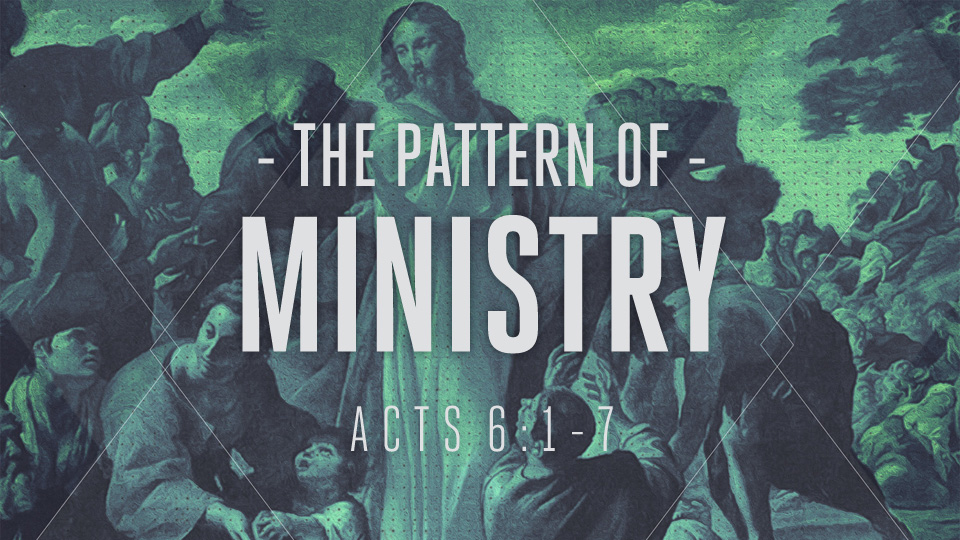
Something quite similar is happening in Acts 6. The apostles’ preoccupation with serving tables is endangering their original marching orders from Christ. What should the apostles be giving their time to? Look at 6:4, “But we will devote ourselves to prayer and to the ministry of the word.”
If 6:2-3 give us insight into what a healthy deacon body looks like, 6:4 gives us the priorities of pastoral ministry: praying and preaching. To read the rest of the New Testament, particularly the pastoral letters to Timothy and Titus, is to see this bear out. Faithful pastors and elders are those devoted, like the apostles they emulate to some degree, “ourselves to prayer and to the ministry of the word.”
If the great danger threatening the church in this passage was distraction—distraction from occupying their ministry with that which is of first importance. And this Satanic scheme makes so much sense doesn’t it? If faith comes by hearing and preaching is the ordinary way God gives life to His people and grows His church, why wouldn’t the Enemy want to distract pastors from praying and preaching? Why wouldn’t he want to distract some of you from devoting yourselves to the praying and preaching ministry of the church each week in gathered worship? A distracted church is a powerless church.
We will devote “ourselves to prayer and to the ministry of the word.” Oh, how we can’t—I can’t—forget the first side of the apostle’s devotion. Charles Bridges, in his classic work The Christian Ministry, wrote, “‘The spirit of our ministry is a spirit of prayer.’ Prayer is the ornament of the priesthood, the leading feature of our character. Without prayer, the minister is of no use to the church, nor of any advantage to mankind . . . It is prayer alone that gives the whole strength and efficacy to our different administrations . . . Prayer therefore is one half of our ministry; and it gives to the other half all its power and success.” I am incredibly thankful to serve in a church where preaching is valued, encouraged, and prayed for. I frequently get text messages and emails from you expressing encouragements about and prayers for this pulpit. From Acts 6:4 let me also ask, as I’m sure you are doing, to not forget to pray that your elders would be men of prayer.
A Biblical Pattern
Few things bring greater anxiety and expected stress in my life than returning home with self-assembly furniture . . . particularly from Ikea. Their “how-to/assembly” guides have no words, just pictorial steps that cause non-mechanical people like me to labor and toil far too long on a piece of furniture that sure looks like it should come together in a matter of minutes—not a matter of hours. From my perspective, the builder and the building guide cannot be trusted.
It seems to me that Satan wants us to believe something similar when it comes to the church: that the builder and the building guide cannot be trusted. Yet, the first seven verses of Acts 6 announce the builder (Jesus) and the building guide (His Word) are worthy of full trust—of total devotion. We can delight in and rest on the pattern of ministry according to Acts 6:1-7 Jesus’ promise that He will build His church (Matt. 16:18) through His word (Eph. 5:26).
As we conclude I want to point out a few pillars, according to Acts 6, of a church living in a faithful pattern of ministry.
Pillars of Faithful Ministry
A Word-centered ministry. I’m sure we’ve said enough on this point already, but the labor of ministry is to always keep God’s word at the center. The greatest threat to healthy ministry is anything that steals the centrality of the word—for the Word brings life and power to God’s people.
A Spirit-empowered ministry. To read the book of Acts to see a church empowered by God’s Spirit. A constant key to perpetuating unity and delight in a local church is members growing in the fullness of the Spirit. Is there anywhere in your life where you sense growing power from the spirit? It seems that few things test out the true spirit of a church as there life of prayer. Prayer-filled churches are Spirit-empowered churches.
A compassion-saturated ministry. Some people think the apostles acts in this text as though compassionate care of the widows is unimportant. But that’s not the case at all. They lead the church to ensure the widows needs are met. Devotion to God’s word is never severed from compassion towards God’s people.
A gospel-advancing ministry. We keep the Word central, long for the Spirit’s power, and fill our hearts with compassion in order to see the gospel advance in our lives, church, city, and world.
This then is the pattern of ministry we must pursue. One centered on God’s word, empowered by God’s spirit, saturated with compassion for one another, and advancing the gospel for God’s glory in all nations.
This post is adapted from my recent sermon, “The Pattern of Ministry,” on Acts 6:1-7.
Preaching is Terrifyingly Thrilling
“For [Barth], no intellectual pursuit could possibly match the thrill and the terror of the bold and audacious venture to speak about God.” – Marsh, Strange Glory, 53.
7 Books to Look For
Every so often I scour the “Coming Soon” lists from evangelical publishing houses to see if there’s anything worthy of anticipation. My most recent search turned up seven soon-to-be-published titles I think are of unique interest to ordinary pastors—to read and/or pass around in their churches.
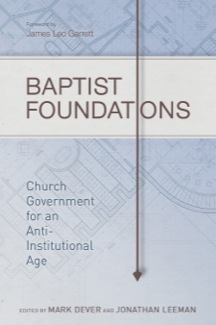 Baptist Foundations: Church Government for an Anti-Institutional Age edited by Mark Dever and Jonathan Leeman. Today is an anti-polity age, perhaps more than any other time in the history of the church. Yet polity remains as important now as it was in the New Testament church. Right polity strengthens Christians and their ties to one another. It is the platinum prongs that hold the diamond of the gospel in place, protecting the gospel from one generation to the next. Wrong polity, on the other hand, weakens Christians and their ties. It leaves heresies and hypocrites unchecked. It lets hurting sheep wander off and fall into canyons. It loosens the prongs so that the diamond of the gospel eventually falls to the ground and gets lost.
What then is a right or biblical polity? In this volume, representatives of several North American Baptist seminaries and a Baptist university make the exegetical and theological case for a Baptist polity. Right polity, they argue, is congregationalism, elder leadership, diaconal service, regenerate church membership, church discipline, and a Baptist approach to the ordinances.
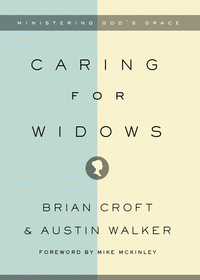 Caring for Widows: Ministering God’s Grace by Brian Croft and Austin Walker. Pastors and church leaders are responsible for countless things. Unfortunately, in many churches, ministry to widows remains largely neglected and forgotten.
Highlighting the Bible’s recurring commands to care for widows with sensitivity and compassion, this book encourages church leaders to think carefully about how to serve the widows in their congregations and suggests practical strategies to that end. In part 1, the authors summarize the Bible’s consistent teaching regarding the care of widows. In part 2, the authors offer hands-on counseling and a host of practical suggestions related to ensuring that widows receive the support and encouragement they need to thrive in the church.
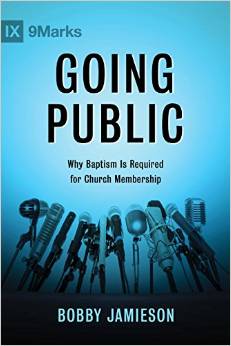 Going Public: Why Baptism is Required for Church Membership by Bobby Jamieson. Does everyone who joins a local church need to be baptized? What should churches that practice believer baptism do about those who were “baptized” as infants? This is a live question for many churches today, and it raises a host of other crucial questions: What is the meaning and function of baptism? Does baptism have any inherent relationship to the local church? How do baptism and the Lord’s Supper fit together? What exactly is “church membership”?
To answer the question of whether baptism is required for church membership, Going Public seeks to rebuild ecclesiological foundations, digging deep into the Bible’s teaching on baptism, the Lord’s Supper, and church membership. Bobby Jamieson describes how baptism and the Lord’s Supper transform a scattered group of Christians into a gathered local church. It traces the trajectory of a church’s birth, how gospel people form a gospel polity.
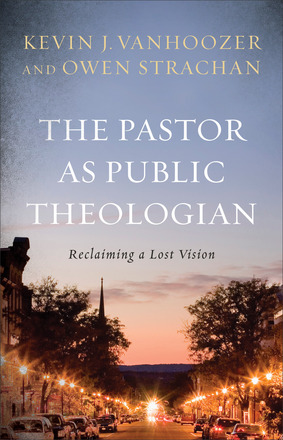 The Pastor as Public Theologian: Reclaiming a Lost Vision by Kevin Vanhoozer and Owen Strachan. Many pastors today see themselves primarily as counselors, leaders, and motivators. Yet this often comes at the expense of the fundamental reality of the pastorate as a theological office. The most important role is to be a theologian mediating God to the people. The church needs pastors who can contextualize the Word of God to help their congregations think theologically about all aspects of their lives, such as work, end-of-life decisions, political involvement, and entertainment.
Drawing on the depiction of pastors in the Bible, key figures from church history, and Christian theology, this brief and accessible book offers a clarion call for pastors to serve as public theologians in their congregations and communities. The church needs pastors to read the world in light of Scripture and to direct their congregations in ways of wisdom, shalom, and human flourishing. The Pastor as Public Theologian calls for a paradigm shift in the very idea of what a pastor is and does, setting forth a positive alternative picture.
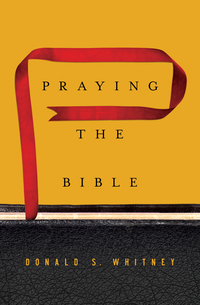 Praying the Bible by Don Whitney. All Christians know they should pray, but sometimes it’s hard to know how—especially if the minutes start to drag and our minds start to wander. Offering readers hope, encouragement, and the practical advice they’re looking for, this concise book by professor Donald Whitney outlines a simple, time-tested method that can help transform our prayer lives: praying the words of the Bible. Praying the Bible shows readers how to pray through portions of Scripture one line at a time, helping us stay focused by allowing God’s Word itself to direct our thoughts and words. Simple yet profound, this resource will prove invaluable to all Christians as they seek to commune with their heavenly Father in prayer each and every day.
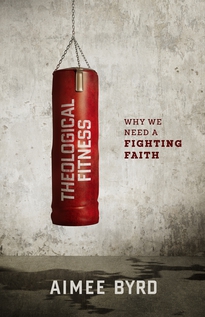 Theological Fitness: Why We Need a Fighting Faith by Aimee Byrd. Your spiritual life should be a battle! The writer of Hebrews tells us to “hold fast to the confession of our hope without wavering” (10:23 ESV). What (and whom) do we need to meet this challenge? How does simply “holding fast” turn into such a workout of faith? Author and blogger Aimee Byrd invites us to join her in some “theological fitness” training as she unpacks our call to perseverance and explores the great metaphor that physical fitness lends to theology. Learn about the “fighting grace” God has given us, and discover how we are equipped to live lives of obedience even amidst the suffering and irritations of ordinary life.
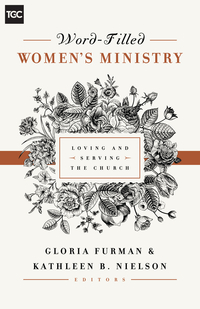 Word-Filled Women’s Ministry: Loving and Serving the Church edited by Gloria Furman and Kathleen Nielson. The Bible is clear that women as well as men are created in God’s image and intended to serve him with their lives. But what does this look like for women in the church? Helping church leaders think through what a Bible-centered women’s ministry looks like, this collection of essays by respected Bible teachers and authors such as Gloria Furman, Nancy Guthrie, and Susan Hunt addresses a variety of topics relevant to women. Whether exploring the importance of intergenerational relationships, the Bible’s teaching on sexuality, or women’s roles in the church and the home, this book of wise teaching and practical instruction will become a must-have resource for anyone interested in bolstering the health and vitality of Christian women in the context of the local church.
Theological Foundations for Preaching
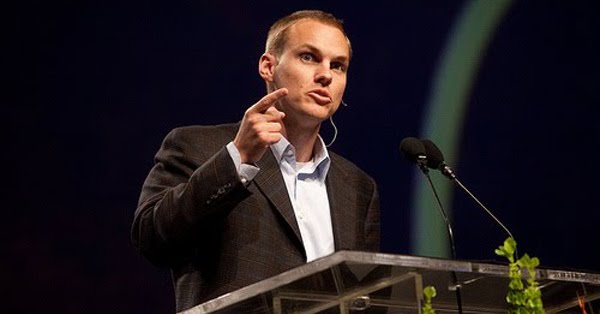
I’ve long thought that David Platt is a wondrously faithful model of how to preach God’s word. He handles Holy Scripture with reverence, clarity, passion, and joy.
Back in 2009 Southwestern Baptist Theological Seminary invited Platt to speak on the topic of “For the Glory of God: Theological Foundations for Text-Driven Preaching” at their annual expository preaching conference. The lecture is full of unction and help for ordinary preachers like myself.
The Preacher’s Private Prayer
In preparing to preach this Saturday on Acts 6:1-7 I’ve found the apostles’ prioritization on prayer freshly challenging. And that’s the way it’s supposed to be, right? Which one of us would ever say we don’t desire to grow in devotion to prayer? I need to hear—surely I’m not the only one—this apostolic conviction again and again, “We will devote ourselves to prayer and to the ministry of the word.”
From Disqualified to Distinguished
Thinking about Acts 6:4 always reminds me of a Spurgeon lecture entitled, “The Preacher’s Private Prayer.” His opening volley to the students will arrest any pastor’s attention. With typical confidence the Prince proclaims,
Of course the preacher is above all others distinguished as a man of prayer. He prays as an ordinary Christian, else he were a hypocrite. He prays more than ordinary Christians, else he were disqualified for the office which he has undertaken. “It would be wholly monstrous,” says Bernard, “for a man to be highest in office and lowest in soul; first in station and last in life.” Over all his other relationships the pre-eminence of the pastor’s responsibility casts a halo, and if true to his Master, he becomes distinguished for his prayerfulness in them all.
You’ll really want to read the rest here—pastoral and spiritual gold awaits. It may just be the most challenging and encouraging thing you do today.
A Series—That Looks to Be—Worth Serious Investment
One of the greatest things a pastor can do is read books that stretch his soul. These books may be outside his ordinary field of interest or they may be more academically rigorous than what he usually reads in theology. Such reading gives the soul godly flexibility and knowledgeable capability.
Among the Common Places
To this end I’ve found it helpful to identify a few series of books worth serious investment—of time and money. Last week I came across a new series from Zondervan that looks fantastic, “New Studies in Dogmatics.” The editorial team of Michael Allen and Scott Swain say,
New Studies in Dogmatics follows in the tradition of G. C. Berkouwer’s classic series, Studies in Dogmatics, in seeking to offer concise, focused treatments of major topics in dogmatic theology that fill the gap between introductory theology textbooks and advanced theological monographs. Dogmatic theology, as understood by editors and contributors to the series, is a conceptual representation of scriptural teaching about God and all things in relation to God. The source of dogmatics is Holy Scripture, its scope is the summing up of all things in Jesus Christ, its setting is the communion of the saints, and its end is the conversion, consolation, and instruction of creaturely wayfarers in the knowledge and love of the triune God until that knowledge and love is consummated in the beatific vision.
The series wagers that the way forward in constructive theology lies in a program of renewal through retrieval. This wager follows upon the judgment that much modern theology exhibits “a stubborn tendency to grow not higher but to the side,” to borrow Alexander Solzhenitsyn’s words from another context. Though modern theology continues to grow in a number of areas of technical expertise and interdisciplinary facility (especially in both the exegetical and historical domains), this growth too often displays a sideways drift rather than an upward progression in relation to theology’s subject matter, scope, and source, and in fulfilling theology’s end. We believe the path toward theological renewal in such a situation lies in drawing more deeply upon the resources of Holy Scripture in conversation with the church’s most trusted teachers (ancient, medieval, and modern) who have sought to fathom Christ’s unsearchable riches. In keeping with this belief, authors from a broad evangelical constituency will seek in this series to retrieve the riches of Scripture and tradition for constructive dogmatics. The purpose of retrieval is neither simple repetition of past theologians nor repristination of an earlier phase in church history; Christianity at any rate has no golden age east of Eden and short of the kingdom of God. Properly understood, retrieval is an inclusive and enlarging venture, a matter of tapping into a vital root and, in some cases, of relearning a lost grammar of theological discourse, all for the sake of equipping the church in its contemporary vocation to think and speak faithfully and fruitfully about God and God’s works.
While the specific emphases of individual volumes will vary, each volume will display (1) awareness of the “state of the question” pertaining to the doctrine under discussion, (2) attention to the patterns of biblical reasoning (exegetical, biblical-theological, etc.) from which the doctrine emerges, 3) engagement with relevant ecclesiastical statements of the doctrine (creedal, conciliar, confessional) as well as leading theologians of the church, and (4) appreciation of the doctrine’s location within the larger system of theology as well as its contribution to Christian piety and practice.
Our prayer is that, by drawing upon the best resources of the past and with an awareness of both perennial and proximate challenges to Christian thought and practice in the present, New Studies in Dogmatics will contribute to a flourishing theological culture in the church today. Soli Deo Gloria.
Forthcoming Volumes
- Holy Scripture: Donald Wood (University of Aberdeen)
- Triune God: Fred Sanders (Biola University)
- Divine Names: Scott R. Swain (Reformed Theological Seminary)
- Election: Oliver D. Crisp (Fuller Theological Seminary)
- Creation: Marguerite Shuster (Fuller Theological Seminary)
- Providence: Kevin J. Vanhoozer (Trinity Evangelical Divinity School)
- Humanity: Matt Jenson (Biola University)
- Christology: Daniel J. Treier (Wheaton College)
- Redemption: Henri Blocher (Faculté Libre de Théologie Ėvangélique)
- Justification: Michael Horton (Westminster Seminary California)
- Sanctification: Michael Allen (Reformed Theological Seminary)
- Holy Spirit: Christopher R. J. Holmes (University of Otago)
- Sacraments: J. Todd Billings (Western Theological Seminary)
- Eschatology: Ivor J. Davidson (University of St. Andrews)
- Prayer: Katherine Sonderegger (Virginia Theological Seminary)
- Christian Life: Kelly M. Kapic (Covenant College)