What’s Growing in Us?

1 John Podcast

Every time one of our children goes in for their annual checkup our pediatrician will humorously—yet carefully—work through a “Development Report Card.” Haddon’s 18-month report card said in the Development Comments, “Great job at growing up.” He evidently achieved all of the medical milestones.

Have you ever considered how concerned God is with our spiritual development and growth in godliness? Over the last four months we’ve journeyed as a people through the book of 1 John and the apostle has given us a clear chart on what kind of spiritual growth ought to be normal in our life together. We know he wants us to have growing assurance, and as we begin to close I want to think about from our text particular marks of growing assurance. Three marks by which we can examine our corporate growth.

Marks of Growing Assurance

Growing trust in God’s word. I told you all the way back in January, when we started our series in this letter, that John is surely an apostle for our time. In an age that demands acceptance of virtually every view, an age that up until just recently celebrated doubt and rebelled against absolute truth, John speaks with total, trustful certainty. The drumbeat of our text and his message is, “We know.”

Where might you be tempted to doubt God’s word? Are there any truths, commands, or promises where you are not taking God at His word?

To grow in assurance is to have growing trust in God’s word. A second mark is . . .

Growing confidence in God’s spirit. Our text says “everyone who has been born of God does not keep on sinning,” and that Jesus “protects” us and “has given us understanding.” All of this happens through the work of His Spirit. Are you confident in God’s spirit? Is secret sin threatening to undo you? Is consistent weariness stealing hope? John means to inject our souls not only with ever deepening trust in God’s word, but ever increasing confidence in the Spirit who resides in us.

A final mark of growing assurance is . . .

Growing joy in God’s son. This is the chief mark. John said in chapter one that one reason he wrote this letter is so that “our joy may be complete.” John continually defends the truth of Christ and exalts in the glory of Christ because, as 5:20 says, “He is the true God and eternal life.” What brings you ultimate joy? What person, place, or people—no matter the difficulty plaguing you at the moment—can seem to lift your spirit in an instance? Oh, how I long for us to increasingly say, individually and corporately, “Jesus is our supreme joy.”

Growing assurance means growing trust in God’s word, growing confidence in God’s spirit, and growing joy in God’s son.

This post is adapted from my recent sermon, “The Love of Assurance,” on 1 John 5:13-21.

Recent Reads

I love to read. I find it helpful to summarize my thoughts on each book and I offer those thoughts in the hope that you will be encouraged to either read or pass over the given title.

Lord willing, tomorrow night at IDC we will finish our spring sermon series on the book of 1 John. Here are some brief thoughts on the 1 John commentaries I finished this week.

0802825184mEpistles of John (NICNT) by I. Howard Marshall. If you’re familiar with the NICNT series you know it tends to be a bit more technical in nature, but Howard Marshall’s work on 1 John is full of pastoral warmth. That’s probably because the epistle on which he comments is full of pastoral sensibility and exhortation. Marshall strikes the appropriate balance in the apostle’s teaching between truth and grace/ word and spirit. Highly recommended.

9780801026874m1-3 John (BECNT) by Robert W. Yarbrough. Every sermon series I’ve ever preached found me purchasing—unknowingly—at least one commentary that was, quite frankly, turgid. For me, Yarbrough’s was that one for 1 John. The simplest of truths get untold paragraphs of focus and so it’s no surprise to find yourself drowingin the detailed analysis of John’s more difficult sections. Now, I’m not against detailed attention in biblical commentary. Yet, Yarbrough’s volume in the BECNT—a series I love—is an example of losing the forest for the trees. Preacher, don’t do the same in your exposition of 1 John.

9780830842490-1mThe Letters of John (TNTC) by John Stott. To read a John Stott commentary is a dangerous endeavor for preachers. If you don’t have your own outline of the passage before reading Stott’s commentary, chances are you’ll always be taking his–he’s just that good. This brisk volume in the Tyndale series has the two hallmarks of Stott on full display: precision and concision. If you are thus a preacher who tends to be wordy in your explanation, Stott will be a valuable addition to your study.

080283728XmThe Letters of John (PNC) by Colin Kruse. I always knew it would happen. At some point I was bound to find a volume in the Pillar New Testament series and offer a summary sigh of, “Meh.” I didn’t find the pastoral care in Kruse I so love in many of the other Pillar volumes. Also, the flow of his commentary is too frequently stilted by an “excursus” I think would have been better left woven into the verse-by-verse exposition. I’m sure some will disagree and find the theological rabbit trails useful. Looking back through its pages, this book has few underlined sentences after a first read. Somewhat disappointing.

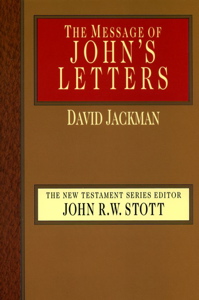
0830812261mThe Message of John’s Letters: Living in the Love of God (BST) by David Jackman. You can always expect a BST volume to have devotional tenderness and Jackman didn’t disappoint in his commentary on 1 John. Although I did find his commentary somewhat losing steam by the end and thought some of his expositional divisions were odd, his word is worth the money for a preacher. I regularly found Jackman providing an unusual depth of illumination into the text with winsome turns of phrase and thought-provoking outlines. Good work!

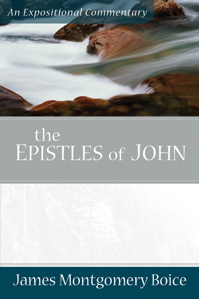
0801066425mThe Epistles of John (Boice Expositional Commentary) by James Montgomery Boice. I love the ministry of James Montgomery Boice and have long thought him to be a model of a pastor-theologian. Unfortunately, his expositional volume reminded me of Yarbrough’s a bit as Boice frequently divides the text into such minute sections he misses John’s larger argument. However, Boice must be commended here for characteristic clarity in instruction and moments—albeit more sporadic than you’d expect—of homiletical brilliance.

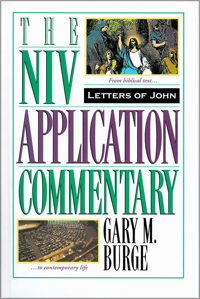
0310486203mLetters of John (NIVAC) by Gary Burge. I’m sure every preacher has affinity for a particular format in the commentaries he reads (I mean, does anyone like the format of the “Word Biblical Commentary?”). I’ve long found the NIVAC’s formatting to be a bit frustrating as it moves from ancient text, to bridging context, and finally to contemporary application. I was thus somewhat astonished to find Burge’s volume on 1John the most homiletically helpful of the whole bunch I read! He offers numerous exegetical insights, yet doesn’t complicate the simplicity of John. Burge also manages to squeeze out inordinate amounts of heart-searching application from each passage. I generally judge the commentaries I use for exposition by the “Preaching Factor”; i.e., “Does this book fan into flame a desire to preach the text at hand?” The best commentaries are sermonic fire-builders and Burge’s volume ignited a flame each week.

Click here to find other entries in the Recent Reads series.

Messenger Hymns

For almost seven years now it’s been a great privilege to call Matt Boswell a friend and partner in the gospel. We served on staff together at Providence Church before we planted IDC in 2013.

I’d say about seventy percent of the songs we sing at IDC are hymns of old. The remaining thirty percent include many songs Bos has written for the church. It’s thus a wonderful day when we can celebrate a new Boswell release. Just this week Bos gave Christ’s church another rich EP entitled Messenger Hymns Vol. 2.

“God Omniscient, God All Knowing” has long been a personal favorite and is a quintessential “call to worship” song. “Come Behold the Wondrous Mystery,” “O Church of Christ, Invincible,” and “God the Spirit” are some of our congregation’s favorites.

You can stream the seven songs below and then go buy the album on iTunes.

A Simple Encouragement

A Singing Church Slider

Pastoral ministry is one of maturing the members (cf. Col. 1:28). Christian maturity depends on teaching (Matt. 28:20), but we also know that much discipling work is more frequently caught than taught. One thing a faithful pastor should want his members to catch from his model is the joy of singing.

Needed: Singing People

Few threads of Christian experience are as woven through all of Scripture as the role of singing. It’s a consistent command (cf Ps. 96:1), the immediate response to redemption (Ex. 15), a mark of a Spirit-filled life (Eph. 5:19), and one of the glories of heaven (Rev. 4-5). Our God is a singing God (Zeph. 3:17) who commands and creates a singing people.

Our churches thus need pastors who visibly and audibly exemplify this singing life. Here are two simple ways you can do this.

They’re Watching and Listening

Sing passionately during your church’s gathered worship. This is quite simple for we one-service-only churches, and it’s a bit more tricky for multiple-service churches. Here’s why: if you have multiple services you might be tempted to join in the singing during only one service while skipping out on the others. For years I’ve seen pastors sit in “the green room” during the singing portion of corporate worship, only coming into the room to preach. I used to be on staff at a church where this was the usual practice. If you’re in the green room as much—or more—than you are out among the congregation during the church’s songs know that you’ve missed out on a sweet opportunity. Not just an opportunity to join in the joy of singing, but to model that joy before your people.

There is something powerful in a pastor sitting at the front of the room and singing with passion. It’s surely true that many church members take occasional, maybe even regular, glances at the pastor during worship to see what he’s doing. Oh, I pray when they look they don’t see a pastor fixated on his sermon notes. I pray they don’t see a pastor seemingly indifferent to the glory of song. I pray they don’t see a pastor talking with staff members or church members more than he sings. What does all that communicate to watching eyes? Singing is not of much value to the pastor. And if it’s not much value for him, why should it be for Mr. Church Member?

What’s better, much better, is for the congregation to see her pastor or pastors singing with passion. Passionate singing means praising God in spirit and truth with volume, expression, joy, and knowledge.

Sing often at other church gatherings. Don’t let the only time your church sings together be the weekend’s gathered worship service. Sing at men’s meeting, women’s meeting, members’ meeting, and prayer meetings. Encourage your small groups to sing one or two songs whenever they meet. I’ve recently been considering how to best incorporate singing into elders’ and deacons’ meetings. If we want to be a singing people we ought to be singing at every station of church life.

Preaching Pastors Should be Singing Pastors

My hope in this post is simple: to see more preaching pastors model the singing life before their people. Let us not relegate the joys of singing to those peculiarly gifted in voice or instrument. God’s given us a voice—however out of pitch it frequently may be—to sing praise to His name and model joy in song for out people.

Apply God’s word and grace wherever it’s needed on this issue. Then go sing with unusual heavenly joy before your people this weekend.

Within the Crucible

When Suffering Strikes

Martin Luther said oratio, meditatio, and tentatio (prayer, meditation, and trial) are the indispensable ingredients for proper theological study.

For years I’ve labored as a pastor convinced of Luther’s laws, but to tell the truth, I’ve only experienced two of them with any regularity. Prayer and meditation have been faithful friends, yet trials has been something of a distant relative—until last fall. Tentatio knocked on my door around November and he seems to have taken up an extended residence in my life.

The Trials We’ve Faced

Our season of suffering arrived when one of our deacons found out his third child would likely not survive many hours outside the womb. God’s hand of providence took baby Eli home a few months before his due date and we wept together. Death struck again just ten days ago when a beloved church member’s heart unexpectedly failed in the middle of the night and his earthly pilgrimage came to an end.

In between we’ve watched another dear member waste away before our eyes as cancer ravages his body. We’ve counseled church members with immediate and extended family members passing away. We’ve walked through instances of secret sin seeking to steal souls and mar relationships. We’ve prayed with brothers and sisters in Christ whose bodies are failing. The storm clouds of suffering still hover overhead.

I’m thus getting a first sense of how trial teaches and shapes not only our theology, but our church’s life together. Tentatio is indeed a faithful tutor when it’s married to faith in Christ. Here are the sweet lessons we’ve feasted on these last few months.

What the Trials Teach

Suffering has brought us greater unity. Like soldiers fighting in a foxhole together creates unusually strong relationships, so too does suffering together bring peculiar unity to a church. Many relationships now have a strength from shared suffering that I doubt could have come in any other way. Intercessory prayer is more active. Concerns of mercy and benevolence, already large, seem to burst forth at every corner. It’s quite difficult to let petty differences and disputes reign when death is moving. Which leads to the second lesson . . .

Suffering has brought us joyful perspective. We’ve learned afresh that life is short, death is real, and pain is great. Yet, oh how kind God is to comfort us in grief! These are principles many of us have heard about and endured separately, but now have experienced them together. We’ve seen how God’s promises take on new significance when suffering strikes. The ministry of God’s word becomes ever sweeter. The songs of the saints rise with greater volume. The vaporous nature of life is more keenly felt. This renewed perspective is a means to what is the ordinary walk of a Christian this side of heaven: joy in suffering.

Suffering has taught us the unshakeable power of God’s word. Without the truth of Scripture, what meaning can we find in suffering? Without God’s self-revelation, how can we know how Christ relates to our pain? Without God’s word, where would we find hope and strength?

What I’ve seen—maybe most acutely—over these last few months is what happens when a church lives in, around, and under the Truth. The Word is everything to God’s people. Like Luther famously said in another place, “The word did it all.” God’s word is the ballast in the boat of our corporate life.

Seasons of suffering, like the one we’re in, are times when our corporate boat sails through storms of Satan’s fury and death’s wrath. Our enemies sling their greatest waves our way and mean to tip us over. What will we do? Grieve we will, but fall we won’t, for our Lord has conquered death. What is left for God’s people is to stand on the truth of God’s word and in the victory of God’s Son.

And so we sail towards the heavenly city with confidence and certainty in spite of the storm, for nothing can assail God’s power delivered through His ordinary means. This is what tentatio has taught us.

A Fellowship of Simplicity

1 John Podcast

Over the last week or so we’ve been doing some of our favorite work at the Stone home: decluttering. Now, we didn’t even have a cluttered home to begin with; if anything could properly be called clutter it would have been my study sagging with books. I find unique satisfaction and contentment in that which is simple.

I’ve found myself—as we’ve studied 1 John—often thinking about John as something like the apostle of “declutterment.” He continually puts before his readers the simple, yet essential truths of authentic Christianity. And this is so helpful for us. We live in a world of near endless possibility, in a culture that celebrates near limitless potential, and thus we can easily be tempted to do everything. Yet, we will eventually discover our attempts to do everything only bring great complexity and clutter. This is temptation can creep into the church as well. How easy it is to do so many things in the name of God that we lose focus on God.

So as we begin to wind down our time, let me mention a few thing our text tells us about a simple corporate fellowship.


A Simple Fellowship According to 1 John

A testimony-driven fellowship. “This is the testimony, that God gave us . . .” It’s an amazing thing, isn’t it? God entrusts His word, which is His testimony about His Son, to His church. His testimony is what dictates, directs, and drives His people. Just as a car moves forward when you step on the accelerator, a church moves forward for God’s glory when it’s devoted to God’s testimony. This is why we a praying in 2015 for unusual devotion to gathered worship, for here we rally around God’s testimony together in song, prayer, sermon, and sacrament. What drives and directs your personal life? Family life? John tells us it must be God’s testimony.

A faith-filled fellowship. When God’s testimony goes out, God means for His people to receive it and believe it—to be full of faith. As God’s testimony grow, faith grows and so fear, anxiety, and worry diminish. Have you ever considered how worry and doubt increase when you live apart from God’s testimony? God’s word is what the Spirit uses to stir up faith.

Where a testimony-driven fellowship leads to a faith-filled fellowship, we can expect thirdly the church will be . . .

An alive-to-Christ fellowship. This is the testimony, that God gave us eternal life, and this life is in his Son. Whoever has the Son has life.Life flows into a church in so far as it joyfully concentrates on Christ. The testimony is about Christ, the faith is in Christ, and so life come from Christ. What is it that most excites you or enlivens you? What is it that most animates us as a church? Oh, may it increasingly be the glory of Christ, for life is found in Him alone.

Simply authentic fellowships aim for three basic things: devotion to God’s testimony, growth in faith, and increasingly love toward Jesus.

Why should you believe God’s word? Because Jesus’ baptism, cross, and spirit shout forth its truth. What happens when you believe God’s word? You find life in Christ. Let us then take God at His word.

This post is adapted from my recent sermon, “The Love of Life,” on 1 John 5:6-12.

More Wooing Than Warning

“Although every preacher must both woo and warn, the most regular note should be of wooing more than warning, more of the carrot than the stick, more of the beauty of holiness than the ugliness of sin, more of drawing Christ than highlighting the danger of the Devil, more of the attraction of heaven than the fear of hell.

“Let’s present Christ to our congregations or to our children and colleagues in all His glory. Let’s show them how much Jesus is willing and able to save and how much He desires and delights to save. He does not save because He has to but because He wants to and enjoys to.” — David Murray, The Happy Christian, 38.

The Spirit of Early Christian Thought

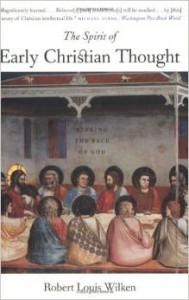
TSOECTThe Christian faith is an intellectual one at its core. From God’s formation of an old covenant nation to His creation of a new covenant church one command claims to be the greatest of all: “You shall love the LORD your God with all your heart and with all your soul and with all your mind” (Matt. 22:37 emphasis added; cf. Deut. 6:5). With such unrelenting clarity weaving its way throughout redemptive history it ought not surprise us to find a thriving intellectual life permeated the early Christian church.

In The Spirit of Early Christian Thought: Seeking the Face of God Robert Louis Wilken, Emeritus William R. Kenan, Jr. Professor of the History of Christianity at the University of Virginia, recounts the intellectual heart of early Christianity. “It is the purpose of this book,” Wilken says, “to depict the pattern of Christian thinking as it took shape in the formative centuries of the church’s history.” Wilken believes “the study of early Christian thought has been too preoccupied with ideas.” Therefore, rather than assessing the development of Christian ideas (the work of historical theology) Wilken unfolds how exactly Christians “thought about the things they believed.”

In the nineteenth century Adolph von Harnack’s proposes that early Christian thinking was little more than a hellenization of Christianity. Wilken says this thesis “has outlived its usefulness” and a better expression of early Christian thought would be the “Christianization of Hellenism.” The work of early Christianity was thus not one of developing a culture-shaped truth, but one aiming at a truth-shaped culture. This intellectual labor, Wilken asserts, is one ultimately aimed at seeking the face of God (Ps. 105:4)—a passage Wilken believes best “captures the spirit of early Christian thinking.”

Summary

The book’s short compass—just over three hundred pages—means Wilken has limited space to set forth “the things Christians cared most about.” He thus selects representative figures for each theme on which he concentrates. Although he pulls from numerous influential patristic figures, four tower above all others in his work: Origen in the third century, Gregory of Nyssa in the fourth, Augustine in the fifth, and Maximus the Confessor in the seventh. According to Wilken “these four stand out as the most rewarding, the most profound, and the most enduring.”

The book consists of twelve chapters, which can be grouped into five sections.

The Foundations (1-3)

The first three chapters set the course for all that follows by focusing on Christianity’s foundations: how God is revealed through the death of His son (ch. 1), how God is worshipped in the liturgy, prayers, and sacraments (ch. 2), and how God has—astonishingly—spoken to His people through His word (ch. 3).

The Teachings (4-6)

Wilken builds on these foundations in the next three chapters by considering the forging of a Trinitarian doctrine (ch. 4), the depicting of Christ’s word—particularly Maximus the Confessor’s elucidation of Christ’s agony (ch. 5), and the creation of human beings as participants in the life and knowledge of their Creator (ch. 6).

The Believer (7-8)

With those foundational teachings in place Wilken moves on to two chapters addresses the life of the believer. Channeling Augustine in both chapters Wilken first argues that God is only known in faith and love (ch. 7). Secondly, he comments on the role of the church in a just society and that “life directed toward God is always social” (ch. 8).

The Stuff (9-10)

The early church was one in which intellectual engagement led to tangible realities in the church’s life. Wilken brilliantly informs us of “a significant new development in Christian intellectual life”: poetry (ch. 9). The poetry of Prudentius gives a glimpse also into the burgeoning power of hymnody in the church. The physical matter of icons is Wilken takes up next, arguing for a robust understanding of the relationship between material and spiritual realities (ch. 10).

The Goal (11-12)

Keen to show how “the Christian intellectual tradition is an exercise in thinking about the God who is known and seeking the One who is loved,” Wilken rounds down his discourse with a focus on living holiness. The goal of the Christian life was to be like Christ, a likeness revealed through biblical virtues such as patience and humility (ch. 11). The moral life of Christianity grows out of its spiritual life, a life of holy passion and affections—in other words, a life of love (ch. 12).

Evaluation

Wilken believes the “energy, the vitality, the imaginative power of Christian thought stems from within, from the person of Christ, the Bible, Christian worship, the life of the church.” It must be said that Wilken’s pen proves to be a worthy vessel for his thesis. Joseph Mueller makes a similar point when he concludes, “Some of the attractiveness of [Wilken’s] demonstration comes from the complete fit between his style and that of early Christian thought.” Energetic, imaginative, and powerful prose flows on every page. One can easily get caught up in the sweeping, moving cadence of his instruction. Wilken’s literary skill alone makes The Spirit of Early Christian Thought a valuable contribution. If only all scholarly work could be so well written. Yet, scholarly works do not rise and fall on their literary merits, they do so on proving their point(s). Thus, we must ask, “Does Wilken effectively prove the early Christian intellectual tradition is best expressed as the Christianization of Hellenism? Did the early church thinkers ultimately direct their work toward seeking the face of God?” The one word answer to each question is the same: “Largely.”

Wilken’s labor is both helped and harmed by unvarnished sympathy for his subjects. Angela Russell Christman, in her review of the same book, says, “The subject of this book . . . Wilken portrays so . . . sympathetically for his readers.” Wilken even seems to acknowledge this sympathy when he says, “One of the most distinctive features of Christian intellectual life is a kind of quiet confidence in the faithfulness and integrity of those who have gone before.” This quiet confidence is helpful in so far as it allows Wilken to warmly invite readers to sit at the feet of and glean from spiritual giants of a previous era. Yet, it gets in the way of substantive critical interaction with the tradition itself. Wilken’s portrayal can wade into the always-treacherous waters of hagiography. This point is well made by John Morrison who, writing in The Journal of the Evangelical Theological Society, says, “The Fathers . . . are made to be wholly charming in life and thought; the warts are all but gone. The few that remain are turned into beauty marks.” Furthermore, “Wilken is . . . [presenting] unapologetically the very best face of early Christianity.”

This is why I answer the question of whether or not Wilken achieves his aims as, “Largely.” Did the Christian intellectual tradition forcefully influence the Hellenized world? No doubt. Yet, the street moves both ways. Did not prevailing philosophies of the day influence creedal and confessional statements in the early church? Absolutely. Did the early Christian intellectuals seek the face of God? Many did. But, as Morrison remarks, “Wilken also quickly excuses, defends, or gives fresh ‘spin’ to the wrongs or misdirections of the Fathers.”

Wilken is able to prove his thesis by choosing the shining stars of the tradition, but shining starts they all were not.

Conclusion

While Wilken’s work might be better served to come from a sympathetically critical pen, The Spirit of Early Christian Thought is still a magnificent achievement. Wilken’s synthesis is compelling and convicting; it will lead many to greater historical awareness and present earnestness in seeking the face of God.

Don’t Skip Over the Cross

“When we assume that God only wills healing and joy rather than suffering in our lives now, we have forgotten the cross of Christ. When we act as if life with the resurrected Christ should be just one victory upon another, we have forgotten the cross of Christ. For while the death of Christ was a once for all sacrifice, ambassadors of the gospel do not skip over the cross to experience “resurrection living.” – Todd Billing, Rejoicing in Lament, 127.

A Conversation on Worship

Last spring Southeastern Baptist Theological Seminary hosted a casual conversation on the topic of worship with Bruce Little, Andy Davis, and Daniel Renstrom.

Listen here or watch below.