I love to read. By God’s grace I am a pretty fast reader; I usually read a couple books each week. I find it helpful to summarize my thoughts on each book and I offer those thoughts in the hope that you will be encouraged to either read or pass over the given title.
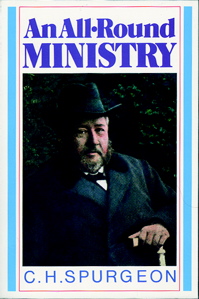
 An All-Round Ministry by Charles Spurgeon. In 1865 Spurgeon began an annual conference for the students and alumni of his Pastor’s College; twelve of the best presidential addresses he gave at these conferences were eventually published as An All-Round Ministry. This book functions as something like a sequel to Lectures to My Students. Any pastor will profit from The Prince’s ruminations on pastoral ministry; his characteristic wit, wisdom, and biblical passion fall under the spotlight here. The eleventh chapter, “The Preacher’s Power, and the Conditions of Obtaining It”, is worth the book’s weight in gold.
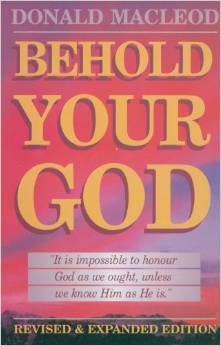
 Behold Your God by Donald Macleod. At some level, every theological fallacy is rooted in a false understanding of God. It’s quite wise then for pastors to consistently study the character and ways of God. One way I put this into practice is regularly reading or rereading books on the doctrine of God. Macleod’s Behold Your God is just the latest in my theology proper parade. I felt like I was invited into Macleod’s home for dinner and got to here him riff on the attributes of God and historical discussions about God. Fun stuff! I didn’t agree with everything he said – his quick disavowal of the historically defined impassibility being one example – but the chapters are helpfully short and clear.
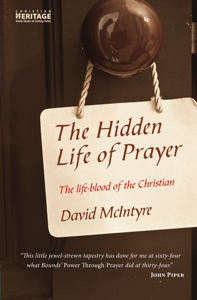
 The Hidden Life of Prayer: The Life-Blood of the Christian by David McIntyre. I am always helped by books on prayer. Even if the given book isn’t very good at least it gets me thinking about prayer. And whenever I think about prayer I normally soon find myself in the prayer closet. So I try to always be reading something on prayer. David McIntyre’s The Hidden Life of Prayer is one I return to every couple of years. It’s short, full of lively anecdotes, and packed with biblical and historical insights on a life of private prayer. The first two chapters – “The Life of Prayer” and “The Equipment” – are always challenging. Case in point: in the latter chapter McIntyre says, “The equipment for the inner life of prayer is simple, if not always easily secured. It consists particularly of a quiet place, a quiet hour and a quiet heart.” That kind of sound simplicity awaits anyone who would feast upon this gem.
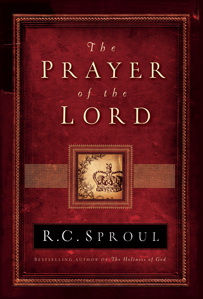
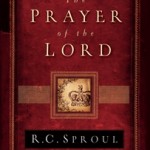 The Prayer of the Lord by RC Sproul. For years I’ve meant to get around to Sproul’s exposition on the Lord’s Prayer, but it took the prospect of preaching on Matthew 6 to get me to finally open up this little gem. The Prayer of Our Lord is a model of biblical and systematic theology; all packed into 105 pages. Everything you’d expect from Sproul is here: etymological attention, philosophical rumination, theological explanation, and heart searching application. I could see this book being uniquely helpful in morning devotions and in discipling relationships.
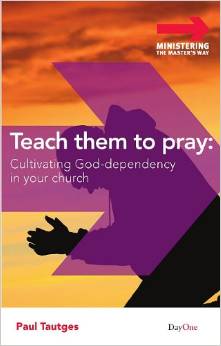
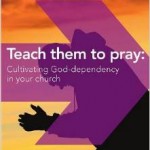 Teach them to Pray: Cultivating God-Dependency in Your Church by Paul Tauges. Day One’s Ministering the Master’s Way series is full of simple and short resources to provoke pastors. Paul Tautges’ little volume on prayer is an arrow worthy of every pastor’s book quiver. The book has three main sections: “Prayer – An Expression of God-Dependency” (Part 1), “Brief Sermons for Prayer Meetings” (Part 2), and “Practical Helps for Cultivating God-Dependency” (Appendices). There is nothing revolutionary nor original in Teach Them to Pray; the best sections are quotes from other pastors or theologians. Yet it will most definitely cause you to evaluate the place of prayer in your local. That reason alone is sufficient for me to commend the book to every pastor.
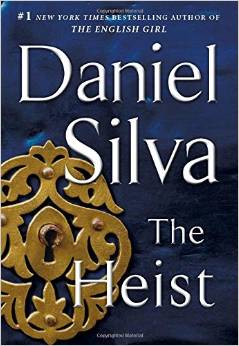
 The Heist by Daniel Silva. Silva’s beloved Israeli spy and art restorer Gabriel Allon returns in The Heist, a novel quintessentially Silva-esque. As I’ve said before, Silva’s mastery is seen in how the Allon books are virtually free from the scandalous or promiscuous, and yet they still thrive. The Heist finds Allon pursuing Caravaggio’s masterpiece The Nativity, investigating the murder of a former British intelligence agent, and endeavoring to bring down the ruling family of Syria. The Heist is another solid work for Silva and is perfect reading on late summer nights.
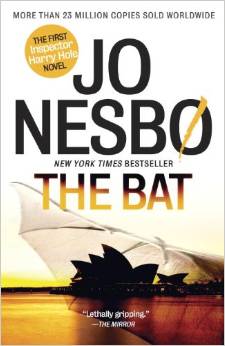
 The Bat by Jo Nesbø. Norwegian mystery writer Jo Nesbø’s Harry Hole (pronounced “HO-leh) series currently stands at ten volumes and is something of a phenomenon in international publishing. For years I’ve had people, who know my propensity to read detective thrillers, tell me, “You must read Nesbø!” So I finally picked up The Bat, “The electrifying first appearance of . . . Harry Hole.” Well, electrified is not a word I would use to define my first experience of Mr. Hole. The narrative moves nicely when it concentrates on the investigation and pursuit of a mysterious Australian (yep, the Norwegian detective is sent down under in this one) serial killer. Yet, those intriguing thrills are too often derailed by Nesbø’s fixation on humanizing Hole by recounting the Norwegian’s dark vices. It may take another few years for me to move on to Harry Hole #2.
Click here to find other entries in the Recent Reads series.