Watson on Praying for Sermons

WatsonBeatitudesMondays are sermon prep days, at least for me. Rarely is the day occupied with anything else.

When Spurgeon, the “Prince of Preachers”, was asked why his ministry was so effective, he responded, “My people pray for me.”

It is my hope that congregations everywhere pray consistently for their preachers. I have told my congregation which days of the week I devote to sermon preparation in hopes they offer supplication and intercession on my behalf (Eph. 6:19). Consider these words from Thomas Watson:

God’s Spirit must fill the sails of our ministry. It is not that scatters the seed which makes it spring up, but the dews and influences of heaven. So it is not our preaching, but the divine influence of the Spirit that makes grace grow in men’s hearts. We are but pipes and organs. It is God’s Spirit blowing in us that makes the preaching of the Word by a divine enchantment allure souls to Christ. Ministers are but stars to light you to Christ. The Spirit is the lodestone to draw you.

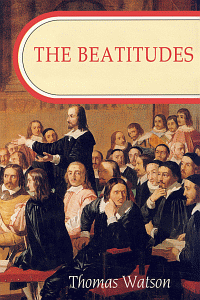
Oh, then pray for us, that God will make his work prosper in our hands. This may be one reason why the Word preached does not profit more, because people do not pray more. Perhaps you complain the tool is dull, the minister is dead and cold. You should have whetted and sharpened him by your prayer. If would have the door of a blessing opened to you through our ministry, you must unlock it through the key of prayer. (Thomas Watson, The Beatitudes, 23)

May our people be praying people and our preachers “prayed for” preachers.

Spring Break in Africa

Starting tomorrow the blog will be silent as I am on my way to Uganda with a team from IDC.

Sixteen of us are off to serve at Restoration Gateway over spring break. We will be doing everything from teaching the Bible, to construction, to soccer camps, to dental and medical clinics, to kids programs and caring for orphans. I’d appreciate any prayer!

Somewhat regular blogging will resume, Lord willing, on March 17th.

Recent Reads

I love to read. By God’s grace I am a pretty fast reader; I usually read a couple books each week. I find it helpful to summarize my thoughts on each book and I offer those thoughts in the hope that you will be encouraged to either read or pass over the given title.

91sphgCz8KL._SL1500_The Works of George Swinnock Vol: 1. I first came across Swinnock when I purchased Trading and Thriving in Godliness: The Piety of George Swinnock in Reformation Heritage’s “Profiles in Reformed Spirituality Series.” I loved his work enough to use Christmas money that year to purchase his five-volume collected works published by Banner of Truth. The first two and half volumes are occupied with The Christian Man’s Calling, an exhaustive application of 1 Timothy 4:7-8. Swinnock is clear, if somewhat monotonous, and Spurgeon was spot on when he said, “George Swinnock had the gift of illustration largely developed, as his works prove…they served his purpose, and made his teaching attractive…there remains “a rare amount of sanctified wit and wisdom.'”

41oOtHzHvaL._SY344_BO1,204,203,200_The Ascension: Humanity in the Presence of God by Tim Chester & Jonny WoodrowThere seems to be, in spite of the gospel-centered resurgence, a gap in publications on the ascension of Christ. Enter this splendid little work by Chester and Woodrow, of Porterbrook Network fame. The book consists of three chapters on Christ as: 1) Ascended Priest, 2) Ascended King, and 3) Ascended Man. With careful attention to biblical and systematic theology the authors eloquently display the undervalued significance of the truth that Christ has ascended on high. This is a vital read.

519X39H72KL._SY344_BO1,204,203,200_Putting Truth to Work by Dan DorianiDA Carson rightly says of this book, “There is not much written that deals thoughtfully and creatively with the theory and practice of applying Scripture” in preaching. Doriani’s book is an exhaustive treatment (coming in at over 300 pages) of the what, why, and how of application. He argues that there are four aspects to sound application: duty (what the text calls us to do), character (who the text calls us to be), goal (what goals the text calls us to pursue), and discernment (how the text tells us to distinguish between character and error). The four aspects can be put through a seven avenues for application, thus Doriani argues – compellingly so – that you could legitimately have 28 different applications to a given pericope. While I do wish the book was shorter, it is a sound and sensitive treatment of a timeless issue. Well done!

51LDVgSggBL._SY344_PJlook-inside-v2,TopRight,1,0_SH20_BO1,204,203,200_Paradigms in Conflict by David Hesselgrave. Paradigms in Conflict addresses ten pressing issues in missiology today. The pressing issues are better understood to be the common dichotomies that divide missionaries and missionary organizations. Things like “Free Will vs. Divine Sovereignty”, “Power Encounters vs. Truth Encounter”, and “Exclusivism vs. Inclusivism.” I don’t agree with all of Hesselgrave’s conclusions, but I think the book proves to be a valuable resource for discipling people entering the mission field. The author is extremely well-verse on the literature and, for the most part, fairly represents the various views treated in the book. I also appreciated his tone of humility in tackling such thorny issues.

41ewEXQFTeL._SY344_PJlook-inside-v2,TopRight,1,0_SH20_BO1,204,203,200_Presumed Innocent by Scott Turow. Someone told me once that Turow’s book created the “courtroom thriller” genre in publishing. Now that I’ve finally gotten around to reading it I can see why. Presumed Innocent employs many devices in structure and style that have made millionaires out of men like John Grisham and Richard North Patterson. The book is narrated in first-person, making the tone intensely personal and compellingly introspective. A thriller wouldn’t be a thriller without a surprise ending, and although my suspicion was proved true at the end, the twist was nevertheless enjoyable.

513KDYGPssL._SY344_PJlook-inside-v2,TopRight,1,0_SH20_BO1,204,203,200_The Innocent by David Baldacci. For years I’ve had people tell me I should read David Baldacci. The Innocent was my first dive in the Baldacci catalog and I was satisfied with the outcome. This book is the first in a series that follows Will Robie, a “stone cold hitman” with – go figure – a conscience. Whether or not such a thing is really possible is a debate for another day. The plot line is engrossing, the characters are enjoyable textured, and the outcome is unexpected. Not surprising enough to shock with me with who actually was the villain, but how the villain went about its evil scheme. A quick, fun read.

51ib4txWMvL._SY344_PJlook-inside-v2,TopRight,1,0_SH20_BO1,204,203,200_Zero Day by David Baldacci. The Innocent was good enough for me to pick up another Baldacci book and Zero Day is first entry in a separate Baldacie series. This one recounts the exploits of John Puller, “the best military investigator in the U.S. Army’s Criminal Investigation Division.” Now this Puller character I like! He really has a conscience (at least in this first book) and cannot be stopped or hindered in his pursuit of truth. Zero Day finds Puller stumbling across a vicious tragedy that opens up the possibility of a grave assault on our nation’s defense. While the plot stretches the realms of realism, it was the first in a long time that actually surprised me. I look forward to the other books already published in this series.

A Catalyst for the Pastor’s Prayer

Praying Pastors 2

I doubt any pastor would argue with this statement: “Faithful pastors are praying pastors.” I also doubt that any pastor wouldn’t simultaneously say, “I wish I was more faithful in private prayer.” The great Bishop Ryle knew this struggle well as he said, “Let us pray more heartily in private, and throw our whole souls more into our prayers.”

There are many things a pastor can do to see the consistency of private prayer grow in his ministry, but let me encourage you to one specific resource that you may “pray more heartily in private.”

A church directory.

AN UNDERRATED CATALYST FOR PRIVATE PRAYER

A directory can come in many different forms these days, but I personally prefer an old school paper directory complete with essential contact info and pictures. My goal is to pray through one page of the directory, sixteen people on average, each day. This simple commitment has done wonders for my prayer life and pastoral ministry.

First, praying through a church directory encourages specific prayer. In my experience and observation, most pastors seem to spend most of their prayer time hovering way up in the sky with their requests. We offer broad, and biblical, petitions like: “Help us to be faithful in disciple-making,” “give us teachable hearts,”  and “mold us into the likeness of Christ.” All good and necessary prayers for sure! But faithful pastoring means getting down into the trenches, even with our prayer requests. A church directory helps with this. Praying through individual names means I am, necessarily, offering specific intercessions that I wouldn’t otherwise probably be making. Intercessions for their children, jobs,

Second, praying through a church directory encourages consistent prayer. I block off time in the middle of each afternoon to pray for our church. Having the goal of praying through one page per day gives that time not only structure, but consistency. Even if nothing else pops into my mind for church-centric prayer, having the directory on hand gives me at least sixteen different people to pray for.

Third, praying through a church directory encourages public prayer. In his timeless little work on prayer JC Ryle said, “You may be vary sure people fall in private long before they fall in public.” If we are falling in private prayer we are undoing our public prayer. A maxim we pastors ought to live by in this area is, “He who fails in private prayer will fail in public prayer.” I know this to be true on a week by week basis. Those weeks where private prayer is lax, I feel my public prayer cold. Those weeks where private prayer is vibrant, I feel my public prayer has more heat. If a church directory indeed encourages specific and consistent private prayer, we can be sure that it is also fueling our public prayer in profound ways.

Fourth, praying through a church directory encourages peaceful unity. Ephesians 4:3 calls us to be “eager to maintain the unity of the Spirit in the bond of peace.” Colossians 3:15 commands the church to “let the peace of Christ rule in your hearts, to which indeed you were called in one body.” Just the other day one of our elder candidates said, “You know I looked around the room during gathered worship and I felt such joy that I get to worship with this body. And I think it is because of your encouragement to pray through the directory.” Why might he say that? I believe it’s because intercessory prayer helps build chords of unity within the body in ways nothing else can. We all know, intuitively, the power prayer has to overcome the pettiness and prejudice we can have towards our brothers and sisters in Christ. Prayer kills the weeds that quench peaceful unity. Simply put, it’s hard to remain frustrated with people you consistently pray for.

So then, praying through a church directory is, probably, much more than a catalyst for private prayer. It might just be a catalyst toward church health. You might want to give it a try.

A Blueprint for Preaching

A Blueprint for Preaching

In Colossians 1:28 the apostle Paul gives us a surprisingly exhaustive blueprint for preaching when he says, “Him we proclaim, warning everyone and teaching everyone with all wisdom, that we may present everyone mature in Christ.”

In the short span of this one verse we find the center, means, and aim of faithful sermons.

THE CENTER OF OUR MESSAGE

In verse twenty-five we find Paul telling the Colossians that God gave him a stewardship in the church to make the word of God fully known, which Paul is going to define further on two different levels.  First, in verse twenty-six we see him call the word of God the mystery.  If Paul had a favorite word, μυστήριον might just be it.  In Ephesians and Colossians alone he uses the word some twenty times.  And its use is intended to communicate to us that the Word of God has been progressively unveiled throughout redemptive history.  He has in mind that specific truth about God and His plan of salvation that had previously remained hidden, but has now been revealed.  So the word of God is the mystery, and verse twenty-seven gives us the second level definition when it says to them God chose to make . . . the glory of this mystery, which is Christ in you, the hope of glory. Him we proclaim . . . The word of God is the mystery and the mystery is Christ. Christ Jesus is the center of our message.

I want to then ask a question here, “Why must Jesus be the center of the church’s message?” We should not blithely pass by this truth or take it for granted. Why must Christ be the center of our message?

The Word must be all about Christ because only Christ can reveal the Father unto us. The Father created us for His own glory, He created us to have an intimate relationship with Him, and of course that relationship is marred by sin.  Sinful people seek there own glory, not the glory of God.  Because of this we are subject to the righteous wrath of God.  But in His love God sent His Son – the radiance of His glory – to remedy that broken relationship. Jesus is God Himself, and He comes, not only to share the love of the Father with us, but also to share His knowledge of the Father with us. He comes that we might grow to know the Father as He know the Father. Through His perfect life, death, and resurrection Jesus reveals the Father unto us so that, through faith, the relationship might be restored.  Christ therefore must be the center of our message.

And what a glorious center it is, as Paul says, “how great are the riches of the glory of [Christ]!”  To say that Christ is the center of the church’s messages is to say that our message centers on a treasure of unsearchable riches.  We call people to come and drink from the fount of Christ for we know that He satisfies.  We call people to place their faith in the blood of Christ because it can cover any sin. We call people to open up the Word of God and stand astonished and breathless at the majesty of God revealed to us.  We say with John Owen, “On Christ’s glory I would fix all my thoughts and desires.”

THE MEANS OF OUR MESSAGE

“Proclaim” a general term not restricted solely to preaching, yet is summarily comprehends the entire preaching ministry. The message of the church is rooted in the preaching ministry. Paul tells us that his proclamation includes two aspects, one negative and one positive.  The negative aspect is warning everyone; which speaks of encouraging counsel in view of sin and coming punishment.  Faithful preaching and ministering of the Word always has an eye towards loving admonishment and warning of sin and its consequences.

Faithful ministering of the Word means that we care enough to lovingly warn and admonish our brothers and sisters from the inherent danger that comes from a perpetual practice of sin.  The positive aspect of our proclamation is that we are also teaching everyone. Our message must also build up and instruct Christians in the truths of Scripture and the way of life found in Christ. Paul tells us that rightly proclaiming, warning, and teaching the message to the church requires that one do so with all wisdom.  Proclamation saturated with wisdom means choosing the right times and likeliest means, the different circumstances and capacities to those who are listening, and instructing accordingly.

Christ is the center, proclamation is the means, and now we look at the aim of our message.

THE AIM OF OUR MESSAGE

Paul has clearly articulated the center and means of the church’s message and just in case someone might ask “why?” he says that we do this so that we may present everyone mature in Christ. The aim is maturity. This word maturity actually may not capture the fullest sense of what is happening in the Greek.  The Greek word in view here is τέλειον, which more literally means “perfect.”  The problem is that “perfect” is too strong and “mature” is too weak. The sense that I want you to grasp this morning is that the aim of our message is wholehearted devotion in mind, heart, and spirit to the Lord.  The aim is wholehearted devotion.  Preaching Christ is unto the end of conforming one to the image of Christ.

This then is the blueprint for faithful sermons: Christ is the center, proclamation is the means, and wholehearted devotion and conformity to Christ is the aim. Preach on!

Jesus Shall Reign

Old Made New

Here’s a great arrangement of Watt’s “Jesus Shall Reign” by The Silver Pages.


LYRICS

Jesus shall reign where’er the sun
Does its successive journeys run
His kingdom spread from shore to shore
Till moons shall wax and wane no more

People and realms of every tongue
Dwell on his love with sweetest song
and infant voices shall proclaim
Their early blessings on his name

Blessings abound where’er he reigns
The prisoners leap and loose their chains
The weary find eternal rest
and all who suffer want are blessed

Let every creature rise and bring
The highest honors to our King
Angels descend with songs again
And earth repeat the loud amen!

Download the song for free on NoiseTrade.

4 Obstacles to Faithful Preaching

Preaching Header

One of my favorite books on preaching is Tony Merida’s Faithful Preaching: Declaring Scripture with Responsibility, Passion, and Authenticity.

The book has a strong Trinitarian emphasis as Merida calls preachers to preach Christ unto the glory of God with the help of the Spirit. Such a goal is no easy endeavor though. Obstacles to Trinitarian preaching can be found in the preacher’s motivation, message, and manner. Merida discussion of four obvious obstacles within a preacher’s motivation is most useful.1

4 MOTIVATIONAL OBSTACLES TO FAITHFUL PREACHING

Obstacle #1: Indwelling Sin. Sin clouds our vision of God and hinders intimacy with God. Consequently, our motive gets distorted when our hearts are not clean. Our motive may end up being popularity, praise, success, or power. Therefore, the primary opponent we have to deal with in preaching motivation is the indwelling residue of sin, and the pride that so interwoven with it.

Obstacle #2: The Praise of Men and Fear of Men. Preachers regularly care too much about the reaction of people. Many times we forget that the primary audience of our sermon is God not people. If we neglect this reality, we will fall into the trap of either altering the message to please people or not preaching truth because we fear people. Remember that if you do not please God, it really does not matter who you please.

Obstacle #3: Competition and Jealousy. The unfortunate competition between preachers is on perpetuated by the contemporary milieu of the day. Many preachers tend to get jealous when others are favored as the keynote speaker, or receive offers from large churches.

An old 4th century story illustrates this well. Some inexperienced demons were finding it difficult in tempting a godly hermit. They lured him with every type of temptation, but he could not be enticed. The demons returned to Satan and recited their problem. He responded that they had been far too hard on the man. Satan said, “Send him a message that his brother has just been made bishop of Antioch. Bring him good news.” Baffled by the devil’s advice, the demons returned and reported the wonderful news to the pious hermit. In that very instant, he fell into deep, wicked jealousy. Jealousy can tear down the godliest ministers.

Obstacle #4: Obsession with Church Growth. Obsession with church growth has the power to keep you from preaching for God’s glory. The temptation is to do “whatever works” (pragmatism) in order to attract a crowd, keep your job, or get a raise. However, the means to not always justify the ends. A faithful preacher has a higher goal than merely putting people in the seat and paying the church’s bills. We have a doxological purpose in preaching (glorifying God) before we have a numerical purpose in preaching (increasing numbers).

  1. The following content is adapted from Faithful Preaching, 24-27.

Ascension-Shaped Preaching

The Ascension and Preaching

I remember sitting in a systematic theology class at RTS while Doug Kelley lectured on Christology. When he got to the ascension and session of Christ he said something like, “If any of you do doctoral work, consider doing it on the ascension. It is woefully neglected.”

It was one of those random asides from a professor that sticks with you.

Ever since then I have kept my eye out for books on the ascension, but the years have proven Dr. Kelley to be quite the prophet. The ascension of Christ does indeed seem to be the forgotten aspect of Christ’s work.

Tim Chester and Jonny Woodrow bucked the trend last year by publishing The Ascension: Humanity in the Presence of God. It is theological pithiness at its finest. In just over 75 pages they unpack how Christ’s ascension is paradigmatic to our understand of and mission for Christ. 

HOW THE ASCENSION SHAPES PREACHING

Chapter two is a masterful exposition of Jesus’ ascension as His enthronement as king. Along the way they rightly observe how the ascension profoundly impacts our understanding of evangelism. If we substitute “preaching” for “evangelism” here’s what we get:

When we proclaim the gospel we are heralds of a coming king. It is as if we go to the citizens of a country and say that a king is coming who rightly claims their allegiance. Those who currently rule them are usurpers and tyrants. But the true king is coming and He will be king. He will reign.

This is what takes place in [preaching].  We declare that Jesus is king and that Jesus will be king. The earliest encapsulation of the Christians message is ‘Jesus is Lord’ – confessed at a time when the rest of the world was declaring Caesar to be Lord (Rom. 10:9). Jesus has been given all authority by the Father and one day every knee will bow before Him. If people acknowledge His lordship now, they will experience His coming rule as blessing, life and salvation. If they reject Him, they will experience His coming rule as conquest, death, and judgment.

We live in a culture where choice is everything and value judgments are relative, in which I decide what is right for me. The declaration of Christ’s kingship cuts right across this. We do not invite people to make Jesus their king; we tell people that Jesus is their king. We do not invite people to meet Jesus; we warn people that they will meet Jesus as their conquering king, either through the gospel or as their judge on the final day. We do not offer people a gospel invitation; we command people to repent and submit to the coming king. Of course we do this graciously and gently (1 Pet. 3:16). We cannot force or manipulate repentance. But one day everyone will bow the knee before Jesus one way or another (Phil. 2:9-11). . . .

Nothing could be more momentous for life on earth than Jesus’ ascension. This story creates [preachers] who proclaim Him boldly in the face of hostility. . . . It is an event to be publicly proclaimed to all nations. It does not create a church bunkered down in a ghetto, but a church that confidently proclaims the coming of Earth’s king.

Amen!

Alistair Begg on Sermon Preparation

begg1One of my favorite living preachers is Alistair Begg. I find him to be a model of convictional clarity in exposition. There is an art and unction to his preaching uncommon in our time.

If you want to find out more about Begg’s thoughts on preaching you can reach for his little booklet Preaching for God’s Glory. One section of the work that is particularly helpful is on his own method of sermon preparation. He mentions five points he “learned from an older minister when [he] was a theological student.”1

THINK YOURSELF EMPTY

“It is helpful if we can survey the passage in a proper spirit of unlearnedness. We do not want to be uncertain by the time our study ends, but it is all right and often beneficial to avoid the proud assumption that we know initially what everything means . . . In this stage I write down anything that comes to mind – parallel passages, possible illustrations, textual difficulties, poems, hymn quotes, a sketchy outline if it emerges naturally.”

READ YOURSELF FULL

“The pastor should read widely and regularly. There are certain books we should return to routinely: Baxter’s The Reformed Pastor, Augustine’s Confessions, and as daunting as we may find it, Calvin’s Institutes. I also find great profit in reading biographies. The two volumes on Lloyd-Jones should be a prerequisite for all pastors, as well as at least the first volume on Whitefield by Arnold Dallimore. . . . We must learn to benefit from these resources without becoming tied to them or allowing their insights to rob us of the necessary personal experience of discovery and creativity.”

WRITE YOURSELF CLEAR

“Aside from the essential empowering of the Holy Spirit, if there is one single aspect of sermon preparation that is most closely tied to fluency of speech and impact in delivery, it is this: freedom of delivery in the pulpit depends upon careful organization in the study. We believe that we have a grasp of the text and that we are clear about our delivery, only to stand up and discover that somewhere between our thinking and our speaking things have gone badly awry. The missing link can usually be traced to the absence of putting our thoughts down clearly.”

PRAY YOURSELF HOT

“There is no chance of fire in the pews if there is an iceberg in the pulpit; and without personal prayer and communion with God during the preparation stages, the pulpit will be cold. . . . We dare not divorce our preaching from our praying. . . . We can do more than pray, after we have prayed, but not until. How easy it is to affirm this, and yet how difficult to practice.”

BE YOURSELF, BUT DON’T PREACH YOURSELF

“There is nothing quite so ridiculous as the affected tone and adopted posture of the preacher who wishes he was someone else. . . .  James Stewart used to say, “Be yourself, but also, forget yourself!” Self-forgetfulness is of vital importance. We cannot make much of ourselves and much of the Lord Jesus Christ simultaneously. If people leave worship saying, “What an amazing preacher!” we have failed. Instead we must long for them to say, “What a great God, and what a privilege it is to meet him in his Word, as we have just done.”

  1. In Between Two Worlds John Stott mentions a very similar method saying, “The whole process from beginning to end, was admirably summed up the by American Black preacher who said, ‘First, I reads myself full, next I thinks myself clear, next I prays myself hot, and then I lets go.”

A Series Worth Serious Investment

Crossway has partnered with 9Marks for a series of books entitled “Building Healthy Churches,” they are an expansion of Dever’s incredibly useful 9 Marks of a Healthy Church. Each entry elaborates on one of the nine marks in a short and readable book.

If the first three books already published are a faithful representation of what’s to come, the Building Healthy Churches series will be one of the most useful resources available for the church – members and leaders alike. Here are the books already in print or soon to be in print.1

9MARKS: BUILDING HEALTHY CHURCHES

9781433532337Church Discipline: How the Church Protects the Name of Jesus by Jonathan Leeman. Church discipline is essential to building a healthy church. So how exactly do we practice church discipline? Jonathan Leeman helps us face the endless variety of circumstances and sins for which no scriptural case study exists, sins that don’t show up on any list and need a biblical framework to be corrected appropriately in love. Here is a contemporary and concise how-to guide that provides a theological framework for understanding and implementing disciplinary measures in the local church, along with several examples of real-life situations and the corresponding responses.”

9781433532375Church Membership: How the World Knows Who Represents Jesus by Jonathan Leeman. Why should you join a church? Becoming a member of a church is an important, and often neglected, part of the Christian life. Yet the trend these days is one of shunning the practice of organized religion and showing a distaste or fear of commitment, especially of institutions. Jonathan Leeman addresses these issues with a straightforward explanation of what church membership is and why it’s important. Giving the local church its proper due, Leeman has built a compelling case for committing to the local body.”

9781433535895Sound Doctrine: How a Church Grows in the Love and Holiness of God by Bobby Jamieson. “How do you feel about doctrine? Whatever answer comes to mind, this book will not only convince you that sound doctrine is vital for living a godly life, it will also explain the essential role of theology in the life of a healthy church. After all, thinking rightly about God affects everything, from guiding us in practical issues to growing a church’s unity and witness. This short, readable book shows how good theology leads to transformation, life, and joy.”

9781433540875Church Elders: How to Shepherd God’s People Like Jesus by Jeramie Rennie.What does effective church leadership look like? In this conversational book, Pastor Jeramie Rinne sets forth an easy-to-understand “job description” for elders drawn from the Bible’s teaching on church leadership. Offering practical guidance for new elders and helping church members better understand and support their spiritual leaders, this succinct volume will encourage elders to embrace their calling with grace, wisdom, and clarity of vision.”

9781433544651Evangelism: How the Whole Church Speaks of Jesus by Mack Stiles. “Evangelism is more than a program. Every few years, churches jump into the latest evangelistic fad. Leaders administrate the new program, and members go on a raid. But picture a church where evangelism is just part of the culture. Leaders share their faith consistently and openly. Members follow, encouraging one another to make evangelism an ongoing way of life. Such is the way of evangelism presented by this brief and compelling book. No program here. Instead, it just might give your church a new way to live and share the gospel together.”

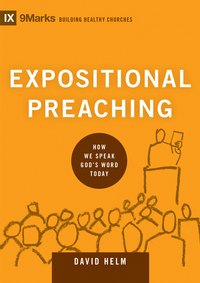
9781433543135Expositional Preaching: How We Speak God’s Word Today by David Helm. “What makes for good preaching? In this accessible volume—written for preachers and preachers in training—pastor David Helm outlines what must be believed and accomplished to become a faithful expositor of God’s Word. In addition to offering practical, step-by-step guidance for preachers, this short book will equip all of us to recognize good preaching when we hear it.”

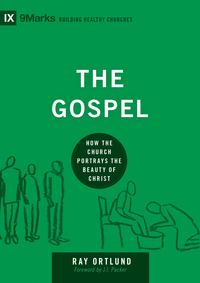
9781433540837The Gospel: How the Church Portrays the Beauty of Christ by Ray Ortland. “How does the church portray the beauty of Christ? The gospel is a theological message. But this message also creates human beauty—beautiful relationships in our churches, making the glory of Christ visible in the world today. In this timely book, Pastor Ray Ortlund makes the case that gospel doctrine creates a gospel culture. In too many of our churches, it is the beauty of a gospel culture that is the missing piece of the puzzle. But when the gospel is allowed to exert its full power, a church becomes radiant with the glory of Christ.”

I hope these book don’t fly under the radar, but are used mightily by God to build His church.

  1. All descriptions taken from Crossway.