Some Merits of a Manuscript

Preaching from a Manuscript

Early on in my ministry I purposed to figure out the best method for sermon delivery. I tried everything from a small outline, to a full outline, to a sticky note with one or two quotes, then to nothing altogether.

Looking back on it now I realize that, for some reason, I thought extemporaneous discourse free from notes was the quintessence of skill in preaching.

I now realize that’s just plain silly.

After about eighteen months of trying everything else, I finally tried preaching from a manuscript. What a difference it made! Now, I do need to explain that preaching from a manuscript does not mean reading a document before the church. Jonathan Edwards may have done that during prolific revival years, but Edwards I am not and you are not. Therefore, when I think of preaching from a manuscript I think of preachers going into the pulpit with elaborate notes on which they don’t heavily rely. Just like any other notes you might bring into the pulpit the manuscript exists summons your mind and heart to organized exposition. They are there and they are somewhat invisible. If you preach from a manuscript but your congregation would never think so, you are probably using it properly.

Here are three reasons why I find preaching from a manuscript particularly helpful.

3 MERITS OF THE MANUSCRIPT

1. Clarity. Many men throughout the ages have remarked on the value of writing oneself unto clear thinking, among them are:

  • Calvin, citing Augustine: “I count myself one of the number of those who write as they learn and learn as they write.”
  • Ed Welch: “I find that there are three levels of clarity. When I only think about something, my thoughts are embryonic and muddled. When I speak about it, my thoughts become clearer, though not always. When I write about it, I jump to a new level of clarity.”
  • John Piper: “Writing became the lever of my thinking and the outlet of my feelings. If I didn’t pull the lever, the wheel of thinking did not turn. It jerked and squeaked and halted. But once a pen was in hand, or a keyboard, the fog began to clear and the wheel of thought began to spin with clarity and insight.”

An articulate manuscript will require the preacher to think carefully and clearly about his exposition in a way no other system of preparation will. Preachers who use a manuscript are often accused of being boring, but they are rarely accused of being unclear. Clarity in preachign is a apostolic essential (Col. 4:4) and the accusation of a sermon being unclear is one of the worst things a preacher can hear. A manuscript is a catalyst to clarity in a ways an outline – simple or extensive – can’t possibly be.

2. Sensitivity. Two things come to mind on this point. First, manuscripts help preacher be sensitive to time. For example, I know that a 3,100 word manuscript will lead to a 35-37 minute sermon (the normal sermon length at our church). Another guy who preaches regularly at our church needs about 4,300 word to preach for 35 minutes. To each his own, I guess.

When I go somewhere and am asked to preach for a specific length of time, the manuscript is an invaluable aid to helping me honor the request. It isn’t constraining, it is actually freeing because I need not worry in the moment if I will end up taxing the audience’s attention with undue length.I often tell guys that people will forgive you for just about anything, but most won’t forgive you for a sermon gone too long.

A second point on sensitivity is the ability to get feedback on particularly thorny sections of your exposition. Maybe there is a theological nuance in the text that’s difficult to explain. Maybe there is an application that you want to make sure comes across appropriately. Writing out your thoughts in full allows you to then get well-informed feedback from other brothers and sisters. I can sit someone down in our church and say, “I need your feedback on point I am trying to make, here is what I plan to say . . .” Surely you can get feedback when you don’t manuscript, but I doubt it will be as detailed or informed.

Manuscripts then, aid sensitivity in time and exposition.

3. Usability. Quite simply, it’s easier to reuse a sermon that you manuscripted than one you outlined. Even further, manuscripts can readily be turned into text for newsletters, blogs post, articles, or chapters in a book. A manuscript multiplies the usability of your sermon in ways that no other method of sermon preparation can.

Recent Reads

I love to read. By God’s grace I am a pretty fast reader; I usually read a couple books each week. I find it helpful to summarize my thoughts on each book and I offer those thoughts in the hope that you will be encouraged to either read or pass over the given title.

517rFQAGr0L._SY344_PJlook-inside-v2,TopRight,1,0_SH20_BO1,204,203,200_The Creedal Imperative by Carl TruemanHe seems to be a divisive figure of sorts in the “gospel-centered” circles in which I live, but Carl Trueman is a gift to God’s church. I find him to be a voice of sanity in American evangelicalism, one who offers incisive cultural analysis and fresh articulation of the Christian tradition. All these things are on display in The Creedal Imperative, which seeks to argue “that the need for creeds and confessions is not just a practical imperative for the church but is also a biblical imperative” (19). I came to the book as a convinced confessionalist, but Trueman put more biblical and theological meat on that skeleton. A book every pastor ought not to miss!

51R1bjfC8SL._SY344_PJlook-inside-v2,TopRight,1,0_SH20_BO1,204,203,200_The Yard by Alex Grecian. Grecian debut novel in his “Scotland Yard’s Murder Squad” series is not properly historical fiction, but it is quite close. Jack the Ripper’s famed reign of terror has runs its course and the London police force finds itself scorned by the larger community. Twelve detectives are charged with investigating the thousands of people Victorian London swallows up each year. The Murder Squad’s skills are put to the test when one of their own suffers ghastly death. The Yard was a fun read that broke the mold of the normal detective-ish books I often read that are strong on plot and weak on character development. Grecian offers a solid plot thick with intriguing characters. What most fascinated me was how the story reveals the development of forensic science. You mean they didn’t always know fingerprints are unique and integral to solving cases?!? I look forward to his second installment in the series.

Be Much in Prayer

Pray Persistently

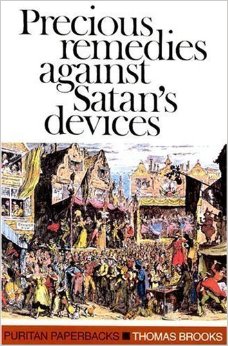
In one of the most helpful books on striving against Satan, Precious Remedies Against Satan’s Devices, Thomas Brooks laid out ten special helps for fighting the enemy. Special help number ten is, “If you would not be taken in any of Satan’s snares, then be much in prayer.”

Ephesians 6:18 is perhaps the most comprehensive one-verse statement on prayer in the Bible. Paul says, “[Pray] at all times in the Spirit, with all prayer and supplication. To that end keep alert with all perseverance, making supplication for all the saints.” Four adverbs show the apostle’s comprehensiveness:

  • Pray constantly, we are to pray at all times.
  • Pray diversely, we are to pray with all prayer and supplication.
  • Pray persistently, we are to pray with all perseverance.
  • Pray universally, we are to pray for all the saints.

In this post I want to focus on what is means to pray persistently, what Paul intends when he says, “To that end keep alert with all perseverance . . .”

PERSISTENT PRAYER

What we have here is a statement of means, in other words, “What will enable us to pray constantly and diversely?” Alert persistence. In our prayers we are encouraged to keep alert – ἀγρυπνοῦντες.  The word has the basic meaning of staying awake and was used of shepherds staying awake at night to watch their sheep, because of the presence of wolves and other wild beasts that threatened the flock.  The church grows and is built on territory surrounded by the enemy, thus we must keep alert with all perseverance. The enemy knows prayer is a missile of profound effectiveness, thus he must war against it.

In Ephesians 6:11 we were told that Satan’s schemes against the church and here Paul is reminding us to pay attention in our praying, for Satan will scheme against it. Satan seems to use three particular schemes in an effort to keep you from praying.

SATAN’S 3 SCHEMES AGAINST PRAYER

Satan schemes to keep you from prayer.  He will tempt you in a condemning tone, “What you pray?  Could such a hypocrite like you pray to God and be heard?”  Praise the Lord that He delights in the prayers of his often hypocritical and sinful children, should they be offered through the intercession of Christ Jesus.  Satan may also suggest that you don’t have the gift of prayer, so just leave prayer up to the “prayer warriors.”  Remember that prayer is no mere suggestion in Scripture; it is a command for all the children of God.  Satan will suggest various excuses to put prayer off, “This isn’t a good time for prayer, too much distraction.  Just wait for complete silence and solitude to pray.”  We know all too well don’t we that our life is filled with things to excuse us away from the duty and glory of prayer.  Satan will scheme to keep you from praying, but if you resist his first stratagem, he employs a second.

Satan schemes to interrupt your prayer.  We all are quite familiar with device, aren’t we?  He will tempt us unto wandering, vain, or even sinful thoughts as our knee is bowed and encourage us to purse the aimless thought thereby diverting us from the path of powerful prayer. Thus, a single-minded and holy focus is needed in the moment of prayer.  Aim to bow the knee in awe and reverence before the majesty of our great God who hears prayer.  Let us come into his presence with all our attention and affection devoted to the King of Kings and Lord of Lords.  Should you resist his second scheme, he will come with a third.

Satan schemes to hinder the success of prayer. Scripture tells us to pray in faith and according to the will of God. Therefore, Satan will tempt you to doubt and unbelief as you make your requests to God. He also schemes to have us pray in accord with our own will in contradiction to the will we are supposed to pray in, God’s will. Let us pray with faith clinging to promise that God hears the faithful cries of His children. Let us pray according to God’s desires as laid before us in His Word.  Let us focus our prayer on what He says we need, should desire, and should ask for.

Satan knows it is a powerful weapon to stand firm against his attack, so he will scheme against prayer.  Yet, do not grow wary or weary of prayer knowing that the enemy will oppose your praying.  Take it is a wonderful and glorious sign of grace for if Satan schemes against your prayer it is because he knows that you are a child of God and God hears His children who desire to assault the kingdom of darkness.  The means to prayer constantly and diversely is to keep alert with all perseverance.

Pray persistently.

3 Books Every Pastor Should Read: On Spiritual Warfare

Books are some of the best friends a pastor can have. How to know which friends to have is quite difficult, for as the inspired Preacher said, “Of making many books there is no end” (Ecclesiastes 12:12). Every so often I recommend three books for pastors on a given topic, hoping the suggestions might hone your book budget.

Two weeks ago I read Borgman and Ventura’s useful little book, Spiritual Warfare: A Balance and Biblical Perspective, and said it “isn’t profound like Powlison’s or pointed like Leahy’s, but it is a mighty fine introduction to an always pressing topic.” Much ink has spilled on this issue of spiritual warfare, but not all of it is good. The choices for studying our striving against Satan are legion and here are the first ones I’d recommend you read:

0851511961mThe Christian in Complete Armor by William Gurnall. The Puritans discussed spiritual warfare with a biblical depth uncommon to our time and Gurnall’s magnum opus is the pinnacle. I will let three spiritual giants convince you of its value: “If I might read only one book beside the Bible, I would choose The Christian in Complete Armour,” said John Newton. Spurgeon wrote, “Gurnall’s work is peerless and priceless; every line is full of wisdom; every sentence is suggestive. The whole book has been preached over scores of times, and is, in our judgment, the best thought-breeder in all our library.” Finally, good Bishop Ryle offered this endorsement, “You will often find in a line and a half some great truth, put so concisely, and yet so fully, that you really marvel how so much thought could be got into so few words.”

51Phi+wriaL._SY344_BO1,204,203,200_Precious Remedies Against Satan’s Devices by Thomas Brooks. If Gurnall is to big a pill to swallow, then I’d start with Brooks. He might be the liveliest and clearest of all the Puritan authors. Precious Remedies are offered for thirty-one different devices of Satan and then Brooks concludes with “Ten Special Helps and Rule Against Satan’s Devices.” This book will not only fuel your fighting against Satan, but also inflame your heart with zeal for your Captain.

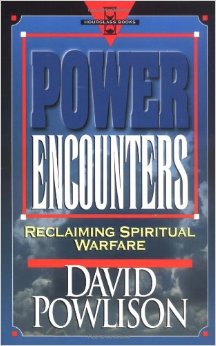
517BwdImm6L._SY344_BO1,204,203,200_Power Encounters: Reclaiming Spiritual Warfare by David Powlison. Unfortunately this book has gone out of print, so you’ll definitely want to grab a used copy. Back in the early 90s Frank Perretti’s novels brought spiritual warfare to mainline evangelicalism and the power encounter model became king. Most popularly advocated by Neil Anderson and Timothy Warner, the power encounter model can be summarize as a person saying, “I command you demon, in the name of Christ, to depart from him/her/it/here!” There are more nuances to be shore, but not many more. Powlison ably counters this view with what can be called a “Truth Encounter”; astute biblical interpretation and pastoral sensibility in fighting spiritual darkness. If you don’t want to fork over the cash money for Power Encounters, check out Powlison’s chapter in Understanding Spiritual Warfare: Four Views. It will give you the general contours of his teaching.

HONORABLE MENTION

Satan Cast Out: A Study in Biblical Demonology by Frederick Leahy. A forgotten gem that offers clarity and concision in abundance.

Check out my past suggestions in the “3 Books Every Pastor Should Read” series here.

This is our goal in life, that we might be God-centered in our thoughts and God-fearing in our hearts, as J.I. Packer put it. We are to be God-honoring in all that we do. And how is that going to happen if we never consider, or consider only fleetingly, or irregularly, the end toward which we travel, and the one who also walks with us through life on the way to this end? – David Wells

3 Criteria for Selecting Congregational Music

Preaching Pastors as Worship Pastors

Finalizing the content for the coming weekend’s corporate worship service at our church occupies part of my Tuesday morning routine. Yesterday I spent time working on new songs to add to the song library at IDC. It’s always a joyful and weighty task.

I’ve said before that preaching pastors are worship pastors. Preaching pastors – and any installed elders – are charged with overseeing all aspects of the church’s teaching ministry. Songs teach the congregation (Eph. 5:19; Col. 3:16). Therefore, preaching pastors ought to ordinarily oversee the selection of songs for their congregation’s gathered worship. It just so happens in the life of our church that I regularly pick the songs we sing.

One of the most helpful grids for choosing songs I’ve seen comes from Kent Hughes’ contribution to Worship by the Book. He says congregational music must meet three criteria: text, tune, and fit. I choose to think in the categories of theology, melody, and suitability.

THREE CRITERIA FOR SELECTION SONGS

Evaluate the song’s theology. Evaluating the song’s lyrical content must always come first. The song, of course, must be faithful to Scripture and orthodox theology. But it isn’t enough that the song simply use biblical language, it must use such language correctly. We must do the hard work to parse out the intended, and unintended, meanings of the words and phrases employed. Here also I would advocate not settling for mere simplicity in lyrics. A song can be true biblically, but actually communicate very little. Give your people some red meat for their soul in the songs you choose.

Evaluate the song’s melody. This is generally where most songs get chucked, at least for me. In evaluating the song’s melody we must first ensure it fits the meaning of the text. Many faithful lyrics have crashed a sad death on the rocks of a “cool” melody. Secondly, the melody of the song must fit the congregation that will sing it. A good question here is, “Can the average church member sing it?” Which leads to the third criteria.

Evaluate the song’s suitability. Some songs will work in one congregation and not in another. Cultural context ought not to be ignored when selecting the arrows we launch into Satan’s kingdom each weekend. A particular song might be too formal for your congregation, where another might be too informal. Or maybe the dynamics of a song do not fit the median musical style of your church.

I hope it’s clear that I am always picking songs with my individual congregation in mind. They are the chief instrument of praise and I want to help them assault hell’s gates with battle cries of depth and delight. Like every area of pastoral ministry, patience is indispensable when it comes to song selection. I feel that it took us a good 10-11 months after planting Imago Dei before it felt as though everything clicked in our singing.

Good songs are applied theology and will shape the life of your congregation. So choose ’em wisely.

How to Train Your Church to Laugh at Anything

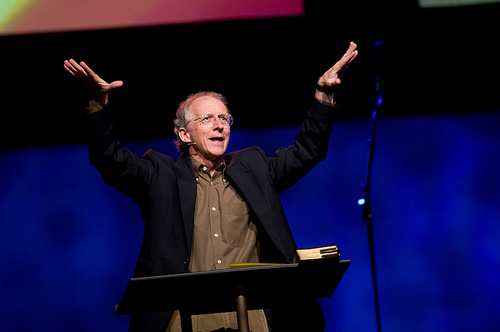
john-piperBack in 2009 John Piper delivered a message to the American Association of Christian Counselors and it proved to be one of the strangest interactions between speaker and audience I have ever seen.

Piper, as you can see from the video, decided to be as clear as possible on his own sinful patterns in life. He thought it appropriate given the nature of his audience. I find his confession to be humbling and God-honoring. The audience found it hilarious. Piper eventually becomes flummoxed with their reaction and points out how “strange” an audience they were.

But were they really strange?

Greg Gilbert, in an excellent commentary, calls it “one of the most bizarre things I’ve ever heard,” and sees an “incredibly important and massively undervalued lesson” for preachers:

Do you see, at root, what had happened at that conference? Over the course of a couple of days, those conferees had been trained to expect humor from the speakers and therefore to react to the speakers with laughter–all the way to the point that they were incapable of seeing that John Piper was being serious in his confession of sin to them. You can quibble with whether the first couple of Piper’s statements were (unintentionally, it seems) kind of funny. I happen to think they were. By the time he gets to about the 3-minute mark, though, there’s nothing funny left, and he’s moved into very serious stuff. Yet the atmosphere of humor and levity at that conference was so thick–the training so complete–that the people were incapable of seeing it. So they laughed at Piper’s confession of his sin.

Apparently the conditioning of that audience to think everything is funny took no more than a couple of days.

How deep do you think that conditioning would be for a church who sat under a funny-man pastor every Sunday for fifteen years?

A preacher’s content and tone will condition how his church hears God’s word. Pastor, what kind of auditory conditioning will your church have after hearing you preach for a decade?

Let us not be masters at training our churches to laugh at anything. Rather, let us labor to train them to hear with “serious joy in a Sovereign Savior.”

HT: Justin Taylor

Two Movements from Sovereign Strength

Faith and Prayer

In Mark 9:14-27 Jesus comes down from the mountain of Transfiguration to find a demonically-possessed, epileptic boy. In yet another compassionate display of His sovereign Lordship casts out the demon and restores the boy to health.1

Sometime later that day the disciples ask Jesus in 9:28, “Why could we not cast it out?” Remember back in chapter six that the twelve received authority over evil spirits and had successfully driven out many demons before this incident, so why their failure now? Jesus answers in 9:29 by saying, “This kind cannot be driven out by anything but prayer.” It seems that the disciples took for granted the power given to them or they thought was inherent now in them. So they no longer prayerfully depended on God for His power and they revealed their lack of faith. There is something in the disciples’ lack of prayer and lack of faith worthy of meditation.

I love symphonies and classical music. Last week as I was writing this sermon a particular song came on that moved me with its unusual grandeur. We might think of Mark’s gospel as a symphony that is sounding for the strength of this Savior with elegance and power as it moves towards the crescendo at Calvary. And does this symphony move you? Let’s consider two ways, from our text, in which this Savior’s strength should move us.

Two Movements from the Savior’s Strength

First, the movement of faith. This text is all about the power of Christ over the forces of darkness and the faith that power demands from us. In 9:19 He rebukes the lack of faith permeating the crowds and scribes; in 9:23 He says all things are possible for those who believe; in 9:24 the boy’s father cries our, “I believe; help my unbelief!” And the unique thing about this text is how it commends small faith. It tells us that small faith in this strong Savior is enough. The father’s faith was small, but it was still enough for Christ to respond with strength.

Let us remember that salvation depends not on the strength of our faith, but on the strength of the one our faith is in – the one who saves. An illustration might be helpful here.

Several weeks back we had our boys at a playground and I set them up high on ledge and said, “Alright, jump to Daddy.” I’m sure many of you have done the same. Hudson only needed a little prodding to take the leap of faith. He’s done this before and knows that Daddy will catch him. Owen however is smaller, the jump looks much bigger, and he really hadn’t jumped from this height before. He didn’t want to do it at first and it took quite a bit of prodding, but he eventually held his breath and jumped with a shaking little body of fright.

What they placed their faith in (my ability to catch them) mattered more than how vibrant their faith was. The same is true when it comes to believing in Jesus. It’s not the quality of our faith that saves, but the object of our faith – Jesus Christ – that saves. Also, it’s not we see from this text that it not as though God requires a certain strength of faith to welcome any who would believe. Mark 9 reminds us that true faith in Christ, no matter how small it is, is still enough because it falls on this sovereign and strong Savior. See the strength of Jesus and be moved to faith. The second movement in our text is . . .

The movement of prayer. Prayer is little more than faith turned towards God. Both faith and prayer testify that spiritual power is not in us, but in God, and both wait upon His promise to answer. Growing faith will lead to growing prayers. For us as a congregation, we long to be filled with faith in our Sovereign God. One way we show our faith is not only in the fact that we pray often, but that we love to pray often. What then does your practice of and delight in prayer say about your faith? It is not stretch to say that all of us would probably say that our prayer life reveals a faith smaller than we would hold. Rather than fall into the serpent’s condemnation on this point, let’s be encouraged to cry out, “Father, help my unbelief!”

The second half of Mark’s gospel is consumed with Jesus’ mission to suffer and die, and the disciples inability to understand this mission. The exorcism of Mark 9:14-29 highlights the disciple’s spiritual weakness and lack of faith, but thankfully it doesn’t leave us with only negative deficiencies. It shows up the priority of faith and prayer in following Christ. Let us crowd around Him in faith collectively, come to Him in faith individually, and call on Him in faith, beholding His power and remembering: Small faith in this strong Savior is enough.

  1. This post is adapted from my recent sermon, “The Savior’s Healing,” on Mark 9:14-29.

Recent Reads

I love to read. By God’s grace I am a pretty fast reader; I usually read a couple books each week. I find it helpful to summarize my thoughts on each book and I offer those thoughts in the hope that you will be encouraged to either read or pass over the given title.

51mhTcOzj3L._SY344_PJlook-inside-v2,TopRight,1,0_SH20_BO1,204,203,200_Lectures to My Students by Charles Spurgeon. Just like Luther’s Tabletalk, this book find the Prince of Preaching lecturing and riffing on various matters related pastoral ministry. If there is a book on pastoral ministry overflowing with more wit and wisdom than Lectures to My Students, I have yet to find it. The book can be read cover to cover or pastors can cherry-pick those lectures most pertinent to their ministry. I’d start with these five: “The Preacher’s Private Prayer”, “Sermons – Their Matter”, “Attention!”, “Earnestness: Its Marring and Maintenance”, and “On Conversion as Our Aim.” LTMS should be read by anyone who hopes to be in the ministry or already is in the ministry.

41Pyo7Tb0NL._SY344_PJlook-inside-v2,TopRight,1,0_SH20_BO1,204,203,200_An Infinite Journey: Growing Towards Christlikeness by Andrew Davis. I have followed Davis’ ministry ever since I read his story of reforming FBC Durham in North Carolina. So when I saw Challies’ high praise for An Infinite Journey I knew I had to pick it up. And what a book this is! Davis writes, “God has set before the Church of Jesus Christ two infinite journeys. Those two journeys have one destination, one ultimate goal, and in the end will prove to have been one and the same journey after all” (17). What are the two journeys? First, “the external journey of the worldwide advance of the Kingdom of Jesus Christ to all nations.” Second, “the internal journey of an individual Christian from being dead in sin to gloriously perfect in Christ.” Davis proceeds to offer a clear and comprehensive map for each journey with warmth and conviction. An Infinite Journey is one of the most useful books for discipling relationships I have ever read. Highly recommended!

41S2NB77hSL._SY344_PJlook-inside-v2,TopRight,1,0_SH20_BO1,204,203,200_Practicing Affirmation: God-Centered Praise of Those Who Are Not God by Sam Crabtree. I first read this book two years ago and immediately thought after finishing it, “I need to read this again – right now!” Practicing Affirmation is indeed one of those rare books that I try to reread every year. Crabtree presents a compelling case for God-centered affirmation in the life of individual Christians and the church as a whole. His thesis is quite simple: “Good affirmations are God-centered, pointing to the image of God in a person” (18). I fail, far too often, in the area of affirmation and every reading of this book proves to be timely for my life and ministry.

51ZgHuwEJ1L._SY344_PJlook-inside-v2,TopRight,1,0_SH20_BO1,204,203,200_Family Shepherds: Calling and Equipping Men to Lead Their Homes  by Voddie Baucham. Once a month the men at our church gather for biblical discussion and encouragement on all manner of topics. This year our focus is on what it means to be a faithful shepherd at home. So I read this book to see if it would be one to recommend and, after reading it, I’d have no problem doing so. Baucham’s offering is a lucid entry into the field of complementarian masculinity. Family Shepherds charts a clear course in its calling of men to lead their homes after the pattern of Scripture.

51E-uLPH6UL._SY344_PJlook-inside-v2,TopRight,1,0_SH20_BO1,204,203,200_The Adventures of Sherlock Holmes by Sir Arthur Conan Doyle. Sherlock Holmes is, hands down, my favorite character in the history of English literature. Oh to have the mind and acuity of the legendary consulting detective from 221B Baker Street! If you’ve never read The Adventures before, stop everything you are doing and get a copy. You just might be stunned by the readability and rapidity of the now infamous cases that occupy this volume.

Among the important elements in the promotion of conversion are your own tone, temper, and spirit in preaching. If you preach the truth in a dull, monotonous style, God may bless it, but in all probability he will not; at any rate the tendency of such a style is not to promote attention, but to hinder it. It is not often that sinners are awakened by ministers who are themselves asleep. – Spurgeon