In Which I Cry “Uncle”

boston

Almost two weeks ago I decided to add a new Endeavor for 2014: read the collected works of Thomas Boston. It was a “go big or go home” Endeavor and I wanted to go big. But now I am going home.

Just yesterday said, “Uncle,” to the great Scotsman.

My reasoning for laying aside the Boston endeavor is quite simple. To read through the twelve volumes in eleven months would mean reading about thirty-five pages a day. If I’m reading fast, those pages would occupy about forty minutes of each day. I spent about ten days attacking the first volume with verve and nearly knocked out the whole thing. But it didn’t take long to realize that this one Endeavor was going to rob time from the other three Endeavors, while also infringing on my afternoon prayers.

Right as I was thinking about laying Boston aside in order to protect prayer time in the afternoon I read this part of Spurgeon’s magnificent lecture on “Earnestness: Its Marring and Maintenance“:

Fan [earnestness] with much supplication. We cannot be too urgent with one another upon this point: no language can be too vehement with which to implore ministers to pray. There is for our brethren and ourselves an absolute necessity for prayer. Necessity!–I hardly like to talk of that, let me rather speak of the deliciousness of prayer–the wondrous sweetness and divine felicity which come to the soul that lives in the atmosphere of prayer. John Fox said, “The time we spend with God in secret is the sweetest time, and the best improved. Therefore, if thou lovest thy life, be in love with prayer.” The devout Mr. Hervey resolved on the bed of sickness–“If God shall spare my life, I will read less and pray more.”

I often think about dying and what I would say on my deathbed. The older I get the more I realize how likely it could be that I would say the same thing as good Mr. Hervey.

And I don’t want to.

So I put Boston back on his venerable shelf in my study and sat down to pray. I think the good Scotsman would commend that endeavor.

A prayerful journey through Boston is still, very much, in the cards . . . just not in 2014.

The grand object of the Christian ministry is the glory of God. Whether souls are converted or not, if Jesus Christ be faithfully preached, the minister has not laboured in vain, for he is a sweet savour unto God as well in them that perish as in them that are saved. Yet, as a rule, God has sent us to preach in order that through the gospel of Jesus Christ the sons of men may be reconciled to Him. – Spurgeon

8 [More] Wishes About the Ministry

Faithful Ministry

Yesterday I gave you the first eight wishes of George Swinnock, a forgotten Puritan, regarding a faithful ministry.

If you are a pastor, I encourage you to pray that God would make these things true in your ministry. If you are a church member, I encourage you to pray that God would make these things true in your pastor’s ministry.

8 [MORE] WISHES ABOUT THE PASTOR’S CALLING

  1. A Prudent Preacher. “I wish that I may prepare for preaching the gospel diligently, ever handle this weapon warily, deliver the message of my God soberly, as may be most for his glory and my people’s good, not with the enticing words of man’s wisdom, but in the demonstration of the Spirit and power.” “I wish also that I may preach over every sermon to my own heart before I preach them to my hearers; that I, preaching feelingly, may preach more effectively.” “I wish that I may preach a crucified Savior in a crucified style.”
  2. A Ceaseless Intercessor. “I wish that all my congregants, without exception, may have so deep a share in my affection, upon a religious account, that without ceasing I may make mention of them always in my prayers; that my heart’s desire and prayer to God, both in private and public, for poor and rich, may be, that they may be saved.”
  3. A Patient Instructor. “I wish, that should my labors prove unfruitful when I am faithful in the discharge of my trust, that I may not be discouraged, knowing that I shall be a ‘sweet savor to my God.'”
  4. A Discerning Judge. “I wish, that in the administration of the sacraments, I may have an impartial regard to the fitness and meetness of the subjects, lest I set those precious seals of the covenant of grace to blanks, where by they should signify nothing, especially about the Lord’s Supper.”
  5. A Faithful Shepherd. “I wish that, like a faithful shepherd, I may often visit my flock, and warn every one night and day with tears.”
  6. A Powerful Example. “I wish that I may be as John the Baptist, both a burning light in my sermons, and a shining light in my conversation, lest my works give the lie to my words.” “Oh that I might preach as powerfully by my life as by my lips.”
  7. A Humble Instrument. “I with that . . . when God has enabled me by his Spirit to cast down imaginations and high things that exalted themselves against the knowledge of him, and to bring into captivity many sinners to the obedience of Christ, that I may set the crown of glory upon the head of God alone, and not suffer the least part of his honor to stick to my fingers.”
  8. A Watchful Overseer. “I wish that I may take heed to myself, my doctrine, to my life, be watchful in all things, endure affliction, make full proof of my ministry, do the work of a faithful pastor.”

8 Wishes About the Ministry

Faithful Ministry

One of my Endeavors for 2014 is to read through the collected works of a Puritan named George Swinnock. One of the more unique aspects of Swinnock’s work The Christian Man’s Calling – which makes up 2.5 of 5 volumes – is its personal nature.

The work is punctuated by small sections of “wishes,” which are something akin to personal prayer requests. For example, after his section on how a Christian may exercise godliness in the practice of prayer, Swinnock offers, “A good wish about prayer, wherein all the forementioned particulars are epitomized.”

Yesterday I read his section on how a Christian may exercise godliness in his particular called and was treated to another collection of wishes, those “about the calling of a minister; wherein several properties and duties of a conscientious pastor are epitomized.”

Just last year Stephen Yuille and Reformation Heritage published this section in a slim volume entitled A Labor of Love: Puritan Pastoral PrioritiesSo if you don’t want to fork over pretty pennies for the Banner of Truth volumes, make sure to grab Yuille’s book. It would be a great devotional for the pastor and an excellent resource for elder teams. In case you don’t buy either of those choices, here are the first eight wishes from good Dr. Swinnock along with some choice quotes.

8 WISHES ABOUT THE PASTOR’S CALLING

  1. A Royal Ambassador. “I wish . . . that I may take heed to myself, and too all the flock over which the Holy Ghost has made me overseer.”
  2. A True Vessel. “I wish that I may know experimentally what regeneration means, before I travail with others, till Christ be formed in them.”
  3. A Sincere Suitor. “I wish that the spring of my motions, and principle of all my work, may be love to my Master, and not expectation of any temporal reward.” “I desire that my ends in the ministry may be purely to exalt the glorious name of God, in the conversion and edification of his precious and chosen ones.”
  4. A Wise Builder. “I wish . . . that, as a wise builder, I may lay the foundation of sound doctrine, raise up strong pillars of convincing reasons, and cover it with useful and powerful application.”
  5. A Skilled Physician. “I wish, that since I am a steward of the mysteries of Christ . . . that knowing the fear of the Lord, I may persuade men, and give to every on their particular and proper portion in due season.”
  6. A Diligent Student. “I wish that I  . . . may mind the work of the ministry, and make it appear that both in my preparation for, and execution of my office, I labor in the word and doctrine.”
  7. A Tender Mother. “I wish that I may be tenderly affected to all the souls in my charge, as knowing their worth, and believe of what concernment their unchangeable estates are in the other world.” “Lord, when I behold wounded, bleeding, dying souls, let mine eyes affect my heart with sorrow, that both mine eyes and heart by be up to thee, with the greatest importunity for a blessing upon my diligent endeavors for their recovery.”
  8. A Courageous Soldier. “I wish that, being a sworn soldier of the Lord of hosts, whatsoever trials and tribulations I meet in my holy warfare, whatsoever dangers and death shall look me in the face, I may never fly from my colors, or forsake my captain, but ‘endure hardship as a good soldier of Jesus Christ.'” “My only safety consists in keeping close to my Savior.”

A Retreating Pastor

Take a Break

A church member recently asked me, “When do you Sabbath?” My response was, “Why did you have to ask me that?” Because I know the answer and it isn’t a good one.

I said, “You can pray for me in this area, I really don’t rest well. I have too much I need to do and too much I want to do to rest. Or at least I think that’s the case.”

As I drove home two things came into my mind. First, how wonderful it is to have church members that care enough to ask a question! Appropriate and consistent rest undoubtedly fuels longevity in ministry. A healthy church will encourage one another in this truth and hold each other accountable to this truth. I am thankful that my congregation cares enough to lovingly correct my power-trippin’, pride-fuelin’ assault on rest.

The second thing I thought about was how I might better incorporate times of rest and retreat into my ministry. I do think there are times for prolonged sabbatical or vacation, but how realistic they are will vary. What’s more realistic are bite-sized sabbaticals and retreats. One helpful resource on this topic is an old lecture from Mike Bullmore entitled, “Watch Your Planning: The Strategic Role of Personal Retreats.” Here’s what Sovereign Grace Ministries says about the talk,

Any pastor benefits from periodic opportunities to contemplate, plan for, and pray about his ministry. These times away from the office allow unhurried reflection, refresh the pastor spiritually, encourage creativity, and practically express dependence on God.

Despite the benefits, difficulties remain. Leaving behind a mountain of work requires faith, and preparing for a fruitful retreat requires foresight and concrete objectives. With these challenges in mind, Mike Bullmore gives this seminar to help pastors plan for regular retreats. He addresses a retreat’s purpose and effects, gives practical pointers, and suggests ways to establish an effective cycle of preparation and review.

So if you, like me, are tempted to think the health of your church requires your incessant labor, let the wise Mr. Bullmore encourage you to retreat from such silliness.

Recent Reads

I love to read. By God’s grace I am a pretty fast reader; I usually read a couple books each week. I find it helpful to summarize my thoughts on each book and I offer those thoughts in the hope that you will be encouraged to either read or pass over the given title.

510VgEyefpL._SY344_PJlook-inside-v2,TopRight,1,0_SH20_BO1,204,203,200_What’s Your Worldview: An Interactive Approach to Life’s Big Questions by James Anderson. Anderson had managed to something increasingly rare in the publishing world: write something utterly unique. As the back cover explains, “Cast in the mold of a classic ‘Choose Your Own Adventure’ story, What’s Your Worldview? will guide you toward intellectually satisfying answers to life’s biggest questions – equipping you to think carefully about not only what you believe but why you believe it and how it impacts the rest of your life.” The approach is innovative and satisfyingly simple; the entire book comes in at just over 80 pages. Part 3 on “Worldviews” is where Anderson really shines. He gives specific attention to 21 different worldviews and then expertly pokes holes in all that stand against the Christian worldview. A great tool for Christians and non-Christians alike.

41MSapxx7rL._SY344_PJlook-inside-v2,TopRight,1,0_SH20_BO1,204,203,200_Spiritual Warfare: A Balanced & Biblical Perspective by Brian Borgman and Rob Ventura. There is no shortage of books on spiritual warfare available today, just a shortage of good books on spiritual warfare. A couple of years ago I read a highly reviewed book on the topic and was stunned to find only two scant references to Ephesians 6:10-20 (the longest treatment of the topic in all Scripture!) in the whole book. Thankfully Borgman and Ventura give us a sane and clear treatment of the Christian’s warfare in this aptly titled book. In thirteen chapters the authors explain Paul’s classic teaching in Ephesians 6 with lucidity and warmth. The book isn’t profound like Powlison’s or pointed like Leahy’s, but it is a mighty fine introduction to an always pressing topic.

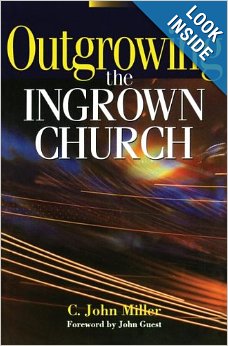
51rTcHPp0TL._SY344_PJlook-inside-v2,TopRight,1,0_SH20_BO1,204,203,200_Outgrowing the Ingrown Church by John Miller. When an author writes a book from his personal experience he treads on water marked, “Risky Business,” for it’s oh so easy to universalize experience: i.e. “This happened to me and it happens to all of you in the same way.” For that reason I am often reticent to read these volumes. Outrowing the Ingrown Church is one such book that navigates the tricky waters of experience with aplomb. This is because Miller’s experience in leading an ingrown church unto missionary focus serves to simply illustrate clear biblical truth. I deeply appreciate Miller’s discussion on the pastor as “pacesetter,” his focus on preaching and prayer, and his emphasis on the necessity of gospel zeal. If your church is ingrown, this book will chart a path toward more faithful mission. If your church isn’t ingrown, this book will help keep you on the course of faithful evangelism.

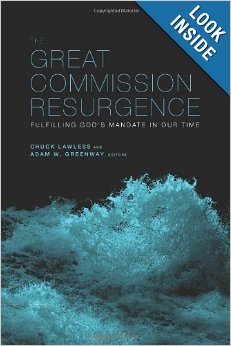
518cIAwXRVL._SY344_PJlook-inside-v2,TopRight,1,0_SH20_BO1,204,203,200_The Great Commission Resurgence: Fulfilling God’s Mandate in Our Time edited by Chuck Lawless and Adam Greenway. In 2009 president Johnny Hunt appointed a Great Commission Task Force which would examine how Southern Baptists can work more faithfully and effectively together in serving Christ through the Great Commission. The Great Commission Resurgence explores the decline of the SBC and proposes solutions for a new generation. I found the historical analysis to be most intriguing, especially Nathan Finn’s work in charting the Great Commission’s emphasis through the SBC’s history. As with all edited volumes, the quality of chapters varies quite a bit, but on the whole the work is solid. The only real perplexing part was David Allen’s unnecessary preoccupation with the dangers of particular redemption in his chapter on preaching. But for those familiar with Allen, this should be no surprise. Admittedly an intramural book, GCR is a valuable contribution to the ongoing conversation on the future of the SBC.

51MlLFYRPqL._SY344_PJlook-inside-v2,TopRight,1,0_SH20_BO1,204,203,200_24 Hours by Greg Iles. I grabbed this book largely based on reviews praising Iles for an unusual depth of characterization and complexity of plot. After reading 24 Hours, to such reviews I must say, “Balderdash!” This book is inanely predictable and humorous in its attempt to pass off an overused formula as novel. The bad guys seem, to me at least, stunningly similar to Milton and Small in Of Mice and Men and the supposed thrills are, well, supposed. If you see this book at the library or book store, just move along.

The Patience Paradigm

Patient Pastors

I fully intended to write a post at the beginning of this year on “Lessons Learned After 1 Year of Church Planting.” I may still do it. I can tell you right now that one prominent lesson has featured over these last thirteen months: the preeminence of patience in pastoral ministry.

As he lay in a prison cell thinking about his immanent departure from this world, the Apostle wrote to the Protege and there is an interesting emphasis he places on patience in ministry. In 2 Timothy 2:24-25 Paul writes, “And the Lord’s servant must not be quarrelsome but kind to everyone, able to teach, patiently enduring evil, correcting his opponents with gentleness.” Then he writes in 4:2, “Preach the word; be ready in season and out of season; reprove, rebuke, and exhort, with complete patience and teaching.”

Increasing patience in ministry is thus a mark ministerial health. From whence does such patience come? The Spirit’s work in the pastors heart (Gal. 5:22); it is a fruit of the Spirit after all.

Let’s turn this jewel of patience in the sun of Scripture and Christian prudence a bit to see its uncommon goodness. First, some presuppositions for patience, then some practices of patience.

PRESUPPOSITIONS FOR PATIENCE

If pastors are to every be known for their patience they must be familiar with God’s patience in Christ. In his first letter to Timothy Paul says he “received mercy for this reason, that in me, as the foremost, Jesus Christ might display his perfect patience as an example to those who were to believe in him for eternal life.” The meditation is so rich for Paul that he composes one of his spontaneous doxologies in 1:17, singing, “To the King of the ages, immortal, invisible, the only God, be honor and glory forever and ever. Amen.” Pastors who pursue the fruit of patience would do well to meditate much on God’s patience to bring his own heart to faith in Christ.

A second presupposition for patience deals with the pastor’s aim in his ministry. Namely, a desire to stay in one place for a long period of time. If a pastor is eager to always move on to the bigger and better, what value will patience be in his ministry? Little. Patience in ministry presupposes a desire run the race of ministry with one people for a long period of time. In The Deliberate Church Dever and Alexander write,

Most of us think only about five or ten years down the road (if that). But patience in the pastorate requires thinking in terms of twenty, thirty, forty, and even fifty years in ministry. . . . Are you building a congregation or a career? Stay with them. Keep teaching. Keep modeling. Keep leading. Keep loving.

The patience revealed in the gospel and your purpose to stay with your people are fertile soils in which this fruit can grow.

PRACTICES OF PATIENCE

How then might pastoral patience display itself in shepherding and leadership? Three practices come to mind:

Patience and preaching. Patience is a great friend to our preaching ministry. We will exhaust ourselves if we measure our preaching primarily by immediate and tangible fruit. Preaching is the ordinary means to grow people in Christ, but God’s timetable for growth is usually quite different from our own. Preach to fatten up your people’s soul over time; patience will help you here.

Patience and praying. Just like preaching, patience is a kind companion for our prayer life. In Luke 18 our King gave a parable “to the effect that [we] ought always to pray and not lose heart.” An apparent lack of quick answers from God might frustrate our prayer life, but God might just intend the delay to create harder callouses on your knees. We are to wrestle with God in prayer, not letting Him go, and this striving won’t happen apart from persistent patience.

Patience and pastoring. By pastoring I mean everything else a minister does outside or preaching and praying. Health and joy in leadership, discipleship, evangelism, discipline, and exhortation are, in many ways, dependent on patience. We don’t want to be like the gardener who gets all excited about planting flowers, but then gives up if the seeds takes too long to sprout. Rather, we want to diligently water, fertilize, and cultivate the souls in our congregation knowing that growth takes time. Pastoring is dependent on patience.

So, preaching, praying, and pastoring are integrally linked with patience. It indeed makes sense then why the apostle would place such an emphasis on this elusive fruit. Patient pastors are works of God and gifts to His church. I hope to be one some day.

Eventually I will get around to putting up a “Lesson Learned in . . . of Ministry” list, but the more I think about it the more I realize how patience surrounds almost every lessons that pops into my mind. I raise my glass of the heavenly nectar and make a toast to patience-driven pastors.

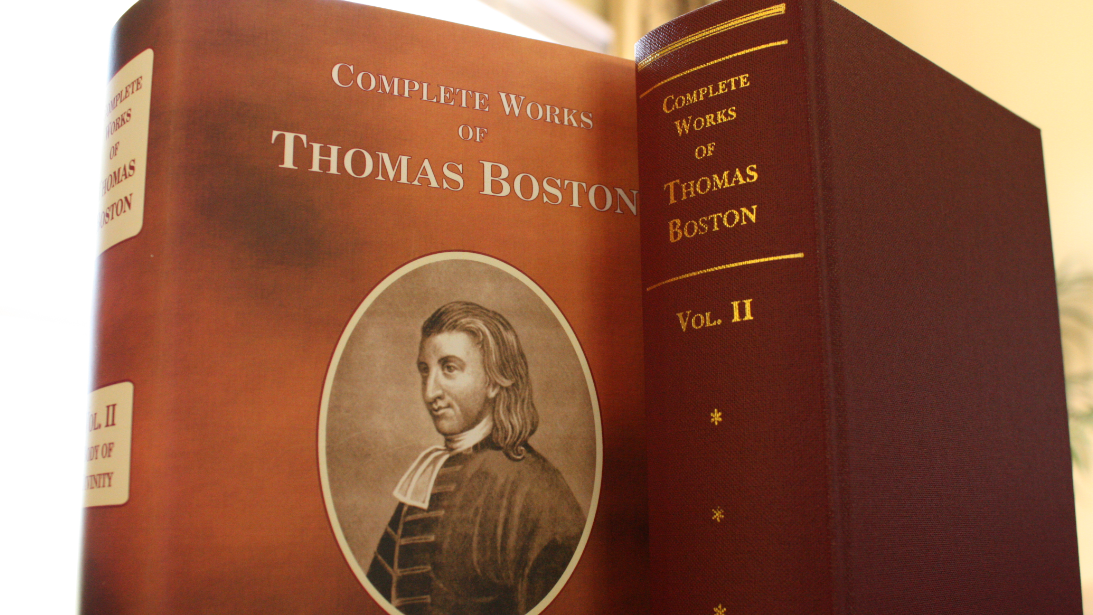
Eternal life springs from death, glory from ignominy, and blessedness from a curse. We are healed by stripes, quickened by death, purchased by blood, crowned by a cross, advanced to the highest honor by the lowest humility, comforted by sorrows, glorified by disgrace, absolved by condemnation, and made rich by poverty. Thus the wisdom of God shines with radiant brightness in the work of redemption. – Thomas Boston

I Want to Live Like That

boston

To read the memoirs of Thomas Boston is to be struck by the earnestness with which one pastor pursued communion with God.

A typical entry in his Memoir reads like this: “Having allotted the morning entirely for prayer and meditation, some worldly thoughts crept in. . . . In the afternoon I somewhat recovered my forenoon’s loss.”  Vigorous in self-examination was he. One might say, “Don’t you think that kind of puritanical introspection is unhelpful?” Maybe. But I for one would love to see pastors today fall into the “Vigorous” category in their pursuit of God.

Beeke and Pederson say that, for Boston, personal organization was essential to the ministry, so he rose early each Monday morning and devoted hours to prayer and meditation. He was a man of regular prayer and fasting as he sought habitual communion with God. Evidently it didn’t take long for the public to notice his dedication to commune with God, for one biographer said,

When his congregation saw him enter the pulpit on the morning of the Lord’s day, they knew that they were looking into the face of one who had just come forth from intimate communion with God, and who at once was God’s ambassador and their friend.

I want to live like that.