3 Books Every Pastor Should Read: On Evangelism

Books are some of the best friends a pastor can have. How to know which friends to have is quite difficult, for as the inspired Preacher said, “Of making many books there is no end” (Ecclesiastes 12:12). So every couple of weeks I suggest three books a pastor should read on a given topic, hoping they will serve his ministry. Check out my past suggestions here.

One of my Endeavors for 2014 is to grow in personal evangelism. God appears to use two things to stir my soul in the practice: relationships (people who are faithful to show it) and reads (people who are faithful to teach it). Here are suggestions on profitable works for the pastor’s personal evangelism:

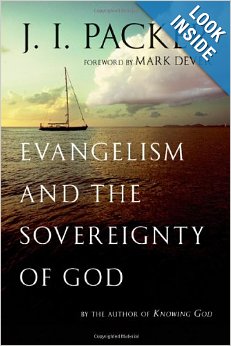
511NcvN64-L._SY344_PJlook-inside-v2,TopRight,1,0_SH20_BO1,204,203,200_Evangelism and the Sovereignty of God by JI Packer. A timeless work on a timelessly thorny issue. Packer deals with two common questions related to personal evangelism and the sovereignty of God: “If God is in control of everything, can Christians sit back and not bother to evangelize? Or does active evangelism imply that God is not really sovereign at all?” With typical eloquence Packer gives a biblical “no” to both questions, and ably shows how sovereignty fuels our evangelism.

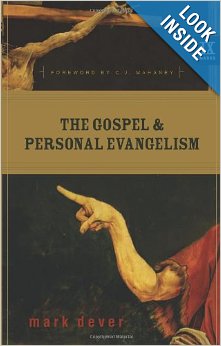
41xJpDdSNxL._SY344_PJlook-inside-v2,TopRight,1,0_SH20_BO1,204,203,200_The Gospel and Personal Evangelism by Mark Dever. Dever wanted a resource to use in discipline Christians in personal evangelism, so he wrote this book. Clear and cogent, short and substantive, The Gospel and Personal Evangelism will encourage diligence in sharing the good news. His chapters on “Why Don’t We Evangelize?” and “How Should We Evangelize?” are unusually pointed.

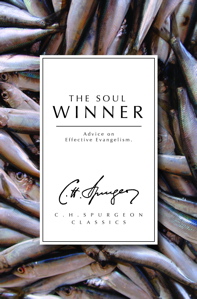
9781871676952mThe Soul-Winner: Advice on Effective Evangelism by Spurgeon. By any measure, Spurgeon was one of the most effective and passionate evangelists of all time. The Soul-Winner is a collection of addresses the Prince gave to encourage all who would win souls to Christ. He writes, “Soul-winning is the chief business of the Christian minister; indeed, it should be the main pursuit of every true believer.” Amen. Sit and learn from a master evangelist.

HONORABLE MENTIONS

Marks of the Messenger by Mack Stiles. I heard Stiles say once that it’s rare for a day to pass when he doesn’t share the gospel with someone. That’s a man I want to learn from and Marks of the Messenger is his best book to date.

Tell The Truth by Will Metzger. A God-centered and truth-saturated manual for personal evangelism, characteristics that unfortunately are rare in the genre.

Cross Centered Epitomes

Cross Centered

This is an excerpt from my recent sermon on Mark 8:27-9:1 entitled, “The Savior’s Demand.

In 8:34 Jesus called “the crowd to him with his disciples,” indicating that what is about to follow is for all disciples, not just The Twelve. He says, “If anyone would come after me, let him deny himself . . .” Self-denial here does not mean the mere resistance of material desires. It means the complete renouncing of self – ceasing to make self the central focus of one’s life. “. . . and take up his cross . . .” Cross bearing doesn’t refer to putting up with irritations or annoyances in life, but it involves the path to crucifixion. It was normal procedure for the condemned person to carry the crossbeam of the cross from the place of judgment to the place of execution. Crucifixion was view as the most ignoble of deaths. To bear the cross, thus meant obeying to the point of humiliation, extreme suffering, and death. “. . . and follow me.” Jesus is simply saying, “My path is your path.” I will suffer and die, you must be willing to follow in my footsteps. This is what disciples must do.

Understand how radical this would have been for the disciples to hear. They understood Jesus role as Messiah to be one of political victory and triumph, they probably were thinking they’d soon have seats of honor next to His throne when He overthrew the Roman Empire. But Jesus said He would suffer and so they must be willing to suffer. Each of these phrases were like little sticks of dynamite blowing up the disciples’ notions of what it meant to come after Jesus.

8:35-38 now gives us four statements that put some practical meat on the theological bones of 8:34. Notice how each verse begins with the word “for”:

  • 8:35: For whoever would save his life will lose it, but whoever loses his life for my sake and the gospel’s will save it.
  • 8:36: For what does it profit a man to gain the whole world and forfeit his soul?
  • 8:37: For what can a man give in return for his soul?
  • 8:38: For whoever is ashamed of me and of my words in this adulterous and sinful generation, of him will the Son of Man also be ashamed when he comes in the glory of his Father with the holy angels.”

We need to see two ways these verses reason unto us a rethinking of what it means to be a disciple of Christ.

  1. Cross-centered discipleship demands us to rethink confession versus denial. 8:35 and 8:38 are linked on this point. It would have been a powerful temptation to the 1st century Romans Mark originally addressed to deny Christ in order to save their life. But Jesus is saying denying Him here on earth means losing Him there in eternity. So, confessing faith in Christ here – no matter the cost –means gaining Him there.
  1. Cross-centered discipleship demands us to rethink humiliation versus honor. Sin, Satan, and the world call you to strive for honor here and forego any humiliation at being associated with Christ.  But Jesus turns that notion on its head in 8:36-37. Would you flee the humiliation that often comes from believing in Christ to gain honor in this world, but in so doing forfeit your soul? Jim Elliot surely right to say, “He is no fool to give up what he cannot keep, to gain what he cannot lose.”

Simply put, cross-centered discipleship will ordinarily demand earthly loss for eternal gain, and that pursuit flies against the common goal of “the good life” – saving one’s life and gaining the whole world. I wonder tonight what occupies your mind most, earthly profits or eternal pursuits? Are you striving for the honor of this world more than the humiliation that comes with faithfully following Christ? Are you quicker to confessing Him as Lord or hide your Christian convictions?

The section concludes with a somewhat puzzling statement, “Truly, I say to you, there are some standing here who will not taste death until they see the kingdom of God after it has come with power.” It seems best to understand that Jesus is referring to what comes next in Mark’s gospel, which we will study next week, the Savior transfigured in glory on a mountainside.

Slowly but surely, Jesus is moving the disciples from being spectators to being participants. Participation means seeing who Jesus is, seeing what Jesus must do, and then seeing what disciples must do.

A CROSS CENTERED CHURCH

Do you see the centrality of the cross in this passage? In 8:31 Jesus says His Messiahship is necessarily barreling towards the cross. In 8:34 He says discipleship is summed up in self-denial and cross-bearing. Christian life and mission is all about a cross – the cross of Jesus Christ. This is thus necessarily true about a Christian church. Let’s begin to close by considering what this text tells us about a cross-centered church:

A cross-centered church knows Jesus intimately. It all begins with a confession of Christ, seeing Him clearly, knowing Him intimately. Faithfulness to Christ depends on accurate knowledge of Christ. If we are to be church that displays and declares God’s glory we must be about knowing Jesus intimately. One practical outflow of this truth is that we would be a people who help each other grow in our knowledge of the Savior. We would make it our delight to help our spouses, children, and fellow church members know the Savior intimately. That knowledge would lead to the second point . . .

A cross-centered church follows Jesus sacrificially. Jesus clearly assumes that His followers would suffer, be rejected, and even die. Faithful obedience requires sacrifice. In our culture that might not be the sacrifice of our lives, but it could mean the sacrifice of money, time, relationships, or reputation. Those sacrifices will ordinarily stem from our third point . . .

A cross-centered church proclaims Jesus eagerly. We are to model the plain, yet bold, teaching of Christ in 8:32. A crucified and risen Savior is the gospel that saves; it’s good news so glorious that we must proclaim it. It must be the sum and substance of our gathered worship time, but also the aim of our daily conversation.

Know Him intimately, follow Him sacrificially, and proclaim Him eagerly; three regular responses of a cross-centered church.

GOODBYE TO SELF-CENTERED LIVING,
HELLO TO CROSS-CENTERED LIVING

One of my favorite theologians is a Scotsman named John Murray. He was the youngest of eight with five older brothers and two sisters. When World War I came his older brothers were some of the first called to service. The unspeakable grief, for the families of such summoned men, is hard for us to capture today. When Murray’s brother Tommy was called to France his father said, “Goodbye Tommy, I’ll never see you again.” And Tommy indeed never returned home alive.

Jesus, the King of Kings, has called His people to Himself, opened their eyes, and is summoning people to the war of the ages as they follow Him. It’s a summons that demands we say, “Goodbye self, I’ll never see you again.”  He came to die that we might live and now calls us to the same, die to self that we might live to Christ. Because He went to the cross we are to carry a cross. Christian life and mission is all about a cross.

Recent Reads

I love to read. By God’s grace I am a pretty fast reader; I usually read a couple books each week. I find it helpful to summarize my thoughts on each book and I offer those thoughts in the hope that you will be encouraged to either read or pass over the given title.

41q1MEUaZGL._SY344_BO1,204,203,200_Looking Unto Jesus by Isaac Ambrose. My introduction to Ambrose’s classic work first came through Meet the Puritans, where Beeke and Pederson called it, “A classic of Christ-centered divinity.” Then Mark Jones suggested that I consider Ambrose’s Christology for my master’s thesis and I knew I should buy the book. After a few years of collecting dust in my study, I finally grabbed to book, dusted off the pages, and sat down to feast. And what a feast it was! Taking Hebrews 12:2 as his starting point, Ambrose lifts Christ up and simply stares at His glory. He says “looking [unto Jesus] is comprehensive of knowing, desiring, hoping, believing, loving, and enjoying” Him. The work meditates deeply on the person and work of Christ considering everything from His eternity, to His generation, to His birth, death, and second coming. Chapter 2 in Book 4 is typical of Ambrose’s approach: he defines what it means to see Jesus”carrying on the great work of our salvation in His intercession” and then goes on to show how to consider, desire, hope, believe, have joy, pray to, and conform to Jesus in this respect. Only Owen The Glory of Christ or Goodwin’s The Heart of Christ can top this Christological summit.

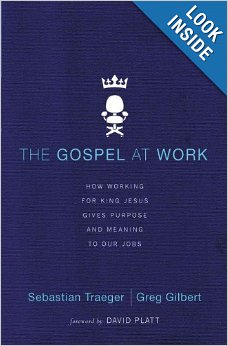
51ju93GWD4L._SY344_PJlook-inside-v2,TopRight,1,0_SH20_BO1,204,203,200_The Gospel at Work: How Working for King Jesus Gives Purpose and Meaning to Our Jobs by Sebastian Traeger and Greg Gilbert. It’s been quite a while since I read a book and immediately thought, “I need to get this into as many hands as possible.” The Gospel at Work is one such book. I wholeheartedly concur with Dever when he says, “I want to make this a basic staple in my discipling.” The book is largely built around two primary pitfalls one can have in approaching work:

On the one hand, we can let our job become an idol. Our work can become the primary object of our passions, our energy, and our love. We end up worshiping our job. On the other hand, we can slip into being idle in our work. When we fail to see God’s purposes in our work, we don’t really care must about it. We fail to give any attention to it, or we despise it and generally neglect our responsibility to serve as if we are serving the Lord. (18)

Traeger and Gilbert swiftly show how faith in Christ answers both of these pitfalls, and I am grateful they did it without succumbing to standard “gospel-centered” cliches. They are spot on when they say, “Ultimately the evidence of the gospel in our lives at work is not so much in the things we do but in the freedom we enjoy in the midst of our work” (57). Filled with an uncanny amount of clarity and practicality, I wouldn’t be surprised if this proves to be one of my favorite books in 2014. I’ve already bought several copies to add to our church’s bookshelf.

51dPtw40o-L._SY344_PJlook-inside-v2,TopRight,1,0_SH20_BO1,204,203,200_Dead Eye by Mark Greaney. Dead Eye is the fourth, and latest, installment in Greaney’s “Gray Man Series.” I wondered aloud after reading book three if it was possible for Greaney to offer up more than a one-dimensional thrill ride. I think I would say, after reading this one, “Yes, but barely. Maybe he can provide a 1.5-deminsional thrill ride.” Whatever that is. Dead Eye finds Court Gentry doing battle with a “singleton” (think lone ranger) who needs to save the Gray Man in order to destroy him – let the reader understand. Greaney wrapped up one substantial plot thread while leaving another one dangling oh so close. Less bloated with unbelievable action scenes and possessing more textured character development than other books in the series, Dead Eye gives hope for what’s to come. I believe the next book in the series is slated for release in late 2015.

41vAO1DTN8L._SY344_PJlook-inside-v2,TopRight,1,0_SH20_BO1,204,203,200_The Three C’s by Mark Stone. My dad just published a book on career enrichment based on his journey from one career to another back in 2009. The burden of the book is to provide a primer on “how to build, enhance, and protect your career. This plan of action – characterizing, connecting, and communicating – is not the best plan. It is not the only plan. It is just a proven plan.” And, I would add, a commonsense plan. I am really not a part of the book’s target audience as a pastor, but the principles are simple enough to have broad application.

It’s difficult for me to read any book on the glories of heaven without thinking about this song. When I wrote my thesis on the Puritan view of heaven I must have listened to this song well over a thousand times.

LYRICS:

This is not the end
This is not the end of this
We will open our eyes wide, wider

This is not our last
This is not our last breath
We will open our mouths wide, wider

And you know you’ll be alright
Oh and you know you’ll be alright

This is not the end
This is not the end of us
We will shine like the stars bright, brighter

A Synonymn for Holy Living

boston

One of my endeavors for 2014 was to read Looking Unto Jesus, the magnum opus of Isaac Ambrose. I planned for slow, meditative reading, but LUJ was far too good to put down. Thus, the Ambrose endeavor is now complete.

Here then I stand on the precipice of 2014’s second month wondering if I should add another endeavor to the list. The next eleven months offer open vistas of opportunity, growth, and challenge. The small shouting voice in my soul proclaims, “Go big or go home!” So I endeavor to go big with Boston; Thomas Boston that is.

I endeavor to read the collected works of Thomas Boston in 2014.

Boston was one of the subjects of my thesis, This is Not the End: Puritans on the Glory of Heaven, and I found him to be unusually illuminating. But perhaps the greatest motivation for this endeavor is found in Andrew Thomson’s description of the man from Ettrick:

If Scotland had been searched during the earlier part of the eighteenth century, there was not a minister within its bounds who, alike in personal character, and in the discharge of his pastoral function, approached nearer the apostolic model than did this man of God. It is a fact that, even before he died, men and children had come to pronounce his name with reverence. It had become a synonym for holy living.

“A synonym for holy living,” now that is an endeavor worth much prayer and pursuit.

“But One Word to Speak”

Looking Unto Jesus

I started this year with the aim of reading two pages per day from Isaac Ambrose’s Looking Unto Jesus. That pace would allow me to finish the work in just over eleven months. Well, I finished it in less than one.

It was just too good to put down.

Never before have I read such a warmth in meditation on the beauty of Christ. Looking unto Jesus (Heb. 12:2) has taken on a fresh fullness. A section of Ambrose’s conclusion is worthy of mention and prolonged meditation:

If I had but one word more to speak to the world, it should be this; Oh! let all our spirits be taken up with Christ, let us not busy ourselves too much with toys, or trifles, with ordinary and low things, but look to Jesus.

Surely Christ is enough to fill all our thoughts, desires, hopes, loves, joys, or whatever is within us, or without us; Christ alone comprehends all the circumference of our happiness; Christ is the pearl hid in the large field of God’s word;

Christ is the scope of all the scripture:

all things and persons in the old world were types of him;

all the prophets foretold him,

all God’s love runs through him,

all the gifts and graces of the Spirit flow from him,

the whole eye of God is upon him,

and all his designs both in heaven and earth meet in him.

Oh! how should all hearts be taken with this Christ? Christians! turn your eyes upon the Lord: “Look, and look again unto Jesus.” Why stand ye gazing on the toys of this world, when such a Christ is offered to you in the gospel?

If there be any heaven upon earth, thou wilt find it in the practice and exercise of this gospel duty, in “Looking unto Jesus.”

And all God’s people said, “Amen.”

We Need Progressive Pastors

Progress in Ministry

“Practice these things, immerse yourself in them, so that all may see your progress.” – 1 Timothy 4:15

My favorite show in television history is Band of Brothers. One of the episodes depicts a counter attack that one member of Easy Company called, “The highlight of all E Company actions for the entire war.”

On the night of October 4-5, 1944 a solider in Easy Company was wounded in patrol, so a small counter attack mission was organized. By the next morning, Lieutenant Winters realized that his platoon of thirty-five men was virtually surrounded by two German companies of 300 men.  Lt. Winters goes out into the field to be alone and think things through; he decided he had no choice but to attack.  So he calls his officers and says, “Talbert, take the third squad to the right. Peacock, take the first squad to the left. I’ll take the second squad right up the middle.” Everyone got set, Winters told his men to fix bayonets. As the sun begins to rise a base of fire is laid down at his signal and off Winters goes.  Storming down in front of his men, he leads them on to an incredible rout of the surrounding Germans.

In 1 Timothy 4:15 Paul tells Timothy to minister in such a way that all will see his progress. This word “progress” (προκοπὴ) is a military term that speaks of an advancing force. Just like Lieutenant Winters bold advance led his men into battle, the pastor’s growth is to be out in front of the people and of the kind that beckons other to follow.

The church needs progressive pastors. Permit me some rather random musings on the issue.

A PASSION FOR PROGRESS

Paul doesn’t require perfection, but he does require progression. The areas in which a pastor must grow are legion and beyond the scope of what I want to emphasize in this post. If you want a potent and pithy detailing of areas in which a pastor ought to show progress see Spurgeon’s lecture “The Necessity of Ministerial Progress.” His motto is “Go Forward”: go forward in personal attainments, forward in gifts and graces, forward in fitness for the work, and forward in conformity to the image of Jesus.

If you need some apostolic inspiration and direction for Spirit-wrought progress I’d encourage meditation on these two verses:

  • Progress in Life: “Pursue righteousness, godliness, faith, love, steadfastness, gentleness.” – 1 Timothy 6:11
  • Progress in Ministry: “Devote yourself to the public reading of Scripture, to exhortation, to teaching.” – 1 Timothy 4:13

But I want to meditate on a couple clear presuppositions Paul has in his progressive exhortation.

THE PATIENCE OF PROGRESS

Clearly, Paul assumes that Timothy will minister in such a way that the Ephesians can actually see and attest to progress. Churches that only see their pastor behind the pulpit at the weekly worship gathering can affirm some aspects of progress, but not many. How would they affirm progress in managing the home? What about those intangible, yet hard to discern areas of spiritual fruit? If the pastor’s people are to notice his progress in life and ministry, his ministry must be in the life of his people. Increasingly so.

A second presupposition on pastoral progress is built on the reality of fruit being time-tested. Spiritual fruit is quite indiscriminate and organic. One notices it most clearly in hindsight and that hindsight normally has a fair distance attached to it. The longest I have stayed in one church was five years and I felt it was only in year three that discernible fruit was visible. Progress in life and ministry takes time and if the church is to “see” our progress we must be with them for quite some time. Just how long can be debated, but it’s safe to say the length is longer than the average pastor’s tenure. What’s best is staying in one place for life; what progress one church ought to observe in decades of ministry!

This even raises a similar point about church membership: if a pastor’s visible progress is dependent on long ministry in the same place, the church’s ability to affirm that progress is dependent on members staying in the same place for a long period.

Pastors must be progressive in the semper reformanda sense of the term. This kind of progress will be patient, plodding, and public. “Persist in this, for by so doing you will save both yourself and your hearers” (1 Tim. 4:16).

If we are to be strong men, we must be conformed to our Lord. Oh, to be like Him! Blessed be that cross on which we shall suffer, if we suffer for being made like unto the Lord Jesus. If we obtain conformity to Christ, we shall have a wondrous unction upon our ministry, and without that, what is ministry worth? – Spurgeon

The Parable of Sleep

In Quest of Rest

I am currently in the midst of a rather grueling schedule of ministry, meetings, and post-graduate studies. There is simply not enough time in the day to do everything I would like to do.

And so my solution is to fight sleep. Which is always an ungratefully bad idea.

An old article from Piper captures the blessed struggle of sleep with characteristic aplomb:

Why did God design us to need sleep? We sleep a third of our lives. Just think of it: a third of our lives spent like dead men. Just think of everything being left undone that could be done had God not designed us to need sleep. There is surely no doubt that he could have created us with no need for sleep. And just think, everyone could devote himself to two careers, and not feel tired. Everyone could be a “full-time Christian worker” and still keep his job. There is so much of our Father’s business we could be about.

Why did God imagine sleep? He never sleeps! He thought the idea up out of nothing. He thought it up for his earthly creatures. Why! Psalm 127:2 says, “It is in vain that you rise up early and go late to rest, eating the bread of anxious toil; for he gives to his beloved in his sleep.” According to this text sleep is a gift of love, and the gift is often spurned by anxious toil. Peaceful sleep is the opposite of anxiety. God does not want his children to be anxious, but to trust him. Therefore I conclude that God made sleep as a continual reminder that we should not be anxious but should rest in him.

Sleep is a daily reminder from God that we are not God. “He who keeps Israel will neither slumber nor sleep” (Psalm 121:4). But Israel will. For we are not God. Once a day God sends us to bed like patients with a sickness. The sickness is a chronic tendency to think we are in control and that our work is indispensable. To cure us of this disease God turns us into helpless sacks of sand once a day. How humiliating to the self-made corporate executive that he has to give up all control and become as limp as a suckling infant every day.

Sleep is a parable that God is God and we are mere men. God handles the world quite nicely while a hemisphere sleeps. Sleep is like a broken record that comes around with the same message every day: Man is not sovereign. Man is not sovereign. Man is not sovereign. Don’t let the lesson be lost on you. God wants to be trusted as the great worker who never tires and never sleeps. He is not nearly so impressed with our late nights and early mornings as he is with the peaceful trust that casts all anxieties on him and sleeps.

So even though there is more I wanted to do this day, I head to bed . . . in quest of rest.

What’s as Good as Christ’s Presence?

Word = Presence

The official said to him, “Sir, come down before my child dies.” Jesus said to him, “Go; your son will live.” The man believed the word that Jesus spoke to him and went on his way.

In John 4:46-54 Jesus heals an official’s son from a distance and reveals one of the sweetest realities about the power of His word: Christ’s word is as good as Christ’s presence.

Jesus merely said, “Go, your son will live,” and the cure was done. Good Bishop Ryle said, “Christ only commanded, and the deadly disease stood fast.” Do you feel the comfort from this truth? What value it gives to every promise that ever came from Christ. If you have laid hold of some word of Christ, you have set your feet on the solid rock. What Christ spoken, He is able to do. What He has undertaken, He will accomplish. You can trust in this Christ. Luther says it well, “Faith is a living, daring confidence in God’s grace, so sure and certain that a man could stake his life on it a thousand times.” Oh, see how faith in Christ’s word can be the source of faith for every circumstance you find yourself in . . .

  • If you are fearful. Remember Isaiah 43:2, “Fear not, for I have redeemed you; I have called you by name, you are mine. When you pass through the waters, I will be with you.”
  • If you are struggling with temptation. Remember 1 Corinthians 10:13, “No temptation has overtaken you that is not common to man. God is faithful, and he will not let you be tempted beyond your ability . . . he will also provide the way of escape, that you may be able to endure it.”
  • If you are fighting sin. Remember Micah 7:9, “He will again have compassion on us; he will tread our iniquities underfoot. You will cast all our sins into the depths of the sea.”
  • If you are without Christ. Remember Romans 10:9-13, “If you confess with your mouth that Jesus is Lord and believe in your heart that God raised him from the dead, you will be saved . . . For “everyone who calls on the name of the Lord will be saved.”

Faith receives and rests on the word of Christ; a word that is His powerful presence in our lives.