Two Responses to Sovereign Strength

Soveriegn Strength

He said to them, “Why are you so afraid? Have you still no faith?” . . . Jesus said, “Do not fear, only believe.” – Mark 4:40; 5:36

In Mark 4:35-5:43 we are given three distinct stories that all tell us something of the sovereign power of Jesus and how people ordinarily respond to His strength. 4:35-41 show He is sovereign over storms, 5:1-20 show He is sovereign over demons, 5:21-34 show He is sovereign over sickness, and 5:35-43 show He is sovereign over death. Mark’s point, of course, in setting theses stories next to one another is to show that Jesus is in fact the very Son of God. These various displays of power all happen over the course of one day and the day concludes with 5:42 saying the people “were immediately overcome with amazement.” How about you? Does the sovereign strength of Jesus amaze you?1

I think war soundtracks are the most appropriate sermon preparation music. Last week I was listening to the soundtrack from the movie The Gladiator while preparing for my sermon on this passage. There is a moment in the film where Maximus – the movie’s hero and protagonist –  is in the gladiator ring, he swiftly dispatches of a competitor, and then cries out “Are you not entertained? Is this not why you are here?” It was a display of strength that generated amusement from the crowd, which Maximus’ questions imply is the wrong response.

The sovereign strength of Christ is on full display in Mark 4:35-5:43 and how should we respond to it? The text says there are two right responses for those who behold the power of Christ.

First, see the sovereign strength of Jesus and respond with fear. The disciples see Jesus’ sovereignty over storms and seas and they were filled with mega-fear (4:41). The townspeople see the healed demoniac and the Jesus’ power over demons and they were afraid (5:15).

It’s quite fascinating to see that the disciples’ fear of the windstorm was exceeded by their fear at what Jesus had done. They ask in 4:41, “Who then is this, that even the wind and the sea obey him?” So, the presence of supernatural strength is even more terrifying than the most destructive of natural disasters. In this instance, God’s nearness in Jesus is not something reassuring but something profoundly unsettling, and even terrifying. Such a sense is entirely appropriate according to this text and the rest of Scripture. You should fear this God and Savior for nothing can stand against Him, nothing can rival Him, and nothing can compete with Him. Mark wants us to see that not only is such fear appropriate, but such fear ought to drive us to the second response . . .

Second, see the sovereign strength of Jesus and respond with faith. Fear the Lord and put your faith in Him, these are the responses to omnipotent power. In what does your faith lie? Looking normally consists of what our two eyes see and if we are to respond in faith to Jesus we need use the two eyes of faith in this text:

  1. See the total inability of man. The disciples could do nothing to calm the waves; the people could do nothing to subdue the man possessed by Legion; doctors and money could do nothing to heal the woman’s disease; Jairus’ status as a synagogue ruler could do nothing to prevent or help his daughter from dying. Faith means seeing the total inability of man, and second . . .
  2. See the total ability of Christ. With a word mega-calm comes over the waves (4:39); with a word demons depart (5:13); with a touch a woman is healed (5:34) and a daughter is raised to life (5:42). Behold your God who is able. Behold your Lord who is strong. “Do not fear, only believe.”

One of the universal realities of humanity’s fall into sin is that we have fears and phobias. What do you fear most? What doubts cripple your soul? In this text we find people in the first century suffering under fears that are still common today – fears of thunder and lightning, of spiritual oppression, of physical suffering, of the death of loved ones. The main point of these stories is for us to see that “faith in Jesus drives out fear.” Consider that our worldly fears come in areas where we believe ourselves to be sovereign, to be in control? If we have control, fear is a natural response because we might bungle it all up. But the reality is that Jesus is sovereign over everything. Respond to His control over all things with reverent fear and childlike faith, and rest in the glorious reality that faith in Jesus drives out fear.

  1. This post is adapted from my recent sermon, “The Savior’s Power.”

Salvation is No Short Story

In considering the historical development of God’s kingdom, John Frame writes,

Why [God] chose to stretch out the drama of salvation over so long a time is a mystery. The length of time is related to other mysteries in Scripture, such as the problem of evil. We would not cry, ‘How long O LORD?’ (Pss. 6:3, 13:1, 80:4; 90:13; Hab. 1:2; Zech. 1:12; Rev. 6:10), if God had determined to complete his purposes in an instant, and the sting of pain and suffering would be much less if God were to abbreviate his story to a few decades. But God’s decision is clear: that the history of redemption will take millenia, leaving space for dramatic movements, ups and downs, twists and turns, longing and astonishments. Salvation is to be a great epic, not a short story. God will glorify himself, not by measuring his kingdom in time spans appropriate to human kings, but by revealing himself as ‘King of the ages’ (Rev. 15:2 NIV).

– Frame, Systematic Theology, 88.

The 3 Commandments of Corporate Prayer

prayer_std_tOne of the “things we want to be true” about our church plant is that we would be “a praying church.”

1 Timothy 3:15 says the church is “the household of God,” and we know from Isaiah 56:7 that God expects his house “will be a house of prayer.”1 One way we try to reflect that reality in our life together is by hosting a monthly prayer night where the church can gather with nothing on the agenda other than prayer. But anyone who has been a part of prayer meetings knows they don’t always go so well – for a variety of different reasons. So let me provide the “Three Commandments of Corporate Prayer” in hopes they might brighten and enliven your prayer meeting.2

3 COMMANDMENTS OF CORPORATE PRAYER

Be bold. Pray with the bold confidence we have through faith in Christ our mediator (Eph. 3:12). The humility we are called to in Christ doesn’t remove the fact that we can approach the throne of grace with confidence (Heb. 4:16). Such assurance necessarily means we can pray boldly for those things we know to be in God’s will. Pray boldly for God to use the church to convert people unto Christ, for holiness to mark the corporate witness of the church, for sin to die within the hearts of church members, and for pastors to passionately declare the gospel of God. On an extremely practical level, praying boldly also means praying loud enough that those around you can hear your petitions.

Be biblical. Faithful prayer will always be thoroughly biblical. When we pray we want to saturate our thanksgivings, confessions, and requests with biblical language and biblical priorities. Furthermore, there are times in prayer where you might not know specific things to pray for underneath a given topic, and this is where an open Bible is a great friend. For example, if you are praying for a church plant that your fellowship supports, but you know little about its ministry or leaders, use the Bible to pray for things you know God’s word prioritizes in every church. Also, it’s not a cop-out to read Scripture as a prayer; this is one way you can be certain you are praying with the will of God in view.

Be brief. Everyone has experienced prayer groups or prayer meetings dominated by one long-winded church member. Brief prayers not only allow more people to pray, but allow more requests to be offered. It’s one thing to ask a small group of members to prayer for eight minutes on a particular topic and have two people occupy that time. It’s a completely different – and better –  thing to see those same eight minutes saturated with 8-10 different prayers. You’d be surprised how much you can pray for in 45 seconds. There are times, to be sure, when longer prayer is advisable, but I generally think corporate prayer meetings should allow every individual church member to pray at multiple junctions.

Be bold, biblical, and brief.

  1. Matthew, Mark, and Luke all recount Jesus’ application of God’s desire that Isaiah expressed.
  2. If you are a pastor, the three commandments should be: plan, plan, and plan.

3 Books Every Pastor Should Read: On Elders

Books are some of the best friends a pastor can have. How to know which friends to have is quite difficult, for as the inspired Preacher said, “Of making many books there is no end” (Ecclesiastes 12:12). Check back through the archives to see my suggestions on pastoral ministry, preaching, and prayer. Here are my offerings on the topic of elders:

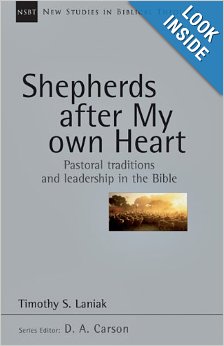
41EHMHxLkAL._SY344_PJlook-inside-v2,TopRight,1,0_SH20_BO1,204,203,200_Shepherds After My Own Heart: Pastoral Traditions and Leadership in the Bibleby Timothy Laniak. If you aren’t familiar with the “New Studies in Biblical Theology” series edited by Don Carson, this would be a great introduction to a great collection. It can be easy to glean all your understanding of elders from the familiar New Testament texts, but to do so would mean you’d miss out on a treasure trove of truth in the Old Testament. Laniak will help you see the full sweep of shepherding in all of Scripture and make pointed application to contemporary pastoral ministry.

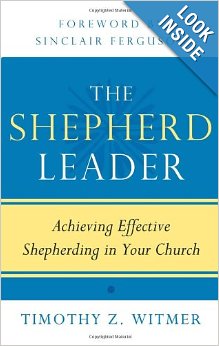
41hsuMz9d6L._SY344_PJlook-inside-v2,TopRight,1,0_SH20_BO1,204,203,200_The Shepherd Leader: Achieving Effective Shepherding in Your Church by Timothy Witmer. Witmer’s book, for me, is the undisputed favorite when it comes to the work of an elder. The first part of the book condenses Laniak’s work, but the real value is found in his four-part matrix of shepherding as: knowing, feeding, leading, and protecting. Clearly grounded in Scripture and overflowing in practical wisdom, this book will either encourage or blow up your current shepherding paradigm. And trust me, the encouragement will be sweet and the explosion will be awesome.

41nsAFBy0HL._SY344_PJlook-inside-v2,TopRight,1,0_SH20_BO1,204,203,200_Finding Faithful Elders and Deacons by Thabiti Anyabwile. In 2 Timothy 2:2 Paul says, “What you have heard from me in the presence of many witnesses entrust to faithful men who will be able to teach others also.” This work will help current elders obey that command as they identify and train future elders. Thabiti takes each biblical qualification for deacon or elder, defines it, and then offers sound advice for how you can see if that qualification is present in a man’s life. For example, when thinking about the requirement that elders be hospitable Thabiti encourages, “Note those men who seem to make a ministry of greeting everyone at church . . . Note the men who help those in need . . . Does the man open his home? . . . Remember that homes are not the only place to show hospitality . . . Does he accept invitations to hospitality?” I have probably seen more fruit from this book in personal discipling relationships than any other.

HONORABLE MENTIONS

Biblical Eldership by Alexander Strauch. The prose is dry, but the exegesis on all the relevant texts is super helpful.

The Elder and His Work by David Dickson. An older work on elders from a Presbyterian perspective, but this would be quite useful for elder training.

The Hardest Study

In volume one of his collected works the forgotten Puritan George Swinnock offers several hopes for his ministry. His ninth hope is that he would be a diligent preacher of God’s word, and he understands the necessity of prayer to the task:

Luther saith, He the prayeth hard, studieth hard. Lord, let all my sermons, as dew be heaven-born, that they may drop down upon my people like rain upon the mown grass. Let prayer be the key to open the mysteries of Christ to me, and let prayer be the turning of the key, to lock them up safe within me. Let prayer open and shut all my books, form and write, begin and conclude every sermon. Ah, now should he pray both for his preaching, and before he preacheth, who, by every sermon, preacheth his beloved neighbors into eternal burning, or eternal pleasures!

– George Swinnock, The Works of George Swinnock Vol:1, 324-325.

At What are You Better?

Sensing the severe lack of devotion to prayer in many Western churches, DA Carson asks,Praying Pastors

Do you not sense, with me the severity of the problem? Granted that most of us know some individuals who are remarkable prayer warriors, is it not nevertheless true that by and large we are better at organizing than agonizing? Better at administering than interceding? Better at fellowship than fasting? Better at entertainment than worship? Better at theological articulation than spiritual adoration? Better – God help us! – a preaching than praying?

– DA Carson, A Call to Spiritual Reformation: Priorities from Paul and His Prayers, 17.

The one thing we most urgently needed in Western Christendom is a deeper knowledge of God. We need to know God better . . . We think rather little of what he is like, what he expects of us, what he seeks in us. We are not captured by his holiness and love; his thoughts and words capture too little of our imagination, too little of our discourse, too few of our priorities. – DA Carson

3 Reasons for Weekly Communion

LordsSupper

“Now as they were eating, Jesus took bread, and after blessing it broke it and gave it to the disciples, and said, ‘Take, eat; this is my body.’ And he took a cup, and when he had given thanks he gave it to them, saying, ‘Drink of it, all of you, for this is my blood of the covenant, which is poured out for many for the forgiveness of sins. I tell you I will not drink again of this fruit of the vine until that day when I drink it new with you in my Father’s kingdom.’” – Matthew 26:26-29

At Imago Dei we partake of the Lord’s Supper every single week at the end of our worship gathering. Our liturgy is somewhat unique in the DFW Bible-belt culture, but I bet it’s our weekly gathering at the Table that receives more positive feedback than any other liturgical element.

Although nothing in Scripture commands a church to weekly partake of the Supper, I do think that an increased understanding of the spiritual benefits received in Communion would lead a pastor to say, “Why not take the Lord’s Supper each week?” Here are three reasons why your church would benefit from weekly Communion . . .

THREE REASONS

First, the Supper is food for faith. The Supper is a gospel-banquet. Our Lord knows His children are often failing in their faith, wanting a sign of Christ’s love and care. And so he gave us a sign, the Supper. Rome says that we physically feed upon Christ’s body at the Table, but the proper view is that we spiritually feed upon Christ’s body. With tangible elements we are able to remind our soul that His body was broken for us and blood shed for us. By taking the elements together a church is able to show their unity in Christ, reminding poor hearts that they are not isolated in their pilgrimage toward heaven. Biblical faith is unmistakably forward looking, thus the Supper feeds weak faith by declaring that an eternal wedding feast is on the way. Through bread and wine the Spirit stirs the soul to expectant perseverance to see the wedding feast of the Lamb.

Second, the Supper demands examination. As Luther famously declared, “The entire life of believers should be repentance.” Weekly gathering at the Table serves Christians by calling them confession and repentance, for one cannot take the elements with such examination. Paul said a person must “examine” himself before coming to the Table lest he eat and drink judgment on himself. Sober self-examination seems to be an increasingly lost practice in American evangelicalism and Communion helps Christians be obedient to 2 Corinthians 13:5.1 Pastors would be wise to exhort their congregation to come to the Table after a time of unhurried examination. At our church I call each Christian to individual examination and then tell every husband and/or father to pray with His family before they take the elements. I can’t you the number of men that have told me they really never prayer with their wife until they were encouraged to do so before Communion.

Third, the Supper is a visible sermon. The Supper is a sermon! Thomas Watson said the Lord’s Supper was a visible sermon, a mirror in which to gaze on the sufferings and death of Christ. Every faithful pastor wants to proclaim the gospel in every service and the Supper provides a second moment of gospel proclamation. Through preaching the Gospel is proclaimed and then it is proclaimed again through bread and wine. As I lead our church in Communion each week I have the opportunity to say just why Christ’s body and blood had to be broken and shed. By saying the meal is only open to those who have “called on the name of the Lord” a pastor gets to again call the unconverted to faith. Also, the Supper is a wonderful opportunity for parents whose children are with them in service to pray for their child to have faith in Christ. I recently spoke with parents in our church who said, “What should we do when we get to Communion? Our child wants to take the elements, but he is not yet a Christian.” Praise God for the opportunity to shepherd sheep in how to speak with their children about the gospel!

A FINAL ENCOURAGEMENT

Finally, I would encourage any pastor to do everything he can to let the time of Communion to be one of corporate celebration. At IDC we do this by having everyone come forward after examination and confession to grab a piece of bread and a cup. As an aside, resist the practice of intinction (dipping bread into the cup) because it individualizes the Supper in an unwise way. Once all our members have the elements and are back in their seats, I come up and lead the congregation in eating and drinking the elements at the same time. Then we all stand and sing a song that usually highlights the work of Christ on the cross.

The Supper can be taken in a variety of ways, so do what seems best for your congregation. Just ensure that it reflects the corporate prioritization called for in 1 Corinthians.

THREE RESOURCES TO CONSIDER

Given for You: Reclaiming Calvin’s Doctrine of the Lord’s Supper by Keith A. Mathison.

Lord’s Supper: Eternal Word in Broken Bread by Robert Letham.

The Lord’s Supper by Thomas Watson.

This forthcoming work by Hughes Oliphant Old will surely be valuable for every pastor.

  1. “Examine yourselves, to see whether you are in the faith.”

Sheer Prayerlessness

In the preface to A Call to Spiritual Reformation DA Carson writes,

I doubt if there is any Christian who has not sometimes found it difficult to pray. In itself this is neither surprising nor depressing: it is not surprising, because we are still pilgrims with many lessons to learn; it is not depressing, because struggling with such matters is part of the way we learn.

What is both surprising and depressing is the sheer prayerlessness that characterizes so much of the Western church. It is surprising, because it is out of step with the Bible that portrays what Christian living should be; it is depressing, because it frequently coexists with abounding Christian activity that somehow seems hollow, frivolous, and superficial. Scarcely less disturbing is the enthusiastic praying in some circles that overflows with emotional release but is utterly uncontrolled by any thoughtful reflection on the prayers of Scripture . . .

If we are to make any headway in reforming our personal and corporate praying then we shall have to begin by listening afresh to Scripture and seeking God’s help in understanding how to apply Scripture to our lives, our homes, and our church.

– Carson, A Call to Spiritual Reformation: Priorities from Paul and His Prayers, 9.

Recent Reads

I love to read. By God’s grace I am a pretty fast reader; I usually read a couple books each week. I find it helpful to summarize my thoughts on each book and I offer those thoughts in hopes that you will be encouraged to either read or pass over the given title.

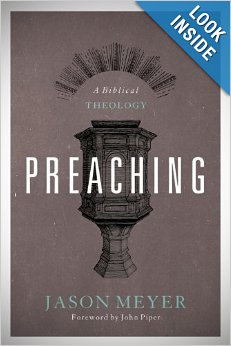
419r4qrrEGL._SY344_PJlook-inside-v2,TopRight,1,0_SH20_BO1,204,203,200_Preaching: A Biblical Theology by Jason Meyer. Many contemporary books on preaching can be quite selective, as some narrowly rely on word studies of “preaching” words, while others largely neglect the Old Testament. Jason Meyer believes his new book fills a void, for he writes, “This book is unique in that I think the whole Bible alone can give a holistic answer to what preaching is” (14). I would affirm the book’s uniqueness. He defines preaching as “stewarding and heralding God’s word in such a way that people encounter God through his word.” Men who preach in this way will be men who preach faithfully, fearlessly, and reverently. I originally planned to do an extended review of the book, but I found myself having nothing to offer but effusive praise. So if you preach regularly or hope to preach regularly, tolle lege!

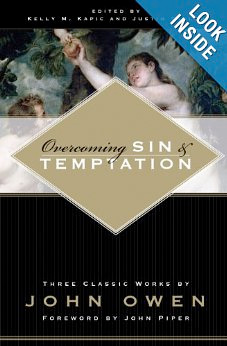
Overcoming SinOf Temptation by John Owen. Few books have impacted my view of the Christian life with such simplicity and clarity as this one. It is short, relatively easy (at least for an Owen book), and packs a punch. Owen takes the words of Christ in Matthew 26:41 – “Watch and pray, that ye enter not into temptation” – and offers a two-part scheme for resisting temptation, “Watch and pray.” Housing all kinds of pithiness and profundity that one can expect from the Prince of Puritans, this book might just be the handiest guide to slaying temptation you can find outside of sacred Scripture. Chapter seven’s discussion of heart-watchfulness is particularly helpful.

41Fd-bA0ViL._SY344_BO1,204,203,200_A Guide to Prayer by Isaac Watts. Many know Watts as a hymn writer (“When I Survey,” “Joy to the World,” etc.), but he was also a great theologian and logician. This book on prayer is a treasure trove of wise application on how to pray in light of Scripture. While the book is somewhat short, Watts leaves no stone unturned as he manages to provide enough principles and directions to fill an encyclopedia. One of the most lasting takeaways from the book – for me – will be the relationship between prayer and spiritual conversation throughout the day. Watts writes, “The reason we lack words for prayer is because we speak so little of Christ throughout the day.” A great book on that most difficult of devotions.

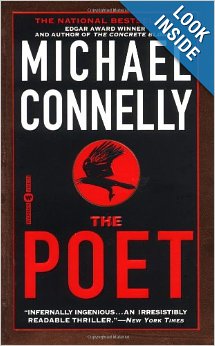
51J+3sfwMwL._SY344_PJlook-inside-v2,TopRight,1,0_SH20_BO1,204,203,200_The Poet by Michael Connelly. This was the first Connelly book I’ve read that didn’t focus on Harry Bosch or Mickey Haller, and Connelly shines as usual. The Poet follows crime-beat reporter Jack McEvoy as he responds to his brother’s apparent suicide in the only way he knows how: investigative journalism. McEvoy’s investigation uncovers a serial killer of unprecedented cunning who target homicide cops, each one haunted by a case he could never crack. About a third of the way into the book I thought I had identified the killer and was well on my way to accusing Connelly of being predictable, but shame on me! In typical Connelly fashion the books ends with a surprise twist; thus the only thing predictable about his books seems to be their very unpredictability. The Poet was originally published in 1997, thus the reader gets an idea for what journalism was like before internet dominance. For example, one character is amazed that one picture can be downloaded on the internet in just four minutes. This of course comes after a detective’s amazement at the strange device called a “digital camera.” A fun and gripping read.

51sJBOCKG5L._SY344_PJlook-inside-v2,TopRight,1,0_SH20_BO1,204,203,200_The Scarecrow by Michael Connelly. This is the second Jack McEvoy book, but Connelly published it twelve years after The Poet. By reading the two volumes back to back I got a clear sense at how technology and the internet revolutionized journalism in just over a decade. Whereas the first volume revels in the novelty of dial-up connections and digital cameras, this second book is stocked with server farms, complex computer hacking, and cutting edge security software. The Scarecrow finds McEvoy forced out of the Los Angeles Times due to budget cuts (thanks to the rise of internet journalism) and once again stumbling into the discovery of a notorious infidel. Page-turning suspense at its finest.