A Song for Thanksgiving

......

Come and stand before your Maker
Full of wonder, full of fear
Come behold His power and glory
Yet with confidence draw near

For the one who holds the heavens
And commands the stars above
Is the God who bends to bless us
With an unrelenting love

Rejoice, come and lift your hands and
Raise your voice, He is worthy of our praise
Rejoice, sing of mercies of your King
And with trembling, rejoice

We are children of the promise
The beloved of the Lord
Won with everlasting kindness
Bought with sacrificial blood

Bringing reconciliation
To a world that longs to know
The affections of a Father
Who will never let them go

All our sickness, all our sorrows
Jesus carried up the hill
He has walked this path before us
He is walking with us still

Turning tragedy to triumph
Turning agony to praise
There is blessing in the battle
So take heart and stand amazed

16 Reasons to Rejoice and Give Thanks

Thanksgiving

“Rejoice always . . . give thanks in all circumstances.”
– 1 Thessalonians 5:16, 18

Today you will likely gather around a table filled with all manner of holiday food and give reasons why you are thankful. On the outside chance you are at a loss for things to offer, here are 16 biblical reasons for rejoicing and thanksgiving:

  1. “Nevertheless, do not rejoice in this, that the spirits are subject to you, but rejoice that your names are written in heaven.” – Luke 10:20
  2. “We rejoice in hope of the glory of God. Not only that, but we rejoice in our sufferings, knowing that suffering produces endurance.” – Romans 5:2-3
  3. “We also rejoice in God through our Lord Jesus Christ.” – Romans 5:11
  4. “Thanks be to God, that you who were once slaves of sin have become obedient from the heart.” – Romans 6:17
  5. “I give thanks to my God always for you because of the grace of God that was given you in Christ Jesus.” – 1 Corinthians 1:4
  6. “Thanks be to God, who gives us the victory through our Lord Jesus Christ.” – 1 Corinthians 15:17
  7. “Thanks be to God, who in Christ always leads us in triumphal procession.” – 2 Corinthians 2:14
  8. “Thanks be to God for his inexpressible gift!” – 2 Corinthians 9:15
  9. “[Give] thanks always and for everything to God the Father in the name of our Lord Jesus Christ.” – Ephesians 5:20
  10. “We always thank God, the Father of our Lord Jesus Christ . . . since we heard of your faith in Christ Jesus and of the love that you have for all the saints.” – Colossians 1:3-4
  11. “[Give] thanks to the Father, who has qualified you to share in the inheritance of the saints in light.” – Colossians 1:12
  12. “We give thanks to God always for all of you.” – 1 Thessalonians 1:2
  13. “We ought always to give thanks to God for you . . . because your faith is growing abundantly, and the love of every one of you for one another is increasing.” – 2 Thessalonians 1:3
  14. “We ought always to give thanks to God for you . . . because God chose you as the firstfruits to be saved.” – 2 Thessalonians 2:13
  15. “Rejoice insofar as you share Christ’s sufferings.” – 1 Peter 4:13
  16. “We give thanks to you, Lord God Almighty, who is and who was, for you have taken your great power and begun to reign.” – Revelation 11:17

Recent Reads

I love to read. By God’s grace I am a pretty fast reader; I usually read a couple books each week. I find it helpful to summarize my thoughts on each book and I offer those thoughts in hopes that you will be encouraged to either read or pass over the given title.

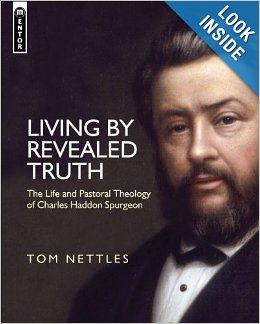
51ChIFpKbLL._SX258_PJlook-inside-v2,TopRight,1,0_SH20_BO1,204,203,200_Living by Revealed Truth: The Life and Pastoral Theology of Charles Haddon Spurgeon  by Tom Nettles. When this book arrived I was initially taken aback by its format. The size is something like 9 inches by 7.5 inches and the text is laid out in double-column. In other words, this is a textbook on Prince of Preachers. Don’t go into it thinking it will be a biography along this lines of Marsden’s Jonathan Edwards or Gordon’s Calvin, instead approach it more as a treasure trove of research on Spurgeon. Nettles isn’t interested in a flowing narrative, as he opts instead to insert Spurgeon’s pastoral theology at various points along the way. For example, after recounting Spurgeon’s baptism at Isleham Ferry the book proceeds to discuss his theology and practice of baptism before returning to Spurgeon’s burgeoning ministry. Some will think this method stilts the story, but I think it’s appropriate for what this book is trying to accomplish. All in all, this would be an incredible addition to any Spurgeon aficionado’s library.

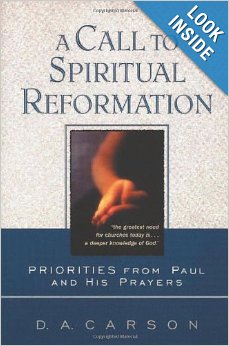
51MSDBHfD2L._SY344_PJlook-inside-v2,TopRight,1,0_SH20_BO1,204,203,200_A Call to Spiritual Reformation: Priorities from Paul and His Prayers by DA Carson. Few books on prayer have influenced my life as much as this one, so I try to read it every year or so. Carson’s aim is to get ordinary Christians to know God in such a way that they become devoted to “spiritual, persistent, biblically minded prayer” (16). To do this the great Canadian exegetes eight different Pauline prayers to show what they tell us about God and how such knowledge should overflow into our prayer lives. The book displays Carson’s profound wisdom as he challenges and comforts in all the right places. I am not sure how someone can read it and not find their practice of prayer transformed according to Scripture. Tolle lege!

51iC7c30RxL._SY344_PJlook-inside-v2,TopRight,1,0_SH20_BO1,204,203,200_Heaven and Hell by John Jakes. This is the final installment of Jakes’ sweeping historical fiction trilogy on the Civil War. I found this volume to be the weakest in the trilogy, probably because the era of Reconstruction just can’t compete with the tension and gravity of the antebellum and Civil War years. Like the previous two volumes, this one simultaneously weaves multiple story lines together, but unlike the first two some of these story lines aren’t terribly compelling. I actually almost gave up on the book halfway through because it seemed like Jakes was going to make the postbellum period more devastating than the Civil War for the trilogy’s protagonists. Nevertheless, I persevered and am glad I did so. Jakes is especially strong in capturing the darker realities of our country’s dealings with Native Americans in the 1870s, as well as the terrible rise of the Ku Klux Klan. This was an entertaining and informative series.

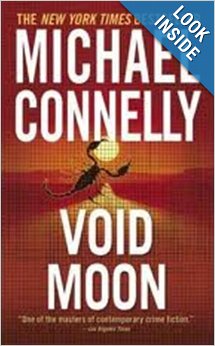
51YyqHKz7+L._SY344_PJlook-inside-v2,TopRight,1,0_SH20_BO1,204,203,200_Void Moon by Michael Connelly. Sooner or later I was bound to read a Connelly book I didn’t like and Void Moon was it. The narrative focuses on fresh-out-of-prison Cassie Black, who attempts one final heist so she can get out of Dodge. The plot line is promising, but it eventually gets mired in verbose descriptions and narrow perspectives. Make no mistake, the book is entertaining, just in a James Patterson kind of way. And Connelly is better than that.

An Easy Test for Sermonic Clarity

Preaching Header

“Pray also for us, that God may open to us a door for the word, to declare the mystery of Christ . . . that I may make it clear, which is how I ought to speak.” – Colossians 4:3-4

Clarity is one of the few essential characteristics of preaching.  A sermon success will indeed rise and fall on the degree to which it is clear. Therefore, every faithful preacher ought to continually strive to increase the clarity of exposition in his sermons. An increase in clarity simply means an increase in the exposition’s understandability and memorability. In Christ-Centered Preaching Bryan Chapell offers an incredibly useful way of testing for clarity (which he deals with under the label of “unity”) with his “3am Test”:

You will have unity when you can demonstrate that the elements of the passage support the theme of your message and you can pass the “3 a.m. test.” The 3:00 am test requires you to imagine a spouse, a roommate, or parishioner waking you from your slumber with this simple question: “What’s the sermon about today, Preacher?” If you cannot give a crisp answer, the sermon is probably half-baked. Thoughts you cannot gather at 3:00 a.m. are not likely to be caught by others at 11:00 a.m. – Christ-Centered Preaching, 47.

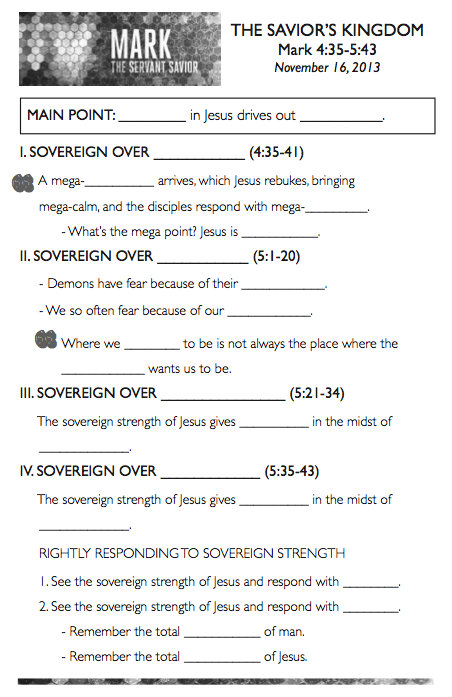
In recent weeks I have discovered another useful test: The Sermon Notes Insert. Earlier this year I spent some time at The Church at Brooks Hills and was struck by the expansive “Message Notes” insert Platt provides for his congregation the week’s bulletin.1 After a few months of going back and forth on doing something similar, we finally took the plunge at IDC and I have been pleasantly surprised with the feedback.2 Like everything in ministry, the adjustment comes with advantages and disadvantages.

TWO ADVANTAGES OF A SERMON NOTES INSERT

First, it provides a measuring stick for a sermon’s clarity. I use the insert to provide the congregation with the sermon’s main point, divisions, as well as any applications that might be particularly helpful. The insert basically answers the question, “What do I want a hearer to remember and meditate on from this sermon?” The question presupposes two things: 1) the sermon actually has something worth remembering, and 2) the sermon has discernible structure. An insert then is one way to easily gauge a sermon’s memorability and understandability. In the weeks since we started offering an insert I have noticed during sermon preparation that I am more intentional to be precise with language. If a teenager has difficulty following along with the insert, your sermon is just too boring, complicated, or verbose. Maybe even it’s all three.

There have been a few weeks where quite a few members missed a fill-in-the-blank, which revealed to me that I wasn’t as clear on the respective point as I intended to be. The insert also helps me have a tool to encourage young and inexperienced preachers with. If I struggle to put together an insert from their manuscript, then it is overwhelmingly likely the manuscript needs work before delivery.

Second, it invites the congregation to focused hearing. If the insert is done well it won’t inhibit listening (see disadvantage #2 below), but it will invite listening. I have observed our congregation more engaged through the entire preaching event because they have a template to aid listening. The insert also provides church members with a simple resource to fuel meditation throughout the week in small groups or devotional study.

Although these two points are sufficient in and of themselves to encourage some churches to use an insert, each advantage has a corresponding and potential disadvantage.

TWO POTENTIAL DISADVANTAGES OF A SERMON NOTES INSERT

First, it encourages “sound bite” preaching. In some ways the insert is a collection of sermonic sound bites. That’s ok as long as they have an evident flow and unity, but I can see a situation where a pastor feels somewhat constrained by the insert’s sound bite reality.

Second, it changes the congregation’s posture from listening to note-taking. Martyn Lloyd-Jones understand this danger when he famously said, “I have often discouraged the taking of notes while I am preaching. . . . The first and primary object of preaching is not only to give information. It is, as Edwards says, to produce an impression. It is the impression at the time that matters, even more than what you can remember subsequently. . . . While you are writing your notes, you may be missing something of the impact of the Spirit.”3 Although I am inclined to believe The Doctor is too strong on this point, his concern is nevertheless valid. An insert will be a valuable resource from some church members and not for others. The key here is to make it available, but not required.

I believe the advantages of a sermon notes insert outweigh its disadvantages, but every pastor and congregation is different. Should you think an insert could serve your church, go for it. If not, maybe there will be a time in the future when it will.

  1. Here is an example from Platt’s recent sermon entitled, “The Cross & Christian Ministry.”
  2. Here is an example from my recent sermon on Mark 4:35-5:43.
  3. Martyn Lloyd-Jones, The Puritans: Their Origins and Successors (Edinburgh, 1987), page 360.

Choosing What is Excellent

Choosing Excellence

“And it is my prayer that your love may abound more and more, with knowledge and all discernment, so that you may approve what is excellent, and so be pure and blameless for the day of Christ, filled with the fruit of righteousness that comes through Jesus Christ, to the glory and praise of God.” – Philippians 1:9-11

In Philippians 1:9-11 Paul offers a simple prayer  for the Philippians to pursue that which is excellent. If they abound in love they will be able to approve – or discern – what is excellent. The excellent things mentioned in 1:10 are nothing more than the ordinary elements of maturing Christian discipleship. DA Carson says, in his book A Call To Spiritual Reformation, that choosing these excellent things “reflect one’s entire value system, one’s entire set of priorities, one’s entire heart and mind.” Carson then goes on to offer practical examples of choosing excellence . . .

“What do you do with your time? How many hours a week do you spend with your children? Have you spent any time in the past two months witnessing to someone about the gospel? How much time have you spent watching television or in other forms of personal relaxation? Are you committed, in your use of time, to what is best?

“What have you read in the past six months? If you have found time for newspapers or magazines, a couple of whodunits, a novel or two or perhaps a trade journal, have you also found time for reading a commentary or some other Christian literature that will help you better understand the Bible or improve your spiritual discipline or broaden your horizons? Are you committed, in your reading habits, to what is best?

How are you relationships within your family? Do you pause now and then and reflectively think through what you can do to strengthen ties with your spouse and with your children?

Do you make time for personal prayer? For prayer meetings? Have you taken steps to improve in this regard?

How do you decide what to do with your money? Do you give a set percentage, say, 10 percent, of your income to the Lord’s work, however begrudgingly, and then regard the rest of your income as your own? Or do you regard yourself as the Lord’s steward, so that all the money you earn is ultimately his? Are you delighted when you find yourself able to put much more of your money into strategic ministry, simply because you love to invest in eternity?

Has your compassion deepened over the years, so that, far from becoming more cynical, you try to take concrete steps to serve those who have less than you do?

Is your reading and study of the Bible so improving your knowledge of God that your wholehearted worship of the Almighty grows in spontaneity, devotion, and joy?

At what points in your life do you cheerfully decide, for no other reason than that you are a Christian, to step outside your ‘comfort zone,’ living and serving in painful or difficult self-denial?

Behind your answers to all these questions are choices. The last thing I want to do is generate a load of guilt because of the choices constantly before us, choices we frequently fail to exploit for the glory of God . . . Feeling of guilt will not by themselves help us to make the right choices; they may simply increase our stress and resentments.

But if our love abounds more and more, shaped all the while by knowledge and moral insight, then these are the kinds of choices we will be wanted to make – and we will be wanting to make them well. They are the kinds of choices that cannot be made on the basis of mere law. They spring from a heart transformed by God’s grace.”

– DA Carson, A Call to Spiritual Reformation: Priorities from Paul and His Prayers, 128-129.

A Hymn Worth Singing

“O Love that Will Not Let Me Go” by George Matheson

Here’s the story behind the song:

At age 20 George Matheson (1842-1906) was engaged to be married but began going blind. When he broke the news to his fiancee, she decided she could not go through life with a blind husband. She left him. Before losing his sight he had written two books of theology and some feel that if he had retained his sight he could have been the greatest leader of the church of Scotland in his day.

A special providence was that George’s sister offered to care for him. With her help, George left the world of academia for pastoral ministry and wound up preaching to 1500 each week–blind.

The day came, however, in 1882, when his sister fell in love and prepared for marriage herself. The evening before the wedding, George’s whole family had left to get ready for the next day’s celebration. He was alone and facing the prospect of living the rest of his life without the one person who had come through for him. On top of this, he was doubtless reflecting on his own aborted wedding day twenty years earlier. It is not hard to imagine the fresh waves of grief washing over him that night.

In the darkness of that moment George Matheson wrote this hymn. He remarked afterward that it took him five minutes and that it was the only hymn he ever wrote that required no editing.

LYRICS

O Love that will not let me go
I rest my weary soul in thee
I give thee back the life I owe
That in thine ocean depths its flow
May richer, fuller be

O light that followest all my way
I yield my flickering torch to thee
My heart restores its borrowed ray
That in thy sunshine’s blaze its day
May brighter, fairer be

O Joy that seekest me through pain
I cannot close my heart to thee
I trace the rainbow through the rain
And feel the promise is not vain
That morn shall tearless be

O Cross that liftest up my head
I dare not ask to fly from thee
I lay in dust life’s glory dead
And from the ground there blossoms red
Life that shall endless be

Excuses for Not Praying

National Day of Prayer_wide_t

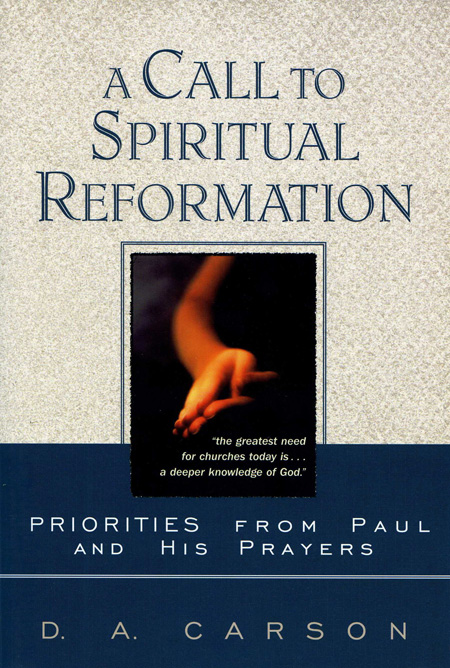
In A Call to Spiritual Reformation: Priorities from Paul and His Prayers D.A. Carson spends an entire chapter answering common excuses for not praying.

I find his answers to be simultaneously strong and comforting, so I am replicating his summaries to each excuse in hopes they will challenge you as well.

5 COMMON EXCUSES FOR NOT PRAYING9780851109763-carson-call-spiritual-reformation

Excuse #1: “I am Too Busy to Pray”

It matters little whether you are the mother of active children who drain away your energy, an important executive in a major multinational corporation, a graduate student cramming fro impending comprehensives, a plumber working overtime to put your children through college, or a pastor of a large church putting in ninety-hour weeks: at the end of the day, if you are too busy to pray, you are too busy. Cut something out.

Excuse #2: “I Feel Too Dry Spiritually to Pray”

God insists that we learn not to hide behind our feelings of dryness, behind our chronic unbelief, behind our lapses into discouragement. He wants us to learn to trust him, to learn to persevere in prayer. In short, in prayer as in other areas of life, God wants us to trust and obey.

Excuse #3: “I Am Too Bitter to Pray”

We can look at this matter of bitterness not only from the vantage of those who need forgiveness, but from the vantage of those who have received it. The Bible tells us, “Let all bitterness and wrath and anger and clamor and slander be put away from you, along with all malice. Be kind to one another, tenderhearted, forgiving one another, as God in Christ forgave you” (Eph. 4:31-32). In light of the matchless forgiveness we have received because Christ bore our guilt, what conceivable right do we have to withhold forgiveness?

Excuse #4: “I Am Too Ashamed to Pray”

Our sense of shame can scarcely be an adequate ground to excuse our prayerlessness. Rather, it ought to be a goad that drives us back to the only one who can forgive us and grant us utter absolution, back to the freedom of conscience and the boldness of prayer that follow in the wake of the joyful knowledge that we have been accepted by a holy God because of his grace.

Excuse #5: “I Am Content with Mediocrity”

Some Christians want enough of Christ to be identified with him, but not enough to be seriously inconvenienced; they genuinely cling to back Christian orthodoxy but do not want to engage in serious Bible study; they value moral probity, especially of the public sort, but do not engage in war against inner corruptions; they fret over the quality of the preacher’s sermon but do not worry much over the quality of their own prayer life. Such Christians are content with mediocrity . . . God’s response is utterly uncompromising: “Submit yourselves therefore to God. Resist the devil, and he will flee from you. Draw near to God, and he will draw near to you. Cleanse your hands, you sinners, and purify your hearts, you double-minded. Be wretched and mourn and weep. Let your laughter be turned to mourning and your joy to gloom. Humble yourselves before the Lord, and he will exalt you” (James 4:7-10).

What to Do on Weeks When You Don’t Preach

When You Do Not PreachOne of the greatest things a pastor can do for his own health and that of his congregation is to take regular weeks off from preaching.

I began this year, my first of full time preaching, with the goal of preaching no more than forty times. Should the remainder of this year’s preaching calendar go according to plan I will have preached exactly forty times at the end of 2013. You don’t have to be a math wiz to realize that, on average, I have one week off from preaching each month.

Everyone’s sermon preparation time differs, but I seem to average about twenty hours for sermon prep on those weeks when I preach. That is quite a good chunk of time to redeem on weeks when sermon prep isn’t a pressing task. So, the question I want to try to answer in this post is, “How can a pastor wisely redeem the time on the weeks he does not preach?” Let me suggest three things . . .

Pray. Of course, a pastor should be praying “always and for everything” (Eph. 5:20), but weeks off from sermon preparation provide a preacher with the unique ability for extended prayer. I suspect that every preacher devotes specific blocks of the week’s time to the sermon, so why not just dedicate these blocks to earnest intercessory prayer? Prayer is the first half of our job description and gives power to the other half, so use these weeks to refill your ministerial tank in prayer before the Father.

Study. A week off from sermon preparation represents an excellent time to devote your mind to matter that needs unique study. Are there any particular texts coming up in you sermon series that would benefit from detailed preparatory study? Are there any pressing theological matters unique to your congregation in which you need to solidify biblical convictions? If so, use these weeks for those specific studies. Or you might find such weeks provide wonderful opportunities to knock out several books you have toiled through for some time.

Meet. I tend to use weeks off from preaching to meet with many people from the congregation I haven’t checked in with recently. It also seems to be a good idea to schedule longer leadership or admin meetings for these weeks when they won’t suck energy from soul soon to preach.

Be purposeful and diligent with your time on the weeks you don’t preach. I often find that these weeks are usually the most busy and I think that’s a good thing. You may be “off” from preaching, but you are not “off” from ministry.

Pastoral Postcard: Sober-Minded, Self-Controlled, Respectable

Pastoral PostcardEvery few weeks I try to write a “Pastoral Postcard,” a post that aims to encourage pastors in the work of ministry. I take one verse of Scripture and apply it to the blessings and afflictions every gospel minister experiences. The postcards originate from a time when I was preaching through 1 Timothy while reading Thomas Boston’s The Art of Man-Fishing. As a young pastor myself, I tried to channel my inner Boston and write short-ish notes to encourage my labor. Hopefully they can be some encouragement to you.

“Therefore an overseer must be above reproach, the husband of one wife, sober-minded, self-controlled, respectable.” – 1 Timothy 3:2

Pastor, you are called to sobriety and respectability; in other words, you are to be a man of winsome watchfulness.

WATCHING YOUR WAY

Old King James likes to think of a “sober-minded” man as a “vigilant” man, one marked by diligence in keeping the heart. The apostle encouraged young Timothy to “keep on yourself and the teaching.” Thus, a sober-minded and self-controlled man is one vigilantly disciplined to watch his life and doctrine.

First, watch your life. Like a captain who constantly stands on his ship’s bridge to stay the course, so too must you stand on the bridge of your soul and steady it within the paths of righteousness. Winds and waves from the world will whip around you, but with eyes fixed above you must steer toward the eternal waters. Make not mistake, this is not as easy. The Serpent is always scheming to divert your gaze from the Savior, to fix your attention on all that is in the world – the desires of flesh, eyes, and pride of life. Should he not be successful in these areas, the Deceitful Devil will encourage you to overly-avid examination of the heart. He knows that the apostle requires you to examine your heart to see if you are in the faith, so he will work for your gaze to never lift off yourself. Such morbid introspection will cripple your progress in life, for the very progress you are to make comes from looking outside yourself. The Colossians were told, “Set your minds on things above,” for that is where Christ is, and He is “your life.” Disciplined looking at your life thus means disciplined looking unto Christ. The young Scotsman knew this all too well, which is why he said, “For one look at self we ought to take ten looks at Christ.” Remember this principle as you stand on your bridge and fix your eyes on the Captain.

Christ is your life, so place Him ever before your eyes, for only then will you really be watching you life with sobriety and self-control.

Second, watch your doctrine. The Savior equipped you with knowledge, gifting, and ability so that you might feed His flock. This means, ordinarily, you will be more advanced in truth than almost every one of your sheep. This is good and pleasing in the sight of God, for mature pastors are necessary for mature sheep. But don’t forget that this is also good and pleasing in the Serpent’s sight because it is a glorious vehicle for complacency in truth. If he can keep you from being challenged in truth, he will then succeed in making you complacent in truth. He will tempt you to rest on your laurels of knowledge and eschew any sort of engagement that might fluster your presuppositions. Unchallenged pastors quickly become complacent pastors and complacent pastors are ripe for the Raging Lion. Slay his roaring subtlety by daily swimming in the deep things of God. Kill your flesh which desires more to study the fleeting vapors of this world instead of the Eternal One. It is only in Him that the real treasures of knowledge are found, thus it is Him that you must encounter and experience.

So just as watching your life means watching Christ, so too does watching your doctrine ultimately mean watching Christ, for He is both life and truth.

You must understand two further things about this watch. First, it cannot be done in isolation. The Serpent will tempt you to wage this watchful war alone in a foxhole. Yet, the truth is that you fight on a victorious hill, shoulder-to-shoulder with other Christians in strongest army the cosmos has ever seen. Your Christian brothers and sisters will help you see through sin’s deception and the Worm’s wiles, steering your on the paths of life and keeping you in the ways of truth. Dear pastor, watch with witnesses. Second, know that your unique soul will want to give unbalanced attention to one of these two areas. The Worm knows this as well, and so he might currently scheme for you to only watch your life, but not your doctrine. If so you will be a ship sailing with no anchor. Or he might tempt you to only watch your doctrine and not your life. Such a watch means the soul’s ship has an anchor, but no sails.

Fight against any temptation to overly focus on one side and instead fix your gaze on Christ, who is life and truth.

WINSOMENESS IS THE WAY

Your world celebrates freedom from constraint and discipline. Yet, this world is nevertheless drawn to a man sober-minded and self-controlled. Why? Because order and discipline inevitably bring respectability. And respectability is little more than an appealing character; respectability sings and shines; respectability is winsome. So a respectable life is a winsomely appealing life, and is that not what a pastor’s life much be? One that is exemplary and worthy exemplifying?

Watching your life and doctrine fuels a winsome witness to Christ, the One who is your way, life, and truth. Such testimony comes from a man sober-minded, self-controlled, and respectable.


Recent Reads

I love to read. By God’s grace I am a pretty fast reader; I usually read a couple books each week. I find it helpful to summarize my thoughts on each book and I offer those thoughts in hopes that you will be encouraged to either read or pass over the given title.

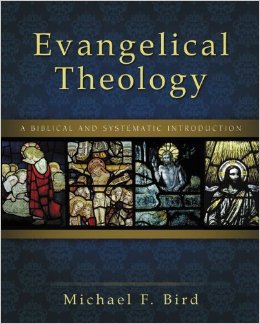
51iHv7dPnAL._SX258_BO1,204,203,200_Evangelical Theology: A Biblical and Systematic Theology by Michael Bird. Bird set out to write a “gospel-centered theology for Christians who seek to define themselves principally by the gospel” (21). Whereas Calvin united his theology under the glory of God, Luther under justification by faith, and Barth under the self-disclosure of the Triune God, Bird believes the gospel is the integrating point of Christian theology. “The gospel comprises the beginning point, boundary, and unifying theme for all theology” (45). The book’s strengths and weaknesses flow from the gospel being the penultimate boundary for Christian theology and fellowship. The method is undeniably helpful as no loci of theology is ever far from the gospel announcement. Yet, such a center-bounded approach predictably flattens common areas of divergence as exemplified in Bird’s discussion of God’s fatherhood, eschatology, the extent of Christ’s atonement, church polity, and sacraments. That I felt the center-bounded work falls short of the ideal probably reveals my own convictions on our centered-bounded age.

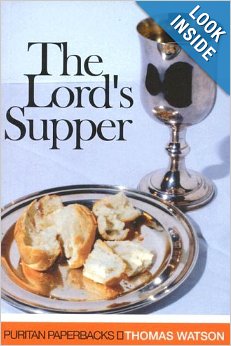
51PA2NBZ71L._SY344_PJlook-inside-v2,TopRight,1,0_SH20_BO1,204,203,200_The Lord’s Supper by Thomas Watson. This little book represents a prototypical Puritan view of Matthew 26:26-28. Although neither Watson’s dedication nor the publisher’s preface say so, I bet the book is consists of a couple sermons on Matthew’s recounting of the Supper’s institution. The first three chapters unfold five particulars about the gospel-banquet from Matthew 26: 1) the Author, 2) the Time, 3) the Manner, 4) the Guests, and 5) the Benefits. In time Watson quickly dispatches of the two extremes to be avoided, transubstantiation and memorialism. For those familiar with the various views, Watson advocates for and elaborates on the teachings of Calvin. I found his discussion of the kind of heart necessary to partake of the Supper to be most helpful.

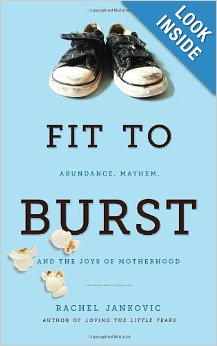
411ZASBFp0L._SY344_PJlook-inside-v2,TopRight,1,0_SH20_BO1,204,203,200_Fit to Burst: Abundance, Mayhem, and the Joys of Motherhood by Rachel Jankovic. Some might think it strange to read a book written by a woman for other women, but my wife resonates deeply with Jankovic’s perspective on motherhood, so I read in order to better understand and serve her work as a mom. Jankovic is a fabulous writer, which makes perfect sense when you discover she is Doug Wilson’s daughter and Nate Wilson’s sister. Her uncommon wisdom and wit are preeminently displayed in meditations on misplaced “grace” in discipline, the relationship between faithfulness and stress, and the value of cultivating a lively sense of humor in parenting. Fit to Burst is one of the most enjoyable books I’ve read this year.

51D1IDjfseL._SY344_PJlook-inside-v2,TopRight,1,0_SH20_BO1,204,203,200_Bloody Crimes: The Funeral of Abraham Lincoln and the Chase for Jefferson Davis by James Swanson. A few years ago Swanson published Manhunt: The 12-Day Chase for Lincoln’s Killer and that story of John Wilkes Booth’s demise was a smashing success. Bloody Crimes functions as something like a sequal to Manhunt, answering the question, “What happened next?” The funeral procession for Lincoln is fascinating and the pictures included paint a vivid portrait of a nation in spectacular mourning. Swanson weaves the death pageant alongside the chase for and capture of America’s “lost man,” Confederate President Jefferson David. Although not as suspenseful as Manhunt, the sequel proves Swanson to be a master of narrative fiction.