Recent Reads

I love to read. By God’s grace I am a pretty fast reader; I usually read a couple books each week. I find it helpful to summarize my thoughts on each book and I offer those thoughts in the hope that you will be encouraged to either read or pass over the given title.
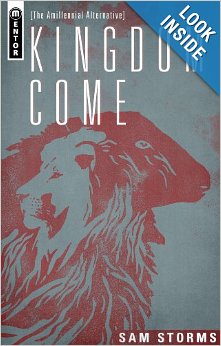
51CTv3RNFyL._SY344_PJlook-inside-v2,TopRight,1,0_SH20_BO1,204,203,200_Kingdom Come: The Amillennial Alternative by Sam Storms. This surely is now the “go to” resource for amillennialism. Storms was trained in classic dispensationalism and the book represents a few decades worth of study, so he is uniquely equipped to deal with the pertinent content. In over 500 pages he covers everything from escatological hermeneutics to systematic strengths/weaknesses of the various positions to exegesis of the disputed texts. Storms writes winsomely and clearly, thus the book steers clear of the dry, academic treatment one usually finds in this debate. If Kingdome Come doesn’t convince you of the amillinnial position it will at least give you the best representative study you can find. Of particular help are his chapters “Problems with Premillinnalism” and “A Cumulative Case Argument for Amillennialism.”
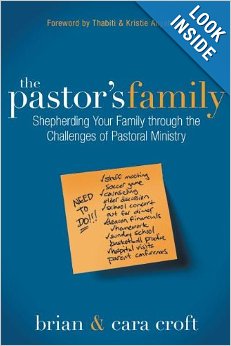
41Yp2URq4rL._SY344_PJlook-inside-v2,TopRight,1,0_SH20_BO1,204,203,200_The Pastor’s Family: Shepherding Your Family through the Challenges of Pastoral Ministry by Brian & Cara Croft. Croft is the curator of the popular practicalshepherding.com and I was pleased to see his wisdom make its way into print with The Pastor’s Family. The strength of this book is the written interplay between Brian and Cara. At appropriate points in Brian’s chapters Cara will offer up a paragraph or two on perspective from a pastor’s wife (and vice versa on Cara’s chapters). For me, Part Two –  “The Pastor’s Wife: ‘I Don’t Recall Saying ‘I Do’ To This!” – is the strongest part of the book. Few available resources today specifically address the impact of ministry on the pastor’s wife, and this one does it wonderfully. The book would serve any family involved in pastoral ministry, but I can see it being uniquely helpful to younger couples just about to start in ministry. Well done!
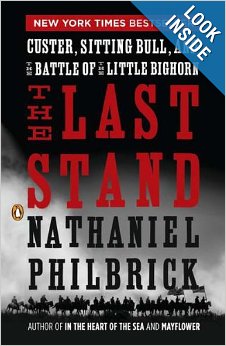
5125onP+cjL._SY344_PJlook-inside-v2,TopRight,1,0_SH20_BO1,204,203,200_The Last Stand: Custer, Sitting Bull, and the Battle of Little Bighorn by Nathaniel Philbrick. I have been hooked on Philbrick ever since reading Mayflower, so I was eager to read his latest on Custer’s last stand. In all my history reading I have never studied much related to the 1870s, the decade with which this book is preoccupied. Although he does dip into military strategy and requisite battle speculation, Philbrick concentrates on Little Bighorn’s principal characters: Custer and Sitting Bull. And what fascinating characters these men were! Philbrick builds their stories to a point that when the battle begins the reader has a deep understanding of the opposing generals. Woven into this work is sober reflection on the decline of life for Native Americans and the government that precipitated it. An excellent introduction to such a small, yet significant battle in our nation’s history.
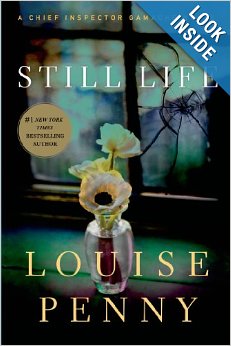
512RsVDUF2L._SY344_PJlook-inside-v2,TopRight,1,0_SH20_BO1,204,203,200_Still Life & A Fatal Grace by Louise Penny. I came across Louise Penny when I saw her latest publication debut at #1 on the New York Times bestseller list. She is famous for her Inspector Gamache series and quite critically acclaimed. The series sounded like something right up my alley, so I dove in and read the first two Gamache books. Still Life introduces the reader to life in Three Pines, a quaint Canadian village two hours from Montreal. When a well known citizen is murdered Gamache arrives to investigate, for Three Pines falls under his jurisdiction. After some extended character development Still Life eventually gets the tension going and captures the interest. It was a solid read.
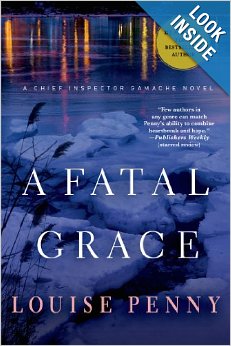
51gW6wt3UXL._SY344_PJlook-inside-v2,TopRight,1,0_SH20_BO1,204,203,200_When I started A Fatal Grace, book two in the Gamache series, I thought to myself, “Surely this book will be set outside of Three Pines.” But lo and behold, one year after A Still Life ends, someone has moved into the tiny town only to find herself the victim of a intricate killing scheme. Three Pines sure seems to be a cursed little village, albeit unbelievably so. A Fatal Grace was interesting, yet I found the conclusion to be a reach. The jury is still out on whether or not I will proceed to book three (one intriguing plot line was unresolved) as the emotive and delicate prose may keep me away.

The 2nd Question to Ask of a Sermon

Questions for Sermons

Yesterday, I said the one question to be asked of any sermon is, “Was it faithful?” A faithful sermon is one that exalts God’s glory in Christ, by clearly making the point of the passage the point of the sermon and broadly applying its truth to the life of the congregation.

Once this question is asked and answered the pastor ought to move on to the second question, “How can it be better?”

METHODS OF EVALUATION

No sermon is perfect, thus every sermon can be better. Honest evaluation can be painful, but inspired Solomon said, “Faithful are the wounds of a friend” (Prov. 27:6). So, how can a pastor evaluate his sermon? Here are three options:

  1. Listen to the sermon. I am regularly amazed at how few preachers ever listen to one of their sermons. Listening is an easy way to identify what habits in vocal delivery are helpful or hurtful.
  2. Watch the sermon. Even better than listening is watching the sermon. This allows the preacher to not only hear vocal tendencies, but also see how his physical expressions and movements serve or distract.
  3. Watch the sermon with trusted brothers in Christ. This is the best way to evaluate a sermon. Some pastors are prone to discouragement and the feedback of other brothers helps to counterbalance doubt and despair. On the flip side, some pastors are prone to think every sermon is a “home run” – or at least an extra base hit – and the critique of other brothers promotes humility. Additionally, multiple perspectives will help the preacher see areas of improvement he might have otherwise missed.

CATEGORIES FOR EVALUATION

Sermon evaluation is done best when every person involved has concrete categories and questions driving the critique. Two basic ones are worth consideration:

  1. Content. Did the sermon faithful exposit the individual passage? Did the sermon have a main point? If so, was the main point clearly and rightly derived from the text? Did the main headings/points/divisions appropriately support the main point? Was there a clear and logical flow to the sermon’s persuasion? Was application used throughout and discriminatory in nature? Was the application tied to the text? Were the illustrations winsome and illuminating? Was the gospel responsibly and naturally integrated into the sermon? Did the sermon have a strong introduction and conclusion? Was the sermon too long or too short?
  2. Delivery. Was the sermon passage read with clarity and appropriate expression? Was passion and authenticity demonstrated? Did the preacher speak with confidence, clarity, and credibility? Was humor used purposefully and naturally? Did the preacher maintain solid eye contact? Was gesturing appropriate and natural? Did the sermon have dynamic pacing and momentum?

The questions that can be asked of a sermon are legion. Therefore, it would be wise for a preacher to concentrate on questions that uniquely reflect his congregation’s sermonic convictions. For example, at our church I am primarily concerned that a sermon have two things: 1) undeniable unity/clarity in exposition, and 2) discriminatory gospel application. Your church may have different priorities.

Proverbs 15:32 says, “He who ignores discipline despises himself, but whoever heeds correction gains understanding.” If we adjust the text for preachers and preaching it might say, “He who ignores evaluation despises his preaching, but whoever heeds correction gains ability.”

We should ask questions of our sermons. Begin with the question, “Was it faithful?” And then ask, “How can it be better?”

You Need to Read

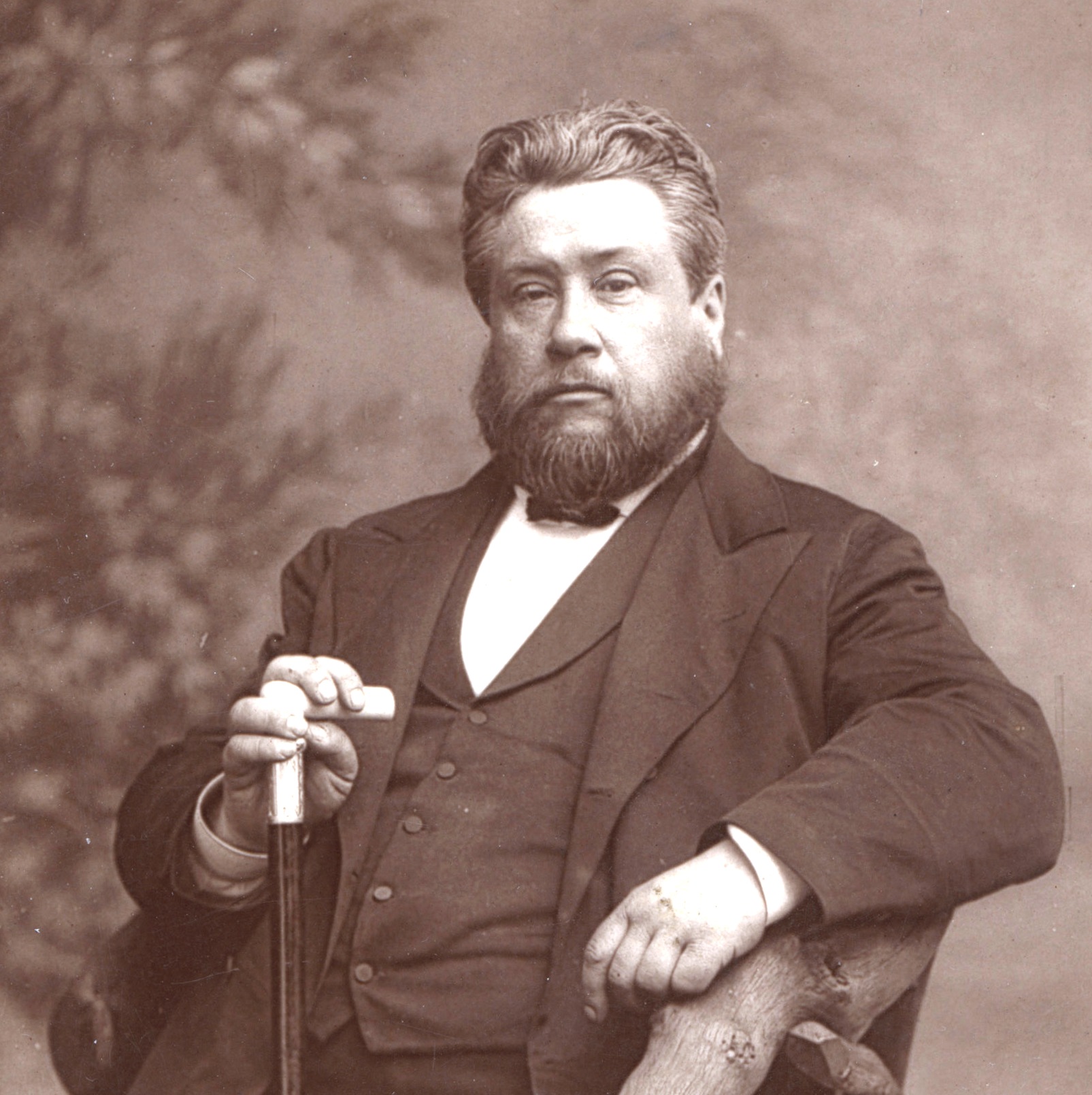
spurgeon_chair1“Paul had a few books, which were left perhaps wrapped up in the cloak, and Timothy was to be careful to bring them. Even an apostle must read.

“Some of our self-sufficient brethren have thought a minister who reads books and studies his sermon must be a very deplorable specimen of a preacher. A man who goes up into the pulpit, professes to take his text on the spot and talks any quantity of nonsense is the idol of many. If he will speak without premeditation, or pretend to do so, and never produce what they call a dish of dead man’s brain – ah! that is the preacher. How rebuked they are by the apostle!

He is inspired, yet he wants books!

He has been preaching for thirty years, yet he wants books!

He has seen the Lord, yet he wants books!

He has a wider experience than most men, yet he wants books!

He had been caught up into the very heaven and had heard things which it was unlawful for a man to utter, yet he wants books!

He had written the major part of the New Testament, yet he wants books!

The apostle says to Timothy, and so he says to every preacher, “Give attendance to reading.” The one who never reads will never be read. He who never quotes will never be quoted. He who will not use the thoughts of other men’s brains proves that he has no brains of his own.

“Brethren, what is true of pastors is true of all our people – you need to read!”

– Charles Haddon Spurgeon

The 1st Question to Ask of a Sermon

Questions for Sermons

“How did it go?” Any time a sermon is preached that one question will be asked in a variety of ways.

Preachers will step down from the sacred desk and friends and family members will ask, “How did it go today?” Church members will walk away from the corporate gathering, go to lunch or dinner and ask, “What did you think of the sermon?”

While not being wrong in and of itself, the question is surely less than helpful. It begs shepherd and sheep alike to dive into the murky waters of subjective criticism. This water is murky because it can quickly devolve into formless personal preferences; i.e. the sermon was, “good,” “funny,” or “boring.” Childlike faith and obedience drown in such subjective and simplistic criticism.

Don’t get me wrong, yes, we should be asking questions of the sermon. We just need to ask the right one. And the first question, and right question, is – “Was it faithful?”

PURSUING FAITHFULNESS

The primary goal of every sermon is not that it be “good,” “enjoyable,” “funny,” or even “captivating.” The primary goal is faithfulness. It is required of pastor’s that they be faithful, thus the single requirement of a sermon is that it be found faithful. Faithful to exalt God’s glory in Christ, faithful to clearly reprove, correct, exhort, and train.

How do we know if a sermon is faithful or not? Can you even measure faithfulness in a sermon?

Answering those questions depends on what we mean by “faithful.” Here’s my stab at defining a faithful sermon: A faithful sermon exalts God’s glory in Christ, by clearly making the point of the passage the point of the sermon and broadly applying its truth to the life of the congregation. Let me briefly take each of these in turn.

TESTING FAITHFULNESS

A faithful sermon exalts God’s glory in Christ . . . The revelation of and delight in God’s glory is the goal of everything. And God’s glory is supremely shown in Jesus Christ. The Bible is the revelation of God’s glory in Christ, thus every faithful sermon will have a sweet flavor of this divine aim. Testing questions on this point might be, “Was the grandeur of God exalted? Was the way of salvation proclaimed? Was the sweetness and sufficiency of Christ on full display? Do I love God more after hearing this sermon?” Faithful sermons will thus be doxological and christological.

 . . . by clearly making the point of the passage the point of the sermon . . . Faithful sermons need not be inventive or creative. They need to plainly and clearly expose the passage they deal with. The best way to do this is to identify the passage’s main point and then make that point the point of your sermon. Such an approach ensures faithfulness to the text and faithful to the Glorious One the text proclaims. Testing questions on this point might be, “Was the passage clearly and contextually explained? Did the point of the sermon obviously flow from the point of the passage? Do I have greater understanding and affection for this passage?” Faithful sermons will thus be expositional.

. . . and broadly applying its truth to the life of the congregation. God said His word is “profitable, for reproof, correction, and training in righteousness.” A faithful sermon will apply the truth of God’s word in a way that spiritually profits the congregation. And it must do this broadly. When the church gathers it is filled with some member who are weak, some who are weary, some who are joyful, and some who are lost. A faithful sermon will show the passage’s profitability for all kinds of people. Testing questions on this point might be, “Did the sermon help direct my life in Christ? Did the sermon confront and comfort? Did the sermon apply to Christians and non-Christians?” Faithful sermons will thus be applicational.

Questions will be asked every time a sermon is preaching and I hope the first question more often than not is, “Was it faithful?”

Church members should ask this question. And pastor, you should ask this question of yourself. For then, and only then, should you move on to the second question to ask of a sermon. That one comes tomorrow.

Planning to Read Deeply

Pastors and Reading

When asked about what Christians should be reading, Charles Spurgeon once replied:

As the apostle says to Timothy, so also he says to every-one, ‘Give yourself to reading.’ . . . He who will not use the thoughts of other men’s brains proves that he has no brains of his own . . . You need to read. Renounce as much as you will all light literature, but study as much as possible sound theological works, especially the Puritanic writers, and expositions of the Bible . . . the best way for you to spend your leisure is to be either reading or praying.

Pastors would do well to heed the Prince and read wisely, purposefully, widely, and deeply. Much can be said about each of those four adverbs, but my purpose in this post is to deal with the last: reading deeply.

Light reading is like dessert; it should be regularly enjoyed, but with the knowledge that it can’t sustain. Steer your soul’s course then toward deep reading of Scripture and deep reading of our faith’s weighty tomes: Calvin, Owen, and Bavinck.1 Few pastors will naturally gravitate toward these works, so it will take discipline and planning to reap the awaiting harvest.

But, I promise, should you have patience, the harvest will come quite easily.

A couple years ago I noticed that I would often start an old classic, only to flame out a few weeks in. I suspect that many pastors are like me in this regard. I so desperately wanted to open up the Institutes and read it cover to cover, but try as I might, it never happened. After some reflection I realized my inability to close with Calvin was because my view was too short-sighted. In other words, I opened him up at each sitting with little more on my mind than to read as many pages as possible, as quickly as possible. Such an approach is a recipe for discouragement and dropping out.

A better approach, I soon discovered, was to say, “How many pages would I need to read each day in order to finish the Institutes in one calendar year?” To my surprise, I only need to read four pages per day! I could do that . . . and I bet you could too.

READING DEEPLY IN 2014

We stand on the precipice of a new year, a few weeks away from when the resolutions will abound. Why not set a goal to read a few of the old, deep volumes in 2014? Looking around my study, here would be a few examples:

  • John Calvin’s Institutes of the Christian Religion (2 volumes) – 4 pages per day
  • Works of Jonathan Edwards (2 volumes, Banner edition) – 5 pages per day
  • Herman Bavinck’s Reformed Dogmatics (4 volumes) – 7 pages per day
  • Wilhelmus a Brackel’s The Christian’s Reasonable Service (4 volumes) – 7 pages per day
  • Works of John Flavel (6 volumes) – 10 pages per day

Just for grins, let’s throw in the good perspectivalist . . .

  • John Frame’s A Theology of Lordship (4 volumes) – 6.5 pages per day2

But, I know, each of these works can hit the bank account pretty hard. Why not consider some of the more substantial one volume works?

  • William Gurnall’s The Christian in Complete Armour (Banner edition) – 3 pages
  • Volume 6 of John Owen’s Collected Works (contains his famous works on sanctification) – 2 pages
  • Isaac Ambrose’s Looking Unto Jesus – 2 pages per day
  • The Letters of Samuel Rutherford – 2 pages per day
  • Louis Berkhof’s Systematic Theology – 2.5 pages per day
  • Beeke and Jones’ A Puritan Theology – 3 pages per day

If you are patient and disciplined, you can climb up theological summits in less than a year. So dive on end to the deep end, it will satisfy your soul in surprising ways. Tolle lege!

  1. I am reminded of Mark Dever’s statement, “The only palliative is to keep the clean sea breeze of the centuries blowing through our minds, and this can be done only by reading old books.”
  2. This doesn’t include the hundreds of pages of appendices. Be forewarned, should you attempt the conquer the good perspectivalist, you will be seeing triads everywhere by this time next year.

The King of Vengeance & Victory

Vengeance and Victory

The book of Haggai ends with a truth that is not only found in Haggai, but virtually every prophet in our sacred Scripture, and it’s this: The King of kings will come in vengeance and victory.1

Haggai 2:20-23 reads,

20 The word of the Lord came a second time to Haggai on the twenty-fourth day of the month, 21 “Speak to Zerubbabel, governor of Judah, saying, I am about to shake the heavens and the earth, 22 and to overthrow the throne of kingdoms. I am about to destroy the strength of the kingdoms of the nations, and overthrow the chariots and their riders. And the horses and their riders shall go down, every one by the sword of his brother. 23 On that day, declares the Lord of hosts, I will take you, O Zerubbabel my servant, the son of Shealtiel, declares the Lord, and make you like a signet ring, for I have chosen you, declares the Lord of hosts.”

The prophet of old says a day is coming that will be marked by two things: 1) the shaking of kingdoms (2:21-22), and 2)  the setting of a king (2:23). The shaking of kingdoms is a promise of terrifying judgment. The setting of a king is a promise of comforting victory. Let me take these two realities in turn and squeeze out application from them.

First, the King of kings’ coming vengeance is terrifying. God uses words like shake, overthrow, and destroy to describe what this day will look like. His judgment of every kingdom that stands against His own is a terrifying judgment. Now, I realize that the terrifying judgment of God is not something that our culture wants to hear. But it is something that God wants us to hear. It is something that God may even want some of your friends or family members to hear.

Danish theologican Søren Kierkegaard once provided an answer to the question, “What happens to those who try to warn the present age?” He answered with a parable. On the opening night of a comedy production a fire breaks out backstage. A clown realized the danger and pushed through the curtains to alert the audience. They applauded. The clown repeated his warning more urgently. By now he was center stage, flailing his arms, his eyes wide in panic. The crowd went wild; whistles, cheers, and raucous laughter. Never had they seen such a routine! Kierkegaard’s point was that the human race thinks the warning of God’s judgment is just another happy joke.

Although some might consider me a clown, the judgment of God – revealed in Haggai 2 – is no happy joke. To what kingdom are you dedicating your life? If your days are devoted to the kingdoms of this world – power, pleasure, and prestige – you can be assured from Haggai 2 that God will overthrow them and judge you in the process. He will not suffer competition from another king or another kingdom. If you’re not a Christian, whether you realize it or not, you are going about your days building your own little kingdom and ruling as your own little king. You stand against God as a rival, and He will tolerate no rivals. There is a time coming where He will overthrow such rivals, but that time is not yet. His mercy and patience call out to you tonight to surrender your kingdom of sin, to understand that Jesus Christ, the King of Kings, took the punishment and wrath of God due to you for your little kingdom building experiment. The loving justice of God crucified His Son so that through faith in this King, you would be brought into God’s kingdom and know a joy and peace that cannot be described with words.  Which leads us then to our second reality.

Second, the King of kings’ coming victory is comforting. Zerubbabel represents a discouraged and despairing people. Neighboring nations pressed down on Judah, revolutions in government marked the known word, the few and feeble Jews wondered if they would be safe. How does God bring comfort? From His promise that a king is coming. Maybe you are suffering from pain or suffering that few people can understand. Maybe the enemies of sin and Satan press down on you so powerfully that obedience and faithfulness is so hard to grasp. Maybe the future is so bleak that you find little reason to hope in the days ahead. Through Haggai, God is calling you and calling us to see the comfort found in the coming of Jesus Christ, the King of kings. Calvin said, “We must remember this principle, that from the time when Christ once appeared, there is nothing left for the faithful, but with suspended minds ever to look forward to his second coming.” Lift up your head and look to when the King will come and bring everlasting comfort.

2,500 years ago, in the far reaches of the Persian Empire, God’s people lived in despair while the temple lay in ruins. So God raised up a mysterious man named Haggai to proclaim His word to His people. He called them to prioritize His presence in their lives by rebuilding the temple, be encouraged that His presence fuels covenant faithfulness, and remember that God fulfills His promises to a holy generation. And the under-girding reality behind all the commands, the stirring up, the encouragement and promises is the fact that our God reigns as sovereign over His people. In His sovereign plan he has decreed that a king is coming in vengeance and victory.

So, as God’s people, we join the old song with renewed expectancy and sing, “And Lord, haste the day when the faith shall be sight, The clouds be rolled back as a scroll, The trump shall resound and the Lord shall descend; ‘Even so’—it is well with my soul.”

  1. This post is adapted from my sermon, “Restored by a King,” on Haggai 2:20-23.

10 Consolations for the Downcast Pastor

Pastor is Downcast

I love Charles Haddon Spurgeon. My soul resonates with the Prince of Preachers in unique ways when compared to other great men of old. One of these ways is in his battle with fits of melancholy.

The melancholy of depression first struck when Spurgeon was twenty four years old and he later wrote, “My spirits were sunken so low that I could weep by the hour like a child, and yet I knew not what I wept for.” The “causeless depression” was no random nuisance, for it proceeded to plague him for the rest of his life. And so it is out of special experience that he delivered a famous lecture entitled, “The Minister’s Fainting Fits.” Spurgeon introduced his topic by remarking how the causeless melancholy is almost universal in pastoral ministry. He says,

As it is recorded that David, in the heat of battle, waxed faint, so may it be written of all the servants of the Lord. Fits of depression come over the most of us. Usually cheerful as we may be, we must at intervals be cast down. The strong are not always vigorous, the wise not always ready, the brave not always courageous, and the joyous not always happy . . . It is not necessary by quotations from the biographies of eminent ministers to prove that seasons of fearful prostration have fallen to the lot of most, if not all of them.

And so he offers “consolatory” thoughts, in order “that younger men might not fancy that some strange thing had happened to them when they became for a season possessed by melancholy; and that sadder men might know that one upon whom the sun has shone right joyously did not always walk in the light.” His consolations have encouraged me on many a hard day or night in ministry. And so, in hopes they might encourage many young pastors fighting through a state of sadness, here are 10 of the choicest consolations from “The Minister’s Fainting Fits.”

10 Consolations for the Downcast Pastor

  1. “There maybe here and there men of iron, to whom wear and tear work no perceptible detriment, but surely the rust frets even these; and as for ordinary men, the Lord knows, and makes them to know, that they are but dust.”
  2. “Even under the economy of redemption it is most clear that we are to endure infirmities, otherwise there were no need of the promised Spirit to help us in them. It is of need be that we are sometimes in heaviness. Good men are promised tribulation in this world, and ministers may expect a larger share than others, that they may learn sympathy with the Lord’s suffering people, and so may be fitting shepherds of an ailing flock.”
  3. “How often, on Lord’s-day evenings, do we feel as if life were completely washed out of us! After pouring out our souls over our congregations, we feel like empty earthen pitchers which a child might break. Probably, if we were more like Paul, and watched for souls at a nobler rate, we should know more of what it is to be eaten up by the zeal of the Lord’s house. It is our duty and our privilege to exhaust our lives for Jesus.”
  4. “Our Sabbaths are our days of toil, and if we do not rest upon some other day we shall break down . . . Rest time is not waste time. It is economy to gather fresh strength.”
  5. “Causeless depression is not to he reasoned with, nor can David’s harp charm it away by sweet discoursings. As well fight with the mist as with this shapeless, undefinable, yet all-beclouding hopelessness.”
  6. “By all the castings down of his servants God is glorified, for they are led to magnify him when again he sets them on their feet, and even while prostrate in the dust their faith yields him praise. They speak all time more sweetly of his faithfulness, and are the more firmly established in his love.”
  7. “Glory be to God for the furnace, the hammer, and the file. Heaven shall be all the fuller of bliss because we have been filled with anguish here below, and earth shall be better tilled because of our training in the school of adversity.”
  8. “The lesson of wisdom is, be not dismayed by soul-trouble. Count it no strange thing, but a part of ordinary ministerial experience. Should the power of depression be more than ordinary, think not that all is over with your usefulness. Cast not away your confidence, for it hath great recompense of reward. Even if the enemy’s foot be on your neck, expect to rise amid overthrow him. Cast the burden of the present, along with the sin of the past and the fear of the future, upon the Lord, who forsaketh not his saints. Live by the day—ay, by the hour. Put no trust in frames and feelings. Care more for a grain of faith than a ton of excitement. Trust in God alone, and lean not on the reeds of human help.”
  9. “Be content to be nothing, for that is what you are. When your own emptiness is painfully forced upon your consciousness, chide yourself that you ever dreamed of being full, except in the Lord. Set small store by present rewards; be grateful for earnests by the way, but look for the recompensing joy hereafter. Continue, with double earnestness to serve your Lord when no visible result is before you. Any simpleton can follow the narrow path in the light: faith’s rare wisdom enables us to march on in the dark with infallible accuracy, since she places her hand in that of her Great Guide.”
  10. “Come fair or come foul, the pulpit is our watch-tower, and the ministry our warfare; be it ours, when we cannot see the face of our God, to trust under THE SHADOW OF HIS WINGS.”

An Advent Hymn Worth Singing

“Come Thou Long Expected Jesus” arranged by Red Mountain Music

Come, Thou long-expected Jesus, born to set Thy people free;
from our fears and sins release us; let us find our rest in Thee.
Israel’s strength and consolation, hope of all the earth Thou art;
dear desire of every nation, joy of every longing heart.

Joy to those who long to see thee, Dayspring from on high, appear;
come, thou promised Rod of Jesse, of thy birth we long to hear!
O’er the hills the angels singing news, glad tidings of a birth;
“Go to him, your praises bringing; Christ the Lord has come to earth.”

Come to earth to taste our sadness, he whose glories knew no end;
by his life he brings us gladness, our Redeemer, Shepherd, Friend.
Leaving riches without number, born within a cattle stall;
this the everlasting wonder, Christ was born the Lord of all.

Born Thy people to deliver, born a child, and yet a King,
born to reign in us forever, now Thy gracious kingdom bring.
By Thine own eternal Spirit rule in all our hearts alone;
by Thine own sufficient merit, raise us to Thy glorious throne.

6 Ways to Treasure God’s Word

Treasuring Gods Word

Nothing is more precious to a Christian than God’s word. And nothing is more precious to a church than God’s word.

God’s word is involved in everything He does: from His decrees to His creation to His providence. His word performs all His acts. If we go even further, it is impossible to separate God and His word. Where God is, His word is; where His word is, God is.1 In his recent Systematic Theology: An Introduction to Christian Belief the good perspectivalist, John Frame, writes:

So the word of God is a great treasure. We should rejoice that our God is not dumb, like the gods of the nations, but has shared with us his laws, his wisdom, and his love. And God is always with and in his word. When  we read the Word, we encounter him; when we encounter him, we hear his word. (523)

So then, a church that treasures God’s word will be a church that encounters God. How then can a church treasure God’s word and thus encounter God? One simple answer would be to construct a weekly liturgy clearly centered on God’s word. While the order and timing of every liturgy need not be the same, I would nevertheless advocate for a church’s liturgy to normally consist of the following six ordinary elements.

6 ORDINARY ELEMENTS FOR TREASURING GOD’S WORD

1. Preach the word (2 Tim. 4:2). This is where it all begins. Expositional preaching is the fountainhead for God’s word permeating the church, and is the spark for encountering God. I think it would be hard to find a church who treasures God’s word that doesn’t consistently feast upon expository preaching. The uniqueness of expository preaching is it strives to make plain what a passage of Scripture says. Because God’s word alone has the authority and power to change a heart, and is the ordinary way in which God speaks to His people, churches that treasure God’s word must have be built on expository preaching.

2. Read the word (1 Tim. 4:13; Rev. 1:3). In 2 Timothy 3 Paul talks about “the sacred writings, which are able to make you wise for salvation through faith in Christ Jesus.” What power there is in God’s word! So every pastor must obey the command 1 Timothy 4:13 to devote himself “to the public reading of God’s word.” This element seems to have fallen on hard times in many evangelical churches, but I pray the renaissance of expositional preaching will soon result in a renaissance of the public reading of God’s word. There are many different ways to do this: systematically reading through a testament, systematically reading through the Psalms, or reading a portion of Scripture that corresponds to sermon text. Reading God’s word can be done congregationally or representationally (an individual reading a passage for the church).

3. Sing the word (Eph. 5:19; Col. 3:16). Saturate your church’s liturgy with the word sung. Select songs that major not simply in Scriptural truth, but in Scriptural lyrics. Singing provides a powerful opportunity to treasure God’s word. One way our church tries to amplify the word-centeredness of our singing is to have every song illuminated by Scripture during the song. Many songs have an instrumental section between a chorus and verse or chorus and bridge, so why not put Scripture on the screen while the instruments are playing? Instead of blithely watching the band perform, the congregation has the opportunity to encounter God’s word with truth appropriate to the song.

4. Pray the word (Eph. 6:18; Col. 6:2; Heb. 13:15). Prayer seems to be – to me at least – a transitional element in many liturgies. It is the evangelical oil that provides a seamless transition from song to sermon and then from sermon to song. But prayer must have more than transitional prominence in the church’s gathering. A diversity of prayers can be offered throughout the service: prayers of praise, confession, thanksgiving, and intercession. If your church hasn’t ever had extended prayer in a service I would counsel you to start slowly. Yet start nonetheless by praying for biblical priorities with biblical language.

5. See the word (Mat. 28:18-20; Luke 22:19). Through the sacraments of baptism and the Lord’s Supper we “see” the word. These ordinances are visible representations of God’s word and God’s gospel. We ought to all be consistently praying the Lord uses our church in such a way that the baptismal waters are stirred with great frequency. Although we can do nothing to guarantee weekly baptism, we can see the word each week through communion. If you need specific encouragement on this point see my post “3 Reasons for Weekly Communion.”

6. Support the word (1 Cor. 16:2; Phil. 4:15-16). Resist the contemporary practice of privatizing the offering by simply having a tithe box at the back of your meeting space. Make the offering a dedicated, ordinary element in your church’s liturgy. Through giving we support the ministry of the word, worship God, and obey His word. Depending on how your liturgy is structured, an offering can be preceded or followed by a prayer of thanksgiving or Bible reading.

A church that treasures God’s word will be a church that regularly encounters God. A simply way to do this is to saturate everything you do in gathered worship with God’s word. So build your church’s liturgy on the six ordinary elements of preaching, reading, singing, praying, seeing, and supporting the word.

  1. These sentences are adapted from Frame, Systematic Theology, 521.

Let the Christmas Music Begin

The passing of Thanksgiving means the Christmas season has finally arrived. Today my family will decorate our house will all the traditional trappings and we will do so with Christmas music blaring in the background.

Songs are powerful (Col. 3:16; Eph. 5:19). And if you are like me there seems to be unique power in Christmas carols and seasonal songs. Maybe it’s for reasons of nostalgia. Or maybe it’s sound biblical and systematic theology. Whatever the reason, everyone has their personal favorite.

My favorite Christmas hymn changes every few days or so, but if we are talking about contemporary Christmas songs I have an undisputed favorite: “The Earth Stood Still” by Future of Forestry. The simple, yet atmospheric instrumentation combines with longing lyrics stir to my soul in profound ways.

Maybe it will do the same for you.

LYRICS

A teenage girl and her soon-to-be
A simple trip far as they could see
The sky was clear and the hour serene
But did they know what the night would bring

Lonely hearts strung across the land
They’ve been waiting long for a healing hand
My heart was there and I felt the chill
Love came down and the earth stood still

Shepherds stirred under starry skies
Tasting grace that would change their lives
The angels trembled and the demons did too
For they knew very well what pure grace would do.

The hope of the world and a baby boy
I remember Him well like I was there that night
My heart was there and I felt the chill
Love came down and the earth stood still