Pie Jesu

“Pie Jesu” from Future of Forestry’s Advent Chrismas EP Vol. 2

Pie Jesu (Pious Jesus)
Qui tollis peccata mundi (Who takes away the sins of the world)
Dona eis requiem (Give them rest)
Agnus Dei (Lamb of God)

Qui tollis peccata mundi (Who takes away the sins of the world)
Dona eis requiem (Give them rest)
Sempiternam (Everlasting)
Requiem (Rest)

The Proper Study of a Christian

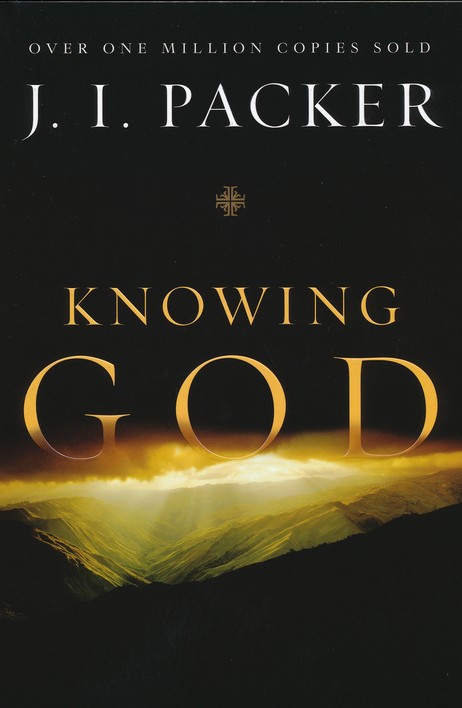
KnowingGodJI Packer’s Knowing God is deservedly called a classic. But you might be surprised to know that the words of a young twenty year old serve as Packer’s launching pad into doxological theology.

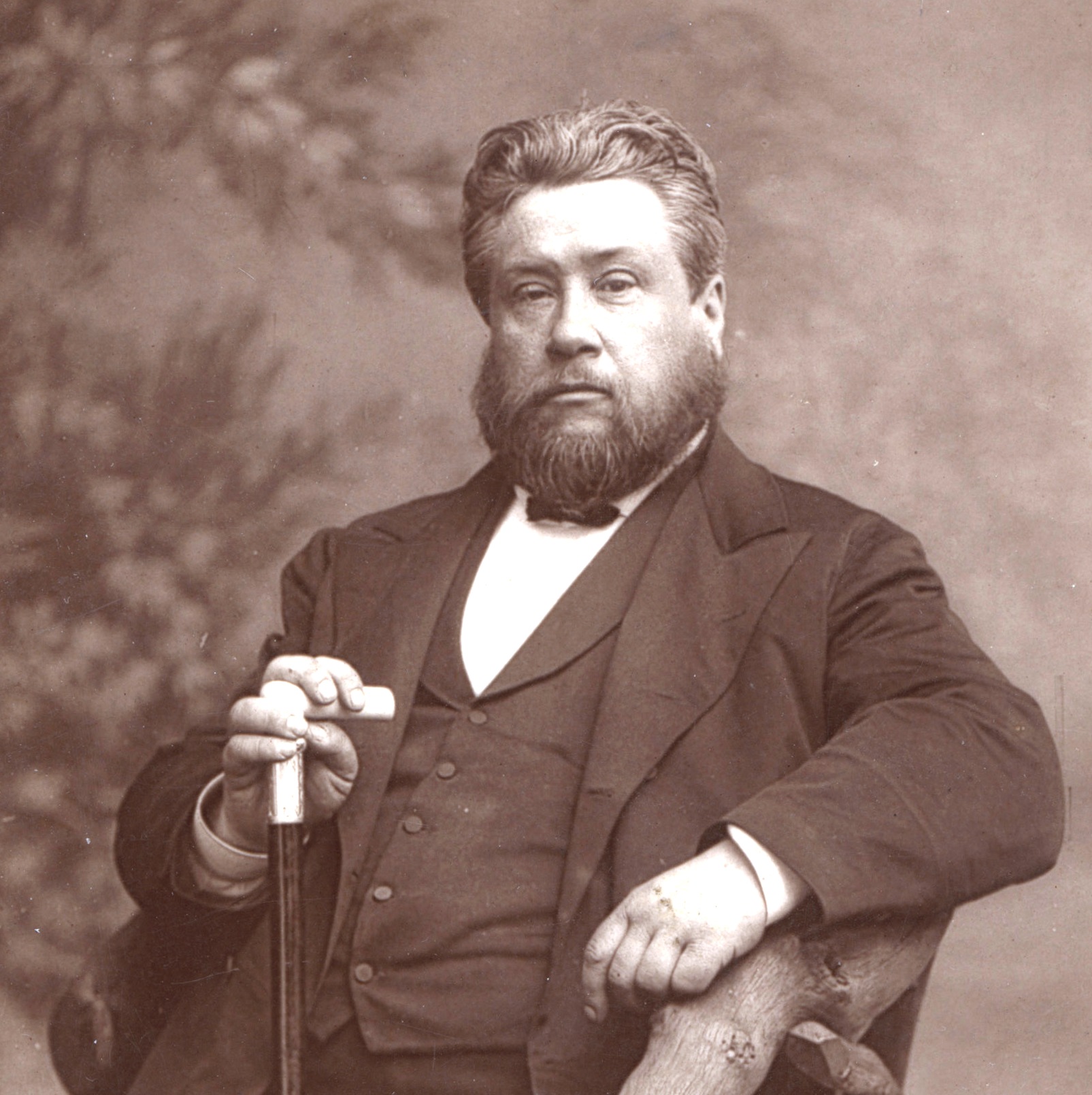
That young twenty year old is Charles Haddon Spurgeon. On January 7, 1855, the minister of New Park Street Chapel, Southwark, England, opened his morning sermon as follows:

It has been said by someone that “the proper study of mankind is man.” I will not oppose the idea, but I believe it is equally true that the proper study of God’s elect is God; the proper study of a Christian is the Godhead. The highest science, the loftiest speculation, the mightiest philosophy, which can ever engage the attention of a child of God, is the name, the nature, the person, the work, the doings, and the existence of the great God whom he calls his Father.

There is something exceedingly improving to the mind in a contemplation of the Divinity. It is a subject so vast, that all our thoughts are lost in its immensity; so deep, that our pride is drowned in its infinity. Other subjects we can compass and grapple with; in them we feel a kind of self-content, and go our way with the thought, “Behold I am wise.” But when we come to this master science, finding that our plumbline cannot sound its depth, and that our eagle eye cannot see its height, we turn away with the thought that vain man would be wise, but he is like a wild ass’s colt; and with solemn exclamation, “I am but of yesterday, and know nothing.” No subject of contemplation will tend more to humble the mind, than thoughts of God….

But while the subject humbles the mind, it also expands it. He who often thinks of God, will have a larger mind than the man who simply plods around this narrow globe…. The most excellent study for expanding the soul, is the science of Christ, and Him crucified, and the knowledge of the Godhead in the glorious Trinity. Nothing will so enlarge the intellect, nothing so magnify the whole soul of man, as a devout, earnest, continued investigation of the great subject of the Deity.

And, whilst humbling and expanding, this subject is eminently consolatory. Oh, there is, in contemplating Christ, a balm for every wound; in musing on the Father, there is a quietus for every grief; and in the influence of the Holy Ghost, there is a balsam for every sore. Would you lose your sorrow? Would you drown your cares? Then go, plunge yourself in the Godhead’s deepest sea; be lost in his immensity; and you shall come forth as from a couch of rest, refreshed and invigorated. I know nothing which can so comfort the soul; so calm the swelling billows of sorrow and grief; so speak peace to the winds of trial, as a devout musing upon the subject of the Godhead. It is to that subject that I invite you this morning.

I was reminded of these words earlier this week and was freshly humbled. How amazing and glorious our God is! To mature a man to a point where he can utter such profound wisdom at twenty can only come from God’s gracious work. May all His shepherds find their souls similarly enlarged through “devout, earnest, continued investigation of the great subject of the Deity.”

God’s People Love to Be With God’s People

La_Aduana_church_door_009Kevin DeYoung is one of those people that always seems to say it better than I ever do or ever can.

For a few months I have wanted to write a post aiming to encourage Christians in their commitment to regularly gather with their local church body for worship. We live in a time where church attendance is quickly becoming negotiable. Yet, it isn’t negotiable in the Bible and to miss it means missing heaven on earth.

Well, I just haven’t gotten around to writing the post for one reason or another, but to my great delight Rev Kev threw up a post this morning on “The Scandal of the Semi-Churched.” It’s better than my post would ever be, so you should check it out. He writes,

“I know we are the church and don’t go to church (blah, blah, blah), but being persnickety about our language doesn’t change the exhortation of Hebrews 10:35. We should not neglect to meet together, as some are in the habit of doing. Gathering every Lord’s Day with our church family is one of the pillars of mature Christianity.

So ask yourself a few questions.”

QUESTIONS TO ASK REGARDING CHURCH ATTENDANCE

1. Have you established church going as an inviolable habit in your family?

2. Do you plan ahead on Saturday so you can make church a priority on Sunday?

3. Do you order your travel plans so as to minimize being gone from your church on Sunday?

4. Are you willing to make sacrifices to gather with God’s people for worship every Sunday?

5. Have you considered that you may not be a Christian?

Read the rest here.

Spurgeon’s 7 Canons of Public Prayer

Public Prayer

Some might be surprised to hear Spurgeon, the Prince of Preachers, say he would rather give up preaching the sermon than give up his role in another element of worship. What is that element? Public prayer.

In his lecture on public prayer Spurgeon said, “I am not able to see any reason for depriving me of the holiest, sweetest, and most profitable exercise which  my Lord has allotted me; if I have my choice, I will sooner yield up the sermon than the prayer.”
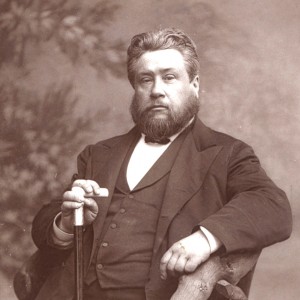
spurgeon_chair1Few documents in church history extol the house such remarkable affection for and counsel on public prayer as this lecture. I have said before that I find public prayer the most daunting, and glorious, privilege of pastoral ministry. To stand in the congregation’s stead and plead with the Lord Most High ought to cause a shiver go up many a pastor’s spine. It sure does for me. So it is no coincidence that I find myself almost monthly gravitating to Spurgeon’s thoughts on public prayer. With characteristic wit and conviction he humbles the heart of every man called to this ministry. But he also inspires the soul.

Let me whet your appetite for this fine feast of a lecture by giving you Spurgeon’s six canons, or rule, to “make our public prayer what it should be.”1

7 CANONS OF PUBLIC PRAYER

First, public prayer should be a matter of the heart. A man must be really earnest in prayer. You can pardon a man’s familiarities and vulgarities too, when you clearly see that his inmost heart is speaking to his Master, and that it is only the man’s defects of education or experience which create his faults, and not any moral or spiritual vices of his heart. Cast your whole soul into the exercise of public prayer. So pray, that by a divine attraction, you draw the whole congregation up with you to the throne of God. So pray, that by the power of the Spirit, you express the desires and thoughts of every one present, and stand as the one voice for hundreds of beating hearts which are glowing with fervor before God’s throne.

Second, public prayer should be appropriate. There is no need to make the public prayer a gazette of the week’s events, or a register of the births, deaths, and marriage of your people, but the general movements that have taken place in the congregation should be noted by the minister’s careful heart. He should bring the joys and sorrows alike before the throne of grace.

Third, public prayer should not be long. John Macdonald said, “If you are in the spirit of prayer, do not be long, because other people will not be able to keep pace with you in such unusual spirituality; and if you are not in the spirit of prayer, do not be long, because you will then be sure to weary the listeners.” Ten minutes is the limit to which our public prayer ought to be prolonged.

Fourth, do not use cant2 phrases. Be done with these vile things altogether. There should be no grotesque mingling of Scripture texts, alterations of Scripture texts, or abuses of Scriptural truth in prayer. It ought always to be a point of honor among ministers always to quote Scripture directly. Make us of an expression fresh from your own mind, and it will be quite as acceptable to God as a scriptural phrase defaced or clipped. Vehemently strive against garblings and perversions of Scripture, and renounce forever all cant phrases, for the are the disfigurement of free prayer.

Five, vary the order, length, and current of your public prayers. Vary the order of your prayers, then, for the sake of maintaining attention, and preventing people going through the whole thing as a clock runs on till the weights are down. Also vary the length of your prayers. Do you not think it would be much better if sometimes instead of giving three minutes to the first prayer and fifteen minutes to the second, you have nine minutes to each? Would it not be better sometimes to be longer in the first, and not so long in the second prayer? Finally, vary the current of your prayers. There are many topics which require your attention; the church in its weakness, its backslidings, its sorrows, and its comforts; the outside world, the neighborhood, unconverted hearers, the young people, the nation. Do not pray for all these every time, or otherwise your prayers will be long and probably uninteresting.

Six, keep from all attempts to work up spurious fervor in public devotion. Do not labor to seem earnest. Pray as your heart dictates, under the leading of the Spirit of God, and if you are dull and heavy tell the Lord so. It will be no ill thing to confess your deadness, and bewail it, and cry for quickening; it will be real and acceptable prayer; but simulated ardor is a shameful form of lying.

Seventh, prepare your prayer. Proper preparation means solemn consideration beforehand of the importance of prayer, meditation upon the needs of men’s souls, and a remembrance of the promises which we are to plead; and thus coming before the Lord with a petition written upon the fleshly tables of the heart. This is surely better than coming to God at random, rushing before the throne at haphazard, without a definite error or desire.

If we wanted to summarize the canons with adverbs we could say, “Spurgeon exhorts pastors to pray soulfully, appropriately, quickly, authentically, variously, and prepared-ly.”

Spugeon’s conclusion of the lecture is a most fitting place for this post to end:

Let your prayers be earnest, full of fire, vehemence, prevalence. I pray the Holy Ghost to instruct every student of this College so to offer public prayer, that God shall always be served of his best. Let your petitions be plain and heart-felt; and while your people may sometimes feel that the sermon was below the mark, may they also feel that the prayer compensated for all.

  1. The following canons and their respective elaborations are either direct or adapted quotations from Spurgeon’s lecture.
  2. Meaning sanctimonious or hypocritical talk.

The Cross Centered Life: A Summary Review

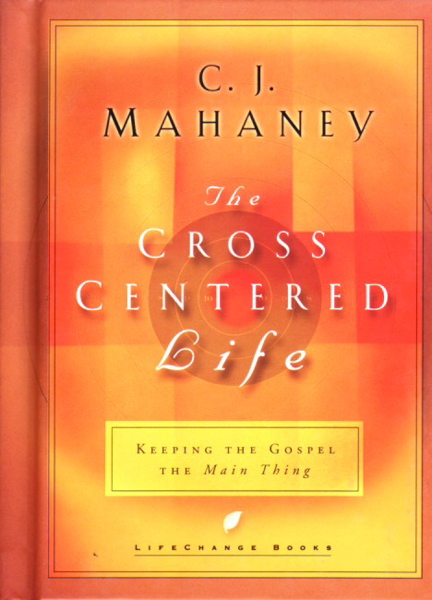
1590520459George Orwell once noted, “Sometimes the first duty of intelligent men is the restatement of the obvious.”

In his short book The Cross Centered Life author CJ Mahaney writes, “Sometimes the most obvious truths are the ones we need to be reminded of the most” (15). What then is the truth he aims to remind the reader of? Simply put, the gospel. “Perhaps the purpose of this book is to restate the obvious, yet of-neglected, truth of the gospel, to bring it before you one more time” (16). Mahaney’s working definition of the gospel is simple and solid, “Jesus Christ died so that sinners would be reconciled to God and forgiven by God” (11).

THREE HEART TENDENCIES

Yet, Mahaney knows how difficult it can be to keep that which is of “first importance” central to our daily lives. A fair portion of the book is devoted then to “three main tendencies” that can draw our hearts away from the gospel:

  1. Legalism: Basing our relationship with God on our own performance.
  2. Condemnation: Being more focused on our sin than on God’s grace.
  3. Subjectivism: Basing our view of God on our changing feelings and emotions.

Mahaney quotes Tom Schreiner to show the serious danger legalism, writing, “Legalism has its origins in self-worship. If people are justified through their obedience to the law, then they merit praise, honor, and glory. Legalism, in other words, means the glory goes to people rather than God” (25). Mahaney is wise to remind the reader that breaking free from legalism doesn’t mean you stop reading the Bible, obeying God, or praying with disciplined dedication. Rather, the core issue is an appropriate understanding of the relationship between justification and sanctification. Although the two works of God cannot be separated, they are nonetheless distinct. The legalist problem is that “he confuses his own ongoing participation in the process of sanctification with God’s finished work in justification” (33). Further, “the legalist allows his performance of spiritual duties to become his preoccupation and a source of self-righteous pride. In doing so, he unwittingly walks away from the main thing – the gospel” (34-35).

The second human tendency that draws one away from the gospel is condemnation. It’s danger is found in how it feeds upon sinful flesh. “In its opposition to God, our flesh will tell us that Jesus’ sacrifice couldn’t possibly be enough to win the Father’s favor completely, unreservedly, and forever” (42). The answer to condemnation is quite simple, “Confess you sin to God. Then believe in Him. Exercise the gift of faith that God has given you to believe that Jesus died for the very sins you’re being condemned for” (43). Yes, every sinner is worthy of condemnation, but the Christian is set free from such crippling baggage because of the glorious work of Christ on the cross.

The third danger is that of subjectivism. The average evangelical orientation is inward and subjective. We base our view of God and His view toward us based on fleeting emotions. Mahaney’s remedy for this problem is tried and true: spend more time looking outward – at the finished work of Christ – than inward. “Being your day and at numerous points throughout the day ‘admiring, exploring, expositing, and extolling Jesus Christ’” (51).

So what does the cross centered life look like in everyday life? Mahaney says, “A cross centered life is made up of cross centered days” (54). Cross centered day will be occupied with two primary realities: preaching the gospel to yourself and fanning gospel affection into flame. This second reality is fueled by memorizing the gospel, praying the gospel, singing the gospel, studying the gospel, and reviewing your day in light of the gospel.

The book closes with a wise exhortation, “Never move on from [the gospel]. Jesus died for your sins. May every day be lived by His grace alone. May you know the joy and peace of the cross centered life” (85).

INFLAMING GOSPEL EXCITEMENT

I last read this book in December of 2010 and loved it. Three years later I find myself even more appreciative of Mahaney’s pastoral sensitivity. He steers clear of the redundancy and reductionism that can mark contemporary gospel-centered parlance. On a side note, should this book have been published any time after 2008 (it was originally published in 2002) I bet it would be titled The Gospel Centered Life. Mahaney would have been wise to have some reflection on Christ’s resurrection and ascension, yet the focus on Calvary is warranted and it comes with great warmth.

The gospel clearly affects CJ Mahaney and its inflaming power permeates everything in this little book. Although you can read it in less than an hour, its influence on your life will likely be measured by months and years.

3 Books Every Pastor Should Read: On The Trinity

Books are some of the best friends a pastor can have. How to know which friends to have is quite difficult, for as the inspired Preacher said, “Of making many books there is no end” (Ecclesiastes 12:12). So every couple of weeks I suggest three books a pastor should read on a given topic, hoping they will serve his ministry.

Few areas of theology are as simultaneously difficult and useful as that of our Triune God. The difficulty comes from the sheer mystery of it all. The usefulness comes from its far reaching application to the church’s worship and life together. I think we can all agree that studying the Trinity is of utmost importance for a pastor. Such study provides balance in his understanding of the godhead, protects him from theological reductionism (eg. Christomonism), and aids his faithful proclamation of salvation accomplished and applied.

Here then are three suggestions for reading about the deep things of God:

41YuP66JciL._SY344_PJlook-inside-v2,TopRight,1,0_SH20_BO1,204,203,200_Delighting in the Trinity: An Introduction to the Christian Faith by Michael Reeves. I know of no other 130 page book containing the stunning depth and wit as this one. Reeves argues that God as Father must be the starting point in our doctrine of the Trinity and then proceeds to show how this overflows into our view of the Son and Spirit. Delighting in the Trinity offers up biblical and historical sensitivity with an unusual freshness that will cause the soul to explode in doxology. I have had read this book with dozens of men and it has received a surprising amount of unvarnished praise. I don’t hesitate to include it among the best books I’ve ever read.

41tyFre5-oL._SY344_PJlook-inside-v2,TopRight,1,0_SH20_BO1,204,203,200_The Holy Trinity: In Scripture, History, Theology, and Worship by Robert Letham. For me, Reeves has the best “short-ish” book on the Trinity and Letham has the best “long-ish” one. In over five hundred pages Letham does exactly what the subtitle heralds: evaluate the Trinity in Scripture, history, theology, and worship. Letham’s writing is clear, if weighty – you might find yourself making good use of the glossary. Those savvy with historical theology might quibble with his immediate jump from Calvin into the 20th century, but it would be a small quibble indeed. This heavy read leads to a happy heart.

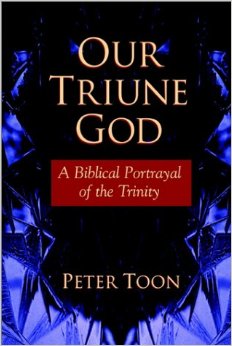
51HDSDXPK7L._SY344_BO1,204,203,200_Our Triune God: A Biblical Portrayal of the Trinity by Peter Toon. Our Triune God is a Trinitarian primer is aimed to aimed at the person in the pew. As such, it is rigorously clear, profoundly biblical, and unshakably orthodox. The prose isn’t as lively as Reeves or Sanders, but it’s truth is accessible and satisfying. Toon’s work will help make sure you have a healthy, biblical, and clear formulation of the trees which make up the forest of Trinitarian doctrine.

HONORABLE MENTIONS

De Trinitate (On the Trinity) by Augustine. Sure, reading Augustine is akin to a 300lb theological deadlift. But he has a pivotal place in the development of Trinitarian doctrine for a reason.

The Deep Things of God: How the Trinity Changes Everything by Fred SandersSanders has great fun extolling evangelical Trinitarianism; I bet you’ll have great fun reading it.

A Burning Light

In his incredible lecture on “The Preacher’s Private Prayer” Spurgeon remarked,

It is said of Alleine, ‘He poured out his very heart in prayer and preaching. His supplications and his exhortations were so affectionate, so full of holy zeal, life and vigour, that they quite overcame his hearers; he melted over them, so that he thawed and mollified, and sometimes dissolved the hardest hearts.’

– Spurgeon, Lectures to My Students, 45.

3 Traits of a Disciple-Making Church

A Disciple-Making Church Slider

And Jesus came and said to them, “All authority in heaven and on earth has been given to me. Go therefore and make disciples of all nations, baptizing them in the name of the Father and of the Son and of the Holy Spirit, teaching them to observe all that I have commanded you. And behold, I am with you always, to the end of the age.” – Matthew 28:18-201

For the last twelve months or so I have been engrossed in studying the Cold War. We could say that the Cold War was a clash of cultures – capitalism on one side and communism on the other – and certain components contributed to each culture. A capitalist economy is based on private ownership, private profit and free competition. It encourages private individuals to own businesses and make profits. A communist economy, on the other hand, is controlled by the government. A country’s wealth and resources are owned by the state or government. The state controls and plans all economic activity so that everybody benefits.

Every culture has unique components. I believe the Great Commission calls the church to have a disciple-making culture. A disciple-making culture is the product of many different components or traits. Here are three . . .

THREE TRAITS OF A DISCIPLE-MAKING CHURCH

First, a prayerful trait. Earlier in Matthew Jesus talked about how the fields are ripe for the harvest, but the laborers are few. What should his disciples then do? “Pray earnestly to the Lord of the harvest to send out laborers into his harvest.” Faithful disciple-making is marked by a prayerful disposition before the Lord of the harvest. I wonder if you have ever noticed how Paul often calls churches to pray for him, that doors would be opened for him to proclaim the mystery of the gospel. Our sovereign God is not only the one who saves sinners, but sends His laborers to proclaim that salvation. Thus, disciple-making people are praying people. This is a reason why, at our church, we pray so much in our gathered worship and spend much of our time praying for things outside of our body. This is why we regularly post links to Operation World to encourage our members to pray for the nations each day. Let us also be encouraged tonight to let our prayers have a particular accent on the glory of God being made known to all nations.

Second, an intentional trait. Disciple-making is ordinary Christianity. Like learning to count and say your alphabet in the natural realm, there is scarcely any part of the Christian life where discipleship does not touch. In his wonderful article Disciple-Making is Ordinary Christianity Erik Raymond provides the following examples of intentionality in disciple-making:

  • Intentional disciple-making happens when a guy wants to be married but doesn’t have a game-plan for how to go about it. He asks another brother for guidance and help. This brother takes him out for lunch and talks through some biblical and practical principles. He then commits to pray for him, to be available for questions, and to meet occasionally to talk about his progress.
  • Intentional disciple-making happens when a mom with two toddlers drops something off that she borrowed from another sister at church. During the exchange they get to talking and the young mom expresses her feelings of fatigue and failure to measure up to her perceived standards of motherhood. The other woman listens to her, reminds her of Scripture, prays with her, and then continues to come alongside of her for encouragement in the gospel.
  • Intentional disciple-making happens when a brother notices another brother is running hard after his job and neglecting his family and ministry. He comes alongside of his brother to remind him of the true and lasting treasure, and the proper perspective on work.
  • Intentional disciple-making happens when a mom is at the park with her children. At one point the kids become unruly and she patiently, graciously but faithfully, disciplines her children. There are many watching eyes around her. Both the believing and unbelieving women are intrigued. Conversations begin and soon the fruit of the Spirit points to the matchless worth of Christ.
  • Intentional disciple-making happens when a home-school mom breaks away with free time only to go to the same coffee house hoping to make new friends and open doors for sharing the gospel.

So, faithful disciple-making includes a prayerful trait and an intentional trait.

Thirdly, a disciple-making church will have a sacrificial trait. Jesus said, “All authority in heaven and on earth has been given to me.” That means that Jesus is Lord over every one of our lives and therefore has the right to do whatever He wants with our lives. You often may hear someone say, “I have decided to make Jesus the Lord of my life.”  Now that statement is often a sincere way of professing truth faith in Christ, but at a certain level it’s not true.  For Jesus says that he is already the Lord of your life. You didn’t really have a choice in the matter. The real issue is not if Jesus is Lord of your life, but if you will submit to His lordship over your life. Will you do it now or will you do it after it’s too late? What does it mean to surrender to the lordship of Christ? It means that we have surrendered – we have sacrificed – every right to determine the direction of our lives. No longer do we get to call the shots in our lives.  Men, if you have surrendered to Christ you no longer have the authority to call the shots as to what career you have, what you do with your money, in what direction you lead your family. As your Lord Christ looks at those rights and says, “Mine.” The glorious news from Matthew 28 is that we know what Jesus wants to do with your life, He wants you to make disciples of all nations! The sacrificial trait comes into play when His Lordship calls you to sell a house to give the money for a church plant, to take a job in a foreign country to be a Christian businessman bearing witness to our Lord and King, to leave the DFW to help with a church plant in another state, or to take the gospel to an unreached people group that are so hostile that you may lose you life in the process.

He is Lord of your individual body and Lord of this collective body. In what ways might he be calling you and calling us to live sacrificially for the glory of Christ in all nations?

Christ’s authority, command, and presence call us to be a disciple-making church. Those things ought to stir up within our midst prayerful, intentional, and sacrificial head, hearts, and hands. Henry Martyn, the great missionary to India said,  “The Spirit of Christ is the spirit of missions, and the nearer we get to Him the more intensely missionary we must become.” He promised to be with us to the end of the age, therefore a faithful church will be “intensely missionary.” Prayer, intentionality, and sacrifice are aids to such a disciple-making culture.

  1. This post is adapted from my sermon “A Disciple-Making Church.”

Follow Them to Their Family

Jeremiah_BurroughsIn his excellent work on a holy life, Gospel Conversation, Jeremiah Burroughs writes,

There are some who make profession of religion indeed, and, if you come to them before other company, their conversation seems to be very fair and square.  But just follow them to their families and see what they do there.  Will you see their conversation to be holy as becomes the gospel of Jesus Christ?

– Burroughs, Gospel Conversation: Conduct Worthy of the Gospel, 23.