
O Come All Ye Faithful by Future of Forestry
Jordan Stone
2 Ordinary Responses to an Extraordinary Birth

My favorite character in all of English literature is the legendary consulting detective of 221B Baker Street – Sherlock Holmes. The modern BBC adaptation is, undoubtedly, my favorite show on the “tele” (as the English say).
One of the more humorous parts of Holmes’ personality is his obsession with the extraordinary. A modern rendition of his business advertisement captures the quirk quite well:
I’m Sherlock Holmes, the world’s only consulting detective.
I’m not going to go into detail about how I do what I do because chances are you wouldn’t understand. If you’ve got a problem that you want me to solve, then contact me. This is what I do:
1. I observe everything.
2. From what I observe, I deduce everything.
3. When I’ve eliminated the impossible, whatever remains, no matter how mad it
might seem, must be the truth.If you need assistance, contact me and we’ll discuss its potential. Interesting cases only please.
The ordinary bores Holmes to a debilitating degree and so he must have interesting cases. I often wonder if we Christians don’t approach the truth of Christmas with a similar distaste for what we think is boringly ordinary.
We saw yesterday how the angels’ song in Luke 2 proclaims that Jesus came to give His father glory and His people peace. No truth is more foundational to our faith, yet it can be so utterly ordinary that we find it to be uninteresting or unsurprising. The Incarnation can become so common to our minds that it gets put on the “Uninteresting Shelf” of souls. And so we clamor and shout for other doctrines, when in reality, outside of the Trinity, no truth or doctrine of Christianity is as mysterious and interesting as the Incarnation. God has come down to lift us up, He has become weak to make us strong, He has been born so He might die. This is most interesting! This is life altering!
See afresh how gloriously interesting the Incarnation is.
The extraordinary truth of Christ’s birth and its purpose – God’s glory and our peace – demands two ordinary responses from God’s people, responses exemplified by the shepherds in Luke 2.
2 ORDINARY RESPONSES TO THE EXTRAORDINARY BABY KING
First, Jesus came to give His Father glory and so we worship. Luke 2:15-16 tell us that after hearing the angels’ song the shepherds went to Bethlehem and found the baby King. 2:20 says, “And the shepherds returned, glorifying and praising God for all they had heard and seen.” As we have said, the glory of God is uniquely displayed in the birth of Jesus. The heavenly chorus begins the symphony of God’s glory in redemption that will soon crescendo at the cross. We are invited to join in and worship. Does not your heart want to burst in song with the angels? To glorify and praise God for the miracle of Christ’s birth? If not, ask why not? Have you become so disengaged from God that He no longer amazes you? Is cherished secret sin in your soul pushing out your heart’s ability to cherish this King worthy of all worship? He came to give His father glory, and so we worship.
Second, Jesus came to give His people peace and so we witness. With haste the shepherds go to find the baby and when they arrive 2:17 says, “They made known the saying that had been told them concerning this child.” They bear witness. This is the pattern of the Christian life: the vertical response of worship and the horizontal response of witness. 2 Corinthians 5 says God is bringing peace to the world through Christ and so “we are ambassadors for Christ, God making his appeal through us.” Ambassadors bearing witness, heralding the good news, imploring the world to be reconciled to God, this is ordinary the response to Christ’s coming and bringing His people peace. Do we have this kind of joyful earnestness to announce His terms of peace? I suspect we all feel humbled by the shepherds’ response. Let us pray for God to embolden and empower us through His Spirit to boldly and clearly proclaim the wonder of His Son.
To the distracted world in which we live, the Christmas story was just a small, insignificant acorn that was just a blip on the canvas of history. But the Incarnation, this truth that is more fantastic than fiction, this little acorn would soon grow into an oak of redemption that shines forth the majesty of God to the universe. So sing with joy, in peace, and from love this Christmas because Jesus came to give His Father glory and His people peace.
Singing with Angels
In his classic book Knowing God, JI Packer wrote, “It is here, in the thing that happened at the first Christmas, that the profoundest and most unfathomable depths of the Christian revelation lie . . . The more you think about it, the more staggering it gets. Nothing in fiction is so fantastic as is this truth of the Incarnation.”1
To see the truth more fantastic than fiction we turn to the well-known story of shepherds and singing angels on that first Christmas night in Luke 2. In the short span of one verse the angels reveal the purpose and wonder of Christ’s incarnation. We might summarize their chorus by saying, “Jesus came to give His father glory and His people peace.” This is the purpose of Christmas according to the angels. I want you to encourage you with three things from the angels song: 1) Sing with Joy this Christmas, 2) Sing in Peace this Christmas, and 3) Sing from Love this Christmas.
SING WITH JOY THIS CHRISTMAS
They sang, “Glory to God in the highest.” What does the song’s first syllable tell us? That God is supremely glorified in salvation. The Bible tells us that everything in creation resounds unto God’s glory. He is glorified in every drop of dew that falls on the morning grass. He is glorified in every plant that blooms in forests men rarely see. He is glorified in the bird that glides on His air. From the smallest minnow to the largest whale, the creatures in the sea sing of His glory. The bright stars and far of galaxies proclaim His glory to the universe. Every lightning bolt and crack of thunder contributes to creation’s concert of God’s glory. But creation does not represent the highest movement in this symphony of glory. It’s the incarnation of Christ that finds the angels singing glory to God in the highest. Spurgeon said, “There is more melody in Jesus born in the manger, than there is in worlds upon worlds rolling their grandeur round the throne of the Most High.”
How is it that God is so supremely glorified in the birth of Christ?
- Jesus’ birth glorifies God’s wisdom. This is what it would take to save men, God become man. From eternity past God decreed His Son would come and add humanity’s flesh to His divine nature. What wisdom!
- Jesus’ birth glorifies God’s justice. No creature could satisfy God’s justice toward the sin of men. Only Jesus, the Son of God, perfect in nature and obedience, can satisfy His just Father. So the birth of Jesus uncovers the glories of God’s wisdom, justice, and thirdly . . .
- Jesus’ birth glorifies God’s holiness. Our holy God demands holiness from His creatures, but we all have fallen short. Holiness is impossible for us to grasp or achieve. The demand of holiness can only be met in Christ, the Holy One. Thus it was that He came.
- Jesus’ birth glorifies God’s mercy. He is just and holy, as such He stands opposed to all our sin. But see His mercy in Christ. The Father does not desire to leave men in sin, He is going to use them as mirrors of His mercy. And so Jesus came as the ultimate merciful gift for sinful man. His mercy will triumph over man’s misery.
So yes, creation glorifies God, but not in the way Jesus’ incarnation and redemption does. Do you see how we are to sing with joy this Christmas? His wisdom, justice, holiness, and mercy are instruments for our joy.
Every Christmas season I like to listen to Handel’s famous work The Messiah. This piece is ingrained within popular culture because of its infamous “Hallelujah Chorus.” If you go to a performance of Handel’s masterpiece, you will notice something rather interesting. As the second part of the oratorio rolls to its climax, the iconic “Hallelujah’’ chorus, people will begin to stand, it’s a tradition that supposedly dates back to the mid-1700s. Call it traditionalism or deference for greatness if you want, but historically the act was done out of reverential joy.
The angels’ chorus ought to cause our soul to leap up with joy. What about you? Does your soul remain seated when you read and hear of the glory of Christ’s birth? Or does your soul leap for joy because His birth signals that salvation has come? His birth is is like a turbo-charger of joy. Let us be reminded, in the words of John Piper, that joyless faith in Jesus is an oxymoron in terms. Sing with joy this Christmas, and now, as the song continues we are encourage to sing in peace.
SING IN PEACE THIS CHRISTMAS
2:14 continues, “and on earth peace.” The great design of Jesus’ birth was peace on earth. Have you considered that peace is man’s greatest need? Ever since the fall of Adam man is in a state of war and rebellion against his Maker. In our sin we all have renounced allegiance to and dependence on God, and instead we claim allegiance and dependence only to ourselves. So we are now against God and God is against us. The soul was created to be at peace with God, but now it isn’t, so we strive in sin to give it peace through everything but God.
Some of us think money and materials will provide peace to our soul, but as many of you know from experience, things can’t give true peace. So some people strive for peace through people. Marriage and parenting does bring joy, but they don’t calm a soul at war with God. Some people think pleasure will calm a soul of doubt, fear, and struggle – things that are nothing more than the fruit of no peace. So they turn to drink, drugs, food, or flesh to give peace, but it never comes. Some people think following the rules and laws of God with utter perfection will sign a treaty with God, but such legalism is a tyranny.
Where then is peace found? In this baby lying in a manger, wrapped in swaddling clothes. The long expected Prince of Peace will soon be surrounded by animals and shepherds. Ephesians 2 tells us, “He is our peace.” Have you come in faith to the peaceful prince? Maybe you are reading this and you are not a Christian. The Bible tells us that you are far off, separated from Christ, without God or peace in this world. The good news of this baby king is that He came to bring peace on earth. Through the blood he shed on the cross He brings near those who are far off and He gives peace to those at war with God.
Sing with joy, sing in peace, and now sing from love.
SING FROM LOVE THIS CHRISTMAS
Peace comes to “those with whom he is pleased!” It is popular to conceive of God as some sort of spiritual Santa so you better watch out, because He’s making a list, and checking it twice, gonna find out, who’s naughty and nice. Those who are nice get the present of peace. But that’s not what the angels are singing here. “Those with whom he is pleased” is biblical language for election. We can think of Deuteronomy 10:14-15, which describes the pleasure God had in choosing Israel from all the peoples of the earth:
“Behold, to the Lord your God belong heaven and the heaven of heavens, the earth with all that is in it; yet the Lord set his heart in love upon your fathers [literally:“the Lord delighted in your fathers to love them”] and chose their descendants after them, you above all peoples.”
The peace of God comes according to God’s sovereign pleasure. And are not the shepherds the perfect example? One commentator on the text said the shepherds “were much more like a group of tattooed rednecks than anything else.” And God chose them. Merit and achievement has no influence on the sovereign grace of God – a fact that might need to comfort some of you and discomfort other of you. He does not choose people because of their prominence or grandeur or distinction. When he chooses he chooses freely, in order to magnify the glory of his own mercy. His sovereign pleasure is the foundation for His praise.
You’ll notice this golden chain of salvation if we work backwards through the song: The sovereign pleasure of God provides the peace of Christ, and the peace of Christ propels the praise of God. Because this baby king was born we sing with joy, in peace, and from love because He loved us first in Christ.
- This post is adapted from my recent sermon, “In Excelsis Deo.” ↩
The Elder’s Noble Teaching

Earlier this week we looked at “The Elder’s Noble Traits” from 1 Timothy 3:1-7. As Carson says, these traits are all gloriously unremarkable because they are required of all Christian men. But there is one trait not required of all men: that they be able to teach.
In Lectures to My Students Spurgeon said:
The pulpit is the Thermopylae of Christendom: there the fight will be lost or won.
To us ministers the maintenance of our power in the pulpit should be our great concern, we must occupy that spiritual watch-tower with our hearts and minds awake and in full vigor. It will not avail us to be laborious pastors if we are not earnest preachers.
We shall be forgiven a great many sins in the matter of pastoral visitation if the people’s souls are really fed on the Sabbath-day; but fed they must be, and nothing else will make up for it.
The failures of most ministers who drift down the stream may be traced to inefficiency in the pulpit. The chief business of a captain is to know how to handle his vessel, nothing can compensate for deficiency there, and so our pulpits must be our main care, or all will go awry.
Teaching then is not only the elder’s ordinary weapon for war, it is also his rudder for directing and steering the church.
NOBLE TEACHING
Along with the words of management and oversight we have in this text, the qualification that elder be able to teach gives us great insight into his work. All the noble traits we just looked at speak to his character, this one speaks more to his work – to his competency. Remember, the Ephesian church that Timothy pastored had been infiltrated by teachers, so Timothy’s role as an overseer necessarily meant that he be able to teach sound doctrine. And this is the qualification that distinguishes the office. Deacons might be able to teach, but such ability is not required. It is for elders.
James 3:1 says, “Not many of you should become teachers . . . for you . . . will be judged with greater strictness.” The Bible then does not expect that everyone in the church will be able to teach. So what does this qualification mean? I actually think the way Paul articulate this qualification in Titus 1:9 is more helpful; there he says the elders “must be able to give instruction in sound doctrine and also to rebuke those who contradict it.” It’s one thing to be able to instruct in sound doctrine, it’s even better to also be able to refute false doctrine. An elder should able to communicate and apply the truth of Scripture with clarity, coherence, and fruitfulness.
A common question then is, “Does an elder have to be able to preach in front of hundreds?” I would say yes and no. He need not be Charles Spurgeon nor John Piper; he just need be able to clearly and accurately teach Scripture in an edifying way. The ability to teach doesn’t equate to Piperion grandeur in preaching or Spurgeon-esque power in rhetoric. The overwhelming majority of elders, and thus teachers, are humble men who ably bring a humble offering of the word whenever and wherever they are asked to do so.
An elder is to teach. Paul does not give us much about the elder’s work here in 1 Timothy. If we were to survey the Bible’s teaching on eldering or shepherding we could break up the pastor’s labor into four main areas: knowing, feeding, leading, and protecting. For this of course is what shepherds do. Which leads us then to the most important thing to note when talking about elders and shepherds . . . they are “under-shepherds.”
They are to be an earthly reflection of the church’s chief shepherd (1 Pet. 5:4), Jesus Christ. In John 10 we find Jesus say, “I am the good shepherd. I know my own and my own know me, just as the Father knows me and I know the Father; and I lay down my life for the sheep.” Faithful “under-shepherds” then are men that are to model the character of Christ (noble traits) and teach the glory of Christ (noble teaching).
The Sum of Preaching
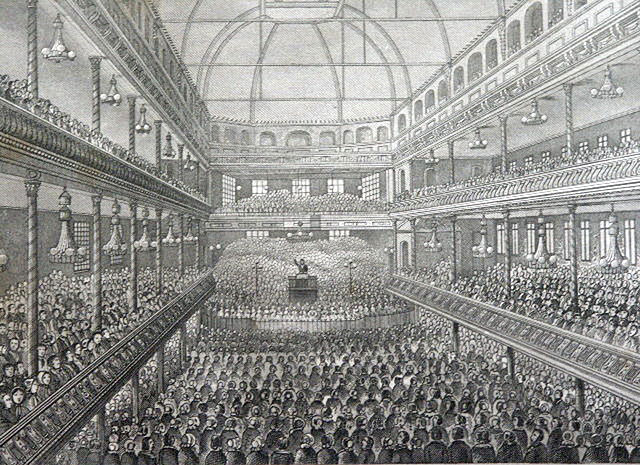
Check out Spurgeon’s summary crescendo on the matter of preaching:
Of all I would wish to say this is the sum; my brethren, preach CHRIST, always and evermore. He is the whole gospel. His person, offices, and work must be our one great, all-comprehending theme. The world needs still to be told of its Saviour, and of the way to reach him. Justification by faith should be far more than it is the daily testimony of Protestant pulpits; and if with this master-truth there should be more generally associated the other great doctrines of grace, the better for our churches and our age.
If with the zeal of Methodists we can preach the doctrine of Puritans a great future is before us. The fire of Wesley, and the fuel of Whitfield, will cause a burning which shall set the forests of error on fire, and warm the very soul of this cold earth. We are not called to proclaim philosophy and metaphysics, but the simple gospel. Man’s fall, his need of a new birth, forgiveness through an atonement, and salvation as the result of faith, these are our battle-axe and weapons of war. We have enough to do to learn and teach these great truths, and accursed be that learning which shall divert us from our mission, or that wilful ignorance which shall cripple us in its pursuit.
More and more am I jealous lest any views upon prophecy, church government, politics, or even systematic theology, should withdraw one of us from glorying in the cross of Christ. Salvation is a theme for which I would fain enlist every holy tongue. I am greedy after witnesses for the glorious gospel of the blessed God. O that Christ crucified were the universal burden of men of God . . .
Blessed is that ministry of which CHRIST IS ALL.
– Spurgeon, Lectures to My Students, 79-80.
Dever’s Grid for Diverse Application

Yesterday I looked at William Perkins’ four condition for application and four kinds of application. One modern expositor who knows the value of discriminatory application is Mark Dever.
Each week when Dever preaches he takes the main points of his sermon and ask how each of them are related to the following six categories:
DEVER’S SIX CATEGORIES OF APPLICATION
- Unique Salvation History – What about the passage is important for the way God unfolds his plan of salvation in history? What’s unrepeatable by us but worthy of worshiping God for?
- Non-Christian – How does the passage speak to the unbeliever? How does it call him/her to repentance and belief? How does it warn, rebuke, correct, or prod the unbeliever? What does it say about the danger of the unbeliever’s situation, the exclusivity of Christ, the sinner’s need for a Savior, or the sufficiency of that Savior as a substitute for the sinner?
- Public – What does the passage say about our lives and roles in the public sphere, both as Christians and non-Christians (e.g., government, neighborhood)?
- Christ – How is Jesus foreshadowed or typed? What particular perfection of Christ does that type depict? How is Jesus remembered or described in character, authority, glory, or essence?
- Christian – What does the passage mean for the life of the individual Christian? How does it call him/her to deeper repentance and belief? How does it warn, rebuke, correct, motivate, comfort, or encourage the Christian?
- Local Church – What does the passage mean for the corporate life of our local church? How does it call the local corporate body to tend to its corporate life together and corporate witness to the unbelieving community around it?
So, let’s say Dever has three points in a given sermon. If every point has a clear application in all six categories, he could have as many as 18 different applications! But, as you can see from this sample, not every point has an application in every category. Our friends over at 9Marks have provided you with a blank sermon application grid for you to put this philosophy of application into practice.
APPLICATION IN COMMUNITY
One thing Dever does to aid sermon prep is letting church members or interns speak into his sermon application grid. The last I heard his normal practice was to do this on Saturdays with a few men in his church. I can only imagine how often these men bring applications to mind that may have been missed otherwise. Not only would such a practice benefit the sermon, but think of the discipleship benefit for these other men! The sermon’s application is aim at the congregation’s life, so it makes total sense why including parts of the congregation in sermon prep can be a great advantage. I’d encourage you to consider how you might do something similar in your preaching ministry.
I hope these posts on discriminatory application, both old and new, stirs you to apply God’s word in fresh ways this coming Lord’s Day.
Diverse Application in Preaching
One of the most treasured lessons I have gleaned from the old Puritan divines is the practice of “discriminatory application.” This method seeks to apply the sermon’s truth in diverse, yet specific, ways because every audience is the collection of diverse spiritual conditions.
For help in this practice we can turn to William Perkins’ The Art of Prophesying. It is the standard teaching on how the Puritans went about the practice of application.
Perkins defines application as “the skill by which the doctrine which has been properly drawn from Scripture is handled in ways appropriate to the circumstances of the place and time and to the people in the congregation.” You’ll notice this definition presupposes a delineated “doctrine” in every sermon. At the risk of oversimplification, we could say the Puritans viewed a sermon’s “doctrine” much like modern homileticians advocate every sermon have a main point or big idea. Once the main point has been explained and expounded its truth should be applied.
Perkins says “there are basically seven ways in which application should be made, in keeping with seven different spiritual conditions.” Ever true to his Puritan tradition, Perkins is somewhat repetitive in his listing, so I will summarize his seven conditions under the following four.
4 CONDITIONS FOR APPLICATION
- The Hard Heart. Those who are unbelievers and are both ignorant and unteachable. To the hard-hearted the law must be stressed, and its curse stated clearly along with its threats.
- The Seeker. This category includes those who are teachable, but ignorant, and those who have knowledge of God, but are not yet repentant. The law of God must also be stressed to this group, but when the beginning of genuine sorrow appears they are to be comforted with the gospel.
- The Converted. These need to be taught the full-orbed nature of Christ’s blessings and benefits: justification, sanctification, adoption, and perseverance. They also need to be taught the law, not as those under its curse, but as a guide for how to bear the fruit of new obedience in keeping with their repentance.
- The Backslider. For those falling in faith the specific doctrine which counter-acts their error should be expounded and taught. We need to stress its importance to them, along with the doctrine of repentance. Let this be done with brotherly affection.
With these four categorical conditions set, we can now move on to the various ways a preacher can apply truth to each condition. Perkins says, “Application is of two kinds, mental and practical.” The mental and practical each have two summary applications, which I combine into the following list.
4 KINDS OF APPLICATION
- Doctrinal application. Doctrine applies the main point in such a way to show the hearer what the mind ought to believe.
- Reproving application. Reproof is the flip side of doctrine. It applies the main point in such a way to show the hearer what the mind should not believe.
- Instructional application. Instruction is the main point applied in a way to enable the hearer to live well in the context of family, the state, and the church. It involves both encouragement and exhortation.
- Correctional application. Correction is the application of the main point in a specific way that transforms lives marked by ungodliness and unrighteousness.
A savvy reader would note at this point that my summary of Perkins’ approach would mean a preacher has at least sixteen different, and legitimate, applications at his disposal in any sermon. Do you see it? If a preacher offered all four kinds of application to all four conditions for application, he would have sixteen points of application in one sermon! The preacher would be wise to heed Perkins admonition that applications “must be carefully chosen, and limited to a few, lest those who hear God’s word expounded are overwhelmed by the sheer number of applications.” The point in application is not to overwhelm the congregation, but pierce their hearts and minds in appropriately specific ways.
How about you? Do your sermons regularly and specifically apply the main point to the varied conditions present within the congregation? If so, praise God! If not, see if you can integrate Perkins’ practice into your preparation for this weekend.
Tomorrow I will show you how one modern expositor goes about preparing for “discriminatory application.”
Recent Reads
I love to read. By God’s grace I am a pretty fast reader; I usually read a couple books each week. I find it helpful to summarize my thoughts on each book and I offer those thoughts in the hope that you will be encouraged to either read or pass over the given title.
 Systematic Theology: An Introduction to Christian Belief by John Frame. I am not sure if it would be appropriate to call this Frame’s magnum opus, but it is undoubtedly a fitting capstone to his decades of teaching. Everything you would expect from Frame is in this volume: emphasis on God’s lordship, extended sections on epistemology, a warm tone, and, oh yeah, loads of triads. As DeYoung pointed out Frame’s ST gives overwhelming attention to the doctrine of God, doctrine of the knowledge of God, and doctrine of the Word of God. I wish these sections would have been thinned out to give more room to areas of salvation, ecclesiology, and eschatology. After completing the book I felt as thought ST functions like a “John Frame’s Greatest Hits” album. It really is not much more than a smashing of his 4-volume lordship series with Salvation Belongs to the Lord. That being said, it is an outstanding achievement. If I had to recommend a 1,000+ page systematic for a layperson this might be the one.
 Five Points: Towards a Deeper Experience of God’s Grace by John Piper. I loved this little (just over 80 pages) volume. Piper walks through the five points of Calvinism with pronounced pastoral care and warmth. He gives appropriate attention to what Scripture says about each point and is not immune to the common objections. If you wanted to walk through the doctrines of grace with a new believer or wanted to recommend an accessible treatment for skeptical Arminians, this would be the place to start. I particularly appreciated his discussion on how perseverance in the Christian life is a community project. Kudos to Piper for also including a final chapter that surveys how the doctrines of grace impacted men like Augustine, Edwards, Whitefield, Mueller, and Spurgeon.
 The Cross-Centered Life: Keeping the Gospel the Main Thing by CJ Mahaney. I last read this book in December of 2010 and loved it. Three years later I find myself even more appreciative of Mahaney’s pastoral sensitivity. He steers clear of the redundancy and reductionism that can mark contemporary gospel-centered parlance. On a side note, should this book have been published any time after 2008 (it was originally published in 2002) I bet it would be titled The Gospel Centered Life. Mahaney would have been wise to have some reflection on Christ’s resurrection and ascension, yet the focus on Calvary is warranted and it comes with great warmth. The gospel clearly affects CJ Mahaney and its inflaming power permeates everything in this little book. Although you can read it in less than an hour, its influence on your life will likely be measured by months and years.
 Hermeneutics: Principles and Processes of Biblical Interpretation by Henry Virkler. Virkler’s work is one of the more definitive hermeneutical handbooks of the last twenty-five years. The bulk of the book is spent walking through the following four areas of analysis: 1) historical-cultural and contextual analysis, 2) lexical-syntactical analysis, 3) special literary analysis, and 4) transcultural application analysis. Hermeneutics would be a good introduction for prospective or current seminary students. If you want a hermeneutics book to recommend to lay teachers or church members I’d suggest this one.
 The Gods of Guilt by Michael Connelly. This is latest volume in Connelly’s bestselling Lincoln Lawyer series. The series left off with Haller planning to run for District Attorney of LA County and I was eager to find out what came of the race. Evidently the Lincoln Lawyer is not D.A. material. The Gods of Guilt finds Haller in his familiar role of defense attorney, having somewhat stupendously flamed out of the D.A. race. Although this entry doesn’t have the twist ending that has marked recent books in the series, it is still a “grippingly” fun read. Connelly has long been a master crime writer, but the LL series is proving him to be also be a master of courtroom banter and strategy.
In Praise of Optimistic Pastors

A few weeks ago I had lunch with several different pastors in the area. As I listened to their descriptions of current ministry issues or struggles I realized a common undercurrent ran through each description.
Pessimism.
There seemed to be little hope or faith that things would improve or transform. It was as though the ministries were stuck in the mud and the pastors were resigned to gradually sinking deeper in despair.
My brothers, this should not be so.
Now, in complete honesty, for the vast majority of my life I wore pessimism as a badge on my letter jacket of Christianity. After all, I had a verse, John 2:24-25, “But Jesus on his part did not entrust himself to them, because he knew all people and needed no one to bear witness about man, for he himself knew what was in man.” Yet, I confused unwarranted pessimism with biblical realism. As I grew in my understanding of God, His word, and His people I started to see that dire outlooks on the church and hopeless orientation to church members are Worm-like weapons. They slay faith, hope, and love – which are the very ingredients of optimism. And the very ingredients that Christians are to exemplify in their lives.
So what is a pastor do to if the great triumvirate of biblical optimism wanes? Preach God’s promises to your heart.
PREACHING OPTIMISM TO YOUR HEART
Preach the promises, particularly those promises that have unique relevance to pastoral ministry. Let me show you what I mean . . .
- “He will again have compassion on us; he will tread our iniquities underfoot. You will cast all our sins into the depths of the sea” (Mic. 7:19). The pastor is called to have tangible maturity and palpable Christlikeness in order to be an example to the flock. Yet, it is easy to wilt under such truth. We feel as though we are the worst of sinners and often want to cry out with the blessed apostle, “Who will deliver me from this body of death?” God will deliver through Jesus Christ. Micah 7:19 helps us be optimistic when holiness is lagging and godliness seems impossible for “He will tread our iniquities underfoot.”
- “Come to me, all who labor and are heavy laden, and I will give you rest” (Matt. 11:28). Faithful ministers will regularly tire, physically and spiritually. This exhaustion can be warranted and unwarranted. Warranted in the sense that the demands of pastoral ministry will regularly steal sleep. Unwarranted in the the sense of the unbiblical perfectionism many pastors are prone to place on themselves. Matthew 11:28 fuels optimism in seasons of exhaustion for rest is promised by Christ and found in Christ.
- “On this rock I will build my church, and the gates of hell shall not prevail against it” (Matt. 16:18). As I write this, there are only fifteen days left in 2013. Maybe this year has been one of great difficulty and you wonder, “How can the church ever rebound from this?” If that is the case, preach Matthew 16:18 to your soul and take refuge in the certainty of the church’s victory.
- “And we know that for those who love God all things work together for good, for those who are called according to his purpose” (Rom. 8:28). To live a godly life means persecution and suffering will come. I am convinced that God regularly purposes to afflict ministers to help them rely on His grace and not their power. Romans 8:28 might be the most overused and abused promise in Scripture, but that shouldn’t preclude the pastor from preaching it to His soul. In fact, this one should probably be preached at the end of every day as it is the quintessential fuel for optimism. All things will work together for your good.
- “Therefore, my beloved brothers, be steadfast, immovable, always abounding in the work of the Lord, knowing that in the Lord your labor is not in vain” (1 Cor. 15:58). It is all too easy to feel like pastoral ministry labor in vain. You might think, “No one has been converted; one of my elders just left the church; people delight to sleep through my sermons; members attend church insofar as it is convenient.” But 1 Corinthians 15:58 says our labor is not in vain for there is a prize coming on the other side of this life – resurrection glory.
I could go on and on, but I hope you get the idea. Preach the promises to your soul and you will bind they fuel biblical optimism in ministry. Also, spend time reflecting on the truth Trinity. Do you not see how the immutability of the Father’s decree, which in its turn depends upon His free and unchangeable love, the efficacious merit and intercession of Christ, and the abiding power of the Spirit’s indwelling of the saints ought to fuel faith, hope, and love?
I am convinced that if a pastor will arm himself with God’s promises and truth, he will be a man growing in biblical optimism. Which is little more than faith, hope, and love. And this triad of optimism ought to the very thing permeating our lives and ministry.
The Elder’s Noble Traits
D.A. Carson has famously pointed out that the remarkable thing about these qualifications is how unremarkable they are. With the exception that an elder be able to teach and not be a recent convert, every other qualification listed here by Paul in 1 Timothy 3 is enjoined upon every Christian.
Let’s briefly explain and apply the character traits required of elders and then observe two realities about the list worth noticing.
THE ELDER’S NOBLE TRAITS
An elder is to be above reproach. This phrase serves as an umbrella for all the requirements that follow. Being above reproach does not mean that he maintains sinless perfection, rather is means that his demeanor and behavior over time have garnered respect and admiration. Everything that now follows in 3:2-7 simply flesh out what it means that an elder be above reproach.
An elder is the husband of one wife. Literally, the phrase reads “one-woman man.” Just exactly whom this qualification would exclude has been the subject of long and anxious debate. Some think Paul is excluding men who are single, others think he is excluding polygamists, and still others believe it excludes a man who has ever been divorced. Yet, the qualification has in mind marital faithfulness, so the elder Paul has in mind is faithful to his one wife. The point of the qualification is that sexual purity is a requirement for everyone holding the office of elder. Sexual purity in the church plays a uniquely important role in the church’s witness and evangelism to a world consumed with sexual immorality. Brothers, don’t let a day pass without understanding the war for purity that rages around you. This issue of sexual purity regularly, and prominently, disqualifies men from ministry. With Christ’s power and the Spirit’s leading, fight for purity.
An elder is sober-minded, self-controlled, and respectable. These qualifications distinguish an elder as being watchful, sober in his desires, feelings, and attitudes. He is not fixed on power, lust, anger, or anything else, but is self-controlled. If these are in place, the man will ordinarily be respectable. This would also impress the importance of discipline on an elder, as we will soon see in chapter four.
An elder is hospitable. Hospitality is one of the most tangible expressions of the gospel practiced in the church. The word itself literally means “loving strangers.” Rarely will you find a man that talks about being gifted in hospitality, yet it’s such an important display of God’s love that Scripture requires elders be known as hospitable. These would be men that seem to make a ministry of greeting everyone at church. Men who naturally help those in need. Men who regularly open their homes to people or use his lunch hour at the work place to express hospitality to co-workers or other people he comes across.
An elder is not a drunkard, not violent but gentle, not quarrelsome. I doubt these qualifications need much explanation. A couple questions would be, “Is the man patient and gentle in the midst of conflict? Does he avoid needless fighting and disagreement, and instead pursue the work of a peacemaker?”
An elder is not a lover of money. A man’s money will indicate a man’s heart, plain and simple. Does he give generously and sacrificially? Are his investments earthly minded or heavenly minded? Does he organize his life around the goal of monetary gain or the pursuit of godly objectives?
An elder must manage his own household well, with all dignity keeping his children submissive, for if someone does not know how to manage his own household, how will he care for God’s church? We began our series on 1 Timothy by noting Paul’s definition of the church as God’s household. In this verse Paul again shows himself to be pristine in logic, for if a man cannot manage his house, why should we expect him to manage God’s house? And let us give unique attention here. Because few things shipwreck a man’s current and potential fitness for eldership as does the management of his household, particularly his children. Paul is not demanding that children be converted, nor is he demanding that children be perfect. However, he is demanding that an elder’s children have a general demeanor that is submissive, obedient, and respectful of their father’s authority. Therefore, a prospective elder would be a man that gives godly attention and care to his children (if he has them).
Growing up in the church, I have been over to many a church leader’s home. It has not been rare in my experience to find a church leader to be quite different at his house and with his family. Paul is saying that this should not be so. If you want to see the true measure of a man’s leadership, follow him to his family.
An elder must not be a recent convert. He must not be νεόφυτον: a novice, or literally “newly planted.” The point is that the elder be mature in his faith. He must be so, otherwise he may become puffed up with conceit and fall into the condemnation of the devil. Immaturity is ground in which pride and demonic condemnation can find fertile soil. Therefore, an elder should have a pronounced humility and spiritual maturity.
Finally, an elder he must be well thought of by outsiders. What unbelievers think about potential elders is important. He must have a strong reputation with those outside the church, if not, Paul says he might fall into disgrace, into a snare of the devil. A reputation that is poor with lost people means that he is vulnerable to falling into disgrace or a trap of the Evil One. Thus, a proper elder will have wise engagement with the wider community and that engagement will lead to him being well-thought of by outsiders.
TWO THINGS TO NOTE
There area two important realities we should note from the list of noble traits.
First, note the importance of maturity. Paul does not say that the man must be married, that he must have children, or that he must be of a certain age. Paul is preeminently concerned that the elder be a model of Christlike maturity.
Second, note the schemes of the enemy. Two times in our text Paul mentions the devil; his condemnation and snare. Make no mistake about it, Satan is out to get the elders of the church. It is basic military strategy and the oldest trick in the book. The best way to defeat an army is to attack its command and control. The best way to attack a local church is to attack its leadership. Men in the church, you must ever be on your guard in this battle. Pastors in the church, you must never lay down in this battle. Let the church pray diligently for her pastors.
A man characterized by these noble traits will be one who is mature, and one who is under constant assault from the enemy.
Later this week we will look at the elder’s noble teaching.