The Epitome of a Christian’s Happiness

Looking Unto Jesus

Isaac Ambrose opens his work Looking Unto Jesus with some magisterial language indeed:

“As Christ is more excellent than all the world, so this sight transcends all other sights; it is the epitome of a Christian’s happiness, the quintessence of evangelical duties, Looking unto Jesus. . . . This, indeed, is the glad tidings, the gospel, the gospel privilege, and our gospel-duty, Looking unto Jesus.”

Who is Isaac Ambrose?

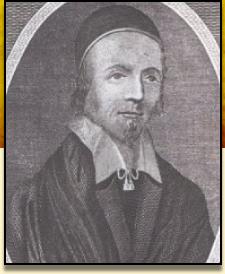
isaacambroseOne of my Endeavors for 2014 is to read Isaac Ambrose’s timeless tome, Looking Unto Jesus: A View of the Everlasting Gospel: Or, the Soul’s Eyeing of Jesus, As Carrying on the Great Work of Man’s Salvation, from First to Last.

If you aren’t familiar with Puritan works just know that title is not particularly long for those 17th century divines.

So just who is Isaac Ambrose? I can’t improve upon the work of Beeke and Pederson in Meet the PuritansHere’s a short-ish adaptation.

AMBROSE THE MAN

Isaac Ambrose was born in 1604, the son of Richard Ambrose, vicar of Ormskirk, Lancashire. Entering Brasenose College, Oxford, in 1621, he graduated with a Bachelor of Arts degree in 1624, and was ordained to the ministry. He became vicar of the parish church in Castleton, Derbyshire, in 1627, then served at Clapham, Yorkshire, from 1629 to 1631. The following year he received a Master of Arts degree from Cambridge.

About 1640, Lady Margaret Hoghton selected him as vicar of Preston in Amounderness. As long as Ambrose lived in Preston, he enjoyed the warm friendship of the Hoghton family. It was to their ancestral woods and tower near Blackburn, east of Preston, or Weddicre Woods near Garstang, that Ambrose retired each May to be alone, searching the Scriptures, praying, and meditating upon God. His sermon, “Redeeming the Time,” preached to the large congregation assembled for Lady Hoghton’s funeral, was long remembered in Lancashire.

Presbyterianism in Lancashire was served well by Ambrose in the 1640s and early 1650s, though not without strife. On several occasions he served as moderator of the Lancashire classis, and, in 1648, was a signatory of the harmonious consent of the Lancashire Presbyterian clergy, which expressed solidarity with the Westminster Assembly and opposed calls for toleration. In 1649, the local committee for the relief of plundered ministers ordered him to be briefly imprisoned in London. When Ambrose returned to minister in Preston, he faced ongoing persecution. Finally, in 1654, he gave up his post there, perhaps due in part to illness (Oxford DNB, 1:921).

Ambrose moved north to become minister of Garstang, where he was ejected from his living in 1662 because of non- conformity. He lived in retirement among his friends at Preston, dying suddenly of apoplexy on January 23, 1664. It was said of him: “He was holy in life, happy in his death, honored of God, and held in high estimation by all good men.”

AMBROSE THE AUTHOR

Ambrose was a Christ-centered and warmly experiential author. He spoke of himself as a son of Boanerges and Barnabas, though his writings and ministry appear to have reflected more of the latter than the former. His writings are remarkably free of polemics. “As a religious writer Ambrose has a vividness and freshness of imagination possessed by scarcely any of the Puritan nonconformists. Many who have no love for Puritan doctrine, nor sympathy with Puritan experience, have appreciated the pathos and beauty of his writings, and his Looking unto Jesus long held its own in popular appreciation with the writings of John Bunyan” (Encyclopedia Britannica, 11th ed., 1:800). A collection of his works appeared in 1674 and was reprinted at least seven times over the next two centuries.

After a serious illness in the early 1650s, Ambrose wrote a devotional on what the Lord had done for his soul, titled Looking unto Jesus, or the Soul’s Eyeing of Jesus as Carrying on the Great Work of Man’s Salvation (1658). The book, which stresses experiential identification with Jesus in thought and behavior, soon became a classic of Christ-centered divinity. Its readers feel they are standing on holy ground.

The book has been reprinted many times, influencing many Christians over the centuries to pursue a closer walk with God. It equals Samuel Rutherford’s Letters in its Christcenteredness.

3 Endeavors for 2014

2014 Endeavors

Few men of old have impacted my life so profoundly as Jonathan Edwards. It all began in the spring of 2007.

On a whim I purchased George Marsden’s Jonathan Edwards: A Life from a nearby Christian bookstore. As strange as it may seem for those who know me well, and in light of yesterday’s post, Marsden’s biography was the first “Christian” book longer than 200 pages I had ever read.

It took me quite a while to finish the book, the pace was caterpillar-ish when contrasted to how I read seven years later, but I have never been the same since. Apart from Scripture no other book as effected me in a myriad of significant ways like this one.

It was the gateway into deeper study of Edwards.

It was the gateway into loving the Puritans.

It was the gateway into a near obsession with history.

And it was the gateway into a disciplined pursuit of holiness.

This last one is what struck me most about Edwards, his staggering, soul-consuming pursuit of holiness, and thus happiness, in God. I doubt anything encapsulates his passion for godliness like those famous Resolutions. After reading them I had a strange bifurcation of the soul. One part of my heart fell into utter despair, “What a miserably lazy worm I am!” But the other part, and honestly the major part, raced with excitement, “Yes! Amen! Now, that’s a life spent pursuing God.” And so it was that I pulled out my laptop and tapped away my own list of desires for The Fight. I called them “Endeavors.”

Some day I might publish those original ones, but for now you should know that as every year begins I have a couple new, often time-capped, Endeavors that find their way onto the list. Here are the three Endeavors I have for 2014:

3 ENDEAVORS FOR 2014

First, I endeavor to memorize 1 Timothy. Few things stir my soul to consistently dwell in doxological deeps like Bible memory. In 2011 I memorized Ephesians and Colossians and have spent the last two years trying to make sure I retain them. I think I am now ready to move on to the next book and it was always going to be 1 Timothy. Paul’s letter to his “true child in the faith” has long been a go-to resource for pastoral ministry and I want to write it on my heart.

Second, I endeavor to read the collected works of George Swinnock and the magnum opus of Isaac Ambrose. This is a good example of what I mean by a “time-capped” Endeavor. In the past couple of years I have chosen a few older and longer works to meditatively nibble on throughout the year. This year its the five-volume collection from Swinnock and Ambrose’s Looking Unto Jesus. 8 pages per day in the former and 2 in the latter will have ’em likely done sometime in November.

Third, I endeavor to personally evangelize at least one person a month. Some may say, and be right to say, that this hope is porous. It’s too small. Or, “You don’t do that already?!?” I usually find it best to put the peanut gallery on mute, especially in areas like this. Simply put, I want to become a better personal evangelist. My calling demands it and my God deserves it. I am praying that the Spirit would empower me unto faithfulness and fruitfulness in evangelism. Maybe one day I might be like the venerable Mack Stiles who says it’s rare for a couple days to pass without at least one evangelistic conversation.

So, in the year of our Lord 2014, these are my Edwardsian endeavors. Anyone want to join me on the journey?

156 Books

156 Books

I am not totally sure how it happened. I didn’t even set out to do it. Somehow I read 156 books in 2013.

Maybe it was the required reading from graduate and post-graduate studies, maybe it was the increased reading of fiction, or maybe it is simply due to the fact that I should sleep more. Who knows.

As a new year dawns this day, I wonder, “Will I read as many books in 2014? Should I read as many books in 2014?” Who knows.

All I know is that books bless my soul in unusual ways. I can’t wait to see how God uses them to form Christ in me this year.

Favorite Books of 2013

I read a lot of books this year – more on that tomorrow – but it wasn’t too difficult to narrow down a list of thirteen favorites. These were, for me, the cream of the crop.

HONORABLE MENTIONS
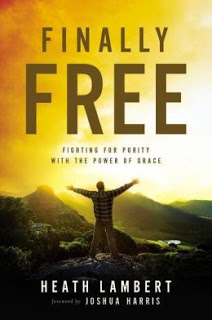
FinallyFreeFinally Free: Fighting for Purity with the Power of Grace by Heath Lambert. Lambert’s book is a fantastic grace-fueled filling of the gap in modern literature on the subject of fighting for purity. If you took out the chapter on “Using Your Spouse (or Your Singleness)” to Fight Pornography” the book is actually a field manual for killing all kinds of sin. Surely one can use sorrow, humility, gratitude, and confession to slay various, fleshly enemies. I kept thinking that his strategies would find a happy partner in the directives Owen provides in The Mortification of Sin. Any Christian – pastor, small group leader, lay member – would do well to read this book.
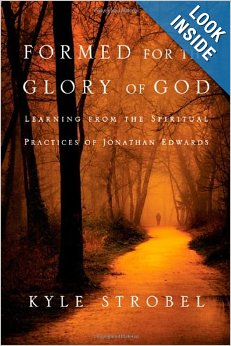
513i0UrhMqL._SY344_PJlook-inside-v2,TopRight,1,0_SH20_BO1,204,203,200_ Formed for the Glory of God: Learning from the Spiritual Practices of Jonathan Edwards by Kyle Strobel. Jonathan Edwards is a towering theological giant for many reasons and one of them is his disciplined pursuit of holiness. Strobel is well equipped to write a book that I’m surprised no one had yet written: Edwards on Spiritual Formation. You don’t need to be an Edwards fan to appreciate the rich application found throughout this book. This is now one of my favorite contemporary books on “the ordinary means,” and I can only hope it gets a wide readership.
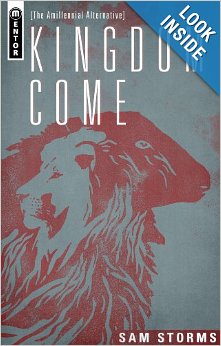
51CTv3RNFyL._SY344_PJlook-inside-v2,TopRight,1,0_SH20_BO1,204,203,200_Kingdom Come: The Amillennial Alternative by Sam Storms. This would be higher if I wasn’t already a convinced amilliennialist. In over 500 pages he covers everything from escatological hermeneutics to systematic strengths/weaknesses of the various positions to exegesis of the disputed texts. Storms writes winsomely and clearly, thus the book steers clear of the dry, academic treatment one usually finds in this debate. Surely this is now the “go-to” book on amillennialism.

TOP TEN FAVORITE READS
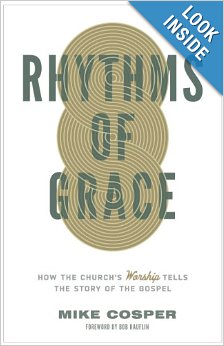
41BD8kstwuL._SY344_PJlook-inside-v2,TopRight,1,0_SH20_BO1,204,203,200_#10 – Rhythms of Grace: How the Church’s Worship Tells the Story of the Gospel by Mike Cosper. When it comes to accessible yet weighty meditation on the topic of worship, this Cosper’s work is as good as it gets. He brings together the best of all that has been published on worship and then puts his Cosper-like curve on the subject. The “One, Two, Three” framework he offers is quite useful: worship has one object and author (God), two contexts (gathered and scattered), and three audiences (God, the church, and the watching world). Every pastor and church member should read chapter nine,”Sing, Sing, Sing,” which offers uncommon wisdom on the topic and rightly challenges Christians to move from being a critic to a participant. An excellent work not to be underestimated.
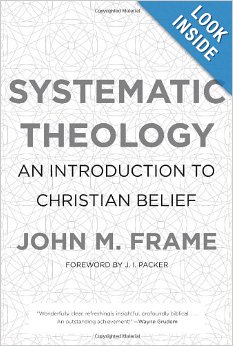
51yn75QUjKL._SY344_PJlook-inside-v2,TopRight,1,0_SH20_BO1,204,203,200_#9 – Systematic Theology: An Introduction to Christian Belief by John FrameThis is a fitting capstone – “magnum opus” would be deserved – to Frame’s career. Everything you would expect from Frame is in this volume: emphasis on God’s lordship, extended sections on epistemology, a warm tone, and, oh yeah, loads of triads. Systematic Theology functions like a “John Frame’s Greatest Hits” album. It really is not much more than a smashing of his 4-volume lordship series with Salvation Belongs to the LordThat being said, it is an outstanding achievement. If I had to recommend a 1,000+ page systematic for a layperson this might be the one.
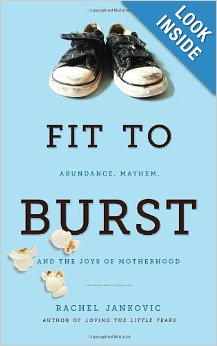
411ZASBFp0L._SY344_PJlook-inside-v2,TopRight,1,0_SH20_BO1,204,203,200_#8 – Fit to Burst: Abundance, Mayhem, and the Joy of Motherhood by Rachel Jankovic. I read books on motherhood in order to better understand and serve my wife’s work as a mom. And I am glad I read this one. Jankovic is a wonderful writer, which makes perfect sense when you discover she is Doug Wilson’s daughter and Nate Wilson’s sister. Her wisdom and wit are preeminently displayed in meditations on misplaced “grace” in discipline, the relationship between faithfulness and stress, and the value of cultivating a lively sense of humor in parenting.
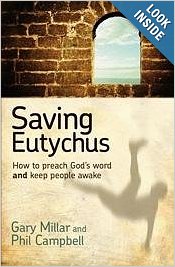
31GoWsW2GhL._PJlook-inside-v2-small,TopRight,1,0_SH20_BO1,204,203,200_#7 – Saving Eutychus: How to Preach God’s Word and Keep People Awake by Phil Campbell and Gary Millar. This book is not a theology of preaching, but a simple guide on the practice of preaching. Filled with humor and immediately employable wisdom, I can’t see how any preacher wouldn’t benefit greatly from this book. I found it so compelling and challenging that my prayers before preaching regularly include a petition that God would “save Eutychus.” We need more preaching books like this one.
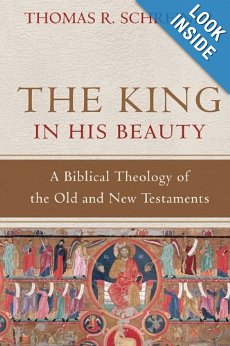
51JkeL52aUL._SY346_PJlook-inside-v2,TopRight,1,0_SH20_#6 – The King in His Beauty: A Biblical Theology of the Old and New Testaments by Tom Schreiner. Schreiner is one of my favorite living biblical scholars. My appreciation is not rooted in the fact that I almost always agree with his conclusions (his understanding of the millenium withstanding), but in the fact that his scholarship is marked by such devotional warmth. There is pronounced emphasis on God’s lordship in the work and I deeply appreciated his focus on how human beings, created in the image of God, are supposed to relate to their Lord and King with praise, obedience, and fear. The summary conclusions and interludes woven throughout the book make it all the more useful as a discipleship and teaching resource. Well done!
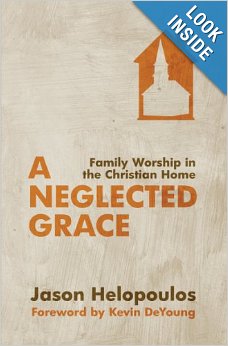
41ByCYfk29L._SY344_PJlook-inside-v2,TopRight,1,0_SH20_BO1,204,203,200_#5 – A Neglected Grace: Family Worship in the Christian Home by Jason Helopoulos.  Wow, what a book! Helopoulos manages to tackle the always convicting topic of family worship with uncommon wisdom and grace. Far from feeling condemned after reading, I was freshly encouraged to lead my wife and boys in daily worship. We used this book at our church with a few dozen men and I am not sure I’ve recommended a resource that brought as much instantaneous fruit.
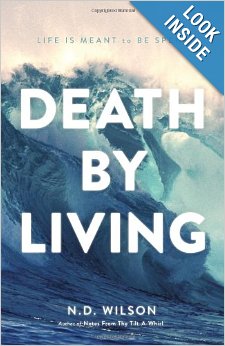
51e-ok5bIlL._SY344_PJlook-inside-v2,TopRight,1,0_SH20_BO1,204,203,200_#4 – Death By Living: Life is Meant to Be Spent by N.D. Wilson. Wilson didn’t disappoint in this long awaited follow-up to his much acclaimed Notes from a Tilt-a-Whirl. I was brought to tears multiple times through laughter, simple reflections on life, and the sadness of a loved one crossing over. As the book concluded a renewed vigor to live this vapor in the wind with passion and purpose thudded on my soul. I can’t wait to read whatever Wilson’s comes up with next.
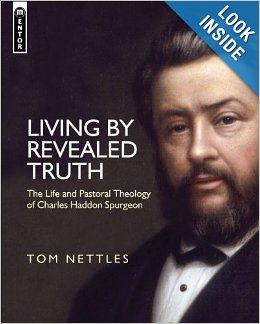
51ChIFpKbLL._SX258_PJlook-inside-v2,TopRight,1,0_SH20_BO1,204,203,200_#3 – Living by Revealed Truth: The Life and Pastoral Theology of Charles Haddon Spurgeon by Tom Nettles. I will grant that I am somewhat of a Spurgeon aficionado – after all, I named our third son after the Prince of Preachers. I hope he will one day read this magnificent work. Once you get oriented to the textbook-ish layout you will be confronted with all the gusto one would expect from a momentous publication on CHS. Filled with fresh insights from consultations of little known sources, this book is a worthy, maybe even necessary, addition to your study.
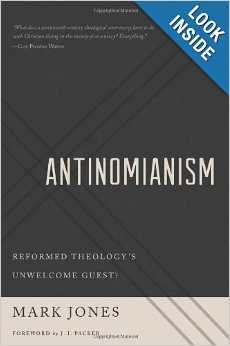
41h18lfhjoL._SY344_PJlook-inside-v2,TopRight,1,0_SH20_BO1,204,203,200_#2 – Antinomianism: Reformed Theology’s Unwelcome Guest? by Mark Jones. This is a tour-de-force of historical and pastoral theology. Far from being simply a polemical work against modern antinomianism, this book displays a classically and confessionally Reformed understanding of sanctification and the pursuit of holiness. Jones ably shows that historic antinomianism is much more than a person being simply “against law.” This was the most illuminating work I read all year and the one I underlined most. I am sure I will recommend it for years to come.
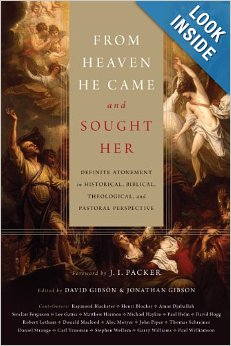
51n2mUWQMaL._SY344_PJlook-inside-v2,TopRight,1,0_SH20_BO1,204,203,200_#1 – From Heaven He Came and Sought Her: Definite Atonement in Historical, Biblical, Theological and Pastoral Perspective edited by David Gibson & Jonathan Gibson. I am still amazed that this book has been published. Who would have predicted ten years ago that a major Christian publisher would offer up a massive volume on limited atonement? Praise God for Crossway putting this into print and the Gibson men for editing so pristine a volume. No one writing on the topic of particular redemption will be able to do so without now taking this work into account. In my opinion, this is one of the greatest publishing achievements of the past decade and maybe even longer than that. Tolle lege!


Recent Reads

I love to read. By God’s grace I am a pretty fast reader; I usually read a couple books each week. I find it helpful to summarize my thoughts on each book and I offer those thoughts in the hope that you will be encouraged to either read or pass over the given title.

51e-ok5bIlL._SY344_PJlook-inside-v2,TopRight,1,0_SH20_BO1,204,203,200_Death By Living: Life is Meant to Be Spent by ND Wilson. Wilson didn’t disappoint in this long awaited follow-up to his much acclaimed Notes from a Tilt-a-Whirl. He says, “This book hangs on a creature’s narrative motion through time (past, present, and future) and is (slightly) more linear [than Notes].” I am not so sure I would call it linear, but it is a collection of marvelous meditations on life, death, and everything in between. I was brought to tears multiple times through laughter, simple reflections on life, and the sadness of a loved one crossing over. As the book concluded a renewed vigor to live this vapor in the wind with passion and purpose thudded on my soul. Undoubtedly one of the best books I have read all year.

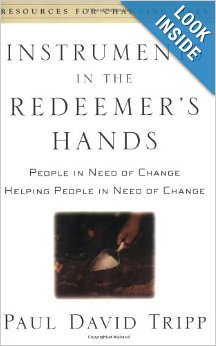
41mtECTonBL._SY344_PJlook-inside-v2,TopRight,1,0_SH20_BO1,204,203,200_Instruments in the Redeemer’s Hands: People in Need of Change Helping People in Need of Change by Paul David Tripp. I had thumbed through this book several times, but never got around to reading it until last week. Tripp’s soul-care manifesto is a one stop shop of biblical wisdom for pastors, counselors, and Christians in general. The book can be broken up into two parts with the first section detailing the theology foundation for helping people change and the second section showing a practical method to employ. His framework of “Love, Know, Speak, Do” is mighty helpful. The book is longer than it needs to be (360 pages), which is very Tripp-like, but I would still recommend every pastor read it.

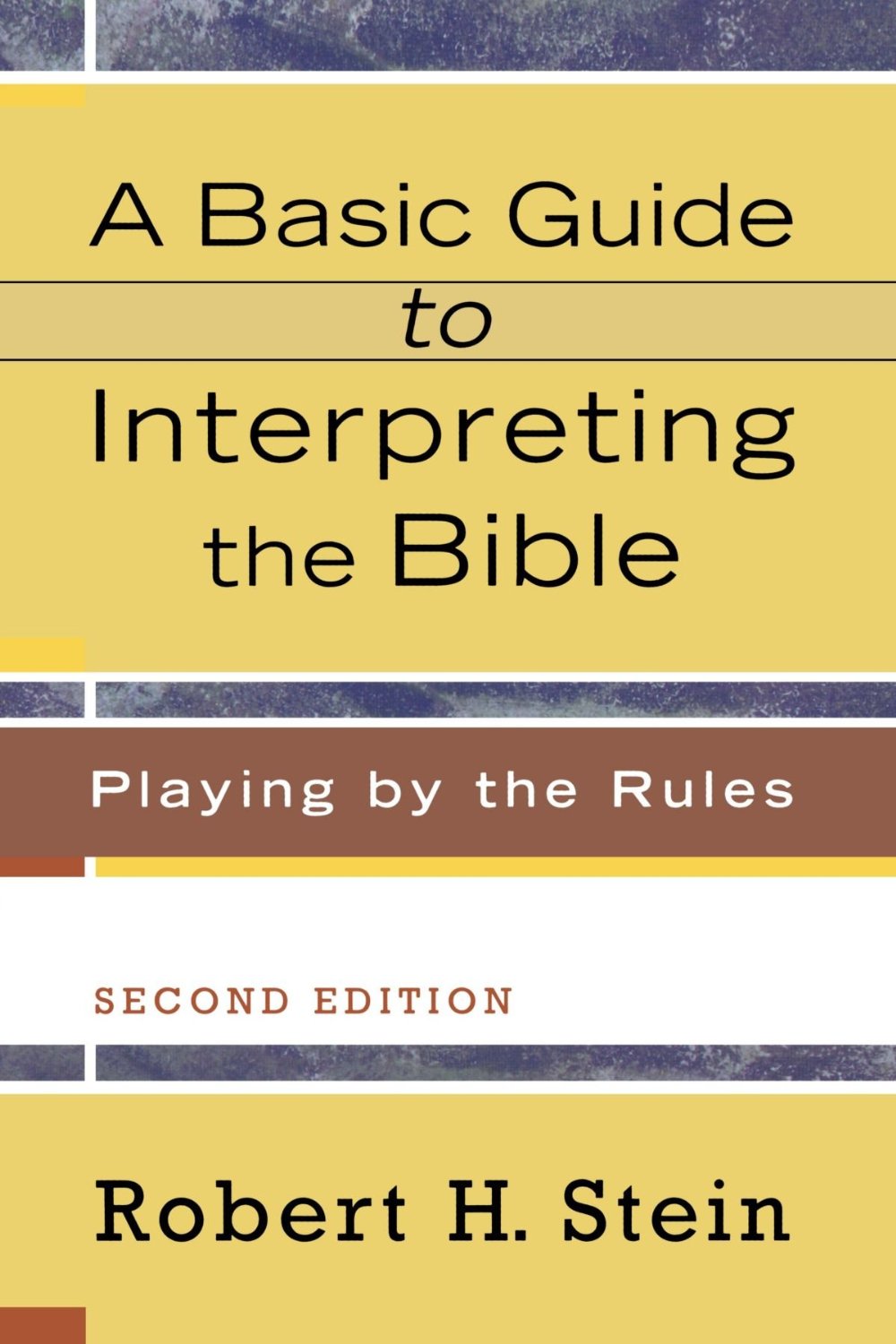
71bXN4B-qnL._SL1500_A Basic Guide to Interpreting the Bible: Playing by the Rules by Robert Stein. I loved the whimsically serious nature with which Stein teaches basic principles for interpreting the Bible in this book. When he teaches on interpreting narratives he does so under the heading of “The Game of Stories”; when it’s poetry he calls it “The Game of Rhythm.” Each section is long enough to cover the necessary bases, but not so long to tempt the reader’s interest. All in all, this is a useful introduction to hermeneutics. It may have been the one I’d recommend if it wasn’t for . . .

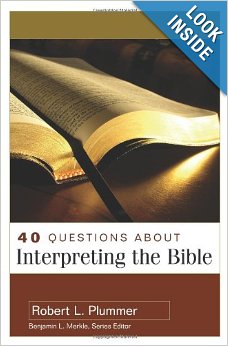
51woZW9K8jL._SY344_PJlook-inside-v2,TopRight,1,0_SH20_BO1,204,203,200_40 Questions About Interpreting the Bible by Robert Plummer. I love Kregel’s “40 Questions About Series” because each entry is accessibly exhaustive – 40 questions on a given topic is usually sufficient to his all the high points. Plummer’s entry on hermeneutics is my now go to volume to introduce Christians into the discipline. Plummer covers everything you would want him to with clarity and care. Highly recommended!

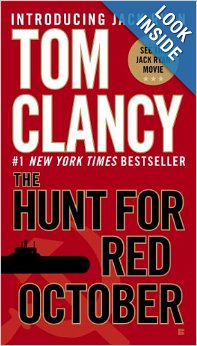
51UWLpan49L._SY344_PJlook-inside-v2,TopRight,1,0_SH20_BO1,204,203,200_The Hunt for Red October by Tom Clancy. My dad has tried to get me to read Clancy for quite some time, so I finally dove in with the first Jack Ryan novel. Maybe it was because my dad’s rave reviews created unrealistic expectations or maybe it was because I already knew the ending from watching the movie; whatever the reason, I was quite disappointed. The book is bloated with technical naval jargon and Clancy jumps around so much with the narrative that character development didn’t seem to be on his radar. I did enjoy how the Cold War’s ideologies were appropriately collided throughout the novel. Ryan gets surprisingly little spot time in the book, so I can’t help but think that if Clancy didn’t bounce around so much and focused more solely on Ryan and Ramius (the Soviet protagonist) the narrative would have been tighter. I am not disappointed enough to give up on Clancy, I will just stroll in to the next book with lower expectations.

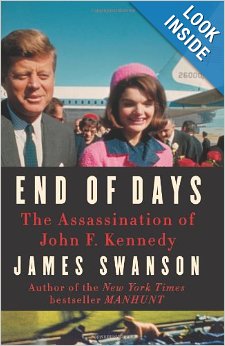
51DjGtdpW8L._SY344_PJlook-inside-v2,TopRight,1,0_SH20_BO1,204,203,200_End of Days: The Assassination of John F. Kennedy by James Swanson. Swanson’s first two books, bestsellers I might add, focused on the chase for a presidential assassin and the presidential funeral pageant that followed. So I guess he is uniquely equipped to writ about JFK’s assassination and everything it includes. And I am glad he did. Swanson is one of those rare historians who can write history with the gripping prose of expert storytellers and this trait is on full display in this latest work. I was so absorbed with the interwoven fates of Kennedy and Oswald that I read the entire book in two sittings. Conspiracy theorists will surely want to excoriate Swanson’s simple conclusion that “perhaps the reason (for Oswald assassinating the president) is much simpler and more fundamental and lies beyond rational human understanding: Lee Harvey Oswald was evil” (297). The book abounds with fascinating insights (such as how Jackie started the Camelot Court mythology) and I think would satisfy the JFK expert or novice.

Sermon Evaluation Form

Preaching Header

Lord willing, tonight I will sit next to my wife during corporate worship for the 12th time this year and listen to another man preach God’s word at our church.

We planted IDC with the conviction that I would preach no more than forty times a year. So this year has seen six different men preach at IDC, half of them are working out a call to ministry. The preaching opportunity is therefore a time for these men to hone skill in exposition and for the congregation to affirm their stated desire to be preachers of God’s word.

I want to always get better at how I serve these men by way of feedback, so this week I created a sermon evaluation form that captures some of the distinct preaching convictions of our church.

I hope it will provide more tangible flesh to sermon reviews. Feel free to download the form and adjust accordingly to fit your church.

Sermon Evaluation Form

Our form is based, in part, on Tony Merida’s sermon evaluation form in Faithful Preaching.

Reading Well to Write Well

The Pastor and Writing

I am increasingly convinced that the discipline of writing is one of a pastor’s best friends. It promotes clarity of thought, winsomeness with words, and power in persuasion.

Consider these statements from prominent pastor-theologians in the Reformed tradition:

Citing Augustine, John Calvin said, “I count myself one of the number of those who write as they learn and learn as they write.” John Piper said, “Writing became the lever of my thinking and the outlet of my feelings. If I didn’t pull the lever, the wheel of thinking did not turn. It jerked and squeaked and halted. But once a pen was in hand, or a keyboard, the fog began to clear and the wheel of thought began to spin with clarity and insight.”1

In many ways, the only reason I started this blog was to force myself to write with regularity. My hope is the regularity will do two things: 1) help me to write better, and 2) help me to find my own voice. I think of a pastor’s writing voice much like his preaching voice: it takes a long time to discover it2 and a lifetime to hone it.

D.A. Carson once said, “If you listen to only one preacher, you become a clone. If you listen to two, you become confused. If you listen to fifty, you’re on the edge of wisdom and beginning to become yourself.” I think you can apply the same thing to reading and writing: “If you read only one writer, you become a clone. If you read two, you become confused. If you read fifty, you’re on the edge of wisdom and beginning to become yourself.”

So what I want to do in this post is give you a peek into how I try to put my spin on Carson’s maxim into practice. I hope it will encourage you to something similar as you find/solidify/sharpen your writing style and voice.3

READING THAT SHAPES WRITING

I read John Frame and Tom Schreiner for accessibility. I am amazed at how these men can write expansive systematic and biblical theologies with such simplicity and clarity. Their works steer clear of the verbosity that so often comes out of the academy, which serves the ordinary person in the pew. Reading Frame and Schreiner will show a pastor how to write on complexity without complexity.

I read the Puritans for particularity. The Puritans were masters of nuance, distinction, and definition. When talking about God’s power they speak of His absolute power and ordained power. When speaking about God’s love for man, they make a distinction between God’s benevolent love and complacent love. Their theological distinctions can be so minute they run the risk of being helpful. But on the whole, their particularity in discourse is overwhelmingly useful. Anyone who has engaged in theological discussion knows the necessity of precision, and the Puritanism is something of a synonym for precision. Their particularity is seen not only in their doctrinal instruction, but also their heartfelt application. Every doctrine would be applied to specific heart conditions, a fact that writers would be wise to consider for a diversity of people will read any given work.

I read the Wilsons for dexterity. By Wilsons I am thinking of Doug and Nate Wilson. This father and son duo has a facility with language and prose that regularly astonishes me. I will never write as well as they do, but I am always inspired with their skill in crafting sentences and wielding words with power, passion, and conviction.

I read history for sensitivity. No person wants to be accused of “chronological snobbery” in their writing or ministry. Broad historical reading helps one be sensitive to the ebbs and flows of culture. The best historian are storytellers, therefore a glorious consequence of reading good history is that you get to see how a story is told well. So historical reading helps generate sensitivity to the progress of man and the progress of a good plot line.

I read fiction for curiosity. Good fiction excites interest – curiosity – for a variety of reasons. It can be suspense, angst, pain, joy, or any other emotion. Every person who writes wants to write compellingly and good fiction encourages that kind of writing.

Strategic reading will help shape your writing. Who is influencing your writing voice?

  1. HT: Justin Taylor, “On Writing Well: Four Suggestions.”
  2. I would say it took five years of somewhat regular preaching before I hit my personal stride in oral communication.
  3. Check out the bottom of this post from Tony Reinke to see how he did something similar when writing his first book.

Training Future Preachers

David Helm, Mike Bullmore, and Bryan Chapell discuss a timeless issue for pastors: How do you train future leaders and preachers? Watch, listen, and learn.

Recent Reads

I love to read. By God’s grace I am a pretty fast reader; I usually read a couple books each week. I find it helpful to summarize my thoughts on each book and I offer those thoughts in the hope that you will be encouraged to either read or pass over the given title.

41h18lfhjoL._SY344_PJlook-inside-v2,TopRight,1,0_SH20_BO1,204,203,200_Antinomianism: Reformed Theology’s Unwelcome Guest? by Mark Jones. This is a tour-de-force of historical and pastoral theology. As Guy Waters says in his endorsement, “What does a seventeenth-century theological controversy have to do with Christian living in the twenty-first century? Everything.” Far from being a polemical work against modern antinomianism, this book displays a Reformed understanding of sanctification and the pursuit of holiness from a confessional perspective. Jones ably shows that historic antinomianism means much more than a person being “against law.” Historically, antinomianism was an elusive mix of six factors: 1) ridiculing the idea that Christians should imitate Christ, 2) rejecting of the law as a means of sanctification, 3) denying a law-gospel distinction that said the law is a friend to Christians and the gospel contains prescriptive parts, 4) refusal to speaks God rewarding of good works, 5) espousing the belief that God does not love us any more or any less on the basis  of our obedience or lack thereof, and 6) putting forth a view of assurance that has no place for subjective fruit flowing from the objective work of Christ. Jones says, “When all or at least most of these errors are combined in a preaching ministry, you have [historic] antinomianism” (128). One of the most illuminated works I’ve read all year and surely the one I underlined the most.

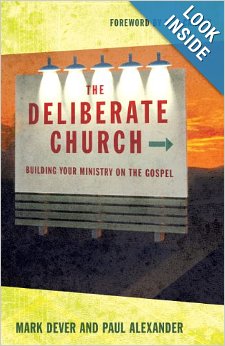
51nxFXnHfBL._SY344_PJlook-inside-v2,TopRight,1,0_SH20_BO1,204,203,200_The Deliberate Church: Building Your Church on the Gospel by Mark Dever and Paul Alexander. The Deliberate Church is one of the finest, and most expansive, books on practical ecclesiology available today. Divided into three parts (Gathering the Church, When the Church Gathers, and Gathering Elders), the book covers everything from faithful pastoring to shepherding to the regulative principle to how a healthy elder meeting is run. Dever views this book as the conclusion to an ecclesiological trilogy that began with 9 Marks of a Healthy Church and Polity. This book will challenge, encourage, and sharpen pastoral and congregational convictions in the best ways. It is one of two primary resources we use at IDC for elder candidate training.

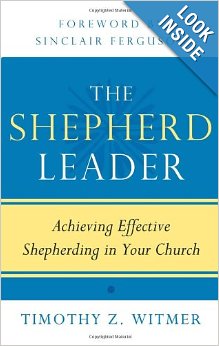
41hsuMz9d6L._SY344_PJlook-inside-v2,TopRight,1,0_SH20_BO1,204,203,200_The Shepherd Leader: Achieving Effective Shepherding in Your Church by Tim Witmer. This is the other primary resource we use in our elder candidate training. The initial chapters on biblical and historical foundations for shepherding are solid, but it is in part two – “A Comprehensive Matrix for Shepherding” – where the book’s value is seen. Witmer wisely walks through the distinction between macro and micro shepherding and then says a faithful shepherding ministry consists of four parts: knowing, feeding, leading, and protecting. He provides the undisputed biblical backing for each part and then proceeds to recommend how a church can go about integrating macro and micro shepherding for each part. I have recommended this book to countless pastors over the last few years and not a few of them have said it completely restructured their thoughts on shepherding. And that’s a good thing.

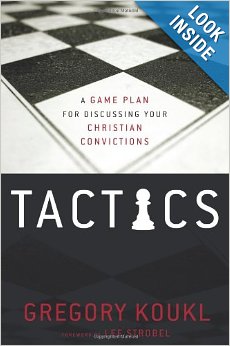
41MK+RxtbeL._SY344_PJlook-inside-v2,TopRight,1,0_SH20_BO1,204,203,200_Tactics: A Game Plan for Discussing Your Christian Convictions by Greg Koukl. Koukl loves to engage non-believers in conversation and this book is an overflow of his apologetics ministry. He is wise to note that most skeptics have a kind of “theology by osmosis” that will fall in on itself when the right questions are asked. And that really is the overarching tactic he advocates: asking wise and probing questions. Doing so will help reveal the irrationality fueling unbelief. Koukl does, at times, lean more into an evidentialist approach than I would recommend, but overall this is a very helpful resource for lay members. If a church member is interested in apologetics I might start ’em on Koukl, then move ’em on to Frame, and conclude the training with Oliphant’s latest.

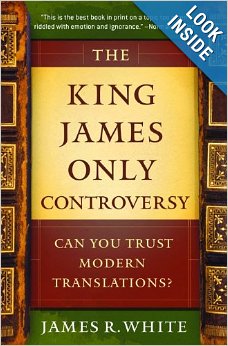
51vfzfeFT7L._SY344_PJlook-inside-v2,TopRight,1,0_SH20_BO1,204,203,200_The King James Controversy: Can You Trust Modern Translations? by James White. This book is probably the “go to” resource for addressing the KJV Only debate. Thankfully, the controversy seems to have noticeably declined over the last 15-20 years. I have only dealt with it once in my ministry. If you have friends or family members that look down on your NIV or ESV translation because they only want the King’s English, grab a copy of White’s book. Otherwise I’d pass it over.

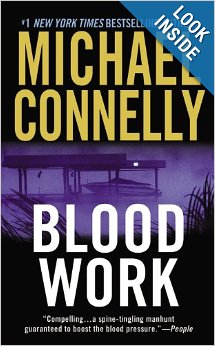
51p1WBVb4BL._SY344_PJlook-inside-v2,TopRight,1,0_SH20_BO1,204,203,200_Bloodwork by Michael Connelly. I might need a break from Connelly for a while, but it’s not because I didn’t like this book. In fact, I found this book to be intriguing, surprising, and unique. The issue at play for me is Connelly’s continual employment of a “twist” ending. Knowing a twist is likely coming at the end I engage in a sort of competition with Connelly: will he surprise me or will I accurately predict the surprise? Because I am, how do you say, pathologically competitive, the joy of reading is somewhat stolen. Bloodwork illustrated this principle all too well. So, even though he remains my favorite crime writer, I think Connelly and I will separate for a period of time. And, oh yeah, I had Bloodwork‘s ending nailed about a third of the way in.