Jonathan Edwards on the Means of Grace

Jonathan Edwards on The Means of Grace

One of the best books I read in 2013 was Kyle Strobel’s Formed for the Glory of God: Learning from the Spiritual Practices of Jonathan Edwards.

Chapter 4, “Spiritual Disciplines as Means of Grace,” contains a very helpful discussion on the nature of the means.1 When Edwards speaks of the means often used three different biblical images to illustrate his emphases.

THREE ILLUSTRATIONS FOR UNDERSTANDING THE MEANS

One of his more common illustrations is taken from John 5 and the story of Jesus healing a man at the pool called Bethesda. If you remember the story, a disable man constantly remains by the pool because angels stir the water. The thought at the time was the first person in the pool after an angelic stirring would be healed from his infirmity. The disabled man tells Jesus he has no one to lower him into the pool, so he never is first in the water. Edwards focused on the reality of this pool as a God-given gift of healing. Strobel says, “It’s important to note that there was nothing about the pool itself that was healing. But God had established this way as the way of healing, and therefore people were called to enter the pool with faith that God would heal.” The means of grace God gives to the church are not effectual in and of themselves. God has, in his mercy, given us established means to come to him that we may receive his grace, even though our coming does not bind God and force Him to be gracious. Our task is to simply come with faith.

A second illustration Edwards turned to was in John 2 when Jesus turned the water into wine. Our role in the Christian life is to “fill the water pots,” and Christ’s role is to turn our water into wine. The means of grace are ways to fill us with water, water that God can turn into wine. The means of grace Edwards uses with this illustration is preaching: “They can be abundant in preaching the word, which, as it comes only from them, is but water, a dead letter, a sapless, tasteless, spiritless thing; but this is what Christ will bless for the supply [of] his church with wine.”

A third image looks to the story of Elijah and his challenge to the prophets of Baal in 1 Kings 18. Elijah built an altar and put wood on it with an offering. He then prayed to God and God descended with fire to consume the offering. In light of the precious illustrations, the correlation of Elijah’s altar building encounter with the means should be clear. Our actions do not create grace; our actions cannot even create holiness, any more than Elijah’s building of an altar could create fire. We use the means out of faithfulness to God, trusting that he will descend with the fire.

These three illustrations narrate two specific realities Edwards hoped to convey . . .

TWO CONVEYANCES ABOUT THE MEANS

First, we are called to specific actions – “means” – to receive grace. These actions are powerless in themselves to change the heart or make one holy. If they could the Christian life would inevitably become a self-help project. Instead, we are called to enact them and put our faith in God to do with them what He will.

Second, if God chooses, he will endow the means we do in faith with his grace. God does this by His will and sovereign grace alone. Strobel writes, “Our call, in other words, is not to grow ourselves, but to present ourselves to God through the means He has provided. Means of grace are spiritual postures to receive God’s grace.” We would be wrong to assume that these practices are easy; in actuality they require hard work. Many of them, as we know from experience, are deeply trying. They are designed to put us in a spiritual frame that runs contrary to our fleshly dependence and worldly fascination. But they do not, and cannot, grow you. What they ordinarily do is open your soul to receive the grace that alone can transform and beautify.

  1. Everything that follows is adapted from Formed for the Glory of God, 75-77.

Ministry for the Victorious King

Psalm 47

The Psalms have long occupied a special place in the life of the church, and for good reason.  John Calvin called the Psalms “an anatomy of the soul” because throughout the 150 psalms in our Bible we find the full range of the human experience.  There is a Psalm for every emotion that we experience.  But of course Psalms are not merely emotive, they actually contain some of the richest theological expressions in the entire Bible.

Today I want to consider Psalm 47, a short and powerful song extolling our glorious king.  There is debate on the original situation and setting for this psalm, but the main point is clear: God is king over the nations.  So it is a song of exultation and celebration, but a prophetic and eschatological dimension also marks it, as the psalmist longs for the full establishment of God’s rule on earth.

Clap your hands, all peoples!
Shout to God with loud songs of joy!
For the Lord, the Most High, is to be feared,
a great king over all the earth.
He subdued peoples under us,
and nations under our feet.
He chose our heritage for us,
the pride of Jacob whom he loves. Selah

What we see, right from the outset, is that this psalm is one of incredible joy.  As the people of Israel sang this song they would have done so with great volume and expression.  To think upon the glory of God as our king is a meditation that throughout the Bible – and in this psalm – leads to two reactions: 1) praise, and 2) fear.  Both reactions are clearly seen in 47:1-2.  Because He is the Lord, the Most High (Yahweh Elyon) he is to be feared. The title of God being “a great king” would have been significant during the time when Israel sang this song. Kings in the ancient Near East loved to designate themselves by this title because with it were associate superiority and supremacy. Any king assuming this title could not tolerate competition. So it is with God, He is the Great King over all the earth.

In the first four verses we also see four reasons to praise God: 1) Joy in His character, 2) joy in His reign, 3) the triumph of the Gospel, and 4) the love He has for His children.

God has gone up with a shout,
the Lord with the sound of a trumpet.
Sing praises to God, sing praises!
Sing praises to our King, sing praises!
For God is the King of all the earth;
sing praises with a psalm!

The early church often sung this Psalm on Ascension Day because it celebrates that God has gone up.  Therefore He is worthy of our song and the repetition of verse six simply reminds us of how appropriate and normal it is for God’s people to sing.

God reigns over the nations;
God sits on his holy throne.
The princes of the peoples gather
as the people of the God of Abraham.
For the shields of the earth belong to God;
he is highly exalted!

God’s ascension into heaven and his rule over the earth emphasize the universality of His reign, He reigns over the nations.  That He is seated on His holy throne means that He is altogether different from other gods.  He alone is King and He alone is God.  Verse nine is incredibly important as one writer mentions, “The history of divine salvation is consummated within the psalm’s field of vision.”  We are told the princes of the peoples gather as the people of the God of Abraham. Remember God’s covenant with Abraham, His promise that all the nations would be blessed through Abraham.  The psalmist is prophetically thinking of a time when all the nations would gather as the children of Abraham.  And so we have come to the centrality of Christ in our psalm.

  • Who subdued the nations and the peoples?  We are told that Jesus did through His cross and victory over the grave (Col. 2:17; Rev. 20:3).
  • Who ascended on high to reign? Jesus Christ (Matt. 28:18-20).
  • Who sits on His holy throne exercising rule and dominion? Jesus (Rev. 5:6-13; 7:9-17).
  • Who secured blessing for the nations and welcomes them as children of Abraham? Jesus (Gal. 3:7-9).
  • Who is to be highly exalted? Jesus (Rev. 5:7-13).

God’s reign as the victorious king of the universe finds its consummation in the person and work of Jesus Christ.  So let us clap our hands, shout with loud songs, sing praise, and exalt our King of Kings!

PSALM 47 AND THE PASTOR

So how might this psalm uniquely impact the life of a minister?  Three couple of things come to mind:

  1. Let your ministry be centered on Christ. He is the center of the Psalm and the climactic concentration of history. Therefore, His current and coming kingdom must preoccupy our preaching and shepherding. If His kingdom advances through His church we would do well to lay up Christ at the center of all our ministry.
  2. Let your ministry be focused on mission. Throughout this Psalm we see that God, through Jesus, reigns over the nations.  Therefore, He is to be feared.  The reality of His reign is a terror to those apart from Christ for God reigns over them as a judge.  Yet His reign is wonderfully sweet and comforting to His children for He reigns over them as a loving father.  So we cannot ever lose the focus of making disciples in our ministry.  Every person that we encounter exists under the lordship of Christ and we want to serve him or her in such a way that they, through faith, come to exalt the one true, holy, and great God.
  3. Let your ministry always have an eye to the nations. Throughout Psalm 47 we see the universal scope of God’s reign: He is “a great king over all the earth. He subdued peoples under us, and nations under our feet . . . God reigns over the nations; The princes of the peoples gather as the people of the God of Abraham. For the shields of the earth belong to God.” The reality of God’s universal reign should encourage us to serve with the nations in mind.  What might that look like?  First of all, not forgetting that the area we currently find ourselves in, is part of the nations.  We want to see His reign extended where we live.  But we also want to disciple people to have the heart of Christ, which is a heart for the nations.  We want to pray regularly for the nations to come to Christ.  Revelation 5 tells us that Jesus has secured salvation for every tribe, tongue, nation, and language. So we ought to long for the consummation of this work and participate in the completion of this work.

In summary then, Psalm 47 is an exciting encouragement for your ministry to be focused on Christ, the victorious King of the nations.

A Portrait of Purpose

Pray and Preach

And rising very early in the morning, while it was still dark, he departed and went out to a desolate place, and there he prayed. And Simon and those who were with him searched for him, and they found him and said to him, “Everyone is looking for you.” And he said to them, “Let us go on to the next towns, that I may preach there also, for that is why I came out.” – Mark 1:35-38

In 2010 The Museum of Modern Art hosted artist Marina Abramovic’s performance entitled “The Artist is Present.” For 736 hours she sat immobile in the museum’s atrium while spectators were invited to sit across the table from her. It essentially was an artistic staring contest, but photographers captured incredible shots of people responding with laughter, smiling, and crying to the Serbian’s stares. It’s a fact that we all know from experience, staring at someone ordinarily evokes a response and the response can often be more pronounced than one would have guessed.

Stop and stare at the Savior here in Mark 1:35-38 and those few mornings hours after the Sabbath day. What do you see? What response is bubbling to the surface? What I see in this portrait of Jesus is a pattern for God’s people to hear and heed: Communion with God fuels mission for God. We find in our text Jesus praying, resisting, and preaching and all three points have something essential for us to see tonight as we meditate on the truth that communion with God is essential to mission for God.

3 RESPONSES TO JESUS’ EARLY WAKE UP CALL

First, see the priority of prayer. The start of His ministry has been a resounding success; His authority currently captivates everyone. They clamor for His presence and power, and what is His immediate response? He withdraws to a desolate place in order to pray. Let’s just think about Jesus’ practice of prayer that we observe in the gospels. When He was baptized we are told he was praying (Luke 3:21). When he was transfigured, we are told that His face was transformed as he prayed (Luke 9:29). Before He appointed the twelve disciples, Luke tells us He tells us He continued all night in prayer (Luke 6:12). After feeding the five thousand all the people want to crown Him as king, but He leaves them in order to pray (Mark 9:23). In the moments leading up to His betrayal, arrest, and eventually crucifixion we find Him crying out in prayer. Our Lord is consistently is found praying, it was a priority that fueled His mission.

We would be wise here to be challenged and encouraged by His devotion to prayer. In commenting on this passage, JC Ryle said, “Here is the pulse of our Christianity, here is the true test of our state before God.” How healthy is the pulse of your Christianity? What can we say about those who pray little, what’s the pulse of their Christianity? Let’s confess that this is most of us.  We understand the value of prayer and can even recount blessings untold we have received at the throne of grace, but we progress slowly. What might our prayerless reveal? If prayer, as modeled by Jesus Christ is little more than an act of humble dependence, then prayerlessness is little more than an act of independence. Jesus was dependent on God for strength, wisdom, and assurance, and so He prayed. Might our small progress in prayer be rooted in a soul that finds greater joy in independence from God than dependence on God? We need to see first of all the priority of prayer and . . .

Second, see the pitfall of preoccupation. The disciples cried out, “What are you doing out here praying? The people need you.” We observe here, and will find similar occasions all over the gospels, that a recurring pitfall for Jesus’ mission on earth was preoccupation with earthly concerns. The people’s concern was with health and happiness, not with the King’s demand for repentance and faith. The disciples’ preoccupation with these things not only interrupted Jesus’ communion with God, but also threatened His mission for God. Jesus shows us that no one makes progress in communion with God or mission for God that is not schooled in self-denial. If your life were shot as a documentary for all to see, what preoccupations would the audience see? Any preoccupations that interrupt communion with God or threaten you mission for God? See the priority of prayer, the pitfall of preoccupation, and for this text, most centrally. . .

Third, see the primacy of preaching. This was Christ’s mission, to preach the gospel of the kingdom. Preaching was the God-ordained means to extend the kingdom of grace, and preaching remains the God-ordained means to extend the kingdom of grace. Have you ever thought about how incredible this truth is? That God builds His kingdom on the authority and power of His word? Not through signs and wonders, but through the gospel being preached to the ends of the earth!

Every weekend the church gathers and the element of our worship that gets the most extended time is preaching. You come each week and primarily get to sit and listen to someone speak to you. It’s strange is it not? 1 Corinthians 1:18 says that preaching seems foolish to the world. But let it not be foolish to us! The preacher may not be gifted and the sermons may be meager offerings, but it is God’s chosen grace to extend His kingdom. How then do you think about this chosen grace? Do you even think of it as God’s grace to you? Your commitment to and delight in hearing the word in your church’s gathering is a pretty good place to start your evaluation.

The people in the first century may have thought the Messiah would spend His earthly ministry keeping up the priestly institutions and ceremonies, like the great high priest Aaron. Many thought He would rule and reign in the manner of the great King David. But this Savior defied all expectations and conventions of the day. From the moment of His arrival to the moment of His death, He could be heard preaching, for that is why He came.

Stopping and staring at this portrait of the Savior will evoke a response. Let our responses be renewed interest in the priority of prayer, greater awareness at the pitfall of preoccupation, and strengthened delight in the primacy of preaching. However unexpected this scene was to the 1st century disciples, may the truth of this scene not be unexpected or unfamiliar to us, that communion with God fuels mission for God.

Recent Reads

I love to read. By God’s grace I am a pretty fast reader; I usually read a couple books each week. I find it helpful to summarize my thoughts on each book and I offer those thoughts in the hope that you will be encouraged to either read or pass over the given title.

41qS0e0A7ZL._SY344_PJlook-inside-v2,TopRight,1,0_SH20_BO1,204,203,200_You Lift Me Up: Overcoming Ministry Challenges by Al Martin. For years I had heard of Martin’s peculiar power in preaching, but it was only last year that I actually listened to a few sermons and found myself saying, “Now that is unction!” Back in 1990 Martin preached a series of messages at a pastor’s conference on the topic of “Warnings Against Ministerial Backsliding and Burnout” that were received with “unusual benefit” (9).

So it was that 23 years later the addresses were published as You Lift Me Up. Martin offers seven warnings related to ministerial backsliding and burnout: Beware of 1) distractions from devotion, 2) neglecting generic Christian duties, 3) trading off a good conscience, 4) isolating yourself from the congregation, 5) having priorities shaped by others’ perceived needs, 6) hiding your real humanity, and 7) neglecting your physical body. Every pastor, young or old, would be wise to feast on the wisdom Martin provides. His wisdom offers a medicinal balm of correctives, restoratives, and preventatives.

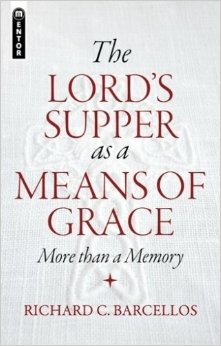
51Y1fCx4syL._SY344_BO1,204,203,200_The Lord’s Supper as a Means of Grace: More than a Memory by Richard Barcellos. Every useful book I’ve ever read on the Supper has been from a non-Baptist. So I was excited to see Barcellos, a Reformed Baptist, offer up a brief primer on the reality of the Supper being a means of grace. His “specific focus is to show how the Lord’s Supper is a means of grace.” To show how he turns to three texts: 1 Corinthians 10:16, Ephesians 1:3, and Ephesians 3:14-16. His argument from these texts essentially is, “In the Lord’s Supper Christian’s have real, present participation in the present benefits of the exalted Christ through the work of the Holy Spirit.”

I appreciated his chapter on historical theology that showed how the argument is not only a centuries old in the Reformed and Presbyterian heritages, but also the Particular Baptist heritage. The argument is clouded by technical Greek discussion and a fair amount of redundancy, making it largely inaccessible to a church member. To be fair, Barcellos admits he is writing for pastors and theological students (16). So we are still waiting for a popular level, Baptist treatment of the Supper as a means of grace.

51EP2VyQGSL._SY344_PJlook-inside-v2,TopRight,1,0_SH20_BO1,204,203,200_No Perfect People Allowed: Creating a Come as You Are Culture in the Church by John Burke. Burke says our postmodern and post-Christian culture brings five unique struggles into the church and they all need to be deconstructed. The struggles are those of trust, tolerance, truth, brokenness, and aloneness. To answer these struggles Burke says a local church should strive to create a culture of authenticity, vulnerability, understanding, and healing. To show how this can work he gives the reader lots – and I mean LOTS – of illustrations and stories from his church, Gateway Church in Austin. The proposed solutions are predictable, but nonetheless useful in helping a pastor evaluate how his church his church’s “welcoming” culture.

51GeA3CmuVL._SY344_PJlook-inside-v2,TopRight,1,0_SH20_BO1,204,203,200_The Gray Man by Mark Greaney. I have often thought that if I could be one movie character for a day it would be Jason Bourne. So when I see a book series declared to be “Bourne for the new millenium” I am bound to read it. This title is the first of Greaney’s Gray Man series revolving around one Court Gentry, a veritable legend in the covert world. The Gray Man proved to be exactly what I was expecting, and that’s not a bad thing. Are the Gentry’s amazing and many escapes from death unrealistic? Probably. Are the fight scenes somewhat bombastic? Probably. Is the story strikingly similar to Bourne? Probably. But is it an enthralling read? Undoubtedly.

6 Directions to Look Off the World

Looking Unto Jesus

In Looking Unto Jesus Isaac Ambrose says, “We must take off our mind from everything which might divert us in our Christian race from looking unto Jesus.”

The allure of this world and indwelling sin within our heart will motivate the mind’s eye to be fascinated with things other than Christ. Therefore, we must do the work of turning from the fleeting pleasures of this world to the everlasting pleasures of Christ. It’s only then that we will begin truly to know, consider, desire, hope, believe, love, enjoy, and be conformed to Christ.

What can help us to look off all other things? Ambrose provides six of them.

6 DIRECTIONS FOR HOW TO LOOK OFF ALL OTHER THINGS

  1. Study every day more and more the vanity of this world. Read Ecclesiastes often to learn the lesson of striving after the wind. Men often look on such strivings through a false glass and thus don’t seem them as being the vapors that they are. Learning of this vanity shows worldly honor and respect to be little more than bubbles soon to pop.
  2. Converse but little with any evil thing this side of Christ. Have as little to do with the sinful pleasure, profits, riches, and manners of the world as much as you can. The less the better. Ambrose says, “Things of this world have a glutinous quality; if you let the heart lie any while amongst them, it will cleave unto them, and if it once cleave to them there will be no way, but either repentance or hell-fire must part them.”
  3. Be more and better acquainted with Christ. Get more tastes of Christ and heaven and the earth will become more bitter to the soul. When Christ is in view all the world begins to fade and collapse in comparison. “The glory of Christ will darken all other things in the world.”
  4. Set before your heart the example of such saints who accounted themselves as pilgrims and strangers on the earth. When you read about those saints of old who expectantly wandered through their wilderness condition, don’t be surprised to find your heart being shaken off earthly things.
  5. Go in your meditations to heaven and stay there a while. The mind that is in heaven cannot dwell among earthly things. The eyes that take in a survey of heaven and heavenly things have no time to fix his eyes on such poor things below.
  6. Cry mightily unto God that he would take of your eyes off the world. If the heart bends down to earth, go to God to raise it up towards heaven. Cry out with the psalmist in 119:37, “Turn my eyes from looking at worthless things; and give me life in your ways.”

AN IMPLICATION FOR ORDINARY MINISTERS

Dear pastor, you have a unique, God-given chance each week to help your congregation look off the world and look up to Christ. As you ascend to the sacred desk you must do so with an aim to preach Christ and Him crucified.

Lift Him up! Lift Him up in all His glory, majesty, power, and beauty and watch the world fade away from your congregation’s eyes. Pray for the Spirit to shine forth the brilliance of Christ in your explanations and exclamations. Pray for the Spirit to inflame your heart with love for Christ that the cold and worldly souls melt under your proclamation of the Savior.

Apply Ambrose’s directions to your own life so that when you stand behind the sacred desk your you soul appears blessedly burned from seeing the Son.

Lift Him up! Lift Him up in your preaching, so that in looking unto Jesus your people might find life.

In Pursuit of Astonishment

Astonishment

‘And they were astonished beyond measure, saying, “He has done all things well. He even makes the deaf hear and the mute speak.’” – Mark 7:37

One of my favorite things to do at the end of each year is peruse the proliferation of “Best of . . .” lists that shows up all over the place. One list, hands down, always captures my attention more than any other; the “Best Pictures of . . .” list. So it was with great excitement and expectation that I recently clicked on “The 1oo Most Astonishing Images of 2013.” I can still picture the Korean satellite image of Namibian sands, the hurricane whirling around on Saturn, Devil’s Tower underneath the night sky, and the wings of a butterfly under a microscope.

There is something compelling about astonishment. It invites the soul to stop, sit, stare, and wonder.

ASTONISHMENT AT JESUS

Astonishment was a normal reaction to the person and work of Jesus. In Mark 7 after healing a deaf and dumb man, the gospel writer records that the crowds “were astonished beyond measure, saying, ‘He has done all things well. He even makes the deaf hear and the mute speak.'”

The Greek word here for astonishment is ἐκπλήσσω, and more literally means “being struck out of one’s mind.” Mark had to invent a word (ὑπερπερισσῶς) to describe the extent of the people’s astonishment as they were amazed “beyond measure.”

When was the last time Jesus blew your mind beyond measure?

ASTONISHMENT THROUGH FAMILIARITY

There is, I think, an unusually potent application this question has for pastors and preachers. The enemy to astonishment is familiarity. You will never be astonished by something you are familiar with, it will just be common. But here’s the tension for ministers: they must be familiar with God’s word. So much so that we even have an apostolic encouragement to that end, “Do your best to present yourself to God as one approved, a worker who has no need to be ashamed, rightly handling the word of truth” (2 Tim. 2:15).

The truth we confess about God and His word protects us from the normal antagonism familiarity has for astonishment. In the economy of God it seems like familiarity is a friend, not foe, to astonishment. This makes sense when you consider that familiarity with God is knowledge of an incomprehensible being whose greatness is unsearchable (Psa. 145:3). Even the Christ we preach is a treasure trove of unsearchable riches (Eph. 3:8).

Could it be, paradoxically, that familiarity with God is actually a God-ordained means to astonishment with God? It sure seems to be the pattern of Paul. Scour his letters and notice how often he breaks out in doxology, in astonishment. Here’s a quick sampling:

  • “The Creator, who is blessed forever. Amen.” (Rom. 1:25)
  • “Christ…is over all, God blessed for ever. Amen.” (Rom. 9:5)
  • “Him…to whom be glory forever. Amen” (Rom. 11:36)
  • “To God only wise, be glory through Jesus Christ for ever. Amen.” (Rom. 16:25-27)
  • “Now…Unto him be glory in the church, and in Christ Jesus throughout all generations, forever and ever. Amen.” (Eph. 3:20-21)
  • “Now unto God and our Father be glory forever and ever. Amen.” (Phil. 4:20)
  • “Now unto the King eternal, immortal, invisible, the only wise God, be honor and glory forever and ever. Amen.” (1 Tim. 1:17)
  • “Our Lord Jesus Christ…the blessed and only Sovereign, the King of kings, and Lord of lords…to whom be honor and power everlasting. Amen.” (1 Tim. 6:14-16)
  • “The Lord…to whom be glory forever and ever. Amen.” (2 Tim. 4:18)

That Paul was familiar with God’s glory in Christ is something no pastor can deny. One recent Pauline theology is even titled “Paul, Apostle of God’s Glory in Christ!” That, however, this familiarity with God’s glory in Christ was an enemy to astonishment is something we must patently deny.

Familiarity with Christ is the means of astonishment at Christ.

THE PASTOR’S ASTONISHMENT

I know this truth has born itself in my life. Every time I seek to memorize a book of the Bible I am continually amazed and astonished at the God worthy of all glory. A deeper familiarity with God’s word only increases my amazement at the Incarnate Word.

What implications might this then have for the pastor’s preaching ministry? I see two . . .

  1. Aim to preach with astonishment. If familiarity brings astonishment then your sermon prep should be marked by the plea of the old divines who cried, “More light, more light.” Light comes before heat. Doxological preaching will rarely, if ever, come apart from agonizing labor in God’s word.
  2. Aim to preach for astonishment. In our preaching we want to see heads, hearts, and hands moved “beyond measure” at the glorious God the glorious word proclaims. You want them to experience the praise you experienced from the text. Open the text clearly, yet boldly, and watch the Spirit’s fire fall.

Astonishment is compelling and it comes from a deep dive into the word. Pursue astonishment at all costs and find that your ministry will never be the same.

The Friendship of Failure

Light of Failure

Last week I preached what was, at least from my perspective, an absolute dud of a sermon.Thankfully, God is sovereign and can turn dross into diamonds.

But to call my sermon dross is to be rude to the dross.

As my boys flew down a slide at a the Golden Arches1 I drank the Heavenly Nectar2 and contemplated my latest hop into homiletical mediocrity. With my wife sitting across the table, I walked through the elemental missteps I had made in composition and delivery. I half-joked about retiring from preaching and finally venturing out into “the real world.” But my wife won’t suffer my “woe is me” misery, for some reason she thinks it best to encourage me in these moments.

Praise God for such partners in ministry. I love her. She helped me turn the failure into a friend. As much as I wanted to shake off the sense of a job done poorly, what I really needed to do was learn from the job done poorly. So I stopped, looked, and learned.

My purpose in this little post is not to disclose everything the failure revealed. It’s to simply say that when the inevitable failures come in ministry, don’t run. Let the fire of failure refine.

Wise Solomon said, “Faithful are the wounds of a friend.”

Failure can be one of your most faithful friends.

  1. McDonald’s (their favorite post-church pastime)
  2. Diet Coke

3 Books Every Pastor Should Read: On the Church

Books are some of the best friends a pastor can have. How to know which friends to have is quite difficult, for as the inspired Preacher said, “Of making many books there is no end” (Ecclesiastes 12:12). So every couple of weeks I suggest three books a pastor should read on a given topic, hoping they will serve his ministry. Check out my past suggestions here.

I’m not sure why it’s taken me so long to get to the topic of ecclesiology, but rest assured, it isn’t because the matter is of little significance. In actuality, few studies in theology are as vital to a pastor’s ministry as study on the purpose, nature, and mission of Christ’s body. Here are three suggestions for reading on the church:

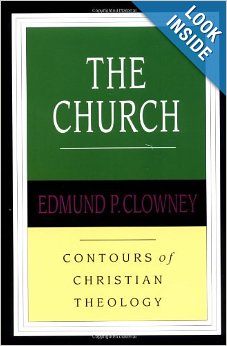
41qoweUfkEL._SY344_PJlook-inside-v2,TopRight,1,0_SH20_BO1,204,203,200_The Church by Edmund Clowney. This is one of the finest entries in IVP’s fine “Contours of Christian Theology Series.” With biblical sensitivity and theological clarity Clowney gives the pastor a solid footing on which proper ecclesiology can stand. His characterization of the local church as “a colony of heaven” is paradigm shaping for membership, discipline, worship, and discipleship. He writes, “The church is called to serve God in three ways: to service him directly in worship; to serve the saints in nurture; and to serve the world in witness” (117). Helpful and illuminating in all the rights ways.

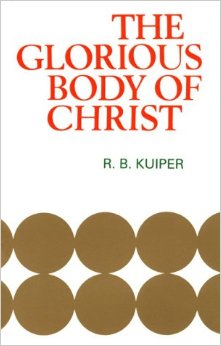
41M1GJY4WPL._SY344_BO1,204,203,200_The Glorious Body of Christ by R.B. Kuiper. From 1933-1952 Kuiper was Professor of Practical Theology at Westminster Theological Seminary. The final five years of his labor saw him contribute monthly articles to The Presbyterian Guardian on “The Glory of the Christian Church.” The lectures were first printed as one volume by Banner of Truth in 1966 and the book has yet to go out of print; it’s already been reprinted twice in the 21st century. And for good reason. The chapters are, in my estimation, as precise and concise as you will find in any ecclesiological book. I’ve used this book with interns and pastoral candidates and their feedback has universally been, “I wish I had known about this book. It’s so helpful!”

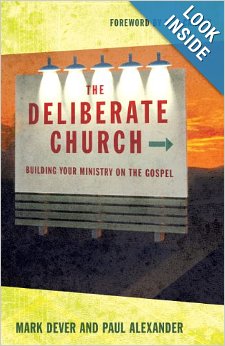
51nxFXnHfBL._SY344_PJlook-inside-v2,TopRight,1,0_SH20_BO1,204,203,200_The Deliberate Church: Building Your Ministry on the Gospel by Mark Dever and Paul Alexander. The Deliberate Church is, for me, one of the finest and most expansive books on practical ecclesiology available today. Divided into three parts (Gathering the Church, When the Church Gathers, and Gathering Elders), the book covers everything from faithful pastoring to membership and discipline to the regulative principle to how a healthy elder meeting is run. Dever views DC as the conclusion to an ecclesiological trilogy that began with 9 Marks of a Healthy Church and PolityThis one is a one-stop shop ot challenge, encourage, and sharpen your ecclesiological convictions.

HONORABLE MENTIONS

The Church of Christ: Vol. 1 & Vol. 2 by James Bannerman. Beeke says, “James Bannerman’s ‘The Church of Christ’ is the most extensive, standard, solid, Reformed treatment of the doctrine of the church that has ever been written.” I can’t say it better.

What is the Mission of the Church? Making Sense of Social Justice, Shalom, and the Great Commission by Kevin DeYoung and Greg Gilbert. A narrow slice of ecclesiology to be sure, but the subject matter is oh so timely.

Come Then, Let Us Look

Looking Unto Jesus

I continue to make my way, slowly, through Isaac Ambrose’s Looking Unto Jesus. I can only hope the final 650 pages are as good as the first 50. Explosions of joy and praise abound on page after page. Here’s just one example:

In this knowledge of Christ, there is an excellency above all other knowledge in the world; there is nothing more pleasing and comfortable, more animating and enlivening, more ravishing and soul contenting; only Christ is the sun and center of all divine revealed truths, we can preach nothing else as the object of our faith, as the necessary element of your soul’s salvation, which does not some way or other, either meet in Christ, or refer to Christ; only Christ is the whole of man’s happiness, the Sun to enlighten him, the Physician to heal him, the Wall of fire to defend him, the Friend to comfort him, the Pearl to enrich him, the Ark to support him, the Rock to sustain him under the heaviest pressures, “As a hiding place from the wind, and a covert from the tempest, as rivers of waters in a dry place and as the shadow of a great rock in a weary land” (Isa. 32:2). Only Christ is that ladder between earth and heaven, the Mediator between God and man, a mystery, which the angels of heaven desire to pry, and peep, and look into (1 Pet. 1:12).

Here is a blessed subject indeed; who would not be glad to pry into it, to be acquainted with it? “This is life eternal, to know God, and Jesus Christ whom He hath sent” (John 17:3).

Come then, let us look; on this Sun of righteousness: we cannot receive harm but good by such a look; indeed by looking long on the natural sun, we may have our eyes dazzled, and our faces blackened; but by looking unto Jesus Christ, we shall have our eyes clearer, and our faces fairer; if “the light of the eye rejoice the heart.” Prov. 15:30, how much more, when we have such a blessed object to look upon? As Christ is more excellent than all the world, so this sight transcends all other sights; it is the epitome of a Christian’s happiness, the quintessence of evangelical duties, “Looking unto Jesus.”

Tolle lege!

Don’t Miss This Savior

No One Like Jesus

“And they were all amazed, so that they questioned among themselves, saying, ‘What is this? A new teaching with authority! He commands even the unclean spirits, and they obey him.'” – Mark 1:271

Back in my soccer days I as able to travel all over the world.. I have been to virtually every country in Europe, but such truth can be deceiving. Weeks spent training and playing in these countries meant that we became familiar with their landscape and culture, but rarely got to experience that landscape and culture. Our lives were eat, sleep, and play soccer. Familiarity didn’t lead to experience.

And we need to understand that it is easy for us to fall into the same trap when encountering Jesus. We can be familiar with the gospel stories and teachings of Jesus, but never experience who He really is. Familiarity is necessary, but not equal, to experiencing Jesus. Mark 1:21-34 is in our Bible to show us not only the kingdom’s advance, but also the absolute uniqueness of its King. Mark is in pain for us to see this one simple truth about Jesus: This Savior is unlike anyone you have ever heard or seen. In many ways, every gospel writer recounts the life and ministry of Jesus so that everyone would get that truth. You could make it the main point of almost every gospel passage. But is clearly is the main point of Mark 1:21-34. The people are amazed and astonished, bringing all the sick and demon possessed to him, because He has an authority they have never experienced before. In order that we see the utter uniqueness of Jesus, I want to give you three things from this text that you cannot afford to miss.

Don’t miss the aim of Jesus. The “whole city” gathers at Jesus’ door, not because they recognized that He is God’s Son and Savior, but because it is rumored that a miracle worker has come in their midst. Jesus had come to preach repentance and the nearness of the kingdom, but the people think only of relief from pain and affliction. They failed to see that the healings and deliverances were windows into who Jesus was, the true Son of God. You are not supposed to stare at windows, but stare through windows. The people should not have stared at the miracles, but through the miracles, for the miracles attest to the identity of Jesus. See the miracles of Christ and look through them to the One performing them.

There is something important for the church in this passage.  Martyn Lloyd-Jones said, “The authentic task of the church is not primarily to make people happy; it is not to make people healthy; and it is not even to make people good. The church, of course, is concerned about making people good, and that they should be happy; yes, but that is not her primary function . . . Her essential task is to restore men to the right relationship with God.” It wasn’t Jesus’ primary aim to make people happy and healthy, it was to restore them to a right relationship with God. So, firstly, don’t miss the aim of Jesus, secondly . . .

Don’t miss the assault on Jesus. He shows up in the synagogue, teaching with authority, and quite literally, all hell breaks loose. There is no more dangerous place in town that where the truth of Christ meets dead, devilish religion. Never forget that the world is not friendly to the authoritative truth of Christ. If you are under assault for loving the truth of Christ, you have a friend in Christ. The devils of this world and dead religions of this world assault the authority of this Savior. By dead religion, I want you to see the religious leaders there in the background of the synagogue, leaders who will soon come to the forefront in the opposition of Christ. Men, who knew their Scriptures, but did not know God. They were dead in religion and couldn’t handle the truth, so they wage war against it. This text calls us to remember that one can know the truth and yet be unconverted. Might you be familiar with Jesus and yet still not know Him as your Savior? I invite you to examine your heart before Him and see if you have truly placed your faith in the one who is the Savior for sinners. He didn’t come for us to be merely familiar with Him, which leads to the final thing we cannot miss . . .

Don’t miss the astonishment at Jesus. Jesus’ authority astonished and amazed the people who encountered Him for the first time; He “blew their minds.” To behold this Jesus is to be struck with the holy mixture of fear and wonder. When was the last time you beheld Jesus and were astonished? Amazed? Left in holy fear?

Jesus’ is establishing God’s kingdom, and in the process we see that He is the teacher, deliverer, and healer. Let us not miss the aim of Jesus, the assault on Jesus, and the astonishment at Jesus. For this Savior is unlike anyone you have ever heard or seen.

  1. This post is adapted from my sermon “The Savior’s Authority.”