A Hymn for All Seasons

how-firm-a-foundation

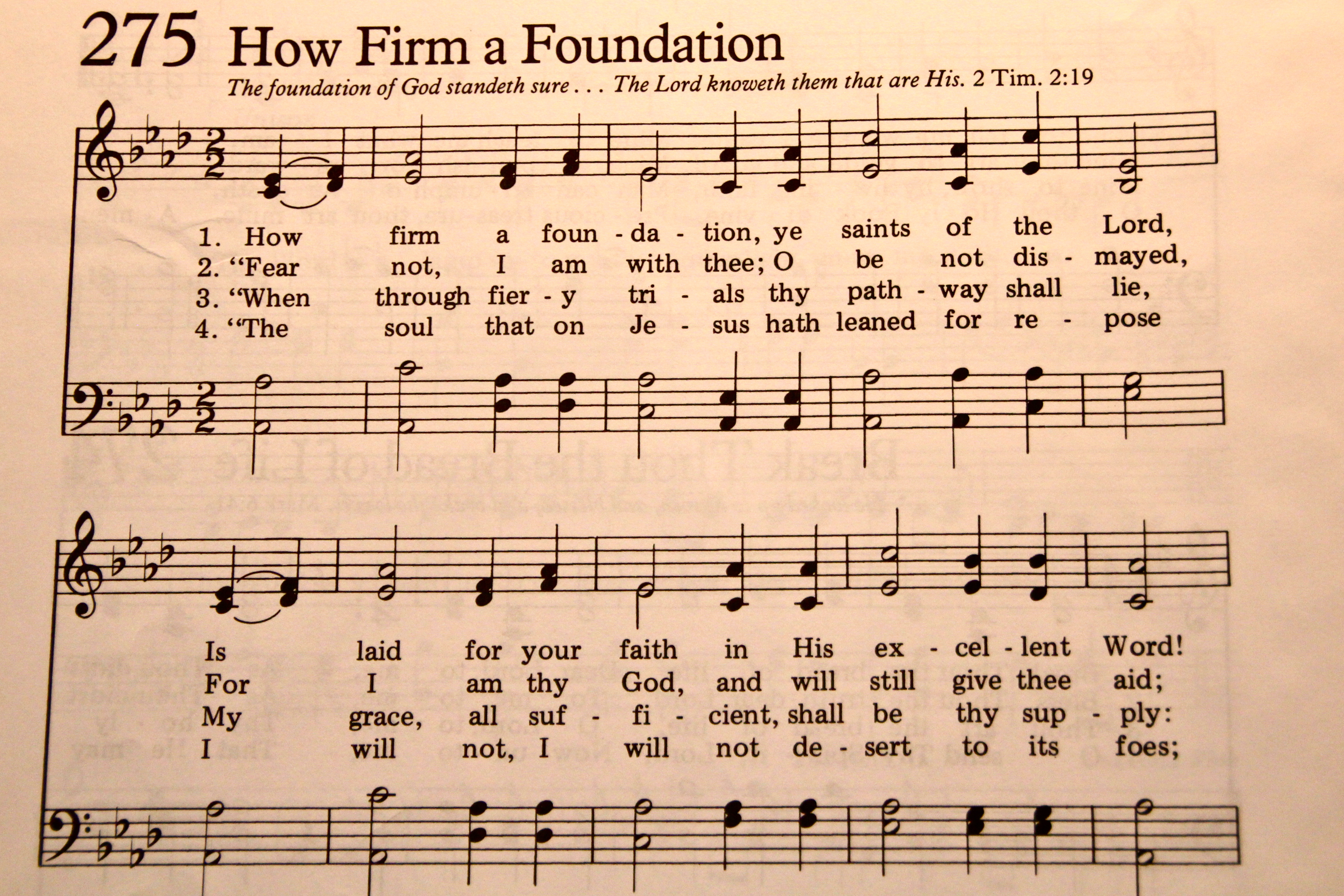
Part of ordinary ministry is leading our churches to sing the best songs possible. We want songs full of biblical and theological truth that soar on congregational melodies. One such song is the classic, “How Firm a Foundation.”

Singing Scripture’s Powerful Promises

For sixty-three years Rippon pastored Carter’s Lane Baptist Church in London, starting in 1775. During his years at Carter’s Lane Rippon developed a vision for a congregational hymnal and with the help of Robert Keene (his minister of music) A Selection of Hymns from the Best Authors, Intended to Be an Appendix to Dr. Watts’ Psalms and Hymns was published in 1787. It was a runaway bestseller, especially among the Baptists, going through eleven different editions in Rippon’s lifetime.

It was here “How Firm a Foundation” made its debut. No one knows its author as the author’s line simply bore the letter “K.” Thus, our best guest is the song came from the pen of Keene. What’s undeniable is the songs lyrical power. Each of the original seven verses are based on explicit biblical promises, including:

  • “Fear thou not; for I am with thee: be not dismayed; for I am thy God: I will strengthen thee; yea, I will help thee; yea, I will uphold thee with the right hand of my righteousness.” (Isa. 41:10)
  • When thou passest through the waters, I will be with thee; and through the rivers, they shall not overflow thee: when thou walkest through the fire, thou shalt not be burned; neither shall the flame kindle upon thee.” (Isa. 43:2)
  • And he said unto me, My grace is sufficient for thee: for my strength is made perfect in weakness. Most gladly therefore will I rather glory in my infirmities, that the power of Christ may rest upon me.” (2 Cor. 12:9)
  • “He hath said, I will never leave thee, nor forsake thee.” (Heb. 13:5)

It is not surprising then to find out the song was originally titled, “Exceedingly Great and Precious Promises.”

Lyrics

How firm a foundation, ye saints of the Lord,
Is laid for your faith in His excellent Word!
What more can He say than to you He hath said,
You, who unto Jesus for refuge have fled?

In every condition, in sickness, in health;
In poverty’s vale, or abounding in wealth;
At home and abroad, on the land, on the sea,
As thy days may demand, shall thy strength ever be.

Fear not, I am with thee, O be not dismayed,
For I am thy God and will still give thee aid;
I’ll strengthen and help thee, and cause thee to stand
Upheld by My righteous, omnipotent hand.

When through the deep waters I call thee to go,
The rivers of woe shall not thee overflow;
For I will be with thee, thy troubles to bless,
And sanctify to thee thy deepest distress.

When through fiery trials thy pathways shall lie,
My grace, all sufficient, shall be thy supply;
The flame shall not hurt thee; I only design
Thy dross to consume, and thy gold to refine.

Even down to old age all My people shall prove
My sovereign, eternal, unchangeable love;
And when hoary hairs shall their temples adorn,
Like lambs they shall still in My bosom be borne.

The soul that on Jesus has leaned for repose,
I will not, I will not desert to its foes;
That soul, though all hell should endeavor to shake,
I’ll never, no never, no never forsake.

Various Arrangements

Here are four different arrangements of the hymn. The first three retain the traditional melody and the fourth channels all the production of modern CCM music.

1 Timothy 4:13 Pastors

Read the Word

I tend to think you can tell a lot about a homeowner by looking at his yard. Is the grass thriving and weeds diminishing? Are the plants tended and trimmed? Rarely have I seen a lawn so cared for and not found out that it’s owner is not known for diligence, precision, and care.1 The yard of a home announces something of the character of its owners—whether we like it or not.

There is something similar for those of us who preach. Something that generally comes in the front of our sermons and reveals much about how we approach God’s word: the Scripture reading.

The Forgotten Command of Pastoral Ministry?

One of the forgotten pastoral commands in Scripture is that ordinary pastors are to read Scripture in public. Paul told his young protégé in 1 Timothy 4:13, “Until I come, devote yourself to the public reading of Scripture, to exhortation, to teaching.” My aim in this post is two-fold: 1) to convince you to start your exposition by reading God’s word, and 2) to introduce your reading of God’s word in a particular way. The degree to which we are doing these things is a measure of our obedience to Paul’s command. It’s also a mirror into what we believe about God’s word.

Start with God’s Word

My first aim need not take us long. I believe the best sermons are begun by the preacher reading part of or the totality of the passage he is about to exposit. Just as a call to worship lets God have the first word in the worship service, so too does a Scripture reading of the given text let God have the first word in the sermon.2 Now, I’m not saying that the first word out of the preacher’s mouth must be the reading of his passage. Transitions and segues are often necessary for services to retain some sense of smoothness. Yet, what I am saying is that before any real work of exposition is done we ought to read our passage.

This not only let’s God have the first word in the sermon, it also implicitly communicates something to our congregations. It points to hope and faith in the truth that God’s word brings life to His people. Our reading of Scripture consists of the only guaranteed-to-be-inspired-and-so-bring-life words we will speak that day.

I assume many of you are convinced of this necessity. Let’s then think about how we can introduce the reading in a way that perpetuates reverence and expectancy in our hearers.

Think Of Yourself As a Covenant Lawyer

I was trained in a Presbyterian context where the preacher would say something after, not before, reading the passage. Usually it was something like, “Thus far the reading of God’s word,” or, “Thus ends the reading of God’s holy, inspired, and inerrant word.” It must be said that such an approach is not bad, not bad at all. But I do think we can do something better.

You may not have thought about it in this way before, but preachers—like the prophets of old—are something like God’s covenant lawyers. They defend God’s word and prosecute the truths of Jesus Christ in order to establish and edify Christ’s church. Do you remember how the old-school covenant lawyers introduced God’s word? ‘Thus saith the LORD.” Now that’s an introduction to God’s word full of power. It demands attention and raises expectation. God is speaking! “Hear ye! Hear ye!”

Modern-day heralds can, and I think ought, to do something similar. Whenever we read God’s word prior to the sermon there is great wisdom in introducing it with a powerfully precise phrase. It’s my own practice to say, “Let’s hear now as God speaks to us through His word.” I want my congregation to know something supernatural is about to occur, God is speaking to us. Whenever someone reads Scripture in the middle of our service they do so by saying, “This is the word of the Lord . . .” Some other introductory statements I’ve heard from other people are:

  • “These are the very words of God.”
  • “These are the perfect, life-giving words of God.”
  • “Listen to God’s unchanging and unfailing word.”
  • “Hear God’s holy word.”

Whatever you say, say something authentic to your personality. Say something honoring to God’s word. And then unleash the power of God.

—————————————————————————————————–

  1. This is, of course, not to say that any lawn not so cared for is thus owned by someone lazy or disorganized. Maybe the owners just moved in. Maybe they have an impossible sprinkler system. We don’t need to stretch the analogy too far.
  2. I know many churches will have someone other than the pastor read the text before the sermon, but I’d encourage something different. Let that individual read, at another point in the service—maybe before the song that precedes the sermon—, a passage complementary to the sermon text. This allows God’s word to more permeate your liturgy and it allows the preacher to a 1 Timothy 4:13 kind of pastor.

The Fragrance of Grace

Genesis Podcast 1

So, here’s where we stand on the promises of chapter 12 by the end of chapter 14. Abram’s name is great, but he still has no family. This now becomes the central issue of chapters 15-17 as we see “The Covenant.”

The Covenant

Some time after the defeat of the rebel kings God speaks to Abram in a vision. Notice what God says in 15:1, “Fear not, Abram, I am your shield; your reward shall be very great.” What’s Abram’s fear? That he has no son. Such a fear is mostly lost in our culture, but few fears were greater in the ancient world than having no heir. Abram says in 15:2-3 that God hadn’t yet given him offspring and so the heir of his house would just be servant Eliezer. Look at how God comforts him in 15:5, “’Look toward heaven, and number the stars, if you are able to number them.’ Then he said to him, ‘So shall your offspring be.’” It’s seems like this illustration of the promise is just what Abram needed for 15:6 says, “And he believed the LORD, and he counted it to him as righteousness.” From this point on in Scripture Abram becomes the epitome of faith as Paul consistently uses this verse to prove justification by faith alone. Faith, according to Genesis 15:6, is readiness to accept God’s promise.

Abram’s faith is small though for he asks how will he know he can take God at His word (15:8). God says get a cow, a goat, a ram, a turtledove, and a pigeon. Abram get them and cuts all but the birds in half—a covenant service is about to happen. Like He did with Adam, God causes a deep sleep to fall over Abram. And God says, “Know for certain that your offspring will be sojourners in a land that is not theirs and will be servants there, and they will be afflicted for four hundred years.” But God would eventually deliver them. Why the four-century-long wait to gain the promised land? Look at 15:16, “And they shall come back here in the fourth generation, for the iniquity of the Amorites is not yet complete.” What an amazing statement. God is making His chosen people wait for the promise so that the sin of those filling the land would be so great He could not but wipe them away. What patience this ought to instill in us when we see enemies of God flaunting their success and apparent security. It could just be God is waiting until their sin is complete to send forth His wrath. Our God is trustworthy and terrifying.

What comes in 15:17 is among the most astonishing verses in all of Scripture. Look at what happens, “When the sun had gone down and it was dark, behold, a smoking fire pot and a flaming torch passed between the pieces. On that day the LORD made a covenant with Abram.” A covenant is a binding agreement sealed with an oath, not unlike marriage is a binding agreements sealed with vows—“till death do us part.” In the Ancient Near Eastern world parties of a covenant would often pass through a cut animal to signify “may such a thing be done to me if I break the covenant.” What’s astonishing about this is that only God, the smoke and fire were a theophany, makes the covenant. It’s His initiative and His gift. The God who cannot die says, “May I die if I don’t fulfill my promises.” This is how sure His grace to Abram is.

Yet, no child has yet come. So Abram and Sarai take matters into their own hands. Look at 16:2, “And Sarai said to Abram, ‘Behold now, the LORD has prevented me from bearing children. Go in to my servant; it may be that I shall obtain children by her.’” Just as Adam should have rebuke Eve for handing him the forbidden fruit, Abram should have rebuked his wife for taking the matter of children into her own hands. Yet, just like Adam, he listens to his wife’s dubious council and proceeds to have a child by Hagar—ten years after he first heard God’s call. Once the child is conceived Sarai proceeds to despise Abram and Hagar for the very thing she wanted to happen. Unrepentance means never taking responsibility. Sarai treats Hagar so harshly that Hagar flees with the boy to “a spring of water in the wilderness.” You see in 16:7 that the angel of the LORD arrives. He comforts the mistreated servant saying in 16:11, “Behold, you are pregnant and shall bear a son. You shall call his name Ishmael because the LORD has listened to your affliction. He shall be a wild donkey of a man, his hand against everyone and everyone’s hand against him.” The child is eventually born and the story goes silent for thirteen years.

The Sign of the Covenant

One can only wonder what must have run through Abram’s mind all those years as he only got older and older, with each passing year making the birth of a son seemingly more impossible. When Abram is 99 years old God shows back up and look at what he says in 17:1-2, “I am God Almighty; walk before me and be blameless, that I may make my covenant between me and you, and my multiply you greatly.” God goes on to say that He’s changing Abram’s name to Abraham, for he would be the father of many nations, and God will establish with Abraham “an everlasting covenant, to be God to you and to your offspring after you.” Abraham must prove his faith in the covenant by walking in obedience to the covenant’s condition: circumcision. Every male in his household from henceforth must be circumcised. Circumcision functions as a concrete reminder to Abraham this his children were the result of the grace of God, not Abraham’s own reproductive power.

What then about the promise of offspring? Now 25 years after the call Abraham has Ishmael, but look at 17:16. God is going to do something in Abram’s wife. Her name will change from Sarai to Sarah and God says, “I will give her, and moreover, I will give you a son by her . . . kings of nations shall come from her.” With happy incredulity Abraham laughs aloud at the thought have a 100-year-old man and 90-year-old woman having a son, why not just let the line come through Ishmael? God’s says—sovereign election is on full display here—in 17:21, “I will establish my covenant with Isaac, whom Sarah shall bear to you at this time next year.” God gave a promise to Abraham, Abraham waited for twenty-five years, and now he has a name for that promise: a covenant with Isaac. Our God is Lord of the covenant.

The Fragrance of Grace

Last Friday I spent a good portion of the day laying down some fresh mulch in all the beds of our house. I got the mulch from a new place and it didn’t take me long to recognize this mulch had a very distinct, earthy smell to it. Later on in the day I was out running and as I came down the street I could smell the mulch some thirty yards away. Every time I’ve walked outside this week or opened our garage door it’s only been a matter of seconds before the whiff of mulch flew by on the breeze. For better or worse, our house seems to have a fragrance about it.

Did you notice the fragrance of Genesis 12-17, the distinct spiritual smell that permeates the entire account? What is it? God’s grace as expressed through His abundant promises to Abraham. To know God is to know grace, to be God’s people is to be recipients of grace, to live by faith is to live in grace. As we close let’s do so by noticing the two distinct, but inseparable truths of grace we find permeating this story of Abraham.

Nothing can earn the favor of God’s promise. There is not one thing in the entire story that Abraham did to earn the favor of God’s promise. He simply is a humble, faithful vessel God calls and covenants with in sovereign grace. The plan Sarah hatched cannot earn the promise, it’s simply an example that human attempts to receive God’s grace will fail in the end. Is there anywhere in your life you are striving to earn the favor of God’s promise? I pray tonight you are challenged and comforted by the reality that God’s promise is never earned, it is only received by faith.

Nothing can stop the fulfillment of God’s promise. Not one man’s failure of faith, nor the opposition of unbelieving kings. The wave of sovereign grace will flow where it will and nothing can stop it. If you’re a Christian, God’s faithfulness to His promises of grace is something on which you can stake your life. If you’re not a Christian, it’s the same for you. You see the promise wouldn’t come to full fruition until God sent His Son Jesus Christ. For Jesus is the true and better Abraham, who answered the call of God to leave the comfortable and familiar home of heaven and go out into the world to create a new people of God. And through faith, turning from your sin and trusting in Christ, you too can be part of the family of God.

Through Christ God is creating a new covenant people, giving them a promised inheritance in heaven, and using them to accomplish a global purpose. This we are to do by forsaking all to follow God and bring blessing to the nations by preaching the gospel of Jesus to the nations. God’s covenant people are to be heralds of the covenant relationship found in Christ alone. Our God is Lord of the covenant.

This post is adapted from my recent sermon, “Abraham,” on Genesis 12-17.

Recent Reads

I love to read. I find it helpful to summarize my thoughts on each book and I offer those thoughts in the hope that you will be encouraged to either read or pass over the given title.

It’s been over six weeks since I last offered up a “Recent Reads” post, but my reading hasn’t slowed down. In order that this post doesn’t become unnecessarily long I’ve selected seven of the books I completed that might be of most interest to ordinary pastors.

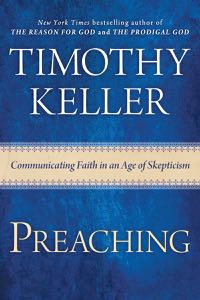
9780525953036mPreaching: Communicating Faith in an Age of Skepticism by Tim Keller. The Manhattan Man’s treatise on preaching has been in the works for a long time. Thankfully it has arrived. Those familiar with his preaching ministry and homiletical convictions won’t find anything new in this work. But don’t mistake that as being a bad thing. Preaching is saturated with instruction on concerns you’d expect from Keller: preaching contextually, understanding cultural narratives, and making the gospel of Christ central in every sermon. The book shines brightest in the last two chapters, “Preaching Christ to the Heart,” and “Preaching and the Spirit.” Two chapters that ought to be required reading for every preaching student or preaching pastor.

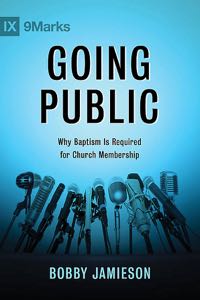
9781433686207mGoing Public: Why Baptism is Required for Church Membership by Bobby Jamieson. The focus of 9Marks’ latest book is pointed—should believer’s baptism be required for all church members? Jamieson gives a thoughtful emphatic, “Yes,” as you’d expect from reading the subtitle. His primary interlocutors are John Bunyan and John Piper, for they represent 17th century and 21st century convictions of “open membership” (the view that paedobaptists can be accepted as members in a credobaptist church). I’ve heard one prominent Baptist say the book paves new ground in our understanding of the sacraments and church membership, but I couldn’t discern what this new ground is supposed to be. I can see some parts of the argument being new for Baptists, but many aren’t new to—what I see as—a more historically Reformed understanding on specific matters. Case in point: the chapter on baptism as “The Initiating Oath-Sign of the New Covenant” is as rich a treatment on the covenantal realities of baptism I’ve seen put forth by a Baptist (and probably a new way of thinking about baptism for many Baptists). Yet, Reformed treatments on the subject have been making similar arguments for centuries. Nonetheless, this is a very valuable book and necessary reading for anyone interested in the intra-Baptist debate on open membership and closed membership.

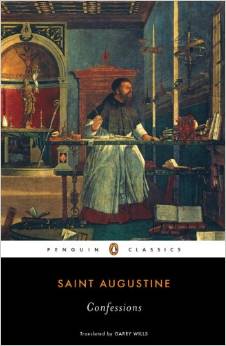
ConfessionsConfessions by Augustine. Simply magnificent. For years this has sat on my shelf begging to be read, yet it took a PhD seminar in Patristic Spirituality to get me to actually read Augustine’s classic. I’m not sure if I should say much about Confessions lest I break out into a string of redundant superlatives. So I will only say, “Read this book!”


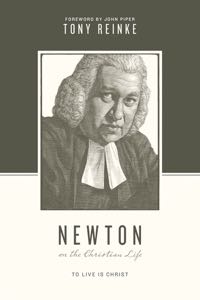
9781433539718mNewton on the Christian Life: To Live is Christ by Tony Reinke. The praise for Reinke’s book on Newton was so eye-grabbing that I couldn’t help but grab the book myself. “Here is mastery!” cries Packer. “For some readers, this book may just become the most important book, outside the Bible, they will ever read,” declares Ortlund. I think the hyperbolic endorsements created unrealistic expectations, for I confess to having felt a bit disappointed when I finished . . . even though the book is solid. Maybe it’s because I found the book too long, a bit redundant, overly italicized, or maybe it’s because I can be a stodgy reader. Who knows. But you must not mistake my unmet expectations as being reason not to read the book. In fact, I recommend the book to anyone. Read this dissertation with slow meditation. Read it to observe a man—Newton—stare hard and long at the glory of the Savior. You just might find Newton giving you fresh insights into Christ and the human heart. If he does that for you, Newton on the Christian Life will be worth every penny.

9780718022013mThe Happy Christian by David Murray. I’m utterly delighted Murray has given us this book. The title and cover may seem a bit sappy (Murray admits he didn’t like the title at first), but The Happy Christian is a book worth everyone’s attention. For Murray is right, Christians should be the happiest people in the world! The man from Puritan Reformed Seminary weaves together biblical insight, scientific research, and personal anecdotes in convincing fashion. Each chapter offers a mathematical spiritual formula for happiness and many of them are worth memorizing. Formulas such as, “Facts > Feelings = Positive” (chapter 1), “Done > Do = Positive” (chapter 3), or “Future > Past = Positive” (chapter 5) are handy guides for everyday happiness in Christ. Several of the chapters are longer than necessary, but Murray fills them with plenty of short sections and never overtaxes one’s attention. I can see this being a useful discipling resource for churches and small groups.

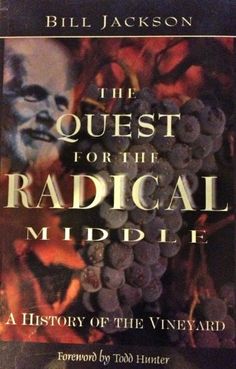
questradicalmiddleThe Quest for the Radical Middle: A History of the Vineyard by Bill Jackson. One reason for my recent blog hiatus was a research paper I needed to complete on the spirituality of Vineyard music. One of the many invaluable resources I came across in research was Bill Jackson’s excellent history. This is the definitive account of a movement that swept through and swept up evangelicalism in the late 20th-century. Jackson writes as sympathetically (he’s a Vineyard pastor), but not uncritically. As the book was published only two years after the death of John Wimber, the Vineyard’s leader and shaper, it’s essentially a history of “The Wimber Years.” And what fascinating years they were! I only wish all PhD research was so intriguing from cover to cover.

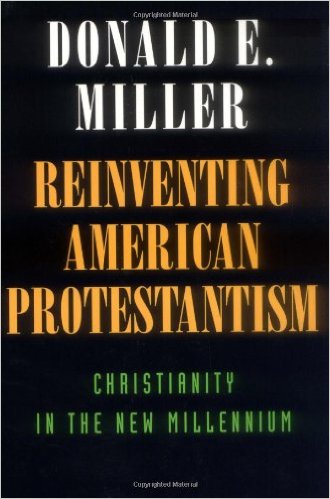
51KJkX3idkL._SX328_BO1,204,203,200_Reinventing American Protestantism: Christianity in the New Millennium by Donald Miller. In 1997 sociologist Donald Miller published his study of what he termed “new paradigm churches,” the most influential of which are Calvary Chapter and the Vineyard. Miller argues, as Larry Eskridge ably states, “New Paradigm churches achieved a unique balance, incorporating aspects of the therapeutic, individualistic, and antiestablishment values of the counterculre [of the late 1960s to early 1970s] while rejecting its inherent narcissistic tendencies. He goes on to demonstrate that while Calvary Chapel and the Vineyard were fundamentalist in many areas, their organizational pragmatism broke the mold of traditionally evangelical denominations and thus ushered in a new age of “doing church.” I leaned heavily on his study of music in the New Paradigm churches, where he concludes, “Worship may be viewed as a form of sacred lovemaking.” And that, my friends, is a “memorably correct” conclusion.

Click here to find other entries in the Recent Reads series.

Old School Wisdom

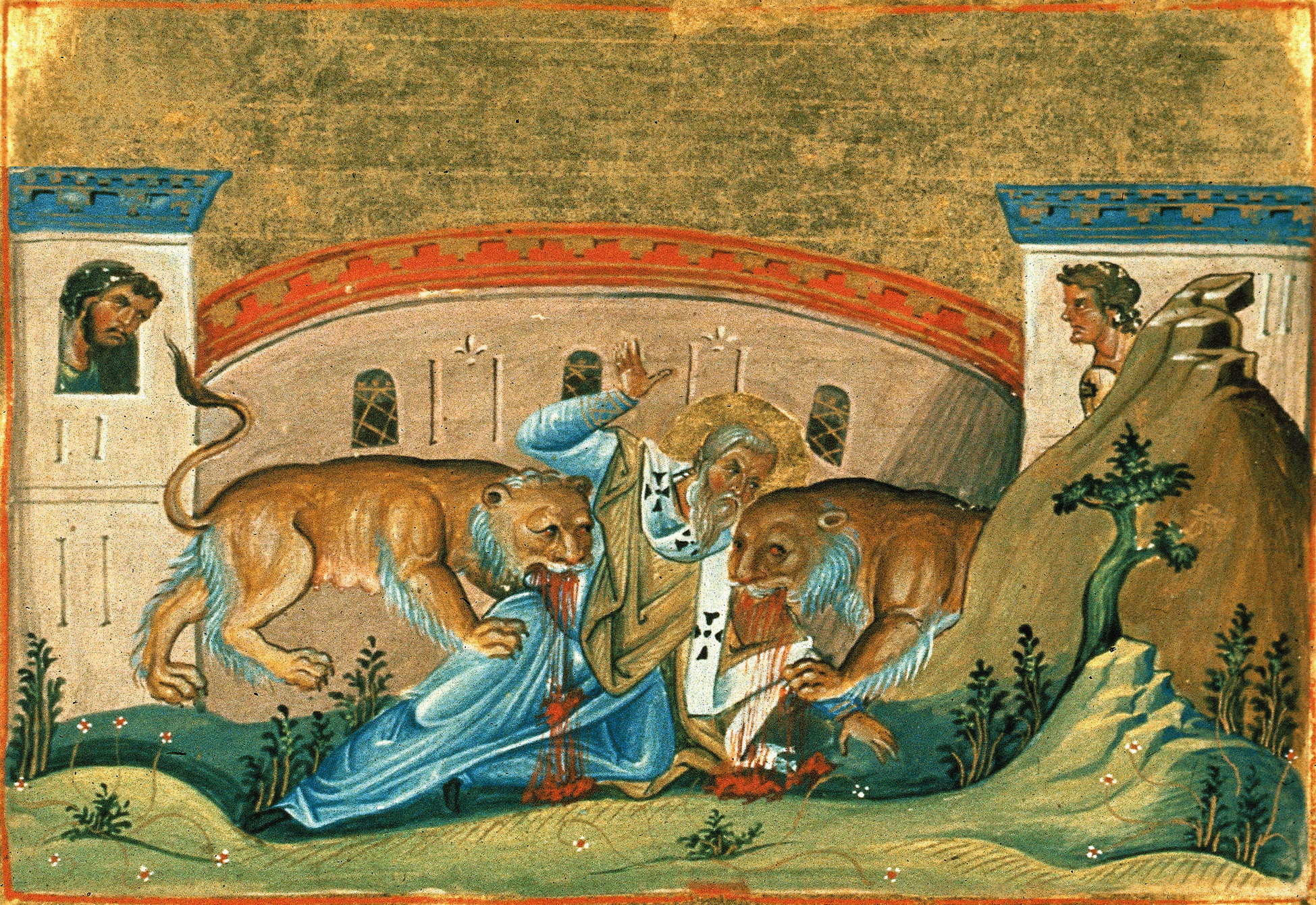
Ignatius_of_Antioch

“Just as we become aware of a meteor only when, after traveling silently through space for untold millions of miles, it blazes briefly through the atmosphere before dying in a shower of fire, so it is with Ignatius, bishop of Antioch in Syria,” writes Michael Holmes.

The only time we meet Ignatius is in the final few weeks of his life as he journeys towards martyrdom in Rome, sometime between 98-117 AD. Along the way he wrote a series of seven letters full of interest to historians and pastors alike. Historians get a unique glimpse into the church’s history at that pivotal time and see an early church leader’s teaching on a variety of important matters. Pastors should enjoy these letters because they are short and overflowing with pithy prose on church ministry and church life.

I recently worked through Ignatius’ letters for a doctoral seminar at The Institution and here are a collection of quotes of unique service to ordinary pastors.

Ignatius’ Top Ten

  1. “When you (the church) meet together frequently, the powers of Satan are overthrown and his destructiveness is nullified by the unanimity of your faith.” (Ephesians, 13.1)
  2. “It is better to be silent and be real than to talk and not be real. It is good to teach, if one does what one says.” (Ephesians 15.1)
  3. “It is right, therefore, that we not just be called Christians, but that we actually be Christians.” (Magnesians, 4.1)
  4. “I am guarding you in advance because you are very dear to me and I foresee the snares of the devil. You, therefore, must arm yourselves with gentleness and regain your strength in faith and in love.” (Trallians, 8.1)
  5. “Where the shepherd is, there follow the sheep.” (Philadelphians, 2.1)
  6. “Flee from divisions as the beginning of evils.” (Smyrnaeans, 8.1)
  7. “Focus on unity, for there is nothing better.” (Polycarp, 1.2)
  8. “Devote yourself to unceasing prayers; ask for greater understanding than you have. Keep alert with an unresting spirit.” (Polycarp, 1.3)
  9. “If you love good disciples, it is of no credit to you; rather with gentleness bring the more troublesome ones into submission.” (Polycarp, 2.1)
  10. “Stand firm, like an anvil being struck with a hammer. It is the mark of a great athlete to be bruised, yet still conquer.” (Polycarp, 3.1)

One Process for Sermon Prep

Sermon Prep

Some of the most helpful things I’ve learned throughout the years regarding sermon prep have come from hearing how other brothers go about the work week in and week out. Sometimes I’ve heard about a model that resulted in small adjustments to my current process. At other times I came across a preparation plan that was almost revolutionary. I thus personally love to hear how other preachers prepare their sermons. I doubt I’m alone in this.

Last week I had three different conversations with people inquiring about my personal process for sermon prep, so I thought I might as well throw up a post about what it looks like. Some of you might read this and take nothing away. No offense will be taken. But maybe, just maybe, some small slice of what I do can stir up something useful for your own process.

Here we go then.

Sunday

Our church currently meets on Saturday night—if you’re a church planter meeting on Saturdays is the one thing I’d never do if I did it all over again—so Sunday is something of my first day for sermon prep. I know brothers who like to take off “the day after preaching,” but I find that’s when my preaching energy is often highest. Why? To be honest, because I usually spend Saturday night in spiritual doldrums. I fall asleep thinking, “There’s no way I can do it again next week.” Yet, what feels like despair late Saturday night has morphed into, by Sunday morning, fresh vigor for the upcoming sermon. My mind wakes up eager with something like, “I can do better! I must do better! Time to get going!”

So, when my kids are taking their afternoon nap I like to spend 2-3 hours meditating on the planned text for the next week.1 If it’s a short section, I try to memorize the text. If it’s a long section (for example, this week I’m preaching on Genesis 12-17) I read the text over and over trying to get a sense of its particular contours. As I’m doing this I have a document open on my computer where I can put down anything that comes to mind about possible points, illustrations, or quotes. By the end of Sunday afternoon I hope to have a fair idea about these four things:

  1. The main point of the text (MPT). This is my restatement, in a sentence or so, what the main point is of the given passage.
  2. The main point of the sermon (MPS). This my contemporary application of the MPT for my given congregation.2
  3. Divisions. Think of these as headings for the text, or rhetorical signposts to guide the hearer through the text.
  4. Final exhortations. While I desire to liberally sprinkle applications throughout the entire sermon I usually offer sustained application at the end of the sermon. I think the average hearer innately approaches truth in this order: “Tell me what the truth is, and then tell me what I’m supposed to do with it.” Thus, my final exhortations try to seize this natural progression by offering summary applications from the text that individuals and the congregation can be challenged by.

Monday

Barring any crisis or emergency I don’t schedule meetings on Mondays. This allows me to devote the entire day—often about nine hours—to sermon prep. Usually I read commentaries and relevant resources first thing in the morning, jotting down anything of value for the sermon. The books are also dialogue partners for question I wrote down about the text on Sunday. I then put the proverbial pen to paper and start writing the first draft of the manuscript.3 This is all I do on Monday—write, write, write. My goal is to have the first draft of the manuscript, usually about 3,200 words, done by lunch time on Tuesday, at the latest.

Tuesday-Wednesday

If the manuscript needs more attention I’ll work on it Tuesday morning, but it’s rare when the first draft isn’t done by 11am on Tuesday. While some brothers have told me before it’s crazy to have a legitimate draft done so early in the week, it bears noting that by this point I’ve often spent twelve hours in sermon prep. Once the first draft is done I set it aside until Thursday morning. This allows me about 48 hours to meditate on the finer points of the text and structural elements of the sermon. I find this meditation time is vital to having a warm, living sermon by the weekend. It’s during these two days that improvements to illustrations pop into mind (or new illustrations altogether), applications become more pointed, and explanation gains clarity.

Thursday

Thursday morning I read through the sermon twice as if I was preaching it. Although this may sound like a dry run rehearsal, it’s really not. I’m just trying to see how the language fits and I make edits as needed—there is regularly a substantial amount to change. The editing process on Thursday normally accomplishes two things, the first of which is cutting the homiletical fat. Rarely does a Thursday go by without the manuscript shrinking a fair amount. This, I hope, is a good thing as it usually means an increase in concision and precision. The second thing Thursday achieves is that the sermon writes its way onto my heart and into my head.

I take time in the afternoon to put together a sermon notes insert for our weekly gathering guide. This labor allows be to hone the language on my main points and key applications, which I hope provides the sermon with many different hooks on which the truth can hang.

Friday

I do nothing other than pray. I try as best I can to spend the day with family and turn off explicit focus on the sermon.

Saturday

It’s go time. Our church gathers at 5pm and I’m at the building no later than 12pm. My goal is to always read through the manuscript two more times to cement it into memory. My propensity to saturate the manuscript with color helps this happen quickly. After I spend at least an hour in concentrated prayer for the preaching time. I will sit in various seats in the meeting room and pray for whomever may fill that seat to have a faithful encounter with God through His word.

From 3:00-4:30pm I assist our musicians as they rehearse by running sound (something I still love to do) and dialoguing about the song arrangements. Then from 4:30-4:45pm I pray with a group of church members who gather to pray for the night’s preacher and preaching.

By about 7:30pm I’m on the way back home, in the doldrums, cataloging everything that went wrong with the sermon while simultaneously praying for the Spirit to supernaturally empower my feeble attempt at heralding the gospel. As mentioned above, this homiletical depression last about twelve hours and then I start the whole process over again.

Random Things of Note

  • I hope it goes without saying, but prayer must saturate the entire process. There is always an inextricable link to my confidence in the sermon by Thursday lunch and the amount of time spent in prayer up to that point.
  • As best I can tell I probably average about 20 hours a week directly related to sermon prep.
  • I want to do a better job of getting feedback on the sermon before it gets preached on Saturday. Too often I’m the only one to look at it before Saturday. It’s more helpful to get other eyes to look at the text and offer explanations, objections, or applications I may not have seen.
  • We have provide an “Upcoming Sermons Card” in the weekly gathering guide and encourage our members to read through the week’s text and pray for the planned preacher. I have an untold number of stories of how this little card has brought unique power to the church’s preaching ministry. It’s almost like a sermon prep guide for hearers.

——————————————————————————————————-

  1. I generally plan out the sermon calendar twelve months in advance and rarely find myself deviating from it.
  2. Click here for a more detailed post on a MPT and MPS.
  3. Click here for “Some Merits of a Manuscript.”

An Issue Not to be Neglected

In recent weeks a useful conversation has taken place in various quarters of the Interweb on the matter of baptism (see here, here, here, here, here, and here). The ecumenical bent of evangelicalism in the mid-late 1900s meant an increasing “essentialism” that relegated baptism to the category of adiaphora. But a simple read of Scripture will show that baptism is far from being a thing indifferent. It is the new covenant seal and sign of initiation into the new covenant community—the church.

So ordinary pastors should think long and hard about their theology and practice of baptism.

Two Resources to Help

To help you do just that I want to point your attention to a couple podcast episodes from individuals and organizations swimming in each side of the baptismal pool. First, come the credo boys, those who swim in the deep end (think immersion).

9m_audio_membership_final-270x250A few months ago Jonathan Leeman sat down with Bobby Jamieson to discuss his book Going Public: Why Baptism is Required for Church Membership. 9Marks writes:

What is baptism? What does baptism mean? Is it simply an individual’s declaration that they now belong to Jesus? Is it a sign and seal of the new covenant, just as God intended circumcision to be a sign and seal of the old? And what does all of this have to do with church membership? Is church membership for everyone? Only baptized believers? Baptized believers and their children?

These questions often resist clear and easy answers, yet they take up their fair share of pastoral time and consideration. In an effort to help with these questions and others like them, Jonathan Leeman interviewed Bobby Jamieson about his new book Going Public. We pray you’ll find the time useful as the conversation perhaps even sharpens some of your own thoughts.

Listen or download the episode here.

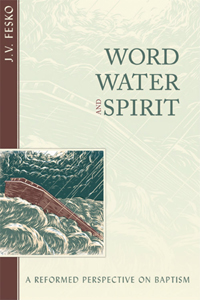
9781601782826mThen comes the paedo boys, those who swim in the shallow end of the pool (think sprinkling of infants). Way back in 2010 the men of Christ the Center interviewed J.V. Fesko about his book Word, Water, and Spirit: A Reformed Perspective on Baptism. The publisher describes the book in this way:

Word, Water and Spirit is a comprehensive introduction to the Reformed doctrine of baptism. Part one looks at the history of the doctrine in seven chapters, ranging from the Patristic age to modern times. Part two is a biblical–theological survey, looking at the eschatological and covenantal aspects of the sacrament, with a special emphasis on baptism as judgment. Part three is a systematic–theological construction, with a view towards establishing and defending the means, mode, recipients and efficacy of baptism.

Readers looking for a defense of infant baptism will find that and much more. Using the concepts of covenant and canon, Fesko sets out a firm defense of the practice, but he also provides a constructive proposal for thinking about baptism in general and its implications for ecclesiology. This work is sure to add much needed light to an old debate, but it will also enable many paedobaptists to better articulate a practice they already firmly believe in.

Listen or download the episode here.

Learning from Each Side

You probably side, as I do, with one camp more than the other. Yet, I’m sure each episode will stir fresh thoughts about the initiatory rite of the Christian life and at least help you understand where the other side is coming from. Tolle audite!

The Anatomy of a Temptation

Genesis Podcast 1

Matthew Henry once said of Genesis 3, “The story of this chapter is perhaps as sad a story as any we have in all the Bible . . . We have here an account of the sin and misery of our first parents, the wrath and curse of God against them, the peace of the creation disturbed, and its beauty stained and sullied, all bad, very bad. O that our hearts were deeply affected with this record!”

When Snakes Slink and Speak

We are told, “the man and his wife were both naked and were not ashamed. Now the serpent was more crafty than any other beast of the field that the Lord God had made.” The word “crafty” in 3:1 sounds almost identical to the word “naked” in 2:25. The apparent wordplay in these verses implies that Adam and Eve were oblivious to evil, not knowing where the dangers lay. The snake thus slinks up to Eve and begins to—amazingly!—speak. We know nothing about where the snake came from, but the New Testament makes clear that the serpent is none other than the vaunted foe of God and God’s people, Satan (Rev. 12:9).

In high school I found Anatomy a most difficult subject. Memorizing all those bones, muscles, and anatomical information overtaxed my limited memory. While I loathed the anatomical memorization required at the time, I’ve since come to see how beneficial, particularly as I played sports, the knowledge was. Well, I want us to enter into a spiritual anatomy session for a moment as we observe, from Genesis 3:1-5, “The Anatomy of Temptation.”

The Anatomy of Temptation

The first point to see is it’s a temptation to doubt God’s word. Notice the second half of 3:1, “He said to the woman, “Did God actually say . . .?” “The incredulous tone — ‘Did God actually say . . .?” — ­­is both disturbing and flattering: it smuggles in the assumption that God’s word is subject to our judgment.”

The second part of the temptation is to downplay God’s goodness. The serpent asks, “Did God actually say, ‘You shall not eat of any tree in the garden’?” Nope, that’s not what God said at all. Look back to 2:16-17 to see what God actually said, “And the Lord God commanded the man, saying, ‘You may surely eat of every tree of the garden, but of the tree of the knowledge of good and evil you shall not eat, for in the day that you eat of it you shall surely die.’” Eve evidently heard about this command from Adam and so she repeats it in 3:2, but adds God saying in 3:3, “neither shall you touch it, lest you die.” Satan tempts Eve to doubt God’s word, downplay God’s goodness, and thirdly . . . deny God’s justice. Look at 3:4-5, “But the serpent said to the woman, ‘You will not surely die. For God knows that when you eat of it your eyes will be opened, and you will be like God, knowing good and evil.’” “Not only,” Satan says, “will God not judge you unto death—it’s surely significant that the first heresy in the Bible is there’s no judgment for sin—He actually isn’t just at all, He’s just jealous. He doesn’t want you to be like Him.”

Do you see the irony in Satan’s words? Chapter 1 announced that only man and woman were created in the image of God, they were already “like” God. But Eve listens to the creature instead of the Creator and follows her impressions instead of God’s instructions. Notice 3:6, “So when the woman saw that the tree was good for food, and that it was a delight to the eyes, and that the tree was to be desired to make one wise, she took of its fruit and ate, and she also gave some to her husband who was with her, and he ate.” We might want to ask, “Where was Adam in all of this?” He was right next to Eve. As God’s vice-regent on the earth Adam should have told the snake to be quiet, stepped on its head, and stopped Eve’s hand when she reached for the fruit. Yet, instead he reaches for the fruit when she offers and he too eats. Sin has a way of not only involving others, but getting others to validate your sing by them sinning with you.

As it always does, sin promises much but actually offers little. Satan said, “Eat, your eyes will be opened, and you will be like God.” But look at what happened when their eyes did open in 3:7, “Then the eyes of both were opened, and they knew that they were naked. And they sewed fig leaves together and made themselves loincloths.” Can’t you just picture the serpent’s devilish smile as Adam and Eve sewed together their makeshift clothes? Far from being just like God, they go from being unashamed to totally ashamed.

An Anatomy of Autonomy

What then is at the root of this spiritual anatomy lesson? I believe it’s this: the root of all sin is autonomy. It’s the refusal to live under God’s lordship and submit to His word. It’s to live like we are in charge, like we are Lord, like we are autonomous—separate—from God’s lordship. This is a spiritual anatomy lesson to memorize. Where are you currently being tempted to doubt God’s word, downplay His goodness, or deny His justice? Wherever that may be, Genesis three tells us Satan may be speaking and autonomy is probably creeping.

What we now see as this sad story continues is sin always leads to shame and shrinking away from God in fear. Notice 3:8 tells us upon hearing God walking in the garden, “the man and his wife hid themselves from the presence of the Lord God.” God says to Adam, “Where are you?” Adam responds, “I hid when I heard you because I was naked.” Look at 3:11 as God asks, “Who told you that you were naked? Have you eaten of the tree of which I commanded you not to eat?” Then ensues the original blame game. Adam says in 3:12 that it was Eve’s fault, and Eve says in 3:13 it was the serpent’s fault.

And so it was that Satan’s temptation unraveled everything.

This post is adapted from my recent sermon, “The Beginning of the End,” on Genesis 3.

Silent for a Time

please-stand-by

The blog is going silent for time. Between family responsibilities, pastoral duties, and PhD deadlines I’ve had to make a decision: let the blog go silent for a while or let my time daily personal time with God get pinched. I’ve chosen the former. Lord willing, the blog will resume its usual ruminations on ordinary ministry sometime in July.

9Marks Mailbag

9marks-bailbag-270x250In case you’ve missed it, 9Marks has been running a weekly feature since early March named “The 9Marks Mailbag.” Every Friday morning Jonathan Leeman offers “counsel on questions that [are] wide-ranging, practical, and from actual readers in the throes of actual dilemmas.” You may not always agree with the particulars of his counsel, but Leeman does a fantastic job in thinking through every question with biblically informed wisdom.

Check out the Mailbags, with their specific questions, in the links below:

Mailbag #1: Lent, Mid-Life Pastor, & Elder Agenda

Mailbag #2: Deaconess Qualifications, Private Baptisms, Knowing Members’ Giving

Mailbag #3: Plagiarizing Pastor, Membership Interview

Mailbag #4: Gospel Culture, Elders and Porn

Mailbag #5: Not Baptizing Children, Small Groups, Elders and Porn—Again 

Mailbag #6: Pastors’ Wives, Taking Oaths, Pastors & Administration Work

Mailbag #7: Cake-baking Principles; Two Services or One; Youth Pastors; & A Discipline Issue

Mailbag #8: Confidentiality among Elders; Meaningful Membership; Can an Elder Be Single?; and Young Earth Creationism

Mailbag #9: Lord’s Supper in Small Groups; Elder Disqualified by Unbelieving Wife; Immersion Necessary for Baptism?