A Subtle and Dangerous Snare

If we are ever to see a revival in our nation, it will begin with a revival of real gospel ministry. Pastoral paradigms built on pragmatism must fall, and in their place, we will see a renewed passion for prayer and piety. The kind of preaching that the Spirit blesses (and the heraldic ministry that ushers in revival) is that which is saturated in prayer and comes from the mouth of a man consumed with holy love for Christ. Before he ever considers strategic vision, administrative planning, and staffing structure, God’s man must be a man of God—in doctrine and devotion.

Should God grant me many years in ministry, I want to see this kind of renewal visit our ministers. But such a renewal comes with a perennial peril.

Learning a Vital Lesson

As I’ve studied Robert Murray M’Cheyne over the last few years, one of the more noticeable lessons his life teaches is the full-orbed nature of pastoral piety. We need to understand this totality of holiness in two ways. First, for M’Cheyne, piety begins with love for Christ. It then flowers into every area of spirituality: devotion to prayer, God’s Word, the Lord’s Day, evangelism, friendship in the church, dependence on the Spirit, and “unfeigned humility.” Secondly, we must see that an earnest pursuit of piety is a dangerous one. We can make much of godliness—it’s necessity and nature—that people overestimate our actual holiness. It’s one thing to be a holy man, but it’s entirely different to be known, even famed, for holiness.

M’Cheyne was such a minister.

The Snare Exposed

M’Cheyne once wrote, “I earnestly long for more grace and personal holiness, and more usefulness.” Nothing communicates M’Cheyne’s longing more than his Reformation.

Written in late 1842 or early 1843, it is his ten-page resolution for personal holiness. In the first section, he concentrated on “Personal Reformation,” saying,

I am persuaded that I shall obtain the highest amount of present happiness, I shall do most for God’s glory and the good of man, and I shall have the fullest reward in eternity, by maintaining a conscience always washed in Christ’s blood, by being filled with the Holy Spirit at all times, and by attaining the most entire likeness to Christ in mind, will, and heart, that it is possible for a redeemed sinner to attain to in this world.

M’Cheyne proceeded to delineate a scheme for personal holiness that would enable him to live in increasing communion with Christ. The plan included strategies for confessing sin, reading Scripture, applying Christ to the conscience, being filled with the Spirit, growing in humility, fleeing temptation, meditating on heaven, as well as studying specific Christological subjects.

His devotion to Christ was so renown that almost every epigram after his death referred to him as “the saintly ministry” or “the godly pastor” of St. Peter’s. His friend and biographer, Andrew Bonar, made an astute observation on a common pitfall in pastoral piety:

An experienced servant of God has said, that, while popularity is a snare that few are not caught by, a more subtle and dangerous snare is to be famed for holiness. The fame of being a godly man is a great a snare as the fame of being learned or eloquent. It is possible to attend with scrupulous anxiety even to secret habits of devotion, in order to get a name for holiness. If any were exposed to this snare in his day, Mr. M’Cheyne was the person. Yet nothing was more certain than that, to the very last, he was ever discovering, and successfully resisting, the deceitful tendencies of his own heart, and a tempting devil. Two things he seems never to have ceased from—the cultivation of personal holiness, and the most anxious efforts to save souls.

Examine Yourself

Ever since I first read it, these two sentences in the quote above have been a constant warning: “The fame of being a godly man is a great a snare as the fame of being learned or eloquent. It is possible to attend with scrupulous anxiety even to secret habits of devotion, in order to get a name for holiness.”

I’m not known as a holy man. But I recognize how easy it is to devote oneself to the means of grace and forget that your real motivation is selfish to the core: “I make much of such devotion so people will make much of my devotion.” Thus, the pastor’s pursuit is only in service of self, not the Savior. The Spirit won’t revive His church with such a man.

Pastors then must be wary of their motives in pursuing piety. They must resist the praise of men, and live only for the smiles of God. They must recognize how the devil schemes, even in our noble endeavors, and live for Christ’s honor alone.

True holiness is noticeable. Vital godliness leaves a mark. Paul’s teaching to Timothy demands it: “Practice these things, immerse yourself in them, so that all may see your progress. Keep a close watch on yourself and on the teaching. Persist in this, for by so doing you will save both yourself and your hearers” (1 Tim. 4:15–16).

So, yes, let’s pursue personal holiness with extraordinary vigor. But test your motives. Make sure they aren’t, at the root, just a scheme “to get a name for holiness.”

Danger Lurks Near The Sacred Desk

Temptations fly at preachers as mosquitos swarm in a swamp. Archibald Alexander knew this well. To read his teachings on pastoral ministry is to read not only expert wisdom, but also experienced wisdom. No novice teacher can pen the paragraphs below.

The pulpit is perhaps, the severest ordeal of piety in the world. The man in secret might have felt humbled, on account of his sins, and seriously concerned for the salvation of his fellowmen; but when he rises in the pulpit, and hundreds of eyes are fixed on him, and multitudes are observing his performance, he can with difficult avoid feeling his attention drawn to himself, and a strong desire to acquit himself as to meet public expectation, and at any rate to rise above contempt.

And if a man has acquired already some degree of popularity, he naturally feels a strong desire to preserve the reputation which he has acquired. And these thoughts relating to his own dear popularity, may so get possession of his mind, that with every word which he utters, and every gesture which he makes, the thought may involuntarily occur, ‘How will this be received?’ Or, perhaps, in a form more hateful, ‘that is well spoken’—’that will be admired’—or ‘that will instruct the audience.’

And if he preaches with liberty, and some degree of eloquence, self-complacency is apt to arise in the mind. The deceitfulness and deep depravity of the human heart, never appears more evidently than in the pulpit. If all the thoughts which pass thro’ the preachers mind were exposed in their naked deformity to the view of the people, how would he be ashamed and confounded!

May the Lord enable His preachers to know true humility and vital piety in the pulpit. May the Lord protect us from seeking man’s praise. May He give us hearts that long to proclaim Christ alone.

Sincerity’s Proper Parent in Preaching

“Simplicity is necessary to preserve the speaker’s character for sincerity. You heard before how necessary piety is, which is the proper parent of sincerity in the pulpit. Now it is not easy to preserve the opinion of piety and sincerity in the pulpit when there is much ornament. Besides the danger of much affected pomp or foppery of style, a discourse very highly polished, even in the truest taste, is apt to suggest to the audience that a man is preaching himself and not the cross of Christ.” — Select Works of John Witherspoon, 297

A New Robe

Yesterday, I preached in my doctoral robe for the first time at Redeemer. It reminded me of a letter I discovered while rummaging through M’Cheyne’s manuscripts last year.

On January 17, 1837, two months after he was installed as the minister of St. Peter’s Dundee, M’Cheyne informed his mother that he had finally received a new Geneva gown. He said,

I was preaching on Sabbath afternoon in my new silk gown which you would have been very proud to see. I daresay it is so large and handsome that you would take me for a Bishop at the very least. I hope it may be like the mantle of Elijah and bring with it a double portion of the spirit from on high

Although no one would confuse me for a bishop, I daresay that M’Cheyne’s prayer for a double portion of Elijah’s spirit is a most worthy request.

Resolutions for Personal Revival

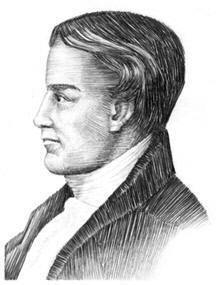
Our sixth child, Boston Stone, is named after the great Scottish theologian Thomas Boston. His work, Human Nature in Its Fourfold State, was the bestselling Scottish book of the 18th century. But my favorite volume from Boston is one he wrote at the age of twenty-two. It was first published after he died and has remained in print for almost three hundred years.

Not long before he entered into glory, he wrote something of the book’s background in his journal. He recorded on January 6, 1699:

Reading in secret, my heart was touched with Matt. 4:19, “Follow me, and I will make you fishers of men.” My soul cried out for the accomplishing of that to me, and I was very desirous to know how I might follow Christ, so as to become a fisher of men; and for my own instruction in that point, I addressed myself to the consideration of it in that manner. . . . That scribble gives an idea of the then temper of my spirit.

That “scribble” was A Soliloquy on the Art of Man-Fishing.

8 Resolutions for Personal Revival

I believe one of the most significant needs in our time is a revival of Christ-centered, sinner-saving, and saint-sanctifying piety in the ministry. Perhaps the decline we continue to see in the Church’s spirituality is a direct result of declining pastoral piety. May we not be rash to point the finger outward, however. Let us first deal with ourselves, falling upon Christ’s mercy and grace. Revival in the church begins with a reformation of the ministry.
Thomas Boston knew this to be the case. And so, from the outset of his ministry, he resolved to follow an eight-fold plan for personal renewal, all laid out in The Art of Manfishing. May his purpose stir us to similar schemes and hopes.

  1. “In imitation of Christ and His apostles, and to get good done, I purpose to rise timely every morning.”
  2. “To prepare as soon as I am up some work to be, and how and when to do it; to engage my heart to it; and even to call myself to account and to mourn over my failings.”
  3. “To spend a sufficient portion of time every day in prayer; reading, meditating, spiritual exercises: morning, midday, evening, and ere I go to bed.”
  4. “Once in the month, either at the end or middle of it, I keep a day of humiliation for the public condition, for the Lord’s people and their sad condition, for raising up the work and people of God.”
  5. “I spend, besides this, one day for my own private condition, in fighting against spiritual evils and to get my heart more holy, or to get some spiritual exercise accomplished, once in six months.”
  6. “I spend once every week four hours over and above my daily portion in private, for some special causes either relating to myself or others.”
  7. “To spend some time on Saturday, towards night, for preparation for the Lord’s Day.”
  8. “To spend six or seven days together, once a year, when most convenient, wholly and only on spiritual accounts.”

The Necessary Ingredients

“It is living fellowship with a living Savior which, transforming us into his image, fits us for being able and successful ministers of the gospel. Without this nothing else will avail. Neither orthodoxy, nor learning, nor eloquence, nor power of argument, nor zeal, nor fervor, will accomplish naught without this. It is this that gives power to our words and persuasiveness to our arguments, making them either as the balm of Gilead to the wounded spirit or as sharp arrows of the might to the conscience of the stouthearted rebel . . . Nearness to Christ, intimacy with him, assimilation to his character—these are the elements of a minsitry with power.” — Horatius Bonar, Words to Winners of Souls

Simple, Yet Significant Truth

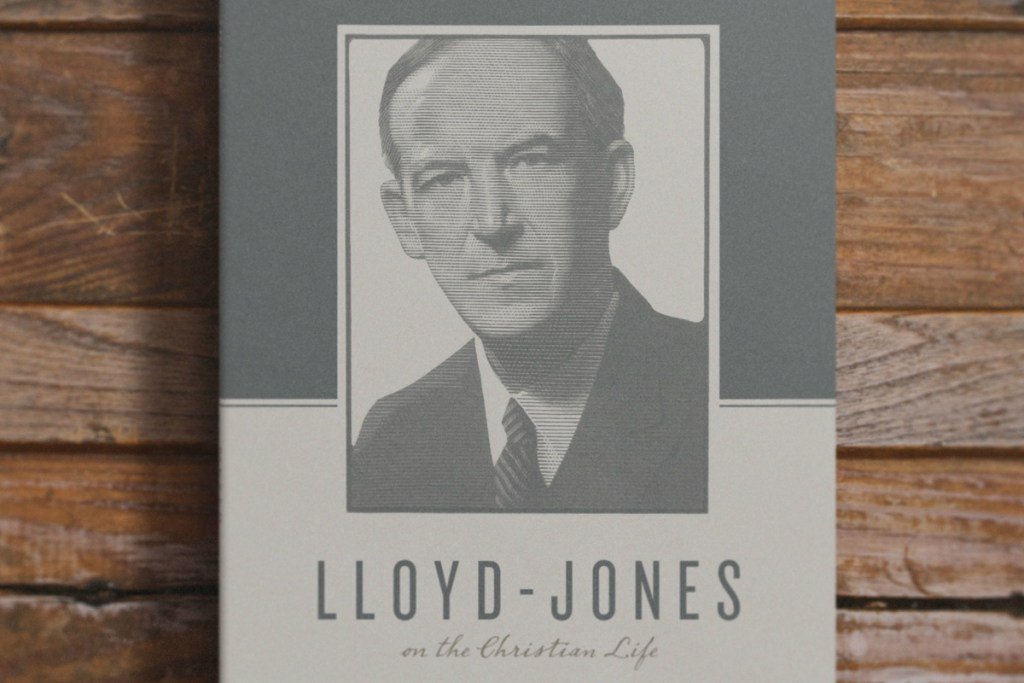
In his foreword to Jason Meyer’s Martyn Lloyd-Jones on the Christian Life: Doctrine and Life as Fuel and Fire, Sinclair Ferguson writes, “[Lloyd-Jones] did not live to preach; he lived for Christ. All preachers are differently wired; there is a wide variety in gifts and temperaments, in experience and understanding. But when a man is given over to the love of Christ in his living, it cannot be hidden in his preaching; just as sadly, if he is given over to the love of self, it will also show.”

Studying Presbyterian History in America

Cicero once quipped, “To know nothing of what happened before you were born is to forever remain a child.” Or, as George Santayana (likely) said, “Those who cannot remember the past are condemned to repeat it.”

There are many reasons why we should study history. Surely, at the most basic level, we can all agree that Christians should be historically-interested people because we are to know, love, and grow in the God who has revealed Himself in history.

Learning about Your Family

Lord willing, my denomination will gather for its annual General Assembly two weeks from today. Overtures will be debated, motions will be made, votes will be cast, and worship will be offered. If you listen carefully, ne’er a year goes by without someone noticing how certain contemporary issues sound so similar to matters discussed or decided in years past. Indeed, one can hardly be a faithful commissioner without recognizing that we stand in the shadows of old giants, all of whom had feet of clay. Such recognition means we don’t conduct ourselves in isolation, but in connection to what has gone before us.

Our story is a family history. Our forebears died for truth we take for granted. They made right decisions and pursued wrong agendas. We want to know about both so that we might walk in wisdom.

6 Volumes Worth Reading

Every ordained minister in the PCA must pass an examination on the denomination’s history. We are thus supposedly somewhat sharp on the story. Yet, life and ministry are always consuming. Facts, dates, and conclusions memorized for a test often evacuate the mind.

In order, then, that we might hold fast and have discernment, here are several volumes on American Presbyterianism from which every pastor, officer, or church member can profit. I have ordered them by ease of reading.

Seeking a Better Country: 300 Years of American Presbyterianism by D. G. Hart and John Muether. Published on the 300th anniversary of the establishment of the first presbytery in American, Hart and Muether provide no uncritical celebration of our history. They offer Presbyterians “a history that will yield discernment and wisdom about the strengths and weaknesses of their tradition, as well as the degree to which the circumstances of being American have affected their identity as Presbyterians.” The book is clear and covers all the vital ground. If you know the authors’ other work, you won’t be surprised by many of their critiques. Nevertheless, Seeking a Better Country is the best entry-point available today.
A Brief History of the Presbyterians by James Smylie. The title communicates everything you need to know of Smylie’s intent. And, gratefully, he succeeds. His work quickly covers all the essentials of the American story from a mainline point of view. He gives appropriate attention to some of the oft-forgotten elements of our story.


Reformed Theology in America: A History of Its Modern Development edited by David Wells. I think one of the easiest, and most enjoyable, ways to learn history is through biography. This underrated volume introduces readers to the principal players in 19th-century American Presbyterianism (which was its zenith point of power): Hodge, Warfield, Machen, Dabney, Thornwell, and it also branches out into the Dutch tradition with Berkhof and Van Til.
Presbyterians and American Culture by Bradley Longfield. Longfield’s first book, The Presbyterian Controversy, should be required reading for any Presbyterian pastor, but I’ve left it off as it only focuses on part of the American story. His more recent work is my favorite book on this list. Longfield ably demonstrates how close the relationship between American Presbyterianism and American culture was from the founding of both institutions. This book offers the double benefit of learning both about the church and the country.

If you’re looking for more specific denominational histories, especially from a conservative confessionalist view, consider:

Extra Credit

Here are two other works that well worth your time:

Conviction Served Ripe and Ready

“Prayer is the soul’s traffic with heaven. God comes down to us by his Spirit, and we go up to him by prayer . . . A godly man cannot live without prayer. A man cannot live unless he takes his breath, nor can the soul, unless it breathes forth its desires to God. As soon as the babe of grace is born, it cries; no sooner was Paul converted than ‘behold, he prayed’ (Acts 9:11) . . . A godly man is on the mount of prayer every day; he begins the day with prayer; before he opens his shop, he opens his heart to God. We burn sweet perfumes in our houses; a godly man’s house is ‘a house of perfume’; he airs it with the incense of prayer; he engages in no business without seeking God.” — Thomas Watson, The Godly Man’s Picture

Three Years Later (Reflections on Graduation Day)

Three years ago, I began my Ph.D. studies at The Institution. Eight seminars, four colloquia, two research languages, two sets of comprehensive exams, and one dissertation later, I’m finally finished. Sometime after 11:00 a.m. EST this morning, I’ll walk across the stage to receive my doctoral hood and degree. What a satisfying joy it shall be.

In no particular order, here are a series of reflections and lessons learned after my time at SBTS.

20 Takeaways and Tell-Alls

  1. If you’re married and decide to do any graduate or post-graduate work, make sure your wife understands—and welcomes—the sacrifice your studies will require. I could never have done it all without my wife’s skill at home.
  2. If you’re in ministry and decide to do any graduate or post-graduate work, make sure you live your studies before your congregation. Faithful studies should always increase your ability and humility. Put 1 Timothy 4:15 into practice. Demonstrate your progress in Christ before their watching eyes.
  3. An interested and able supervisor makes all the difference. Dr. Yuille has been a grace in my life.
  4. I entered the Ph.D. program intimidated at all the required writing. After my first seminar, I dreaded all writing projects. Now, few things get me as excited as putting pen to paper.
  5. Of all the seminary discussions I had to lead, my favorite to prepare for was on Dietrich Bonhoeffer.
  6. Of all the seminary discussions I had to lead, my least favorite was on Eusebius of Caesarea.
  7. The worst book I had to read for a seminar was Weaving the Visions. Stay away, my friends, stay away.
  8. My personal favorite textbook was Puritan Spirituality: The Fear of God in the Affective Theology of George Swinnock. It’s (probably) the best scholarly summation of Puritan piety you’ve never heard of.
  9. Few things are as essential to diligent research work than a fascination with your dissertation subject.
  10. If you can, pick a dissertation subject that appeals to more than just your mother and advisor.
  11. Good Christian writing depends on good Bible reading.
  12. Pray for God’s blessing on your studies.
  13. The academy thrives on novelty and originality; pastoral ministry doesn’t.
  14. Discover what time during the day you read and write best, and guard it with all vigilance.
  15. A few good friends in seminary will sustain you through those days and nights when you want to give up.
  16. Doctoral studies are a boot camp in humility. You’ll never be the smartest scholar in the room.
  17. My studies seem to have forever altered my reading habits. I’m more content than ever not to read books cover to cover—for better or worse.
  18. Life in the seminary world is dangerous. You can quickly forget that there’s a whole wide world off campus that doesn’t care much about your studies.
  19. Louisville has really, really good food. I have many fond memories of student lunches at Joella’s Hot Chicken.
  20. I always thought I’d feel different when I finally finished the degree. I don’t. I’m still just a plain old pastor, husband, and father.