A Forgotten Friend in Sermon Preparation

Meditation & Preparation

Martin Luther once gave three rules for studying theology in the right way: “Oratio, meditatio, tentatio.”

For we Latin-illiterate people, he says “prayer, meditation, and trial” are three keys which unlock the depths of theology. What I want to briefly consider, and commend, today is the role meditation can play in your sermon preparation.

BEAT IMPORTUNATELY ON THE TEXT

Have you ever sat down to prepare a sermon on a given text and the unsearchable riches seem hidden behind an insurmountable wall? Luther definitely did.

In his Preface to the Complete Edition of Luther’s Latin Writings Luther recounted his great gospel discovery from the book of Romans. He wrote,

Though I lived as a monk without reproach, I felt that I was a sinner before God with an extremely disturbed conscience. I could not believe that he was placated by my satisfaction. I did not love, yes, I hated the righteous God who punishes sinners, and secretly, if not blasphemously, certainly murmuring greatly, I was angry with God, and said, “As if, indeed, it is not enough, that miserable sinners, eternally lost through original sin, are crushed by every kind of calamity by the law of the decalogue, without having God add pain to pain by the gospel and also by the gospel threatening us with his righteous wrath!” Thus I raged with a fierce and trouble conscience. Nevertheless, I beat importunately upon Paul at that place, most ardently desiring to know what St. Paul wanted.

At last, by the mercy of God, meditating day and night, I gave heed to the context of the words, namely, “In it righteousness of God is revealed, as it is written, “He who through faith is righteous shall live.” There I began to understand [that] the righteousness of God is that by which the righteous lives by a gift of God, namely by faith.

The great apostle’s teaching was veiled to Luther and so he “beat importunately” by “meditating day and night”, which in turn led him “to understand.”

DON’T NEGLECT THIS KEY

Earlier this week I was preparing to preach on 2 Corinthians 9:6-15 and, wow, was I in a rut. It wasn’t that I couldn’t understand the point Paul is making about Christian generosity. Rather, I had yet to land into the deep end of his typically – and gloriously – dense logic. I needed to understand the relationship between certain words and phrases. I felt as though I wasn’t getting through.

Sure, the sermon outline and manuscript were workable, but something was missing. And it was a depth of understanding.

So, I set the manuscript aside, prayed, and then spent thirty minutes drilling the text into my mind through memorization. I normally make a point to memorize the text, but for whatever reason, I plowed right through the initial stages of preparation without saturating my soul in the passage. Oh, how I needed to remedy a surface level understanding of the text!

And so it was some time later in the morning, after extended meditatio, that the surface unfolded to the deeps. The key of memorization unlocked the door to inspired apostolic treasure.

Dear brother in ministry, don’t neglect this key of meditation through memorization. It just might be the weapon you need to round out your arsenal for sermon preparation.

The Gospel is preached in the ears of all—it only comes with power to some. The power that is in the Gospel does not lie in the eloquence of the preacher, otherwise men would be the converters of souls. Nor does it lie in the preacher’s learning, otherwise it would consist in the wisdom of man. . . .

We might preach till our tongues rotted, till we should exhaust our lungs and die, but never a soul would be converted unless there were the mysterious power of the Holy Spirit going with it, changing the will of man! O Sirs! We might as well preach to stone walls as preach to humanity unless the Holy Spirit is with the Word to give it power to convert the soul! – Spurgeon

Book to Look For: On John Owen’s Piety

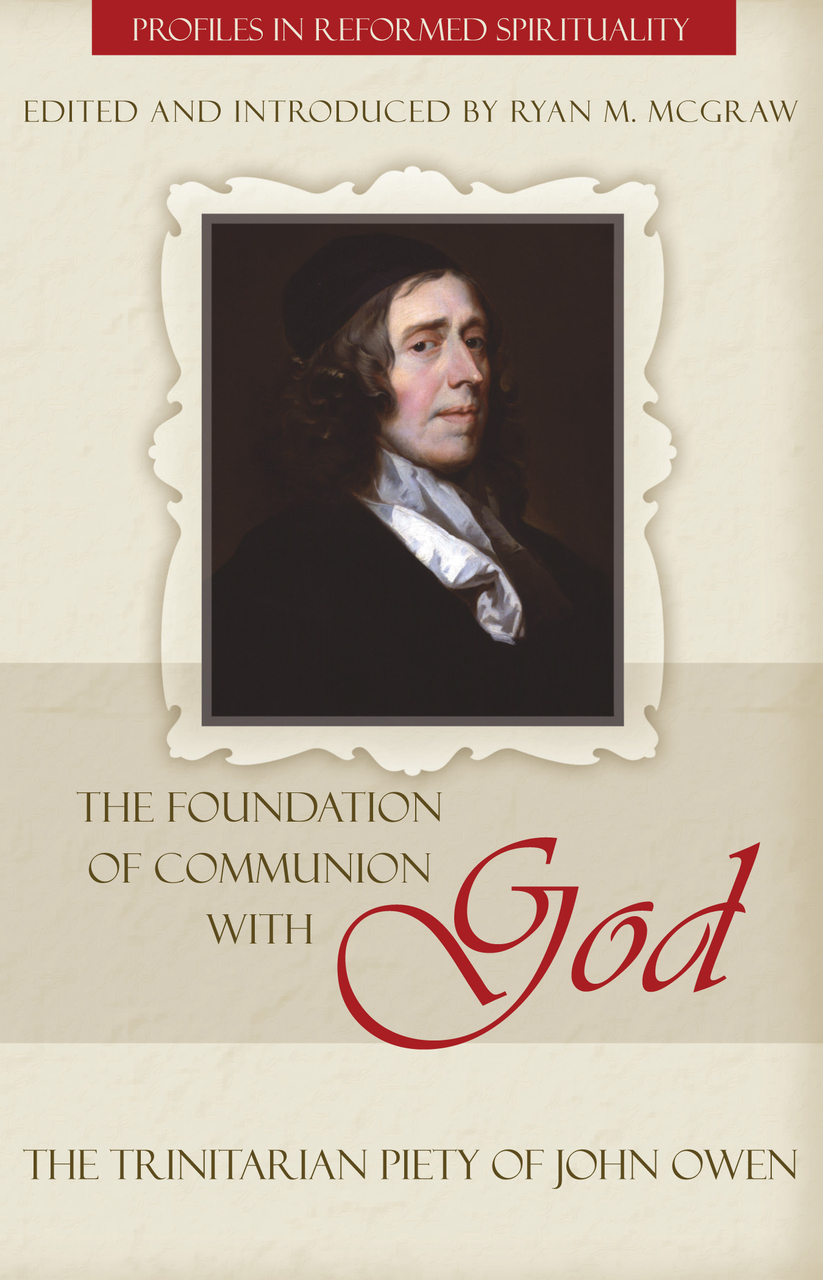
Foundation_front__74064.1396468482.1280.1280Reformation Heritage Books has quietly amassed a goldmine for piety in its “Profiles in Reformed Spirituality Series.”

The “series is designed to introduce the spirituality and piety of the Reformed tradition by presenting descriptions of the lives of influential Christians with select passages from their works. This combination of biographical sketches and primary sources gives a taste of each subject’s contribution to the Reformed tradition’s spiritual heritage and direction as to how the reader can find further edification through their works.”

The next installment, due in just over a month, is entitled “The Foundation of Communion with God: The Trinitarian Piety of John Owen.” Ryan McGraw, who did his PhD on Owen’s liturgical theology, offers up a digestible feast from the Prince of the Puritans. Which is no small accomplishment!

AN ACCESSIBLE OWEN

Owen is notoriously difficult do read, and so RHB and McGraw ought to be commended for their hard work in making Owen accessible to the average church member.

The book’s forty-one chapters are broken down into the following four sections:

  1. Knowing God as Triune
  2. Public Worship and Scripture
  3. Heavenly Mindedness and Apostasy
  4. Covenant and Church

I have read quite a few of the other volumes in this series and each one has been fantastic. They are great for discipling and are also suited nicely for morning devotions. Make sure to grab this one when it comes out and then consider which installment you might read next.

Tolle lege!

BT & ST in Preaching

0e733507_helm2ndaryIt ought to be no surprise that the recent resurgence in gospel-centrality has coincided with a renewed concentration on biblical theology. The latter gives weight and meaning to the former.

David Helm, pastor of Holy Trinity Church in Chicago, is no stranger to biblical theology. Through his work with the Simeon Trust he’s trained hundreds of pastors in expositional preaching that’s rooted in biblical theology. He’s also published a perennial best-seller, The Big Picture Story Bible, which eloqently explains the basics of biblical theology for parents and children.

On top of all this, Helm recently published Expositional Preaching in 9Mark’s “Building Healthy Churches Series” in which he says, “The discipline of biblical theology offers preachers a certain benefit. It prevents intellectual or moralistic preaching. To put that positively, it brings you – legitimately – to the heart of the Christian gospel from particular texts in the Bible. It keep the main things the main thing.”

BT & ST IN PREACHING

So what is it about the resurgence of biblical theology – a very resurgence he’s helped promote – that concerns good Mr. Helm? That’s what Mark Dever asked in a recent 9Marks interview. Furthermore, does systematic theology have any place in preaching? Helm says, “Yes!” and his answer is oh so good.

Listen in to this four and a half minute clip as Helm provides sound counsel on how to faithfully integrate biblical theology and systematic theology in your preaching.

Recent Reads

I love to read. By God’s grace I am a pretty fast reader; I usually read a couple books each week. I find it helpful to summarize my thoughts on each book and I offer those thoughts in the hope that you will be encouraged to either read or pass over the given title.

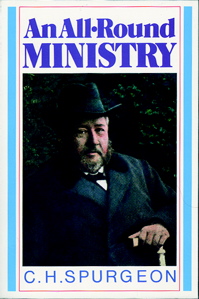
0851511813mAn All-Round Ministry by Charles Spurgeon. In 1865 Spurgeon began an annual conference for the students and alumni of his Pastor’s College; twelve of the best presidential addresses he gave at these conferences were eventually published as An All-Round Ministry. This book functions as something like a sequel to Lectures to My Students. Any pastor will profit from The Prince’s ruminations on pastoral ministry; his characteristic wit, wisdom, and biblical passion fall under the spotlight here. The eleventh chapter, “The Preacher’s Power, and the Conditions of Obtaining It”, is worth the book’s weight in gold.

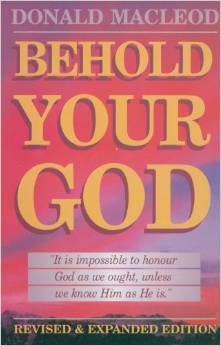
BYGBehold Your God by Donald Macleod. At some level, every theological fallacy is rooted in a false understanding of God. It’s quite wise then for pastors to consistently study the character and ways of God. One way I put this into practice is regularly reading or rereading books on the doctrine of God. Macleod’s Behold Your God is just the latest in my theology proper parade. I felt like I was invited into Macleod’s home for dinner and got to here him riff on the attributes of God and historical discussions about God. Fun stuff! I didn’t agree with everything he said – his quick disavowal of the historically defined impassibility being one example – but the chapters are helpfully short and clear.

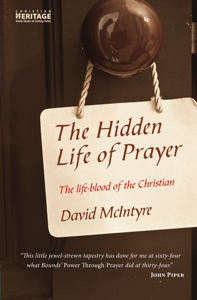
9781845505868mThe Hidden Life of Prayer: The Life-Blood of the Christian by David McIntyre. I am always helped by books on prayer. Even if the given book isn’t very good at least it gets me thinking about prayer. And whenever I think about prayer I normally soon find myself in the prayer closet. So I try to always be reading something on prayer. David McIntyre’s The Hidden Life of Prayer is one I return to every couple of years. It’s short, full of lively anecdotes, and packed with biblical and historical insights on a life of private prayer. The first two chapters – “The Life of Prayer” and “The Equipment” – are always challenging. Case in point: in the latter chapter McIntyre says, “The equipment for the inner life of prayer is simple, if not always easily secured. It consists particularly of a quiet place, a quiet hour and a quiet heart.” That kind of sound simplicity awaits anyone who would feast upon this gem.

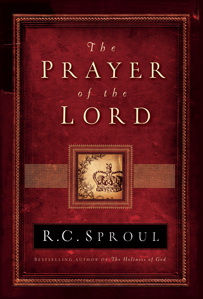
9781567691184mThe Prayer of the Lord by RC Sproul. For years I’ve meant to get around to Sproul’s exposition on the Lord’s Prayer, but it took the prospect of preaching on Matthew 6 to get me to finally open up this little gem. The Prayer of Our Lord is a model of biblical and systematic theology; all packed into 105 pages. Everything you’d expect from Sproul is here: etymological attention, philosophical rumination, theological explanation, and heart searching application.  I could see this book being uniquely helpful in morning devotions and in discipling relationships.

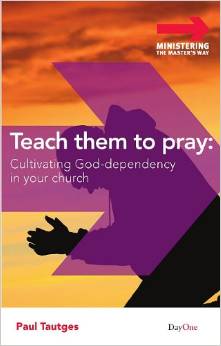
TTTPTeach them to Pray: Cultivating God-Dependency in Your Church by Paul Tauges. Day One’s Ministering the Master’s Way series is full of simple and short resources to provoke pastors. Paul Tautges’ little volume on prayer is an arrow worthy of every pastor’s book quiver. The book has three main sections: “Prayer – An Expression of God-Dependency” (Part 1), “Brief Sermons for Prayer Meetings” (Part 2), and “Practical Helps for Cultivating God-Dependency” (Appendices). There is nothing revolutionary nor original in Teach Them to Pray; the best sections are quotes from other pastors or theologians. Yet it will most definitely cause you to evaluate the place of prayer in your local. That reason alone is sufficient for me to commend the book to every pastor.

THThe Heist by Daniel Silva. Silva’s beloved Israeli spy and art restorer Gabriel Allon returns in The Heist, a novel quintessentially Silva-esque. As I’ve said before, Silva’s mastery is seen in how the Allon books are virtually free from the scandalous or promiscuous, and yet they still thrive. The Heist finds Allon pursuing Caravaggio’s masterpiece The Nativity, investigating the murder of a former British intelligence agent, and endeavoring to bring down the ruling family of Syria. The Heist is another solid work for Silva and is perfect reading on late summer nights.

TBThe Bat by Jo Nesbø. Norwegian mystery writer Jo Nesbø’s Harry Hole (pronounced “HO-leh) series currently stands at ten volumes and is something of a phenomenon in international publishing. For years I’ve had people, who know my propensity to read detective thrillers, tell me, “You must read Nesbø!” So I finally picked up The Bat“The electrifying first appearance of . . . Harry Hole.” Well, electrified is not a word I would use to define my first experience of Mr. Hole. The narrative moves nicely when it concentrates on the investigation and pursuit of a mysterious Australian (yep, the Norwegian detective is sent down under in this one) serial killer. Yet, those intriguing thrills are too often derailed by Nesbø’s fixation on humanizing Hole by recounting the Norwegian’s dark vices. It may take another few years for me to move on to Harry Hole #2.

Click here to find other entries in the Recent Reads series.

Out of the Pulpit

Out of the Pulpit

From the very beginning of our church plant I endeavored to preach no more than 40 times a year, and so I rounded out 2013 having occupied our pulpit 39 times. From my perspective, it was one of the healthiest things we did all year.

I’ve been around many pastors over the last decade who seemed to protect their pulpit with an iron hand. One mentor of mine said he’d never preach less than 48 times a year. I’ve also heard many a church member say something like, “He has to preach every week. That’s what we pay him for!”

Such sentiment, if left unchecked, will set your church on a trajectory of implosion. Let’s begin to chip away a that ticking time-bomb by considering four benefits of having other men occupy the pulpit.

4 BENEFITS OF HAVING OTHERS PREACH

Protects against senior pastor dependency.Regularly having other men preach creates a culture of shared leadership through shared proclamation. No longer is the senior pastor seen as the only resident Bible teacher. The theological acumen of other men bleeds through as they preach and the congregation will recognize their ability. For example, last year one of our members wanted to better understand the finer points of eschatology. He sought out a man – who was an elder candidate at the time – who had preached several times over the year and revealed himself to be theologically trustworthy and able. I love seeing and hearing such things happen!

If a pastor rarely steps out of the pulpit he loses an opportunity to delegate authority. Nothing builds godly authority in a local church like the faithful heralding of God’s word. Have your elders speak from behind the pulpit with some consistency, then sit back and watch the congregation’s joy in submission increase exponentially.

Provides regular weeks of rest.A pastor needs to have weeks when he is still in the trenches of ministry, but the glorious burden of sermon preparation is borne by another. On average, I spend one week every month out of the pulpit. When used rightly, those weeks are like jet-fuel for joy and longevity in ministry. The soul lightens on weeks like these and enables you to return to the pulpit with Spirit-wrought vigor.

Tests and trains future pastors. You will undoubtedly have men in your church that express a calling for pastoral ministry. Having them fill the pulpit does two things. First, it tests the reality of their ability to teach. Pastors must be able to teach (1 Tim. 3:2) and letting them ascend to the sacred desk functions like an “Exam on Your Calling as a Pastor.” Even if the sermon is a dud, a man truly called to pastor will offer many glimpse of hope during the “dudness.” Second, opening the pulpit trains men for faithful ministry. We want to send out men who are relatively seasoned in pulpit ministry. Your church’s pulpit is the saltiest place for that to happen.

Models expositional listening. This is a point of benefit I cannot overstate: your church will be immensely helped by watching you hear a sermon. Do you want your congregation to have expectancy in hearing God’s word? Do you want them to prepare diligently to hear it preached? Do you want your people to come with hearts ready to respond to God’s word? Having regular weeks out of the pulpit while still being in the congregation enables you to model all those things.

The fall is right around the corner and it’s quite likely you are planning to start a new sermon series. So plan to be out of the pulpit a few times and watch the church your church benefit spiritually.

I see a man cannot be a faithful minister, until he preaches Christ for Christ’s sake – until he gives up striving to attract people to himself, and seeks only to attract them to Christ. Lord, give me this! – M’Cheyne

Power in Sermon Prep

Powerful Preparation

Every preacher surely knows the feeling. Sunday’s coming and he’s yet to settle on a text or outline for his sermon. He fears he will enter the pulpit void of power.

What’s he to do?

Clearly, he must pray for the fresh winds of the Spirit to inflame his soul and give him full insight into God’s word. But is there anything else that one can do? Any dispositions of the heart necessary for power in preparation?

LET THE POWERFUL PREACHER ADVISE

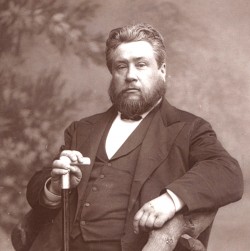
Spurgeon was, by all accounts, a legendary force of power in the pulpit. You don’t get the label “Prince of Preachers” if you aren’t a Christ-exalting, homiletical hurricane. And he trained his pastoral students to yearn for the power of God in preaching. In an address to the annual pastor’s conference over which he presided, Spurgeon remarked on “The Preacher’s Power, and the Conditions for Obtaining It.”

spurgeon_chair1Spurgeon starts by reminding his audience that Sovereign God of the universe purposes to use weak vessels (preachers) to proclaim His treasured Christ. Therefore, these men must preach “by Divine power, or else be total failures.” From where does such power come? “The supernatural force is the power of the Holy Ghost, the power of Jehovah Himself. It is a wonderful thing that God should condescend to work His marvels of grace through men.” Amen!
The Prince calls preachers to long for such power in public, but to remember that “in order to have power in public, we must receive power in private.” It’s in this part of the address that Spurgeon speaks about receiving power in sermon preparation. He says it’s during sermon preparation “the Lord gives the soul saving message, and clothes it with power; He gives it to certain order of people, and under certain conditions.”

So, what are those conditions for receiving the Spirit’s power during sermon prep?

6 CONDITIONS FOR OBTAINING POWER IN SERMON PREP

  1. A simplicity of heart. The Lord pours most into those who are most empty of self. Those who have least of their own shall have the most of God’s. The Lord cares little what the vessel is, whether golden or earthen, so long as it is clean, and disengaged from other uses.
  2. A great humility of mind. It ought not to take much humility for such poor creatures as we are to sit at the feet of Jesus. We ought to look upon it as an elevation of mind for our spirit to lie prostrate before infinite wisdom. Assuredly, this is needful to the reception of power from God.
  3. A singleness of eye. Such a man, trying to hear what God the Lord shall speak, is all ear. He honestly and eagerly desires to know what God’s mind is, and he applies all his faculties to the reception of the Divine communication. Unless you have but one eye, and that one eye sees Christ and His glory in the salvation of men, God will not use you.
  4. A complete subordination to Him. The best of men, must be altogether subordinate to the Word of the Lord.
  5. A deep seriousness of heart. We are so weak, and these Divine inspirations are so weighty, that we are subdued into awe, and there is no room for levity. Brethren, avoid anything like trifling over sermon-making. Do not regard preparation for the pulpit as a trifling thing; and do not rush upon your holy duties without devout preparation for the hallowed service. Make your waiting upon God a necessity of your calling, and at the same time the highest privilege of it. Count it your joy and honour to have an interview with your Master. Get your message fresh from God.
  6. A sympathy with God. The Lord loves to use a man who is in perfect sympathy with Him. God loves to clasp a sympathizing one to His heart, and then to say, “Go, My child, and work in My Name; for I can trust My gospel in thy hands.” Be with God, and God will be with you. Espouse His cause, and He will espouse yours. There can be no question about this.

This is a well of wisdom from which you can drink as you continue to prepare for this weekend. May you receive power in your preparation!

Read ‘Em All

20120724_acr_11193I try to let most of my reading focus on works from the pens of men who’ve long lay in the ashes.

But every so often a contemporary author comes along and has a kind of winsome wisdom that demands attention. One man who falls squarely into that category is Jonathan Leeman.

Do you know him?

Leeman currently serves as the editorial director for 9Marks and is a lay elder at Capitol Hill Baptist Church. He wields his authorial pen with witty profundity and accessibility. That latter trait is most important seeing that Leeman rarely leaves – at least in his publications – the theological space of “church polity.”

Have you ever read a work on church polity? If you actually did, that odds are that two things were true: 1) it was old, and 2) it tested your ability to stay interested. And that’s why you must read good Dr. Leeman; he is a modern author who is abundantly useful and insightful. I don’t think it’s any stretch to say that Leeman – in conjunction with his comrades at 9Marks – might just make polity popular again.

Here are four books from Leeman, with the publisher’s description, that every pastor should consider. And I’d read ’em in the following order.

LEARNING FROM LEEMAN

9780802422996mReverberation: How God’s Word Brings Light, Freedom, and Action to His People. What is the most effective way to grow a church? It’s not a new methodology or cultural outreach strategy, it’s…the Word of God. In this book, Jonathan Leeman wants you to realize that the Word, working through God’s Spirit, is responsible for the growth of God’s church and we need to trust it! Leeman not only informs and equips the leadership of local churches for greatest effectiveness in their preaching ministry but explains how to translate that into the life of the church throughout the week. The book also deals with two errors – not trusting the Word (resulting in a pragmatic ministry philosophy) and not living in light of the Word, (resulting in a ministry philosophy of “preaching is enough”).

Reverberation explains the pulpit ministry and traces the theme of how the Word continues through the life of the church. Both theological and practical, Reverberation focuses on how the church hears, responds, discusses, implements and is transformed by the Word. No high-octane production, superstar personalities, or postmodern entreaties, just stuff that is really old, really good, and really powerful!

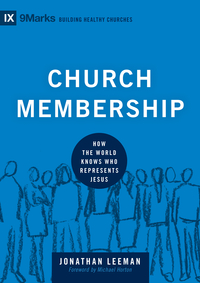
9781433532375Church Membership: How the World Knows Who Represents Jesus. Why should you join a church? Becoming a member of a church is an important, and often neglected, part of the Christian life. Yet the trend these days is one of shunning the practice of organized religion and showing a distaste or fear of commitment, especially of institutions. Jonathan Leeman addresses these issues with a straightforward explanation of what church membership is and why it’s important. Giving the local church its proper due, Leeman has built a compelling case for committing to the local body.

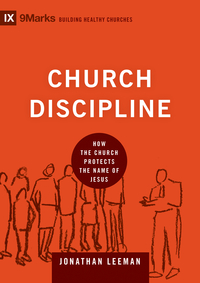
9781433532337Church Discipline: How the Church Protects the Name of Jesus. Church discipline is essential to building a healthy church. So how exactly do we practice church discipline? Jonathan Leeman helps us face the endless variety of circumstances and sins for which no scriptural case study exists, sins that don’t show up on any list and need a biblical framework to be corrected appropriately in love. Here is a contemporary and concise how-to guide that provides a theological framework for understanding and implementing disciplinary measures in the local church, along with several examples of real-life situations and the corresponding responses.

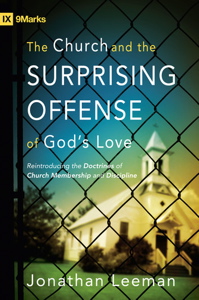
9781433509056mThe Church and the Surprising Offense of God’s Love: Reintroducing the Doctrines of Church Membership and Discipline. When the world speaks of “love,” it often means unconditional acceptance. Many churches have adopted this mind-set in their practice of membership and discipline—if they have not done away with such structures entirely. “Yet God’s love and God’s gospel are different than what the world expects,” writes Jonathan Leeman. They’re centered in his character, which draws a clear boundary between what is holy and what is not. It’s this line that the local church should represent in its member practices, because the careful exercise of such authority “is God’s means for guarding the gospel, marking off a people, and thereby defining his love for the world.”

So how should churches receive and dismiss members? How should Christians view their submission to the church? Are there dangers in such submission? The Church and the Surprising Offense of God’s Love responds with biblical, theological, and practical guidance-from both corporate and individual perspectives. It’s a resource that will help pastors and their congregations upend worldly conceptions and recover a biblical understanding and practice of church authority.

A Week to Wield

Pray, Meet, Read

As best I can tell, I usually spend about 25 hours a week in preparing a sermon. And this week is one in which I am not scheduled to preach.

I am thus left to consider how to best wield those 25 hours as a weapon for God’s glory. The normal battle plan on weeks like these is to deploy three regiments named Pray, Meet, and Read.

THE TEMPTER TALKS

I have discovered that Satan loves to scheme in two particular – and paradoxical – areas on the weeks when I don’t preach. First, he tempts unto laziness. “Take a break. Indulge yourself and have a rest,” he says. It is true that I must find ways to rest this week so my soul can be sustained over the long-haul. But the Worm’s deceitful distortion is to turn Sabbath-like rest into slothfulness.

Second, and here’s where the paradox comes in, he tempts unto labor. “Get everything done that you’ve placed on the back burner. Redo the church website. Finish the first draft of that book. Edit that research paper for seminary. Complete Bavinck’s fourth volume in Reformed Dogmatics. And, oh yeah, repair the fence while your at it.” There is a very real temptation to take all this extra time, pour my energy out in labor, only to find myself completely spent and disillusioned when the next week begins.

Sometimes the temptation flies from one area more than the other, but many weeks I find the snares to be dialectically tense; it seems like his fiery darts of laziness and labor come simultaneously.

So what is a pastor to do?

3 WAYS TO MAXIMIZE YOUR TIME OUT OF THE PULPIT

Pastors are stewards, and “it is required of stewards that they be found faithful.” Stewardship means faithfulness in the ministry of word, prayer, and care. Thus, on weeks out of the pulpit I want to labor diligently in those three areas of faithfulness. Hence the deployment of Pray, Meet, Read.

Pray.I try to use the extra hours on hand for extended prayer on particular issues. I delineate a few things pressing in life and ministry, carve out time for the prayer closest, and then try to take hold of God in those areas. For example, I aim aiming to “get through” to God on the future leaders of IDC, future location of IDC, and cultivation of godliness in my young boys.

Meet. In the days leading up to my “off” week I purpose to schedule 6-10 different meetings with people in our church. This is on top of the regularly recurring church meetings and discipleship gatherings. Usually, I meet with members I just want to connect with or members whom I need to speak with about something upcoming in the life of our church. I have meetings this week with almost all our small group leaders to talk about a small adjustment we are making to group life this fall.

Read. Finally, I select a couple of books that I want to plow through over the course of five days. These are books that either speak to a theological issue needing attention in my ministry, an upcoming sermon series, or are ones I trust will simply fuel joy and maturity in ministry. I have four books on tap this week:

RESTING BY WORKING

As I fix my eyes on the week ahead, I expect the Serpent’s paradoxical temptations to laziness and labor to be constantly present. So I combat it with a paradox of my own: resting by working. Remember, this isn’t a sabbatical or vacation. Although I am not preaching, I am still working. And so  I confront the snares named Laziness and Labor with “Pray, Meet, Read.” Not only do these three areas summarize faithful ministry, they also are the ways in which I ordinarily best rest. Communion with God and His people refuel my soul, and so I pour my energy into them to get His energy from them.

Maybe there are other ways that you can rest in the work. Find them. Hone them. Then wield them the next time you are scheduled to be out of the pulpit.