2 Foundations for Public Prayer

Public Prayer

Our liturgy at IDC finds me ordinarily in charge of three particular elements: the pastoral prayer, sermon, and Lord’s Supper. I find the pastoral prayer to be the most daunting.

By far.

Every week, for six to seven minutes, I stand before my congregation and petition the Lord to answer our needs and send His gospel throughout our city, country, and world. I’ve never been able to adequately put into words exactly why I find the work so formidable . . . until yesterday.

In the course of my afternoon reading I came across Andrew Bonar’s journal entry from December 30, 1835 in which he wrote,

I saw . . . that in prayer the speaker ought to try to move the heart of God and not the feelings of man, and that I should be much more fervent in private prayer.

I put a star next to the sentence, dog-eared the page, laid the book aside, and spent some time in solemn examination for Bonar’s words cut me to the quick. If you, dear pastor, spend any time in public prayer remind yourself this week of these two simple steps to freedom in public prayer.

TWO STEPS TO FREEDOM IN PUBLIC PRAYER

#1: Pray to move the heart of God, not the feelings of men. It is a sad indication of my prideful soul that I often pray with a mind to impress my congregation. What pompous piety. With Paul I cry, “Wretched man that I am! Who will deliver me from this body of death?” When we stand before the people of God in intercession and supplication on their behalf, let us fix our gaze on the heart of God, not the praise of men. Let us cry out to Him with loving affection, instead of stilted spiritual jargon mean to paint us as more fervent than we are.

#2: Be persistent in private prayer. We should not expect to have freedom in public prayer when private prayer languishes. Our private familiarity with the throne of grace is God’s catalyst for fervent joy when praying in public. Samuel Miller’s first exhortation to excellence in public prayer is well worth a mention here: “None can hope to attain excellence in the grace and gift of prayer in the public assembly, unless they abound in closet devotion, and in holy communion with God in secret.”

These two points are like immovable cinder blocks of wisdom on which to build your practice of public prayer. Lean on them and lean into them.
In Need of a Good Commentary?

We just wrapped up a ten-month series in Mark and will soon move on, Lord willing, to a study of Job. And so I find myself in a grand stage of sermon prep when hefty shipments of commentaries land on the doorstep.

Nothing shakes the book budget like starting a new sermon series, for good commentaries are no cheap addition to one’s library. Discerning which resources are worth the cash money can be difficult for preachers young and old. Thus, it is always good to have a few friends on speed dial when deciding on which commentaries to purchase. Here are a few companions I have found most helpful:

COMMENTING ON COMMENTARIES

9780801039911mOld Testament Commentary Survey by Tremper Longman. Even though Longman has, in the past decade, gone too far in questioning things like the historicity of Adam his survey of OT resources is still quite useful. The publisher says, “The fifth edition has been updated to assess the most recently published commentaries, providing evaluative comments. Longman lists a number of works available for each book of the Old Testament, gives a brief indication of their emphases and viewpoints, and evaluates them.”

9780801039904mNew Testament Commentary Survey by D.A. Carson. Carson’s survey is an absolute must have for every pastor. Exactly how the man continues to publish individual works, teach, preach, and still stay up to date on the most recent works published on each NT book is beyond me. The man is, flat out, a gospel-drenched machine. If you are soon to preach a series on any New Testament book, buy Carson’s survey before you purchase anything else.

Keith Mathison’s Top 5 Commentaries on Every Book of the Bible. Mathison is academic dean and professor of systematic theology at Reformation Bible College. He is author of many books, including From Age to Age: The Unfolding of Biblical Eschatology and a personal favorite on the Lord’s Supper entitled, Given for You: Reclaiming Calvin’s Doctrine of the Lord’s Supper. A few years ago he started a series of posts over at Ligonier on the top five commentaries on particular books of the Bible and I find myself rarely disagreeing with his assessments. If you are looking for quick hit, trustworthy recommendations Mathison is a fantastic friend to consult.

Challies’ Best Commentaries on Each Book of the Bible. Challies writes, “Over the past couple of years I have focused on building a collection of commentaries that will include only the best volumes on each book of the Bible. I know when I’m in way over my head, so before I began I collected every good resource I could find that rated and reviewed commentaries. I studied them and then began my collection on the basis of what the experts told me. Since I did all of that work, and since I continue to keep up with the project, I thought it might be helpful to share the recommendations.” His focus, admittedly, is on recent publications, but it is nonetheless helpful in synthesizing the various recommendations of conservative evangelical scholars. Very useful.

Commenting & Commentaries by Spurgeon. If you’ve never used it before, spend some time with Commenting and Commentaries for two reasons: 1) Spurgeon will point you to valuable and lesser known commentaries from centuries gone by, and 2) his remarks are pointing and often funny. Consider what he says about Caryl’s infamous work on Job, “Caryl must have inherited the patience of Job to have completed his stupendous task (it took Caryl over twenty years to get through the book). It would be a mistake to suppose that he is at all prolix or redundant; he is only full. In the course of his expounding he has illustrated a very large portion of the whole Bible with great clearness and power. He is deeply devotional and spiritual. He gives us much, but none too much. His work can scarcely be superseded or surpassed.”

Recent Reads

I love to read. By God’s grace I am a pretty fast reader; I usually read a couple books each week. I find it helpful to summarize my thoughts on each book and I offer those thoughts in the hope that you will be encouraged to either read or pass over the given title.

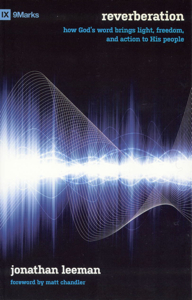
9780802422996mReverberation: How God’s Word Brings Light, Freedom, and Action to His People by Jonathan Leeman. Two years ago I read this book and loved it. Two years and one re-read later I love it even more. Leeman fully understands the sufficiency of Scripture for the life of God’s people and communicates with winsome clarity. His imagery of the word going out from the pulpit and then reverberating through the church’s conversation, conduct, and mission is excellent. The book serves church leaders well as it gives consistent application for how a church runs and worships. Reverberation will help any Christan appreciate the power of God’s word to grow His church, and is one of the best discipling tools a pastor can have in his arsenal.

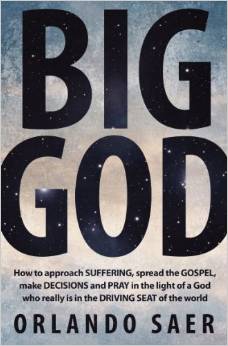
Big GodBig God: How to Approach Suffering, Spread the Gospel, Make Decisions and Pray in the Light of a God Who Really is in the Driving Seat of the World by Orlando Saer. I picked up this book based on the glowing recommendation of Mark Dever and, to be honest, I was a bit disappointed.  Expectations were too high I guess. I do love Saer’s intent: show how a big God (read: a God sovereign over all things) relates to our suffering, evangelism, and prayer. Yet, in spite of having content utterly grounded in Scripture, I found the book – on the whole – to be rather verbose (as the subtitle bears out). The wordiness of Big God is largely due to the overabundance of illustrations. I would have like to see him trim down the anecdotes so that the rich truth he offers doesn’t get muddied in the process.

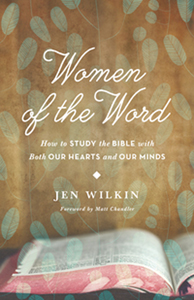
9781433541766mWomen of the Word: How to Study the Bible with Both Our Hearts and Our Minds by Jen Wilkin. This is a good book. A really good book. As a pastor who has seen how often women’s Bible studies can do everything but study the Bible, I deeply resonate with Wilkin’s attempt to restore a rich place to digging deep into Scripture. She rightly says, “I believe there is nothing more transformative to our lives than beholding God in his Word” (18). The book aims to help women by first reorienting what Bible study is: God before me, and mind before heart. She then offers the five-step method of studying with purpose, perspective, patience, process, and prayer. To continue the alliteration scheme, Women of the Word is at times profound, regularly pithy and practical, so pick up and read!

The FarmThe Farm by Tom Rob Smith. I enjoyed Smith’s “Child-44 Trilogy” enough to quickly move on to his most recent novel. The Farm represents a sharp departure from Smith’s previous three books as the book consists almost entirely of one character’s recounting seminal events; a la Flynn’s recent blockbuster. The book begins with a Londoner named Daniel getting a strange visit from his mother, Tilde, unexpectedly returned from a Swedish farm. With terror and purpose Tilde proceeds to explain a labyrinthine tale about life on the farm involving sex trafficking, poison and, yes, murder. At some point in the discourse Daniel’s father calls to say, “Everything your mother believes is a lie.” And so the reader is left trying to discern what parts of Tilde’s fanciful account are true, mistaken perceptions, or outright lies.

Structuring a thriller like this is terrifyingly difficult, and Smith has a hard time with it. The book is strongest when Smith evokes the beauty and menace of rural Sweden; his skill at giving readers a sense of place is what made the Child-44 novels so compelling. Yet, as 75% of the book occupied with Tilde’s narration, the book was always going to rise or fall on her monologue. I guess it’s only fitting that her monologue feel less than lucid.

Click here to find other entries in the Recent Reads series.

It’s a notable Scripture (Heb. 13:7) to show that the ministers of the Word should be eminent in their conversations every way, and that all those to whom they speak the Word of God should see in their conversations the beauty and excellency of the Word of God they speak to them, for people look at the lives of ministers as well as listen to their words. It is not good enough only to be a good man in the pulpit unless it is in the constant way of their conversations. – Jeremiah Burroughs

The Best Way to Serve Your Pastor

Pray for Your Pastor

What is the single best thing church members can do for their pastor? Pray for them.

Any other answer—encourage, attend, serve, give, etc.—are flickering candles when compared to the sun-blazing power of prayer.

The great apostle knew full well the power of prayer. He appealed to the Romans “by our Lord Jesus Christ and by the love of the Spirit, to strive together with me in your prayers to God on my behalf.” He begged the Ephesians to pray “also for me, that words may be given to me in opening my mouth boldly to proclaim the mystery of the gospel, for which I am an ambassador in chains, that I may declare it boldly, as I ought to speak.

Pastors need the prayers of their people to not only survive in ministry but thrive in faithfulness and fruitfulness.

How to Pray for Your Pastor

I imagine few church members need any convincing of the simple point that pastors need their prayers. Yet, at least in my experience, while convinced of the need to pray for their pastors, church members often think, “What exactly should I pray for?” Of course, the easiest way to find out his prayer needs is to simply ask. Another thing a caring church member could do is peruse the Pastorals and pray for God to give what He commands of pastors. But life is busy and demands are many, so I decided to go ahead and put that list together.

Here then is a list of things you could pray for your pastor and be simultaneously certain of two things: 1) they are in accord with God’s will, and 2) they are things a healthy pastor always desires. Pray that:

  • He would warn against false doctrine (1 Tim. 1:3-4).
  • He would do all things in love that flows from a pure heart, good conscience, and sincere faith (1 Tim. 1:5).
  • He wages the good warfare and not reject his conscience (1 Tim. 1:18-19).
  • He would be active in prayer (1 Tim. 2:1-5).
  • He would be above reproach,  sober-minded, self-controlled, respectable, and hospitable (1 Tim. 3:2).
  • He would increase in his ability to teach (1 Tim. 3:2).
  • He would not give himself to drunkenness, violence, quarrels, or the love of money (1 Tim. 3:3).
  • He would love his wife after the model of Christ and faithfully lead his children (1 Tim. 3:4-5).
  • He would train himself for godliness (1 Tim. 4:7).
  • He would set his hope in the living God (1 Tim. 4:10).
  • He would be exemplary in speech, conduct, and purity (1 Tim. 4:12).
  • He would devote himself to reading Scripture and preaching Scripture (1 Tim. 4:13).
  • He would not neglect his gift (1 Tim. 4:14).
  • He would keep a close watch on himself and the teaching (1 Tim. 4:16).
  • He would do nothing from partiality (1 Tim. 5:21).
  • He would not be hasty in decision-making (1 Tim. 5:22).
  • He would grow in contentment (1 Tim. 6:6).
  • He would flee sin and pursue righteousness, steadfastness, and gentleness (1 Tim. 6:11).
  • He would take hold of the assurance of eternal life in Christ (1 Tim. 6:12).
  • He would warn against worldliness and the vanity of money (1 Tim. 6:17).
  • He would guard the gospel (1 Tim. 6:20).
  • He would not be ashamed of the gospel (2 Tim. 1:8).
  • He would joyfully suffer for the gospel (2 Tim. 1:8).
  • He would be strengthened by the grace that is in Christ Jesus (2 Tim. 2:1).
  • He would be active in discipling (2 Tim. 2:2).
  • He would gain wisdom in everything (2 Tim. 2:7).
  • He would rightly handle the word of truth (2 Tim. 2:15).
  • He would avoid gossip (2 Tim. 2:16).
  • He would pursue peace (2 Tim. 2:22).
  • He would have nothing to do with foolish controversies (2 Tim. 2:23).
  • He would be kind to everyone (2 Tim. 2:24).
  • He would patiently endure evil (2 Tim. 2:24).
  • He would correct with gentleness (2 Tim. 2:25).
  • He would avoid false teachers (2 Tim. 3:5).
  • He would preach the word (2 Tim. 4:2).
  • He would always be ready with the truth (2 Tim. 4:2).
  • He would reprove, rebuke, and exhort with patience and clarity (2 Tim. 4:2).
  • He would be active in evangelism (2 Tim. 2:5).
  • He would be disciplined (Titus 1:8).
  • He would hold firm to sound doctrine (Titus 1:9).
  • His teaching would be saturated with sound doctrine (Titus 2:1).
  • He would disciple all generations to godliness (Titus 2:2-10).
  • He would lead with confidence (Titus 2:15).
  • He would disciple church members to be ready for every good work (Titus 3:1-8).
  • He would be wise in church discipline (Titus 3:10-11).

Take those 45 points and just pray for a few each day. You’ll never know the life it will bring to his soul and to your church as a whole.

Save

Save

Book to Look For

9781433543500Good books are vital friends in pastoral ministry. I hope you need no convincing on this point.

I am a firm believer that a the majority of a pastor’s reading, outside of Scripture saturation, ought to be of those books published long ago. Yet, we need to pay attention to recent publications for two reasons: 1) these are the books our members are more likely to read, and 2) many new books are outstanding resources for edification.

Case in point: Greg Gilbert’s 2010 book What is the Gospel? It’s a model of brevity and clarity on matters of first importance. If ever there was a recent publication worthy of finding its way into your church’s bookstore and discipling ministry, Gilbert’s work on the gospel is one of them.

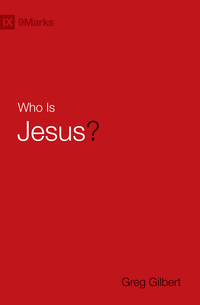
So it is with high expectation I await the publication of his next book, Who is Jesus? Here’s what Crossway has to say about it:

About Who Is Jesus?

A famed historian once noted that, regardless of what you think of him personally, Jesus Christ stands as the central figure in the history of Western civilization. A man violently rejected by some and passionately worshipped by others, Jesus remains as polarizing as ever. But most people still know very little about who he really was, why he was really here, or what he really claimed. Intended as a succinct introduction to Jesus’s life, words, and enduring significance, Who Is Jesus? offers non-Christians and new Christians alike a compelling portrait of Jesus Christ. Ultimately, this book encourages readers to carefully consider the history-shaping life and extraordinary teachings of the greatest man who ever lived.

Table of Contents

  1. What Do You Think?
  2. An Extraordinary Man, and Then Some
  3. King of Israel, King of Kings
  4. The Great “I AM”…
  5. …Is One of Us
  6. The Triumph of the Last Adam
  7. Lamb of God, Sacrifice for Man
  8. Resurrected and Reigning Lord

    A Final Word: Who Do You Say He Is?

It’s due to drop on January 31st, so you’ll have to wait half a year. Given Gilbert’s recent track record, I’m sure this will be a book you’ll want to buy and distribute with great liberality.

Tolle lege!

5 Theses About God’s Word

DSC_1031

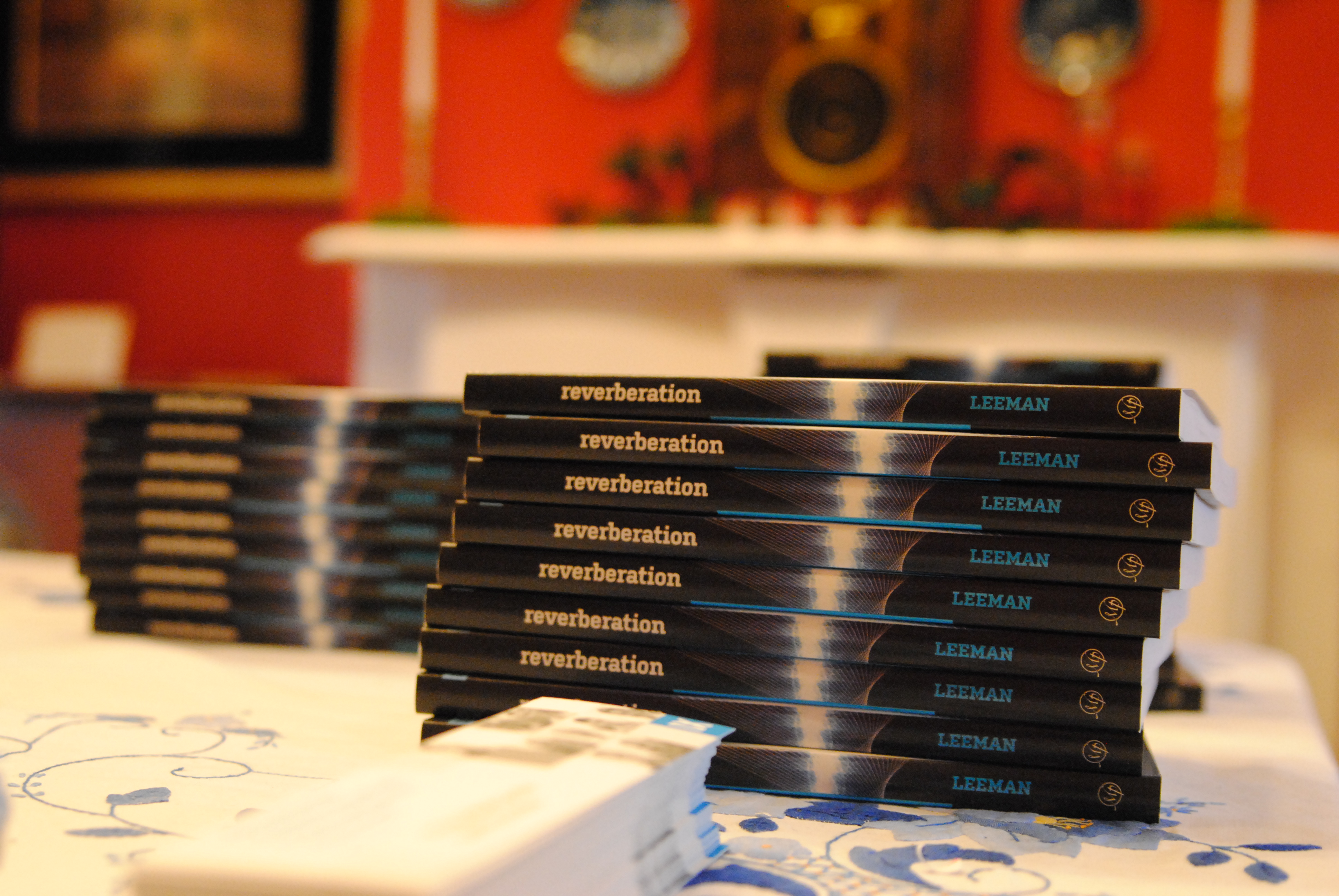
Jonathan Leeman’s Reverberation just might be the best recent publication you haven’t heard of. Carl Trueman, whose endorsement is never glib, is right to say, “This book . . . should be read by pastors, elders, and, indeed, church members.”

Leeman’s burden is to show that “one thing is necessary in our churches – hearing God’s Word through preaching, reading, singing, and praying.” The book powerfully illustrates how the ministry of the Word begins in the pulpit and then reverberates throughout the life of the church as members echo back that word to each other in the ordinary elements of life.

5 RELIABLE STATEMENTS

Before unpacking the more practical realities of the life of the word in the life of the church Leeman offers “five statements that will be foundational for everything else in this book.” Theology before doxology is oh so right.

Because every pastor needs to continually remind himself that God’s word is sufficient for all faith and life – even the growth of a church – consider the five theses along with some choice quotes.

1. God’s Word is an Extension of God. “To hear His words that comprise the whole Bible is to hear Him. To obey His words is to obey Him. To ignore His words is to ignore Him.” “You can measure a person’s opinion of God by his or her opinion of God’s word. That’s why a person who loves God loves His word, and the person who hates God rejects what God has spoken. God’s word is an extension of Himself – His identity, purposes, affections, and power.”

2. God Acts through His Word. “God acts when He speaks. He acts in three ways: He creates, He sustains, and He both establishes and breaks relationships.”

3. God Acts through His Word by His Spirit.“God’s words have power because they move by God’s spirit and do exactly what the Spirit wishes.” “There is no greater power a church has at its disposal than preaching the Father’s Word of the Son working through the Spirit.”

4. God’s Word and Spirit Act Together Efficaciously. “Combined, the Word and Spirit make a difference.” “God’s word does not merely impart information; it creates life. It’s not only descriptive; it’s effective. It produces worship, obedience, communion, and disciples.”

5. God Speaks through Human Preachers and Human Words.“When sending seventy-two disciples out to preach, Jesus tells them, ‘The one who hears you hears me, and the one who rejects you rejects me, and the one who rejects me rejects him who sent me” (Luke 10:16). “God’s Word, working through God’s Spirit, is the most powerful force in the universe and in the church. Father, Son, and Spirit wonderfully conspire to pour forth their power through speech, to accomplish their single will through words.”

MINISTERS OF WHAT?

Dear pastor, remember what you are: a minister of the word. The Word that is able, in and of itself, to creates, sustain, and empower your church’s ministry. Give yourself over to the study of this word. Wash your congregation with the water of God’s word . . . and watch it grow.

Saying Goodbye

MARK - Slider NT

Over the weekend I said goodbye to a friend with which I had become unusually close named Mark. The gospel of Mark that is.

For 315 days his account of Jesus’ life and ministry occupied my thinking in all manner of ways. Sometimes I could have exploded in joy at the discoveries of Mark’s unique portrayal of Christ. Other times I nearly cried out in frustration, wanting the earliest gospel writer to give me more on a particular topic. But overall, I have deep gratitude for Mark. What clarity he gives us about Christ! Is there anything more valuable in a friendship?

In eighteen months of church planting we have preached through 1 Timothy, Ruth, Haggai, and Mark. Yet, for some reason saying goodbye to Mark has affected me in ways I couldn’t put into words.

Until yesterday.

EXPOSITION AS THE MINISTRY OF ETERNITY

On the way home from picking my wife up at the airport1 I realized just what was pricking my soul: I probably will never preach on Mark again. Sure, I may preach a sermon here or there on a particular passage, but I would be quite surprised if I walk through the whole book again. The finality of it all is quite saddening, but oh so useful.

For I have uncovered what is, at least for me, yet another benefit of systematic exposition: it is a powerful reminder of death. Realizing that you may never preach through the book again, never get a chance to do it over and improve it, helps a man learn to number his days and get a heart of wisdom (Ps. 90:12). It helps the preacher minister God’s eternal word with the weight of eternity on his heart. Such a lesson couldn’t have been learned anywhere else than befriending God’s word.

Mark has been a wonderful friend. If you haven’t gotten to know him well, I commend him to you with the highest regards. He will teach, warn, and encourage you in unexpectedly glorious ways.

—————————————————————————————————————

  1. She spent the weekend at TGC’s National Women’s Conference.

Sound Counsel to a Young Pastor

When Robert Murray M’Cheyne went on an exploratory trip to Israel for his denomination he chose a young 24 year old named William Chalmers Burns to be the interim pastor.

PASTORAL COUNSEL FOR THE AGES

mccheyneUnable to see Burns face to face one last time before his departure M’Cheyne sent a letter full of sober-minded counsel to the man God would use to bring revival among his beloved congregation. M’Cheyne’s advice is timeless and timely for every pastor, no matter his season of ministry:

Take heed to thyself. Your own soul is your first and greatest care. You know a sound body alone can work with power; much more a healthy soul. Keep a clear conscience through the blood of the Lamb. Keep up close communion with God. Study likeness to Him in all things. Read the Bible for your own growth first, then for your people. Expound much; it is through the truth that souls are to be sanctified, not through essays upon the truth. Be easy of access, apt to teach, and the Lord teach you and bless you in all you do and say. You will not find many companions. Be the more with God.

A sound target full of biblical wisdom.

Recent Reads

I love to read. By God’s grace I am a pretty fast reader; I usually read a couple books each week. I find it helpful to summarize my thoughts on each book and I offer those thoughts in the hope that you will be encouraged to either read or pass over the given title.

9780851510859mRobert Murray M’Cheyne by Andrew Bonar. I guess every pastor has their favorite, stirring figure from church history. For the longest time I thought Jonathan Edwards was mine. But am beginning to think Mr. M’Cheyne may prove to be the captain of my All-Star Church History team. His good friend Andrew Bonar surely occupies a central place in making M’Cheyene’s life and ministry prominent in evangelicalism. It’s been five years since I last read about the life and ministry of the holy Scotsman, and I am glad I took up once again. The Spirit seems pleased to use M’Cheyne’s passion for holiness and the conversion of souls in uniquely challenging ways. An excellent book!

indexGod’s Polished Arrow: W.C. Burns; Revival Preacherby Michael McMullen. I came across this book in a footnote in David Beaty’s An All-Surpassing Fellowship. Burns was the 24-year-old preacher M’Cheyne called on to occupy his pulpit during the exploratory to Israel. Said to have have a stronger voice than even Spurgeon, God reigned revival down on M’Cheyne’s congregation through Burns. Eventually Burns became a missionary to China and was a close friend of Hudson Taylor. His is a fascinating life forgotten to history. McMullen must be commended for resurrecting the story of Burns for the 21st century. God’s Polished Arrow includes McMullen’s 130 page biography of Burns as well as journal extracts, letters, and sermon notes.

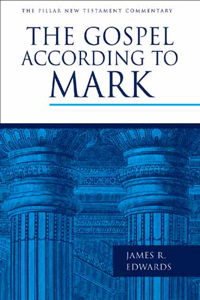
0802837344mThe Gospel According to Mark by James Edwards. Lord willing, tomorrow night we finish up a sermon series on Mark at IDC and while I consulted many different commentaries throughout, I only read a few cover to cover. Edwards’ work in the Pillar series was, by far and away, my favorite resource. His work with original sources and languages is appropriately done; his application pointed, and at times, masterful; and his conclusions sound. If you are preaching through Mark and don’t have this one, buy a copy today. If you plan to preach through Mark in the near future, make sure this work occupies a prominent place during your series.

Here are the other resources on Mark I read in their entirety:

  • The Expositor’s Bible Commentary: Mark by Wessel and Strauss. A lucid commentary that doesn’t unnecessarily belabor points. Solid on application as well, especially in the earlier chapters of Mark.
  • Let’s Study Mark by Sinclair Ferguson. If Ferguson has published a work on the particular book I am preaching through I will always get it. Like all the volumes in the Let’s Study Series, this one is pithy and pointed.
  • Mark by RC Sproul. Like Ferguson, if Sproul has a book on it, I will buy it. He is particularly strong on historical context and etymology. For a homiletical commentary, it’s lacking in application and implication.
  • Expository Thoughts on Mark by JC Ryle. Not as good as his Thoughts on John, but his comments are welcome in their warm brevity.

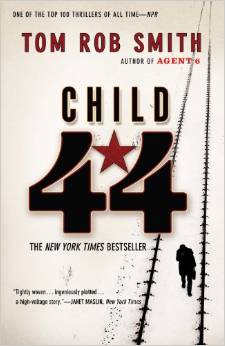
child 44Child 44 by Tom Rob Smith. What a book! The pages turn quite rapidly in this thriller set in the Soviet Union of the 1950s. It’s so good that one can hardly believe this is Smith’s first offering as a published author. It’s the first of a trilogy involving a Russian security officer named Leo Demidov, a man growing increasingly disenfranchised with the Stalinist machine of which he is a part. When he uncovers a series of serial murders he is forced out of his job and left, only with the aid his wife, uncover the truth behind the murder – a crime not even recognized in the Soviet motherland. Eventually the reader finds how who the killer is, but a delightful game of, “Why did he do it ensues?” Sometimes the “why did he do it” is more enjoyable than the “who did it” twist. Read for the thrills and let the historical portrait of Cold War Russia sweep you away.

Secret SpeechThe Secret Speech by Tom Rob Smith. While not as enthralling as Child 44, the second book in Smith’s Russia trilogy is still a moving portrait of the fear and personal angst that so many experienced in the Cold War Soviet states. I was delighted to find Khrushchev famous “Secret Speech” play such a pivotal – and titular – role. The reader is swept all way from Moscow, to Siberian gulags, and then to the Hungarian Revolution of 1956. These books aren’t properly “historical fiction,” but they sure would fit the bill. I didn’t find the antagonist terribly believable, but the emotional angst of Demidov’s adopted daughter seeking his life is oh so compelling. On to book three . . .

Agent 6Agent 6 by Tom Rob SmithYou have to give Mr. Smith some credit with this trilogy for his doesn’t fall into predictability or conformity. No two books are alike. Agent 6 beautifully highlights his dexterity. One day in New York City consumed the book’s first half, then the next two scenes jump the reader in time across 15 years and millions of miles as the Afghanistan replaces the US. The Soviet invasion of Afghanistan thus becomes the perfect backdrop on which Demidov’s depression and pain can boil over. The book’s ending left, at least for me, much to be desired as the truth lurking in the shadows was apparent early on. Thus, the “reveal” was less than revelatory. The Demidov books are a  fantastically enjoyable series all around, and thankfully are free from the “salacious”. Excellent read.

Click here to find other entries in the Recent Reads series.