Experience and Preaching

Preach_the_Word_wide_t_nv

Last year I said one of the most difficult distinctions in preaching is the one between preaching among the congregation not just at the congregation. Earlier this month I offered up another vital nuance: preaching in the text not merely about the text.

Today I want to highlight another one. You gotta love precision.

The Framian perspectivalists might smell something here, but rest assured I have no intention of turning these distinctions into some homiletical triad. If you can do it, I’m all ears.

Here then is the distinction I want to briefly consider today: preaching from your experience versus preaching about your experience.

DANGER LURKS AROUND THE CORNER

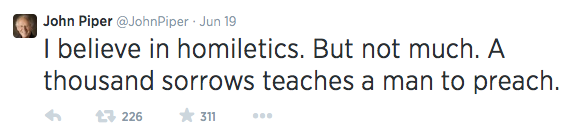
A tweet by Piper actually stirred up my thinking on this issue. He wrote,
Screen Shot 2014-06-25 at 10.32.12 AM

Amen. Nothing will teach a man to preach like the experience of cross-bearing. Sorrows will bend and break the preacher in ways no techniques of homiletics can. Lord willing, those formations of experience create Christlike pulpiteers.

But we need to recognize that experience is a dangerous thing when it comes to preaching. In an evangelical culture that craves authenticity, preachers will be tempted to include many personal anecdotes to connect with a congregation. Over and over, we are told, “You must be transparent. Transparency moves.” And they are right, it does move! Yet, we are preachers of the word, not self. Too many personal illustrations will lead a discerning hearer to say, “It seemed like there was more of Preacher in that sermon than Jesus.”

One of my favorite preachers growing up, who is still extremely popular, often gave sermons which felt like “The Story Factory.” His strength of illustration was, and is, astounding. To his credit, every illustration clearly illuminated biblical truth. However, as I matured what I craved was not hearing his personal experiences, but hearing a word-saturated sermon empowered by cross-shaped experience.

We need pastors who preach from their experience not just about their experience.

HUMBLE EXPERIENTIAL PREACHING

Here’s what I am trying to get at. Faithful preachers are obedient preachers. Obedient preachers are those who take up their cross and follow Christ. Such men will inevitably face hardship, pain, and suffering in the ministry. We need to let those trials function as something like sermonic seasoning. Open up a faithful preacher’s Homiletical Pantry and what should we find? Holy spices named Humility, Tenderness, Earnestness, and Reverence. Those qualities ordinarily come through Spirit-wrought experience and flavor the sermon with tasty holiness. And that, to update Mr. M’Cheyne, is what my people need most.

So how exactly does God’s mortal and pestle grind out godly sermons? Consider these examples:

  • We have seen the ghastly stain of sin that still mars our heart. So when we preach on sin we do so from experiential humility.
  • We have seen infants die and cancer afflict too many bodies. So when we preach on suffering we do so from experiential tenderness.
  • We have seen friends and family, whom we’ve loved, dilly dally with the things of God and His gospel. So when we we call sinners to faith and repentance we do so from experiential earnestness.
  • We have seen, through study, the blinding holy-love of God and the preciousness of His truth. So when we preach His word we do so from experiential reverence.

Preacher, don’t fall into the modern morass calling for sermons saturated with stories of your experience. Sprinkle them in when its wise. What’s best is saturating your sermons with the truth of God’s word falling from a soul shaped by the cross. Preach from your experience rather than about your experience.

The Interrogation Room

Interrogative Preaching

It’s not uncommon today to find people, Christians even, who view the preaching event as a mere monologue. But faithful preaching is far from a banal harangue.

In his masterful book Between Two Worlds John Stott advocates a “silent dialogue” in preaching. He writes,

[In every sermon a] silent dialogue should be developing between the preacher and his hearers. For what he says provokes questions in their minds which he then proceeds to answer. His answer raises further questions, to which he again replies. One of the greatest gifts a preacher needs is such a sensitive understanding of people and their problems that he can anticipate their reactions to each part of his sermon and respond to them. . . . We want to provoke people to think, to answer us and argue with us in their minds, and we should maintain such a lively (though silent) dialogue with them that they find it impossible to fall asleep.

Amen. A proper “silent dialogue,” in its most basic form, anticipates the audiences struggles with the text and offers clarity from the text.

But let me take the silent dialogue further in order to ramp up the congregational conversation.

INTERROGATION, INTERROGATION

Maybe it’s because I read too many detective novels or grew up watching too many detective novels, but I love a good interrogation. I appreciate an interrogation scene with such masterful attention to nuance that falsehoods unravel in an instant. Or clarity cuts through the cloud with precision.

Faithful preachers will give such attention to nuance in pursuit of clarity as they preach. We do this by asking our congregation questions. Rhetorical, interrogative questions engage the hearer’s heart and mind, amplifying the silent dialogue, and saving Eutychus.

It’s not uncommon for me to listen to a dozen or so sermons throughout the week, from outstanding preachers no less, and the use of the interrogative seems to be heading the way of the saber-toothed tiger. In other words, it’s vanishing.

But let me offer a small attempt to save the species from extinction.

HONING YOUR QUESTIONING SKILLS

It could be that those expert preachers I listen to are, well, expert in their delivery. So forceful and attractive are their expositional skills that they need not pursue the silent dialogue to keep attention. But we lesser men need to use all the tools at our disposal and thus need to sharpen our interrogation skills.

In every text we have an abundance of opportunities to question our congregation. Sometimes those questions address objections, other times it points to common shortfalls in understanding, or they point the hearer to faithful application of the truth.

Here are a few examples, from recent sermons, of how I tried to engage my congregation in silent dialogue via interrogation:

  • After reading about Jesus’ silence before Pilate I asked that age old, elementary question of, “Why?” Saying, “Why did Jesus not open His mouth?”
  • When meditating on Jesus’ silence in the face of false accusation (Mark 15:5) I asked, “When was the last time your were falsely accused? What was your immediate reaction?”
  • When showing how the crowd in Mark 15:12-15 call for the release of Barabbas instead of Jesus I asked, “Every day the enemy of mankind and Lord of mankind call you to follow, whom will you choose? False saviors that make promises they never can fulfill, or the Savior who Himself is the greatest promise?”
  • When talking about the people’s ironic mockeries thrown at Jesus while he was on the cross (Mark 15:26-23) I asked, “Do you see here how the human heart can stand right in the face of truth and yet utterly miss the truth? Could the truth of Christ possibly be staring at you in the face tonight and yet you still miss it?”
  • When explaining how the wrath of God fell on Jesus to such a degree that the land went dark for three hours (Mark 15:33) I asked, “What do you think about this wrath of God? Is it an attribute to be announced and amplified? Or minimized and muted?”
  • This week I, Lord willing, will preach on Joseph of Arimathea and his burial of Jesus. After explaining who Joseph was from Mark 15:42-44 I hope to say, “I wonder if any of you are quite like Joseph. Are you settled in your faith, but somewhat secret with it?”

A TOOL NOT TO BE UNDERESTIMATED

Interrogation is one of the most basic parts of human conversation. From their earliest ability to speak children ask their parents, “Why?” We preachers need to seize on this ordinarily element of humanity and employ it unto congregational engagement.

When you ascend to the sacred desk this week, reverently think about it as though you have come to the interrogation room. Question them, poke, prod, and uncover their soul so they might discover the glorious of Christ.

Reading for Preaching

Saving-EutychusI’ve heard many preachers offer some variation on this comment, “Don’t read books on preaching, just listen to good preaching.”

And that’s sound advice for sure. Because certain aspects of good preaching can be taught, but so much of it is caught. Thus, the best thing young and aspiring preachers can do is regularly sit under sound preaching. This is even one reason why pastors ought not fill the pulpit every single week, for they too need to sit and be sharpened. Listening to podcasts or mp3s is all fine and dandy, but it is still no replacement for the visual event of preaching.

YET, ONE COMES ALONG WORTH READING

Every once in a while, however, a book comes along on the topic of preaching and it falls into the “must read” category. For me, those books usually are not methodologies of preaching nor theologies of preaching1, they are better categorizes as “experiences of preaching.” These books come from seasoned pastors who have the correct principles of preaching in place, but the bulk of the work offers up practices for consideration. How do you prepare a sermon? Structure a sermon? Deal with discouragement in preaching?

One recent book worthy of any preacher’s attention is Gary Millar and Phil Campbell’s Saving Eutychus: How to Preach God’s Word and Keep People Awake.

As a rule of thumb, if D.A. Carson endorses a book, you need to pay attention. His recommendations are few and thoughtful. Consider what he says about Saving Eutychus:

I have read books on how to make sure your sermon is interesting, and I have read books on how to make sure your sermon is faithful to the text, but this book wants your sermon to be both. If I could, I would make this little book mandatory reading for seminarians everywhere, and then urge them to read it a couple more times during the course of their ministry. It avoids cutesy and manipulative suggestions, and makes its practical points while urging integrity, faithfulness, and imagination. Many books on preaching are published every year; this one is a ‘must.’

PUT IT INTO YOUR SHOPPING CART

Filled with humor and immediately employable wisdom, I can’t see how any preacher wouldn’t benefit greatly from this book. I found it so compelling and challenging that my prayers before preaching regularly include a petition that God would “save Eutychus.” We need more preaching books like this one.

If you haven’t read it yet, make sure to buy a copy today.

  1. Yet, such books are valuable. Click here to see my post “3 Books Every Pastor Should Read: On Preaching.”

A Festival, Not a Funeral

Good FridayFor the last few weeks I’ve been preaching through Mark 15 and the events of Good Friday. Sadness and loss imbued the first century followers of Christ as our Lord was rejected, beaten, mocked, and killed.

And there is a sense in which such emotions are appropriate for the 21st century Christian. But they ought to never dominate our thinking of Good Friday. Why? For we know how the story ends! We know the fulness of what Christ did on that cross in a way the 1st century participants did not immediately comprehend.

With typical eloquence, Spurgeon encouraged his people to see Good Friday more as a festival, than a funeral:

The Lord of life and glory was nailed to the accursed tree. He died by the act of guilty men. We, by our sins, crucified the Son of God.

We might have expected that, in remembrance of his death, we should have been called to a long, sad, rigorous fast. Do not many men think so even today? See how they observe Good Friday, a sad, sad day to many; yet our Lord has never enjoined our keeping such a day, or bidden us to look back upon his death under such a melancholy aspect.

Instead of that, having passed out from under the old covenant into the new, and resting in our risen Lord, who once was slain, we commemorate his death by a festival most joyous. It came over the Passover, which was a feast of the Jews; but unlike that feast, which was kept by unleavened bread, this feast is brimful of joy and gladness. It is composed of bread and of wine, without a trace of bitter herbs, or anything that suggests sorrow and grief. …

The memorial of Christ’s death is a festival, not a funeral.”1

The takeaway for preachers? Let joy permeate your spirit when you proclaim the glories of Calvary. Be reverent, not flippant. But don’t be dour as though you have come to a funeral. The opposite is true, you have come to the soul’s festival of salvation.

  1. The Metropolitan Tabernacle Pulpit No. 2248, “Sad Fasts Changed to Glad Feasts.”

An Awful Weapon

mccheyneAlthough he only lived until the age of 29, Robert Murray M’Cheyne left a timeless collection of writings on which countless Christians have fed for over 150 years.

But his writings cannot compare to the holiness his life preached every week.

Undoubtedly the most pastorally encouraging and challenging book I’ve read in recent memory is David Beaty’s An All Surpassing Fellowship: Learning from Robert Murray M’Cheyne’s Communion with God. In it he offers the following reflection:

M’Cheyne believed that ministers, especially, should pursue and give evidence of holy lives. To Rev. Dan Edwards, he wrote, ‘Remember you are God’s sword, – His instrument, – I trust a chosen vessel unto Him to bear His name. In great measure, according to the purity of perfections of the instrument, will be the success. It is not great talents God blesses so much as great likeness to Jesus. A holy minister is an awful weapon in the hand of God.’ To another pastor, he wrote, ‘Study universal holiness of life. Your whole usefulness depends on this, for your sermons last but an hour or two, your life preaches all the week.’

Dear pastor, give yourself to this study. Spend His energy (Col. 1:28) striving for the holiness without which no one will see the Lord (Heb. 12:14). That is what your people need more than anything else.

Sounds from the Stone Pavement

MARK - Slider NT

In Mark 15:1-20 we come to the final hours of our Lord Jesus as he stands at The Stone Pavement on trial before Pilate.

It is a part of Mark’s gospel familiar to Christians and non-Christians alike. And thus we must recognize that danger lurks in these pages. The danger is that such familiarity constrains our ability to be freshly affected. Spurgeon, when preaching on this text, said, “I hope that you will not be wearied with this subject. If so, it will be the fault of the preacher, for the subject is always full and fresh. Or if the preacher is not to blame, there will be something of censure due to his hearers. If we grow tired of the story of the Cross it will be a sad indication of secret soul-sickness.”1

In God’s good kindness He calls us to look to His word so that our soul-sickness and soul-slumber might be exposed.

THE SOUL’S ALARM CLOCK

For have you ever considered how much the truth of God’s word is like a spiritual alarm clock for the soul? Through His work God speaks and summons us to life and joy because of Christ’s sacrifice. He calls us to wake up! And the sound of this alarm in Mark 15:1-20 has two primary beats on which I want to meditate as we close.

The Stone Pavement calls for reckoning with Christ. We see in Pilate the reality that fascination with Jesus doesn’t equal faith. He is amazed and interested at Jesus, but when the cries of the worldly crowd get loud he figures its time to be done with the supposed king. Some of you like Pilate and the crowd need to reckon with the truths of Christ. He is no mere man to be amazed at, He is the King who demands your faithful allegiance. Every day the enemy of mankind and Lord of mankind call you to a reckoning, whom will you follow? False saviors that make promises they never can fulfill or the Savior who Himself is the greatest promise? Let your reckoning with Christ then lead to the second sound.

The Stone Pavement calls for thanksgiving in Christ. I’ve always wondered what Barabbas did the rest of that Good Friday. Did he make the walk up to Calvary later that afternoon and watch as the Christ was crucified in his place between his friends? Or did he walk away only to give occasional thought to the man who was his substitute? Church, let us acknowledge that so often we do the latter. We walk away from the glorious substitution of Christ and only infrequently remember what He did. Oh, but the every time the gospel is announced it is like a Thanksgiving holiday for the soul! The church’s corporate gathering is a weekly summons to consistent thanksgiving, for it is here we sing and hear the good news. And is there any greater ground for gratitude than this gospel of substitution?

He took the accusation.

He took the condemnation.

He took the humiliation.

And gave you salvation.

Hear the King’s silence before Pilate, see the King’s substitution for Barabbas, feel the King’s shame at the battalion’s mockery, and come to a reckoning with Christ that leads you to thanksgiving in Christ. What joyful news we have and herald: The Son was shamed for sinners.

The post is adapted from my recent sermon, “The Savior’s Sentence.”

—————————————————————————————————————

  1. Spurgeon, The Metropolitan Tabernacle Pulpit, No. 1644.

Have a Plan – Pt. 2

Praying Pastors 2

Last week I encouraged pastors to read through the entire Bible at least once a year. One of your best friends in such an endeavor will be a Bible reading plan. Ministers of the word must plan to read the word.

The same thing goes with that other half of pastoral ministry: prayer.

IN NEED OF A PLANNED TIME

Carson makes this point with typical verve in A Call to Spiritual Reformation when he writes,

Much praying is not done because we do not plan to pray. We do not drift into spiritual life; we do not drift into disciplined prayer. We will not grow in prayer unless we plan to pray. That means we must self-consciously set aside time to do nothing but pray.

Pastor, do you have such set aside time?

Carson’s quote reveals the first part of planning to pray: our schedule must include regular times devoted to nothing but prayer. If that is a universal rule of wisdom, the uniqueness then comes in when each pastor looks at his own schedule and discerns when such times are right. My recommendation is to schedule three blocks of time per day – morning, afternoon, and evening – with one devoted to extended prayer. I personally find I am best suited for extended prayer in the afternoon.

IN NEED OF A PLANNED LIST

To ensure that set aside time is productive the ordinary pastor will need a prayer list. Thus, the second part of planning to pray is: our devoted prayer times will need a prayer list to protect faithfulness in the various areas of biblical prayer.We all know how hard this is. Some major in confession, others intercession, yet others thanksgiving, and oh so many more in simple petition. But we want to – and need to – do all those things everyday! A straightforward list is necessary here. Everyone’s system will be different, but you will need a system. I encourage pastors to have a list with specific categories. Here are the categories I typically pray through:

  • Personal
  • Family
  • Pastoral Ministry
  • Church Life
  • Intercession

I then take those categories and subdivide them into areas of praise/thanksgiving, confession, petition, and intercession. As much as possible I try to update these lists at least once a week. That way, whenever I enter the closet for an extended time of prayer I am never short of items to focus my attention. In fact, if you are good with updating your list and categories I think you will soon figure out how easy it is to pray in an extended manner. And when you reach that point you are heading in the right direction.

So make a a plan and get to praying this day . . . and don’t forget your church directory!

A Series Worth Serious Investment: Vol. 3

Pastors and Reading

Among the many words one can use to describe D.A. Carson “prolific” is quite a good one.

This servant of God has published standard commentaries on Matthew and John, a perennial bestseller in the seminaries, a slim volume every pastor should own, and as good a book on prayer as you will find.

A MAGISTERIAL SERIES IN THE MAKING

What some people don’t know however is that Carson is in the midst of editing a marvelous series published by IVP titled New Studies in Biblical Theology. The series’ aim is to

. . . address key issues in the discipline of biblical theology. Contributions to the series focus on one or more of three areas: (1) the nature and status of biblical theology, including its relations with other disciplines (e.g. historical theology, exegesis, systematic theology, historical criticism, narrative theology); (2) the articulation and exposition of the structure of thought of a particular biblical writer or corpus; and (3) the delineation of a biblical theme across all or part of the biblical corpora.

Above all, these monographs are creative attempts to help thinking Christians understand their Bibles better. The series aims simultaneously to instruct and to edify, to interact with the current literature, and to point the way ahead.

If you’ve got the ability to do so, buy the whole set of 26 (more are on the way) over at WTS Books and get reading. If not, here are few individual titles well worth your money and study.1

A PLACE TO START

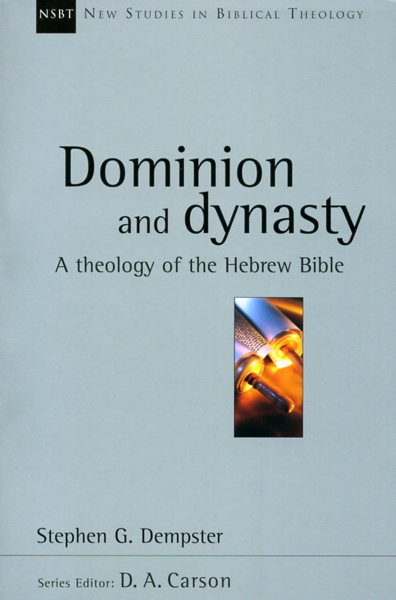
0830826157Dominion and Dynasty: A Study in Old Testament Theology by Stephen DempsterChristian theologians rarely study the Old Testament in its final Hebrew canonical form, even though this was very likely the Bible used by Jesus and the early church. However, once read as a whole, the larger structure of the Hebrew Bible (Tanakh) provides a “wide-angle lens” through which its contents can be viewed.

In this stimulating exposition, Stephen G. Dempster argues that, despite its undoubted literary diversity, the Hebrew Bible possesses a remarkable structural and conceptual unity. The various genres and books are placed within a comprehensive narrative framework which provides an overarching literary and historical context. The many texts contribute to this larger text, and find their meaning and significance within its story of “dominion and dynasty,” which ranges from Adam to the Son of Man to David, and to a coming Davidic king.

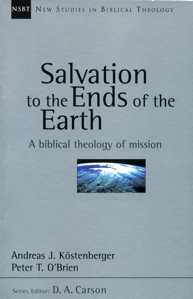
0830826114mSalvation to the Ends of the Earth: A Biblical Theology of Mission by Andreas Kostenberger and Peter O’BrienFew biblical topics are as important as mission. Mission is linked inextricably to humanity’s sinfulness and need for redemption, and to God’s provision of salvation in the person and work of Jesus Christ. This “good news” of salvation must be made known! The saving mission of Jesus constitutes the foundation for Christian mission, and the Christian gospel is its message. According to Andreas Köstenberger and Peter O’Brien, this significant theme has rarely been given its due attention in biblical theology.

Motivated by their passion to see God’s mission carried out in today’s world, they offer a comprehensive study of the theme of mission. In Salvation to the Ends of the Earth they explore the entire sweep of biblical history, including the Old Testament, the second-temple period, each New Testament Gospel, Paul and his writings, and the General Epistles and Revelation.

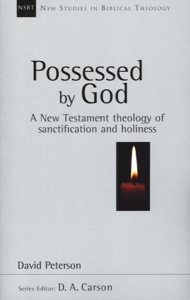
9780830826018mPossessed by God: A New Testament Theology of Sanctification and Holiness by David PetersonDavid Peterson challenges the common assumption that the New Testament views sanctification as primarily a process. He argues that its emphasis falls upon sanctification as a definitive event, “God’s way of taking possession of us in Christ, setting us apart to belong to him and to fulfill his purpose for us.” Simply to identify sanctification with growth and holiness, he contends, obscures the emphasis and balance of New Testament teaching and creates unrealistic expectations.  Throughout this study Peterson builds his case on the careful exegesis of relevant passages, with a keen eye for the pastoral implications of his findings.

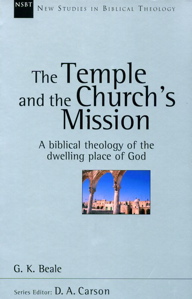
0830826181mTemple and the Church’s Mission: Biblical Theology of the Dwelling Place of God by G.K. BealeIn this comprehensive study, G. K. Beale argues that the Old Testament tabernacle and temples were symbolically designed to point to the end-time reality that God’s presence, formerly limited to the Holy of Holies, would be extended throughout the cosmos. Hence, John’s vision in Revelation 21 is best understood as picturing the new heavens and earth as the eschatological temple.

Beale’s stimulating exposition traces the theme of the tabernacle and temple across the Bible’s story-line, illuminating many texts and closely-related themes along the way. He shows how the significance and symbolism of the temple can be better understood in the context of ancient Near Eastern assumptions, and offers new insights into the meaning of the temple in both Old and New Testaments.

0830826211mShepherds After My Own Heart: Pastoral Traditions and Leadership in the Bible by Timothy LaniakMost of Israel’s pastoral imagery is grounded in two traditions: Moses as God’s under-shepherd and David as shepherd-king. These traditions, explains author Timothy S. Laniak, provided prototypes for leaders that followed, and formed the background for the ministry of Jesus, the good shepherd. The pastoral role was central to the ongoing life of local churches in the Christian movement, and today’s pastors are still called to be shepherds after God’s own heart, to lead his people, living on the margins of settled society, to their eternal home.

In this excellent study, Laniak draws on a wide range of Old and New Testament texts to develop the biblical theology of “shepherd” imagery, and concludes with some principles and implications for contemporary pastoral ministry. A wonderful resource for pastors, teachers and seminary students, as well as readers interested in the study of biblical imagery.

Click here to see previous entries in the “A Series Worth Serious Investment” series.

  1. All following descriptions are taken from the publisher.

Sermon Preparation as Thanksgiving

Sermon Preparation as Thanksgiving

Pastor, have you ever thought of sermon preparation as a weekly Thanksgiving holiday? Let’s just briefly consider how the work of sermon prep is high octane fuel for gratitude.

OCCASIONS FOR THANKSGIVING

If you get illumination into the text’s truth – give thanks.

If you receive heart-searching application to give to your congregation – give thanks.

If you understand how your text organically points to Christ – give thanks.

If you gain a deeper understanding of God’s character – give thanks.

If you have a sermonic structure that’s memorable and persuasive – give thanks.

If you see how your text uniquely heralds the gospel to an unbeliever – give thanks.

If your affections for God’s glory in Christ increase through the preparation – give thanks.

If your heart is moved to confess sin in light of your text – give thanks.

If you gain helpful illustrations or metaphors to adorn the passage – give thanks.

We could go on and on. If we see sermon preparation as a powerful means of grace, what type of people ought we pastors to be but those “always abounding in thanksgiving?”

The Beautiful Game

Precious few things will cause me to deviate in this space from things related to ordinary ministry through the ordinary means. But today I venture out of the ordinary and into the extraordinary.

For this afternoon the 2014 World Cup begins.

“Praise God from whom all blessings flow . . .”

For the next month I will be glued to the drama soon to unfold down in Brazil and you should be too. Remember, our God reigns over the nations, and those nations are transfixed with “the beautiful game.”

To whet your appetite I give you the greatest American moment from the 2010 World Cup.

My man Landon1 shook up the country with his 92nd minute strike against Algeria to secure the team’s place into the Round of 16.

And I celebrated with seminary students in, of all places, Charlotte, North Carolina. I had traveled out to RTS for a summer module and actually thought hard about dropping the class when I noticed it would cause me to miss the USA’s final group game against Algeria. World Cup Soccer does things to me few people understand. But I went, and in God’s providence the scheduled class ended early on that fateful day of June 23, 2010.

The classmate on my left, one brother named Joel, pulled up the game on espn.com and we were able to watch the nail-biting final twenty minutes. I wish someone would have taken a video of us that day for we would surely have made the YouTube offering above. Fifteen seminary students – many of whom cared little about soccer – were huddled in close to a fifteen inch screen yelling, pounding tables, and crying out in exasperation. When LD smashed home the game winner we made such a ruckus that all the administrative staff ran upstairs to see what the emergency was.

What a day.

What a moment.

What a game.

—————————————————————————————————————

  1. I had the occasion to play with him on the Olympic team during our failed bid to make the 2004 Summer games in Athens. Not to mention the other times I had to chase him around the field during my few years in the MLS.