Recents Reads

I love to read. By God’s grace I am a pretty fast reader; I usually read a couple books each week. I find it helpful to summarize my thoughts on each book and I offer those thoughts in the hope that you will be encouraged to either read or pass over the given title.
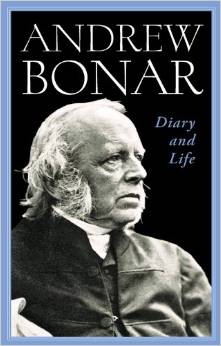
Andrew BonarAndrew Bonar: Life and Diary.I recently reread Bonar’s edited volume on Robert Murray M’Cheyne and noticed on the dust jacket a commendation of Bonar’s own “Life and Remains.” The Church of England Newspaper proclaimed, “The whole volume is a devotional gem, far removed from the passing superficiality of many of its modern counterparts. Its very profundity and realism will help a disheartened Christian and revive the weary ministry.” I can testify to such sentiment. God used this window into Bonar’s soul mightily in my life. Like his great friend M’Cheyne, Bonar was convinced that “it is not great talents God blesses so much as great likeness to Jesus” and that “unholiness lies at the root of our little success.” Bonar has taught me much about humility, self-denial, and the primary of holy prayer. These are lessons I need to relearn daily and so I expect drink from Bonar’s diary with great frequency.
9781871676952mThe Soul-Winner: Advice on Effective Evangelism by Spurgeon. The Prince of Preachers would surely be at, or near, the top of any list ranking church history’s most effective evangelists. Winning souls was his passion and this volume aims to instill that passion in every Christian. The first six chapters contain lectures to his Pastor’s College students and these will be most valuable to pastors. The rest of the volume consists of various addresses or sermons on the titular topic delivered to Sunday-school teachers, open-air preachers, and church members of the Tabernacle. Spurgeon sparkles with typical pithiness and sound wisdom, and the two chapters on “Qualifications for Soul-Winning” ought to be required reading for every church leader. Highly recommended!
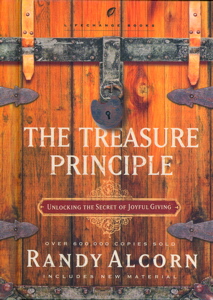
1590525086mThe Treasure Principle by Randy Alcorn. Alcorn’s thesis is simple when it comes to money: “You can’t take it with you, but you can send it on ahead.” It’s all built on Matthew 13:44 and the man who finds a treasure hidden in a field and, in his joy, sells everything he has to purchase the field. So the book is simple and biblical. To those we must add, “Wise.” Over and over Alcorn deposits little nuggets of wisdom into the souls of his readers, such as, “My heart always goes where I put God’s money,” and, “Giving is the only antidote to materialism.” Not many “bestsellers” of the last decade are worth your investment, but The Treasure Principle is one of the few. I imagine every penny you spend on it will cause many more to stretch into eternity.

SilkwormThe Silkworm by Robert Galbraith. JK Rowling returns to detective work under her chosen pseudonym of Robert Galbraith. Just over one year ago Rowling introduced readers to Cormoran Strike, a private investigator who prowls the streets of London with tenacity and skill, in The Cuckoo’s Calling. That delightful page-tuner was made all the more interesting in that the reader was able to sense something of Rowling’s inner thoughts on celebrity and fame, as the novel’s central victim was a world renown model. The Silkworm is a satisfying continuation of the Srike series; the pages fly and this time we hear Rowling’s thoughts on authors and publishing. One Leonora Quine calls on Strike to find her husband, a somewhat famous author, whose gone missing. Owen Quine eventually turns up as the victim of a grotesque murder and Strike moves to ensuring the Mrs. Quine isn’t wrongly accused as his murderer. Quine’s last – and unpublished – work, Bombyx Mori, holds the all clues to his death. The ensuing investigation is engrossing.

The book is longer than it needs to be and the ending is anticlimactic, yet Rowling succeeds with aplomb in matters of character development and nuanced perspective. The Strike series will supposedly stretch to seven novels and I am eager for the third to drop.

Shadow of the WindThe Shadow of the Wind by Carlos Ruiz Zafon. I can’t remember the last fiction book I read that was as impressive a read as The Shadow of the Wind. The book begins in 1945 in Barcelona as a young boy named Daniel journeys to The Cemetary of Forgotten Books with his bookseller father. Daniel eventually chooses – mostly for its attractive binding – the eponymously titled ”The Shadow of the Wind,” by an obscure Spanish writer, Julián Carax. And little Daniel’s life changes forever. As one review says, “The main story is too zestfully convoluted to set out in any detail and allow space for the lush side stories that weave through it.” Suffice it to say, Daniel’s subsequent search for Carax is like a lovely Matryoshka doll filled with thrillingly tragedies and alluring victories. Although I uncovered the book’s twist almost from the outset, Zafon kept my attention with the dialogue – oh, the dialogue! The conversations regularly sing with almost perfect pitch. Stephen King sums it all up quite well, “This is one gorgeous read.”

Tolle lege!

Click here to find other entries in the Recent Reads series.

A Double Portion for Your Hearers

When The Seats Are Empty
A few weeks ago I mentioned how faithful attendance to their church’s corporate gathering is the most powerful, yet least talked about, way church members can encourage their pastor.

Yet, as every pastor knows, there are two menacing enemies to such encouragement; one is named Summer, and that other goes by the moniker of Holiday.

We know the feeling full well. The school year ends and it’s not uncommon to find the chairs or pews a bit less full in the warm months of the year. Or a national holiday decides to land on a Saturday or Sunday and your flock scatters to four winds of family, fun, vacation, and party.

Summer and Holiday can steal the joy of any preacher.

But they need not succeed in such thievery.

A DOUBLE PORTION OF BLESSING

Earlier this week I listened to an old Piper sermon on Charles Simeon and came across the best way to combat the blues preachers often feel when Summer and Holiday decide to show up.

Simeon face peculiar opposition for much of his ministry. As a way to protest his appointment at Trinity Church the church locked the pew doors on Sunday mornings. The pewholders refused to come and refused to let others sit in their personal pews. Simeon set up seats in the aisles and nooks and corners at his own expense. But the churchwardens took them out and threw them in the churchyard.

This happened for over ten years. And here’s what Simeon said about such discouragement,

In this state of things I saw no remedy but faith and patience. The passage of Scripture which subdued and controlled my mind was this, ‘The servant of the Lord must not strive.’ It was painful indeed to see the church, with the exception of the aisles, almost forsaken; but I thought that if God would only give a double blessing to the congregation that did attend, there would on the whole be as much good done as if the congregation were doubled and the blessing limited to only half the amount. This comforted me many, many times, when, without such a reflection, I should have sunk under my burden. (Moule, 39)

SIMEON’S WISDOM FOR TODAY

The next time time Summer and Holiday creep up on you let Simeon’s wisdom drive you to pray for God to give a double blessing to the congregation that does attend. Who knows? Maybe, in His abounding kindness, there will be as much good done as if the congregation were doubled and the blessing limited to only half the amount.

8 [More] Qualifications for Soul-Winning

Spurgeon on Soul-Winning

On Tuesday the Prince gave us “Seven Qualifications for Soul-Winning – Godward”, those quintessential characteristics God looks for in His servants.

Spurgeon’s next lecture finds him taking up the same them, yet from the “manward” perspective; eight qualities “likely to be approved by the object acted upon, that is, the soul of man.”

There is indeed much crossover with the previous seven qualifications, but the manward qualification poke and prod in unique ways. Here they are with some of Spurgeon’s typical pithiness.

8 MORE QUALIFICATIONS FOR SOUL-WINNING

#1: An ignoramus is not likely to be much of a soul-winner. A man who only knows that he is a sinner, and that Christ is a Saviour, may be very useful to others in the same condition as himself, and it is his duty to do the best he can with what little knowledge he possesses; but, on the whole, I should not expect such a man to be very largely used in the service of God.

#2: There must be about us an evident sincerity. It must be quite clear to your hearers that you have a firm belief in the truths that you are preaching; otherwise, you will never make them believe them. Unless they are convinced, beyond all question, that you do believe these truths yourselves, there will be no efficacy and no force in your preaching. I do beseech you, brethren, speak from your hearts, or else do not speak at all. If you can be silent, be silent; but if you must speak for God, be thoroughly sincere about it.

#3: He must have evident earnestness. If a man is to be a soul-winner, there must be in him intensity of emotion as well as sincerity of heart. What earnestness our theme deserves! We have to tell of an earnest Saviour, an earnest heaven, and an earnest hell. How earnest we ought to be when we remember that in our work we have to deal with souls that are immortal, with sin that is eternal in its effects, with pardon that is infinite, and with terrors and joys that are to last for ever and ever!

#4: He must have an evident love to his hearers. It is very sad when the failure of any ministry is caused by want of heart. Do you not notice that men succeed in the ministry, and win souls for Christ, just in proportion as they are men with large hearts? You must love the people, and mix with them, if you are to be of service to them. There are some ministers who really are much better men than others, yet they do not accomplish so much good as those who are more human, those who go and sit down with the people, and make themselves as much as possible at home with them.

#5: He must have evident unselfishness. A man ceases to bring men to Christ as soon as he becomes known as a selfish man. What are you, my dear brother, that people should all bow down and worship you, and think that in all the world there is none beside you? I tell you what it is; the less you think of yourself, the more will people think of you; and the more you think of yourself, the less will people think of you. If any of you have any trace of selfishness about you, pray get rid of it at once, or you will never be fit instruments for the winning of souls for the Lord Jesus Christ.

#6: He must have holiness of character. When people see that we not only preach about holiness, but that we are ourselves holy men, they will be drawn towards holy things by our character as well as by our preaching.

#7: He must have a seriousness of manner. The most of us, however, are far more inclined to that laughter which doeth good like medicine, and we shall need all our cheerfulness, if we are to comfort and lift up those who are cast down; but we shall never bring many souls to Christ, if we are full of that levity which characterizes some men. There must be a prevailing seriousness about our whole lives, otherwise we cannot hope to lead other men to Christ.

#8: He must have a great deal of tenderness. I like a man to have a due amount of holy boldness, but I do not care to see him brazen-faced and impudent. When you preach, speak out straight, but be very tender about it; and if there is an unpleasant thing to be said, take care that you put it in the kindest possible form.

I believe, brethren, that soul-winning is to be done by men of the character I have been describing; and most of all will this be the case when they are surrounded by people of a similar character. You want to get the very atmosphere in which you live and labour permeated with this spirit before you can rightly expect the fullest and richest blessings. Therefore, may you and all your people be all that I have pictured, for the Lord Jesus Christ’s sake! Amen.

In order that you may impress the Word upon those to whom you preach, remember that it must be impressed upon yourself first. You must feel it yourself, and speak as a man who feels it; not as if you feel it, but because you feel it, otherwise you will not make it felt by others. – Spurgeon

The Best Book[let] on Preaching

9781848710658mWhat is one thing the great apostle said faithful preaching must be? Clear.

In Colossians 4:3-4 he writes,

“Pray also for us, that God may open to us a door for the word, to declare the mystery of Christ, on account of which I am in prison—that I may make it clear, which is how I ought to speak.”

The old Puritan divines, channeling the spirit of Paul, said the plainer the preaching the better.

What is one necessary component of preaching that is both clear and plain? Sermons marked by simplicity.

And it’s here that every preacher would be wise to purchase good Bishop Ryle’s delightful little feast entitled, Simplicity in Preaching. The 24-page booklet packs a punch that will bruise and then mend your preaching in all the right ways.

Before offering five brief hints for attaining simplicity in preaching he gives two towering theses for the paper:

  1. For one thing, I ask all my readers to remember that to attain simplicity in preaching is of the utmost importance to every minister who wishes to be useful to souls. Unless you are simple in your sermons you will never be understood, and unless you are understood you cannot do good to those who hear you.
  2. The next thing I will say, by way of prefatory remark, is, that to attain simplicity in preaching is by no means an easy matter. No greater mistake can be made than to suppose this.

Preach on Mr. Ryle!

Preachers of all experience and education will be helped by Ryle’s appropriately simple style and arguments. So grab a copy today or read it online.

7 Qualifications for Soul-Winning

Spurgeon on Soul-Winning

Paul commanded young Timothy to “do the work of an evangelist.” Every gospel ministry ever since has labored under the shadow of such an awesome command.

Perhaps no minister has done so with as much visible success as The Prince of Preachers. Charles Spurgeon delighted in soul-winning, his 19th century phrase for “evangelism.” In one lecture to his pastoral college students he said, “Our main business, brethren, is to win souls . . . so we must know about souls, and how to win them for God.”

The lecture proceeds to outline seven “Qualifications for Soul-Winning Godward”; in other words, which qualifications would God naturally look for in His servants, which qualifications He would be likely to approve, and most likely to use. Let me repackage them here with choice comments from The Prince in the hopes they will stir your soul for successful soul-winning.

7 GODWARD QUALITIES FOR SOUL-WINNING

#1: A man who is to be a soul-winner must have holiness of character. No wise man would pour his wine into foul bottles; no kind and good parent would allow his children to go to see an immoral play; and God will not go to work with instruments which would compromise His own character. In God’s school, the teachers must be masters of the art of holiness.

Dear brethren, I do beg you to attach the highest importance to your own personal holiness. Do live unto God. If you do not, your Lord will not be with you; He will say of you as He said of the false prophets of old, “I sent them not, nor commanded them: therefore they shall not profit this people at all, saith the Lord.” You may preach very fine sermons, but if you are not yourselves holy, there will be no souls saved.

#2: He must have spiritual life to a high degree. You see, brethren, our work is, under God, to communicate life to others. Life must be communicated by a living instrument, and the man who is to communicate the life must have a great deal of it himself. You remember the words of Christ, “He that believeth on Me, as the Scripture hath said, out of his belly shall flow rivers of living water,” that is, the Holy Spirit, when He dwells within a living child of God, afterwards rises out of the very midst of him as a fountain or a river, so that others may come and participate in the Spirit’s gracious influences.

#3: He must have a humble spirit. Certainly, the great God has a predilection for those who are humble. He loathes the proud; and whenever He sees the high and mighty, He passes them by; but whenever He finds the lowly in heart, He takes pleasure in exalting them. He delights especially in humility amongst His ministers.

In the matter of soul-winning, humility makes you feel that you are nothing and nobody, and that, if God gives you success in the work, you will be driven to ascribe to Him all the glory, for none of the credit of it could properly belong to you. If you do not have success, humility will lead you to blame your own folly and weakness, not God’s sovereignty. Why should God give blessing, and then let you run away with the glory of it? The glory of the salvation of souls belongs to Him, and to Him alone.

#4: He must have a living faith. If you have genuine faith in your call to the ministry, you will be ready, with Luther, to preach the gospel even while standing within the jaws of the leviathan, between his great teeth. You may depend upon it that souls are not saved by a minister who doubts; and the preaching of your doubts and your questions can never possibly decide a soul for Christ. You must have great faith in the Word of God if you are to be winners of souls to those who hear it.

That is the essential point, you must believe in God and in His gospel if you are to be a winner of souls; some other things may be omitted, but this matter of faith must never be.

#5: He must be characterized by thorough earnestness. The Lord Jesus Christ wept over Jerusalem, and you will have to weep over sinners if they are to be saved through you. Dear brethren, do be earnest, put your whole soul into the work, or else give it up.

#6: He must have a great simplicity of heart. By simplicity of heart, I mean, that a man evidently goes into the ministry for the glory of God and the winning of souls, and nothing else. There are some men who would like to win souls and glorify God if it could be done with due regard to their own interests. If a man seeks to serve himself, to get honour to himself, instead of seeking to serve God and honour Him alone, the Lord Jehovah will not use that man.

#7: He must be completely surrendered to God. I mean surrender in this sense, that from this time you wish to think, not your own thoughts, but God’s thoughts; and that you determine to preach, not anything of your own invention, but God’s Word; and further, that you resolve not even to give out that truth in your own way, but in God’s way.

I am sure this self-surrender is one of the essential qualifications for a preacher who is to be a winner of souls. There is a something that must be said if you are to be the means of saving that man in the corner; woe unto you if you are not ready to say it, woe unto you if you are afraid to say it, woe unto you if you are ashamed to say it, woe unto you if you do not dare to say it lest somebody up in the gallery should say that you were too earnest, too enthusiastic, too zealous!

Is it Enough?

Resound Slider NT

Have you ever considered how the Bible is, in many ways, much like a vivid night sky?

Every chapter in God’s word, like stars in a night sky, shouts and shines forth the glory of God in Christ, but – like certain stars and constellations – some chapters do so with incredible luminosity. Psalm 119 is one such chapter that shines with peculiar power. The Germans used to call this psalm, “The Christian’s golden alphabet of the praise, love, power, and use of the Word of God.”

At 176 verses this psalm is the longest longest chapter in the Bible, more than twice as long as its nearest competitor. You could point to verse twenty-five as indicative of the psalmist’s heart and theme.

NOT A NEW THEME

119:25, “My soul clings to the dust; give me life according to your word!” And what amazing about this one verse is how it encapsulates a main theme we see from Genesis to Revelation: the connection between God’s word and life. God’s word bring life from the dust.

All through the Bible we see that when God gives life, He does so through the power of his word. In Genesis 1 we find God creating, giving life to all things, by speaking them into existence with his powerful word. Later on in Exodus 20 we find God, through His word, speaking the nation of Israel into existence. Then there is the stunning vision in Ezekiel 37 of God giving new life to his people after their exile in Babylon. The prophet sees bones lying in the dust and God tells him to speak. Ezekiel then says,

So I prophesied as I was commanded. And as I prophesied, there was a sound, and behold, a rattling, and the bones came together, bone to its bone . . . and the breath came into them, and they lived and stood on their feet, an exceedingly great army. (Ezekiel 37:7,10)

God’s word, spoken through Ezekiel, brings dead bones to life. The Old Testament is clear: God’s people receive life through God’s word.

We see the same thing in the New Testament. Indeed Scripture’s teaching about God’s life-giving Word finds its consummation in Jesus Christ, the incarnate Word. John writes at the beginning of his gospel,

In the beginning was the Word, and the Word was with God, and the Word was God. All things were made through him, and without him was not any thing made that was made. In him was life. (John 1:1,3-4)

In the Word was life! It is through Jesus Christ – the incarnate Word of God – that we are brought from death to life and “born again” by God’s power. Paul makes the same point in Romans 10: “Faith comes by hearing, and hearing by the word of Christ,” he says (Romans 10:17). And Hebrews 1 says, “he upholds the universe by the word of his power.” The Bible continually announces that God’s Word brings life to everything; that is a theme on which our soul is lifted from the dust of this world in which we live.

GOD’S WORD IS ENOUGH

Notice how prevalent this idea is in Psalm 119:

  • 119:37 – “Give me life in your ways.”
  • 19:50 – “Your promise gives me life.”
  • 119:93 – “Your precepts . . . have given me life.”
  • 119:107 – “Give me life, O Lord, according to your word!”
  • 119:54 – “Give me life according to your promise!”
  • 119:56 – “Give me life according to your rules.”

Psalm 119 reorients us to the primacy and life-giving power of God’s word. Here is life and life abundant! Why turn anywhere else?

How is it that God’s word can give us life? Notice the vital nuance we find in 119:2, “Blessed are those who keep his testimonies, who seek him with their whole heart.” Do you see it? 119:2 shows us that keeping God’s word is the same thing as seeking God. The psalmist doesn’t destructively separate God from His word. He knows that God’s word is an extension of Himself. To obey God’s word is to obey God. To hear God’s word is to hear God. These words are life-giving words because they are inextricably connected to the life-giving Creator of the whole universe.

I wonder what comes into mind when you think about God’s word. Tozer famously said, “What comes into our minds when we think about God is the most important thing about us.” Psalm 119 is telling us the same is true when we think about God’s word. Here is a trustworthy saying deserving of full acceptance: You can measure a person’s opinion of God by his or her opinion of God’s word. God’s word is an extension of God Himself, so your thoughts about it reveal your thoughts about Him. A person who loves God loves His word, and a person who rejects God rejects what God has said.

THE “ENOUGHNESS” SCRIPTURE

Here then is the first implication we as a church, and you individually, must see from Psalm 119: God’s word is enough. It has the power of life and so it is enough. We dare not be surprised that God’s people are regularly tempted to slide away from the the sufficiency – the “enoughness” – of God’s word. Understand dear church that the Serpent is desperate for you and us to believe it’s not enough. To tempt us to think life is found somewhere else – anywhere else! If we run away from the fountain of life we must know that we are actually into the desert of death. Is God’s word enough for you? Enough to give you life?

This post is adapted from my recent sermon on Psalm 119 entitled, “The Word of God.”

Jet-Fuel for Your Ministry of Prayer

Pray Persistently

Faithful pastors are ministers of the word and prayer. I don’t think I am out of line to say that most pastors struggle with the latter more than the former.

If my suspicion is correct then a remedy is needed. Prayer, as Bridges said, “is one half of our ministry, and it gives the other half all its power and success.” We will never be truly powerful in the pulpit if we are not powerful in prayer. Strategies for prayer-closet diligence abound, but let me offer one today you may not have considered before.

Here it is: spend time in your elders’ meetings praying for church members by name.

I’ll eventually get to how this relates to persistence in private prayer, but first let’s consider what praying for members by name in our elders’ meetings can look like.

WE MUST BE DOING THIS

I trust you need not be convinced that pastors ought to be praying for church members by name. But you may never have seen or heard how elders can integrate this into their regular meetings. Here’s how we do it at IDC . . .

First of all, we have two elders’ meetings each month: a “member centric” meeting and an “issue centric” meeting. These meetings usually occur on Thursday nights and run for 3-3.5 hours. Having two meetings each month gives us great ability to deal with pressing matters of oversight (normally at the “issue centric” meetings) and retain much time for shepherding through prayer.

At each “member centric” meeting we will pray through two pages of our membership directory, which is normally about 30 individuals. One month prior to this meeting, usually via email, each elder will delineate which members on the directory’s next two pages he will contact1 to discern how they are doing spiritually. From these conversations our elders arrive locked and loaded to the next month’s MC meeting with prayer request and spiritual updates.

When we come together at the MC meeting we usually settle some brief ministry matters before going into the time of prayer. Once we’re ready, we read off the first family unit (either a single member, or married couple), then elder who contacted them offers shares the update and points of prayer. After the update is given, one of the elders prays specifically for the family unit.2

The goal is to spend 5 minutes per family unit between the update and prayer, so going through two pages takes us between 90-105 minutes.

I can speak for the rest of our elders in saying we believe this is the single-most important and life-giving thing we do as elders.

HOW IT FUELS PRIVATE PRAYER

Now, back to the original point of this post: how does this practice fuel the pastor’s private prayer?

First, it helps me have somewhat recent knowledge of how every member of our church is doing. So as I pray through one page of the directory each day I am able to pray with specifics in mind.

Second, I find I am more burdened to pray for members after the MC meeting. It has an unexpected power in driving me to my knees in intercession.

Which leads to a third point. Faithful pastors are those growing in intercession and supplication. We are prone to focus all our prayer time on personal petitions for our family and skill in ministry, but we must balance that with the lifting up of others to God. Practicing intercessory prayer in the elders’ meeting flexes my prayer muscles and prepares them for diligence in private prayer.

Just as private prayer fuels public prayer, I’ve found this maxim to be true: group prayer fuels private prayer.

———————————————————————————————————

  1. Face to face contact is preferred, phone call is second, and email is last.
  2. We just go around in circle praying for each unit, so sometimes the elder who provides the update prays for the member or members himself.

3 Diaries Every Pastor Should Read

Pastors and Reading

Several years ago it was a normal practice to ask Christian friends to reflect upon what things stirred their affections for God.

It was always fun to see how, in God’s creative providence, there were several things which received almost universal mention: beholding God’s glory in creation, the power of music to move the soul, and stirring effect of spiritual conversation with godly brothers and sisters in Christ.

WHAT STIRS YOU TO HOLINESS?

One wrinkle I now add to the conversation started is this: “What things stir your soul to pursue holiness?” Having your affections stirred for God and soul stirred for holiness are not mutually exclusive realities, but they are distinct nonetheless.

You know what might just be the most common thing I’m told that stirs people to pursue holiness? Reading Christian biography and the journals of mighty saints.

There is a peculiar power in reading about God’s “oaks of righteousness” from centuries gone by. And the Bible actually tells us why. Philippians 3:17 says, “Brothers, join in imitating me, and keep your eyes on those who walk according to the example you have in us.” Notice that Paul doesn’t merely say keep your eyes Christ or His apostles. He says, “Keep your eyes on anyone that follows the Christ-centered apostolic example.” Here then is a principle for life: wherever you see a life lived in the ­power of Christ, according to the word of Christ, for the glory of Christ, “keep your eyes on that life.”

And that’s exactly what we get to do with Christian biography and old diaries. You can check out my previous post to see my recommendations on “Biographies Every Pastor Should Read“, so let me today suggest three diaries that will encourage you unto holiness.

3 DIARIES EVERY PASTOR SHOULD READ

9780851519548The Diary and Journal of David Brainerd edited by Jonathan Edwards. In the mid-18th century David Brainerd took the gospel to various Indian tribes in New England. His self-denial, courage through suffering, and holiness of life were the stuff of legend. He eventually crossed paths with Jonathan Edwards and even died in the Edwards home of tuberculosis. After his death Edwards edited Brainerd’s diary and journal for publication, and it created a firestorm of mission activity. Brainerd’s short words inspired such missionaries as William Carey, Henry Martyn, Robert Morrison, David Livingstone, and Robert Murray M’Cheyne in the nineteenth century and Jim Elliot in the twentieth. Edwards wrote in his preface to the diary, “In twenty-nine years David Brainerd (1718-1747) made a deeper and more lasting impression on the world in which he lived than most men make in a long lifetime.”

EdwardsThe Diary of Jonathan Edwards.I will grant I am somewhat biased on this work. Few things have been as used to God to so immediately change my life as Edwards’ diary entries. No one has yet published the diary by itself, so you’ll have to either read it online or spend some precious pennies on Volume 1 of his collected works. You’ll never regret the purchase. It’s here you will discover his famous Resolutions and find your soul transfixed by his single-minded pursuit of godliness. Edwards’ diary paints a compelling picture about the role of God’s beauty and an eternal perspective in “striving for the holiness without which no one will see the Lord.”

0851510841mMemoir and Remains of Robert Murray M’Cheyne by Andrew Bonar. The circulation of this work underscores the timeless allure of M’Cheyne. First published in 1844, within twenty-five years it went through one hundred and sixteen English editions. In 1910 it was estimated that, including translations into other languages, not less than half a million copies were in circulation. M’Cheyne’s diary is not as long as the other two, but it is has an atomic force of pithy gravity. It’s here the reader is invited into the mind and “Personal Reformation” of a man so holy that people were known to weep at just the sight of his godly countenance.

Spurgeon, in a lecture to his pastoral students, said, “Read McChyene’s Memoir, read the whole of it, I cannot do you a better service than by recommending you to read it; there is no great freshness of though, there is nothing novel or striking in it, but as you read it, you must get good out of it, for you are conscious that it is the story of the life of a man who walked with God.”

Check out my past suggestions in the “3 Books Every Pastor Should Read” series here.

I see now that preaching once on a Sabbath may work God’s purpose as well as if I preached from morning to night. For, if God speaks from heaven once, and for only a minute, yet that voice should be felt in the parish all the week, yea, for months after. – Andrew Bonar