
Prayer is the principal work of a minister and it is by this he must carry on the rest. – Thomas Hooker
Jordan Stone
Stand Firm on the Word of God

For days Odysseus, the ancient hero of Greek literature, and his men had sailed without sight of land as they journeyed home.
Distress and despair permeated the crew, until they heard distant, otherworldly, and yet beautiful sounds . . . the fabled, sweet, and magical Siren songs. Few people knew about these Sirens because few survived them; their lovely songs were in fact death dirges in disguise. The songs would steal the hearts of sailors and compel them to go on the Siren’s shore, only to find that stepping on their sand meant certain death at the hands of these less than noble women. Having been warned of the Sirens’ melodic scheme Odysseus quickly covers the crew’s ears with wax and instructs them to lash him hand and foot to the mast. And so it was the crew was able to stay the course while the Siren songs called for their souls.
In 2 Timothy 3 we find Paul exhorting his young protégé, one final time, to lash himself to the masthead of gospel. For it’s only there that he, and by extension we, can navigate through the treacherous waters of this dark world, a world filled with siren songs of sin and death.
A STUNNING ASSURANCE
In 3:1-9 Paul says that “the last days” – the period the NT consistently refers to as the time between Christ’s comings – will be a time characterized by nineteen different kinds of godlessness. Godlessness perpetuated by false teachers who, according to 3:8, “oppose the truth . . . [are corrupt] in mind, and disqualified regarding the faith.” But Timothy is to follow another course, the apostolic pattern of Paul. Notice 3:10-11, “You, however, have followed my teaching, my conduct, my aim in life, my faith, my patience, my love, my steadfastness, my persecutions and sufferings.” As it has gone for me, it must go for you. Look at the stunning promise of 3:12, “Indeed, all who desire to live a godly life in Christ Jesus will be persecuted.”
So here it is Timothy, here are my final parting words, “Don’t follow the false teaching of these men who proclaim a fixation on the world and a life free from pain and persecution. No, those men are duped by the devil (my contemporary translation of 3:13), and your faithfulness in ministry depends on not being duped.” Dear Christian, are you being devilishly duped about suffering and persecution in the Christian life? Radical Christ-exalting obedience and God-glorifying passion will always be persecuted. And we, like Timothy, must embrace it and endure it. The question then is, how? How will he embrace and endure the persecution that comes from life in Christ? The answer comes in 3:14-15.
STAND FIRM ON SCRIPTURE
Paul says in 3:14, “But as for you, continue . . .“ In 3:13 Paul has just said “evil people and imposters will go on from bad to worse,” they will advance and proceed in godlessness. But in 3:14 Paul tells Timothy to do the opposite, he is to “continue.” The word is better translated as “remain”, “stay”, or “abide.” Abide in what? Look at how the verse moves on, “Continue in what you have learned and have firmly believed, knowing from whom you learned it and how from childhood you have been acquainted with the sacred writings.” There’s the answer to the question. And the answer is two-fold: embrace and endure suffering by 1) continuing in what you have learned, and 2) knowing from whom you’ve learned it.
In the course of the pastorals, what Timothy has learned is regularly said to be “sound doctrine” or “the gospel”, which are both revealed in “the sacred writings” of Scripture. We know from the rest of the New Testament that who Timothy learned it from was his grandmother Lois and mother Eunice.
Are you not amazed at the glorious simplicity for pastoral perseverance? Paul’s final exhortation to Timothy, as he sits in a Roman prison cell, is, “Lash yourself to the gospel. And you’ll do that by staying close to the word of God and people who teach it faithfully.
We stand firm in the life of God by standing firm on the word of God.
This post is adapted from my recent sermon, “Read the Word,” on 2 Timothy 3:14-17.
I hope I may own in sincerity that my heart’s desire unto God, and the chief design of my life . . . are, that mortification and universal holiness may be promoted in my own and in the hearts and ways of others, to the glory of God, that so the Gospel of our Lord and Savior Jesus Christ may be adorned in all things. – John Owen
Precisely Packed

Meaning moves. Wisdom walks. And precision propels.
Which is why I love definitions. Sometimes you stumble across the definition of a particular term or action that opens the mind to an oh so powerful nuance. I’ve seen this happen in my own ministry when it comes to hearing a pithily packed definition of preaching.
3 LEGS OF UNDERSTANDING
Here are three definitions of preaching that have most shaped my practice:
- “To know truth as it should be known, to love it as it should be loved, and then to proclaim it in the right spirit, and in its proper proportions.” – Charles Spurgeon, An All Round Ministry, p. 8.
- An expositional sermon is a sermon in which “the point of the passage is the point of the sermon, applied to the life of the congregation.” – Mark Dever, quoted in Leeman, Reverberation, 114.
- “Expositional preaching is empowered preaching that rightly submits the shape and emphasis of the sermon to the shape and emphasis of the biblical text.” – David Helm, Expositional Preaching, 13.
I wonder how these might impact your preaching and sermon preparation. Meditate on them, squeeze out any nuance, and let them compel you to a faithful handling of God’s word.
3 Books Every Pastor Should Read: On Biblical Theology
Books are some of the best friends a pastor can have. How to know which friends to have is quite difficult, for as the inspired Preacher said, “Of making many books there is no end” (Ecclesiastes 12:12). Every so often I recommend three books for pastors on a given topic, hoping the suggestions might hone your book budget.
A popular renaissance in the field of biblical theology came at the turn of the century. Seminaries moved to offer PhDs in Biblical Theology and countless resources on the discipline have poured out of publishing houses. The saturation of books can make it difficult for a young pastor to know where to begin. Here are a few titles undoubtedly worth your time and money.
 Biblical Theology by Geerhardus Vos. If Gabler is the grandfather of biblical theology as a theological enterprise, Vos surely is the Father of Biblical Theology. This volume is the fountainhead for the plethora of resources we’ve seen over the last few decades. Simply put, you have to reckon with the Dutchman who taught at Princeton Seminary in it’s twilight of grandeur. Vos is not easy by any stretch of the imagination, but the strain on your brain will be oh so worth it.
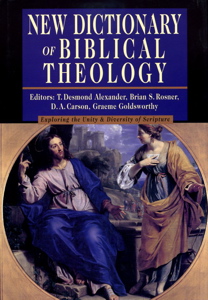 New Dictionary of Biblical Theology edited by Alexander, Rosner, Carson, and Goldsworthy. Yes, this is more an encyclopedic resource than page turner, but its insights are often stunning. As IVP says, “At the heart of this work is an A-to-Z encyclopedia of over 200 key biblical-theological themes such as atonement, creation, eschatology, Israel, Jesus Christ, the kingdom of God, redemption, suffering, wisdom and worship.” A BT benchmark that ought to be in every pastor’s study.
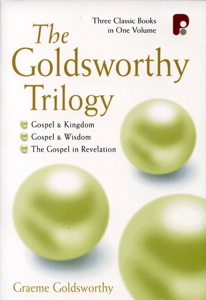 The Goldsworthy Trilogy by Graeme Goldsworthy. Paternoster did everyone a favor by bringing three excellent Goldsworthy books – “Gospel & Kingdom,” “Gospel & Wisdom,” and “The Gospel in Revelation” – into one volume. Few people have been able to better the Australian’s brilliant summation of Scripture’s storyline as “God’s people, in God’s place, under God’s rule.” The “Gospel & Kingdom” work is particularly helpful.
HONORABLE MENTIONS
Dominion and Dynasty: A Study in Old Testament Theology by Dempster. A magnificent evaluation of how OT passages find meaning and significance within the overall story of “dominion and dynasty.”
New Testament Biblical Theology: The Unfolding of the Old Testament in the New by Beale. Rightly called a “magnum opus,” this work will do for your understanding of the NT what Dempster does for the OT.
God’s Big Picture: Tracing the Storyline of the Bible by Roberts. An admitted simplification of Goldsworthy for the average church member, but it’s an excellent distillation. And a wonderful discipling resource!
Check out my past suggestions in the “3 Books Every Pastor Should Read” series here.
A Hymn to Sing on the Way to Heaven
Our churches needs psalms, hymns, and spiritual songs that speak to the full range of human experience. We need songs for seasons of lament, praise, distress, and hope.
One hymn of hope worth reclaiming today is Samuel Stennett’s “On Jordan’s Stormy Banks I Stand.”
Let me commend to you the Jars boys’ version for your church. May it help your people set their gaze toward their heavenly city.
On Jordan’s stormy banks I stand
And cast a wishful eye
To Canaan’s fair and happy land
Where my possessions lie
All o’er those wide extended plains
Shines one eternal day
There God, the Son forever reigns
And scatters night away
I am bound, I am bound, I am bound for the Promise Land
I am bound, I am bound, I am bound for the Promise Land
No chilling wind nor poisonous breath
Can reach that healthful shore
Where sickness, sorrow, pain and death
Are felt and feared no more
When shall I see that happy place
And be forever blessed
When shall I see my Father’s face
And in His bosom rest
Click here to find other hymns and arrangements worth your attention.
Prayerlessness is the most subtle disclosure of our independence from God and is our depraved heart’s declaration of sovereignty. – Paul Tautges
Teach them to Pray
, 33.
Do You Have Friends in Ministry?

Last week I sat down with three brothers in ministry, two of whom are twice my age, to put down plans for a pastoral fellowship we coordinate.
Three hours later we scatted to our various posts having done little planning, but oh! those hours were not wasted. As the bottomless chips and salsa kept coming we bantered back and forth about theological matters and counseled one another through pastoral issues.
Such spiritual camaraderie does wonders for the pastor’s soul and ministry.
Pastor, do you have any comrades in the gospel ministry?
I doubt you need any experiential encouragement to find some soul-brothers in ministry. So let me let good Dr. Piper give you some historical encouragement on the matter.
PASTORAL COMRADES
At the 2011 Desiring God Pastor’s Conference Piper delivered his biographical address on Robert Murray M’Cheyne entitled, “He Kissed the Rose and Felt the Thorn: Living and Dying in the Morning of Life.”
40 minutes into the talk he addressed the life-giving, ministry-expanding friendship M’Cheyne had with Andrew Bonar and Alexander Somerville. His eight minute meditation is worth prayerful attention. You can listen to it below:
I found the final few minutes particularly challenging, so on the outside chance you don’t have eight minutes, I’d invite you to consider the following section from Piper’s manuscript.
“Your impact in the world will be exponentially increased through these kinds of friendships. Van Valen captured this exponential effect of McCheyne’s band of brothers like this:
McCheyne’s ‘school’ tended to be more spiritual than theological. Their influence was evident not so much in the college halls or the study rooms of the theological students; they distinguished themselves not in controversy, when it concerned the fight against error, but their contribution was more effective in spreading the classical teaching on grace to the general public. Their task was especially focused on evangelization and revivals and didn’t exist to give substance to theological structures. Hence their strength lay in their preaching, which distinguished itself from the preaching of others “in demonstration of the Spirit and of power”.
“Bands of brothers—comrades in a great cause—are more than the sum of their parts. May God link your arms theologically, spiritually, personally for the sake of this exponential effect.”
Preachers as Window Washers
2 Corinthians 4:1-6 is a zenith of apostolic instruction on true preaching.
Pastors would do well to memorize 4:5, where Paul says, “What we proclaim is not ourselves, but Jesus Christ as Lord, with ourselves as your servants for Jesus’ sake.”
HERALDING GOD’S WORD
The verb here for “proclaim” is κηρύσσω, which describes the tone of preaching as “heralding.” If you’ve rightly understood that encountering God’s word through preaching a battle of cosmic proportions, it won’t surprise you to know that “heralding” is military language.
A herald is in times of war what an ambassador is in times of peace . . . The herald would go into enemy territory ahead of an advancing army to warn the enemy of certain destruction unless they accepted the proffered terms for peace. A gospel herald stands with God’s word in hand and proclaims, “Hear ye! Hear ye! Jesus Christ is Lord. All who swear allegiance to his throne will receive eternal life.”
We preachers must ask our unbelieving hearers, “What will you do with this announcement that Jesus is Lord?” Satan wants to blind their eyes in unbelief and rebellion (2 Cor. 4:4), to keep them as part of His army. But the gospel, the good news of life, is contained in those four words of 4:5: Jesus Christ is Lord. And thus we herald the King who lived perfectly, died sacrificially, rose victoriously, and now reigns supremely. We cry out for them to cry out to Him in faith and repentance. The two eyes of faith and repentance are the only way they will ever see the Son in all his glory. And so we call them to swear allegiance through their seeing of Him.
PREACHING IS WINDOW WASHING
Brother pastor, do not miss the negation contained in 4:5, “. . . what we proclaim is not ourselves,” but Jesus Christ. If you want to be a faithful preacher, rid yourself of notions to use the preaching of God’s word as an occasion to herald yourself. It is dangerous to put much of yourself into a sermon. Sure, short illustrations from personal experience can be useful at times, but such a desire to illuminate truth can easily become an exercise in proclaiming self.
And we dare not tamper with God’s word in that way.
One helpful way of thinking about this is through the analogy of preachers as window washers. God’s word is a window that reveals the glory of Christ. When we stand behind the sacred desk we are to hold up the window of God’s word, and cry out, “Look unto Him! See Him! Behold the glory of God in the face of Jesus Christ.” Our job as preachers then is to scrub that window clean by the clear proclamation of Scripture (2 Cor. 4:2; cf. Col. 4:4).
Putting too much of oneself into the sermon is tantamount to scrubbing the window with clouds of mud and then covering it up with the foil of personal vanity. Our churches won’t see Christ through such dirt. Renounce such disgraceful and underhanded means and herald God’s word by “the open statement of the truth.”
Preacher, you are a window washer. Make the window plain and clear, so they might see Christ!
This post is adapted from my recent sermon, “Preach the Word,” on 2 Corinthians 4:1-6.
A Lord’s Day Reminder for Preachers
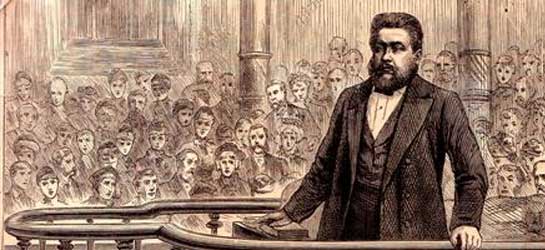
To read Spurgeon’s sermons is to hear and see, as Piper once said, “a bee buzzing around one tree: the cross of Christ.”
In a lecture to his pastoral students entitled “Sermons Likely to Win Souls” Spurgeon said, “People have often asked me, ‘What is the secret of your success?” He answered,
I have no other secret but this, that I have preached the gospel, – not about the gospel, but the gospel – the full, free, glorious gospel of the living Christ who is the incarnation of the good news. Preach Jesus Christ, brethren, always and everywhere; and every time you preach be sure to have much of Jesus Christ in every sermon.
May it be so in pulpits all across the land this day.