Testing Your Sermons

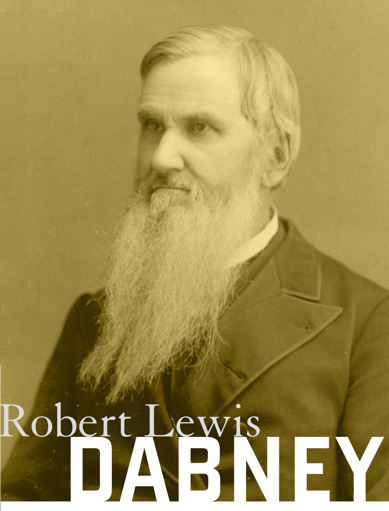
411yqoulxhl-_sl500_aa300_1On Wednesday I mentioned R.L. Dabney’s seven “cardinal requisites for the sermon”: textual fidelity, unity, evangelical tone, instructiveness, movement, pointedness, and order.
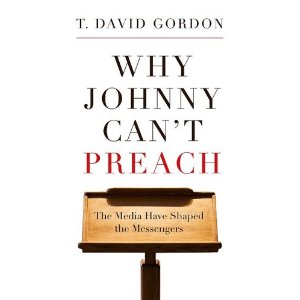
Lo and behold, the next day I decided to reread T. David Gordon’s Why Johnny Can’t Preach and found the first chapter is largely occupied with comments on the seven requisites. Gordon is especially useful in providing the following test questions for each of Dabney’s requirements:

  1. Textual Fidelity. Does the significant point of the sermon arise out of the significant point of the text? Is the thrust of the sermon merely an aside in the text? Is the text merely a pretext for the minister’s own idea?
  2. Unity. If ten people are asked after the sermon what the sermon was about, will at least eight of them give the same (or a similar) answer?
  3. Evangelical Tone. Do the hearers get the impression that the minister is for them (eager to see them richly blessed by a gracious God), or against them (eager to put them in their place, scold them, reprimand them, or punish them)? Is it his desire to see them reconciled to and blessed by a pardoning God? Does the sermon press the hearer to consider the hopelessness of his condition apart from Christ, and the utter competence of Christ to rescue the penitent sinner?
  4. Intructiveness. Does the sermon significantly engage the mind, or is the sermon full of commonplace cliches, slogans, and general truths? Is the hearer genuinely likely to rethink his view of God, society, church, or self, or his reasons for holding his current views? Is the mind of the attentive listener engaged or repulsed?
  5. Movement. Do the earlier parts of the sermon contribute to the latter parts’ full effect? Does the sermon have intellectual (and consequently emotional) momentum?
  6. Pointedness. Is the effect of the sermon, on those who believe it, similar? If it encouraged one, did it tend to encourage all, and for the same reason? If it troubled one, did it trouble all, and for the same reason? If it made one thankful, did it ten to make all thankful, and for the same reason?
  7. Order. Could the hearers compare notes and reproduce the outline of the sermon? If they could not reproduce the outline, could they state how it progressed from one part to another?

Preachers around the world today will ascend to the sacred desk to offer sacred rhetoric from the Sacred Book. May they do so with faithfulness to all these “requisites.”

Walking Up to Preach

Preaching Header

Every preacher knows his ascension to the sacred desk can be a fearful climb fraught with weighty excitement. It’s why Charles Spurgeon was said to mount the stairs to the Metropolitan’s pulpit by repeating, with each step taken, “I believe in the Holy Spirit.” It’s why John Piper says he almost always runs through the acronym of APTAT (Admit, Pray, Trust, Act, Thank) just before the sacred moment of preaching.

In just over twelve hours (at the time of this posting) I will, Lord willing, step up to preach on Christ’s calling of the Twelve in Mark 3:7-19. If tonight is par for the course, I won’t be nervous nor anxious, the dominating sense will be one of awesomeness – a mixture of awe and terror. The awe comes from wonder and delight that God allows me to preach His word. The terror comes from, I think, a holy fear of the responsibility I have to preach God’s word. As James 3:1 says, preacher dare not trifle with God’s word lest He be judged all the more harshly.

So, in the brief moments before walking up to the pulpit and starting the sermon, I have come to recite the acronym of R-E-L-Y.

Recognize. I recognize that, in and of myself, I am insufficient and weak for the task at hand. My words will falter in places and mind wander in places. I will not say things as clearly as I ought nor preach as boldly as I ought. The recognition leads me to remember that God’s power is made perfect in my weakness, and that my preaching ought to be a demonstration of the Spirit’s power, not my own.

Exalt. The sermon is an arrow which must hit the one grand target for which it is intended: God’s glory in Jesus Christ. I remind myself the exaltation of a crucified Christ leads to exultation in the glorious God of the universe. To exalt God’s glory in Christ is the one thing I for which I must aim.

Lead. I must lead my congregation to truth. Like a father taking his child’s hand, I must take the hand of my church and lead them to the right understanding and application of the text. The Lord places His preachers in His pulpit in order to lead His sheep to His truth.

Yearn. The final word brings me, in some ways, back to the first point. If I am to faithfully exalt God’s glory in Christ and lead His people to His truth, I need Spirit’s power. Put in the older language, I must yearn for the Spirit’s unction. EM Bounds said, “This divine unction is the one distinguishing feature that separates true gospel preaching from all other methods of presenting truth. It backs and interpenetrates the revealed truth with all the force of God. It illumines the Word and broadens and enriches the intellect and empowers it to grasp and apprehend the Word. It qualifies the preacher’s heart, and brings it to that condition of tenderness, of purity, of force and light that are necessary to secure the highest results. This unction gives to the preacher liberty and enlargement of thought and soul—a freedom, fullness, and directness of utterance that can be secured by no other process.” That is what I yearn for in my preaching.

To sum it up . . .

Recognize my weakness.
Exalt God’s glory in Christ.
Lead them to truth.
Yearn for the Spirit’s unction.

8 Helps for the Pastor’s Prayer Life

Praying PastorsCharles Bridges, in his classic work The Christian Ministry, wrote, “‘The spirit of our ministry is a spirit of prayer.’ Prayer is the ornament of the priesthood, the leading feature of our character. Without prayer, the minister is of no use to the church, nor of any advantage to mankind . . . It is prayer alone that gives the whole strength and efficacy to our different administrations . . . Prayer therefore is one half of our ministry; and it gives to the other half all its power and success.”1

The Prince of Preachers, Charles Haddon Spurgeon, seems to agree when he says, “The preacher is above all others distinguished as a man of prayer. He prays as an ordinary Christian, else he were a hypocrite. He prays more than ordinary Christians, else he were disqualified for the office which he has undertaken.”2

I doubt any pastor would disagree with these vaunted 19th century brothers, but I do suspect that reading the quotes above brings a convicting cringe. Let’s face it, praying pastors are hard to find. Where today is the pastor whom, like Luther, gives his three best hours to the work of prayer?

My personal journey of devotion to prayer has been a long, painful, and often disappointing one. In my early days of ministry prayer was virtually non-existent; Spurgeon would have surely given me a good dressing down. Yet, God was kind to poke and prod in all the right places. The initial pokes were more like strong stabs as God handed me a cup of ministerial suffering to cause – among other things – my knees to become more familiar with the floor. Yet, once the suffering passed the peculiar devotion to prayer passed as well. Prayer, in my life, has ordinarily been a fleeting and vaporous devotion. The next poke came with the arrival of our first son. Parenting is a gloriously burdensome responsibility, a load lightened by devotion in prayer. But once it was clear my boy would be healthy and would sleep through the night, the winds of life again blew away devotion to prayer. God’s third poke came from one old Puritan and one modern Puritan. In the span of one month I read Thomas Brooks’ The Privy Key to Heaven and watched Joel Beeke deliver a stirring address at the Desiring God Pastor’s Conference on the pastor’s prayer life. The Spirit used this two-pronged Puritan prod to strike the deepest blow to date; secret prayer became more habitual and joyful. The final notable work of God in this area happened just over nine months ago when we planted a church. Few things will cause familiarity with the closet as bearing the primary preaching and pastoral responsibility.

I am by no means a Luther, Bradford, or Spurgeon when it comes to prayer; I am little more than an impatient plodder in the prioritizing of prayer. But God continues to mold and shape the frame that only He can build. Over the years I have discovered eight particular helps for persistence in the “first half of ministry,” and I post them here in hope that God might use them to poke and prod you unto devotion in prayer.

  1. Study your Bible. It’s only in the Good Book that we find the goodness of our God and glory of His gospel. Consistently deep study of Scripture fuels an intimate knowledge of God that will naturally overflow into intimate communion with God. Deeper knowledge of God leads to deeper love of God, which in turn leads to deeper conversation with God.
  2. Set a time. Few things in life get done without the intentional setting aside of time. Extended time in prayer needs exactly that, time. The demands of pastoral ministry are legion and will easily cut out prayer if a particular time is not protected. It seems best to carve out a few different periods for prayer throughout the day rather than lumping them all into one. Matthew Henry was on to something when he talked about beginning, spending, and ending your day with prayer. Personally, I find the middle afternoon hours are best for extended prayer, so that’s where I carve out a good chunk of time. For you it could be early in the morning or late at night.
  3. Find your “closet.” Prayer has to be the most easily distracted spiritual discipline. Thus, it’s probably imperative that you find your “closet,” a place free of audible and visual distractions. This could be a spot in your house, a room in your church building, or a place out in the community. I happen to enjoy our master bedroom closet, but you might like a bench at tranquil park.
  4. Have a plan. Aimless prayer is the seedbed for distracted prayer. Keep up a running prayer list that’s easily accessible via a journal, computer, tablet, or phone. Break the list up into categories that you find helpful; my list includes headings like, “Personal,” “Family,” “Church,” “Ministry,” “Missions,” etc.
  5. Work less. Henry Martyn, in evaluating his first year of ministry, said he had dedicated “too much time to public ministrations, and too little to private communion with God.” Prayer is indeed pastoral work, but rarely do we think of it that way. Sometimes the only way to devote time to this work is to cut some of the other work.
  6. Pray with others. The work of gospel ministry is always helped when done in concert with others. The work of prayer is no different. Few things encourage longevity in prayer as does regular prayer with others. This can be your family, a few co-laborers in ministry, a couple church members, or all of the above.
  7. Read a good book on prayer. Because I am so prone to focus on everything but prayer, I find that having my reading list occupied with a book on prayer helps prioritize the work of prayer. Here are some books that have helped me.
  8. Read a good book of prayers. Our prayers inevitably become stale and rote, thus a good book of prayers can be your best friend in cutting through the monotony. Psalms is a great place to start, for as you pray through a Psalm you will find the Spirit bringing a myriad of other concerns to mind through the inspired text. You might also try The Valley of Vision, Lifting Up Our HeartsThe Pastor in Prayeror Henry’s Method for Prayer.

Any other helps you would offer?

  1. Bridges, The Christian Ministry, 147-148.
  2. Spurgeon, Lectures to My Students, 42.

7 Requirements of the Sermon

0875526632A forgotten contribution to the modern conversation on preaching is Robert Lewis Dabney’s Evangelical Eloquence: A Course of Lectures on Preaching.

The legendary Southern Presbyterian minister originally published the work as Sacred Rhetoric (a quite lovely title) in 1870 as the fruit his seventeen years at Union Theological Seminary. Contemporary preachers would be well served by the whole book, but lectures 7-8 are particularly helpful. These two lectures offer the following seven “cardinal requisites of the sermon”:

  1. Textual Fidelity. This means “sticking to one’s text.” The preacher’s very nature as a herald demands such fidelity, for the first quality of a good herald is the faithful delivery of the very mind of his king. God’s thoughts, not ours, are to occupy a primary place in the sermon.
  2. Unity. The sermon, like every work of art, needs unity. Dabney says rhetorical unity requires two things: 1) a main subject for the discourse, and 2) a main impression for the hearer. Singleness in exposition and application are unity’s best friends.
  3. Evangelical Tone. The proclamation of the gospel requires a gracious character; it is the place “where mercy and truth meet each other, and righteousness and peace kiss each other.” This requirement assumes that the sermon will be predominately evangelical. Or in contemporary jargon, “gospel-centered.”
  4. Instructive. This does not mean a sermon should be accused of “odious intellectualism.” An instructive sermon instead means food for feeding. The instructive sermon will have an important point, rich in substance, faithfully delivered to the congregation’s life.
  5. Movement. Movement, said Vinet, is the royal virtue of style. Dabney says movement is what will make a discourse eloquent. What’s movement? “It is, in short, that force thrown from the soul of the preaching into his sermon, by which the soul of the hearer is urged, with a constant and accelerated progress, toward that practical impression which is designed for the result.” Preaching needs passion.
  6. Pointedness. There must be a main point to the sermon, clearly understood by the hearer, intended to excite the soul. From there the preacher must have a clear idea of where his is going and his congregation must understand, once he gets to the end, how and why he got there.
  7. Order. The sermon needs to be properly ordered and divided along expositional lines. “Each thing should be said in its right place.” Dabney has little time for the wandering discourse and aimless exposition, for “disarray is displeasing.” If a church member is able to recall the sermon’s contents a few day’s after the preaching event, the sermon likely had order. If the church member can’t remember anything from the sermon other than the preacher did a good job, the sermon like had no order. Order brings benefit to the hearer.

Once you get used to the late-19th century prose, I predict you’ll be amazed at how profitable this book is.

6 Ways to Care for Your Pastor

Care for Your Pastor

Over at the Boundless blog Dave Kraft marshals his four decades of ministry experience to provide six ways church members can care for their pastors.

1. Pray for your pastor.

Undoubtedly, the most important thing you can do to help your pastor be fruitful and effective in his role is to pray for him. You can use passages such as Ephesians 1:15-23Ephesians 3:14-20 and Colossians 1:9-12 to pray for your pastor(s) and other leaders.

  • Pray for him daily.
  • Pray the Lord will give him wisdom in his various responsibilities in the church he serves.
  • Pray for his role as both husband and father (if he is married and has children).
  • Pray the Lord will protect him in the area of sexual purity.
  • Pray he will experience courage and anointing in his preaching/teaching.
  • Pray he would be able to strike a good balance between his ministry, family and personal life.

2. Encourage your pastor.

3. Submit to your pastor’s leadership.

4. Get to know your pastor.

5. Ask how you can serve your pastor/your church.

6. Talk honestly to, not about your pastor.


Read the rest here
.

Recent Reads

I love to read. By God’s grace I am a pretty fast reader; I usually read a couple books each week. I find it helpful to summarize my thoughts on each book and I offer those thoughts in hopes that you will be encouraged to either read or pass over the given title.

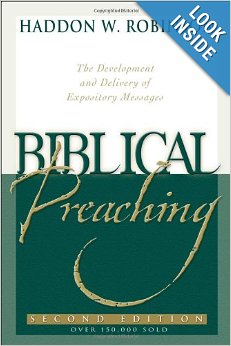
514E3Dc6DNL._SY344_PJlook-inside-v2,TopRight,1,0_SH20_BO1,204,203,200_Biblical Preaching: The Development and Delivery of Expository Messages by Haddon Robinson. This is a book eminently worthy of consideration. Preachers looking for a theological defense of expository preaching will have to turn to Peter Adam or John Stott. Yet, the lack of substantive theological meat does not mean that a feast cannot still be had. There is undoubtedly a place for extended rumination on the practice of preaching; it’s development and delivery. Robinson’s work is indeed a landmark contribution to this field. His emphasis on clarity in exposition is a timely and timeless concentration. It was the apostle himself who asked the Colossians to pray that he would make clear the mystery of the gospel, for that “is how I ought to speak” (Col. 4:4). Young preachers and old preachers alike need to be consistently confronted with the imperative of clarity in preaching, and this book will challenge and encourage unto that end.

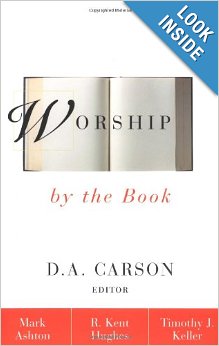
41xu1EwyqyL._SY344_PJlook-inside-v2,TopRight,1,0_SH20_BO1,204,203,200_Worship by the Book edited by DA Carson. I am not sure why it took me so long to read this book, but I glad I finally did. The book largely consists of three chapters articulating worship practices from the viewpoints of an Anglican (Mark Ashton), Baptist (Kent Hughes), and Presbyterian (Tim Keller). These chapters follow Carson’s mammoth first chapter on the construction of a theology of worship. It’s is complex and clunky – he acknowledges as much on page 26 – but careful reading will be immensely rewarded as he leaves few stones unturned in defining worship according to the good book. Being a Baptist I appreciated Hughes chapter, particularly for its simplicity and historical sensibility. I find, overwhelmingly, the most common ground with Keller’s adaptation of Calvin’s liturgy as a via media between “Contemporary Worship” and “Historic Worship.” The inclusion of numerous appendices showing various resources and liturgies each tradition employs only increases the book’s value.

41FCuh8XO-L._SY344_BO1,204,203,200_Does God Desire All to Be Saved? by John Piper. This is definitely more a booklet than a book, as it comes in at 66 pages. Piper doesn’t pave any new ground in the discussion on how a Reformed view of God’s election of people unto salvation is compatible with His desire that all men come to repentance. Instead, Piper puts his usual – and helpful – flair on the discussion. The crux of his argument is found in the following paragraph,

The difference between the Reformed and the Arminians lies not in whether there are two wills in God, but in what they say this higher commitment is. What does God will more than saving all? The answer the Arminians give is that human self-determination and the possible resulting love relationship with God are more valu- able than saving all people by sovereign, efficacious grace. The answer the Reformed give is that the greater value is the manifestation of the full range of God’s glory in wrath and mercy (Rom. 9:22–23) and the humbling of man so that he enjoys giving all credit to God for his salvation (1 Cor. 1:29).

Piper’s little work would be a useful resource for pastors discipling church members through this timeless discussion. Download a free PDF here.

51+pCHlWCkL._SY344_PJlook-inside-v2,TopRight,1,0_SH20_BO1,204,203,200_The English Girl by Daniel Silva. This is the latest volume in Silva’s series on Gabriel Allon, the art-restorer and master Israeli spy. I appreciate Silva for being able to write an intriguing storyline void of the salacious content that often dominates the genre.  The English Girl‘s narrative wanders at times and felt predictable (it may just be that I’ve read too many of these books to be surprised anymore), but I still enjoyed this modern update of classic Cold War espionage.

The Citadel and Keep of Christianity

ryle-banner-cropped

“The beginning of the gospel of Jesus Christ, the Son of God.” – Mark 1:1

One of the unique blessings of preaching through a New Testament gospel is having an excuse to read JC Ryle’s Expository Thoughts. The great Anglican bishop writes with an experiential warmth few can match in our day. Consider the following comments on Mark 1:1:

Let us observe, in these verses, what a full declaration we have of the dignity of our Lord Jesus Christ’s person. The very first sentence speaks of Him as “the Son of God.”

These words, “the Son of God,” conveyed far more to Jewish minds than they do to ours. They were nothing less than an assertion of our Lord’s divinity. They were a declaration that Jesus was Himself very God, and “equal with God.” (John 5:18.)

There is a beautiful fitness in placing this truth in the very beginning of a Gospel. The divinity of Christ is the citadel and keep of Christianity. Here lies the infinite value of the atoning sacrifice He made upon the cross. Here lies the peculiar merit of His atoning death for sinners. That death was not the death of a mere man, like ourselves, but of one who is “over all, God blessed forever.” (Rom. 9:5.) We need not wonder that the sufferings of one person were a sufficient propitiation for the sin of a world, when we remember that He who suffered was the “Son of God.”

Let believers cling to this doctrine with jealous watchfulness. With it, they stand upon a rock. Without it, they have nothing solid beneath their feet. Our hearts are weak. Our sins are many. We need a Redeemer who is able to save to the uttermost, and deliver from the wrath to come. We have such a Redeemer in Jesus Christ. He is “the mighty God.” (Isaiah 9:6.)

This is Christ-centered preaching.

3 Books Every Pastor Should Read: On Prayer

Books are some of the best friends a pastor can have. How to know which friends to have is quite difficult, for as the inspired Preacher said, “Of making many books there is no end” (Ecclesiastes 12:12). I recently suggested three books every time-strapped and budget-strapped pastor should read on pastoral ministry and preaching. Here are my offerings on the work of prayer:

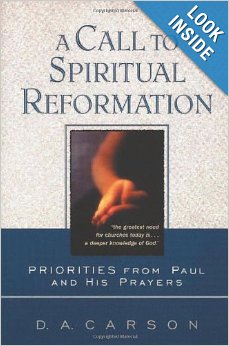
51MSDBHfD2L._SY344_PJlook-inside-v2,TopRight,1,0_SH20_BO1,204,203,200_A Call to Spiritual Reformation: Priorities from Paul and His Prayers by D.A. Carson. Carson says, “The one thing we most urgently need in Western Christendom is a deeper knowledge of God. We need to know God better” (15). One of the foundational steps in knowing God is “spiritual, persistent, biblically minded prayer” (16). To help Christians know their God and pray to their God Carson walks through Paul’s prayers in his epistles. Each chapter provides rich commentary on an individual passage and wonderfully wise application to prayer. The great takeaway from this work is to saturate your prayers with clear, biblical concerns. Carson’s encouragement on pages 34-35 to those who pray publicly is worth the price of the book.

41PMhfBjy+L._SY344_PJlook-inside-v2,TopRight,1,0_SH20_BO1,204,203,200_A Method for Prayer: Freedom in the Face of God by Matthew Henry. If Carson convinces you to offer prayers saturated with Scripture, then Henry will show you what Scripture saturated prayer can sound like. Henry’s “method” is adoration, confession, petition, thanksgiving, and intercession. The numerous examples provided on each kind of prayer are excellent tools to sharpen public and private prayer. The Christian Heritage edition of this book includes a discourse on “how to spend each day with God,” where Henry writes, “The life of communion with God, and constant attendance upon him, is a heaven upon earth.”

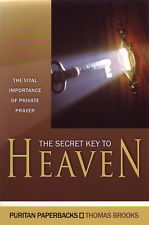
mbJRr26Uc8VP6l5kIFDEDNgThe Secret Key to Heaven: The Vital Importance of Private Prayer by Thomas BrooksThe Secret Key (originally published as The Privy Key) finds Brooks expounding on Matthew 6:6, “But when you pray, go into your room and shut the door and pray to your Father who is in secret. And your Father who sees in secret will reward you.” From this verse he gathers his main doctrine, “That closet prayer or private prayer is an indispensable duty.” Few books have had such an immediate impact on my life and ministry as this one. It might do the same for you.

HONORABLE MENTIONS

The Complete Works of E.M. Bounds on Prayer by E.M. Bounds. This volume contains eight different books from Bounds on the subject of prayer. You need only read “Power Through Prayer” to find your conscience powerfully pricked unto devotion in prayer.

Leading in Prayer: A Workbook for Worship by Hughes Oliphant Old. This is more of a resource on public prayer, but a vital one for any pastor that regularly pray before his congregation.

13 Ways to Train Yourself for Godliness

91sphgCz8KL._SL1500_One of my favorite Puritan authors is the little known George Swinnock. Stephen Yuille introduced me to this great divine in his academic work The Fear of God in the Affective Theology of George SwinnockI later bought, with Christmas money, 1 the Works of George Swinnock put out by Banner of Truth and have been feasting ever since.

Few details of Swinnock’s life have survived the centuries. We know his great contemporary Edmund Calamy called him a “serious, warm . . . practical, useful preacher.” Spurgeon said, “George Swinnock had the gift of illustration largely developed, as his works prove.” He died at the tender age of 46 in 1672, ten years after being ejected from The Church of England for Nonconformity. One wonders what works he would have produced if God granted him a few more decades of ministry.

Swinnock’s magnum opus is The Christian Man’s Calling, a 1,252 page work applying 1 Timothy 4:7 – “exercise thyself unto godliness” – to all areas of life. Some people might accuse it of being the epitome of Puritan redundancy, but I like to think of it as the epitome of fruitful Puritan meditation. Of particular help are the thirteen “means whereby Christians may exercise themselves unto godliness” he offers at the book’s end:

  1. Living by faith
  2. Setting God always before our eyes
  3. A constant watchfulness
  4. Frequent meditation of death
  5. Daily communion with God
  6. Frequent meditation on the day of judgment
  7. Daily examination of the heart
  8. Mortification of sin
  9. A humble frame
  10. Increased knowledge of God
  11. A contented spirit
  12. The vanity of all other pursuits
  13. The brevity of man’s life

I wish he had a fourteenth point emphasizing the role of the local church as God’s gymnasium, the ordinary arena in which we train ourselves for godliness. Nevertheless, Swinnock’s list provides thirteen compelling topics for spiritual exercise and meditation. Consistent exercise in each area will put some godly sweat on your spiritual exercise.

  1. My version of a year end bonus.

Book Review: Biblical Preaching by Haddon Robinson

9780801022623In Biblical Preaching Haddon Robinson seeks to provide a manual for developing and delivering expository sermons. He believes “the type of preaching that best carries the force of divine authority is expository preaching” (20).

He understands that attempting to define expository preaching can be “sticky business,” but necessary business nevertheless, so he writes, “Expository preaching is the communication of a biblical concept, derived from and transmitted through a historical, grammatical, and literary study of a passage in its context, which the Holy Spirit first applies to the personality and experience of the preacher, then through the preacher, applies to the hearers” (21).

With his definition in place Robinson spends the majority of his work articulating ten stages in the development of expository messages: 1) Selecting the Passage, 2) Studying the Passage, 3) Discovering the Exegetical Idea, 4) Analyzing the Exegetical Idea, 5) Formulating the Homiletical Idea, 6) Determining the Sermon’s Purpose, 7) Deciding How to Accomplish This Purpose, 8) Outlining the Sermon, 9) Filling in the Sermon Outline, and 10) Preparing the Introduction and Conclusion. He concludes with two chapters urging preachers to clarity in their personal style of development and delivery.

TWO WEAKNESSES

Preachers looking for a theological and biblical defense of expository preaching will need to look to other sources than Biblical Preaching for such articulation. One pages nineteen through twenty-one Robinson offers “The Case for Preaching” and “The Need for Preaching,” but the section does not actually develop a well-thought out argument for expository preaching. Robinson’s thoughts can be summarized as, “Because God speaks through the Bible you must preach the Bible.” Surely there are worse convictions on which to rest your preaching! However, the author knows it would be wrong “to assume that everyone agrees” with his conviction that expository preaching is the “type of preaching that best carries the force of divine authority” (20) and still does not try to convince his readers why expository preaching is the best kind of preaching. In fairness to the author, Biblical Preaching is not intended to be a defense of expository preaching as much as it is supposed to be a manual for how to do expository preaching.  Yet, the book’s value would be increased if it contained a thought out, biblical defense of expository preaching’s necessity.

A second area of weakness is that Robinson fails to emphasize why and how biblical preaching must and can center on Christ. He acknowledges, “At some time or other, you will have to respond to the question, ‘How does the centrality of Jesus Christ affect the way I handle the biblical texts?’” But instead of weaving the centrality of Christ through his work he defers the reader to other texts to answer the question. 1  It would have been better for Robinson to show preachers the various and glorious ways that expository preaching should exalt Christ. Maybe this neglect comes from the his emphasis on a grammatical-historical hermeneutic, instead of a redemptive-historical hermeneutic.

Although it fails as a theological and Christological defense of expository preaching, the work more than succeeds as a resource for helping preachers develop and deliver expository sermons.

THREE STRENGTHS

The overriding value of this book can be captured in one word, clarity. Robinson’s prose is imminently clear and he correctly urges for preachers to cherish clarity in their preaching. He laments how many messages are too muddied for people in the pew, writing, “Sermons seldom fail because they have too many ideas; more often they fail because they deal with too many unrelated ideas” (35). Memorably he says, “Sermons should be a bullet, not buckshot” (35). To correct the aimlessness dominating much preaching today, Robinson introduces his concept of “The Big Idea”, or the sermon’s “single, all-encompassing concept” (36). Two questions are offered to help the preacher discover “The Big Idea”: first he should ask, “What am I talking about?” and second, “What exactly am I saying about what I’m talking about?” Robinson then proceeds to spend six chapters detailing the development of Big Idea preaching. 2 These chapters will be acutely helpful for seminary students considering how to prepare sermons, and they also will refresh a seasoned preacher’s practice of preparation.

Chapter nine represents a second area of strength in Robinson’s work as he advocates the use of manuscripts to aid clarity. He states, “The discipline of preparing a manuscript improves preaching. Writing scrapes the fungus off our thought, arranges our ideas in order, and underlines the important ideas” (183). Robinson is not immune to the many protests that surely arise from such encouragement. “’But language is not my gift.’ That is the protest of one-talented servant in the process of burying his ministry. Gift or not, we must use words, and the only question is whether we will use them poorly or well” (185). Preachers labor in language and Robinson is spot-on to demand that preachers become practitioners of words, phrases, and sentence. One may not be Lewis, Muggeridge, or O’Conner, yet he can strive for the ideal of clarity with language. To aid preachers in this area he tells them to do three things: 1) pay attention to your own use of language, 2) study how others use language, and 3) read aloud. The final encouragement is increasingly lost on our visually dominated culture, but it will help develop clear patterns of speech and creative simplicity in style.

A final strength to be mentioned is how Robinson appropriately balances the auditory perspective on preaching with the visual perspective. In chapter ten, “How to Preach So People Will Listen,” he calls preachers to study nonverbal language as much as verbal language. Preaching is after all a visual event, therefore preachers are to use gesture, movement, and appearance as tools to aid clarity. Robinson is particularly helpful in calling preachers to honest self-examination of their pulpit mannerisms. Natural mannerisms that aid delivery should be fine-tuned and those that hurt exposition must be lanced, and one can only do this if he is diligent in ruthless self-examination. The book’s discussion on gestures is rewarding in every way as Robinson says, “God designed the human body to move. If your congregation wants to look at a statue, they can go to a museum” (207).

IT SHOULD BE ON YOUR STUDY’S SHELF

Biblical Preaching is a book eminently worthy of consideration. Preachers looking for a theological defense of expository preaching will have to turn to Peter Adam or John Stott. Yet, the lack of substantive theological meat does not mean that a feast cannot still be had. There is undoubtedly a place for extended rumination on the practice of preaching; it’s development and delivery. Robinson’s work is indeed a landmark contribution to this field. His emphasis on clarity in exposition is a timely and timeless concentration. It was the apostle himself who asked the Colossians to pray that he would make clear the mystery of the gospel, for that “is how I ought to speak” (Col. 4:4). Young preachers and old preachers alike need to be consistently confronted with the imperative of clarity in preaching, and this book will challenge and encourage unto that end.

Book Details

  • Author: Haddon Robinson
  • Title: Biblical Preaching: The Development and Delivery of Expository Messages
  • Publisher: Baker
  • Paperback: 256 pages
  • Score: 7 out of 10
  1. He mentions Greidanus, Goldsworthy, and Kaiser.
  2. Andy Stanley builds on this practice in Communicating for a Change. I personally prefer Tony Merida’s employment of it in Faithful Preaching.