Preaching Pastors as Worship Pastors

Preaching Pastors as Worship Pastors

Each week I have the joyful responsibility of deciding what songs our church will sing during gathered worship. Many curious church members have asked why I, the preaching pastor, make such decisions.

In their book, The Deliberate Church, Mark Dever and Paul Alexander offer the following perspective,

You, the pastor, must be theologically discerning in what you encourage and lead your congregation to sing. It also means you must show courage in not allowing yourself to be guided by the musical preferences of the culture or the congregation, or even the passion of a music director, but rather by the theological content of the songs and their edification potential. Edification – building people up – happens when people are encouraged to understand and apply the Gospel more biblically, not necessarily when they are led into an emotional experience or encouraged to identity temporary emotional expressiveness with worship.

Lyrics set to music have formative power because they are memorable. Use songs that fill our minds with God’s character, that form our worldview by God’s truth, and that teach us about the biblical meaning and personal implications of His Gospel. Just as with prayer, so here, everything that happens up front in corporate gatherings is a function of the teaching ministry of the church. As the main teaching pastor, it is therefore your responsibility to shepherd the congregation into the green pastures of God-centered, Gospel-centered songs, and away from the arid plains of theological vacuity, meditations on human experience, and emotional frenzy. The best of the hymns and the best of the more modern worship choruses are those that direct our focus away from ourselves and onto the character and Gospel of God. Practice discerning the difference, and be careful about what you’re teaching through the music you encourage people to sing. If at all possible, refuse to pawn this responsibility off to someone else. God will hold us accountable for this aspect of our teaching ministries as well – even if we do delegate it (Heb. 13:17).

Mark Dever and Paul Alexander, The Deliberate Church: Building Your Ministry on the Gospel, 84-85.

Preaching pastors – and any installed elders – are charged with overseeing all aspects of the church’s teaching ministry. Songs teach the congregation (Eph. 5:19; Col. 3:16). Therefore, preaching pastors ought to ordinarily oversee the selection of songs for their congregation’s gathered worship.

Preaching pastors are worship pastors.

Reasons and Rules for Preaching Christ

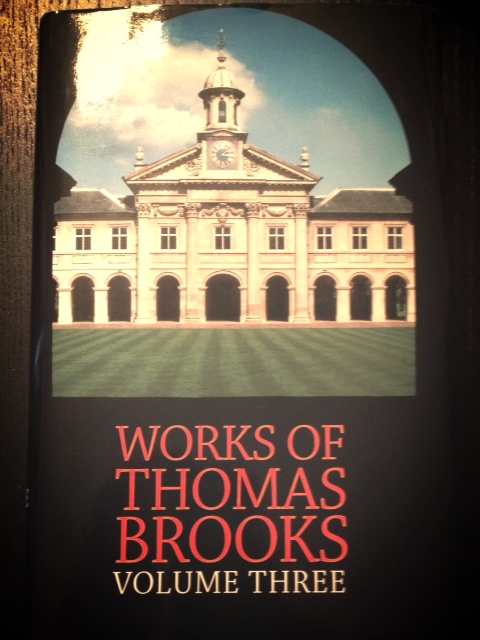
photo(15)Thomas Brooks is probably my favorite Puritan author. There is a warmth, clarity, and verve about his prose few Christian authors have ever been able to match. Spurgeon said he was excessively “sweet and sparkling” in his use of language.

His best known work probably is Precious Remedies Against Satan’s Devices, but The Privy Key to Heaven or Heaven on Earth have also been reprinted for centuries. Tucked away in volume three of his collected works is a masterful meditation on Christian humility from Ephesians 3:8 entitled, “The Unsearchable Riches of Christ.” The majority of Brooks’ work is taken up with the first part of Ephesians 3:8 and Paul’s confession that he “is the least of all the saints.” But patient reading is rewarded for at the end Brooks reaches the topic of humble Christ-centered preaching. And oh how the sparkling doctor shines!

This section on preaching is fueled by Brooks’ belief, “That it is the great duty of preachers to preach Jesus Christ to the people.” He then moves to the “why” and “how” of preaching Christ, by first giving 5 reasons:

  1. It is the only way to save and to win souls to Jesus Christ.
  2. It is the choicest and chiefest way to ingratiate Christ with poor souls.
  3. The preaching of Christ is the only way to preach down anitchrist, or whatever makes against Christ.
  4. The Christ-less preacher contracts the blood of souls.1
  5. The preaching of Christ contributes most to people’s comfort here and to their reward hereafter.

“It is only the preaching of Christ, that allures and draws the souls of men,” Brooks writes. This kind of allurement and drawing of souls to Christ means, according to Brooks, preaching marked by 11 adverbs. The preacher must preach Christ:

  • Plainly
  • Faithfully
  • Humbly
  • Wisely
  • Boldly
  • Consistently
  • Exemplarily
  • Experientially
  • Rightly
  • Acceptably
  • Constantly

Brooks knows that such exhortation might be simultaneously encouraging and discouraging for some. So he goes on to make a “counted presumption” that his readers will allow him to “propound a few rules for such to observe that are willing to preach Christ to poor souls.” He offers three:

  1. If you would preach Christ to the people, according to the rules last mentioned, then you must get Christ within you. “There is nothing that makes a man indeed so able to preach Christ to the people, as the getting Christ within him . . . Nothing will make him so wise, so painful, so watchful, so careful to win souls, as Christ within; nothing will make a man strive with sinners, and weep over sinners, and wait upon sinners for their return, as Christ within.”
  2. They that would preach Christ to the people must study more Scripture truths, Scripture mysteries, than human histories. “They must study God’s book more than all other books . . . Let the word be so concocted an digested by you, as that you turn it into a part of yourselves.”
  3. Such as would preach Christ aright to the people had need to dwell much upon the vanity of human doctrines. “Human doctrines to not discover sin in its ugliness and filthiness as the Scriptures do. Human doctrines have no humbling power in them. Human doctrines are so far from enriching the soul, that they usually impoverish the soul. They make men-pleasers of men rather than pleasers of God; yea, they make men set up themselves and others, sometimes in the room of Christ, and sometimes above Christ.”

5 reasons, 11 adverbs, and 3 rules for preaching Christ. This is Puritan meditation at its finest.

  1. Here he channels what Paul says in 1 Corinthians 9:16, “Woe to me if I do not preach the gospel.”

5 Means to Excellence in Public Prayer

photo(14)I didn’t grow up in churches where the pastor engaged in extended public prayer during the week’s worship gathering.

Most churches I have been a part of (as a member or pastor) treated prayer mostly as a transitional element, a way to move somewhat seamlessly from song to sermon and then back to song. Over the years I’ve had peculiar interest in studying what the Bible says about corporate worship and what history reveals about the church’s worship. It didn’t take very long to see the Bible and church history unveil a prominent place to public prayer. Yet, I still really didn’t know of any churches that had a distinct time in their weekly worship for a pastoral prayer . . . then I went to Capitol Hill Baptist Church.1 Their service had lots of public prayer; lots of long public prayer.2  It was a joy to experience!

As a result of these studies and experiences, we planted Imago Dei Church with a hope that God would mold us into a praying church. A reflection of that desire is seen in our weekly liturgy as we have set times for both public and private prayer. In the middle of our service I get up and offer a pastoral prayer – mostly a prayer of intercession – for six to seven minutes. I think it might be the most daunting thing I do each week, thus I am always looking for ways to grow in this area.

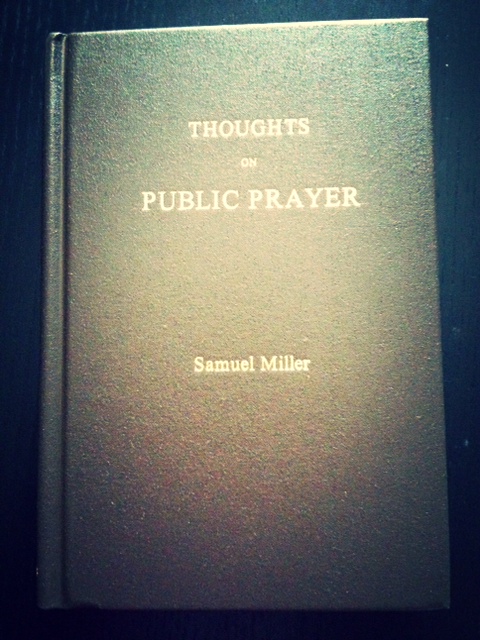
Enter Samuel Miller’s Thoughts on Public Prayer. I finished the book this week and Miller’s work ends with a thunderous chapter entitled, “The Best Means of Attaining Excellence in Public Prayer.” He organizes his thoughts under five primary means leading to excellence in public prayer. I needed to read them and maybe they will be of profit to you as well.

SAMUEL MILLER’S FIVE MEANS TO EXCELLENCE IN PUBLIC PRAYER

  1. None can hope to attain excellence in the grace and gift of prayer in the public assembly, unless they abound in closet devotion, and in holy communion with God in secret.
  2. Not only read, but study some of the best books which have treated the subject.
  3. Store your mind with the language and riches of the word of God.
  4. When any dispensation of Providence occurs,3 which appears to demand special attention in the devotions of the sanctuary, to make prompt and special preparation for presenting that object in public prayer in the most simple, scriptural, and edifying form.
  5. Cultivate the habit of devotional composition; i.e. consider writing out your prayer.

Eventually I hope to post choice excerpts from Means #1 as Miller’s thoughts on the subject are invaluable, but in posting this I am freshly reminded of my need to spend time in the closet. Off I go.

—————————————————————————————————————————————

  1. I’ve since come across many more churches that have extended times of public prayer.
  2. Mark Dever, pastor at CHBC, was once asked about the church’s practice of corporate prayer and he said: “At Capitol Hill Baptist we will always have a prayer of praise (which is focused on some aspect of God), a prayer of confession (where we confess our sins), a prayer of intercession/pastoral prayer (where we pray through various concerns that we have as a church family), and a brief prayer of thanks. There will also be a prayer after the sermon in which we try to pray certain truths into our hearts; and there will sometimes be a brief prayer of invitation for God’s presence at the beginning of our service.”
  3. This would any unusual event in the life of the church, country, or world.

A Forgotten Yet Faithful Minister

Saint Paul in PrisonScripture memory reveals unseen treasures in ways few other methods of study and meditation can.

Case in point: Epaphras. Two years ago I decided to memorize the book of Colossians and I found myself regularly amazed at truth I never really saw before. One such revelation was this man named Epaphras. He only shows up three times in all of Scripture and two of them are in Colossians:1

  1. “You learned [the grace of God in truth] from Epaphras our beloved fellow servant. He is a faithful minister of Christ on your behalf and has made known to us your love in the Spirit.” – Col. 1:7-8
  2. “Epaphras, who is one of you, a servant of Christ Jesus, greets you, always struggling on your behalf in his prayers, that you may stand mature and fully assured in all the will of God. For I bear him witness that he has worked hard for you and for those in Laodicea and in Hierapolis.” – Col. 4:12-13

If you try to summarize everything these four verses say about Epaphras the summary might go something like this, “Epaphras was a faithful minister of Christ who taught the gospel, prayed, and worked hard.” Oh, what a three-pronged challenge to faithful pastoring! Let me work out this summary sentence on faithful ministry a bit more.

“He was a faithful minister who taught the gospel.” Paul kicks of Colossians 1 by sharing his delight in the young church’s faith in Christ and love for one another, things fueled by their hope in heaven. He continues to say that their hope came from hearing “the word of truth, the gospel,” and this they heard from Epaphras. This forgotten saint reminds every pastor that his ministry is to be preoccupied with that which if of first importance, the gospel. The Colossians not only “heard” the gospel, but they “understood” it as well. A preacher doesn’t minister the gospel with the sole aim of being heard; no, he must long to be understood as well. Such understanding can only come from the Spirit’s work, thus the faithful minister must be distinguished as a Spirit-dependent man. Like the sower in Mark 4:1-9, the pastor offers the seed of the gospel to everyone who will listen – even those who won’t listen – and prays for the Spirit to give them understanding.

“He was a faithful minister who prayed.” He not only prayed, but prayed with peculiar devotion.  4:12 says Epaphras was “always struggling.” The Greek for “struggling” is ἀγωνιζόμενος, more literally translated as “agonizing.” Faithful ministry, according to Epaphras, includes agonizing prayer for the flock to “stand mature and fully assured in all the will of God.” The energy of Epaphrus’ praying is challenging, but so to is the content of his praying. Any pastor who makes small advancement in prayer knows how easy it is to let somewhat secondary concerns dominate his prayers for the flock. Epaphras was consumed with pleas for his people to stand mature in Christ and assured in God’s will. This even echoes what Paul said earlier in the book. In 1:28-29 Paul says he proclaims Christ in order to “present everyone mature in Christ. For this I toil, struggling with all his energy that he powerfully works within me.” He then proceeds in chapter 2 to place more detail on the nature of his struggle, or agony. He agonizes for the Colossians “that their hearts may be encouraged, being knit together in love, to reach all the riches of full assurance of understanding and the knowledge of God’s mystery, which is Christ, in whom are hidden all the treasures of wisdom and knowledge.”

So preach the gospel with the aim of being understood, agonize in prayer for maturity and assurance in Christ, and thirdly . . .

“He was a faithful minister who worked hard.” Epaphras bears the apostolic testimony that he “worked hard” for Christians in Colosse, “Laodicea and in Hierapolis.” Pastoral ministry hides lazy men quite well. The average size of the average congregation in our country means most minister work away from accountable eyes. As a church planter leading a small church I know just how easy it is to waste away the hours of each day and have few people know I’ve done so. But God will not suffer lazy shepherds, they are of all men to be diligent in faithful enterprise. Notice that Epaphras was not only commended for hard work in Colosse, but hard work in Laodicea and Hierapolis. These three cities made up the ancient Lycos Valley in modern day Turkey. Laodicea was 10 miles northwest of Colosse, and Hierapolis is thought to be about 13 miles northeast of Laodicea. So Epaphras was faithful to not only make the gospel known in Colosse, but also in the main cities nearby. The hard work of ministry should include working for gospel advancement in the surrounding areas of our immediate city or town. May God give us hearts for those near and far, and the energy to work hard for His glory everywhere we can.

“Epaphras was a faithful minister of Christ who taught the gospel, prayed, and worked hard.” He is a forgotten minster worth remembering.

  1. The other time is in Philippians 1:23 where we find he was with Paul in prison.

It is the indispensable duty of every minister, previously to his entering on his office, to prepare and qualify himself for public prayer, as well as for preaching. He ought, by a thorough acquaintance with the Holy Scriptures; by reading the best writers on the subject; by meditation; and by a life of holy communion with God in secret, to endeavor to acquire both the spirit and the gift of prayer.

Thoughts on Public Prayer by Samuel Miller (Harrisonburg: Sprinkle, 1849), 260

3 Truths About the Christ-Centered Church

church_coverJesus came to inaugurate God’s kingdom in this world and it was the most complete, unexpected, and remarkable revolution the universe has ever seen.1

In Mark 3:7-12 we find that virtually all of Israel has followed Christ into the wilderness, reminding us of a time when Israel followed another redeemer, Moses, into the wilderness. It was there that God constituted His people as a nation at Mt. Sinai. Thus it should be no surprise to us when we hear in Mark 3:13-19 Jesus went up to a mountain to reconstitute God’s people. He did this by calling twelve men to follow Him as apostles.

A first century Jew would have immediately recognized a connection with the twelve tribes of Israel. Jesus could have chosen any number of apostles, but He picks twelve, indicating to us there is an organic connection, and I would argue, an organic fulfillment and spiritual restoration of Old Testament Israel. We see this truth in Matthew 19 as it is the twelve apostles of Christ, not the twelve patriarchs of Israel, who will sit alongside Jesus at the time of judgment. As Mark 1 shows, Jesus is the true Israel, thus those called out by Him and united to Him are part of true Israel. The calling of the twelve signifies then the recreation and fulfillment of God’s covenant people, what Galatians 6 calls, “the Israel of God.”

This mountainside event has much to tells us regarding the Church of Christ. Three things are worth our meditation.

First, Christ calls His church. He called to him those whom he desired, and they came to him” (Mark 3:13). The doctrine of God’s sovereign election and sovereign calling is a divisive one and a debated one. Yet, how can we deny, according to this text, that Christ’s sovereign choice is not the cause of Christ’s church? Let the church see the comfort and joy found in Christ’s calling. There on that mountainside was a group lowly, shunned, or outcast men in Jewish society, and a rabbi calls them unto Himself. Can you imagine the joy and delight they would have experienced in that moment? The sovereign selection of Christ is the ground for our highest praise! Our church’s confession (New Hampshire Baptist Confession) understands this for it says God sovereign choice “utterly excludes boasting, and promotes humility, love, prayer, praise, trust in God, and active imitation of his free mercy.” Few truths are sweeter to the Christian’s soul than the calling of Christ.

If you are not a Christian hear the call of the gospel that comes from Christ’s word and spirit. You were created to glorify God in knowledge, love, and obedience. But you have disobeyed God, loved things in the world, and cared little for who He is. The Bible says the just God of the universe will condemn you to eternal death for your sin. But because He loved sinners, and knew sinners can do nothing to earn their salvation, He sent His son, this Jesus Christ, to die in the place of sinners. He was crucified so that God’s wrath against every sinner who believed in Him would be satisfied. Then He rose again, guaranteeing that all who trust in Him will find new life. We may not be on a mountain today, but He calls to you from His word and through His Spirit. Will you come to him?

Second, Christ centers His church. Mark 3:14 literally reads in the Greek, “And he made [created] twelve, so that they might be with Him.” One commentator says, “The simple prepositional phrase has atomic significance in the Gospel of Mark.” 2 The atomic significance is found in the truth that being with Jesus is the center of Christian discipleship. He was with the twelve physically, but is with us today through His word and spirit. He centers His church and dwells with His people through the ordinary means given to us: the reading and preaching of His word, prayer, fellowship, songs, and sacrament. If these are the ordinary means by which Christ centers His people, we must be again reminded of how vital gathering with the church is to our discipleship. Missing out on the Saturday gathering means missing out on the power packed means of grace given so that we might be with Christ. To regularly shun the corporate gathering is to regularly shun the atomic power of discipleship. The elements of a church’s corporate gathering are like spiritual sticks of dynamite laid on top of our soul. The Spirit intends to place them there and light ’em up as He molds us into the image of Christ.

Third, Christ commissions His church.He made the twelve, so that they might be with him and send them out to preach and have authority to cast out demons” (Mark 3:14-15). In some respects this preaching and authority to cast out demons was unique to the original apostles as Hebrews 2 and 2 Corinthians 12 make clear. Although our commission is not apostolic, we have the similar commissioning priorities: communion with God, speaking of the good news, and opposing evil in this world. If we think of the Great Commission – making disciples of all nations – as a three-legged stool, then these priorities are the three legs: 1) communion with Jesus, 2) speaking of Jesus, and 3) fighting the good fight against sin and evil. Faithfulness to our commission means faithfulness to these priorities.

Do you see how radically Christ-centered the church must be? He calls, centers, and commission His people.  If we tried to sum up our three truths in one sentence we could say the church is called by Christ, to be with Christ, in order to go for Christ.

  1. This is an excerpt from my recent sermon on Mark 3:7-19.
  2. Edwards, The Gospel According to Mark, 113.

Recent Reads

I love to read. By God’s grace I am a pretty fast reader; I usually read a few books each week. I find it helpful to summarize my thoughts on each book and I offer those thoughts in hopes that you will be encouraged to either read or pass over the given title.

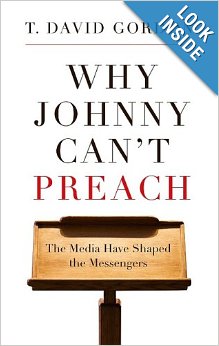
411yqOuLXhL._SY344_PJlook-inside-v2,TopRight,1,0_SH20_BO1,204,203,200_Why Johnny Can’t Preach: The Media Have Shaped the Messengers by T. David Gordon. Gordon wrote this book while completing “fairly severe” treatment for stage III cancer. He thought, “Before I die, I must express my opinion on this subject.” The subject is what Gordon calls “an ordinarily impoverished pulpit.” He believes “the average Christian family in the average pew in the average church on the average Sunday” suffers from less than mediocre preaching. The book’s polemical tone will be off-putting to some, but Gordon’s arguments are unique and merit attention. As a media ecologist, Gordon believes the pulpit’s decline is linked to our society’s evolution from being a language dominated culture to an image dominated culture. Fewer and fewer pastors read carefully and write critically, and are therefore ill-equipped to adequately deal with linguistic realities of preaching. Not every reader will agree with Gordon’s prognosis of modern preaching, but his argument needs to be heard.

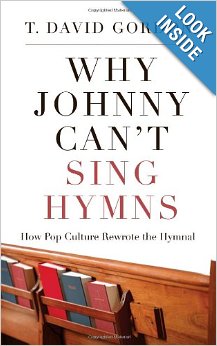
41IGKjf0SLL._SY344_PJlook-inside-v2,TopRight,1,0_SH20_BO1,204,203,200_Why Johnny Can’t Sing Hymns: How Pop Culture Rewrote the Hymnal by T. David Gordon. Gordon followed his book on preaching with one on worship music. The main thesis of this work is that contemporaneity has become the primary criteria for deciding what song is sung in an average worship service. I think Gordon largely succeeds in showing how contemporaneity, alongside the ubiquity of pop music, has rendered many contemporary liturgies inert and transcendent-less. This book is intentionally more descriptive than prescriptive, which is helpful as it reduces the bite of Gordon’s often polemical tone. Chapter 12 on “Strategic Issues” is worth every pastor’s consideration. Much like my final thought on Why Johnny Can’t Preach, not every reader will agree with the thesis of Why Johnny Can’t Sing Hymns (contemporaneity being detrimental to biblical liturgy), but the argument is sufficiently cogent to merit attention.

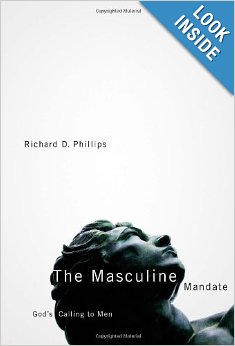
41LVictxJoL._SY344_PJlook-inside-v2,TopRight,1,0_SH20_BO1,204,203,200_The Masculine Mandate: God’s Calling to Men by Rick Phillips. I reread this book in preparation for a monthly men’s meeting we have at our church and I was reminded afresh why TMM is my favorite book on biblical masculinity. Phillips sees Genesis 2:15 as paradigmatic for godly masculinity; “The LORD God took the man and put him in the garden of Eden to work it and keep it.” These two verbs (work and keep) are subsequently expounded and applied to virtually every area of a man’s life. Phillips’ past career in the military ensures the book is sufficiently strong in tone, and he successfully corrects the errors of John Eldridge’s Wild at Heart in a mere two pages. His chapters on marriage and parenting are the best, filled with lifelong wisdom.

51lfzEeQXeL._SY344_PJlook-inside-v2,TopRight,1,0_SH20_BO1,204,203,200_Spartan Gold by Clive Cussler. For several years a friend has told me to read Cussler and it wasn’t until last week that I actually got around to it. Spartan Gold,  the first volume in Cussler’s “Fargot Adventure” series, is a breezy collision of Indiana Jones and National Treasure. The plot is predictable, but the pages still turn quickly. If formulaic fiction is your cup of tea, Cussler is right up your alley.

Soundtracks for the Battle

symphbanner

For as long as I can remember military history has occupied a chief place of interest in my life. Whenever I came home from school and my parents asked how my day was I invariably responded, “Boring.” It was only during times when my social studies class studied a famous war that the response changed to, “My day was awesome!

I majored in history for my undergraduate degree and still spend a fair portion of my week reading books about military history. When I heard my three little boys off to bath time each night I do so by commanding, “Get off the beach! Move, move, move!”

It is probably not surprising then to find out that I like to think of preaching as being, primarily, an act of warfare. When a preacher stands behind the sacred desk to deliver God’s Sacred Word he enters into the greatest battle the universe has ever seen. Through gospel courage and clarity he assaults the kingdom of darkness and the gates of hell. His weapon is the sword of the Spirit and with it he aims to slay sin and liberate its captives.

Therefore, I believe that war soundtracks – from major movies or mini-series – are the most appropriate background music for sermon preparation. John Murphy, a friend and church planter, tweeted last week:

Screen Shot 2013-10-14 at 6.48.08 AM

So in honor of “Murph” – a preacher and former solider – here are the soundtracks I listen to most often, in no particular order. Some of them prove a lousy movie can have a fantastic musical score. Maybe they can fuel your preparation for the coming weekend’s battle.

Are there any specific styles of music that help you during sermon preparation?