5 Features of Biblical Masculinity

21590_largeThe Lord has blessed our family with three young boys – Hudson, Owen, and Haddon. I hope by God’s grace to mold each one of them into fearless men of God.

My favorite passage on parenting is Psalm 127:3-4, “Like arrows in the hand of a warrior are the children of one’s youth. Blessed is the man who fills his quiver with them!”  In commenting on this verse, one of the most practical Puritan theologians George Swinnock said, “Children are compared to ‘arrows.’ Now, we know that sticks are not by nature arrows; they do not grow so, but they are made so; by nature they are knotty and rugged, but by art they are made smooth and handsome. So children by nature are rugged and [troublesome], but by [training] are refined and reformed, made pliable to the divine will and pleasure.”

One of the first orders of business in training boys – these “arrows” Solomon mentions –  is to get a right understanding of biblical masculinity. Doug Wilson’s Future Men: Raising Boys to Fight Giants is unusually helpful in this area. He writes, “Before rearing a son to be ‘masculine,’ it is equally important to have some notion of what that is.”

The Bible reveals five clear aspects of masculinity: men are created to exercise dominion over the earth; they are fitted to be husbandman, tilling the earth; they are equipped to be saviors, delivering from evil; they are expected to grow up into wisdom, becoming sages; and they are designed to reflect the image and glory of God.

Wilson defines each aspect and then meditates on its application to raising boys that storm the gates of hell. I think his work in this area has shaped my parenting paradigm more than any other. Maybe it can do the same for you.

5 DISTINCTIVE FEATURES OF BIBLICAL MASCULINITY

  1. Biblical men are “lords.” Man was created to exercise dominion in the earth. In Genesis 1:26 God says, “Let us make man in our image, after our likeness. And let them have dominion over the fish of the sea and over the birds of the heavens and over the livestock and over all the earth and over every creeping thing that creeps on the earth.” We are told to disciple the nations and bring them to true submission to the Lord Jesus Christ. In boys, we might call this the “tree fort” impetus. Boys want to conquer and subdue, and if the terrain before them is the back yard, then that is what they want to conquer and subdue. The point of discipline with boys is to channel and direct their energy into an obedient response to the cultural mandate. Boys therefore should be training to become men who exercise dominion, they should be learning to be lords in the earth, they should learn to be adventurous and visionary.
  2. Biblical men are “husbandmen.” Man was created, not only to discover and conquer new worlds, but also to make those worlds flourish. After man was created, God placed him in the garden to tend and protect it, “The Lord God took the man and put him in the garden of Eden to work it and keep it.”Man does not just build bridges and space stations. He must also then and oversee the organic things which he plants there – gardens, families, towns. Great lessons can be acquired by small boys in a small garden. A rich farmer was once rebuked for having his sons work in the field when they didn’t have to. His reply was apropos to this discussion. He wasn’t raising corn, he explained, he was raising boys. Boys therefore should be learning to be patient, careful, and hard-working.
  3. Biblical men are “saviors.” Men also have a deep desire to deliver or save. The great example of a savior is, of course, the Lord Jesus Christ. His deliverance is promised in Genesis 3:5, “I will put enmity between you and the woman, and between your offspring and her offspring; he shall bruise your head, and you shall bruise his heel.” Men who follow Jesus Christ, the dragon-slayer, must themselves become lesser dragon-slayers. And this is why it is absolutely essential for boys to play with wooden swords and plastic guns. Boys have a deep need to have something to defend, something to represent in battle. And to beat the spears into pruning hooks prematurely, before the war is over, will leave you fighting the dragon with a pruning hook. Boys must learn they are growing up to fight in a great war, and they must consequently learn, as boys, to be strong, sacrificial, courageous, and good.
  4. Biblical men are “sages.” The sage is a man who is great in wisdom, and wisdom in Scripture is personified as a great lady. Sons are exhorted constantly to listen to her. We must therefore teach our boys the masculinity of study, of learning, of books, of intellectual discussion. Too often we let boys drift into a situation where they pit one aspect of masculinity against another. When this happens, for example, a boy who naturally loves the outdoors can too readily dismiss software programming as effeminate, or even worse, come to look down on poetry. Intellectual discipline, or, as Peter put it, girding up the loins of the mind, is an important part of growing to manhood.  Boys must therefore learn to be teachable, studious, and thoughtful.
  5. Biblical men are “glory-bearers.” The last aspect of masculinity is seen in the fact that men are the glory of God. Paul puts this matter very plainly in 1 Corinthians 11:7, “A man . . . . is the image and glory of God.” Boys must be instructed on how to grow up into glory and how to fulfill their responsibility to be representative, responsible, and holy.

Know what biblical manhood is, for that is where boyhood should be aimed.

“In your public meetings devote so much time to prayer that nominal Christians are bored with talking to the God they only claim to know.” – Mark Dever

3 Devices to Drive Out Deception

Fight the Good Fight

Now the Spirit expressly says that in later times some will depart from the faith by devoting themselves to deceitful spirits and teachings of demons, through the insincerity of liars whose consciences are seared,who forbid marriage and require abstinence from foods that God created to be received with thanksgiving by those who believe and know the truth. For everything created by God is good, and nothing is to be rejected if it is received with thanksgiving, for it is made holy by the word of God and prayer. – 1 Timothy 4:1-5

In 1 Timothy 1 Paul commands his young protege to remove the false teaching prevailing in the Ephesian church and wage the good warfare of faith. In the passage above we get an idea of how these two aspects of ministry are related. The first two verses reveal three characteristics of false teaching: it is 1) a mark of the later times, and 2) comes from deceptive demons and 3) lying leaders. False teaching is rarely overt, in fact, this passage shows us just how covert false teaching is. Instead of blatantly rejected the deity of Christ or the inerrancy of the Bible the false teachers were advocating an ascetic theology – forbidding marriage and the eating of particular foods.

How then are God’s people to fight against such subtlety? Notice three devices Paul gives in this text to drive out deception . . .

Truth drives out deception.  Paul says that the blessings of marriage and food are to be received by people who believe and know the truth. When Paul writes of the armor of God in Ephesians 6 he begins with the belt of truth. As Thomas Brooks said, “Men take no hold of error till they have let go their hold of truth, therefore hold fast to truth.”1   Holding fast to truth means devotion to the Word.  Hearing the word preached is an underestimated battering ram of truth against the enemy’s fortress of deception.  Reading the word with humble devotion illuminates the mind and heart, driving out the darkness of deception.  Speaking the truth to one another in discipling relationships is vital and necessary, for truth is a community treasure (Eph. 4:17).  In everything we hold fast to Christ, for He is the truth.

Thanksgiving drives out deception.  Two times Paul says that we are to receive God’s gifts with thanksgiving.  In another letter he says, “Give thanks in all circumstances; for this is the will of God in Christ Jesus for you” (1 Thess. 5:18).  Just how does thanksgiving drive out deception?  Thanksgiving is little more than remembering and acknowledging God – for who He is and what He has done.  To give thanks in everything is to hold fast to God in everything.  He is a mighty fortress, a bulwark never failing. Thanksgiving places our souls next to this bulwark.

Holiness drives out deception. We see in this text that the false teachers advocated a false holiness, which Paul combats with a right understanding of holiness. Jesus said that we are made holy in truth (John 17:17) and the Spirit’s work of holiness produces the fruit of thanksgiving (Eph. 5:20).  We can be sure that where holiness reigns, truth and thanksgiving thrive.  The beauty of these devices is that they all fuel one another; pursuing truth brings holiness and thanksgiving, pursuing holiness dives the soul deeper into the truth and thanksgiving, and increased thanksgiving grows truth and holiness.  Church, we must be about the pursuit of holiness. You want to strive against Satan? Strive for holiness.

Root yourself in Christ by faith and wage the good warfare against Satan’s deception by wielding truth, thanksgiving, and holiness.

  1.  Brooks, Precious Remedies Against Satan’s Devices, 59.

A Most Difficult Passage

MARK - Slider NT

On Saturday I preached on Mark 4:1-20 and the parables of the soils. Here is how I tried to explain what is arguably the hardest truth found in Mark’s gospel:

Mark 4:10 says, “those around him with the twelve asked him about the parables.” Jesus had already mentioned the parable of the soils, but the plural use of parables here indicates there were others he mentioned. These followers are apparently confused why Jesus speaks in figurative language, they seem to say, “Why not speak plainly Jesus? You’re confusing everyone.” Jesus replies in 4:11-12, “And he said to them, “To you has been given the secret of the kingdom of God, but for those outside everything is in parables, 12 so that

“they may indeed see but not perceive,
and may indeed hear but not understand,
lest they should turn and be forgiven.”

One commentator says of 4:11-12, “These verses are among the most difficult in the entire gospel.” 1 Careful attention needs to be given to this passage as it is paradigmatic for all Jesus’ teaching in the gospel. 4:11 says the disciples have received “the secret of the kingdom of God.” But, Jesus says, “for those outside everything is in parables.” Some people understand His preaching and others don’t. We all understand that reality, but the difficulty is found in 4:12’s purpose clause where Jesus says, “I speak in parables so that those outside will not understand lest they should turn and be forgiven.” Jesus apparently speaks in spiritual code to make sure the hardened sinner will not repent of his sin. A difficult truth no doubt. Note that Jesus is quoting a passage, specifically Isaiah 6:9; so we need to understand Isaiah 6 if we are to truly understand Mark 4.

Isaiah 6 is Isaiah’s commissioning service as a prophet, as he sees the holy God lifted up on His throne and surrounded by the seraphim. Isaiah is told by God to take to the people a message that will cause rejection from the hardened nation of Israel. “Preach the gospel so that their hearts will reject me and I will bring upon them the judgment they deserve.” Jesus sees the exact same thing going on in Mark 4: like ancient Israel, the people see God’s work in Jesus but fail to perceive it. They hear the words of Jesus but fail to understand them.  Now Matthew 13 sees the parables as a response to hardened hearts and Mark 5 sees the parables as the cause of hardened hearts. Although the two seem in tension with one another, they are both right: parables are the response to and cause of hardened hearts.

The best way I can illustrate it is through what Exodus tells us about Pharaoh, the leader of Egypt. We are told that he hardened his heart, but also that God hardened his heart in judgment in order that the entire world would know He alone is God. We have to acknowledge that the biblical writers do not appear to have the tension we do with these realities. He hardened his heart and God hardened his heart. They hardened their heart and God hardened their heart. It is one of those occasions where we have to place our hand over any sinful objections that would come from our our mouth and say, “Lord I am not sure how this works out, but I trust it’s true because it’s in your word.”

So then the purpose of parables is to reveal the truth to humble hearts and conceal the truth from hard hearts. The word of Jesus will either harden or humble your heart. The purpose’s difficulty need not cause us to miss two glorious truths about the kingdom revealed through parables.

First, receiving the kingdom rests on God’s generous grace. Did you notice in 4:11 how Jesus said the disciples were given the secret of the kingdom? The secret of the kingdom is what the rest of the New Testament calls the mystery of the gospel, the good news that Jesus came to save sinners. God graciously gives His kingdom to those He calls. We don’t earn or achieve the kingdom, but instead receive it by grace through faith.

Second, advancing the kingdom rests on God’s mysterious providence. The kingdom of Christ is advancing, in mysterious ways. Jesus is calling radically ordinary people; those traditionally assumed to be on the inside are finding themselves on the outside; the kingdom isn’t advancing with bright political banners or military might, it is advancing in the hearts of those who believe. It is an “undercover kingdom” advancing through God’s mysterious providence. It’s a mysterious providence revealed in the power of parables to harden or humble a heart.

  1.  Wessel & Strauss, The Expositor’s Bible Commentary: Mark, 754.

Preaching’s Difficult Distinction

Preaching Header

One of the most difficult distinctions in preaching is arguably its most vital.

It is the distinction of preaching at the sheep versus preaching among the sheep. I have never seen anyone put the distinction into words because it seems so hard to do, but every Christian intuitively knows the difference.

When a preacher is preaching at the sheep, there is a sense of distance between shepherd and sheep. This may result from tone, content, or movement, but the overall sense from the congregation and their leader is one of separation. Preaching at the sheep can still be true and clear (and be mightily multiplied by the Spirit), it just appears to fall short of the heart-searching ideal. Size makes no difference here; you can preach at 500 sheep and preach at 5 sheep.

When a preacher is preaching among the sheep, there is a sense of nearness between shepherd and sheep. The congregation senses the pastor is preaching to them because he is with them. Such a sense also can result from tone, content, or movement, but I believe there is a deeper reality behind this kind of preaching.It’s the reality of pastoral love. This Pastoral love is why size makes no difference on this side of the equation either; mega-pastors and house church pastors regularly preach among the sheep.

Pastoral love fuels preaching among the sheep because the shepherd has a biblical and emotional interest in their growth. It may just be my experience, but the times where my preaching was (and at times still is) more “at than among” were times when I was eager to be known as a great preacher. Therefore, I stood on stage and spoke at people, anxious to grow my reputation more so than the hearts of my hearers. A loving pastor will have a particular concern in his preaching for the sheep entrusted to his care, a love that will display itself in how he preaches. His love for them means he wants the text to grow their hearts just as it has grown his heart during preparation. Thus, when it comes time to preach, he is only sharing his heart, as explained and applied through the text, with all the authority, clarity, and boldness he must.

This weekend countless pastors will ascend to the sacred desk and preach. May it be preaching among the sheep.

Save

Recent Reads

I love to read. By God’s grace I am a pretty fast reader; I usually read a couple books each week. I find it helpful to summarize my thoughts on each book and I offer those thoughts in hopes that you will be encouraged to either read or pass over the given title.

ThoughtsonPublicPrayerlgThought on Public Prayer by Samuel Miller. First published in 1849, Miller’s work goes unnoticed today because I have a suspicion that public prayer is absent from most churches today. This book won’t convince a pastor of public prayer’s necessity as much as it will, Lord willing, increase his ability in public prayer. The first three chapters are somewhat dated as Miller interacts with the contemporary issues of his time, but chapters 4-6 will search the heart. Miller unfolds eighteen “frequent faults” in public prayer and no pastor is outside his scope of criticism. After such bruising Miller offers fourteen “characteristics of a good public prayer” and five “means of attaining excellence in conducting public prayer” to heal the heart. This book has been in print for over 160 years for good reason; if you regularly lead in public prayer it will be of great benefit.

51HxHQBhZeL._SY344_PJlook-inside-v2,TopRight,1,0_SH20_BO1,204,203,200_Family Ministry Field Guide: How Your Church Can Equip Parents to Make Disciples by Timothy Paul Jones. Jones wants to see churches move toward his vision of family ministry: “Intentionally and persistently coordinating a church’s proclamation and practices so that parents are acknowledge, trained, and held accountable as primary disciple-makers in the children’s lives” (33). The book will be most useful for churches wanting to transition from a more programmatic, activity-driven approach to the family ministry approach Jones advocates. Since I came into the book with similar convictions already in place, I didn’t find much that was challenging or new.

41qMDAuSQbL._SY344_PJlook-inside-v2,TopRight,1,0_SH20_BO1,204,203,200_Trained in the Fear of God: Family Ministry in Theological, Historical, and Practical Perspective edited by Randy Stinson and Timothy Paul Jones. I usually stay away from edited volumes because the quality of content can deviate so much from chapter to chapter. Not so with this volume. It’s strength lies in the three fold evaluation of family ministry; containing chapters from a theological, historical, and practical perspective. I found the historical section to be particular helpful in understanding the various factors contributing to the evolution of family ministry throughout the centuries. David Prince’s chapter on “The Pastor’s Home as Paradigm for the Church’s Family Ministry” was illuminating and challenging. A valuable resource for the pastor’s study.

LoveandWarLove and War (North and South Trilogy #2) by John Jakes. I loved the first installment of Jakes’ North and South as he quickly captured my attention and ably painted a picture of various American lifestyles found in the 1840-1850s. Thus, I had high expectations for volume two – the longest in the series – as it it completely occupied with The Civil War. Jakes surpassed my expectations in a most surprising way as he chose the lesser known byways of the War of Rebellion. Characters find themselves at the bottom of Charleston harbor inventing a dramatic change in naval warfare; in engineer battalions and military rail crews; inside the horrors of a Confederate prison; across the pond in London as the South builds its ships. The dramatic tension of the first novel is successfully replicated in the second, even if it requires the death of a major character (and my personal favorite). Insightful, harrowing, and real . . . I am eager to read the final volume.

Private Prayer Fuels Public Prayer

Thoughts on Public Prayer

The old Princeton theologian Samuel Miller closes his work, Thoughts on Public Prayer, by providing five means to excellence in public prayer.

The first means is, “None can hope to attain excellence in the grace and gift of prayer in the public assembly, unless they abound in closet devotion, and in holy communion with God in secret” (261). I found his discussion on this point to be thoroughly challenging and convicting. Here are a few choice quotes:

It is true that, without [private prayer], there may be formal accuracy [in public prayer]; much copiousness and variety, both as to topics and language; much rhetorical beauty. But without private prayer, there will not, there cannot be that feeling sense of divine things; that holy familiarity with the throne of grace, and with the covenant God who sit upon it, which bespeaks one at home in prayer, and whose whole heart is in the exercise. (261)

It cannot be doubted that a defect in private prayer is one of the most abundant sources of faults in public prayer. Hence the frigid, unfeeling accuracy, so often observable in this part of the service of the sanctuary. Hence the hesitation, the embarrassment, and the various improprieties so frequently witnessed in the public prayers of able and pious men. They have not come from their knees in private to the services of the sacred desk. They have not come with hearts reeking with the hallowed influences of the closet, to be the leaders of the Lord’s host in the sanctuary. The consequence is, their hearts are cold. (263)

It is no doubt that we sometimes meet with men of comparatively weak minds, of very small attainments in human knowledge, and in every respect unqualified advantageously to address an assembly in continued discourse, who were yet peculiarly excellent and edifying in social prayer. This is because they live at the throne of grace. (264)

If any desire to make happy attainments, and progressive improvement both in the grace and gift of public prayer, the closet will be found the appropriate and the most important nursery. (266)

We may safely say, then, that no man ever attained any high degree of excellence in public prayer, who had not previously cultivated peculiar intimacy with his covenant God in secret devotion; who had not had his heart trained to more than common familiarity with, and affection for, new covenant blessings; and his tongue loosened to pour out spiritual desires without reserve or faltering.(267)

He that would be acceptable and powerful in public prayer, must know something habitually of what is meant by “wrestling with God” in his closet: must me “mighty” in secret prayer. He who neglects this, or has little taste for this, might as well expect a miracle to be wrought for his help every time he goes to public prayer. (267-268)

It is an old maxim that no one was ever truly eloquent who didn’t really feel. Such is true when it comes to prayer. The pastor must fan the flame of his soul in the closet so that by the time he steps up to the pulpit to pray, he is burning to converse with His God.

There is a Traitor Within

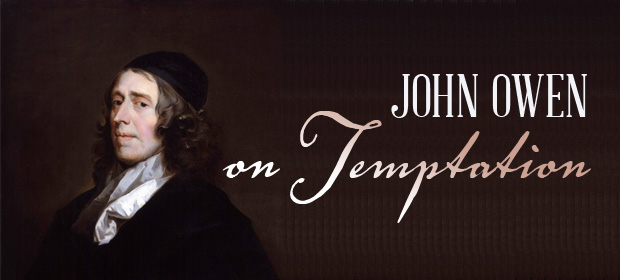
John Owen Temptation

In his great work on temptation John Owen begs his readers to consider that, in and of themselves, they have no strength or power to withstand temptation. He says, “Confidence of any strength in us is one great part of our weakness.”

To prove his point he offers the following analogy:

If a castle or fort be never so strong and well fortified, yet if there be a treacherous party within, that is ready to betray it on every opportunity, there is no preserving it from the enemy. There are traitors in our hearts, ready to take part, to close, and side with every temptation, and to give up all to them; yea, to solicit and bribe temptations to do the work, as traitors incite an enemy. Do not flatter yourselves that you should hold out; there are secret lusts that lie lurking in your hearts, which perhaps now stir not, which, as soon as any temptation befalls you, will rise, tumultuate, cry, disquiet, seduce, and never give over until they are either killed or satisfied. He that promises himself that the frame of his heart will be the same under a temptation as it is before will be woefully mistaken.

Trust not in your own power and your own heart. Trust in Christ’s power that is in you.

3 Books Every Pastor Should Read on Worship

Books are some of the best friends a pastor can have. How to know which friends to have is quite difficult, for as the inspired Preacher said, “Of making many books there is no end” (Ecclesiastes 12:12). I recently suggested three books every time-strapped and budget-strapped pastor should read on pastoral ministry, preaching, and prayer.

In light of my post “Preaching Pastors as Worship Pastors” it seems wise to let the next installment of “3 Books Ever Pastor Should Read” be on the topic of worship.

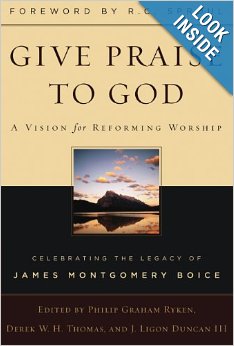
41anShWMyZL._SY344_PJlook-inside-v2,TopRight,1,0_SH20_BO1,204,203,200_Give Praise to God: A Vision for Reforming Worship. This is a Festschrift in honor of James Montgomery Boice, a man who loved to worship. Eighteen different chapters are offered under four parts: 1) The Bible and Worship, 2) Elements of Biblical Worship, 3) Preparing for Biblical Worship, and 4) Worship, History, and Culture. Lig Duncan’s two chapters alone are worth the price of the book as he answers the question “Does God Care How We Worship?” with clarity and power. He helpfully encapsulates Reformed worship as being simple, biblical, transferable, flexible, and reverent. Other chapters of contemporary importance are Rick Phillips’ work on The Lord’s Supper, Terry Johnson’s discussion on singing the psalms, and Bob Godfrey’s evaluation of worship and the emotions. This book covers an astonishing amount of ground on the topic of worship and every chapter drips with biblical conviction. A most invaluable addition to your library.

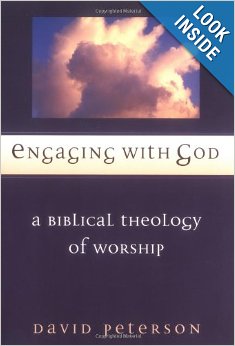
41NOBZWpRYL._SY344_PJlook-inside-v2,TopRight,1,0_SH20_BO1,204,203,200_Engaging with God: A Biblical Theology of Worship by David Peterson. Peterson’s seminal study on worship must be reckoned with. He defines worship as “an engagement with God on the terms that he proposes and in the way that he alone makes possible.” He then moves on to show the nature of worship according to the Old and New testaments. He talks of worship in the New Covenant primarily as service and edification, thus he minimizes – somewhat unfortunately – the worshipful nature of a congregation’s public gatherings. He understands this reality, but in some ways is reacting against the Australian milieu in which he writes. Petersons’ tone is irenic and responsible, I don’t know of another resource that will so ably provide a pastor with the biblical foundation for understanding worship.

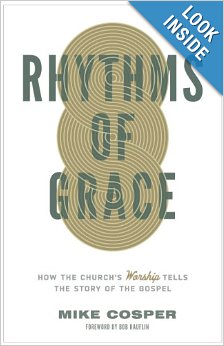
41BD8kstwuL._SY344_PJlook-inside-v2,TopRight,1,0_SH20_BO1,204,203,200_Rhythms of Grace: How the Church’s Worship Tells the Story of the Gospel by Mike Cosper. I bought this book thinking it would be a decent addition to the conversation on worship, but oh how I underestimated Cosper! He brings together the best of all that has been published on worship and then puts his Cosper-like curve on the subject. The “One, Two, Three” framework he offers is quite useful: worship has one object and author (God), two contexts (gathered and scattered), and three audiences (God, the church, and the watching world). Every pastor and church member should read chapter nine,”Sing, Sing, Sing,” which offers uncommon wisdom on the topic and rightly challenges Christians to move from being a critic to a participant. An excellent work not to be underestimated.

HONORABLE MENTIONS

Christ-Centered Worship: Letting the Gospel Shape Our Practice by Bryan Chapell. The prose is dry and the structure is one of a textbook. Yet, Chapell’s historical sensibility and clear grounding in Scripture will help every pastor examine his church’s liturgy.

Worship Matters: Leading Others to Encounter the Greatness of God by Bob Kauflin. The book is directed mostly toward music leaders, but Kauflin’s wisdom is always a joy to hear or read.

Books for Elder Training

Pastoral Ministry

The pastoral epistles1 are best friends to a young pastor like myself. With only nine months of lead pastor ministry under my belt I find myself always turning to these friends for wisdom.

One particular area of focused study in recent months has been Paul’s instruction regarding the installation of elders. Everyone seems to know the qualifications Paul gives for elders in 1 Timothy 3 and Titus 1, but fewer know – or at least talk about – Paul’s wisdom about installing such qualified men. In Titus 1 Paul said to his young church planter, “This is why I left you in Crete, so that you might . . . appoint elders in every town as I directed you” (1:5). The first thing we see is Titus exhorted to urgency as Paul apparently doesn’t want Titus to be lazy in the appointment of elders. But Titus 1:5 needs to always be balanced by 1 Timothy 5:22, where Paul says, “Do not be hasty in the laying on of hands.” So, be urgent and patient. From these two passages I get my conviction that churches should be patiently urgent in installing men for elder leadership.

At our church, this maxim has played out in us spending eight months observing which men are qualified and already doing the work of eldering. We identified those men and then put them in five-months of “elder candidate training.”2 The training involves, on average, three monthly meetings3 along with many books to read, lectures to listen to, and response papers to write. I am always fascinated with and challenged by the resources other churches use for elder training, so I thought it could be useful to provide a list of the books we are using at IDC.

Most of these books are read in their entirety, but from a few we are only reading selected chapters.

BIBLE & THEOLOGY

  • IDC Elder Confession of Faith4
  • The King in His Beauty by Tom Schreiner
  • God’s Big Picture by Vaughn Roberts (UR)5
  • Delighting in the Trinity by Michael Reeves (UR)
  • What is Reformed Theology? by RC Sproul (UR)

ECCLESIOLOGY

  • What is the Mission of the Church? by Kevin DeYoung and Greg Gilbert
  • A Display of God’s Glory by Mark Dever
  • The Deliberate Church by Mark Dever and Paul Alexander
  • What is a Healthy Church? by Mark Dever (UR)

PASTORAL MINISTRY

  • The Shepherd Leader by Timothy Witmer
  • Faithful Preaching by Tony Merida        
  • Finding Faithful Elders and Deacons by Thabiti Anyabwile (UR)

THE CHRISTIAN LIFE

  • The Practice of Godliness by Jerry Bridges
  • Humility by CJ Mahaney (UR)
  • The Gospel & Personal Evangelism by Mark Dever (UR)
  • Sex, Romance, & The Glory of God by CJ Mahaney (UR)
  • A Neglected Grace: Family Worship in the Christian Home by Jason Helopoulos (UR)
  • Mortification of Sin by John Owen (UR)
  • Rhythms of Grace by Mike Cosper (UR)
  • The Secret Key to Heaven by Thomas Brooks (UR)

—————————————————————————————————————————

  1. 1 & 2 Timothy, Titus.
  2. We are about to wrap up our second month.
  3. The meetings normally run about three hours.
  4. An adaptation of the 1689 Baptist Confession.
  5. “UR” signifies a book read for The Upper Room, a monthly gathering for all the men in our church. It’s aim is to disciple men to lead in the home and the church.