
“Ah! there is nothing like a calm look into the eternal world to teach us the emptiness of human praise, the sinfulness of self-seeking, the preciousness of Christ.”- Robert Murray M’Cheyne
The Pastor as Theologian
In his book Jonathan Edwards and The Ministry of the Word Sweeney says, “In the early twenty-first century, when many pastors have abdicated their responsibilities as theologians, and many theologians do their work in a way that is lost on the people of God, we need to recover Edwards’ model of Christian ministry. Most of the best theologians in the history of the church were parish pastors.”
Look at almost any major theologian in church history and you’ll find a man that likely considered himself a pastor first and theologian second. This is a model we need to recover and, happily, it looks like we are working to recover.
This summer two books on the topic—the first was published in June and the second is due in just over two weeks—hit the shelves and further the conversation. Ordinary pastors will want to work their way through these complementary visions of pastors advancing theological understanding.
The Books
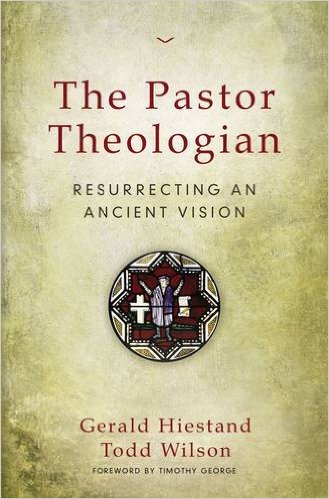 The Pastor Theologian: Resurrecting an Ancient Vision by Gerald Hiestand and Todd Wilson. Pastoral ministry today is often ruled by an emphasis on short-sighted goals, pragmatic results, and shallow thinking. Unfortunately, those in the academy tend to have the opposite problem, failing to connect theological study to the pressing issues facing the church today. Contemporary evangelicalism has lost sight of the inherent connection between pastoral leadership and theology. This results in theologically anemic churches, and ecclesial anemic theologies.
Todd Wilson and Gerald Hiestand contend that among a younger generation of evangelical pastors and theologians, there is a growing appreciation for the native connection between theology and pastoral ministry. At the heart of this recovery of a theological vision for ministry is the re-emergence of the role of the “pastor theologian.”
The Pastor Theologian presents a taxonomy of the pastor-theologian and shows how individual pastors—given their unique calling and gift-set—can best embody this age-old vocation in the 21st century. They present three models that combine theological study and practical ministry to the church:
- The Local Theologian—a pastor theologian who ably services the theological needs of a local congregation.
- The Popular Theologian—a pastor theologian who writes theology to a wider lay audience.
- The Ecclesial Theologian—a pastor theologian who writes theology to other theologians and scholars.
Raising the banner for the pastor as theologian, this book invites the emerging generation of theologians and pastors to reimagine the pastoral vocation along theological lines, and to identify with one of the above models of the pastor theologian.
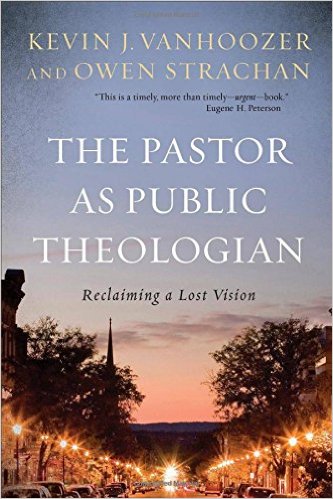 The Pastor as Public Theologian: Reclaiming a Lost Vision by Kevin Vanhoozer and Owen Strachan. Many pastors today see themselves primarily as counselors, leaders, and motivators. Yet this often comes at the expense of the fundamental reality of the pastorate as a theological office. The most important role is to be a theologian mediating God to the people. The church needs pastors who can contextualize the Word of God to help their congregations think theologically about all aspects of their lives, such as work, end-of-life decisions, political involvement, and entertainment.
Drawing on the depiction of pastors in the Bible, key figures from church history, and Christian theology, this brief and accessible book offers a clarion call for pastors to serve as public theologians in their congregations and communities. The church needs pastors to read the world in light of Scripture and to direct their congregations in ways of wisdom, shalom, and human flourishing. The Pastor as Public Theologian calls for a paradigm shift in the very idea of what a pastor is and does, setting forth a positive alternative picture.
In addition to pastors, this book will be invaluable to seminary students training to be pastors and to their professors. It includes pastoral reflections on the theological task from twelve working pastors.
The Podcasts
I’ve recently listened to a couple podcasts pursuing one, if not both, of the books. Listen in and whet your appetite for your eventual reading.
- The guys over at Christ the Center just last week interviewed Hiestand on “The Pastor Theologian.”
- The Mere Fidelity men interviewed Hiestand and Vanhoozer on their respective visions for restoring a prominent place in today’s church for pastor-theologians.
On Fear and Faith
God Protects His Promise
You’ll notice that Abraham “journeyed” to the land of Gerar and “said of Sarah his wife, “She is my sister.” And Abimelech king of Gerar sent and took Sarah.” To understand the threat this action brings to the promise we must remember what happened in chapter 18. There God appeared to Abraham (Sarah was eavesdropping on the conversation) and said in 18:10, “I will surely return about this time next year and Sarah shall have a son.” Thus, presumably—given the timeline—here in chapter 20 Sarah has just conceived, probably isn’t even showing a baby, and out of fear for his life Abraham hands her over to Abimelech saying, “She’s my sister.” Do you see the danger to the promise? Abraham and Sarah haven’t been able to have a child for decades, she’s suddenly found to be pregnant while living in Abimelech’s harem—to whom will everyone think the child belongs? Not Abraham. The promise stands on a perilous precipice all because Abraham willingly sacrificed his wife’s integrity for his own safety.
Yet here comes the God of protection, look at 20:3, “But God came to Abimelech in a dream by night and said to him, ‘Behold, you are a dead man because of the woman whom you have taken, for she is a man’s wife.’” Imagine hearing something like that tonight in the middle of your sleep, what terror must have filled this pagan king! Notice 20:4 to see Abimelech’s response, “Now Abimelech had not approached her (this chapter repeatedly proves Abimelech and Sarah had never shared a bed). So he said, “Lord, will you kill an innocent people? Did he not himself say to me, ‘She is my sister’? . . . In the integrity of my heart and the innocence of my hands I have done this.” To which God says in 20:6, “Yes, I know that you have done this in the integrity of your heart, and it was I who kept you from sinning against me. Therefore I did not let you touch her.” Do you have a place in your understanding of God that says He sovereignly keeps people from sinning? You see Abimelech says, “Lord, I haven’t done anything wrong!” To which God says, “I know, because I wouldn’t let you.” It’s an amazing declaration isn’t it? God will protect even unbelievers from sinning in order to keep His promise. His promise is certain for He is a shield of protection.
God proceeds in 20:7 to command Abimelech to return Sarah lest he die. The next morning Abimelech obeys and understandably challenges Abraham on his deceit. Look at Abraham’s excuse in 20:11, “I thought, ‘There is no fear of God at all in this place, and they will kill me because of my wife.’” In fact, Abimelech proves to be a better model than Abraham in this passage of what it means to fear God. “Besides,” Abraham goes on to say, “Sarah really is my sister, she’s the daughter of my father from a different mother. Plus, when God sent me from my home—notice 20:13, “I said to her, ‘This is the kindness you must do me: at every place to which we come, say of me, ‘He is my brother.’” Abraham and Sarah have thus been up to this ruse for decades, there’s no telling how many times it happened, how often the promise was endangered by his lack of faith.
Have you considered before what a perplexing character Abraham is? I mean, Abraham took God at his word and left his home with no knowledge of where he was going. Lord willing, next week we will see him in faith obey God’s command to sacrifice His son Isaac. Yet, interspersed we have these stories in chapter 12 and 20 of him potentially forfeiting the promise out of fear. Here’s the vital lesson for us: great faith is often mingled with great failure. We see it in Abraham and every major figure of faith ever since. In Abraham we see that it can be easy to have faith in the great things, but fail in the little things. And what’s amazing to me is that God called out and covenanted with Abraham knowing about his future failures. What encouragement this is to you who are called by God! You will fail in the future, maybe even greatly, but if He’s called you belong to Him with all your great faith and great failures.
You’ll notice if you scan through 20:14-16 that Abimelech returns Sarah to Abraham saying they can live wherever they please in his land and give them a gift of one thousand pieces of silver. Then in 20:17 Abraham intercedes for Abimelech and his family so they could bear children for notice 20:18, “For the Lord had closed all the wombs of the house of Abimelech because of Sarah, Abraham’s wife.” The curse of barrenness had fallen on Abimelech’s family because of Abraham’s fear, which announces a terrible irony. Do you see it? Abraham was supposed to bring blessing to the nations, but because of fear he brought a curse to Abimelech’s nation. Sinful fear rarely, if ever, only affects the individual who falls into unbelief—the consequences regularly reach farther.
God is powerful to protect his promise, a promise we now finally see fulfilled.
The Promise Fulfilled
Several years ago Emily and I went to watch a movie that was the final installment of a vaunted series. All along the story was building to a climactic encounter you knew would come in the last film. When the scene came I was on the edge of my seat eager to see the great event all sorted. Yet, the climax came and went rather uneventfully and I thus left the theater that afternoon quite disappointed with a climax that was altogether anticlimactic.
You could be forgiven for feeling something similar as we turn the page to chapter 21. Since chapter 12 the story has been building up to the moment when Sarah has a son, but when the birth comes Moses retells it quite anticlimactically. Look at 21:1-2, “The Lord visited Sarah as he had said, and the Lord did to Sarah as he had promised. And Sarah conceived and bore Abraham a son in his old age at the time of which God had spoken to him.” So hum-drum, isn’t it? “In time Sarah bore Abraham a son, just like God said she would.” Abraham circumcised him and Sarah laughed in joy. That’s about it in 21:1-7. Yet, is the ordinariness really surprising? For God is always faithful to His word of promise. Without much apparent effort at all we see God continually capable of bringing about His plans and purposes. Why then should Moses retell the story with great pomp and celebration? What he emphasizes three times in two verses is how Isaac’s birth happen as God said it would. You can stake your life on God’s word of promise.
If you are not a Christian, let me tell you tonight that you can stake your life on God’s promise. He told Abraham, “I will give you a son,” and Abraham received a son. He told us through His word that someone from Abraham’s family would come and bless the nations by crushing the Serpent’s head. That promise had come true in the life, death, and resurrection of Jesus Christ. He now offers to you the promise of forgiveness of sin an eternal life that He secured, that He protects. What promise of protection do you cling to? The promise of riches, success, or earthly relationships? Or maybe you cling to your own acts of righteousness or obedience? Friend, nothing but turning from your sin and trusting in Jesus for salvation can protect your soul from the death you deserve. He holds out the promise of life to you tonight, will you take it by faith?
Our God is the Lord of protection, He protects His promise.
Life in the Covenant Family
About two months ago we moved to a new house, to be closer to church and one in which we can live, Lord willing, for years and years. It took many weeks to get used to traveling different routes to and from our ordinary places of community; many weeks to get used to walking around a new home in the dark; many weeks to discern how to best tend to a new yard; many weeks to find new ways to play old games. All in all, it took many weeks to get used to life in the new home.
We’ve been in Genesis for several weeks now and this week I thought, “I feel like I’m getting used to how Genesis uniquely talks about life in the covenant family of God.” And so as we begin to close I want to think about ordinary life in this covenant family, exemplified by Abraham, under two statements we keep seeing and have even seen tonight.
First as we observe life in the covenant family we see . . .
The danger of fear in the present. Have you ever considered how fear comes from unbelief and unbelief is anchored to the present? Unbelief is fixated on present realities, and if it goes unchecked then fear runs rampant. This is what we see in Abraham’s failures. His failures come at moments when he’s totally consumed with the present and can’t help but respond with fear. But there are moments in Abraham’s life of great faith, which leads us to the second observation on life in the covenant family . . .
The duty of faith in the future. If Abraham’s great failures are rooted in a preoccupation with the present, the instances of great faith are those moments when he clings to the future. Faith in the future pushes out fearful unbelief in the present. I wonder where fear is strong in your life. Could it be of present unbelief in God’s future promises? There is great danger in life consumed with the present with little thought given to the future. But when God’s people obediently live through faith in God’s future promises they have great spiritual power in the present. What promises are you living by? What promises of God might you need to remember this week as you fight to live by faith?
“Fear not,” God says, “for I am your shield.” May you be encouraged tonight that God always protects His promise and His people. Our God is the Lord of protection.
This post is adapted from my recent sermon, “Abimelech,” on Genesis 20-21.
What Should a Pastor Be?
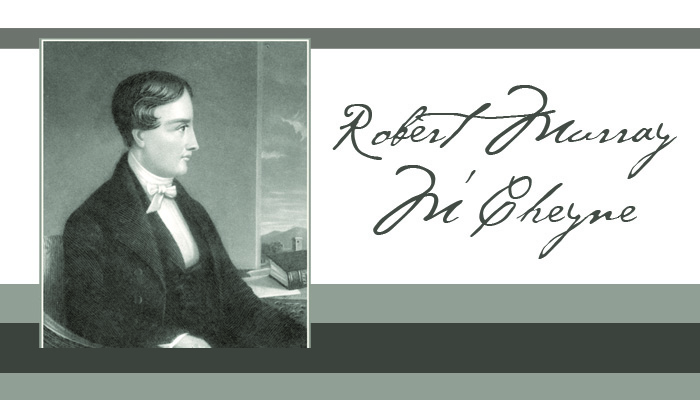
No man has influenced my pastoral life and vision more than Robert Murray M’Cheyne. He was a man of ordinary gifting, but of tenacious love for the sufficiency and beauty of Jesus Christ. The more I read him the more I’m convinced few pastors of old are as worthy to hear today as Mr. M’Cheyne (hence why I hope to do my PhD research on him).
26 Traits of a Faithful Pastor
In one morning’s bible reading M’Cheyne meditated on 1 Thessalonians 2 and Paul’s example of ministry to the church at Thessalonica. In a manuscript quarto—think “journal”—M’Cheyne answered the question, “What should a minister be?” from Paul’s instruction. He came up with twenty-six different characteristics of healthy gospel ministry. May these encourage and challenge you:
- Bold in our God. Having the courage of one who is near and dear to God, and who has God dwelling in him.
- To speak the Gospel. He should be a voice to speak the gospel, an angel of glad tidings.
- With much agony. He should wrestle with God, and wrestle with men.
- Not of uncleanness. He should be chaste in heart, in eye, in speech.
- Not of deceit or guile. He should be open, having only one end in view, the glory of Christ.
- Allowed of God to be put in trust. He should feel a steward, entrusted of God.
- Not as pleasing men, but God. He should speak what God will approve, who tries the heart.
- Neither flattering words. He should never flatter men, even to win them.
-
Nor a cloke of covetousness. Not seeking money or presents, devoted to his work with a single eye.
-
Nor of men sought we glory. Not seeking praise.
-
Gentle even as a nurse.
-
Affectionately desirous of you. Having an inward affection and desire for the salvation and growth of his people.
-
Willing to impart our own souls. Willing to suffer loss, even of life, in their cause.
-
Laboriousness night and day.
-
To preach without being chargeable, to any of his people.
-
Holily.
-
Justly.
-
Unblameably we behaved among believers.
-
The daily walk.
-
Exhorted every one. Individuality of ministry.
-
As a father. Authority and love.
-
Thank we God. He should be full of thanksgiving without ceasing.
-
Should be with his people in heart, when not in presence.
-
Endeavoured to see you. His people his hope. That which animates him.
-
And joy. Immediate delight.
-
And crown of rejoicing. When he looks beyond the grave.
Thirsty and Thriving
My daily prayer list includes specific petitions for the preaching ministry at IDC. I pray that those who preach at our church would do so with clarity (Col. 4:4), boldness (Eph. 6:19), tenderness (2 Tim. 2:24-25), and faithfulness (1 Cor. 4:2, 2 Tim. 2:15). A couple weeks ago I realized I was spending vastly more time praying for the preachers than the hearers. So I set out to remedy the imbalance.
I’m a believer in trying to make spiritual concerns memorable—be that in matters of sermon application or intercessory prayer. I want to construct hooks on which truth can hang and be easily taken down. As I tried to coalesce everything I long for to be true about the hearers at my church I settled on two regular requests. Maybe they will be helpful for your ministry and prayer life.
“Lord, Make Them Thirsty”
Blessed are those who hunger and thirst for faithful preaching, for they will be satisfied. The joy of satiation depends on one coming thirsty to God’s word. Let every heart gather eager and expectant for an encounter with God through His word. I pray for sinners to come with longing in their heart for something more than this life, for the life found in Christ alone. I pray for saints to come ready to experience God’s living word with the full force of its glory.
Alongside this request is for God to use His Spirit in the souls of our people to replace thirst for the things of earth with thirst for the things of heaven. May every heart long for the word that cannot fail, for the proclamation more sure and steady than any experience of earthly power and glory.
“Lord, Make Them Thrive”
May God let our congregation thrive spiritually under our preaching. I pray this comes in part from all of those who preach at our church to do so with increased power and deeper reverence. But, on the whole, I’m praying here for God to let the Spirit take our feeble attempts at heralding and multiply their effect exponentially in the church’s soul.
Let not the hearer focus on homiletical goofs in the sermon, but on that which exposes the truth of the text and their heart. Protect them from anything that robs attention and steals beauty from the gospel. Let them thrive equally under God’s promises, commands, and threats. Let them thrive in the Old Testament and the New Testament. Let them thrive no matter the genre—in narratives, poetry, prophecy, epistles, and anything else the Spirit inspired to be in the canon. We want continual growth and steady transformation, so Lord, let the preached word be their fuel for Christlikeness.
May the word thrive “overflowingly” in their hearts so they might be earnest ambassadors who carry the gospel with them wherever they go.
Lord, give make us a thirsty and thriving congregation.
Working from Hunger
I’m finding P.T. Forsyth’s The Soul of Prayer full of insightful meditations on the joys and travails of prayer. He rightly says prayerlessness is the equivalent to spiritual starvation. To carry the metaphor further the Scotsman writes,
Prayer brings with it, as food does, a new sense of power and health. We are driven to it by hunger, and, having eaten, we are refreshed and strengthened for the battle which even our physical life involves. For heart and flesh cry out for the living God.
We must work for this living. To feed the soul we must toil at prayer. And what a labour it is! “He prayed in an agony.” We must pray even to tears if need be. Our cooperation with God is our receptivity; but it is an active, a laborious receptivity, an importunity that drains our strength away if it do not tap the sources of the Strength Eternal. We work, we slave, at receiving. To him that hath this laborious expectancy it shall be given. Prayer is the powerful appropriation of power, of divine power.
Blessed are those who hunger, for they shall be satisfied.
Leading in Worship
We live in a wonderful time of historic recovery among mainstream evangelicals. Reformation theology has surged once again—just before the Reformation’s quincentenary—and thus it’s only logical that many are now taking the next step in Reformation recovery: a reformation in worship. “Liturgy” is on the lips of many. Just a couple weeks ago I was with a church planter working in a denomination quite opposed to set forms of worship, yet he excitedly spoke about “a call to worship, “confession of sin and assurance of pardon.”
As many senior pastors and music pastors find themselves joyfully swept up by the beauty of Reformed worship I thought it could be helpful to point out a few timeless resources for those who lead in worship. These books don’t argue for a particular liturgy in worship, but rather offer numerous ways to think about, implement, and then lead a congregation each element of worship.
4 Books for Leading in Worship
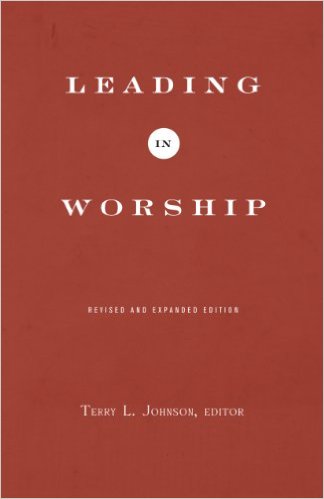 Leading in Worship edited by Terry Johnson. Having become disillusioned with the shallowness, incoherence, and mancenteredness of mainstream contemporary Christian worship, a growing number of ministers and laypeople within the Protestant Church are beginning to recover the biblical roots of traditional Reformed worship. If you count yourself among this number, Leading in Worship was compiled for you. Here is a rich profusion of liturgical material carefully selected from the various directories and prayer books published during the heyday of the Protestant Reformation and compiled into a robust liturgical directory with adaptable forms of worship appropriate for every occasion. But this is more than just a directory of worship. Editor Terry Johnson also explains the importance and purpose of the different services, outlining the biblical foundations for the varied worship practices of the Reformers. Created for ministers, this book also edifies and encourages congregants by providing a biblical rationale for liturgical forms. Leading in Worship is a practical handbook of utmost importance to the modern reformation.
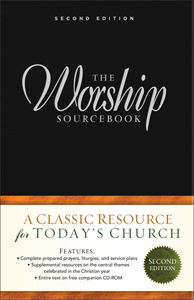 The Worship Sourcebook edited by John Witvliet and Emily Brink. The Worship Sourcebook is a collection of more than 2,500 prayers, litanies, and spoken texts for every element of traditional worship services held throughout the seasons of the church year. This indispensable resource for worship planners and pastors includes texts that can be read aloud as well as outlines that can be adapted for your situation. Teaching notes offer guidance for planning each element of the service. Thought-provoking perspectives on the meaning and purpose of worship help stimulate discussion and reflection. The companion CD contains the entire text of the book for easy cutting and pasting into bulletins, PowerPoint slides, orders of worship, and more. This second edition includes new and revised liturgies, additional prayers for challenging situations facing today’s church, and new appendices.
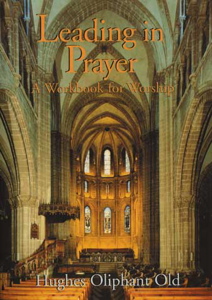 Leading in Prayer by Hughes Oliphant Old. This comprehensive guide to ordering, improving, and doing prayer in Christian corporate worship is for pastors, worship leaders, teachers and anyone interested in a deeper understanding of the use of public prayer. Old discusses the historical and theological background of prayer, instructs readers in the various kinds of prayer as they are used in worship, and examines the ordering of prayer in congregational worship. Includes sample prayers and sample church services.
 Westminster Directory of Public Worship discussed by Mark Dever and Sinclair Ferguson. The Scotsman writes, “To read and study the Puritans is akin to standing in a familiar house and noticing there is an extra door one had never noticed. Press it open and a large basement full of unimagined resources come into view. Here one may linger often, and from here Christians – and not least Christian pastors – may return to the world of their daily service with renewed vigor, with a greater sense of the gospel and its power, deeply challenged to live for their chief end: ‘to glorify God and enjoy him for ever.’ Here we find ourselves in a world of men with a clear vision of the nature of true pastoral ministry, and an unreserved commitment to it, whatever the personal cost. This is an environment of clear-sightedness, single-mindedness, and a deep love of God which, if applied to the work of the pastor today would have a profound, if at times a disturbing, impact on our understanding of the real task of the ministry.”
If you’re interested in more resources on worship Westminster Books has an excellent five-book set for 40% off. Included are:
- Rhythms of Grace by Mike Cosper
- Worship Matters by Bob Kauflin
- Give Praise to God edited by Phil Ryken, Derek Thomas, and Ligon Duncan
- Christ-Centered Worship by Bryan Chapell
- Engaging with God by David Peterson
Retribution and Rescue
It was said that Spurgeon was once walking with a friend down the street when they came upon a drunken homeless man prostrated on the street. Spurgeon’s friend proceeded to make some snide remark about the poor soul. He turned to see if Spurgeon would join in the heckling, yet he saw tears running down Spurgeon’s face and heard the great preacher say, “But for the grace of God, there would I be.”
I’m not sure about you, but I find stories in Scripture of God’s judgment to be quite dangerous for a similar reason. We can smell the sulfurous smoke falling on Sodom and snidely say, “That was deserved,” all the while I believe God’s means for this story to lead us to say with the Prince of Preachers, “But for the grace of God, there would I be.”
To help us do just that I want to consider two truths about God’s relation to man according to our passage.
How God Relates to Man
Our sin demands God’s retribution. This is the first step in what it means to be a Christian, to understand our sin deserves death. And Jesus says the story of Sodom is there to serve as an example and warning to us. As we read earlier tonight in Luke 17 the day of Jesus’s return will be a day of Sodom-like destruction for all who reject him as King. Oh, how I pray that we’d all today feel afresh the force of God’s justice—retribution we deserve. We must know the full terror of God’s wrath in order to love the full treasure of God’s mercy. Which leads to the second point . . .
Our rescue depends on God’s mercy. Look back at 19:16, “But he lingered. So the men seized him and his wife and his two daughters by the hand, the Lord being merciful to him, and they brought him out and set him outside the city.” Mercy rescues. Are you lingering today? Lingering in unbelief and unrepentance? Maybe you are lingering in secret sin or worldly fear. Oh, linger no more as you see tonight the retribution and rescue of God. His mercy is available through Christ, because the same wrath of that consumed Sodom crushed the Son. God’s judgment fell on His Son in the ultimate act of mercy to us.
But God’s rescue doesn’t stop at the cross. Our Lord continues to rescue us each day as he intercedes for us on high. Remember Abraham’s intercession back in chapter 18. The Bible gives unusual prominence to Abraham’s relationship with God, he is regularly called “the friend of God,” but our text tells us the “friend of God” is unable to fully intercede for Sodom—his intercession 19:29 tells us saved Lot, but not the city. Where the friend of God’s intercession was limited, the Son of God’s intercession is unlimited. It is unlimited because He didn’t just turn away God’s wrath due to us, instead He turned it into Himself. And thus the book of Hebrews says, “He always lives to make intercession for,” us, to plead our case, to rescue us.
Before the throne of God above
I have a strong and perfect plea.
A great high Priest whose Name is Love
Who ever lives and pleads for me.
So we need not run in terror from God’s justice, we can instead trust the justice He poured out on Jesus in order so save us. Our God is the Lord of justice.
This post is adapted from my recent sermon, “Lot,” on Genesis 18-19.
Recent Reads
I love to read. I find it helpful to summarize my thoughts on each book and I offer those thoughts in the hope that you will be encouraged to either read or pass over the given title.
 What Does the Bible Really Teach About Homosexuality? by Kevin DeYoung. If ever there was a book uniquely suited for the times it’s DeYoung’s latest. What Does the Bible . . . ? is after an admittedly small slice of the categorical pie, for DeYoung writes, “This is a Christian book, with a narrow focus, defending a traditional view of marriage” (15). The work’s utility lies in it’s simplicity: part one deals with the five most debated passage on homosexuality and part two deals with the seven most common objections to the traditional view. As we should expect by now DeYoung is winsomely logical, ruthlessly biblical, and pastorally helpful. Every pastor should get have multiple copies on hand to distribute to church members. We can’t seem to keep the book in stock at IDC and I continually hear of it being an immense help to our congregation. One of the must reads of 2015.
 Water, Word, and Spirit: A Reformed Perspective on Baptism by J.V Fesko. The appropriate word for Fesko’s volume on baptism is “tome.” It’s an immense work of scholarship spanning the disciplines of historical, biblical, and systematic theology. The immensity is matched by a density of language; this is really an academic monograph on the subject. Fesko is strongest in the section on biblical theology as he highlights the reality of baptism being covenant and eschatological judgment—these are often neglected in my baptist circles. He also usefully points out how often baptism in Scripture is connected to the Noahic flood. Of particular importance is chapter 14, “Baptism and Its Recipients,” as Fesko goes full throttle to convince readers of paedobaptism’s rightness. I’m still not convinced, but if you want to understand the historic “Reformed perspective” this is the book for you.
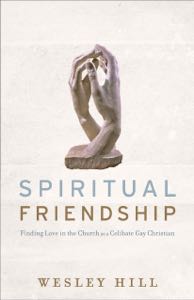 Spiritual Friendship: Finding Love as a Celibate Gay Christian by Wesley Hill. Back in May I sat in a doctoral seminar entitled “Patristic & Celtic Spirituality” and heard Dr. Michael Haykin say something like, “Wesley Hill’s book Spiritual Friendship is teaching me things about friendship I’ve never seen before—and I’ve been studying the topic for years!” I immediately ordered the book and finally got around to reading it this week. Although I’m not convinced of Hill’s apparent desire to resurrect “vowed friendship” is a wise move (Allberry’s spot on in this review), I found myself continually rethinking my own views of friendship. Part 1, “Reading Friendship,” is illuminating in every way as Hill traces the decline of friendship in the Western world over the last few centuries. Part 2 is less helpful, for me at least, because it more acutely applies to those struggling with same-sex attraction. Nonetheless, I think anyone’s understanding and practice of spiritual friendship will be improved by this book.
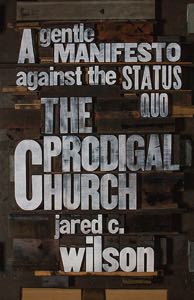 The Prodigal Church: A Gentle Manifesto Against the Status Quo by Jared Wilson. Wilson says he doesn’t want The Prodigal Church to be a rant, an argument for a traditional church, or reactionary rejection. Rather it’s a “gentle manifesto” in which he dares attractional church aficionados to ask, “What if what we’re doing isn’t really what we’re supposed to be doing?” By “attractional” he means “a way of doing ministry that derives from the primary purpose of making Christianity appealing” (25). Although I think the overwhelming majority of readers won’t actually be attractional apologists (I imagine he’ll be mostly preaching to the choir), this book does achieve its stated aims. With gentility and honesty Wilson pokes at the sacred cows of attractional churches to see if they can stand withstand the light of Scripture and reason. If you know a pastor withering at an attractional church or wondering if the model is actually misguided, give them this book. They will be helped.
 The Wright Brothers by David McCullough. There isn’t anyone from whom I’d rather learn about American history than David McCullough. The two-time Pulitzer winner writes with such a warmth and familiarity of understanding I feel as though I’m listening to my grandfather tells stories of days gone by. His latest work focuses on how Wilbur and Orville Wright created their “flying machine.” This story of the boys from Dayton, Ohio is quintessentially “American”—two men rising from obscurity to change the world through undaunted industry and ingenuity. The Wright Brothers is a story we all should know. And McCullough’s reverent and beautiful prose is the perfect guide. Highly recommended!
 The Millennium Trilogy by Stieg Larsson. After almost seven months of nonstop PhD reading I permitted my mind a two-week break of relative mindlessness in terms of bedtime reading. For some reason—I’m still not exactly sure how—I grabbed Larsson’s international senstation The Millennium Triology (The Girl with the Dragon Tattoo, The Girl Who Played with Fire, and The Girl Who Kicked the Hornet’s Nest). Interestingly enough, Larsson was never able to bask in the success of his greatest success as Millennium was published after his death. Aside from a few brutal scenes and occasional reveling in innuendo the trilogy is taut, keep-you-up-too-late reading. I can definitely see why it’s such a smashing success.
Click here to find other entries in the Recent Reads series.
How to Preach to the Heart
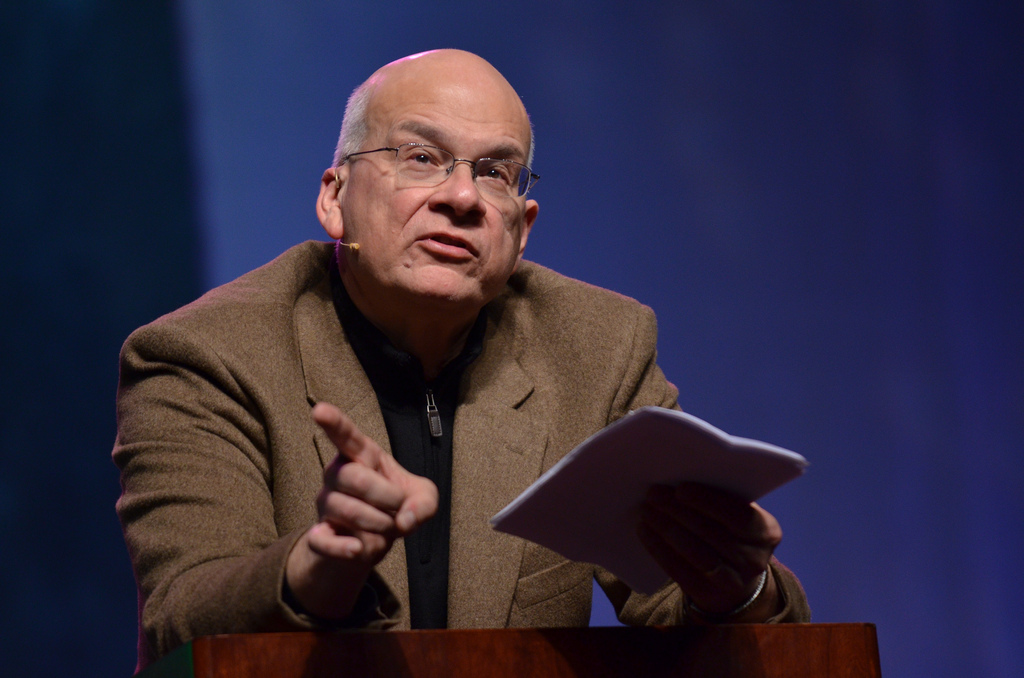
For my mind there are two reasons Tim Keller’s preaching continues to reach such a swath of hearers: 1) he knows how to vividly preach the gospel from the whole counsel of God, and 2) he is a master at preaching to the heart.
Chapter six, “Preaching Christ to the Heart,” in his recent Preaching: Communicating Faith in a Skeptical Age offers untold homiletical riches on the subject of heralding heart-searching sermons. It includes a section appropriately designated, “How To Preach to the Heart.” Keller offer’s six adverbs to help preachers connect their sermons to their people’s hearts. Here they are with some brief comments from The Manhattan Man.
Preach Affectionately
“If you want to preach to the heart, you need to preach from the heart. It’s got to be clear that your own heart has been reached by the truth of the text. This takes non-deliberate transparency. Heart-moving preachers (in contrast to heart-manipulating ones) reveal their own affections without really trying to. What is required is that as you speak it become evident in all sorts of ways that you yourself have been humbled, wounded, healed, comforted, and exalted by the truths you are presenting, and that they have genuine power in your life.”
Preach Imaginatively
“To engage the heart is also to engage the imagination, and the imagination is more affected by images than by propositions. Here we are talking about what are usually termed ‘sermon illustrations.’ . . . The essence of a good illustration is to evoke a remembered sense experience and bring it into connection with a principle. That makes the truth real both by helping listeners better understand it and by inclining hearts more to love it.”
Preach Wondrously
“If we are going to preach to the heart, we need also to evoke wonder . . . Christian preachers and teachers must preach in such a way as to show people the profound good news of that truth. They must point these things out at every turn and have the sense of wonder appropriate to such astonishing claims. Even those of us who believe in the gospel cannot take it in. We do not preach with the tears of joy we should so often have. As we preach we should always open ourselves to let the wonder sink in.”
Preach Memorably
“Some modern expository preachers spend so much time on understanding and explaining the text that they have little time to think about two other things: practical application and striking, memorable, fluent use of language. One thing that makes a sermon memorable is its insight. Rather than telling the listeners things they already know in terms they know, a memorable address is filled with fresh, insightful ways of conveying concepts—concepts the listeners may already know at one level but find new and interesting.”
Preach Christocentrically
“Here I need only to say that preaching Christ is not only the ultimate way to fully understand a text, nor just the best way to simultaneously reach those who don’t believe and those who do, but also the way to be sure that your address moves beyond a dry lecture and becomes a real proclamation of the truth that reaches the heart.”
Preach Practically
“Preaching to the heart is to preach practically . . . diversify your conversation partners . . . diversify whom you picture as you prepare . . . weave application throughout the sermon . . . use variety . . . be emotionally aware . . . Be sure, when you deal very specifically with people’s behavior and thoughts, that you combine an evident love for them with your straight talk about sin. Be both warm and forceful when dealing with personal questions—never scolding, never even disappointed.”