A Worthy Model

In his edited work on the sermons of John L. Girardeau, George Blackburn describes the great preacher’s pulpit manner. Let every herald today labor to emulate this style:

His demeanor in the pulpit was dignified, grave and earnest, indicating that he fully realized his responsibility as an ambassador of Christ and a minister to dying men. I can never forget the solemn countenance he carried into the pulpit and the earnestness with which he read the hymns and conducted the services. And he threw his whole self, body, mind and spirit, into his preaching, speaking with a fervor such as I have rarely seen equalled in the pulpit, and which deeply impressed his hearers with his zeal for God and for their souls.

Reductionistic Doctrinal Preaching

Over the last decade or so, Christ-centered, biblical-theological, moralistic-averse preaching has made a resurgence of sorts in the evangelical world. One consequence, if we have ears to hear, is that such preaching can often press the mute button when it comes to Scripture’s imperatives.

He Puts It So Well

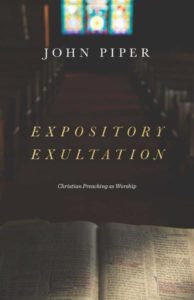
Earlier today, I read through part of John Piper’s latest book Expository Exultation: Christian Preaching and Worship. In chapter 12, Piper points out “two mistakes to avoid” when preaching a command. The first is mere moralism—”Just do it.” The second is “reductionistic doctrinal preaching.” Piper says on this mistake,

The second mistake (“You can’t do it; but Christ did it perfectly, so turn away from your doing to his doing, and enjoy justification by imputed righteousness”) minimizes the seriousness of the command, diverts attention from the real necessity of the imperative, leads to a kind of preaching that oversimplifies the urgency and complexity of Christian obedience, and turns every sermon into a predictable soteriological crescendo that trains the people to tune out and start putting their coats on. It silences the specific riches of the text by preempting them with unwarranted applications of right doctrine.”

To which I wrote in the margin, “Amen.”

Gratefully, Piper doesn’t only diagnose the problem; he offers a proposed solution. But you’ll have to take up the book and read it to find out what that answer is. Tolle lege!

The First Rule

“[The pastor] must maintain regular habits of communion with God, in prayer. The lettered Christian is more liable to neglect this duty and privilege than the unlettered, because his mind is constantly conversant with divine truth, and he is exposed to the temptation of substituting this for the direct expression of desires and wants. But in order to grow in religion, it is not enough for him to meditate upon the divine character and religious doctrines; he must actually address God in supplication.” — Shedd, Homiletics and Pastoral Theology, 289–90.

Eminent Piety

Gospel ministers are meant to be models of holiness. Paul commands us to “set an example” (1 Tim. 4:12). One commentator says on this passage, “The word picture it paints is not so much Timothy is an example that others can emulate but that he is a mold that should be pressed into the lives of others so that they attain the same shape.” Just like a cookie cutter molds the dough into its shape, so is the pastor’s character to shape the lives of his people.

But where can we find encouragement when we realize our mold is not as sharp as it should be?

Noticeable Progress Please

For a variety of different reasons, I’ve been in a three-month-long process of introspection to start 2018. Many things are coming to an end in my life. The dissertation is done. After having our sixth child in December, we are likely done having children. I’m in the midst of a new pastorate and so have reflected on past ministerial experiences in an attempt to discover where I must grow. I’m asking questions about trajectory in pastoral labor, seeking to find areas that need attention.

The self-examination has brought several points of encouragement. But, on the whole, I’ve found myself dissatisfied with my progress in godliness. My life has no small number of places in which I have to grow to be faithful in the gospel ministry: prayer, kindness, trust, and hope for eternity. As M’Cheyne said, “I earnestly long for more grace and personal holiness, and more usefulness.”

My convictions on these matters only increased as I reread a section from W. G. T. Shedd’s Homiletics and Pastoral Ministry.

Eminent Spirituality Demanded
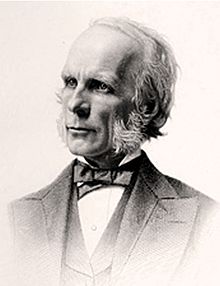
I discovered Shedd’s volume in 2016. Rarely does a week go by without something from his work popping into my mind. Most often, it is his three fundamental properties of sermon style—plainness, force, and beauty. I also remember regularly his chapter titled, “Religious Character and Habits of the Clergyman.”

Let me see if I can encapsulate his argument for you.

Shedd begins with a declaration: “The foundation of influence in parochial life is in the clergyman’s character, and the root of clerical character is piety.” A congregation’s maturity rarely, if ever, exceeds that of its minister(s). Therefore, the pastor’s primary preoccupation is enlarging his soul’s love for Christ. As Shedd says,

The calling and profession of the clergyman demand eminent spirituality. An ordinary excellence is not sufficient. The Christian minister, by his very vocation, is the sacred man in society.

Shedd is careful to tell that a minister is not a member of a sacred caste, but he nonetheless belongs to a sacred profession. His character must reflect his calling:

He is the marked and peculiarly religious man, in the community. His very position and vocation, therefore, make it incumbent upon him to be eminently spiritual.

I’ve found that many pastors today find such demands for holiness grating or even unreasonable. To contemporary minds, Shedd’s assertions may sound inauthentic or sacerdotal. One brother told me that such a view of pastoral godliness tends to promote legalism. Another said it creates a yoke that pastors cannot possibly bear.

Eminent Spirituality Produced

Shedd, however, is more optimistic. My bother pastor, read the following paragraph slowly and be edified:

Not only does the ministerial calling and profession require eminent piety, but it tends to produce it. By his very position, the clergyman is greatly assisted in attaining to a superior grade of Christian character, and if, therefore, he is a worldly and unspiritual man, he is deeply culpable. For, so far as his active life is concerned, his proper professional business is religious. The daily labor of the clergyman is as truly and exclusively religious, as that of the farmer is agricultural, or that of the merchant is mercantile. This is highly favorable to spirituality. Ought not one to grow in grace, whose daily avocations bring him into communication with the anxious, the thoughtful, the convicted soul, the rejoicing heart, the bereaved, the sick, and the dying? Ought not that man to advance in the love and knowledge of God, whose regular occupation from day to day it is, to become acquainted with the strictly Religious wants, and condition of the community, and to minister to them? If the daily avocations of the mechanic have a natural tendency to make him ingenious, and inventive, if the daily avocations of the merchant tend to make him enterprising, and adventurous, do not the daily avocations of the clergyman tend to make him devout? The influence of active life upon character is, in its own place and manner, as great as that of contemplative life. A man is unconsciously moulded and formed by his daily routine of duties, as really as by the books he reads, or the sciences he studies. Hence, a faithful performance of clerical duties contributes directly to spirituality.

Surely Shedd is right to say the gospel ministry is uniquely conducive to noticeable growth in grace. Faithful ministers trade in and thrive on the means of grace. Should grace not tend to flourish in our lives? As the professor also says, “The studies of the theologian and preacher work directly towards the growth of piety.”

The Progress Will Come

Maybe you’re like me; you examine your growth in godliness and find it wanting. Find hope today! Christ has commissioned you as a servant in his house (1 Tim. 4:6). He indwells you through the Spirit—the Spirit of holiness (Rom. 1:4). He’s handed you a job description that requires you to immerse yourself in the means of grace “so that all may see your progress” (1 Tim. 4:15).

Steadfast service for the King will bring increasing conformity to His image (Col. 3:9–10). Let us repent of our failings and rise assured that the grace which forgives is the grace that empowers.

The Dissertation is Done

March 16, 2018 was a most momentous day. I turned thirty-four years old. I also received the best birthday present I could’ve hoped for—a “passed” dissertation. My thirty or so years of non-stop education has (finally) reached its conclusion. People tell me I’m supposed to be an expert, seeing that I’ve completed four degrees. I’m learning, however, that the title of “novice” is much more appropriate than “Doctor.”

Reading, Researching, and Writing

I began my Ph.D. studies at The Institution in January of 2015. From the start, my research interest was Robert Murray M’Cheyne. I initially planned to study “The M’Cheyne School” of ministers in the Free Church of Scotland. But the more I read and researched the more I realized how a thorough study of M’Cheyne’s piety was needed. His brief life has left a long legacy. His story continues to influence countless people over two hundred years after his birth. His pithy quotes on doctrine and spirituality saturate books on all manner of subjects from all kinds of Protestant traditions.

In the spring of 2016, I recognized how the prevailing narrative around M’Cheyne’s life is somewhat miscast. He’s commonly portrayed as a model of personal holiness. Said another way, his devotion to the means of grace is what most captivates Christians. Therefore, the existing studies on M’Cheyne focus on how he pursued the means of grace. I believed a more foundational question needed asking and answering: “Why did M’Cheyne pursue holiness with such singular passion?”

So, I got to work.

The fruit of my research is a dissertation titled “A Communion of Love: The Animating Principle Behind the Christocentric Spirituality of Robert Murray M’Cheyne.” The title encapsulates my thesis, which states, “The primary objective of this dissertation is to demonstrate the crucial place that love for Christ occupies in M’Cheyne’s spirituality.” Over the course of ten chapters, I argue that M’Cheyne’s theology centered on knowing God’s love in Christ and that his piety was little more than the return of love to Christ. His holiness shined brightly because he loved Christ so deeply.

Nervous and Anxious

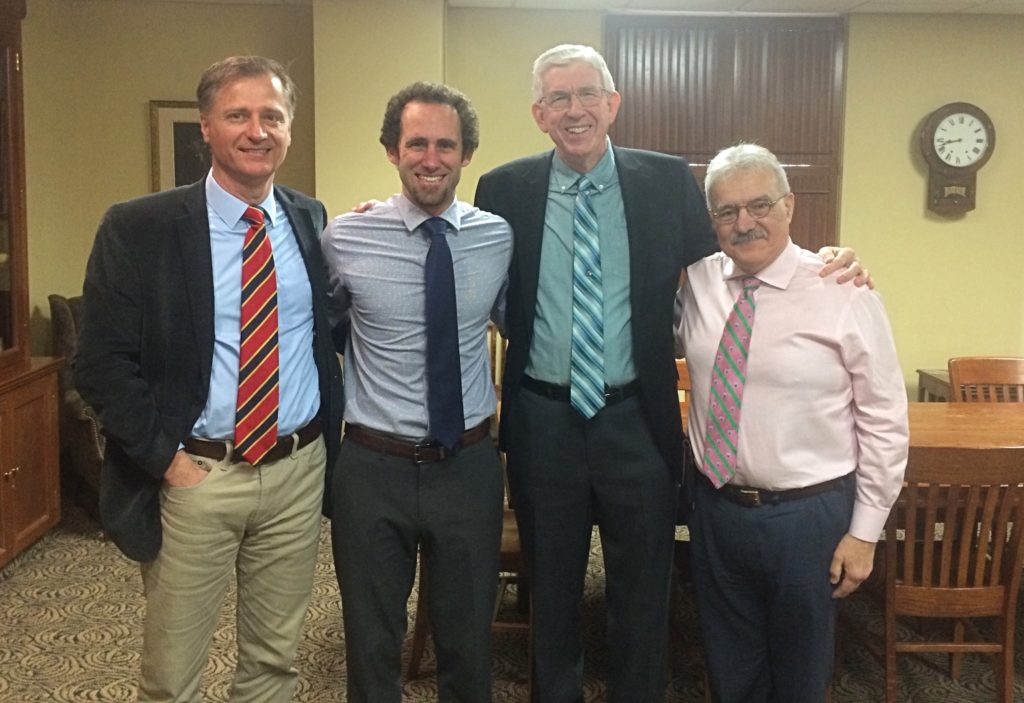
I began writing the dissertation in July of 2017. I submitted it to my examining committee seven months later on Valentine’s Day. The readers were all men whom I’ve looked up to for many years: Drs. Stephen Yuille, Tom Nettles, Michael Haykin, and Sinclair Ferguson. Each man has proved himself an eminent scholar throughout the process and, even more importantly, a model of godliness.

When I left for Louisville on March 15th to defend the dissertation, I went with a feeling I’ve rarely experienced—nervousness. Outside of being in situations with heights (we are not close friends), I don’t know if I’ve ever been nervous about something. But I was a bundle of nerves as I entered the Haldeman Room at 8:00 a.m. on the 16th. Gratefully, the committee was quite encouraging, and the defense went better than I’d anticipated. It was one of the happiest days of my life (which my family says you can see in my smile below).

Mastered By, Not Mastering

Someone told me last week, “You’re the M’Cheyne expert now!” I’m not even close. My studies have only proved how far I have to go to be even a small reflection of M’Cheyne’s faithfulness.

I believe M’Cheyne is an unusually compelling example for pastors. I long to see a revival of his ministerial model, one built on an adoration of Christ that promotes humble piety and zealous soul-winning. In the coming years, I hope to publish a few different works on M’Cheyne, all aimed at retrieving his simple, yet powerful pattern for gospel ministers.

Coming Soon: A Book from Beeke

I remember sitting in a doctoral seminar on the Puritans a few years back and one of the students asked, “Are there any contemporary preachers that embody the Puritans’ practice of preaching? Seeing no one give an answer, I said, “Joel Beeke.”

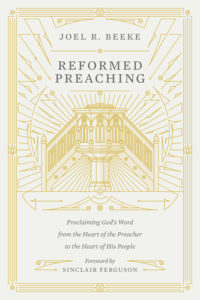
Beeke has long been one of my favorite preachers. In every way, he represents the Puritan ideal of doctrinal, experiential, and evangelical preaching. I’m thus delighted to discover that he’s set to publish a work on preaching with Crossway later this year titled, Reformed Preaching: Proclaiming God’s Word from the Heart of the Preacher to the Heart of His People.

You’ll want to keep an eye out for this one.

Here are the details from Crossway.

Publisher’s Description

Some preaching is like the winter sun: it brightly illuminates the mind but leaves the heart cold. Other sermons are like cotton candy: they taste sweet but contain no substantial nutrients. Biblical sermons, however, need both heat and substance—a conviction at the core of the great Reformed tradition of experiential preaching. Reformed experiential preaching not only informs minds, but also engages hearts and transforms the conduct of hearers. This robust treatment of Reformed experiential preaching by Joel Beeke—a pastor and professor of preaching with over 4 decades of experience—explores the heart of Reformed preaching, examining sermons by preachers from the Reformation and bridging the historical gap by showing pastors what the preaching of this life-transforming truth looks like today.
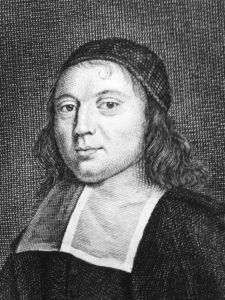
Table of Contents

Foreword (Sinclair B. Ferguson)

Part One: Reformed Experiential Preaching Defined and Described

  1. What Is Reformed Experiential Preaching?

  2. Preaching from Head to Heart

  3. Major Elements of Reformed Experiential Preaching

  4. The Experiential Preacher

Part Two: Reformed Experiential Preaching Illustrated

  1. Reformation Preachers: Zwingli, Bullinger, and Oecolampadius

  2. Reformation Preachers: Calvin

  3. Reformation Preachers: Beza

  4. Introduction to Puritan Preaching

  5. Puritan Preachers: Perkins

  6. Puritan Preachers: Rogers, Sibbes, and Preston

  7. The Westminster Directory and Preaching

  8. Puritan Preachers: Goodwin and Shepard

  9. Puritan Preachers: Bunyan

  10. Introduction to the Dutch Further Reformation

  11. Dutch Preachers: Teellinck, Lodenstein, and à Brakel

  12. Dutch Reformed Preaching in America: Frelinghuysen

  13. Eighteenth-Century Preachers: Halyburton, Edwards, and Davies

  14. Nineteenth-Century Preachers: Alexander, M’Cheyne, and Ryle

  15. Twentieth-Century Preachers: Wisse and Lloyd-Jones

Part Three: Preaching Experientially Today

  1. Preaching with Balance

  2. Application Starts with the Preacher

  3. Effective Preaching about God and Man

  4. Preaching the Gospel to the Heart

  5. Preaching for Holiness

Flavel for Today’s Preacher

Paul was the apostle of Spirit-inspired repetition. He told the Philippians, “Finally, my brothers, rejoice in the Lord. To write the same things to you is no trouble to me and is safe for you.” Every pastor needs a regular dose of Jesus Christ. He needs repetitive fillings from God’s Spirit to preach with power.

We need to remember the same old things so that we may revel in the same old gospel every Lord’s Day.

Sometimes what we need is a simple, stirring reminder about proper preaching.

Statements to Stir You for Sunday

I imagine every pastor has a preferred routine for getting his soul ready to preach on Sunday. Some rise extra early to pray and read God’s word. Others will fast from food that they might proclaim Christ with particular hunger. Yet others will listen to chosen music to raise their affections.
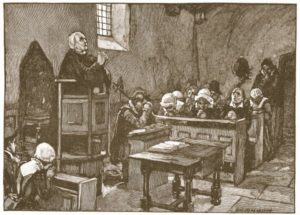
I like to do all of that—and read a good old Puritan on preaching. The resource I return to as often as any other is John Flavel.

My favorite sermon from Flavel is titled, “The Character of a Complete Evangelical Pastor Drawn By Christ” (read it free here). The work is full of wisdom that I need to remember every single week. Consider these gems from the heavenly herald:

  • “Believe it, brethren, it is easier to declaim, like an orator, against a thousand sins of others, than it is to mortify one sin, like Christians, in ourselves; to be more industrious in our pulpits, than in our closets; to preach twenty sermons to our people, than one to our own hearts.”
  • “A crucified style best suits the preachers of a crucified Christ.”
  • “A grave and proper style become the lips of Christ’s ambassadors.”

Other stirring words from Flavel to get you ready to ascend to the sacred desk this week would be:

  • “We preach and pray, and you hear; but there is no motion Christward until the Spirit of God blows upon them.”
  • “The excellency of a sermon lies in the plainest discoveries and liveliest applications of Jesus Christ.”

My brother preacher, remember today the glory of true Christ-centered preaching so that you might preach His glories on Sunday.

7 Implications from Puritan Preaching

In his latest book, Some Pastors and Teachers: Reflecting a Biblical Vision of What Every Minister is Called to Be, Sinclair Ferguson has a wonderful chapter on the Puritans and ministers of God’s word. Near the end, he offers seven implications for preaching from their example.

  1. A commitment to the hard work of studying, meditating on, and appyling to oneself the truth of Scritpure.
  2. A concern to speak God’s truth to all of God’s people, however simply they may be. The great Puritans were well-educated and highly intelligent ministers; but they knew that the concealment of art is also an art.
  3. Preaching the whole counsel of God, for the conversion of men and women, for the glory of God alone in whose presence both great and obscure must be exposed as sinners.
  4. Manifesting wisdom in teaching and applying the word of God, as well as the grace of God, in the very spiritof the preaching without “passion or bitterness.”
  5. Doing so with a sense of the gravitas which ought to characterize a servant of God. This influenced the minister’s physical demeanor and even the use of his voice. The preacher is neither joker nor trifler. He is not sent by God to entertain and amuse, for life is more of a tragedy than a comedy. Message and manner must harmonize or the message itself will be trivialized. Emotions and affections in preaching must be consistent with and expressive of the very substance of the text which is being expounded.
  6. Neither is the minister to be lugubrious and censorious, but rather filled with a loving affection for those to whom he ministers and preaches. Nothing is better calculated to win hearers than their knowledge that their minister has “a hearty desire to do them good.” The Puritans recognized that people will take a great deal from such a man.
  7. All this is to be backed up by a life which is consistent both in private and public with the message that is preached.

What Preaching Needs

“Study of the Scriptures is thus the first and primary demand upon the preacher: organized, persistent, continual study of the Holy Scriptures, if need be without commentaries, but with a clear view, with a praying heart, with a pious, receptive soul, with a sanctified and purified conscience.” — Herman Bavinck, On Preaching and Preachers, 63.

He’s Surely Right

In his Memoir and Remains of Robert Murray M’Cheyne, Andrew Bonar details how M’Cheyne seasoned every conversation with the salt of eternity. Bonar then gives an aside about gospel ministry. His subject is one I’ve thought about often in recent days—as I so often fall short in this area. Bonar says it more eloquently and convictingly than I ever could:

Whatever be said in the pulpit, men will not much regard, though they may feel it at the time, if the minister does not say the same in private, with equal earnestness, in speaking with his people face to face; and it must be in our moment of most familiar intercourse with them, that we are thus to put the seal to all we say in public. Familiar moments are the times when the things that are most closely twined round the heart are brought out to view; and shall we forbear, by tacit consent, to introduce the Lord that bought us into such happy hours? We must not only speak faithfully to our people in our sermons, but live faithfully for them too. Perhaps it may be found, that the reason why many, who preach the gospel fully and in all earnestness, are not owned of God in the conversion of souls, is to be found in their defective exhibition of grace in these easy moments of life.