Recent Reads

I love to read. By God’s grace I am a pretty fast reader; I usually read a couple books each week. I find it helpful to summarize my thoughts on each book and I offer those thoughts in the hope that you will be encouraged to either read or pass over the given title.
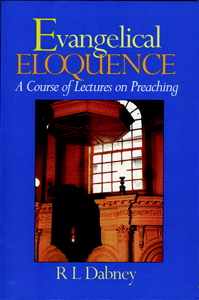
0851517730mEvangelical Eloquence: A Course of Lectures on Preaching by R.L. Dabney. For years my Presbyterian friends have said, “You’ve got to read Dabney’s Evangelical Eloquence!” The poor Southern Presbyterian’s lectures have been collecting dust in my study for some time, but a few weeks ago I finally pulled it out . . . and I may have just discovered my personal authorized text on preaching. If I ever taught a class on preaching, this would be the primary text. Here we find the preaching ministry treated with gravity, scripturalness, and simplicity (which, incidentally enough are Dabney’s “3 Special Qualities of Biblical Preaching”). Originally published in 1879 as Sacred Rhetoric, these lectures have more than passed the test of time; over and over I found myself convicted, challenged, and led to write, “Amen!” in the margin. Dabney’s introductory lecture on “The Preacher’s Commission” will fan aflame a love for the sacred desk, and his lectures on the “Cardinal Requisites of the Sermon” should be requisite reading for preachers young and old. The old man gets extra credit for concluding the work with a lecture on public prayer. A fantastic volume!
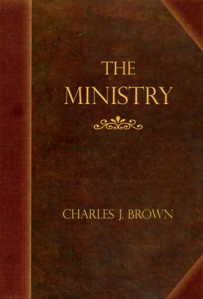
0851519318mThe Ministry by Charles Brown. An old seminary friend used to always be reading some book on pastoral ministry. The titles were often obscure and many stretched back to the church fathers. Several years ago he was reading Charles Brown’s The Ministry and it looked helpful enough, so I bought a copy. It proved to be medicine for my soul during a trying time in ministry. I reread it last week and was freshly encouraged. Brown was a 19th century Scottish pastor who was said to possess “a rare combination of intellectual power and spiritual earnestness, proceeding from a mind and heart full of the treasure of the Word.” His book on ministry consists of four chapters covering the essentials of pastoring: godliness, prayer, and preaching. Brown’s little volume will help pastors return to the apostolic rule of Acts 6:4.
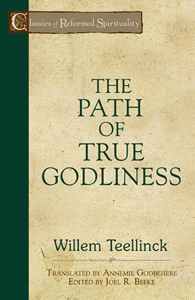
9781892777751mThe Path of True Godliness by Willem Teellinck. Teellinck has been called “The Father of the Dutch Nadere Reformatie“, a movement among the Dutch Reformed that generally paralleled the Puritan movement in England and Scotland. The Path of True Godliness, first published in 1621, is Teellinck’s major work on sanctification. In true Puritan fashion the work is exhaustive and covers everything from what true godliness is, to how the kingdom of darkness wars against the kingdom of grace, and the means by which we grow in true godliness. The book can, and probably should, be much shorter as Teelinck’s discussion gets quite redundant at points. If basketball was around in the 17th century this Dutchman would have been deadly from behind the arc: he organizes almost everything in triads. It’s rather amazing how many sections begin with something like, “Notice that this activity begins in three parts,” or, “As the Holy Spirit leads believers into truth, he offers three distinct works of grace.”
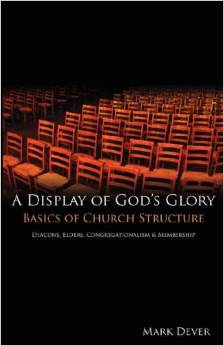
DGGA Display of God’s Glory: Basics of Church Structure by Mark Dever. Dever’s little discussed manual on church polity is an absolute gem. We use it in our church officer training at Imago Dei and I had the chance to reread it again as we just finished our first round of deacon training. In the short compass of four chapters Dever covers the essentials of congregational polity: deacons, elders, congregationalism, and membership. Not only is this a an excellent resource for training prospective officers it would also serve as an excellent discipling tool for any member who needs to understand basics of Baptist polity. I’d love to see a publishing house pick up this title and make it more widely available.
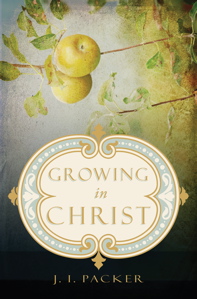
1581348525mGrowing in Christ by J.I. Packer. For Packer, Growing in Christ is the logical companion to his classic Knowing God. This book is his work of catechesis; his commentary on “the three formulae which have always been central in Christian teaching – the Apostle’s Creed, the Lord’s Prayer, and the Ten Commandments, plus Christian baptism.” But don’t let the word “commentary” give you pause, Packer sprints through the content. Each chapter is 2-3 pages in length and includes useful discussion questions. Thoroughly evangelical and warmly ecumenical, I could see this book being a great resource for small groups or discipling relationships.
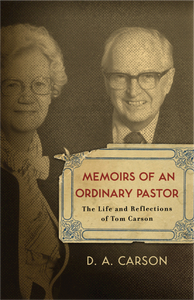
9781433501999mMemoirs of an Ordinary Pastor: The Life and Reflections of Tom Carson by D.A. Carson. I’m not sure why it’s taken me so long to read this book, I am something of a sucker for pastoral memoirs. Carson is to be greatly commended, along with Crossway, for giving us a glimpse into the trials and joys of ordinary ministry through the life and memoirs of his father. After reading the work, Carson’s administrative assistant said, ““I used to aspire to be the next Henry Martyn [heroic British Bible translator and missionary to the Muslim peoples of India and Persia]. However, after reading your dad’s diaries, the Lord has given my heart a far loftier goal: simply to be faithful. I know we as men are but dust, but what dust the man I read about in these diaries was!” No higher praise could be given.

GFThe Goldfinch by Donna Tartt. The Goldfinch won the 2014 Pulitzer Prize for fiction and my first response upon completing it was, “How did this win the Pulitzer?” I’m not one who generally enjoys the “art” of literature, so it’s possible my distaste is simply the product of unrefined artistic taste buds. So I decided to do some research to see if my sentiments were completely unfounded. Little did I know that Tartt is something of a cult hero and her latest book has created something of a impenetrable divide among literary critics: you love it or you hate it. Although I didn’t loathe the book, I definitely didn’t love it. The narrative seamlessly moves from the rivetingly sensational to boringly bloated. I find most of the prose to fall in the latter category.

Click here to find other entries in the Recent Reads series.

Let the PhD Studies Begin

future_students_hero_four_bg

Every once in a while something comes along in life that you immediately know will change your life forever. That happened to me yesterday.

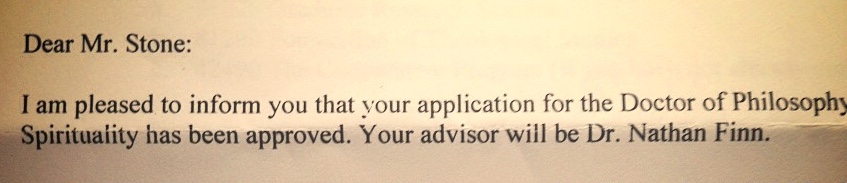
I received a letter from The Southern Baptist Theological Seminary accepting me into their PhD program.

In ways I don’t fully yet know, my life will never bet the same.

A SURPRISING JOURNEY

From elementary school through high school my parents would normally ask upon my return home from each day of school, “How was school today?” My answer was almost invariably, “Boring.” I rarely felt challenged in class and, anyways, my mind was always completely occupied with my real passion: soccer. I looked forward to the days when soccer would replace school as the primary occupier of each day.

When I signed a contract with Major League Soccer at the age of 17 there was some terror among my extended family. The general thought was, “Jordan will never go to college!” Education has always been paramount, particularly on my dad’s side. From the moment I started playing with the Dallas Burn (what is now F.C. Dallas) one of my dad’s brothers started the full-court press of getting me to retire the soccer dream and venture into the halls of his beloved alma mater, Baylor University. He even said he’d pay for the tuition!

I was grateful, but uninterested.

ONE AND DONE

Little did I know how persistent he would be. For three years we discussed these matters and at the end of the 2004 season I announced my retirement from professional soccer. I was twenty years old. Six months later I was a Student Ministry Associate at FBC Prosper who was rapidly trying to finish a bachelor’s degree via extension studies at Texas Tech University. It was at good ‘ol FBCP that the question of seminary first popped up. And then it kept popping up. The general tenor among the Baptist church powers was, “Jordan, if you want to be a pastor you must go to seminary!”

Well, I’ve always had a struggle with pride. And in my early twenties pride was a dragon-like behemoth. The surest way to get me not to do something was tell me I had to do something. I always wanted to pave my own way. The plan was to finish my undergrad degree and be done with schooling. “One and done,” was my thought.

God had another plan.

EVERYTHING CHANGES

In 2008 I joined the staff of Providence Church as an Associate Pastor. I was a bright-eyed twenty-four year old pastor set on changing the ministerial world. Looking back on it now I can see just how silly that notion was, but how God used it to do something in my unexpected.

In May of 2009 two Presbyterian brothers reached out and invited me to lunch. David Rea and Carlton Wynne were old friends and current ministers at Providence Presbyterian Church in Dallas. “D-Rea” had been the college pastor at Park Cities Presbyterian Church, and Carlton his intern, when I attended PCPC for a few years in my soccer playing days. When they heard I was an associate pastor at an Acts 29 church they wanted to see how my ministry was going and what on earth this church planting network was all about. Some of you might remember how those were the boisterous days of A29.

Not long after that meeting I reached out to good Rev. Wynne and asked him if he would disciple me in ministry. I was rapidly realizing how ill-prepared I was for various aspects of pastoral ministry and wanted to grow. Carlton was, and remains, the smartest and humblest pastor I know (he’s currently finishing his PhD dissertation in Systematic Theology at Westminster Theological Seminary). In short, I wanted to be like him. I still hope to be like him.

Carlton graciously agreed to regularly meet with me and our bi-weekly lunches remain one of the fondest memories of my young ministry. He was a graduate of RTS-Charlotte and so, not surprisingly, our conversation often came around to that age-old question of seminary. Overtime he convinced me to go. Five years after –almost to the day! – of saying I wouldn’t go to seminary I submitted an application to RTS.

A REKINDLED LOVE

The next three years were full of ministry, church planting, and seminary. Throughout my time at RTS I rediscovered the joy of learning. I think it was because, unlike much of my previous schooling, the subjects I studied in seminary were so thoroughly interesting and practical. Reading and writing were like old friends I used to spend time with, but life had taken us down separate paths. Now we were reunited. And what fun it was.

When I finished the M.A.R. at RTS I thought, “What about a PhD?”

WHERE TO STUDY

I thus began to research possible schools to which I could apply and I settled on one institution: SBTS. It had everything I was looking for: rigorous scholarship, expert faculty, options for modular study, and a rich tradition in the SBC – our church’s denomination.

After some dialogue with the admissions people I realized I needed to take some classes to get my M.A.R. up to M.Div. equivalency. So over the course of last fall and this spring I slammed out 18 hours worth of seminary classes. In God’s kind providence He used those two semesters to change my direction in which department I would potentially do doctoral research.

WHAT TO STUDY

My original plan was to apply for a PhD in Christian Preaching, but the more I studied at SBTS and got to know the various options and professors I decided to switch my application to the Biblical Spirituality department.

I’m increasingly convinced, along with old saints like M’Cheyne and Bonar, that it is not great talents God blesses as much as great likeness to Christ. I long to be a pastor that sets an example for his people in speech, life, love, faith, and purity, and in so doing save myself and my hearers (1 Tim. 4:12, 16). Additionally, I hope to be a man who trains and exhorts potential pastors in what a spiritual ministry through ordinary means can look like. Further and specific study on these matters can only serve in these areas. Plus, growing in my understanding of the history and theology of piety is right up my alley of interest.

DREADFUL DELIGHT

Earlier this summer I sent in my application and at the beginning of August I received an invitation to come to SBTS to take the entrance exam and go through a faculty interview. And so it was five weeks ago today that I flew out to Louisville with dreadful delight. I guess the exam and interview went well enough, but now that I’ve been officially admitted into the program I once again have that sense of dreadful delight.

FullSizeRender

The dread part of that paradox is wrapped up in the commitment of intellect, time, and cash money we are adding to an already full plate: pastoring a young church with a fourth son on the way in January (our four boys will be four years old and under when Knox, Lord willing, appears). But we are simultaneously delighted in God’s opening of this door for doctoral study.

We know life will never be the same. And that is always dreadfully delightful.

Know the Sheep

Know The Sheep

What is the most undervalued aspect of faithful shepherding? What is that key essential to rightly leading the flock that it seems we are so prone to miss?

Take the helpful shepherding matrix from Tim Witmer’s masterpiece The Shepherd Leader: Shepherds know, feed, lead, and protect. Which of those four elements are you most likely to neglect?

I think it is no stretch to say if the average elder body is weak anywhere it’s on the issue of knowing the flock. Few elders need to be convinced of the necessity of teaching and overseeing the congregation, but I wonder how many actually labor to increasingly know their sheep.

JUST LIKE THE GOOD SHEPHERD

Every elder of a local church is an under-shepherd of the True Shepherd. Our shepherding is supposed to be a  humble reflection of His perfect pattern, which includes a deep, intimate knowledge of the sheep. In John 10:14-15 Jesus says, “I am the good shepherd. I know my own and my own know me, just as the Father knows me and I know the Father.”

Do you know your sheep?

Everything depends on a growing knowledge of our sheep. It’s why Witmer says, “The most basic responsibility of a shepherd is to know his sheep.” Shepherds who know their sheep well are the ones best equipped to wisely lead their congregation on all kinds of matters: What book of the Bible should we study next? What applications does our church need to hear from this text? What issue of discipleship do we need to address? How are we doing in evangelism? Is there a sense of disunity that is growing unchecked? Are we unified on our stewardship of God’s resources?

We can’t lead ’em if we don’t know ’em.

PICK UP THE PHONE

Let me offer one simple suggestion for elder bodies who want to better know their sheep: give ’em a call.

Witmer wisely says, “While grand plans of ‘every member visitation’ should not be jettisoned without due consideration, it is crucial that an approach [for knowing the sheep] be embraced that is practical both for the elder and the member. One such approach is the use of the telephone. . . . Before shrugging off phone contact as the realm of telemarketers and political appeals, don’t underestimate the impact of a personal call from someone who has concern for your well-being at the forefront.”

I can absolutely affirm that final sentence. Whenever I call a church member to check in they almost invariably say, “I so thankful you took the time to call.” A few minutes on the phone go a long way to not only knowing your sheep, but building and perpetuating church unity.

A VERY GOOD PLACE TO START

Recognize that if you haven’t built a culture of “knowing” into your shepherding it might be a bit awkward for elder and church member at the beginning. But shepherding with knowledge is great gain.

If you don’t have one, create an up-to-date membership directory. It could be one that’s never printed off and resides in the ubiquitous Cloud, or maybe it’s one you print off and put in your Bible. It just needs to be current and contain pertinent contact information.

Then, in conjunction with your other elders, take some sub-section of the covenant body whom you will contact in a given month. Our elders normally take two pages per month, which means each man has about five household to contact. The ideal is to always have a face-to-face meeting. When scheduling doesn’t let a meeting happen I usually shoot the husband of the home and email that says something like, “Give me a call when you get a chance today or tomorrow. I just want to hear how you guys are doing and how we can serve you and pray for you.” Most people will usually respond quite quickly and let me know when they’ll give me a call. You could of course go about it differently. The point is to have consistent communication with all your sheep.

It is rare for me to finish a sermon without feeling somewhere between slightly discouraged and moderately depressed that I have not preached with more unction, that I have not articulated these glorious truths more powerfully and with greater insight, and so forth. But I cannot allow that to drive me to despair; rather, it must drive me to a greater grasp of the simple and profound truth that we preach and visit and serve under the gospel of grace, and God accepts us because of his Son. I must learn to accept myself not because of my putative successes but because of the merits of God’s Son.

– D. A. Carson. Memoirs of an Ordinary Pastor: The Life and Reflections of Tom Carson

3 Books Every Pastor Should Read: On the Holy Spirit

Books are some of the best friends a pastor can have. How to know which friends to have is quite difficult, for as the inspired Preacher said, “Of making many books there is no end” (Ecclesiastes 12:12). Every so often I recommend three books for pastors on a given topic, hoping the suggestions might inform your book budget.

It’s time I rounded out the Trinitarian scope of book suggestions. Having already recommended some faithful friends on the Trinity, God, and Jesus Christ, it seems quite necessary to think about valuable works on the Holy Spirit.

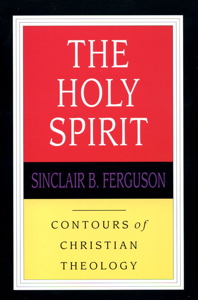
0830815368mThe Holy Spirit by Sinclair Ferguson. Many people in our time refer to the Holy Spirit as the “Forgotten God”, but Ferguson isn’t so sure. He doesn’t doubt the Spirit tends to be neglected, he just thinks a rephrasing of that neglect is in order: “While his work has been recognized, the Spirit himself remains to many Christians an anonymous, faceless aspect of the divine being.” The great man from Scotland give us a portrait of the Spirit’s person and work that is, in a word, “stunning.” He tackles all the pertinent issues with the skill and pastoral wisdom that are now “Fergusonian” hallmarks. If you get only one book on the Spirit, make it this one.

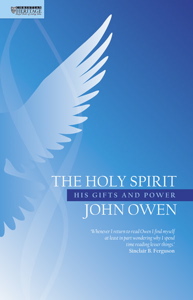
1857924754mHoly Spirit: His Gifts and Power by John Owen. I often smirk when I hear people accuse Reformed theology of minimizing the Spirit. I mean, which volumes on the Spirit have been reprinted for centuries? Those written by Reformed authors. You’d be right to employ the adjective of “timeless” to Owen’s work; it’s just that good. Reading the Prince’s original treatise had been a pricy endeavor because you had to buy volume three of his collected works. But Christian Focus did everyone in 2007 a favor by publishing an unabridged, stand alone edition. John Newton called this book, “An epitome, if not the masterpiece of [Owen’s] writings.” Amen. If you want an abridged version you could always pick up the Puritan Paperback from Banner of Truth.

HSThe Doctrine of the Holy Spirit by George Smeaton. What serves as the textbook in Sinclair Ferguson’s “Doctrine of the Holy Spirit” class? Not his own book listed above, nor the work he so loves by Owen. It’s this volume from an outstanding, and forgotten, 19th century Scottish theologian. Originally published in 1899 and brought back by Banner of Truth in 1958, Smeaton’s work is a perfect textbook on the Spirit. He handles his subject under three divisions- he treats first the testimony to the Holy Spirit, as it is progressively revealed in Scripture. Secondly, he gives detailed attention to six subjects: the personality and procession of the Holy Spirit; the work of the Spirit in the anointing of Christ; the work of the Spirit in connection with revelation and inspiration; the Spirit’s regenerating work on the individual; on the Spirit of holiness; and the work of the Holy Spirit in the Church. Finally, there is an historical survey of the doctrine of the Holy Spirit from the Apostolic age. If you’re into e-reading, you can get Smeaton’s work free on Google Books.

HONORABLE MENTIONS

Keep in Step with the Spirit: Finding Fullness in Our Walk with God by JI Packer. A brilliant study with an unforgettable controlling metaphor: the Spirit’s ministry as a “Floodlight Ministry.” Read on to find out what the metaphor is all about.

Baptism and Fullness by John Stott. It’s amazing how Stott can so powerfully communicate important doctrines in so few pages. This work on Spirit is as good an introduction as you can find.

Check out my past suggestions in the “3 Books Every Pastor Should Read” series here.

Two Sovereign Hands

Job Podcast

One of my favorite things to do with our kids is help them overcome any innate fear of heights (acrophobia) by playfully launching them into the air.

Owen, our almost three-year-old, has been the funniest to do this with. The minute he is separated from my hands he does two things: hold his breath and then immediately stare at my two hands. For he trusts those two hands will catch him, and they always have.

What we see in Job 8-10 is that Job feels as though God has thrown him up into the air of suffering and as he hangs suspended the question is whether or not Job will trust in God’s sovereign hands to catch him and comfort him. Just like Owen stares at my two hands, I see Job staring at God tonight and wavering on two things. And oh how helpful Job continues to be for us! His questions amidst suffering still ring true for many of us. So as we begin to close I want to ask two final questions, pondering God’s two hands as it were, that are vital for whether or not you will trust God during suffering you don’t understand.

WHEN YOU SUFFER . . .

1) Will you trust God’s justice?

2) Will you trust God’s goodness?

In chapters 9-10 Job wonders aloud about the reality of God’s justice and goodness, and are not those two issues always at the forefront of our trust in God during suffering? If we believe God is just and God is good, even in unexplainable suffering, we will be able to trust Him and praise Him. If we don’t, we lessen His glory. Are you suffering? What do you think about God’s justice and goodness over, under, and in your pain? What a witness to the world it is when Christians and churches trust God in unexplainable suffering? Job’s journey will soon reveal that he indeed trusts in these perfections of God.

We need only look to the cross of Christ to see how mysteriously these perfections relate. There at Calvary Jesus experienced the fullness of God; wrath and mercy, justice and goodness, collided and the world has never been the same. God was just and good in Christ’s suffering, so dear Christian you can rest assured He is just and good in yours.

A friend once asked me, after watching me play this “Launch the Stone Boy Into the Air” game, “What happens if you drop them?” I looked at him and said, “These hands will never drop my boy.” But, if I’m honest, it’s possible. Something could go wrong and they boy slips through. Yet, we can be encouraged from Psalm 55:22, “Cast your cares on him . . . for he will never let [his children] fall.” Will you trust God if your suffering is unexplainable?

This post is adapted from my recent sermon on Job 8-10, “Suffering with Bildad.”

What is Unction?

Unction

In 1870 the old southern Presbyterian giant Robert Louis Dabney published a magisterial work on preaching entitled, Sacred Rhetoric, which Banner of Truth reprinted a century later as Evangelical Eloquence.

One of the more valuable parts of his discussion on evangelical – contemporary men would call this “gospel-centered” – preaching is how he speaks of the Spirit’s work in the pastor’s delivery.

THE SPIRIT’S ANNOINTING

Dabney says evangelical tone includes “that quality which is happily denoted by the French divines, unction.” The Union Theological man’s definition of this oft-talked about element in sacred discourse is wonderful:

[Unction] expresses that temperature of thought and elocution, which the Spirit of all grace sheds upon the heart possessed by the blessed truths of the gospel. It is not identical with animation. Every passion in the preacher does not constitute unction. While it does not expel intellectual activity, authority, and will, it superfuses these elements of force with the love, the pity, the tenderness, the pure zeal, the seriousness, which the topics of redemption should shed upon the soul of a ransomed and sanctified sinner. . . .

It is, in short, a quality not merely intellectual or sentimental, but spiritual. Although not identical with ardent piety, it is the effluence of ardent piety alone. A correct taste alone cannot communicate it. It cannot be taught by rhetoric alone. It cannot be acquired from the imitation of others. But it is the Holy Spirit who communicates it to the cultivated mind and pure taste, by enduing the soul which is thus prepared with an ardent zeal for God’s glory and a tender compassion for those who are perishing.

LET THE SPIRIT FALL

Yearn for the Spirit’s unction in every message; the ardent zeal burning for God’s glory in Christ. May every man who ascends to the sacred desk this weekend preach with this power.

Shepherding One Another

Shepherd Each Other

When we installed our first group of elders at IDC we immediately put into place schedule of meeting twice a month.

Little did we know it wouldn’t be enough.

TWO LONG MEETINGS A MONTH

We meet on the first and third Thursday night of each month from roughly 7:30-10:30pm. The first monthly meeting is a “Member Centric Meeting (MCM)”. The bulk of each MCM is taken up with updates and prayers on about fifteen different family units in our membership directory. Prior to the meeting our elders delegate which family units they will visit/reach out to. They then come to the MCM with any pertinent updates and specific prayer requests. We’ve found that it takes us, on average, roughly 90 minutes for discussion and prayer on fifteen families. This shepherding plan is always the first order of business on MCM nights. The rest of our MCM time is normally occupied with administrative matters pertaining to body life and proactive shepherding.

The third Thursday night of each month is designated as an “Issue Centric Meeting (ICM)”. The average ICM is occupied with some theological or philosophical matter in the church. Sometimes the ICM has dealt with pressing issues like “what we believe about deacons” or “future building plans” to an overarching theological matter of unique importance like “a biblical understanding of sanctification.” We’ve found it incredibly helpful to have unhurried and specific conversations about things that count when it comes to our understanding of Scripture and application of it in our church body.

But we noticed early on that something was missing from these meetings: personal shepherding.

A THIRD MONTHLY MEETING

After all, we elders need to shepherd each other as well. Yet, the pressing matter of church life seemed to always crowd out opportunities for sustained reflection on how each man is doing spiritually.

So we added a third meeting, one where we can hold each other accountable and pray for specific needs and desires. This meeting is more informal and usually happens on the third Friday morning of each month from 6:00-7:30am. We share about current advances in holiness and struggles against sin, often counseling one another in the things of God. We all love to read so we’ve currently used this time to discuss a book that has unique emphasis on pastoral piety. The first book we’ve worked through is David Beaty’s study of M’Cheyne’s spirituality, An All-Surpassing Fellowship.

LONG-LASTING FRUIT

Now, I recognize that every church is different and thus every elder board will be unique. Many people hear about our three monthly meetings and say something, “Wow, that’s a lot! I don’t think we could do that.” And in some circumstances they definitely can’t. Frankly, as our church – Lord willing – grows and elder body expands, three monthly meetings may not always be our practice.

But let me tell you something, the Spirit has worked within us a sense of spiritual unity and joyful camaraderie that I don’t think we’d have otherwise. And I’m jealous to keep such a spirit among our shepherds. As David said in Psalm 133,

Behold, how good and pleasant it is
    when brothers dwell in unity!
It is like the precious oil on the head,
    running down on the beard,
on the beard of Aaron,
    running down on the collar of his robes!
It is like the dew of Hermon,
    which falls on the mountains of Zion!
For there the Lord has commanded the blessing,
    life forevermore.

Eldering is hard work and demands much time; maybe even three meetings a month! But rejoice in the labor. Trust the Spirit will do a work within you that is immeasurably greater than you would imagine.

Balanced Preaching

Feed My Sheep

A clean conscience is a wonderful thing.

Just ask the great apostle. The joyful confidence Paul has in a clean conscience seeps out of almost every one of his letters. But not only his letters, also Luke’s recounting of his missionary ministry in Acts. One pertinent reference is Acts 20:26-27, where Paul told the Ephesian elders, “Therefore I testify to you this day that I am innocent of the blood of all, for I did not shrink from declaring to you the whole counsel of God.” In other words, “My conscience is clean before you because I declared the whole counsel of God.”

Preacher, if you have been at your church for any length of time, would you be able to say with Paul, “My conscience is clean?”

A PLEA FOR BALANCE

Preaching the whole counsel of God means giving due attention to the fundamental nature of our Sovereign and Holy God, the sinfulness of man, the way of salvation in Christ, and the life we now live by faith in the Spirit. At the risk of employing an increasingly vapid buzz-phrase, a” gospel-centered” hermeneutic in preaching is essential to preaching the whole counsel.

But mere gospel-centrality is not all. What “whole-counsel preaching” means is actually preaching the whole counsel of God’s words; the old and new testaments, the predictions and expositions of Christ, prophecy and poetry, truth from the narrative and apocalyptic. If someone was to look at your church’s preaching calendar over the last few years would they see this kind of balance? Or would they see lots of similar studies? Something like five out of seven years occupied with Pauline epistles, or eight out of ten years spent in one of the testaments.

Brothers, this should not be so.

A SIMPLE SCHEME

When we planted IDC at the beginning of 2013 we did so with at least one burning conviction when it came to preaching: Striving for balance between the testaments and the genres in the annual sermon calendar. Coupled with that was a commitment to rarely, if ever, spend more than twelve months in one particular book. I regularly tell people that I’m much more willing to be accused of going through a book too quickly than too slowly. The length of a series is like the length of a sermon; people will rarely forget the long, but will almost always forgive the short.

At IDC we minister in a context where a fair subset of our congregation will come and go within five years. My hope then is that when people leave after a few years of attending our church they have a real sense of the whole counsel of God. Certainly there are worse things than faithfully expositing Romans for three years, but I think we can – and ought to – give our churches a fuller diet of Scripture.

Here’s how our aim for balance in the preaching calendar has worked itself out so far:

  • January-May ’13: 1 Timothy
  • June ’13: Ruth
  • July ’13: Haggai
  • August ’13 – June ’14: Mark
  • July-August ’14: Summer series on the means of grace
  • September-December ’14: Job

Next year our plan, Lord willing, is:

  • January-April ’15: 1 John
  • May ’15: Jonah
  • June-August ’15: Genesis
  • September ’15 – May ’16: Romans

Whether or not it works out exactly that way, it should give you a picture of how we try to practice our striving for balance between the testaments and genres. Such a pursuit has at least two advantages.

TWO ADVANTAGES OF BALANCED PREACHING

First, it gets the preacher out of his comfort zone. Every preacher I’ve met has his personal comfort zone when it comes to preaching. For some it’s narrative, for others (like me) it’s the epistles, or for guys like John Macarthur, it’s the New Testament. Pursuing the kind of balance I’m advocating for will, I think, in the end make the preacher more well-rounded than he would naturally be. I’m currently preaching through Job and it is stretching me in ways I’ve never before experienced. That stretching has to be inextricably related to the fact I’ve never preached an entire book of wisdom. The growth curve is also due, I think, to the fact we are covering 42 chapters in 14 weeks. I’m learning what it means to preach huge chunks of Scripture in one setting. I trust this whole endeavor, of which I would never naturally gravitate towards, is making me a better preacher. It’s definitely getting me out of my comfort zone.

Second, it gets the church out of her comfort zone. This reality came to me so clearly after last weekend’s service. A dear older saint in our church came up to me after the sermon and said, “I want you to know I’m so excited about Job. I can’t remember the last time I’ve looked forward to a series this much. I think it is because I don’t know Job as well as the gospel of Mark or the book of Ruth. It’s all fresh to me!” Based on the responses I keep hearing from our church, this member’s experience is not unique. A preaching diet that is wisely scattered across the whole canon will often place church members among new vistas of truth. And newness usually breeds excitement. It not only gets them out of their personal comfort zone, it also let’s them see how all Scripture is God-breathed and useful.

IS IT CLEAN?

Our churches need the whole counsel of God; they need a preaching diet that balances the vast and varied unsearchable riches.

So preacher, how’s your conscience in preaching the whole counsel?